
What All Supervisors Need to Know Management Training



- Slides: 30
What All Supervisors Need to Know Management Training for RF Supervisors
Learning Objectives Participants will be able to understand explain the basic principles of supervising Research Foundation employees, including: - classification of employees, student employees, independent contractors, and fellows. - exempt versus nonexempt. - leave under Family and Medical Leave Act (FMLA) and paid time off. - recruitment and onboarding. - performance management and professional development opportunities. - concepts of employment-at-will and managing performance/behavior correction through progressive discipline. - motivation and engagement.
What All Supervisors Need to Know • Classification – Employee vs Independent Contractor – Misclassifying employees can result in liability • • Minimum wage and overtime violations Benefits coverage violations Unpaid employment taxes Workers compensation coverage
What All Supervisors Need to Know • Employee vs Independent Contractor – FLSA definition of “employee” is very broad – Employment relationship – is the individual economically dependent on the employer? – Independent Contractor – is the worker in business for him/her self? – DOL 6 factor “economic realities” test
What All Supervisors Need to Know • Student Employees • • Must be enrolled full time Engaged in work related to their academic program Work part time Do not get benefits • Fellowship Recipient • support academic study or fellow-initiated research and recognize recipients promise as a research or teaching scholar • No service to the RF
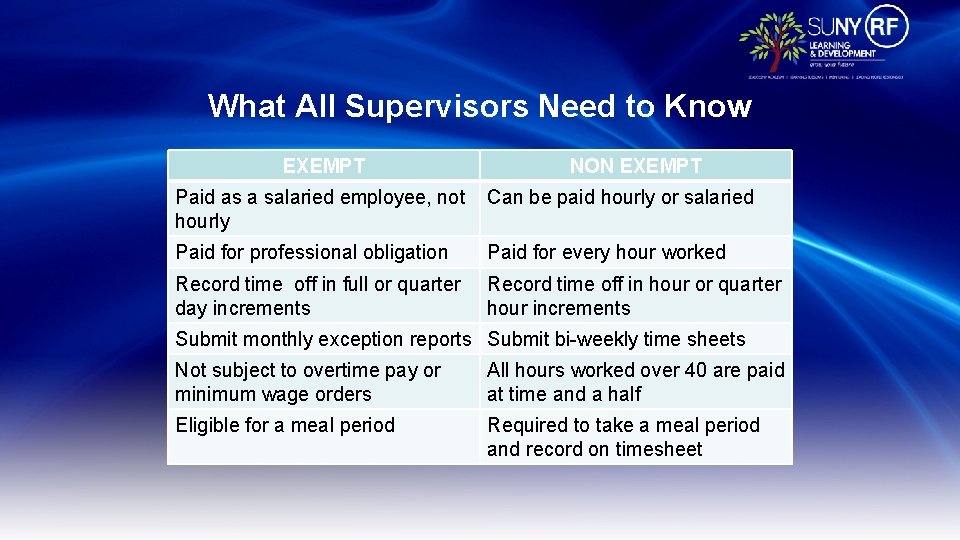
What All Supervisors Need to Know EXEMPT NON EXEMPT Paid as a salaried employee, not hourly Can be paid hourly or salaried Paid for professional obligation Paid for every hour worked Record time off in full or quarter day increments Record time off in hour or quarter hour increments Submit monthly exception reports Submit bi-weekly time sheets Not subject to overtime pay or minimum wage orders All hours worked over 40 are paid at time and a half Eligible for a meal period Required to take a meal period and record on timesheet
What All Supervisors Need to Know • Family medical leave act (FMLA) – 1 year of service and 1250 hours in past 12 months – Employees out with an illness or care of a family member for more than 3 consecutive calendar days (this includes weekends) – Unpaid job protection • May supplement with appropriate accruals – Call HR!
What All Supervisors Need to Know • Vacation • For rest and relaxation • Approved in advance • Sick leave – Employee illness or injury • Out 5 or more days, then need return to work note – Family sick/bereavement – 15 sick days allowed • Personal time – pressing personal business
What All Supervisors Need to Know • Recruitment Issues – Application process – make sure all applicants complete an RF application – Interviewing – Reference checks – Nepotism Policy
What All Supervisors Need to Know • Application process – Forms/Application – Approvals – Self Identification • Recruitment – Desire for a diverse and inclusive pool of candidates – Nepotism
What All Supervisors Need to Know • Reference checks – Best practices – Consistency
On-Boarding at the Research Foundation • Best practices from UAlbany – Paperwork – New staff orientation – Required training • Training – On-boarding plan – Supervision – Routine check-ins • Remote Employees
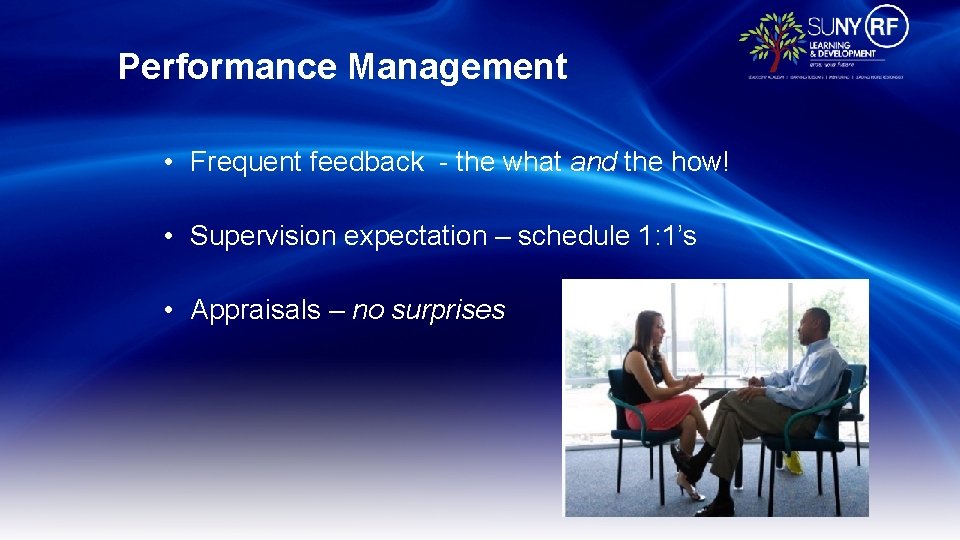
Performance Management • Frequent feedback - the what and the how! • Supervision expectation – schedule 1: 1’s • Appraisals – no surprises
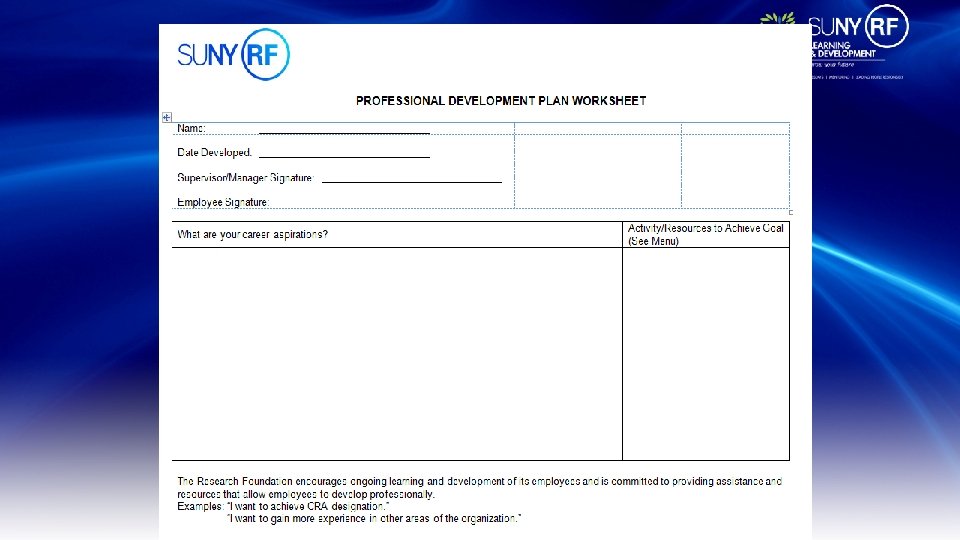
Supervision • Coaching for performance – What you do and how you do it • “Knee to knee” meetings consistently • Strength-based • Open door policy – just not good enough! • Focus on professional development
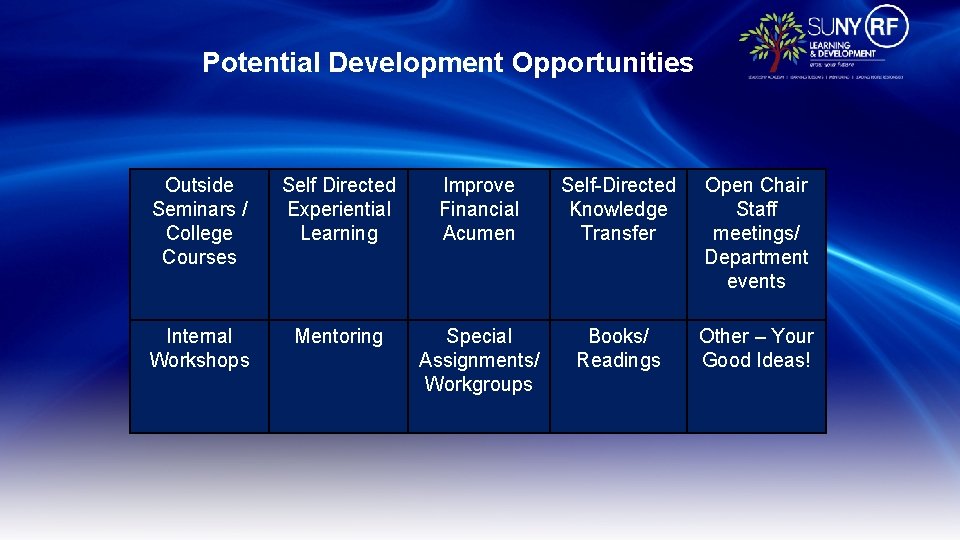
Potential Development Opportunities Outside Seminars / College Courses Self Directed Experiential Learning Improve Financial Acumen Self-Directed Knowledge Transfer Open Chair Staff meetings/ Department events Internal Workshops Mentoring Special Assignments/ Workgroups Books/ Readings Other – Your Good Ideas!
Leadership Academy • • • Professional Development Focused Public Speaking Modules Improved Communication End of Program project Mentors Assigned Campus Tours and more….
Book Review: From Good to Great led by Jerry Gauriloff, UAlbany
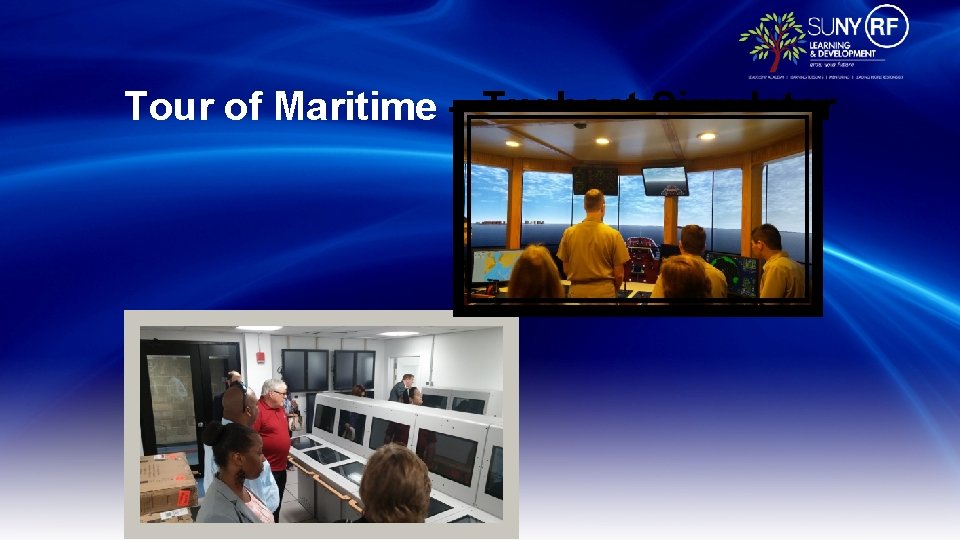
Tour of Maritime – Tugboat Simulator
UB Earthquake Simulator Tour
Employment-at-Will • A doctrine that states that an employment relationship may be terminated by the employer or employee at any time and for any or for no reason.
Employment-at-Will • Employees can be terminated at-will, but not for the following reasons: • Cannot be terminated for a discriminatory reason (e. g. , based on the employee’s race, national origin, religion, color, sex, disability, etc. ) • Cannot be terminated out of retaliation for performing a legally protected action (e. g. , filing a Workers’ Compensation claim, filing a discrimination or harassment suit, participating in a workplace investigation, taking FMLA leave, refusing to perform illegal activities, etc. ) • Cannot be terminated if the employee has an employment contract that outlines the terms of employment (in other words, the contract terms supersede the employment-atwill doctrine).
Employment-at-Will • Steps for Supervisors to Minimize Employers Liability for Adverse Employment Actions - Ensure your employment expectations for employees are clear. - Use disclaimers (at-will language) in the new hire process, including in offer letters and in new employee orientations. - Follow the RF’s Progressive Discipline Policy and Guidelines to demonstrate that if there is a termination there is a valid, nondiscriminatory reason for the termination. - Document any disciplinary actions being taken. - Involve human resources in the disciplinary process. - Engage employee relations and, if needed, legal counsel, prior to making decisions and/or taking adverse employment decisions.
What is Progressive Discipline? • Method used by RF supervisor/coach to attempt to address employees’ performance and/or behavior issues. • Key is to make the employee aware of the specific performance and/or behavior issue, and to give him/her the opportunity to improve in order to become successful in position.
Principles of Progressive Discipline • Corrective • Fair and consistent • Employee is provided a chance to give his/her side
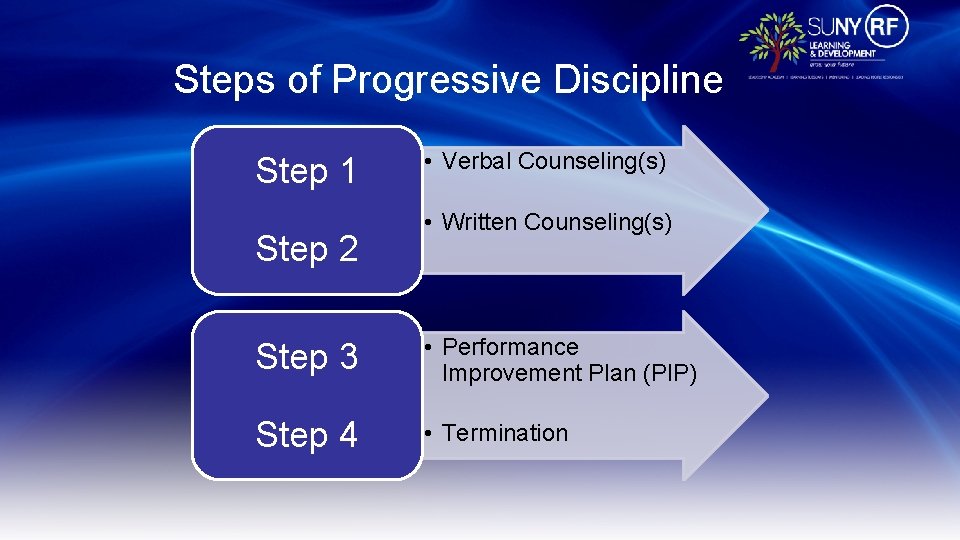
Steps of Progressive Discipline Step 1 Step 2 • Verbal Counseling(s) • Written Counseling(s) Step 3 • Performance Improvement Plan (PIP) Step 4 • Termination
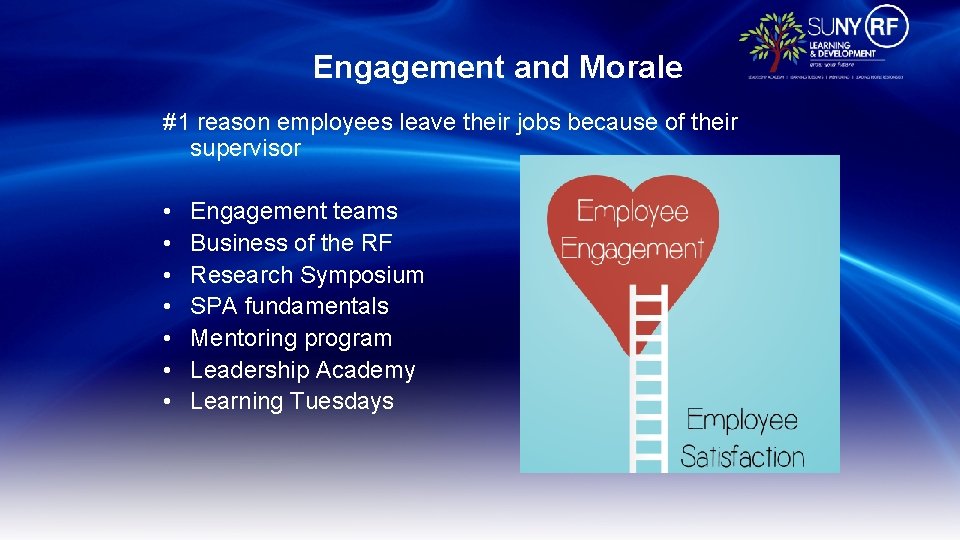
Engagement and Morale #1 reason employees leave their jobs because of their supervisor • • Engagement teams Business of the RF Research Symposium SPA fundamentals Mentoring program Leadership Academy Learning Tuesdays
Questions?