
What about Google Scholar when searching information in
What about Google Scholar when searching information in Human and Physical Geography? Simona STIRBU (Ms. ) Library of Sciences and Technologies Geosciences Section 12 April 2014
Google Scholar’s devise: “Stand on the shoulders of giants”
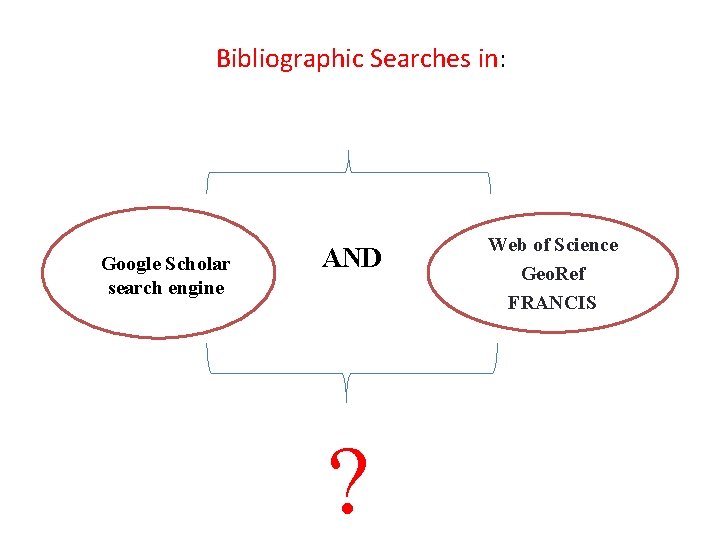
Bibliographic Searches in: Google Scholar search engine AND ? Web of Science Geo. Ref FRANCIS
Bibliographic searches & databases Search results - repeatability, DB performances - geographical ref. , unique results - overlap Findings & Conclusions
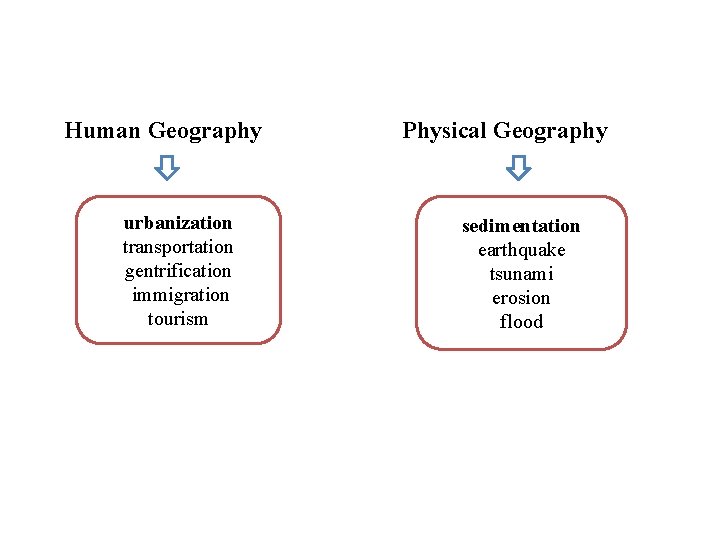
Human Geography urbanization transportation gentrification immigration tourism Physical Geography sedimentation earthquake tsunami erosion flood
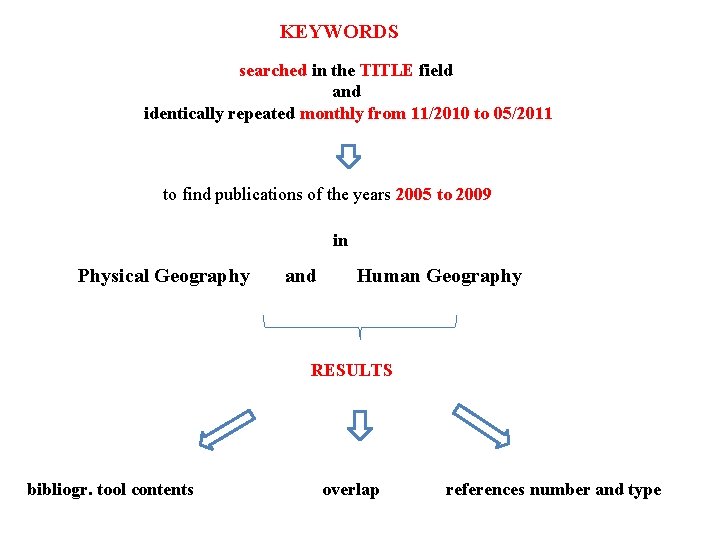
KEYWORDS searched in the TITLE field and identically repeated monthly from 11/2010 to 05/2011 to find publications of the years 2005 to 2009 in Physical Geography and Human Geography RESULTS bibliogr. tool contents overlap references number and type
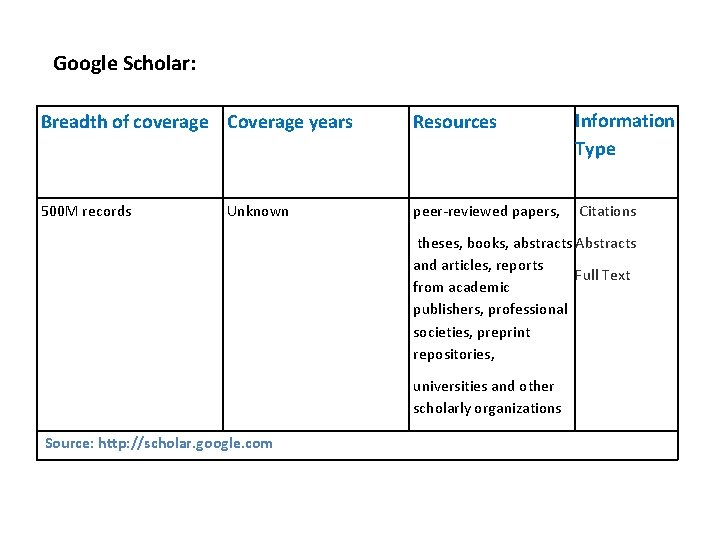
Google Scholar: Breadth of coverage Coverage years Resources Information Type 500 M records peer-reviewed papers, Citations Unknown theses, books, abstracts Abstracts and articles, reports Full Text from academic publishers, professional societies, preprint repositories, universities and other scholarly organizations Source: http: //scholar. google. com
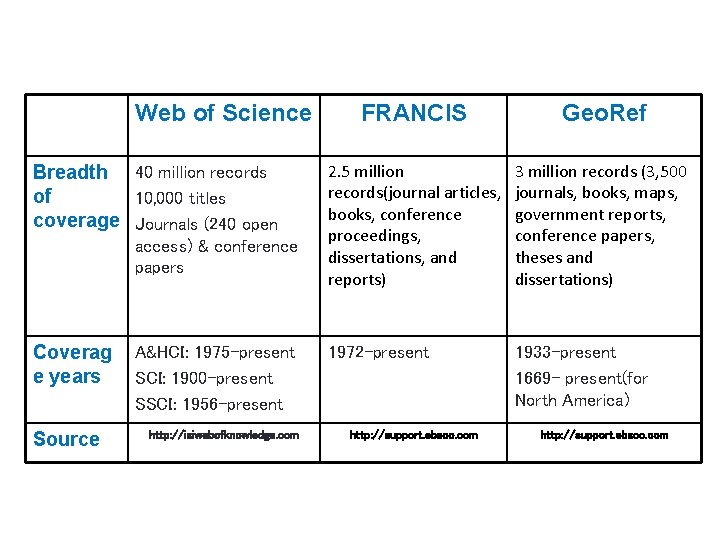
Web of Science Breadth 40 million records of 10, 000 titles coverage Journals (240 open access) & conference papers Coverag e years Source A&HCI: 1975 -present SCI: 1900 -present SSCI: 1956 -present http: //isiwebofknowledge. com FRANCIS Geo. Ref 2. 5 million records(journal articles, books, conference proceedings, dissertations, and reports) 3 million records (3, 500 journals, books, maps, government reports, conference papers, theses and dissertations) 1972 -present 1933 -present 1669 - present(for North America) http: //support. ebsco. com
Bibliographic searches & databases Search results - repeatability, DB performances - geographical ref. , unique results - overlap Findings & Conclusions
When the same search is repeated over time there is little variation in the number of hits retrieved by the traditional bibliographic tools, while the results retrieved by GS increases constantly (except for the last search)
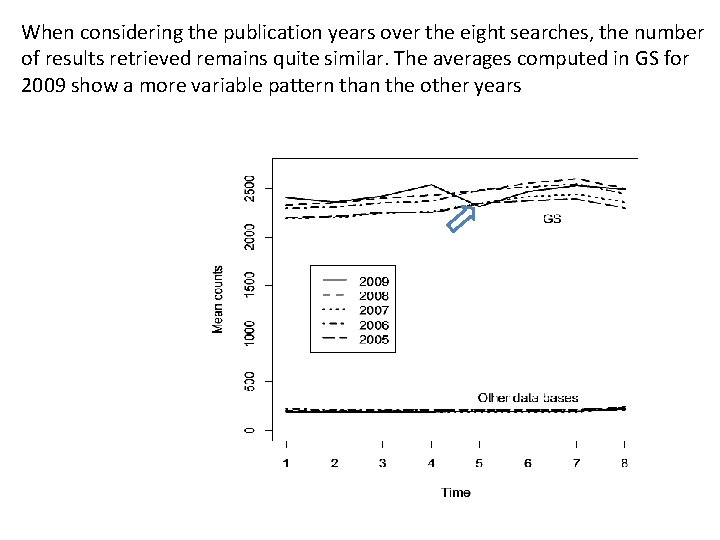
When considering the publication years over the eight searches, the number of results retrieved remains quite similar. The averages computed in GS for 2009 show a more variable pattern than the other years
The number of hits retrieved by the traditional databases is low, while GS reached averages lying between 2000 and 2500 results
The variations for the keywords “earthquake”, “tsunami”, and “tourism” in all the bibliographic tools, are directly linked to events such as tsunami and earthquakes
For all the keywords searched, GS yields many more results than the other bibliographic databases, both in human and physical geography
GS seems to be more efficient in human geography while Wo. S performs better in physical geography. Geo. Ref and FRANCIS yield results which are in accordance with their subfield specificities
Bibliographic searches & databases Search results - repeatability, DB performances - geogr. ref. , type & unique results - overlap Findings & Conclusions
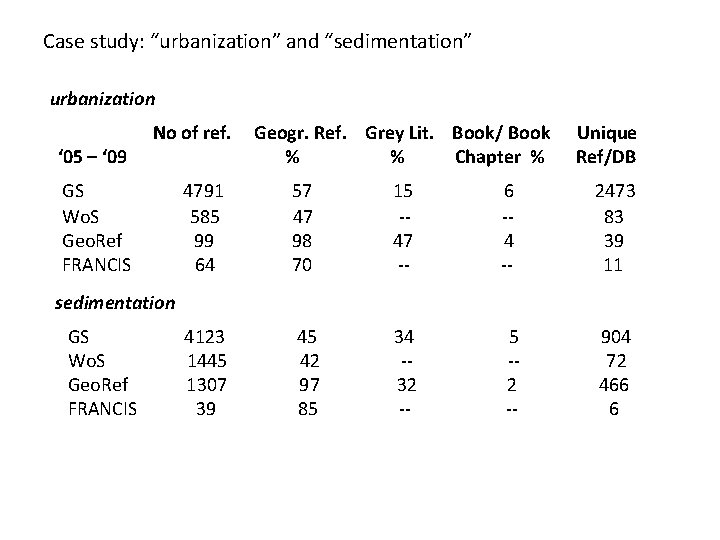
Case study: “urbanization” and “sedimentation” urbanization ‘ 05 – ‘ 09 No of ref. GS Wo. S Geo. Ref FRANCIS Geogr. Ref. Grey Lit. Book/ Book % % Chapter % Unique Ref/DB 4791 585 99 64 57 47 98 70 15 -47 -- 6 -4 -- 2473 83 39 11 4123 1445 1307 39 45 42 97 85 34 -32 -- 5 -2 -- 904 72 466 6 sedimentation GS Wo. S Geo. Ref FRANCIS
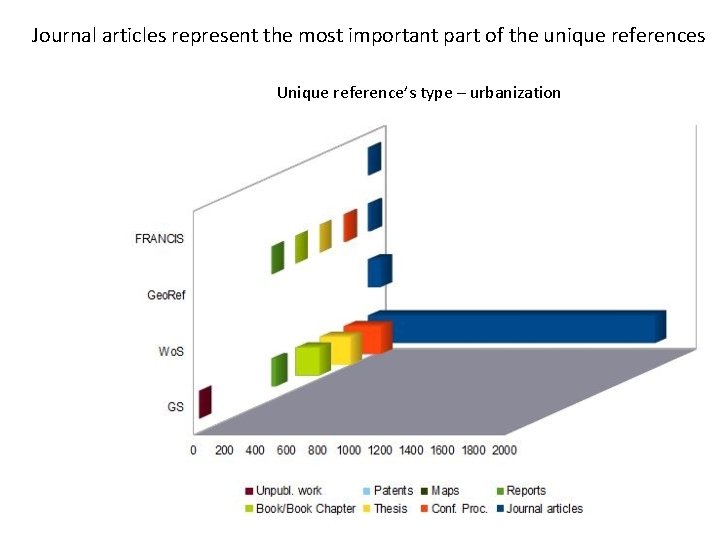
Journal articles represent the most important part of the unique references Unique reference’s type – urbanization
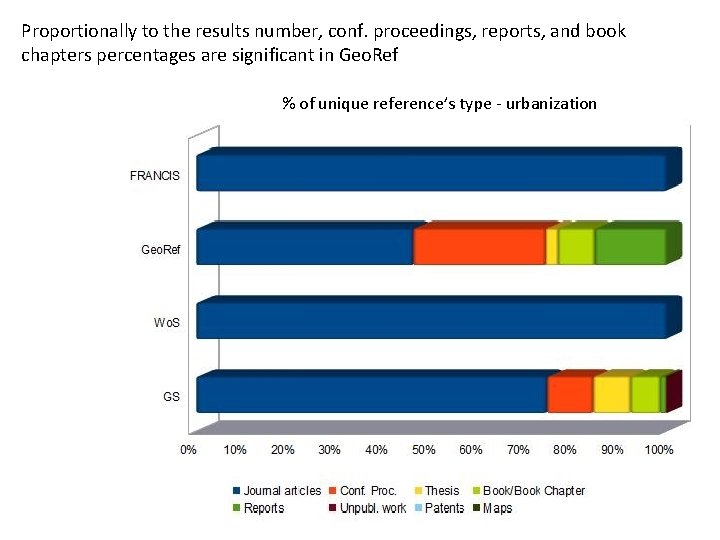
Proportionally to the results number, conf. proceedings, reports, and book chapters percentages are significant in Geo. Ref % of unique reference’s type - urbanization
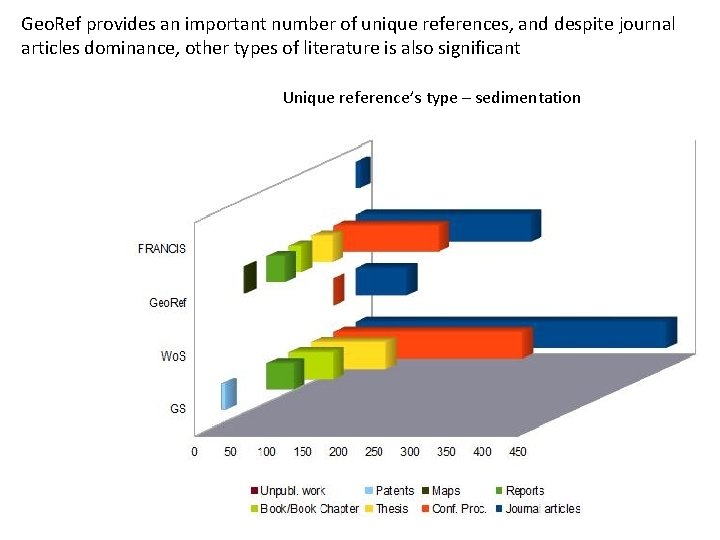
Geo. Ref provides an important number of unique references, and despite journal articles dominance, other types of literature is also significant Unique reference’s type – sedimentation
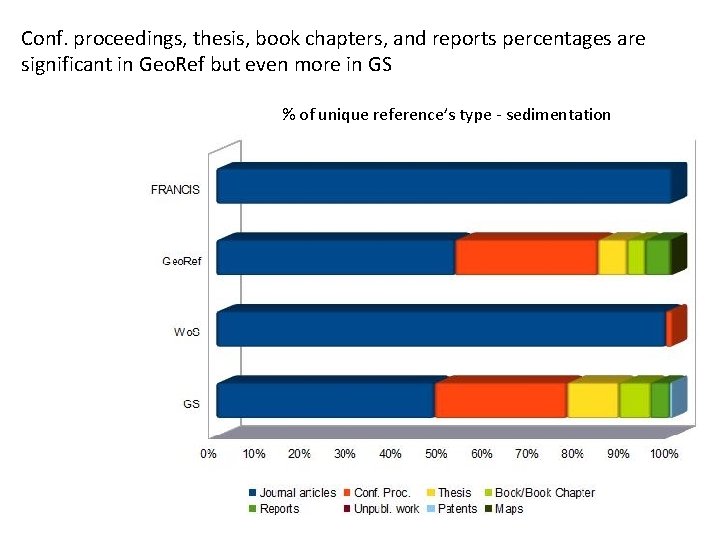
Conf. proceedings, thesis, book chapters, and reports percentages are significant in Geo. Ref but even more in GS % of unique reference’s type - sedimentation
Bibliographic searches & databases Search results - repeatability, DB performances - geographical ref. , unique results - overlap Findings & Conclusions
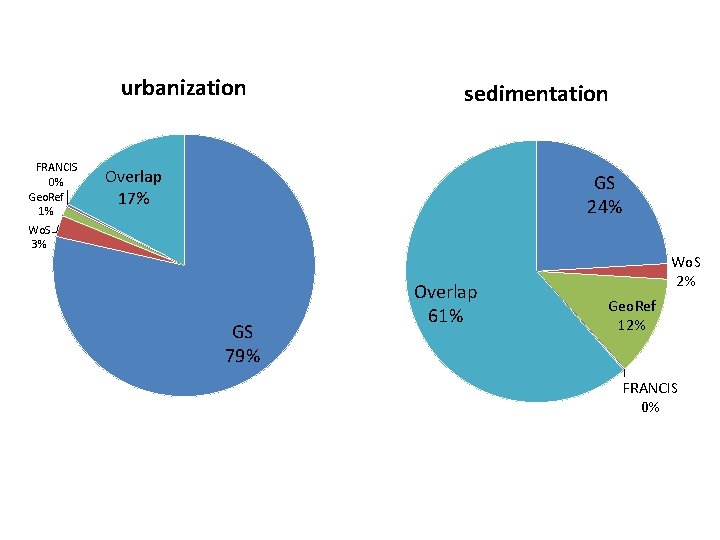
urbanization FRANCIS 0% Geo. Ref 1% sedimentation Overlap 17% GS 24% Wo. S 3% GS 79% Overlap 61% Wo. S 2% Geo. Ref 12% FRANCIS 0%
Bibliographic searches & databases Search results - repeatability, DB performances - geographical ref. , unique results - overlap Findings & Conclusions
Conclusion & findings • Results provided by commercial DB’s is stable through time, while GS encounter more variations • Results correspond to the DB’s specificity. • GS seems to be more efficient in retrieving unique references in human geography, although both domains are well represented. • Geographers can use GS at least as a complementary tool, for their bibliographic research. After testing, it may become the principal tool.

- Slides: 26