
What about communication between neurons Some terms presynaptic
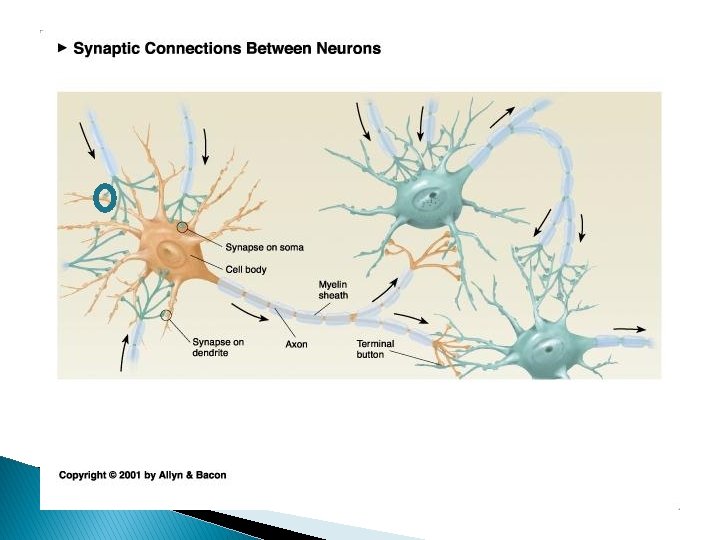
What about communication between neurons?
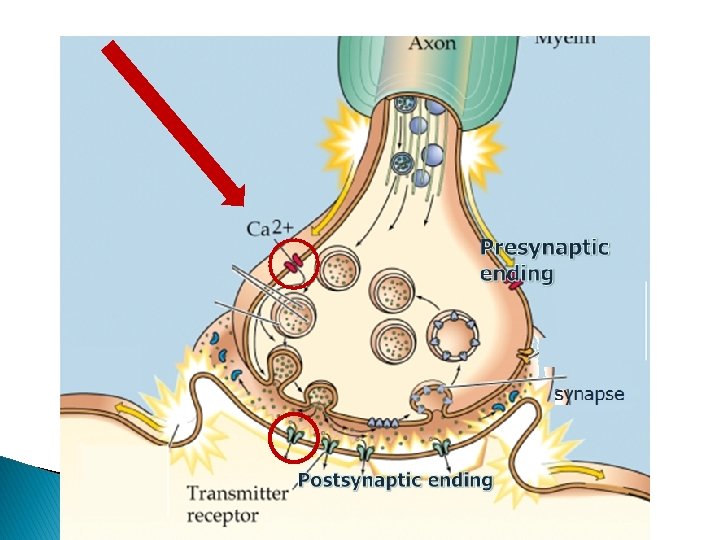
Some terms……. � presynaptic ending – ◦ portion of the axon conveying information to the next neuron
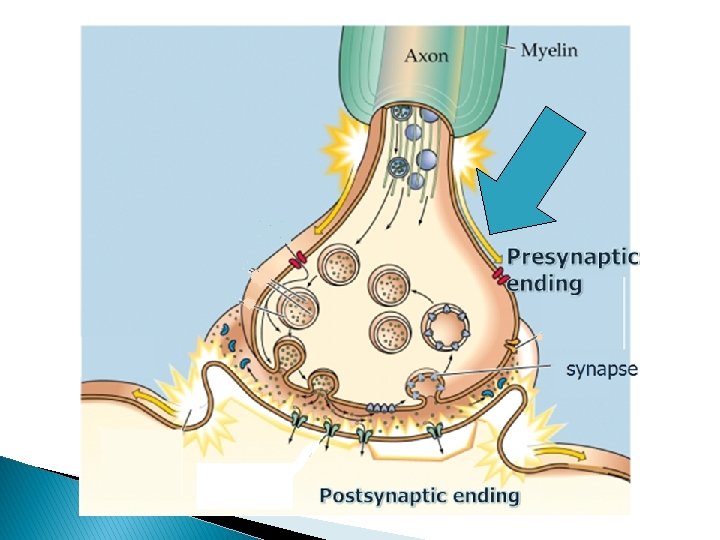
Some terms……. � presynaptic ending – ◦ the portion of the axon that is conveying information to the next neuron � synapse or synaptic cleft ◦ the space between neurons where communication occurs
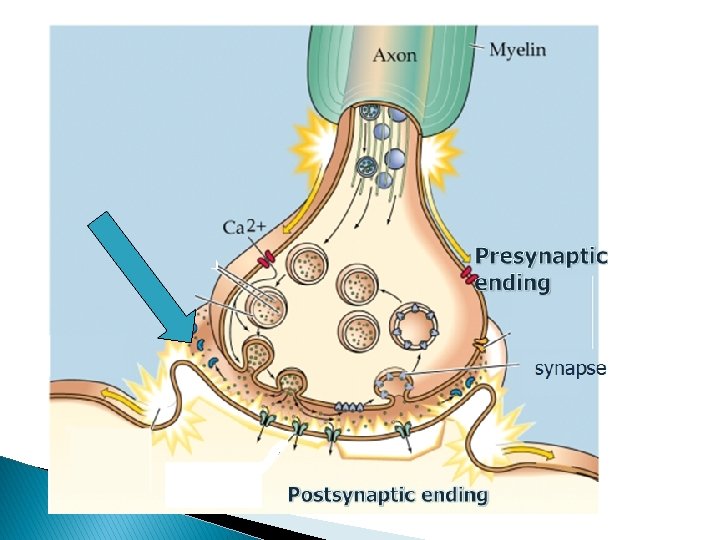
Some terms……. � presynaptic ending – ◦ the portion of the axon that is conveying information to the next neuron � synapse or synaptic cleft ◦ the space between neurons where communication occurs � postsynaptic membrane ◦ the portion of the neuron (usually dendrite) that receives information
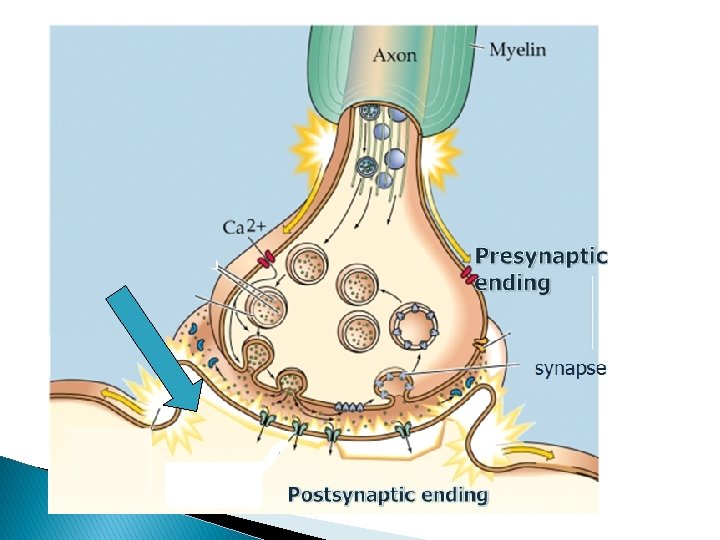
Some terms……. � � presynaptic ending – ◦ the portion of the axon that is conveying information to the next neuron synapse or synaptic cleft ◦ the space between neurons where communication occurs postsynaptic membrane ◦ the portion of the neuron (usually dendrite) that receives information pre and postsynaptic receptors ◦ proteins in both the presynaptic and postsynaptic ending that allow for information to be transferred
� synaptic vesicles --small enclosed membranes that contain neurotransmitter found in presynaptic ending � neurotransmitter – substance in vesicles that are released in synapse and convey info to the next neuron
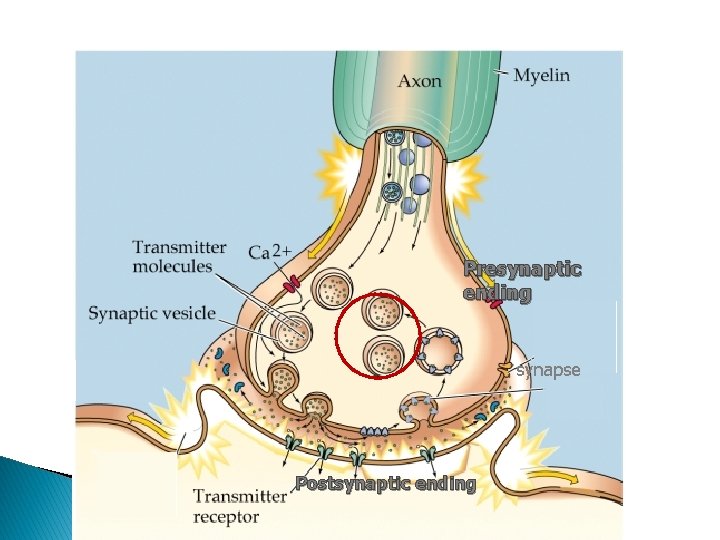
Presynaptic ending synapse Postsynaptic ending
What happens at level of synapse? � AP reaches presynaptic ending- � Ca+2 channels in presynaptic ending open and Ca+2 enters
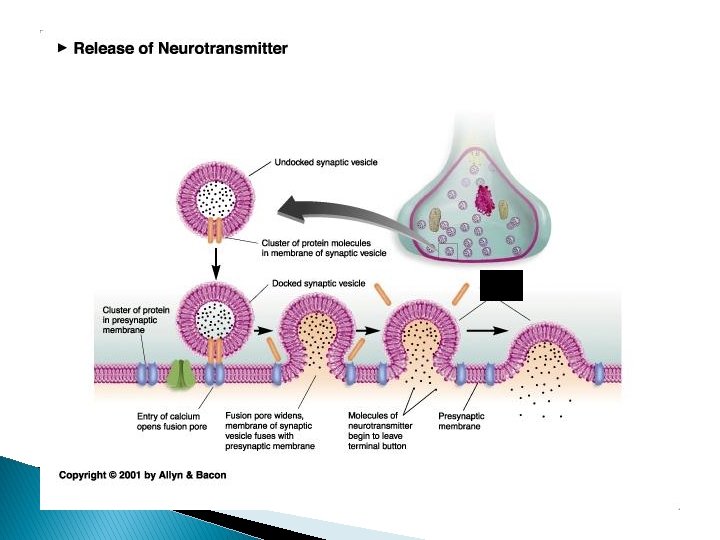
Why are Ca+2 ions important? Ca+2 entry into the presynaptic ending critical for neurotransmitter release
drugs that block Ca+2 channels…….
postsynaptic receptors � protein embedded in membrane � mechanism for neurotransmitter to influence postsynaptic activity by binding to receptor
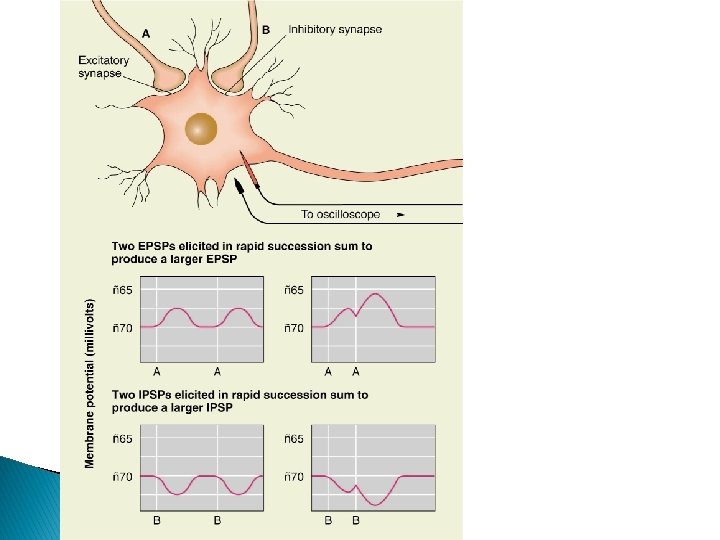
Summary � NT binds to postsynaptic receptors and causes small local changes in electrical potential (depolarizations or hyperpolarizations)- ◦ Called graded potentials
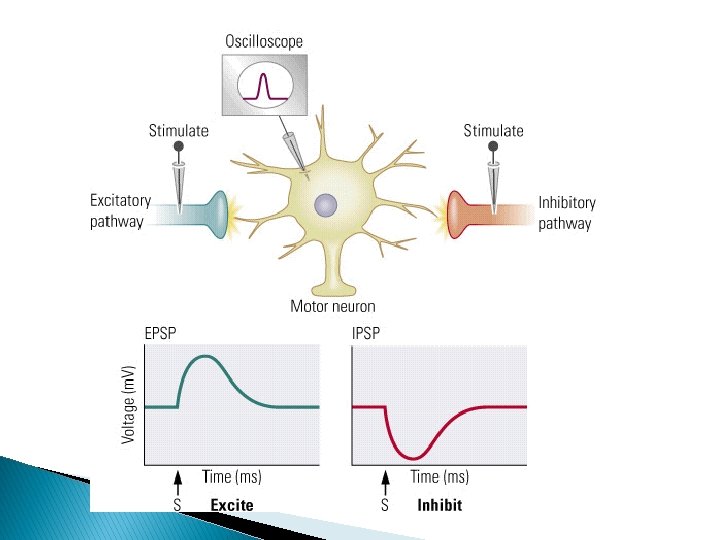
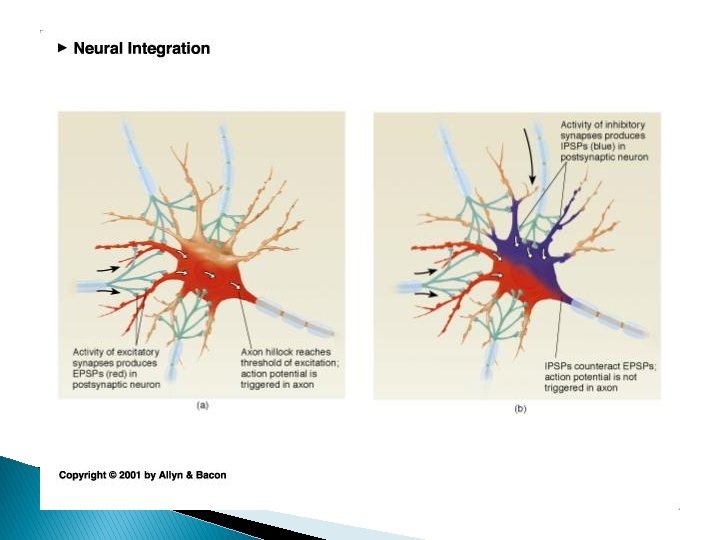
Graded Potentials � increase or decrease the likelihood of the neuron receiving info to generate an action potential ◦ graded potentials that increase the likelihood of an action potential are called EPSPs (excitatory postsynaptic potentials)
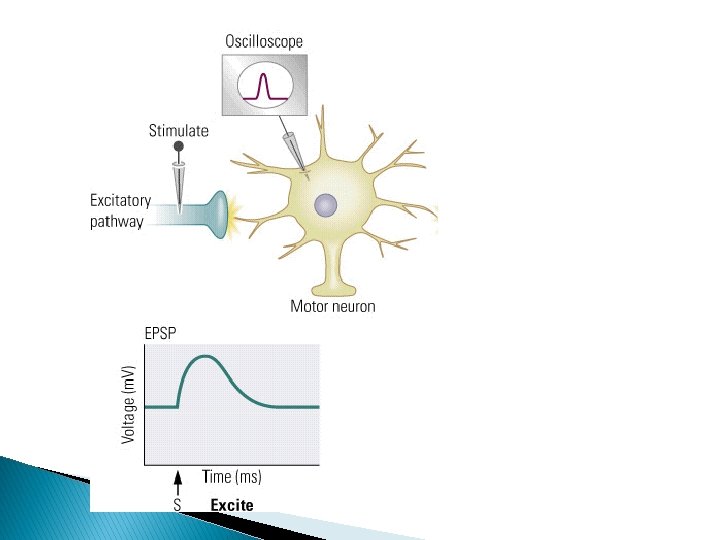
Graded Potentials � increase or decrease the likelihood of the neuron receiving info to generate an action potential ◦ graded potentials that increase the likelihood of an action potential are called EPSPs (excitatory postsynaptic potentials) ◦ graded potentials that decrease the likelihood of an action potential are called IPSPs (inhibitory postsynaptic potentials)
How does the neurotransmitter cause EPSPs and IPSPs? � NT binding to postsynaptic receptors cause local ion channels to open � chemically dependent ion channels ◦ (in contrast with electrically dependent ion channels in the axon)
How does the neurotransmitter cause EPSPs and IPSPs? � postsynaptic receptors open ion channels – ◦ ion channels in postsynaptic membrane (that we need to worry about) include Na+, Cl- and K+
Two kinds of Graded Potentials � EPSPs – excitatory postsynaptic potentials �- increase the likelihood of an AP �- opening of � IPSPs – inhibitory postsynaptic potentials �decrease the likelihood of an AP �- opening of
http: //www. blackwellpublishing. com/matthews/neurotrans. html
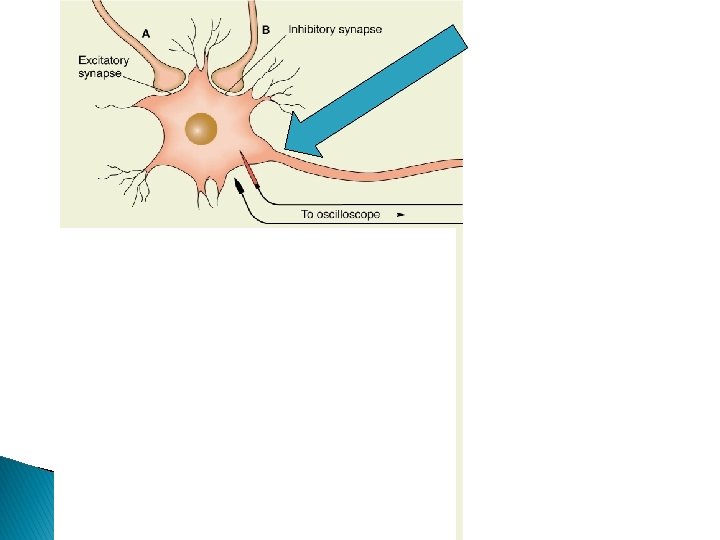
Axon hillock
How do graded potentials result in an action potential? ◦ graded potentials are summed at axon hillock and……if the sum is a great enough depolarization….
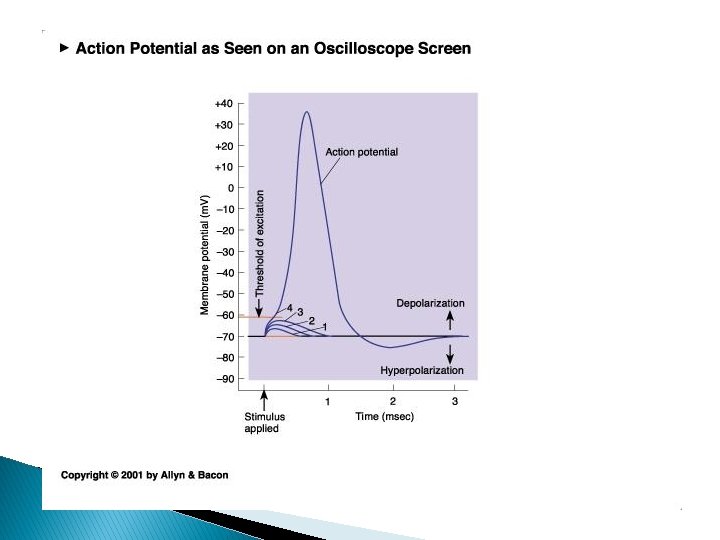
action potential or spike
Graded potentials vs action potentials � ◦ ◦ ◦ Graded Potentials and AP differ in a number of ways AP – occurs at the axon GP – occurs anywhere the neuron receives info from another neuron (usually dendrite although NOT ALWAYS) action potentials are “all or none” graded potentials decrease over space and time ◦ Graded potentials are localized – has impact in limited region; AP travels down the axon
Graded vs Action Potentials � Graded potentials can either increase or decrease the likelihood of an action potential
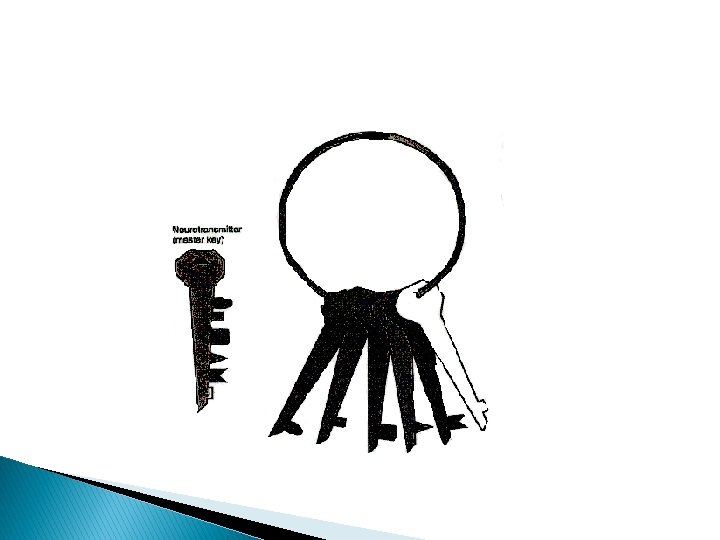
So what about these NT? � Postsynaptic receptor and NT – think about a lock and key!
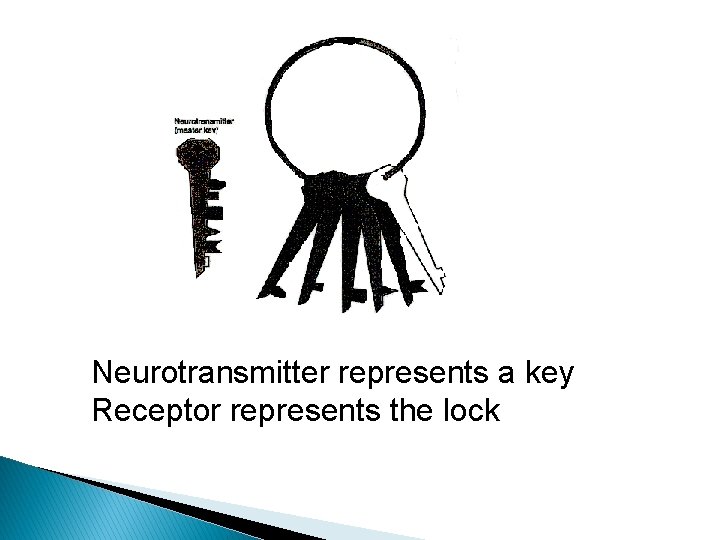
Neurotransmitter represents a key Receptor represents the lock
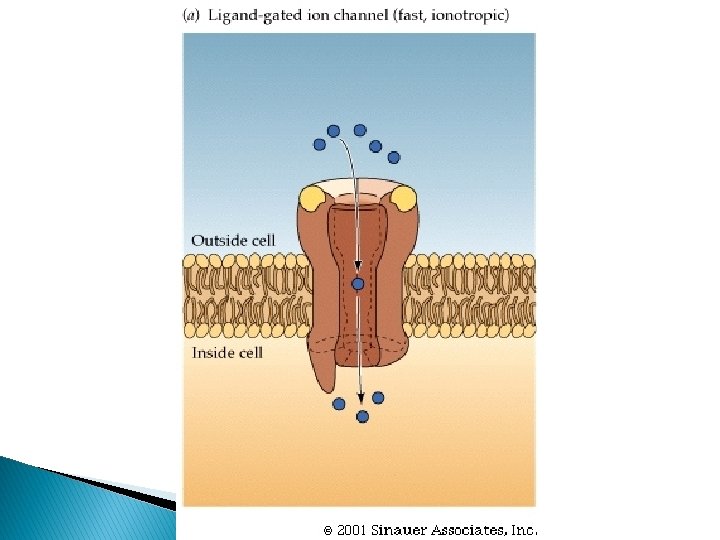
2 ways that neurotransmitter exert these effects 1. ◦ directly opening the ion channel occurs and terminates very quickly
http: //www. blackwellpublishing. com/matthews/nmj. html
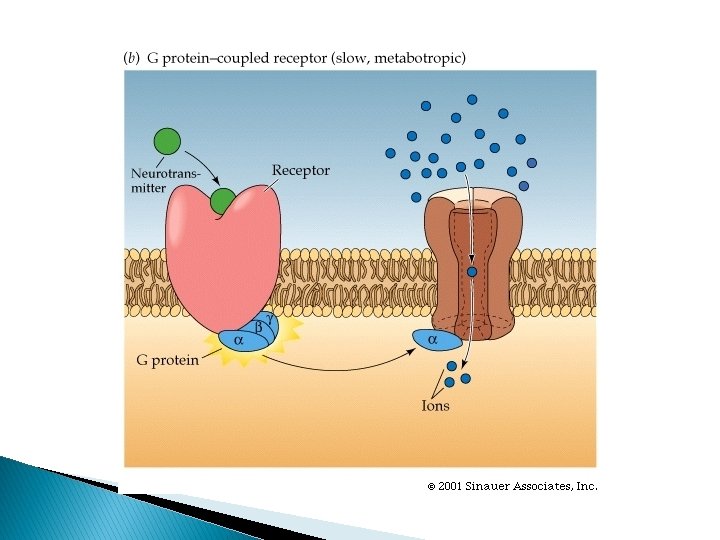
2 ways that neurotransmitter exert these effects 1. ◦ 2. ◦ directly opening the ion channel occurs and terminates very quickly more indirect ultimately opens ion channel via stimulating a chemical reaction � takes longer but lasts longer
http: //www. blackwellpublishing. com/matthews/neurotrans. html
2 main ways for getting the neurotransmitter out of the synapse 1. reuptake - most common ◦ protein on presynaptic ending transports it back into the neuron that released it ◦ Means of recycling NT �saving energy (neurons have to synthesize or produce their own NT) ◦ a common way for drugs to alter normal communication
Examples of reuptake inhibitors cocaine, amphetamine, methylphenidate (Ritalin) – block reuptake of a number of NT – particularly dopamine (reward) many of the newer antidepressants are SSRIs (selective serotonin reuptake inhibitors)
2. ◦ ◦ enzyme degradation enzyme - speeds up a reaction ex. acetylcholine (ACh)is a neurotransmitter is broken down by acetylcholinesterase (ACh. E) � For ACh – this is done in the synapse
Neurotransmitters � probably 100 s of “putative” neurotransmitters – more being discovered all the time � role that the novel NTs play still being determined
Some classic NT 1. • acetylcholine (ACh) –
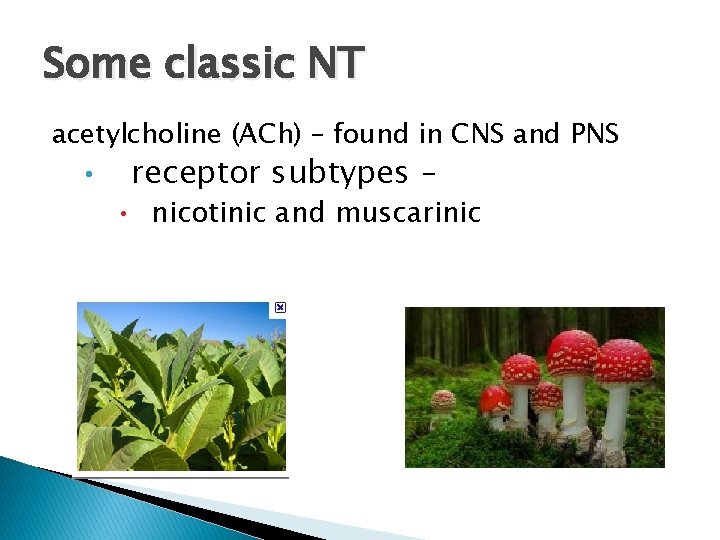
Some classic NT acetylcholine (ACh) – found in CNS and PNS • receptor subtypes – • nicotinic and muscarinic
Some classic NTs acetylcholine (ACh) – found in CNS and PNS • receptor subtypes – • nicotinic and muscarinic • • nicotinic receptors – muscles acetylcholine also important for various behaviors including learning and memory alzheimers disease, REM sleep, among other things…
Neurotransmitters (cont) 2. Monoamines 1. dopamine (DA) important for reward circuits schizophrenia and Parkinsons disease
Neurotransmitters (cont) 2. Monoamines 1. dopamine (DA) 2. norepinephrine (NE) important for arousal altered activity implicated in depression
Neurotransmitters (cont) 2. Monoamines 1. dopamine (DA) 2. norepinephrine (NE) 3. serotonin (5 HT) aggression, anxiety, depression
Neurotransmitters (cont) 3. Peptides- really large neurotransmitters
Neurotransmitters (cont) 3. Peptides 1. substance P important for pain 2. endorphins and enkephalins (endogenous opiates) pain relievers!
Neurotransmitters (cont) 4. amino acids (tiny neurotransmitters) 1. glutamate ALWAYS EXCITATORY (IE always causes EPSPs) 2. GABA – always inhibitory ( always causes IPSPs) -
How can drugs affect a neurotransmitter? � almost any aspect of the NT function can be affected by drugs!
So…. � synthesis of NT � storage of NT � release of NT � binding of NT � breakdown of NT
What are possibilities? � agonist – mimics the neurotransmitter’s effect � antagonist effect – blocks the neurotransmitter’s
ACh as an example � acting like a receptor agonist ◦ nicotine �ionotropic �potent poison � acting like a receptor antagonist ◦ curare
con’t � alter breakdown of ACh � blocks breakdown ◦ mustard gases, insecticides, ◦ nerve gases �Sarin - estimated to be over 500 times more toxic than cyanide ◦ Gulf War Syndrome? ◦ other current syndromes? ?
con’t � alter breakdown of ACh ◦ blocks breakdown �mustard gases, insecticides, physostigmine �Gulf War Syndrome? � alter release of ACh ◦ block release – botulism

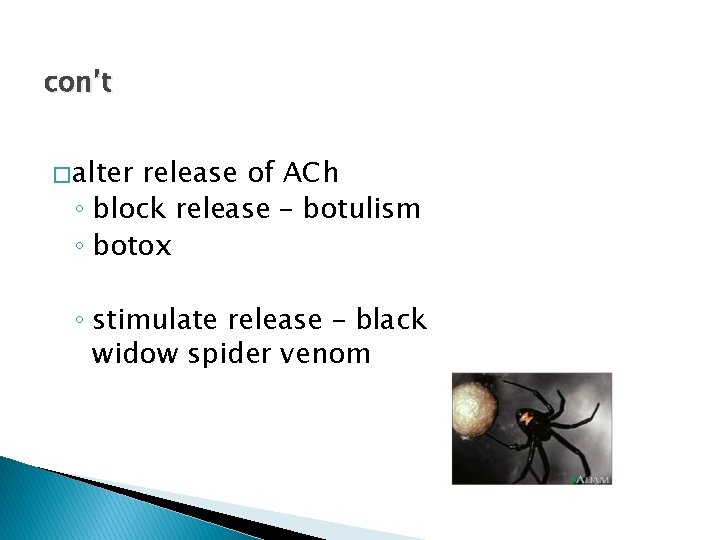
con’t � alter release of ACh ◦ block release – botulism ◦ botox ◦ stimulate release – black widow spider venom
- Slides: 63