
WHAP Indus River Valley Indus River Valley Indus
- Slides: 6
WHAP Indus River Valley
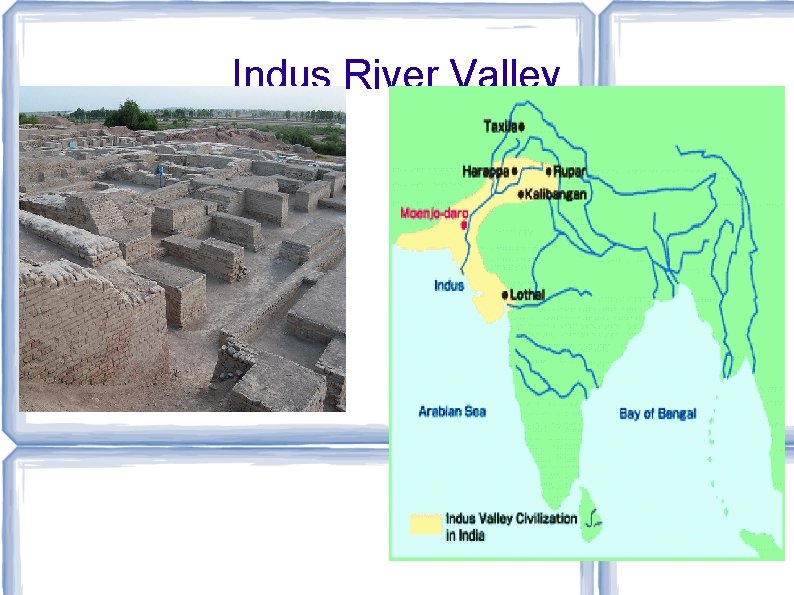
Indus River Valley Indus River Valley- developed by 2500 BCE (modern day Pakistan) Not much is known, major city (Mohenjo-Daro) not discovered until 1850's CE Indus river influenced by monsoon rains that allowed agriculture (wheat, rye, cotton) Massive cities (ex: Harappa) were trade centers Social classes- priests dominate
Indus River Valley No Rosetta Stone (tablet with multiple scripts) so archaeologists cannot decipher Civilization was collapsed by about 1200 BCE when major cities were abandoned (due to ecological changes or a systems failure [ political, social, and/or economic] Archaeologists refer to the people as Dravidians Had an advanced sewage system
Indus River Valley
Aryan migration to India Aryans- nomads (from Central Asia) traveled through Persia bringing horses around 1500 BCE Aryan clans control territories, male chief in charge- no central government Early trade was barter system Language-Sanskrit, eventually Hindi Religion- Vedas (knowledge) collection of poems, songs, etc. Rig-Veda outlines Brahmin (priestly) behavior
India Vedic Age (800 -400 BCE) Aryan beliefs merge with Dravidians- Upanishads (book of religious thoughts) created core beliefs of brahma, dharma, karma and moksha (review in your text) Recommended epic stories Mahabharata, Ramahyana