
WHAP Chapter 1 History vs Prehistory What is

- Slides: 21
WHAP Chapter #1
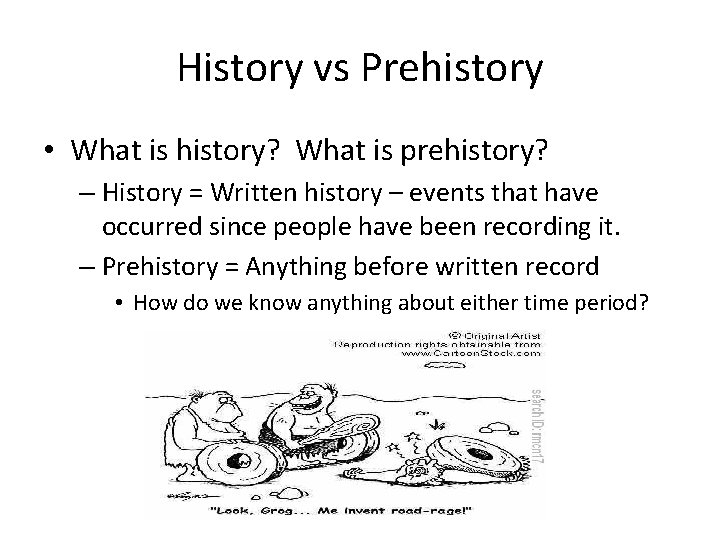
History vs Prehistory • What is history? What is prehistory? – History = Written history – events that have occurred since people have been recording it. – Prehistory = Anything before written record • How do we know anything about either time period?
What is a Civilization? • Complex and organized societies distinguished by reliance on sedentary agriculture, ability to produce food surpluses, and existence of nonfarming elites, as well as merchant and manufacturing groups. – What characteristics are critical for a society to become a civilization? • Cities, Complex Institutions, Job Specialization, Literacy & Technology
Neolithic Age (New Stone Age) • Neolithic Revolution – Succession of technological innovations & changes in human organization that led to the development of agriculture (8500 -3500 BCE). • • • Some give up nomadic life & begin to settle Systematic agriculture, domestication of animals Surplus of food = growing population Need for people to do all the jobs Biggest turning point and the most important development in the history?
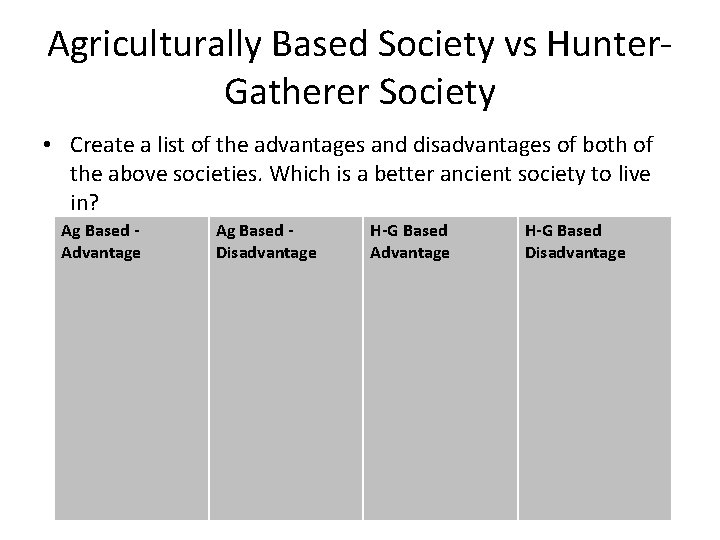
Agriculturally Based Society vs Hunter. Gatherer Society • Create a list of the advantages and disadvantages of both of the above societies. Which is a better ancient society to live in? Ag Based Advantage Ag Based Disadvantage H-G Based Advantage H-G Based Disadvantage
THINK! • Come up with one word that you would use to describe ancient Mesopotamia. Explain to someone sitting next you why you chose that word.
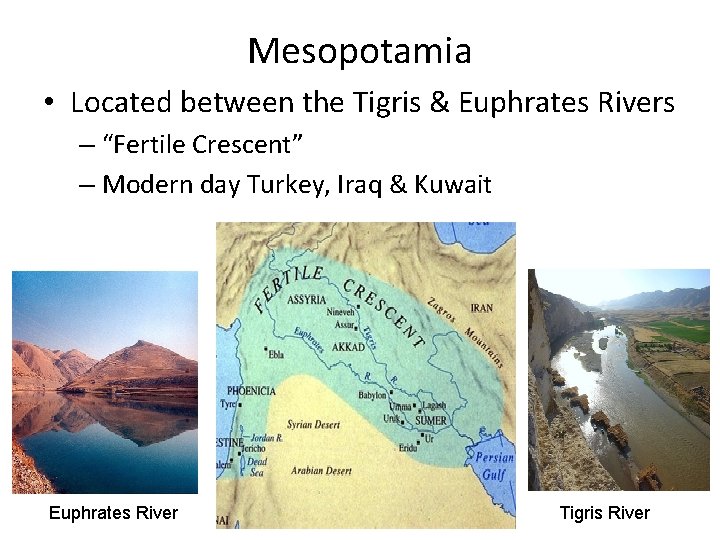
Mesopotamia • Located between the Tigris & Euphrates Rivers – “Fertile Crescent” – Modern day Turkey, Iraq & Kuwait Euphrates River Tigris River
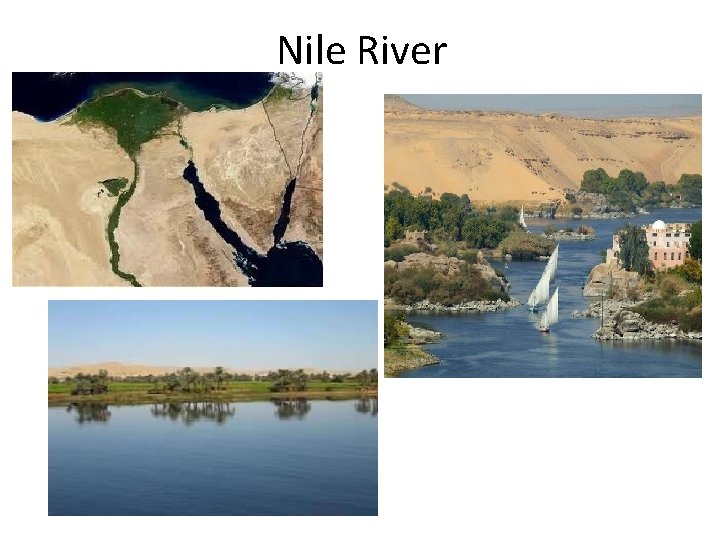
Mesopotamia vs Egypt • How did the Tigris/Euphrates River valley differ from the Nile River valley? – Meso = Few natural barrier for protection • More open to invasion – Egypt = Surrounded by deserts, mountains, seas, cataracts • Free security from external attacks – Meso = Relied on irrigation – Egypt = Predictable Nile River flooding
Nile River
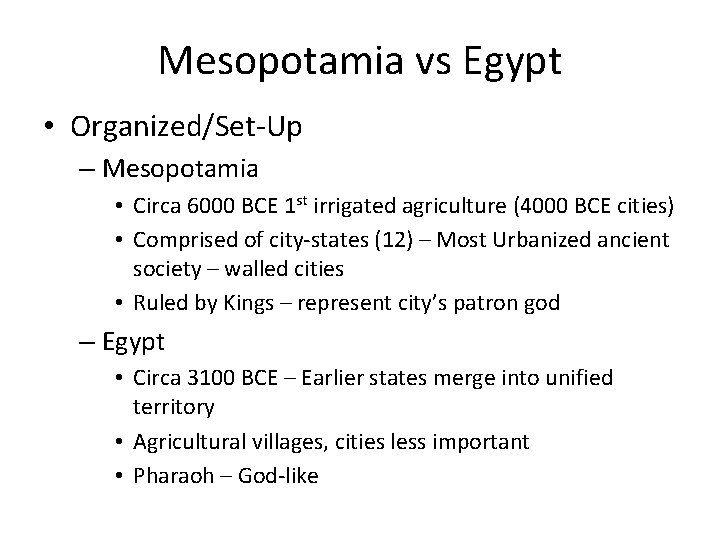
Mesopotamia vs Egypt • Organized/Set-Up – Mesopotamia • Circa 6000 BCE 1 st irrigated agriculture (4000 BCE cities) • Comprised of city-states (12) – Most Urbanized ancient society – walled cities • Ruled by Kings – represent city’s patron god – Egypt • Circa 3100 BCE – Earlier states merge into unified territory • Agricultural villages, cities less important • Pharaoh – God-like
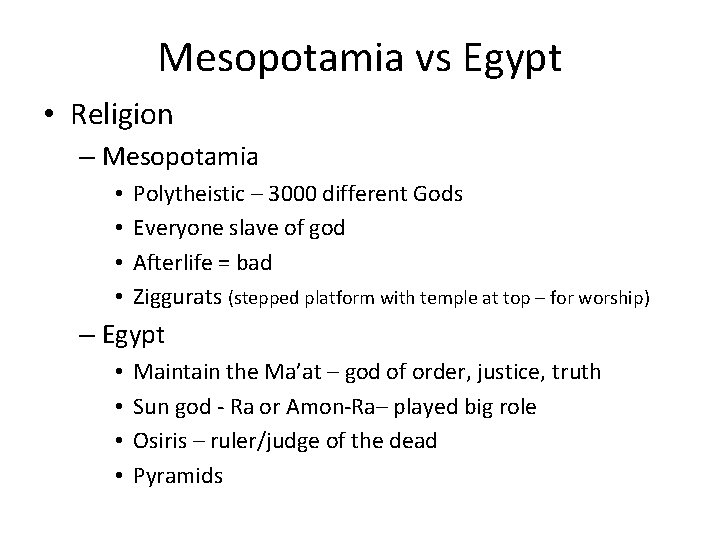
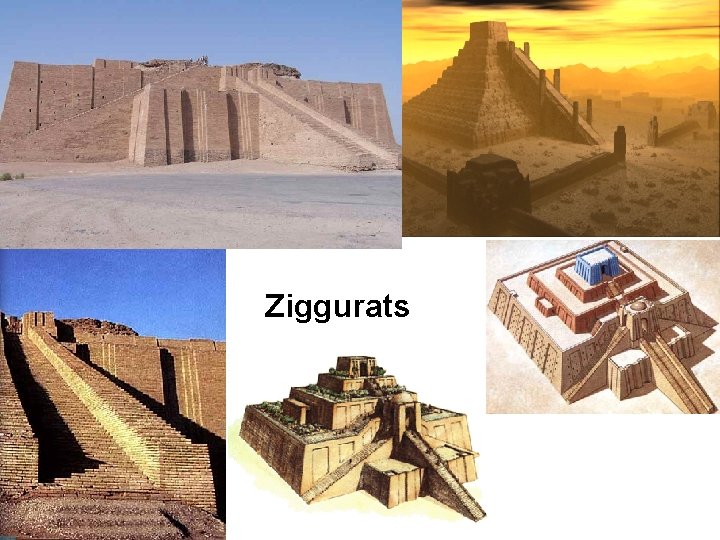
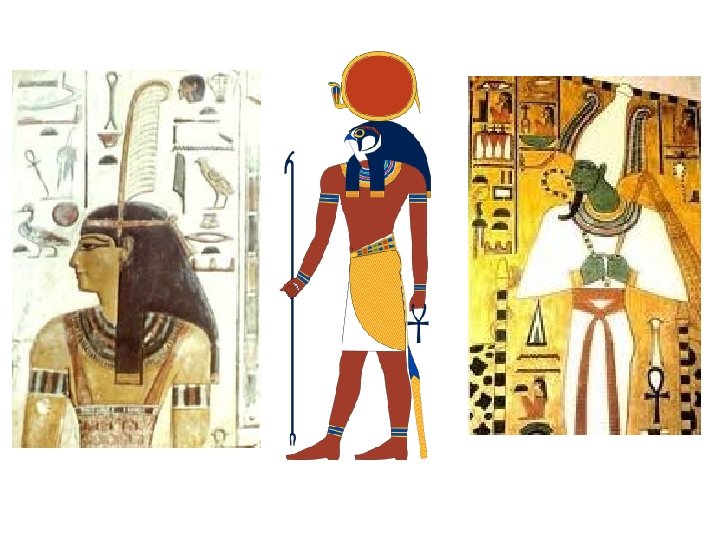
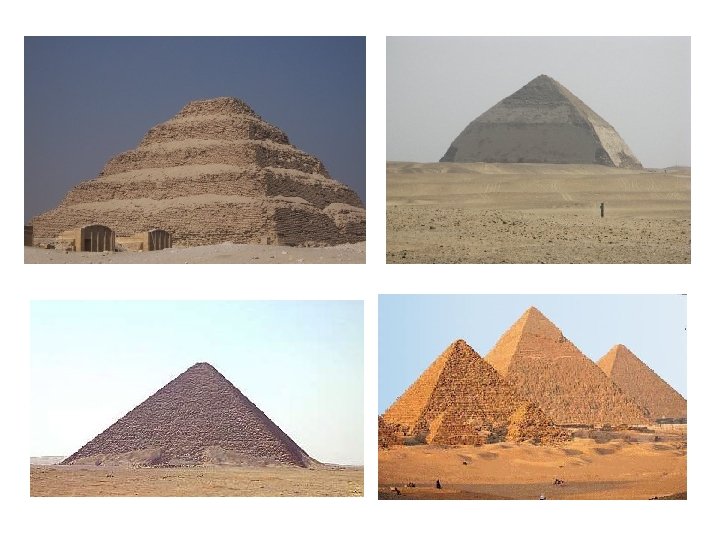
Mesopotamia vs Egypt • Religion – Mesopotamia • • Polytheistic – 3000 different Gods Everyone slave of god Afterlife = bad Ziggurats (stepped platform with temple at top – for worship) – Egypt • • Maintain the Ma’at – god of order, justice, truth Sun god - Ra or Amon-Ra– played big role Osiris – ruler/judge of the dead Pyramids
Ziggurats
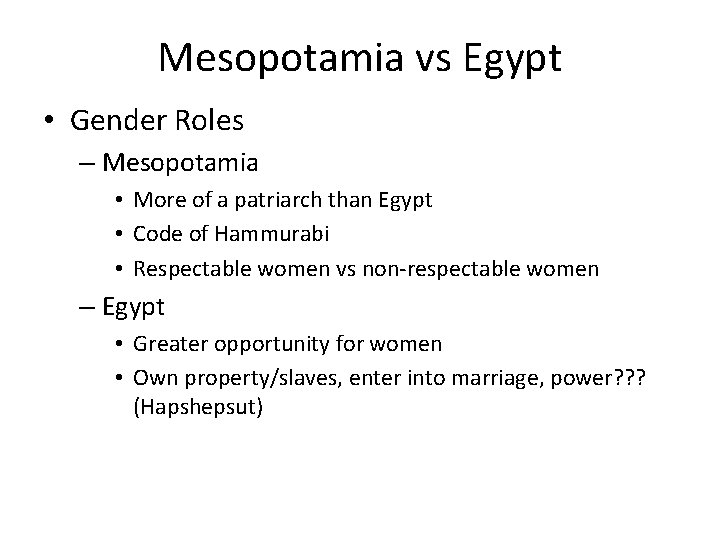
Mesopotamia vs Egypt • Gender Roles – Mesopotamia • More of a patriarch than Egypt • Code of Hammurabi • Respectable women vs non-respectable women – Egypt • Greater opportunity for women • Own property/slaves, enter into marriage, power? ? ? (Hapshepsut)
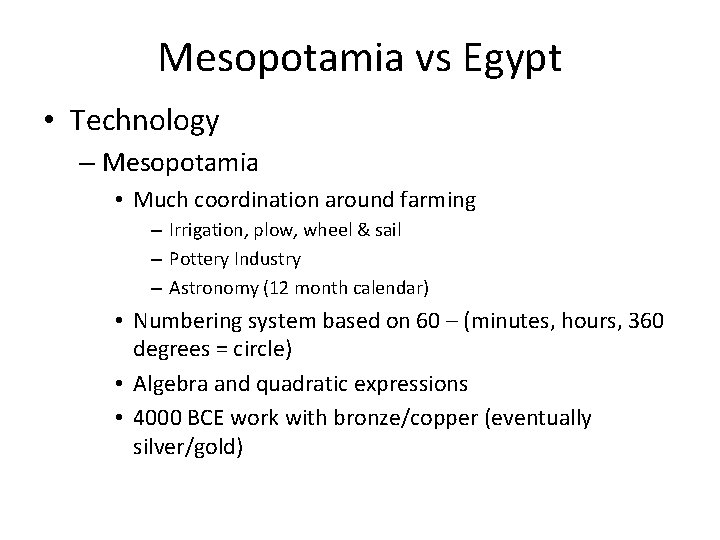
Mesopotamia vs Egypt • Technology – Mesopotamia • Much coordination around farming – Irrigation, plow, wheel & sail – Pottery Industry – Astronomy (12 month calendar) • Numbering system based on 60 – (minutes, hours, 360 degrees = circle) • Algebra and quadratic expressions • 4000 BCE work with bronze/copper (eventually silver/gold)
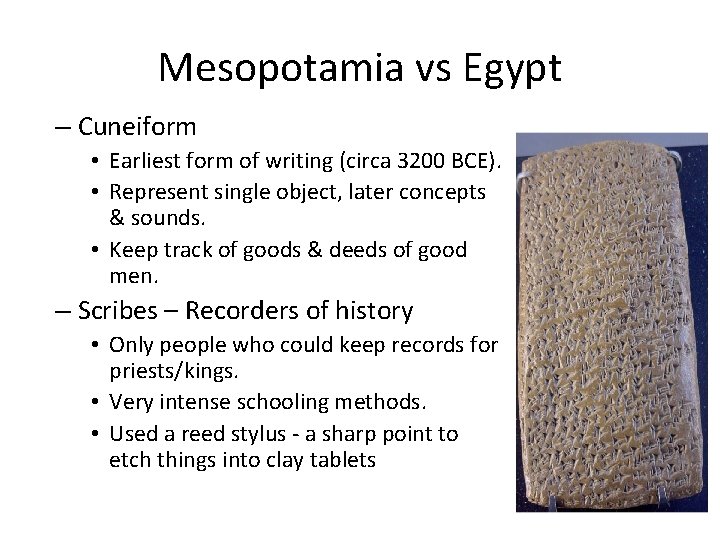
Mesopotamia vs Egypt – Cuneiform • Earliest form of writing (circa 3200 BCE). • Represent single object, later concepts & sounds. • Keep track of goods & deeds of good men. – Scribes – Recorders of history • Only people who could keep records for priests/kings. • Very intense schooling methods. • Used a reed stylus - a sharp point to etch things into clay tablets
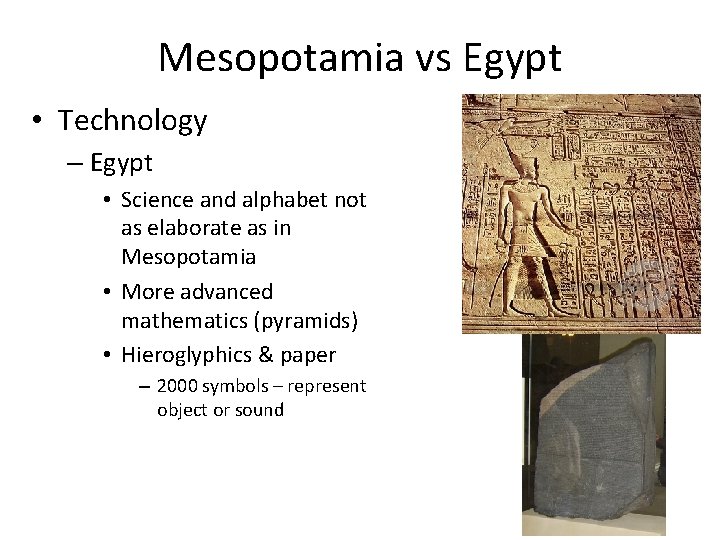
Mesopotamia vs Egypt • Technology – Egypt • Science and alphabet not as elaborate as in Mesopotamia • More advanced mathematics (pyramids) • Hieroglyphics & paper – 2000 symbols – represent object or sound
Mesopotamia vs Egypt • Trade/Connections to Outside World – Meso & Egypt interact frequently • Egypt gets farming practices – wheat/barely from Meso – Both had extensive long distance trade • Meso – Indus Valley, Turkey, Asian pastoralist • Egypt – Deep into Africa, Mediterranean – With trade is cultural influence • Ex: Hebrews migrate from Meso to Palestine/Egypt – Old Testament ‘eye for eye’ influence & flood story
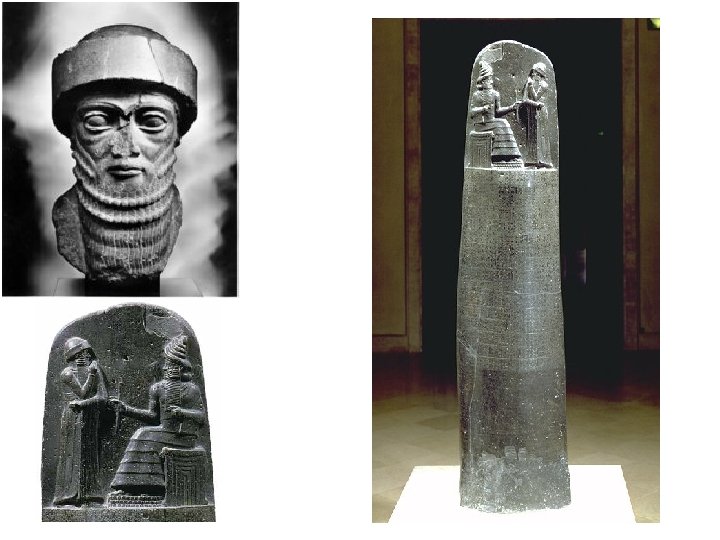
Mesopotamia • Code of Hammurabi – Strong centralized government (Hammurabi 17921750 BCE) – 282 laws that prescribes penalties which vary according to the social status of the victim & perpetrator. – Very harsh penalties for some offenses (fines, whippings, mutilations, burnings, killings). “An eye for an eye”. – Civil & Criminal Law