
Wetlands Characteristic hydric soil and hydrophytic vegetation as
- Slides: 11
Wetlands • Characteristic hydric soil and hydrophytic vegetation as signs of frequent surface saturation or inundation. • Many types of wetlands: (Dodds, 2002; Table 4. 3) – – – – Salt-marshes and (temperate, seawater influence) Mangrove forests (tropical, seawater influence) Tidal & non-tidal freshwater marshes Deepwater (cypress) swamps Northern (bogs & tundra) wetlands Riparian forests/wetlands Man-made (rice paddies & bioremediation) • Function as nutrient and sediment traps; slow runoff and facilitate recharge; most are highly productive.
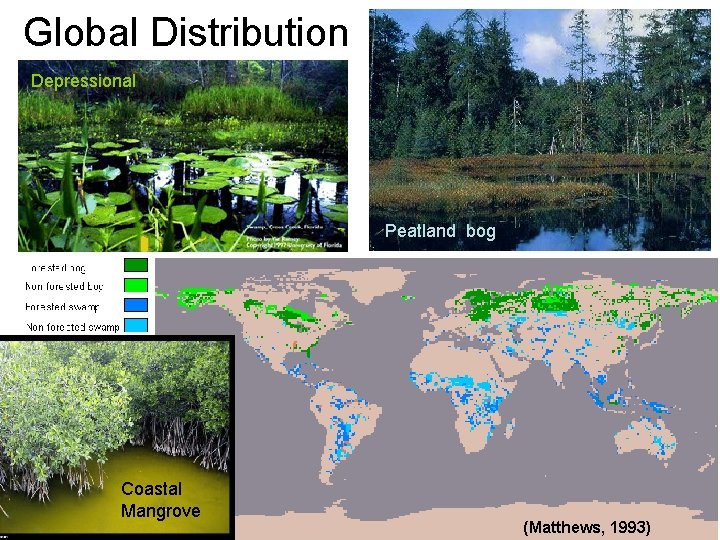
Global Distribution Depressional Peatland bog Coastal Mangrove (Matthews, 1993)
• Wetland ecosystem types are based on hydrologic regime, climate, geomorphology, nutrient input and vegetation. (Dodds, 2002; Table 4. 5) • Geomorphic: Peatlands; Coastal; Riverine; Depressional. • Hydrologic Regime: – Permanence, predictability (e. g. tidal), seasonality – Primary water source: • Precipitation; low throughput (ombrotrophic) • Riverine; potentially high throughput (minerotrophic) • Groundwater • Climate determines the balance of precipitation and evapotranspiration. (E. g. , much less precipitation is required for tundra wetlands than that for a tropical savanna wetland. )
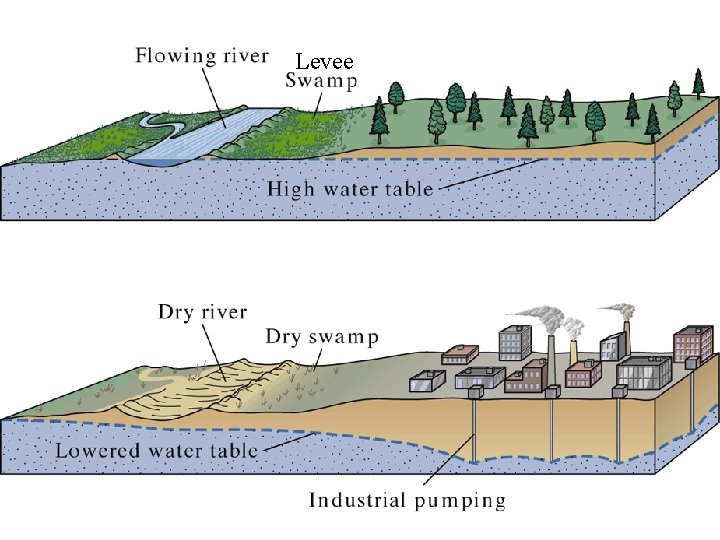
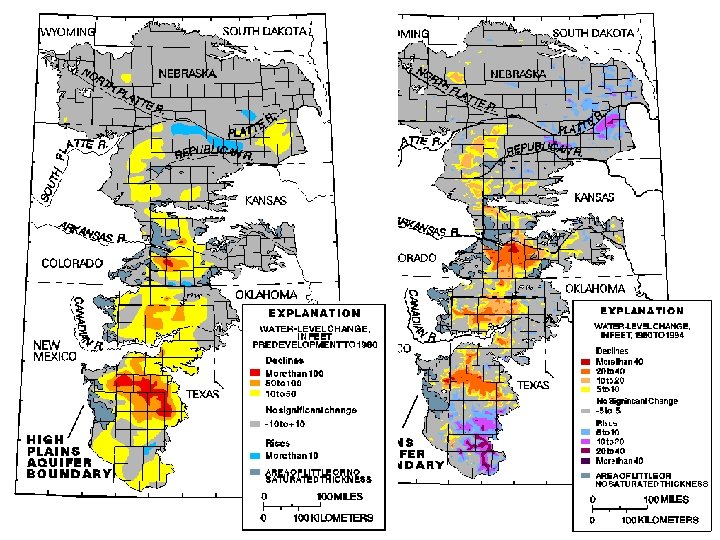
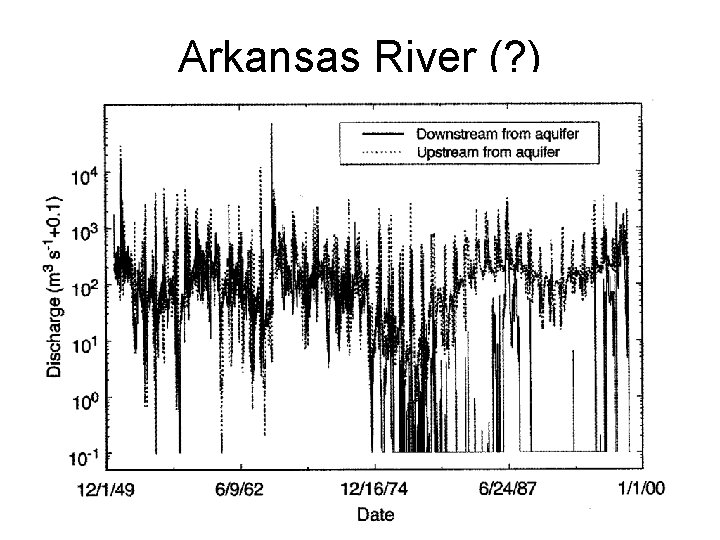
Human Impacts on Groundwaters; Streams and Wetlands • Groundwater or surface pumping: – agriculture – industry – drinking waters. • • Clearing riparian forests & wetlands Draining and filling for “development”. Damming and flooding Diversion channels for water supply.
Levee
Arkansas River (? )
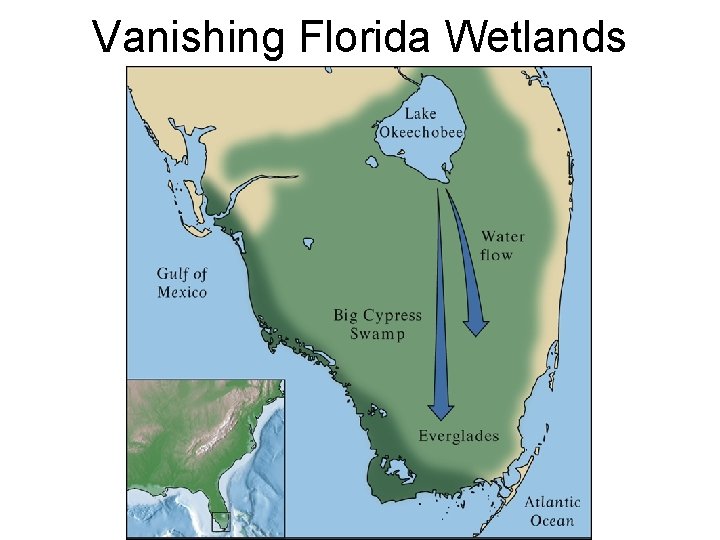
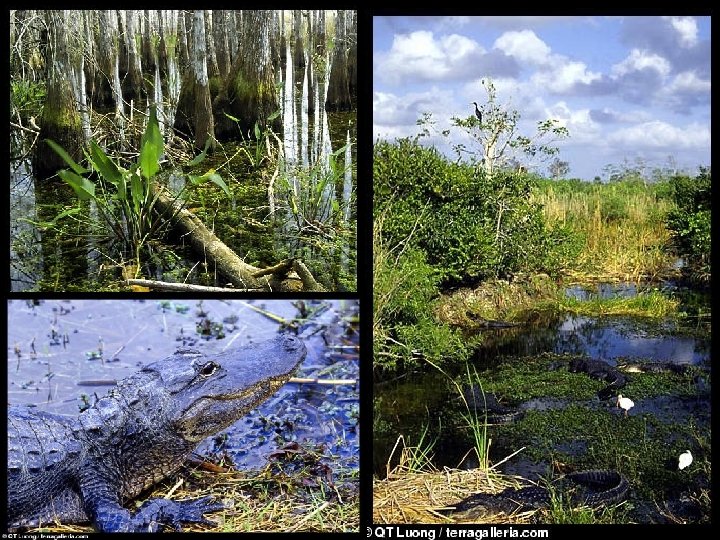
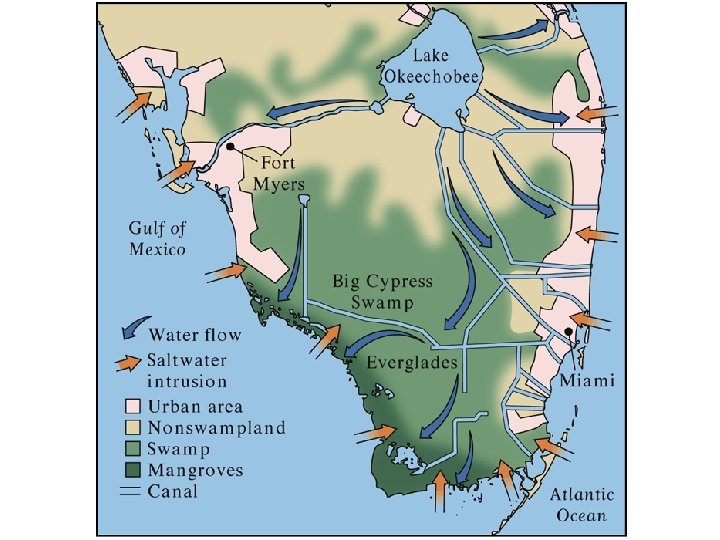
Vanishing Florida Wetlands
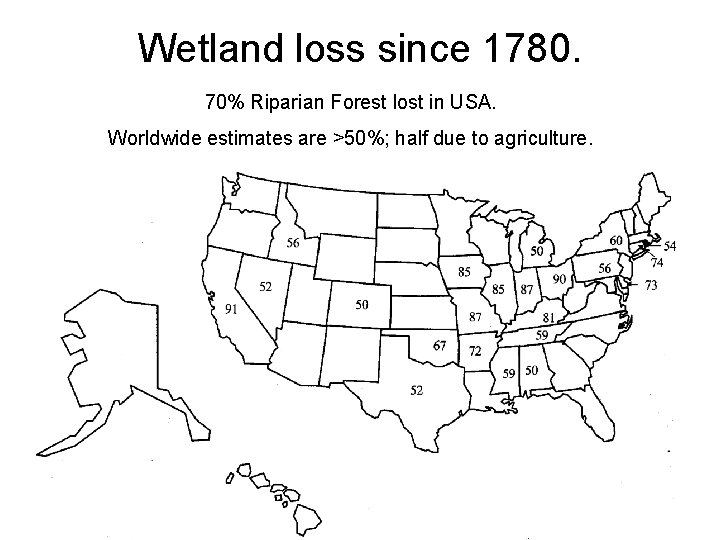
Wetland loss since 1780. 70% Riparian Forest lost in USA. Worldwide estimates are >50%; half due to agriculture.