
Wetland Types Inland Wetland Ecosystems Wetland Types Inland





- Slides: 59
Wetland Types – Inland Wetland Ecosystems
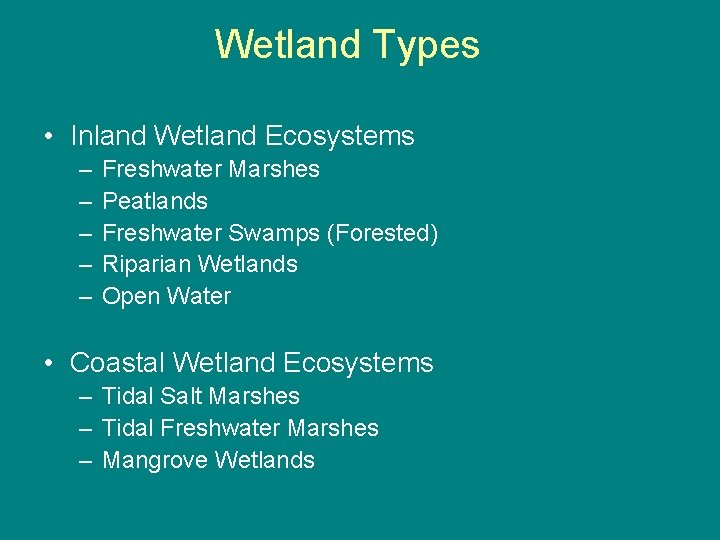
Wetland Types • Inland Wetland Ecosystems – – – Freshwater Marshes Peatlands Freshwater Swamps (Forested) Riparian Wetlands Open Water • Coastal Wetland Ecosystems – Tidal Salt Marshes – Tidal Freshwater Marshes – Mangrove Wetlands
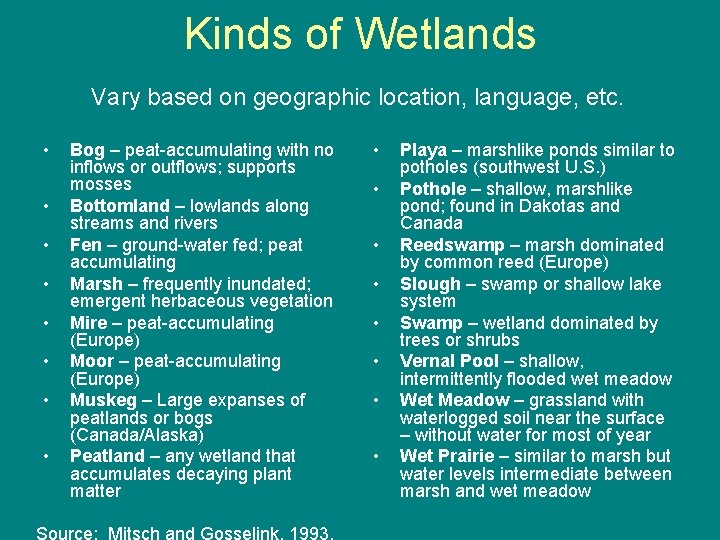
Kinds of Wetlands Vary based on geographic location, language, etc. • • Bog – peat-accumulating with no inflows or outflows; supports mosses Bottomland – lowlands along streams and rivers Fen – ground-water fed; peat accumulating Marsh – frequently inundated; emergent herbaceous vegetation Mire – peat-accumulating (Europe) Moor – peat-accumulating (Europe) Muskeg – Large expanses of peatlands or bogs (Canada/Alaska) Peatland – any wetland that accumulates decaying plant matter Source: Mitsch and Gosselink, 1993. • • Playa – marshlike ponds similar to potholes (southwest U. S. ) Pothole – shallow, marshlike pond; found in Dakotas and Canada Reedswamp – marsh dominated by common reed (Europe) Slough – swamp or shallow lake system Swamp – wetland dominated by trees or shrubs Vernal Pool – shallow, intermittently flooded wet meadow Wet Meadow – grassland with waterlogged soil near the surface – without water for most of year Wet Prairie – similar to marsh but water levels intermediate between marsh and wet meadow
Inland Wetland Ecosystems • Freshwater Marshes • Peatlands • Freshwater Swamps (Forested) • Riparian Wetlands • Open Water
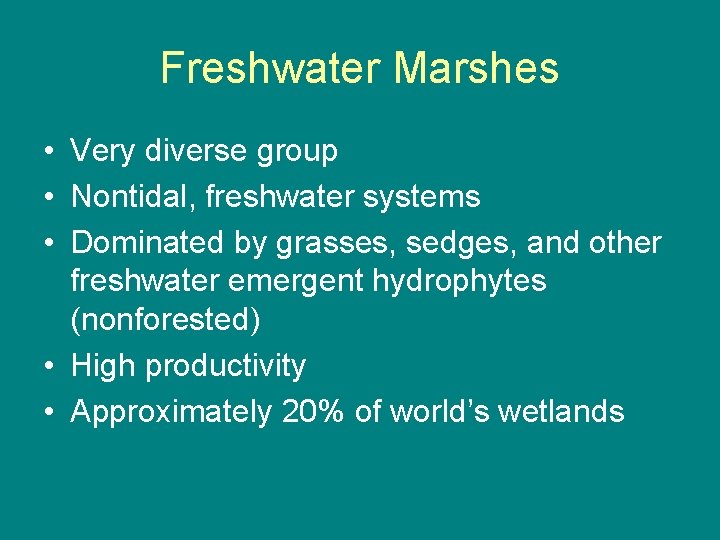
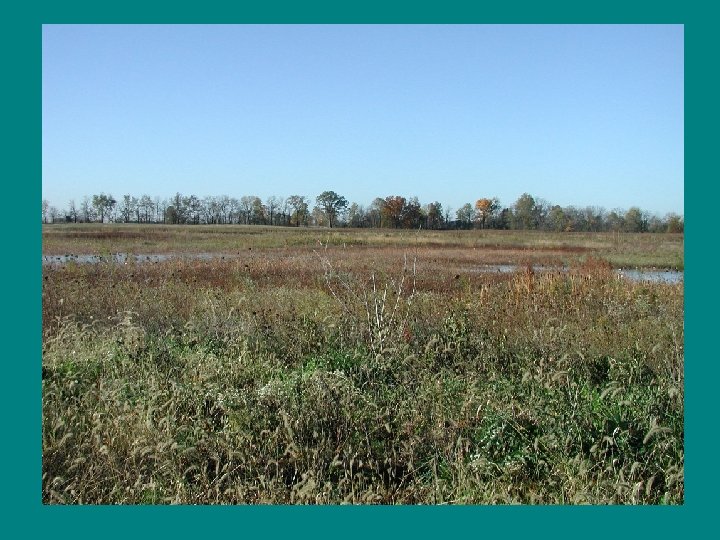
Freshwater Marshes • Very diverse group • Nontidal, freshwater systems • Dominated by grasses, sedges, and other freshwater emergent hydrophytes (nonforested) • High productivity • Approximately 20% of world’s wetlands
Hydrology • Predominately surface water fed; some with groundwater • Deep marsh plant communities have standing water depths of between 6 inches and 3 or more feet during the growing season • Shallow marsh plant communities have soils that are saturated to inundated by standing water up to 6 inches in depth, throughout most of the growing season
Dominant Plant Species • Deep marsh: major dominance by cattails, hardstem bulrush, pickerelweed, giant burreed, Phragmites, wild rice, pondweeds and/or water-lilies. • Shallow marsh: herbaceous emergent vegetation such as cattails, bulrushes, arrowheads, and lake sedges characterize this community.
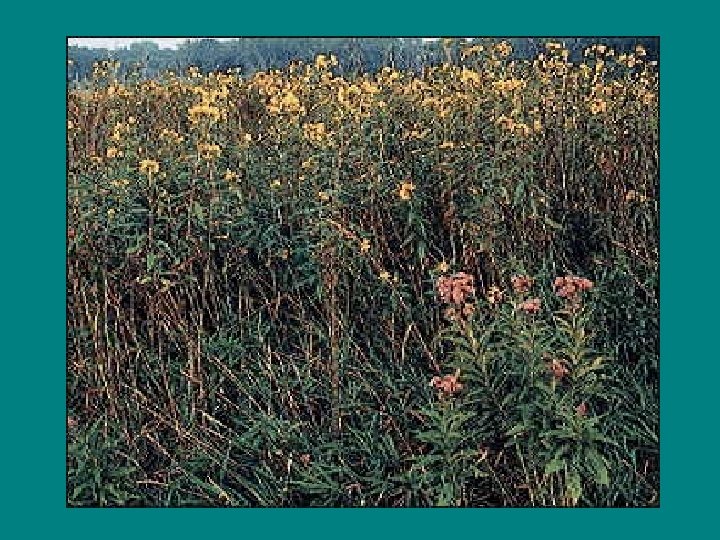
Wet Meadows
Hydrology and Soils • Supported by groundwater and surface water runoff – Usually a high water table is present • Typically drier than other marshes except during seasonal high water – Without standing water most of the year • Occur in poorly drained soils – Soils typically nutrient rich
Dominant Plant Species • hummock sedge (Carex stricta) • lake sedge (Carex lacustris) • Canada bluejoint grass (Calamagrostis canadensis) • woolgrass (Scirpus cyperinus) • marsh milkweed (Asclepias incarnata) • arrow-leaved tearthumb (Polygonum sagittatum) • water pepper (Polygonum hydropiper)
Sedge Meadows
Hydrology • Sedge meadows can be supported by groundwater and surface water runoff
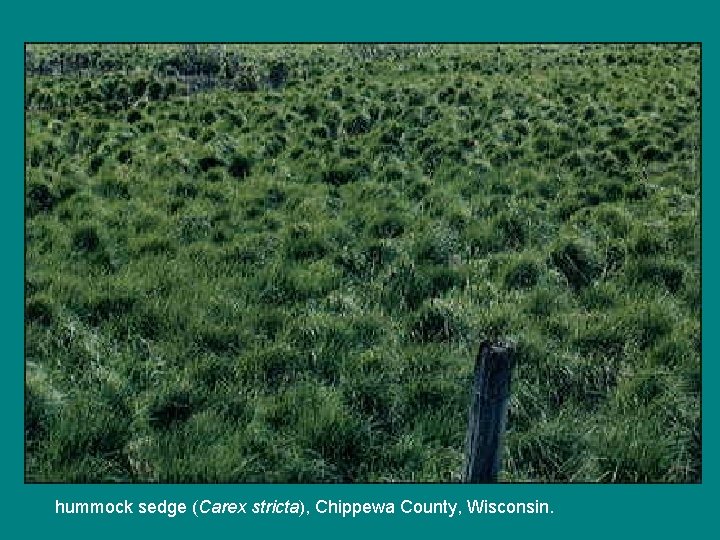
Dominant Plant Species • Sedge meadows are dominated by the sedges (Cyperaceae) growing on saturated soils (Carex dominates) • Also present are Eleocharis (spike-rushes) and Scirpus (bulrushes)
hummock sedge (Carex stricta), Chippewa County, Wisconsin.
Wet Prairie
Hydrology • High groundwater table and, to a lesser extent, surface runoff
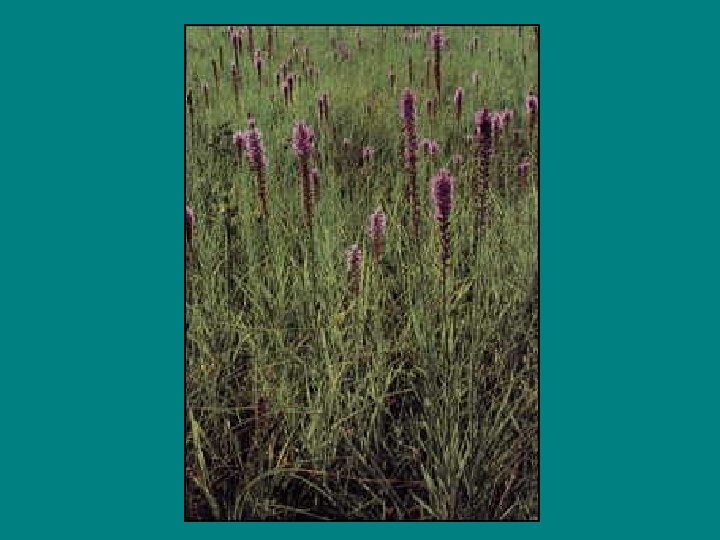
Dominant Plant Species • open, herbaceous plant communities dominated by native grass and grass-like species; at least half of the vegetative cover is made up of true grasses • similar to fresh (wet) meadows, but are dominated by native grasses and forbs associated with prairies such as prairie cordgrass, big bluestem, gayfeather, New England aster, culver's root, prairie dock and sawtooth sunflower
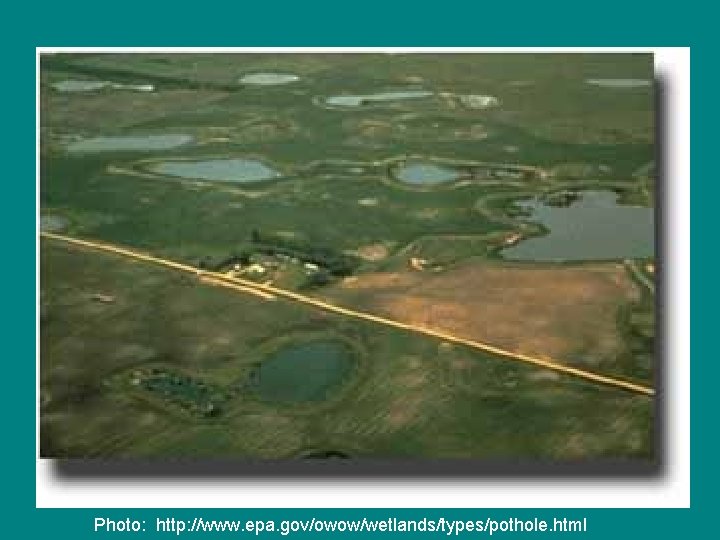
Prairie Potholes • Depressional Wetlands formed by glaciers • Located in Upper Midwest • North Dakota, South Dakota, Wisconsin, and Minnesota
Hydrology • Water source is from primarily snowmelt and rainwater • Many hold water temporarily
Dominant Plant Species • Submerged and floating aquatic plants take occur in the deeper water in the middle of the pothole while bulrushes and cattails grow closer to shore. • Sedge marshes lie next to the upland.
Photo: http: //www. epa. gov/owow/wetlands/types/pothole. html
Vernal Pools • Seasonal depressional wetlands (ephemeral) • Occur predominately in West Coast but Eastern vernal pools also occur • Range in size from small puddles to shallow lakes and are usually found in a gently sloping plain of grassland
Hydrology • Pools collect water during winter and spring rains – Change in volume responding to varying weather patterns – Pools may fill and dry several times – In years of drought, some pools may not fill at all • Generally isolated but are sometimes connected to each other by small drainages known as vernal swales • Beneath vernal pools lies either bedrock or a hard clay layer in the soil that helps keep water in the pool
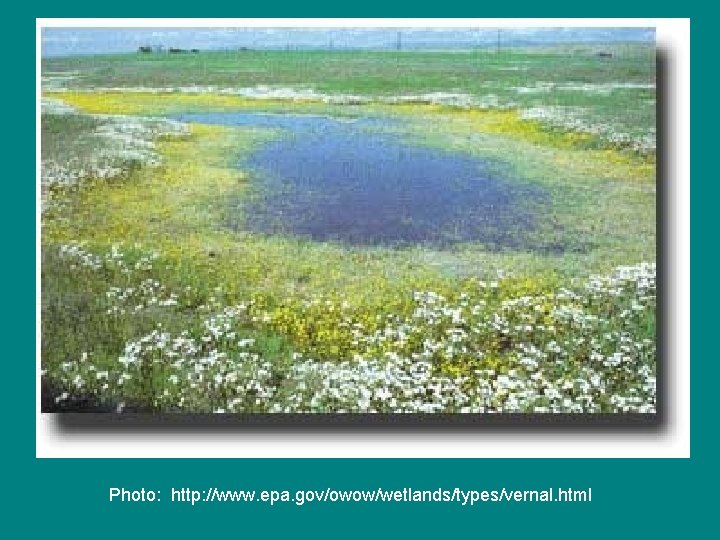
Vegetation • Wildflowers bloom in circles following the receding shoreline of the pools • When water has evaporated, soil is brown, barren, and cracked
Photo: http: //www. epa. gov/owow/wetlands/types/vernal. html
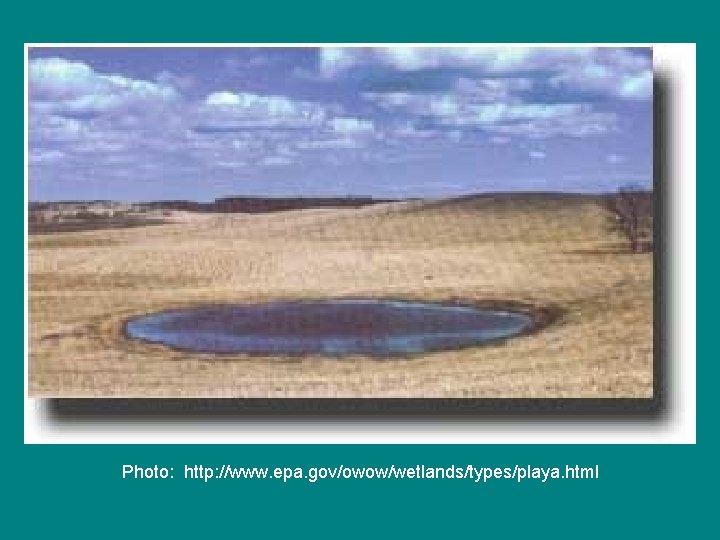
Playa Lakes • Ephemeral, round hollows in Southern High Plains of the United States – West Texas, Oklahoma, New Mexico, Colorado, and Kansas
Hydrology • Playa origin: – either carved by wind or formed by land subsidence. • Freshwater collects in the round depression after spring rains • Saltwater-filled playas – Underlying aquifers bring salt as it percolates up through the soil.
Vegetation • Grow and flourish when water is present – Recede and die when water evaporates • Wildlife depend on water and plants after spring rains
Photo: http: //www. epa. gov/owow/wetlands/types/playa. html
Peatlands
Fens
Hydrology • Upwelling, calcareous groundwater discharge • Small, calcareous streams frequently originate in the fen complex due to the groundwater discharge
Dominant Plant Species • • • sterile sedge (Carex sterilis) beaked spike-rush (Eleocharis rostellata) fen beak-rush (Rhynchospora capillacea) whorled nut-rush (Scleria verticillata) common valerian (Valeriana edulis) twigrush (Cladium mariscoides) • white lady-slipper (Cypripedium candidum)
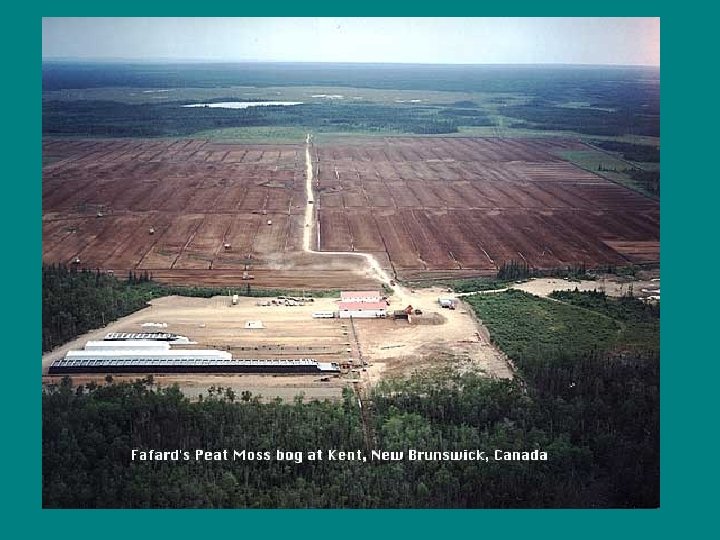
Bogs
Hydrology • Ground water sourced with peaty soils saturated to the surface
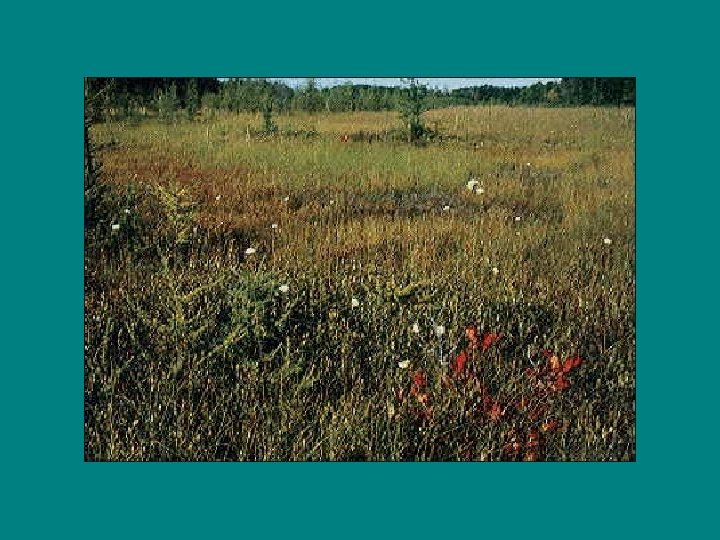
Dominant Plant Species • • • sphagnum mosses (Sphagnum spp. ) bog sedge (Carex oligosperma) tawny cottongrass (Eriophorum virginicum) three-way sedge (Dulichium arundinaceum) leatherleaf (Chamaedaphne calyculata) bog rosemary (Andromeda glaucophylla) bog buckbean (Menyanthes trifoliata) poison sumac (Toxicodendron vernix) broad-leaved cattail (Typha latifolia)
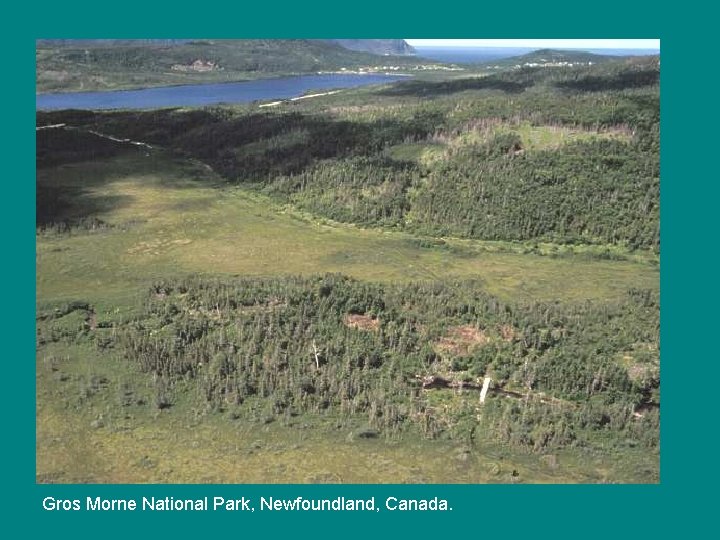
Gros Morne National Park, Newfoundland, Canada.
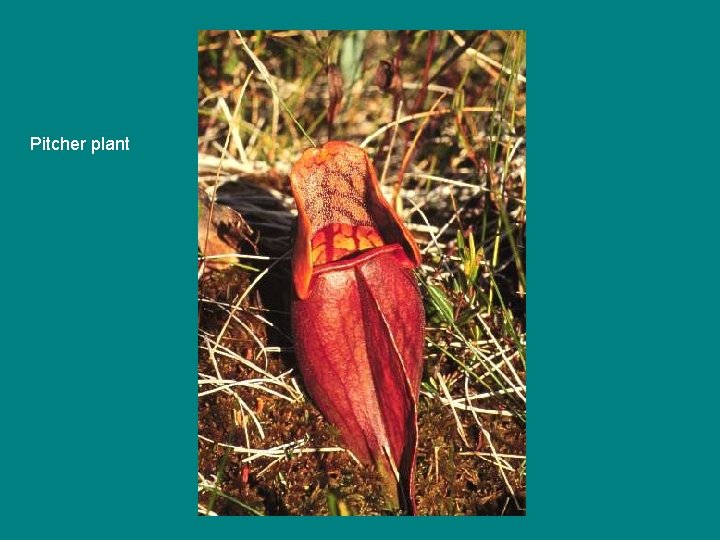
Pitcher plant
Freshwater Swamps • Cypress-tupelo Swamps • Southeastern U. S. • White Cedar Swamps • Atlantic and Gulf Coasts • Red Maple Swamps • Northeastern U. S.
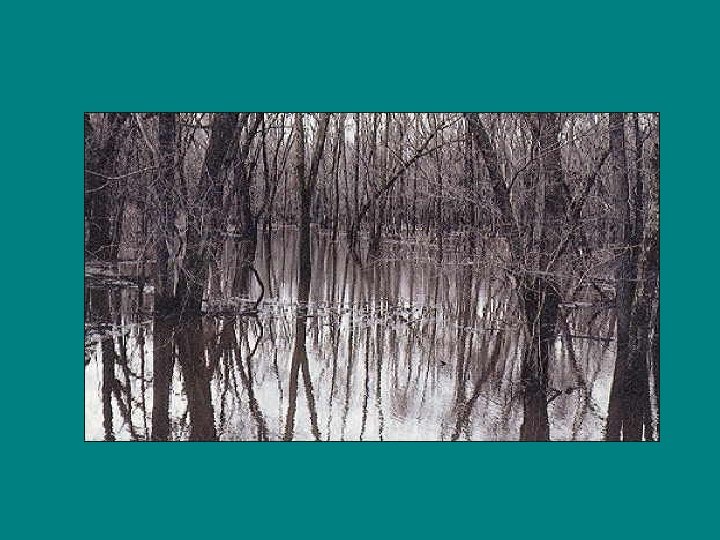
Hydrology • Groundwater discharge (seepages), rainwater, overland flow, floodwater
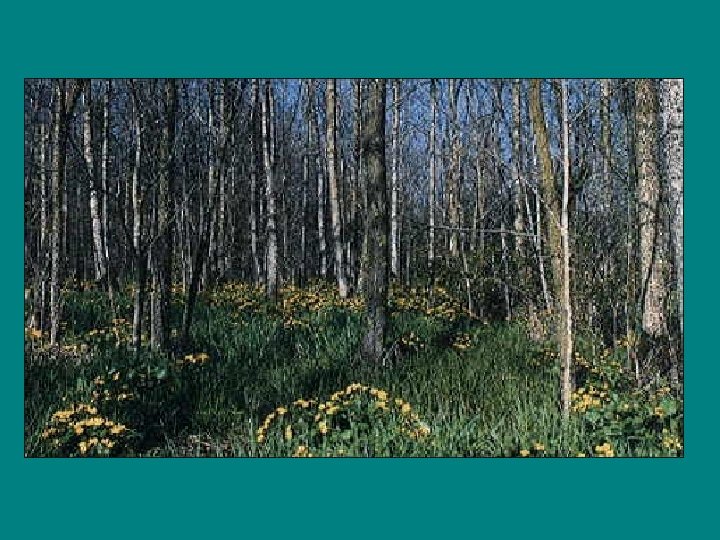
Dominant Plant Species – Midwest • black ash (Fraxinus nigra), red maple (Acer rubrum), formerly American Elm • groundlayer dominated by – – – – lake sedge (Carex lacustris), ostrich fern (Matteuccia struthiopteris) and marsh marigold (Caltha palustris) wood reedgrass (Cinna latifolia) jewelweed (Impatiens capensis) jack-in-the-pulpit (Arisaema triphyllum) giant goldenrod (Solidago gigantea)
Riparian Wetlands
Hydrology • Seasonal flood pulses • Inundated during spring flood events and heavy summer rainfall events
Dominant Plant Species • • silver maple (Acer saccharinum) wood nettle (Laportea canadensis) honewort (Cryptotaenia canadensis) green ash (Fraxinus pennsylvanica), eastern cottonwood (Populus deltoides), riverbank grape (Vitis riparia), jewelweed (Impatiens capensis), stinging nettle (Urtica dioica),
Shallow Open Water
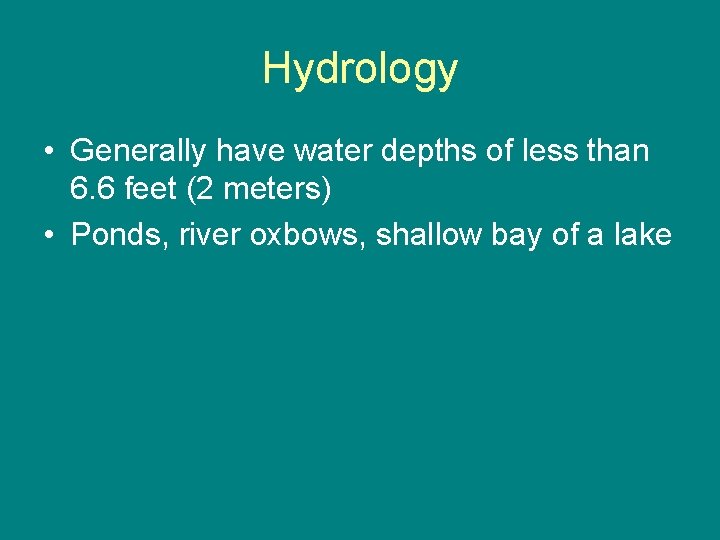
Hydrology • Generally have water depths of less than 6. 6 feet (2 meters) • Ponds, river oxbows, shallow bay of a lake
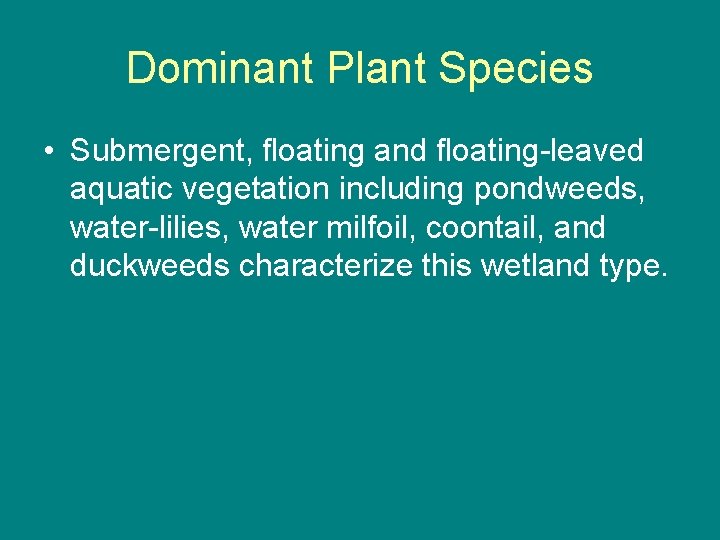
Dominant Plant Species • Submergent, floating and floating-leaved aquatic vegetation including pondweeds, water-lilies, water milfoil, coontail, and duckweeds characterize this wetland type.