
Wet environment reconstruction using IR spectra on Mars
- Slides: 12
Wet environment reconstruction using IR spectra on Mars Akos Kereszturi Konkoly Astronomical Institute, MTA CSFK Mars Astrobiology Group (ESA RCL) OTKA PD 105970
Background: • aim: use laboratory analysis to reconstruct wet conditions on Mars • this presentation: earlier results + new project idea • results: • Mars surface morphology • past water (Bolyai Fund: 2011 -2012) • project: • Mars surface IR spectroscopy + laboratory analysis • past wet conditions (OTKA Fund: 2012. 09. 01. -) Contenst: • Martian wet locations • paleoenvironment reconstruction • examples from morphology • examples from volumetric and discharge calculations • overview of wet environments • IR spectra to understand wet alteration • available CRISM , THEMIS data • laboratory spectra, FTIR measurements
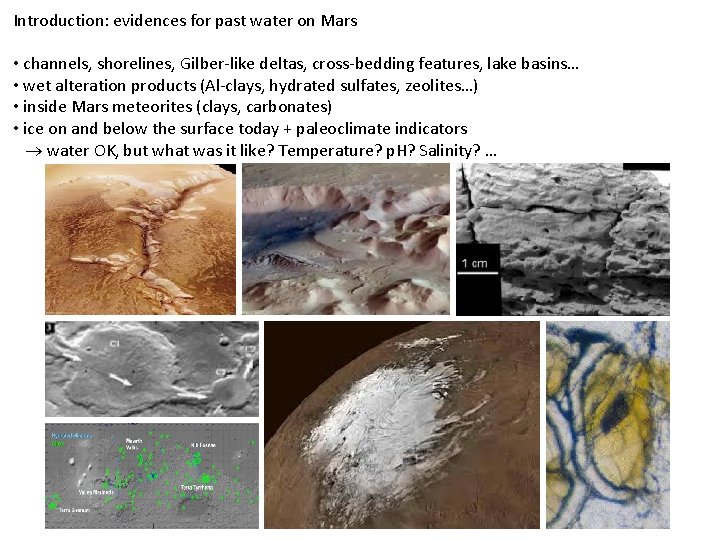
Introduction: evidences for past water on Mars • channels, shorelines, Gilber-like deltas, cross-bedding features, lake basins… • wet alteration products (Al-clays, hydrated sulfates, zeolites…) • inside Mars meteorites (clays, carbonates) • ice on and below the surface today + paleoclimate indicators water OK, but what was it like? Temperature? p. H? Salinity? …
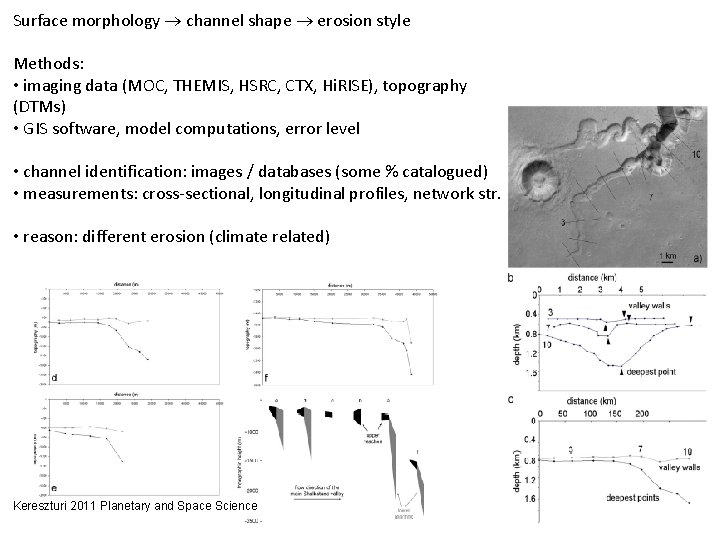
Surface morphology channel shape erosion style Methods: • imaging data (MOC, THEMIS, HSRC, CTX, Hi. RISE), topography (DTMs) • GIS software, model computations, error level • channel identification: images / databases (some % catalogued) • measurements: cross-sectional, longitudinal profiles, network str. • reason: different erosion (climate related) Kereszturi 2011 Planetary and Space Science
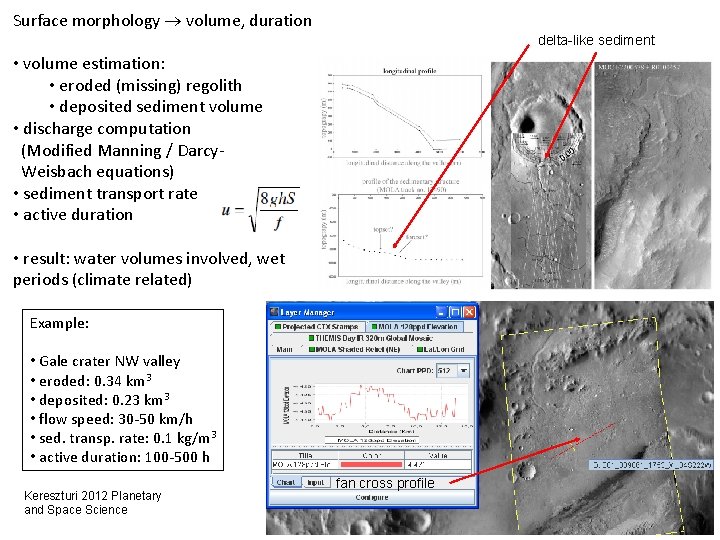
Surface morphology volume, duration delta-like sediment • volume estimation: • eroded (missing) regolith • deposited sediment volume • discharge computation (Modified Manning / Darcy. Weisbach equations) • sediment transport rate • active duration • result: water volumes involved, wet periods (climate related) Example: • Gale crater NW valley • eroded: 0. 34 km 3 • deposited: 0. 23 km 3 • flow speed: 30 -50 km/h • sed. transp. rate: 0. 1 kg/m 3 • active duration: 100 -500 h Kereszturi 2012 Planetary and Space Science fan cross profile
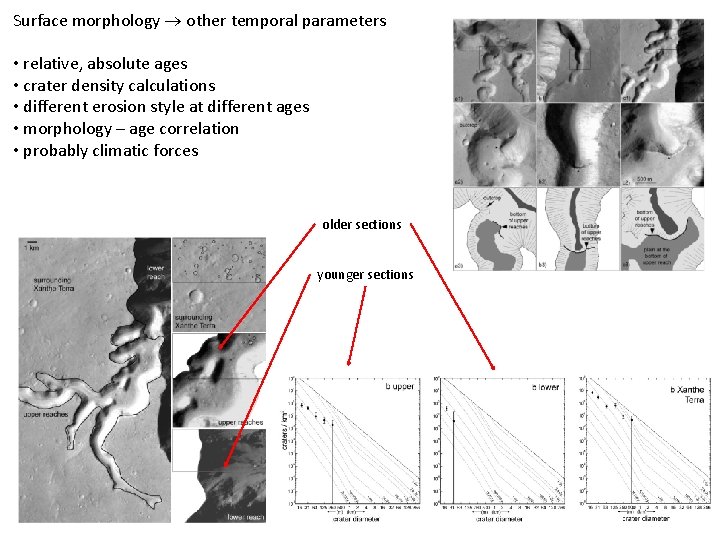
Surface morphology other temporal parameters • relative, absolute ages • crater density calculations • different erosion style at different ages • morphology – age correlation • probably climatic forces older sections younger sections
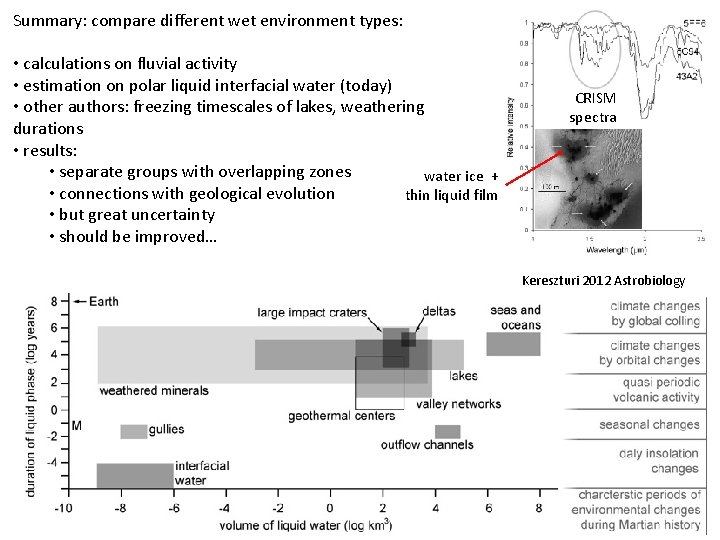
Summary: compare different wet environment types: • calculations on fluvial activity • estimation on polar liquid interfacial water (today) • other authors: freezing timescales of lakes, weathering durations • results: • separate groups with overlapping zones water ice + • connections with geological evolution thin liquid film • but great uncertainty • should be improved… CRISM spectra Kereszturi 2012 Astrobiology
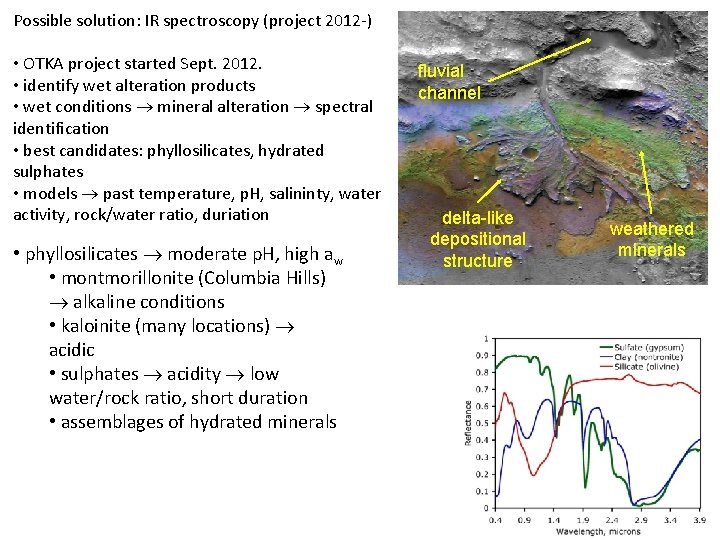
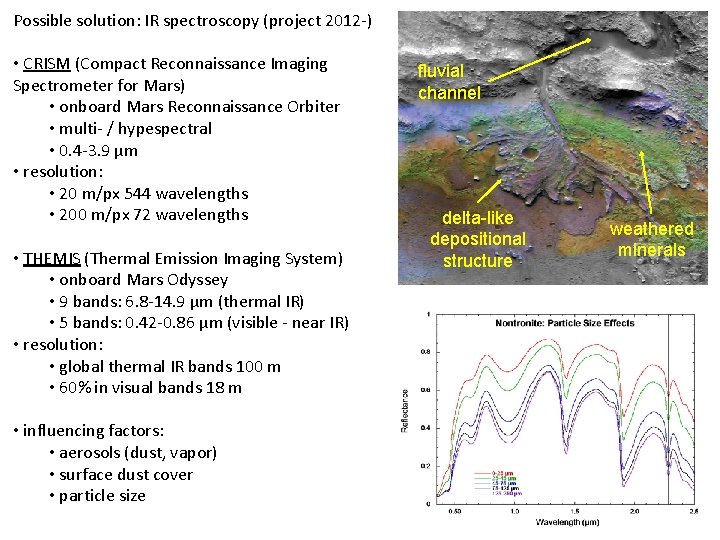
Possible solution: IR spectroscopy (project 2012 -) • OTKA project started Sept. 2012. • identify wet alteration products • wet conditions mineral alteration spectral identification • best candidates: phyllosilicates, hydrated sulphates • models past temperature, p. H, salininty, water activity, rock/water ratio, duriation • phyllosilicates moderate p. H, high aw • montmorillonite (Columbia Hills) alkaline conditions • kaloinite (many locations) acidic • sulphates acidity low water/rock ratio, short duration • assemblages of hydrated minerals fluvial channel delta-like depositional structure weathered minerals
Possible solution: IR spectroscopy (project 2012 -) • CRISM (Compact Reconnaissance Imaging Spectrometer for Mars) • onboard Mars Reconnaissance Orbiter • multi- / hypespectral • 0. 4 -3. 9 µm • resolution: • 20 m/px 544 wavelengths • 200 m/px 72 wavelengths • THEMIS (Thermal Emission Imaging System) • onboard Mars Odyssey • 9 bands: 6. 8 -14. 9 µm (thermal IR) • 5 bands: 0. 42 -0. 86 µm (visible - near IR) • resolution: • global thermal IR bands 100 m • 60% in visual bands 18 m • influencing factors: • aerosols (dust, vapor) • surface dust cover • particle size fluvial channel delta-like depositional structure weathered minerals
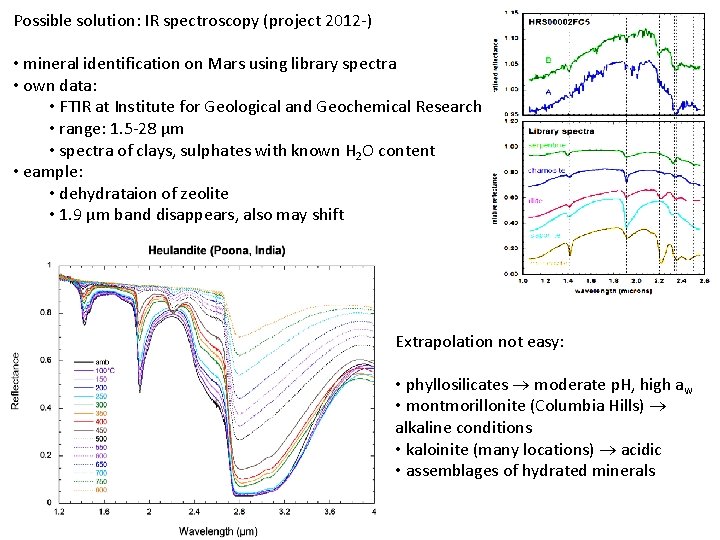
Possible solution: IR spectroscopy (project 2012 -) • mineral identification on Mars using library spectra • own data: • FTIR at Institute for Geological and Geochemical Research • range: 1. 5 -28 µm • spectra of clays, sulphates with known H 2 O content • eample: • dehydrataion of zeolite • 1. 9 µm band disappears, also may shift Extrapolation not easy: • phyllosilicates moderate p. H, high aw • montmorillonite (Columbia Hills) alkaline conditions • kaloinite (many locations) acidic • assemblages of hydrated minerals
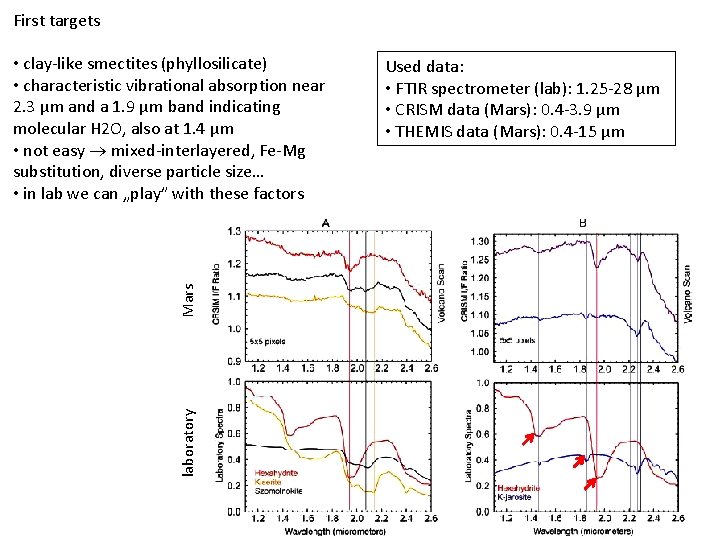
First targets laboratory Mars • clay-like smectites (phyllosilicate) • characteristic vibrational absorption near 2. 3 μm and a 1. 9 μm band indicating molecular H 2 O, also at 1. 4 μm • not easy mixed-interlayered, Fe-Mg substitution, diverse particle size… • in lab we can „play” with these factors Used data: • FTIR spectrometer (lab): 1. 25 -28 µm • CRISM data (Mars): 0. 4 -3. 9 µm • THEMIS data (Mars): 0. 4 -15 µm
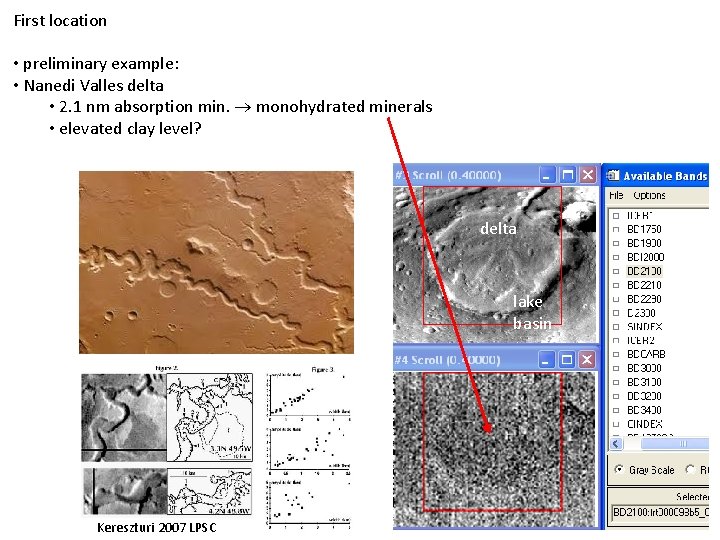
First location • preliminary example: • Nanedi Valles delta • 2. 1 nm absorption min. monohydrated minerals • elevated clay level? delta lake basin Kereszturi 2007 LPSC