
Western mountains plains and plateaus Pacific Mountain Ranges
- Slides: 15
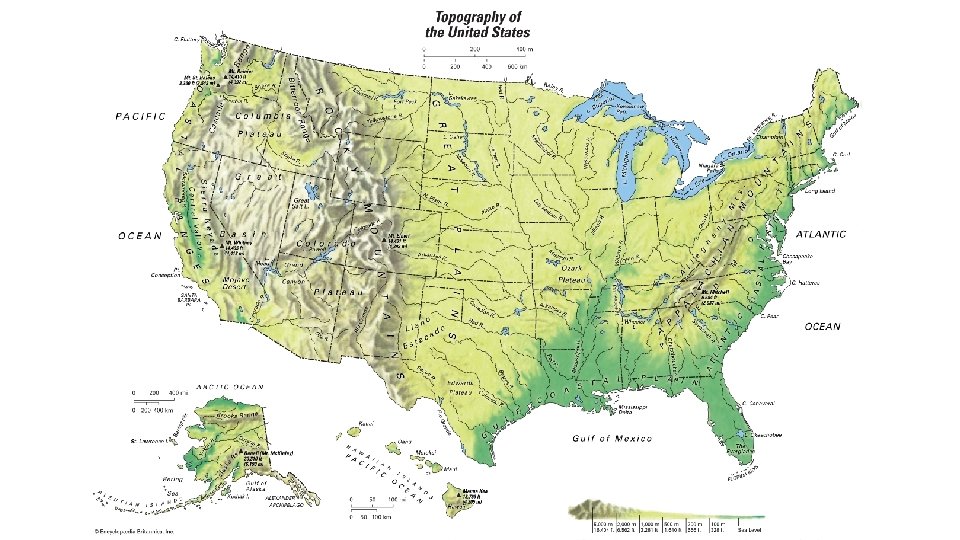
Western mountains, plains, and plateaus • Pacific Mountain Ranges: • • Sierra Nevada Cascade Range Coast Range Alaska Range- Mount Mc. Kinley
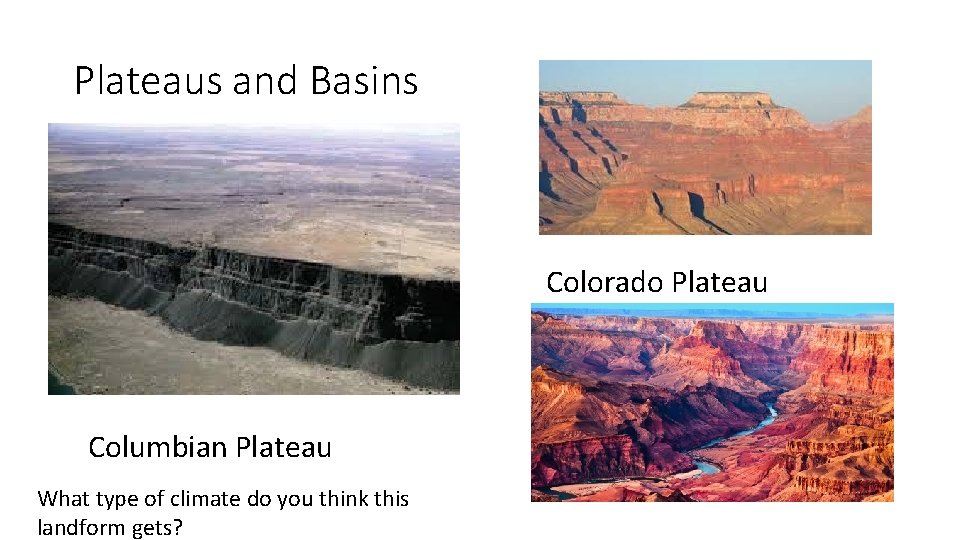
Plateaus and Basins Colorado Plateau Columbian Plateau What type of climate do you think this landform gets?
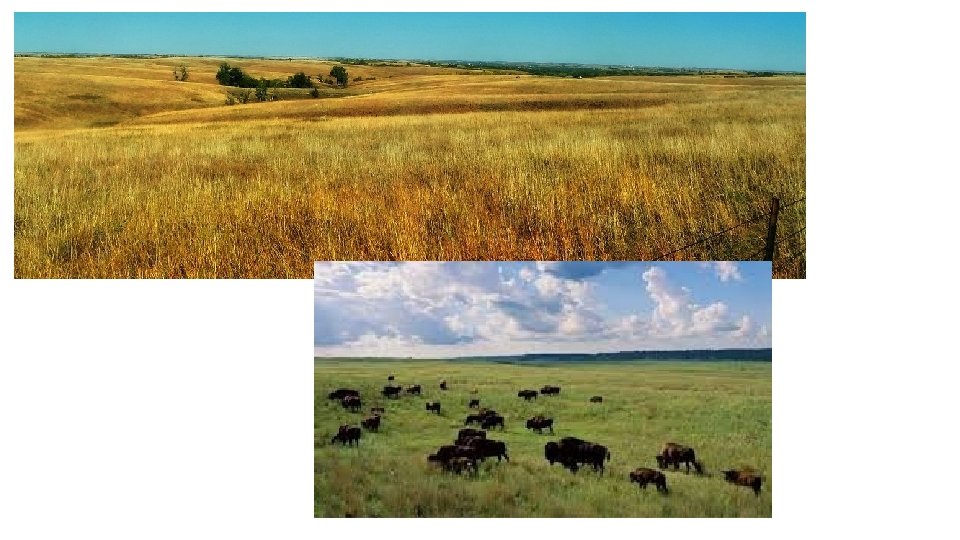
The Great Plains • Reach elevations up to 6, 000 feet • Slope downward about 10 feet per mile • Slopes downward all the way to the Central Lowlands along the Mississippi River
Central Lowlands • Gradual sloping hills • Found along Mississippi River
Eastern Mountains and Lowlands • Appalachian Mountains • Eastern U. S. from Quebec to Alabama • North America’s oldest mountains • Piedmonts • Gently rolling foothills • Between Appalachians and coastal lowlands
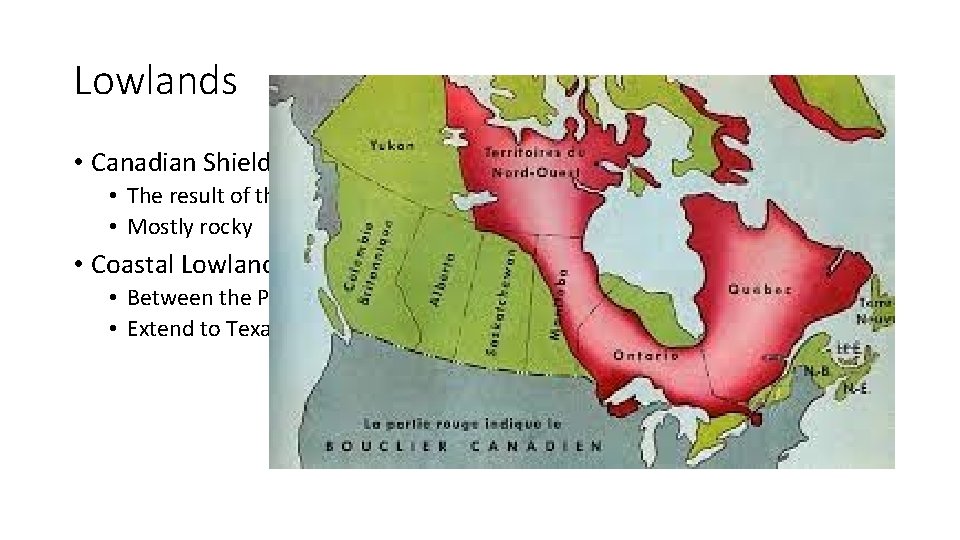
Lowlands • Canadian Shield • The result of thousands of years of glacial erosion • Mostly rocky • Coastal Lowlands • Between the Piedmonts and the ocean • Extend to Texas
Islands • Oceanic • Created by volcanic activity • Hawaii, Caribbean Islands, Aleutian Islands • Continental • Unsubmerged parts of the continental shelf • Greenland, Newfoundland, Manhattan Island • https: //www. youtube. com/watch? v=e. IAs. Im. Evi. Ew
Rivers • Vocab: • • Divide-the high point/ridge that determines the direction in which rivers flow Headwaters- where the river starts- the source Tributaries- smaller rivers and streams that drain into a larger river Fall Line- in eastern U. S. where the higher land of the Piedmont drops to the lower Atlantic Coastal Plain • Mississippi River • One of the longest, and busiest rivers
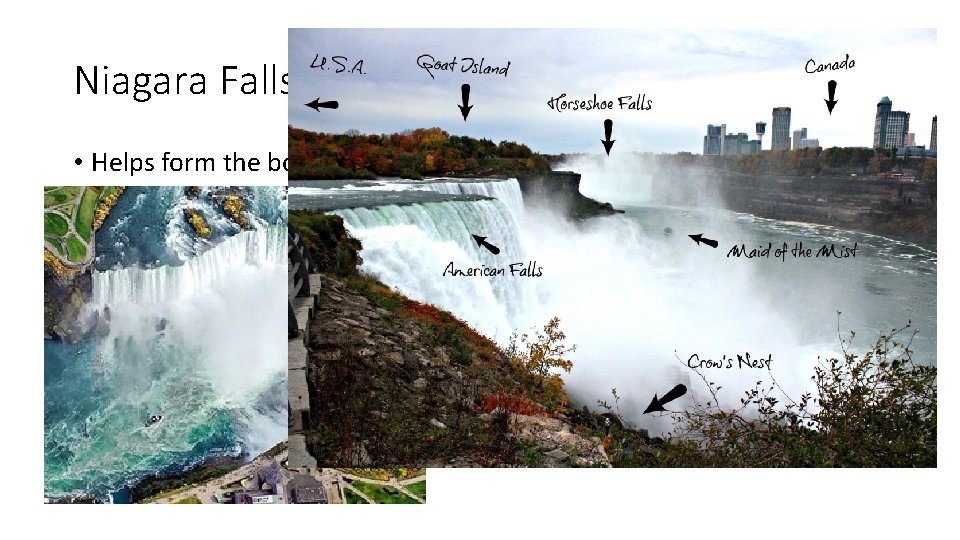
Niagara Falls • Helps form the border between the U. S. and Canada
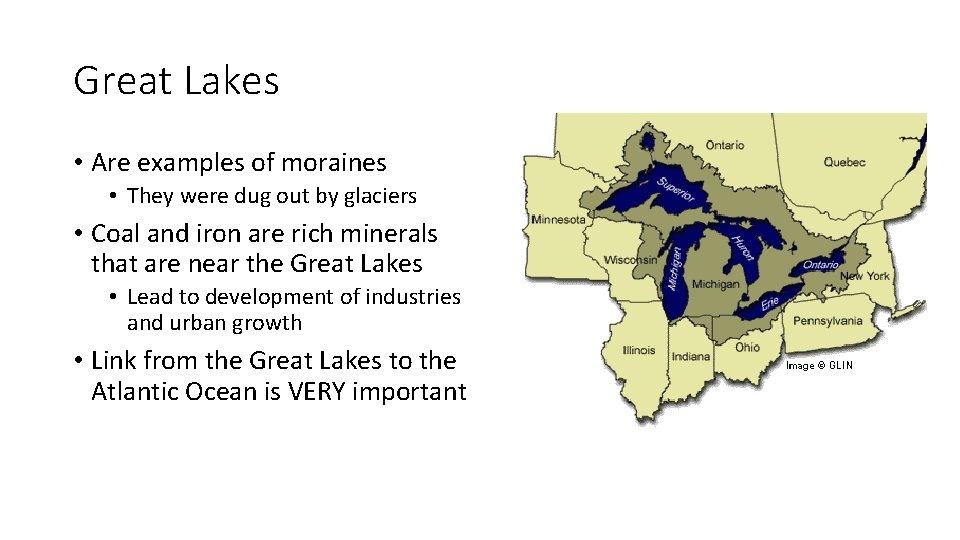
Great Lakes • Are examples of moraines • They were dug out by glaciers • Coal and iron are rich minerals that are near the Great Lakes • Lead to development of industries and urban growth • Link from the Great Lakes to the Atlantic Ocean is VERY important
Natural Resources • Fossil Fuels: • Petroleum • Natural gas • Coal • These are nonrenewable • Other resources: • Gold, silver, copper, iron, nickel, iron ore
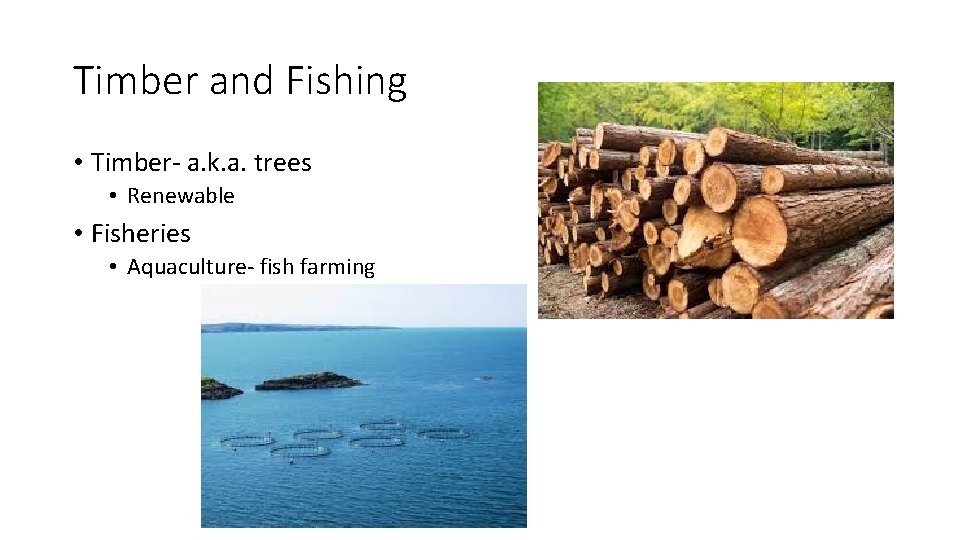
Timber and Fishing • Timber- a. k. a. trees • Renewable • Fisheries • Aquaculture- fish farming