
Western and Northern Europe SSWG 6 d Describe
Western and Northern Europe SSWG 6 d. Describe the various ethnic and religious groups in the region and the effect of geography on those groups and their major customs and traditions
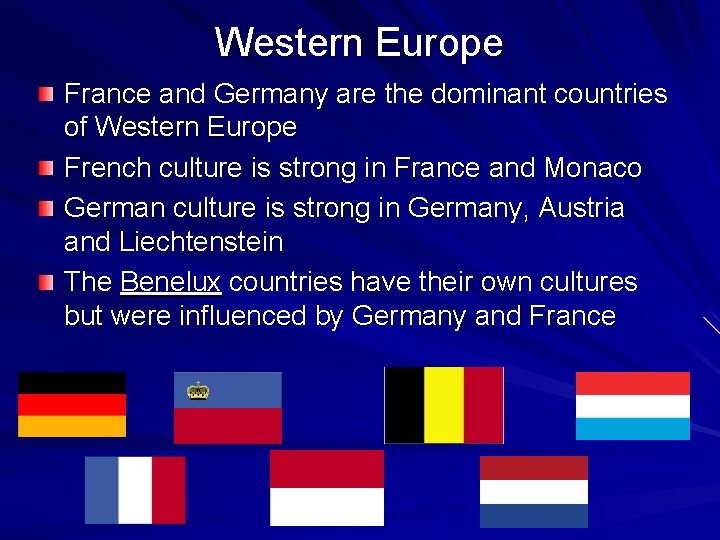
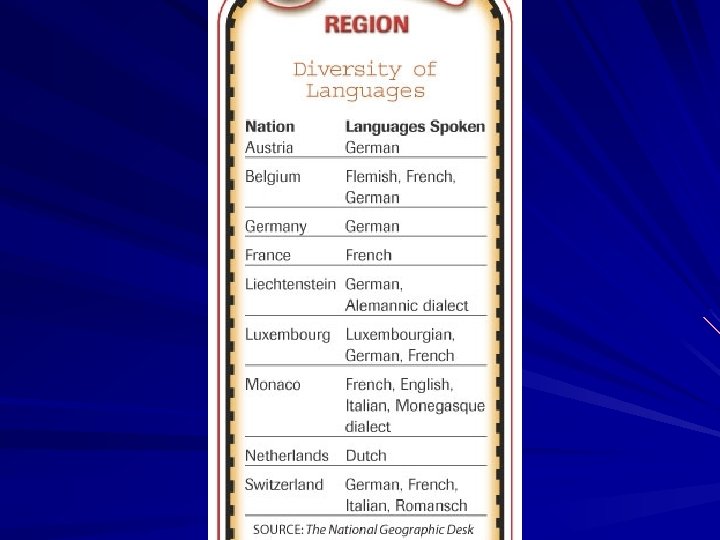
Western Europe France and Germany are the dominant countries of Western Europe French culture is strong in France and Monaco German culture is strong in Germany, Austria and Liechtenstein The Benelux countries have their own cultures but were influenced by Germany and France
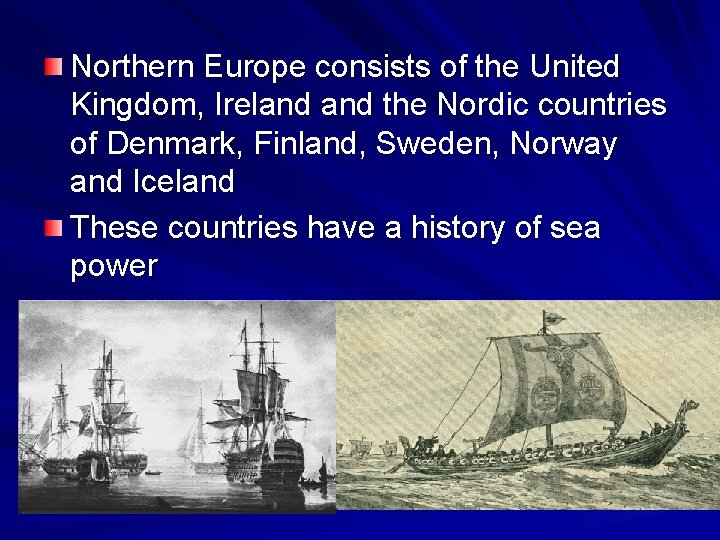
Northern Europe consists of the United Kingdom, Ireland the Nordic countries of Denmark, Finland, Sweden, Norway and Iceland These countries have a history of sea power
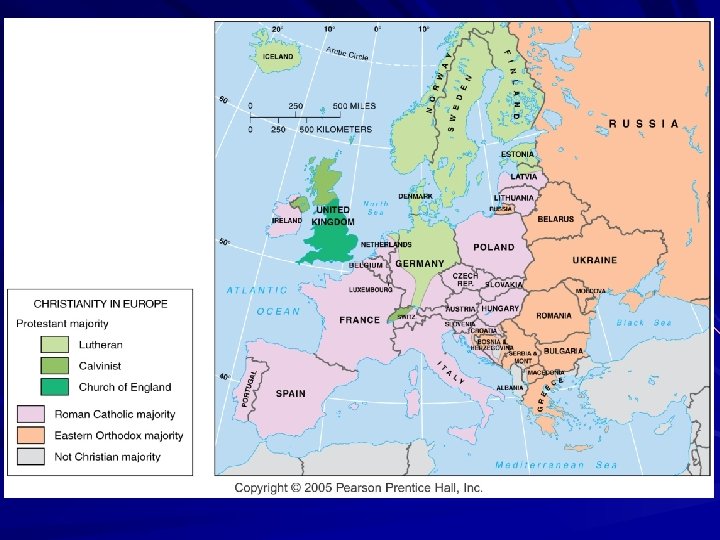
Reformation During the Renaissance scholars questioned authority, even the Catholic Church 1517 -Martin Luther criticized the church and started the Reformation movement – Many people left the Catholic church for Protestant churches Today: France is mostly Catholic and Germany is mixed, Protestants in the north and Catholics in the south
The Rise of Nation-States During feudalism strong kings gained power over the lords A belief of nationalism began – People should be loyal to their nation Nationalism caused groups to want their own country, France was the first nationstate The nation-states of Western Europe became strong rivals, they fought many wars between 1600 and 1945
Industrial Revolution Great Britain became the first nation to industrialize because of its iron ore and coal deposits In the 1800 s the industrial revolution spread to western Europe and the US Inventions: - steam engine - steamboat - steam locomotive - process for making steel Effects: - Rise of the factory system - Higher standard of living - Growth of capitalism - Changes in working conditions - Urbanization

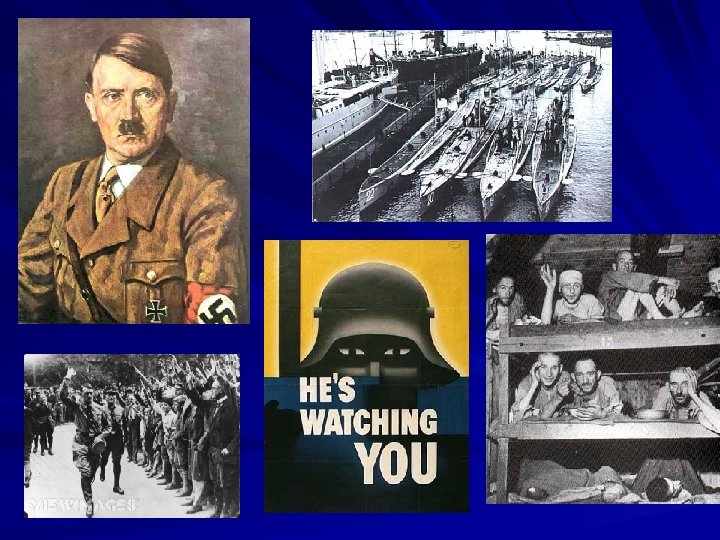
Modern Conflict Rivalry and competition between the major powers caused WWI to break out – The Allies (France, Great Britain, US) – The Central Powers (Germany, Austria. Hungary) The terms of WWI caused WWII – Hitler and the Nazi Party – The Holocaust
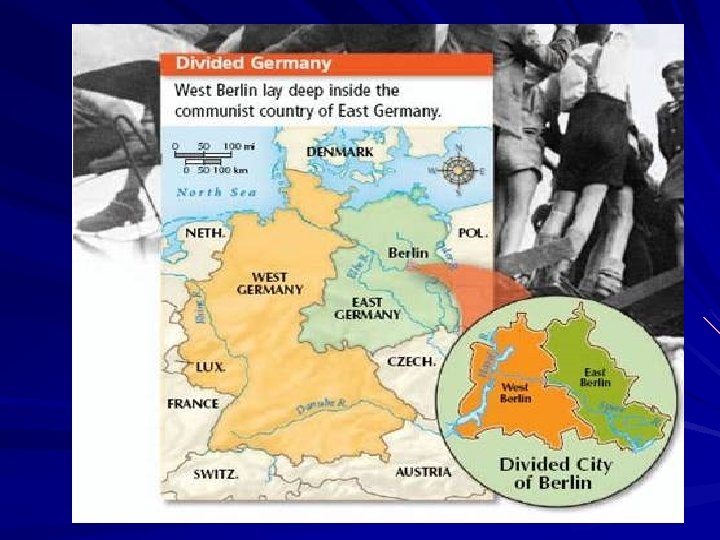
After WWII, Germany was split into 2 nations – West Germany was democratic – East Germany was communist The capital of Berlin was divided by the Berlin Wall – 1989 the Berlin was torn down 1990, the 2 Germanys reunited – Caused economic challenges, West Germany had a high standard of living
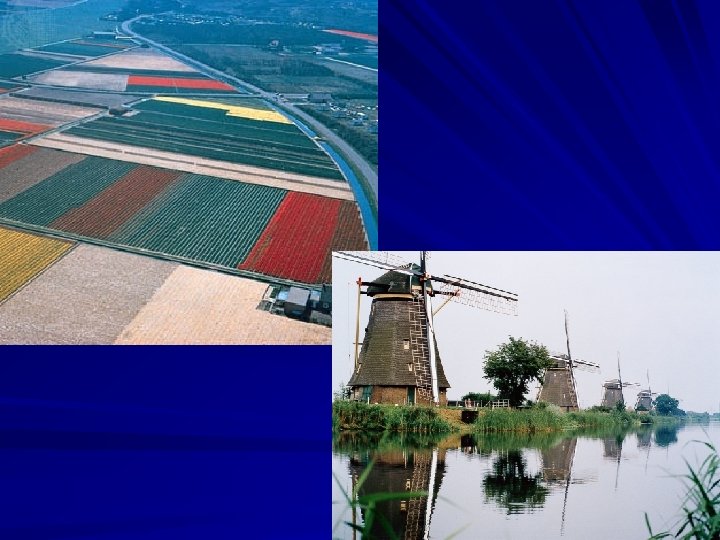
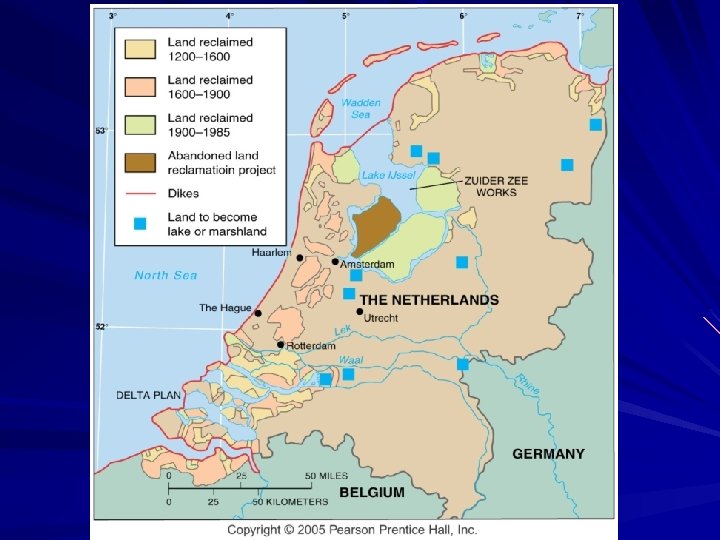
Polders: Land from the Sea The Netherlands needed more land for their growing population so they reclaimed land from the sea – At least 40% of the Netherlands was once under the sea Land that is reclaimed by draining is called a polder
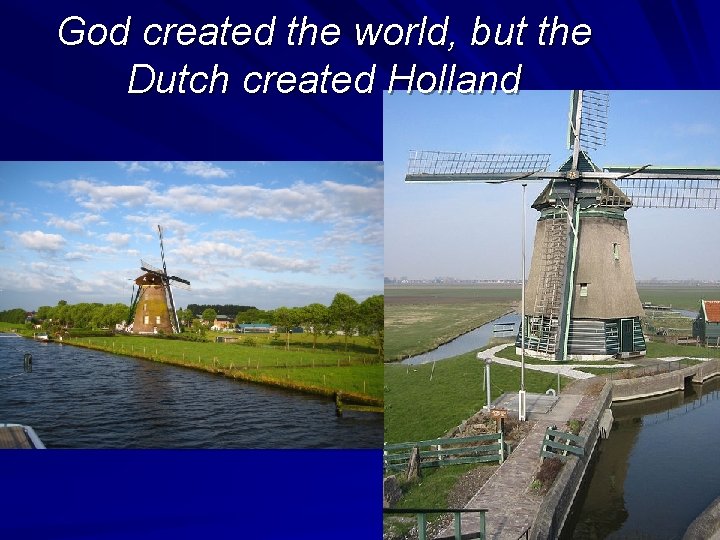
God created the world, but the Dutch created Holland
- Slides: 16