
West Virginia Tiered System of Support WVTSS Designing
- Slides: 17
West Virginia Tiered System of Support (WVTSS): Designing a Multi-tiered System of Support to Meet the Academic, Behavioral, and Mental Health Needs of ALL Students Instructional Supports Professional Learning Forum Monday, August 3, 2020 10: 00 -10: 30 and 1: 00 -1: 30
Housekeeping Procedures • Please note that this session will be recorded and shared. • Please mute your microphone unless you are speaking. • Please keep your camera off during the presentation to preserve bandwidth. • Check the volume on your speakers before we begin. • Closed captioning is available by hitting the “…” on your horizontal onscreen menu. • To open your chat box, click on the speech bubble button on your horizontal on-screen menu. It should open to the right of your screen. • If you are having any problems with the items above, please describe your problem in the chat box before we begin so that we can assist you. 2
Before we begin… • When returning to school, relationships, social/emotional well-being and physical health of our students and staff is our number one priority along with learning. • Using a variety of tool to communicate with students and families will be key in making re-entry successful. • Students will be at different places emotionally and academically. Educators should use available tools to determine where students are and identify their needs. • Educators should use personal and professional observations, conversations, informal assessments, formative assessments, interim and diagnostics assessments to determine what support students need. • Schools should use vertical teaming with teaching staff to identify gaps in the prerequisite skills needed for students to be successful academically. • In this forum, you will see a variety of sessions that will assist you with inperson, remote and blended learning strategies and best practices. 3
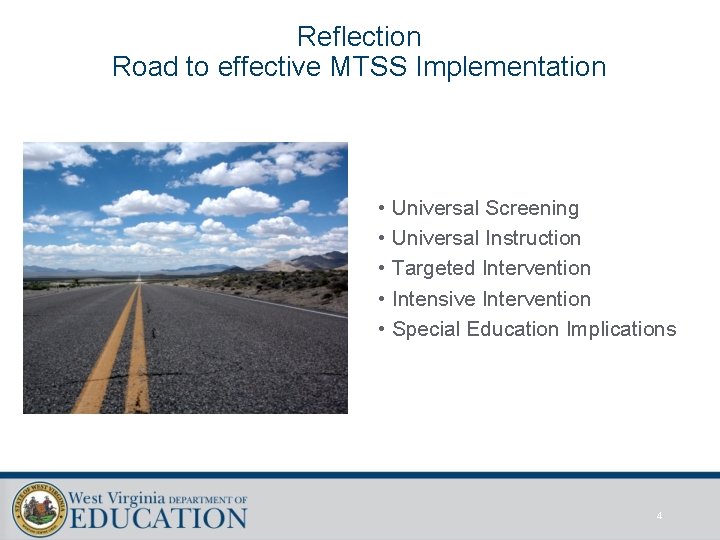
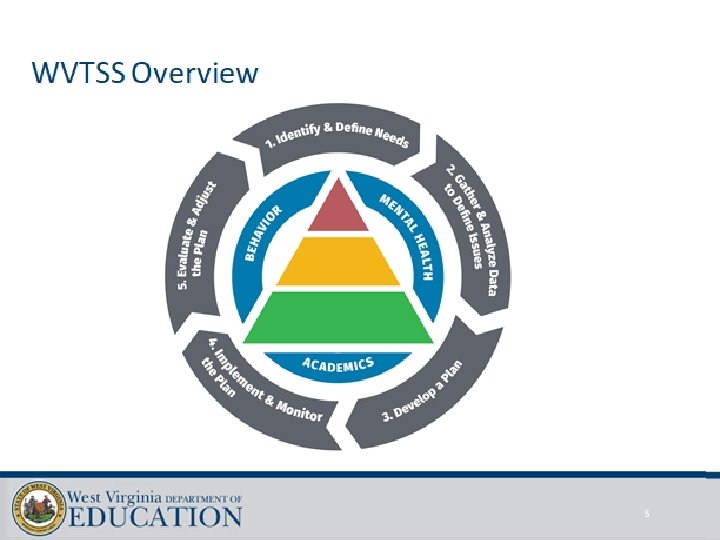
Reflection Road to effective MTSS Implementation • Universal Screening • Universal Instruction • Targeted Intervention • Intensive Intervention • Special Education Implications 4
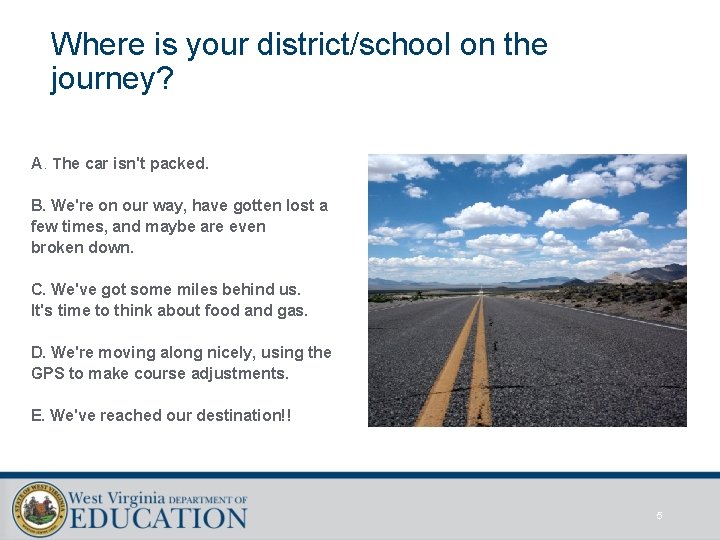
Where is your district/school on the journey? A. The car isn't packed. B. We're on our way, have gotten lost a few times, and maybe are even broken down. C. We've got some miles behind us. It's time to think about food and gas. D. We're moving along nicely, using the GPS to make course adjustments. E. We've reached our destination!! 5
Session Objectives 1. Why a school-wide system of support is necessary to school reentry 2. How to design a multi-tiered system of support 3. Additional and upcoming WVTSS resources 6
Help leadership teams design a schoolwide system of support and interventions based on the West Virginia Tiered System of Support (WVTSS) framework. 8
For help answering any of the following questions, refer to the recommendations in West Virginia Tiered System of Support Overview Document 9
Universal Screening • How will students be identified who need supplemental support? • What universal screeners are already in place? • Are the screeners evidence-based? • Is there any duplication in data collected when using more than one screener? • If so, can one or more of the screeners be eliminated without losing data that is needed? 10
Universal Instruction • Does every student have access to instruction and instructional resources that are aligned to grade-level standards and developmentally appropriate? • Is differentiated instruction embedded in Universal instruction? • Do all teachers understand implement Universal Design for Learning? 11
Universal Instruction Continued • Have we clearly defined the positive behaviors (effort, attendance, social behaviors) that we want all students to demonstrate? • Is there a plan to explicitly teach, reward, and support these behaviors? • How will student progress be measured toward meeting academic, behavior and social-emotional expectations? 12
Targeted and Intensive Intervention • How will students be accurately identified who need targeted/intensive support? • What targeted/intensive interventions are currently available? • Are collaborative teams in place to determine who will provide the targeted/intensive intervention and when the intervention will take place? • Are effective, research-based protocols consistent to systematically analyze causes for limited response to universal instruction and identify appropriate targeted/intensive supports? • How will student progress be monitored? • How frequently will the collaborative team meet to review individual and group interventions? 13
Special Education • Who will sit on the Student Assistance Team (SAT)? • Are effective, research-based protocols consistent to systematically analyze causes for limited response to intensive intervention as part of identifying the need for special education? • Is there an agreed upon process to determine if special education is necessary, appropriate, and defensible for a student? 14
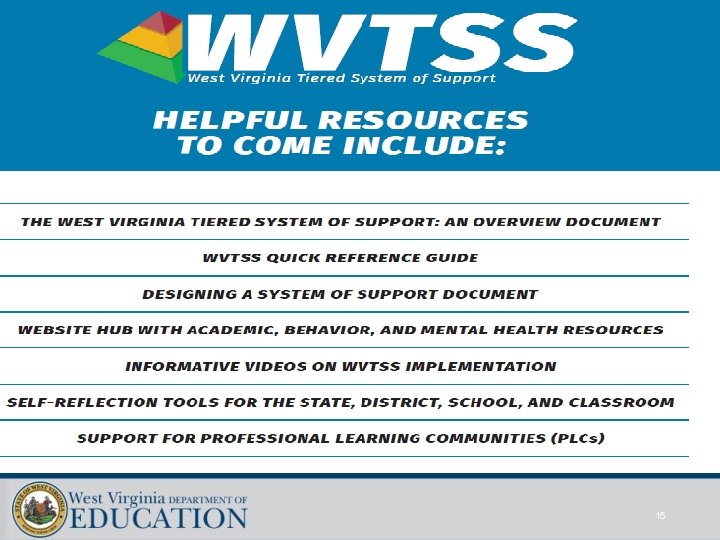
15
What is one area that you want to learn more about? • Universal Design for Learning • Screening tools for academics, behavior, and mental health • Targeted and Intensive Interventions for academics, behavior, and mental health • Progress Monitoring Tools • Effective use of Professional Learning Communities (PLCs) 16
Please complete this survey before 5: 00 pm today in order to receive credit for attendance. Sara Hutchinson Office of Early & Elementary Learning shutchinson@k 12. wv. us Joseph Mastracci Office of Middle & Secondary Learning jmastracci@k 12. wv. us Dawn Embrey-King Office of Special Education dembreyking@k 12. wv. us https: //forms. office. com/Pages/Response Page. aspx? id=S 7 AZ 4 Awzeka. Lrgn 7 Fzd. Nap. EOszzk 9 RJg. S 7 C 6 clj. CXd. UMVc 3 VUoy. S 1 cx. MD RGWVZRMTMz. Mk. Ja. TVU 5 MC 4 u 17