
Wessex Deanery Workforce Planning Reduction of Training Numbers

Wessex Deanery Workforce Planning: Reduction of Training Numbers Vicky Osgood Postgraduate Dean Wessex Deanery

Wessex Deanery
Wessex Deanery

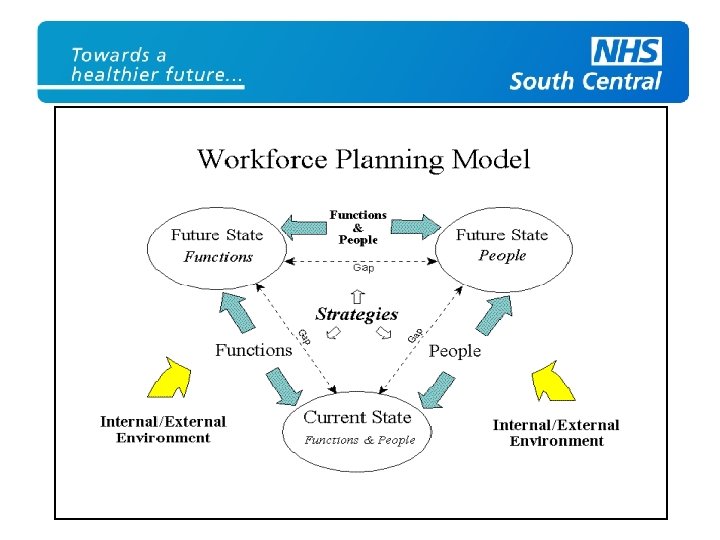
Wessex Deanery Workforce Planning Tight central control v Market forces

Wessex Deanery
Wessex Deanery
Wessex Deanery NHS Plan 2000 By 2004 • 1000 more specialist registrars – key feeder grade for consultants • 450 more GP trainees By 2005 • 40% rise in medical student numbers from 1997
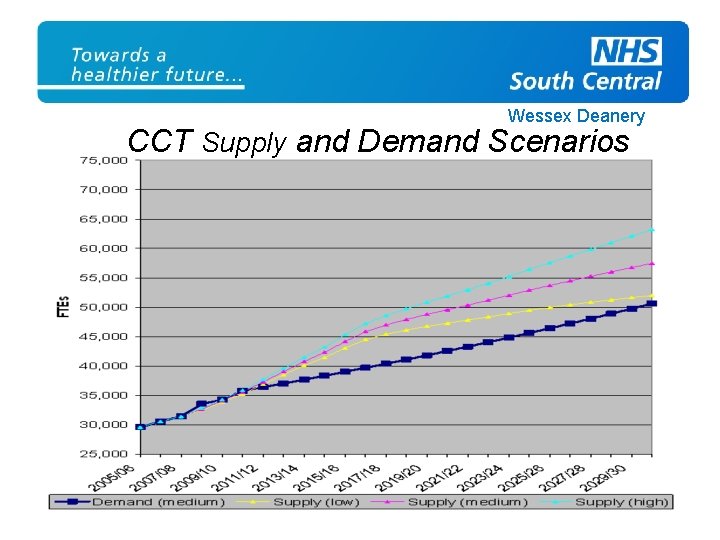
Wessex Deanery CCT Supply and Demand Scenarios Wessex Deanery
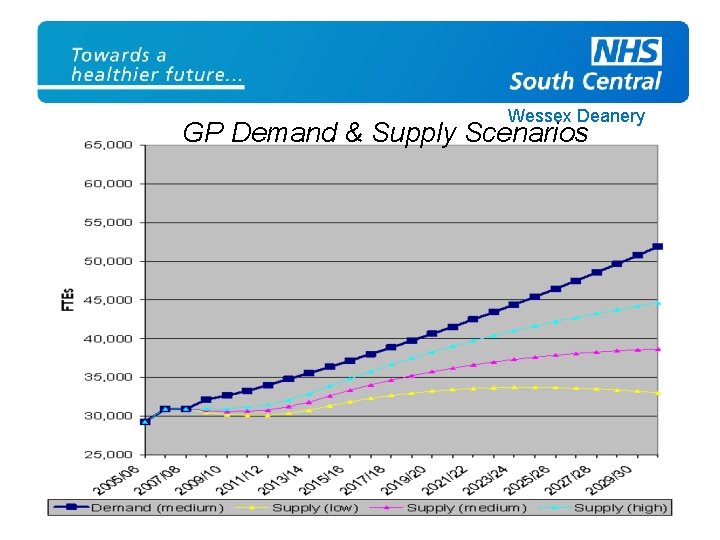
Wessex Deanery GP Demand & Supply Scenarios Wessex Deanery
Wessex Deanery Change in Training Numbers • EWTR • Service pressures • ‘Cost’ of GP increase
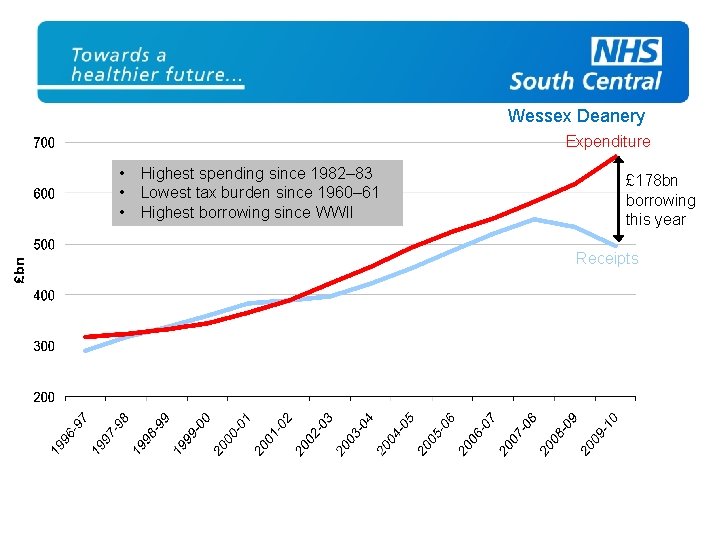
Wessex Deanery Expenditure • Highest spending since 1982– 83 • Lowest tax burden since 1960– 61 • Highest borrowing since WWII £ 178 bn borrowing this year Receipts
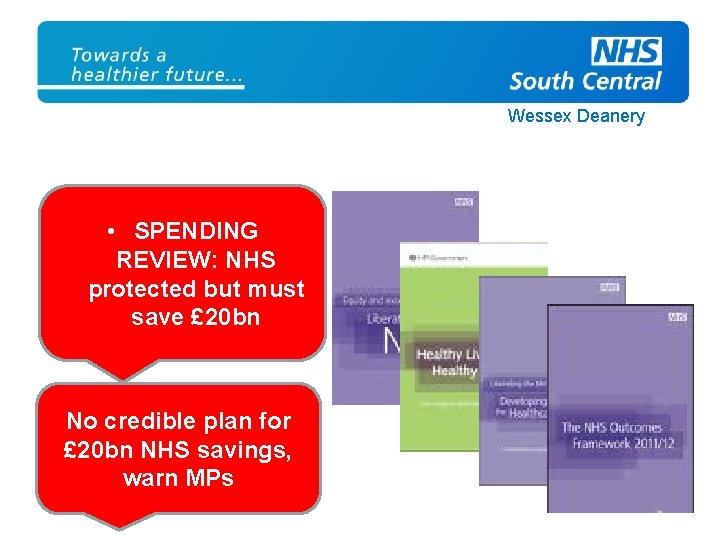
Wessex Deanery • SPENDING REVIEW: NHS protected but must save £ 20 bn No credible plan for £ 20 bn NHS savings, warn MPs
Wessex Deanery “Over-supply of consultants” If NHS employed all new secondary care CCT holders over next 10 years, consultant numbers would increase from 35, 000 to 61, 000 Cf. WI 2010
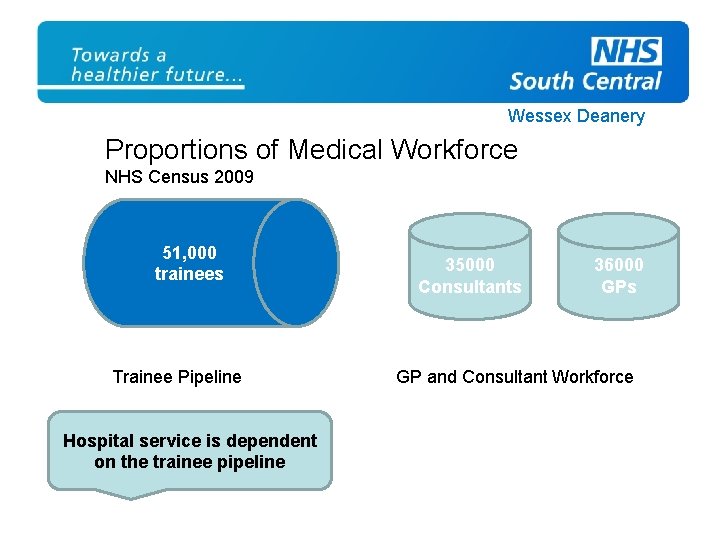
Wessex Deanery Proportions of Medical Workforce NHS Census 2009 51, 000 trainees Trainee Pipeline Hospital service is dependent on the trainee pipeline 35000 Consultants 36000 GPs GP and Consultant Workforce
Wessex Deanery • Training numbers are not aligned with replacement consultant numbers
Wessex Deanery The “dual dilemma “– there are insufficient trainees to cover existing rotas, and there are too many trainees to fill existing consultant positions
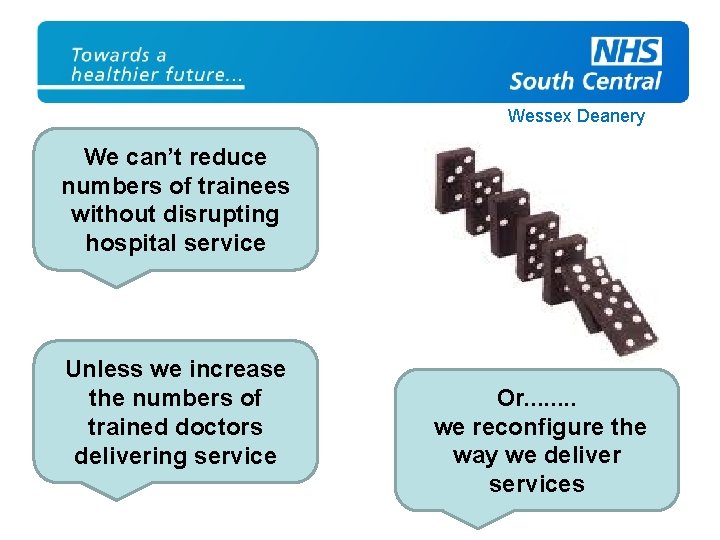
Wessex Deanery We can’t reduce numbers of trainees without disrupting hospital service Unless we increase the numbers of trained doctors delivering service Or. . . . we reconfigure the way we deliver services
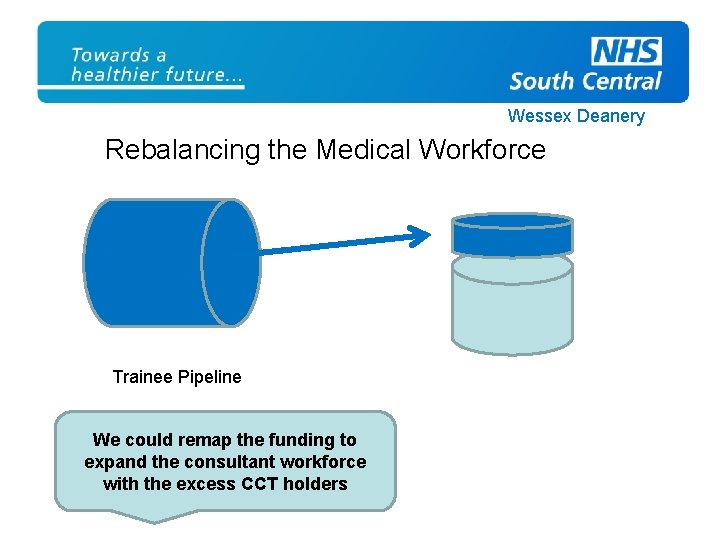
Wessex Deanery Rebalancing the Medical Workforce Trainee Pipeline We could remap the funding to expand the consultant workforce with the excess CCT holders
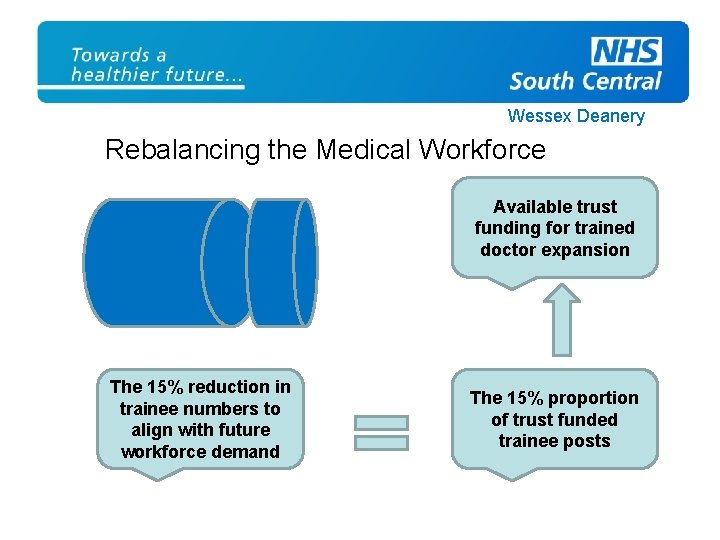
Wessex Deanery Rebalancing the Medical Workforce Available trust funding for trained doctor expansion The 15% reduction in trainee numbers to align with future workforce demand The 15% proportion of trust funded trainee posts
What shape of service? • Trained doctor delivered service • Generalists trained to higher level • Majority of specialists still have generalist skills • Blurring community / hospital distinction • Multi-professional teams Wessex Deanery
Plan • • Wessex Deanery Reduction in overall ST 1/CT 1 entry points Rebalance specialty and GP Rebalance geographically Look at higher specialty training posts – – Too many surgical Still gaps in other specialties • Demand need may vary with different service models and financial situation

Wessex Deanery
Supporting COGPED Excellence In Medical Education 9 th National Multi-specialty Conference for Heads of Schools, Programme Directors, Directors of Medical Education 25 & 26 th January 2011
- Slides: 23