
Were the Dark Ages really that Dark Periodization


- Slides: 53
Were the “Dark Ages” really that Dark?
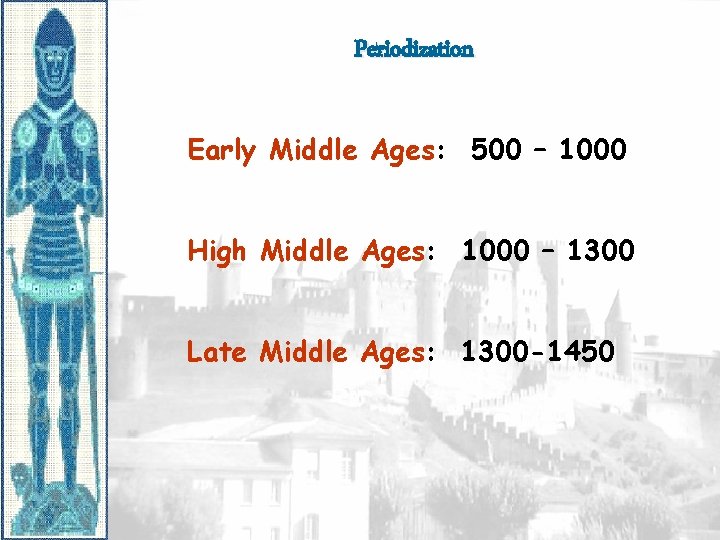
Periodization Early Middle Ages: 500 – 1000 High Middle Ages: 1000 – 1300 Late Middle Ages: 1300 -1450
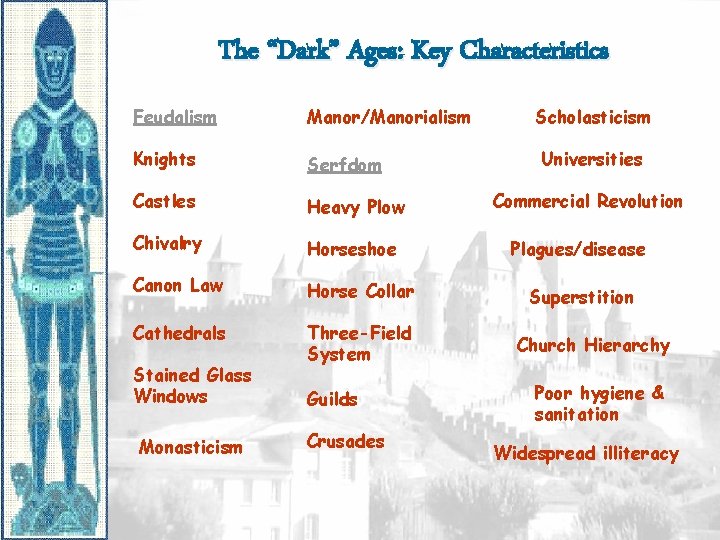
The “Dark” Ages: Key Characteristics Feudalism Manor/Manorialism Knights Serfdom Castles Heavy Plow Chivalry Horseshoe Canon Law Horse Collar Cathedrals Three-Field System Stained Glass Windows Monasticism Guilds Crusades Scholasticism Universities Commercial Revolution Plagues/disease Superstition Church Hierarchy Poor hygiene & sanitation Widespread illiteracy
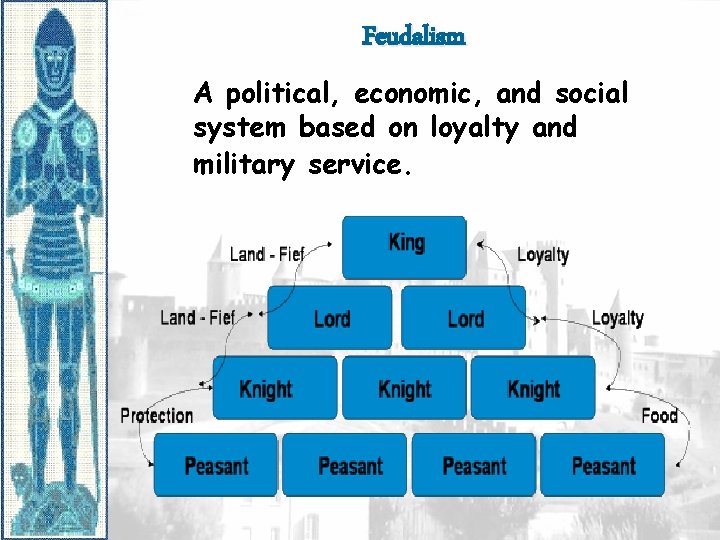
Feudalism A political, economic, and social system based on loyalty and military service.
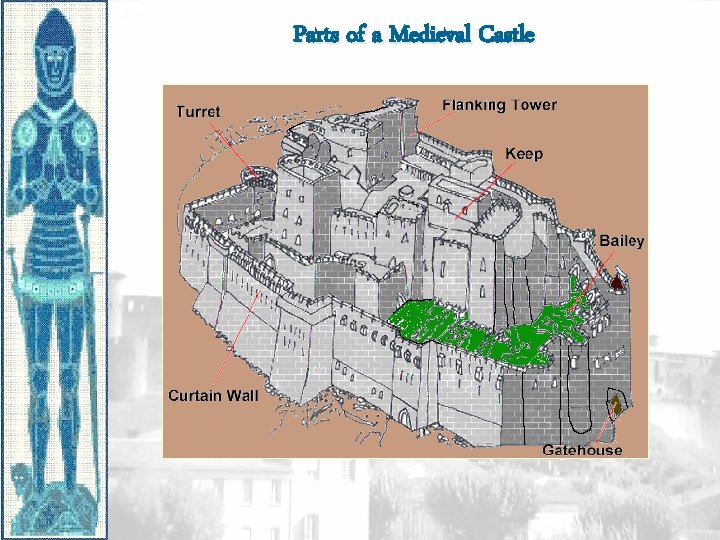
Parts of a Medieval Castle
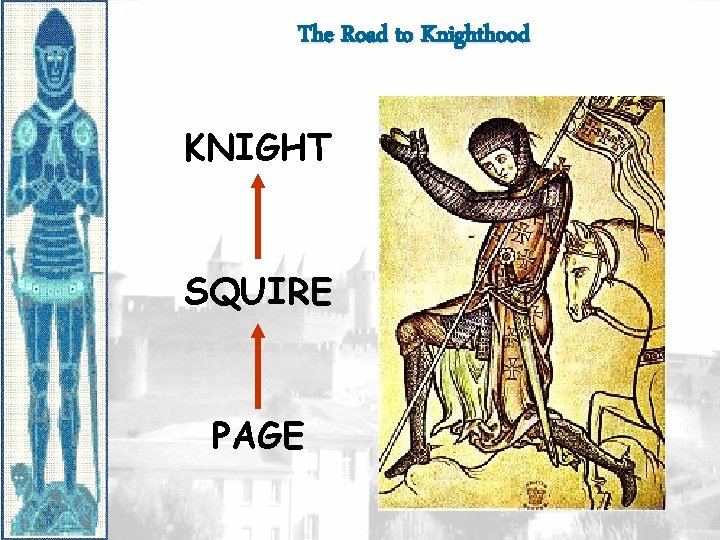
The Road to Knighthood KNIGHT SQUIRE PAGE
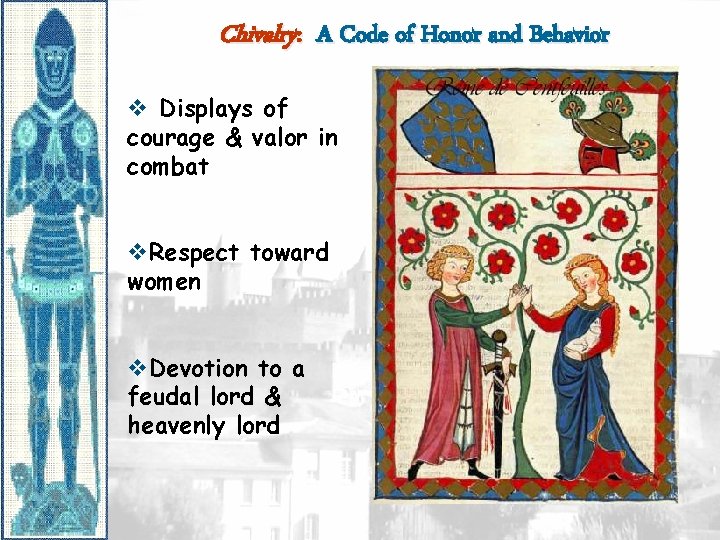
Chivalry: A Code of Honor and Behavior v Displays of courage & valor in combat v. Respect toward women v. Devotion to a feudal lord & heavenly lord
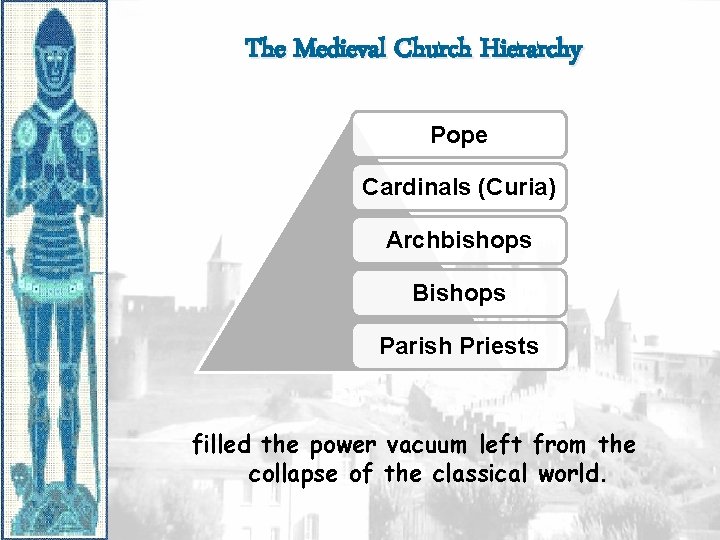
The Medieval Church Hierarchy Pope Cardinals (Curia) Archbishops Bishops Parish Priests filled the power vacuum left from the collapse of the classical world.
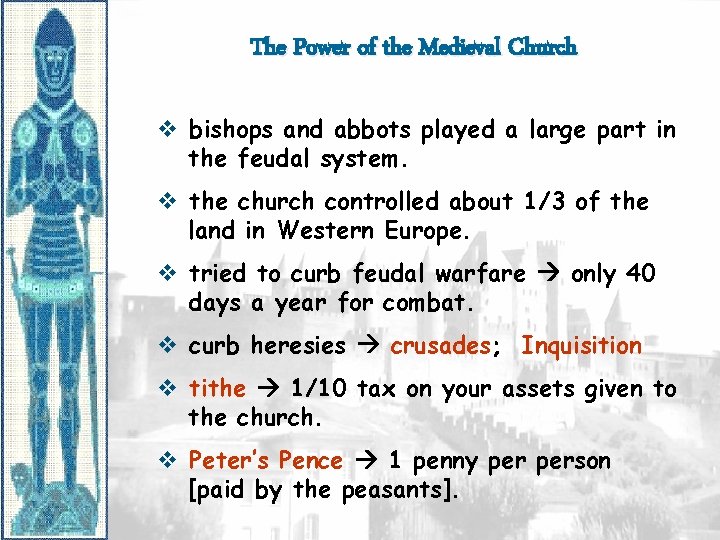
The Power of the Medieval Church v bishops and abbots played a large part in the feudal system. v the church controlled about 1/3 of the land in Western Europe. v tried to curb feudal warfare only 40 days a year for combat. v curb heresies crusades; Inquisition v tithe 1/10 tax on your assets given to the church. v Peter’s Pence 1 penny person [paid by the peasants].
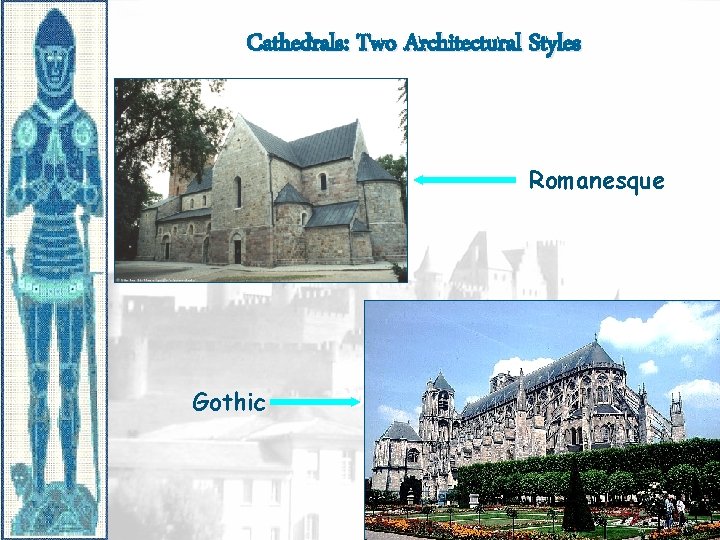
Cathedrals: Two Architectural Styles Romanesque Gothic
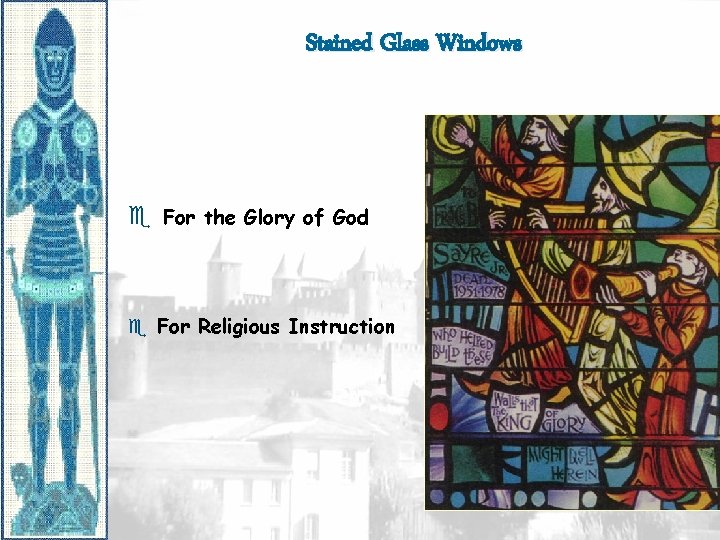
Stained Glass Windows e For the Glory of God e For Religious Instruction
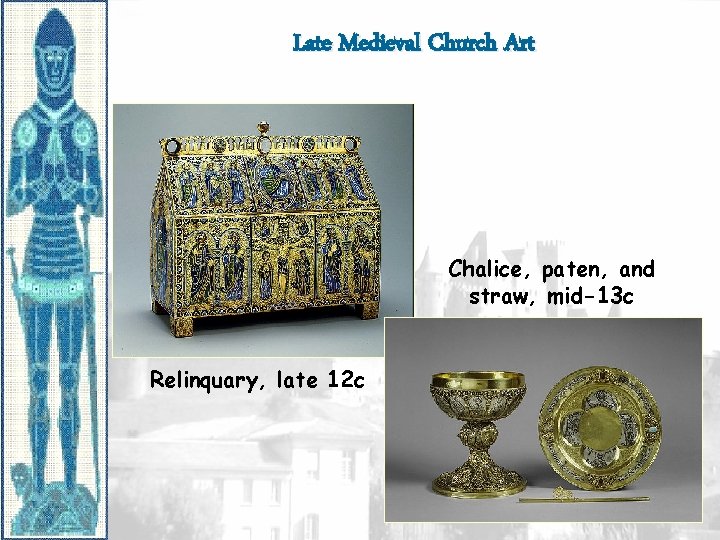
Late Medieval Church Art Chalice, paten, and straw, mid-13 c Relinquary, late 12 c
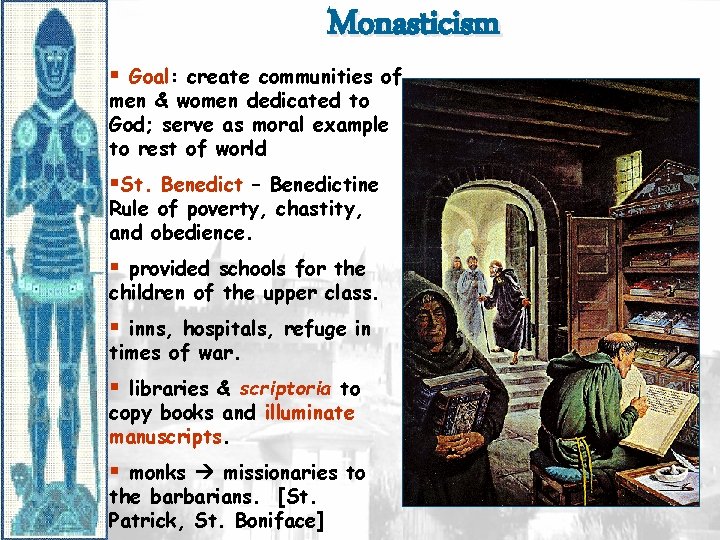
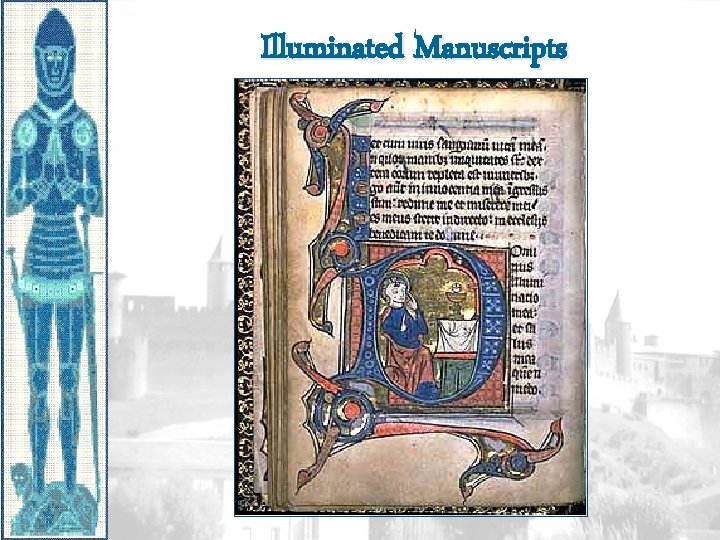
Monasticism § Goal: create communities of men & women dedicated to God; serve as moral example to rest of world §St. Benedict – Benedictine Rule of poverty, chastity, and obedience. § provided schools for the children of the upper class. § inns, hospitals, refuge in times of war. § libraries & scriptoria to copy books and illuminate manuscripts. § monks missionaries to the barbarians. [St. Patrick, St. Boniface]
Illuminated Manuscripts
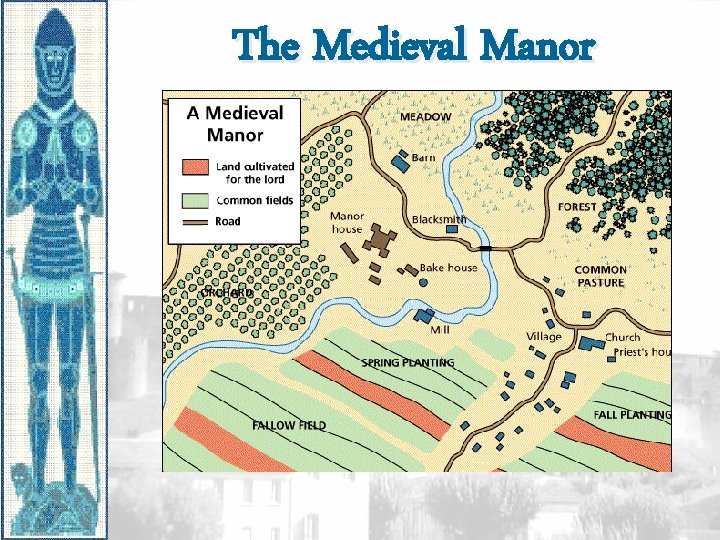
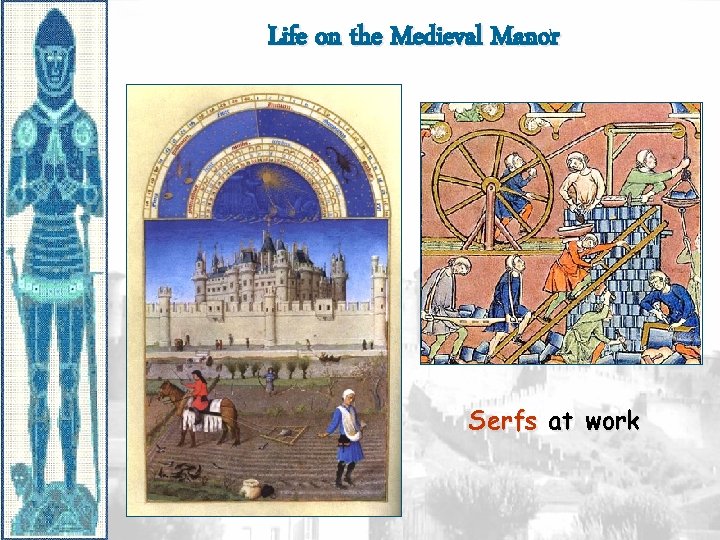
The Medieval Manor
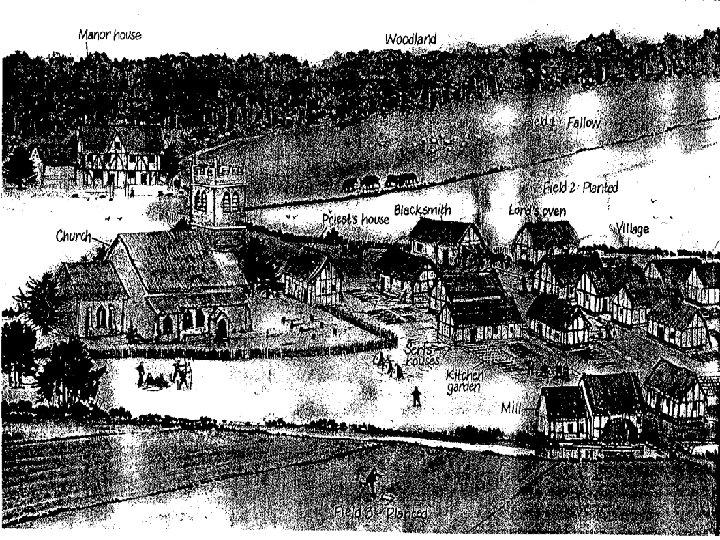
Life on the Medieval Manor Serfs at work
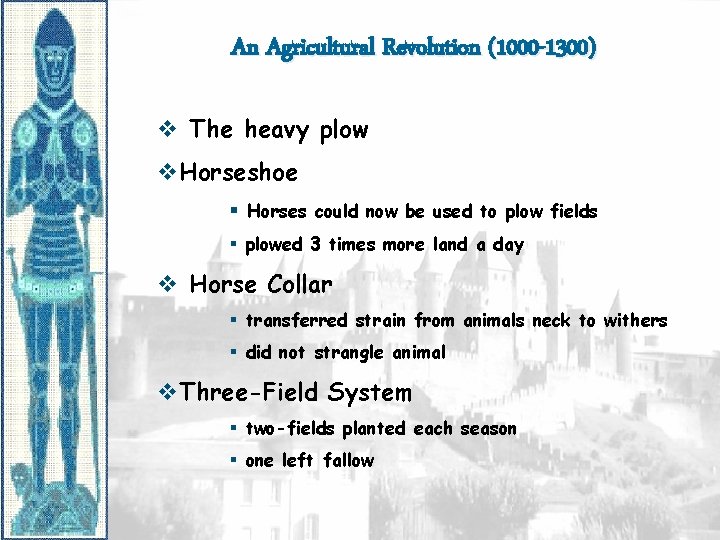
An Agricultural Revolution (1000 -1300) v The heavy plow v. Horseshoe § Horses could now be used to plow fields § plowed 3 times more land a day v Horse Collar § transferred strain from animals neck to withers § did not strangle animal v. Three-Field System § two-fields planted each season § one left fallow
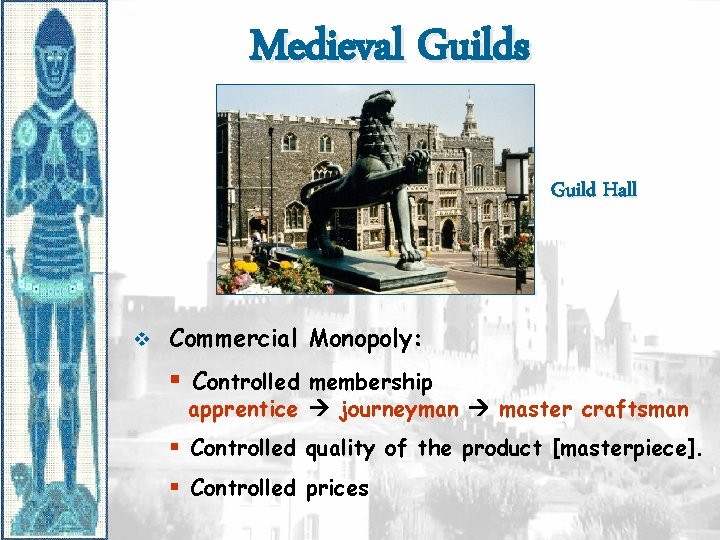
Medieval Guilds Guild Hall v Commercial Monopoly: § Controlled membership apprentice journeyman master craftsman § Controlled quality of the product [masterpiece]. § Controlled prices
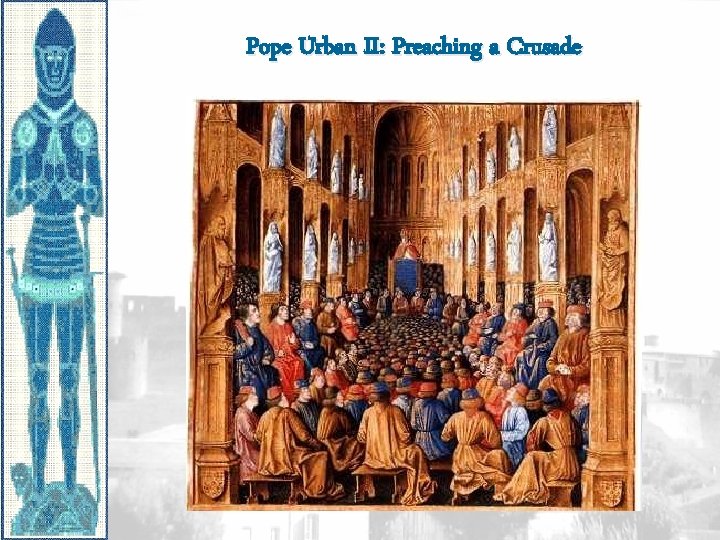
Pope Urban II: Preaching a Crusade
Christian Crusades: East and West
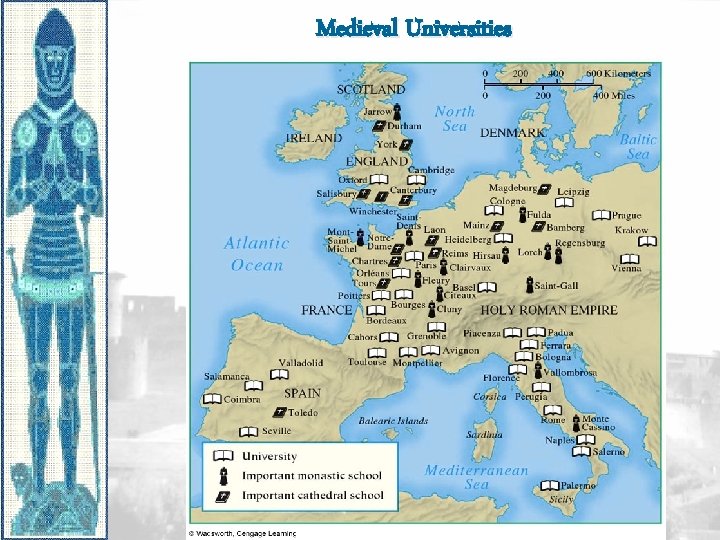
Medieval Universities
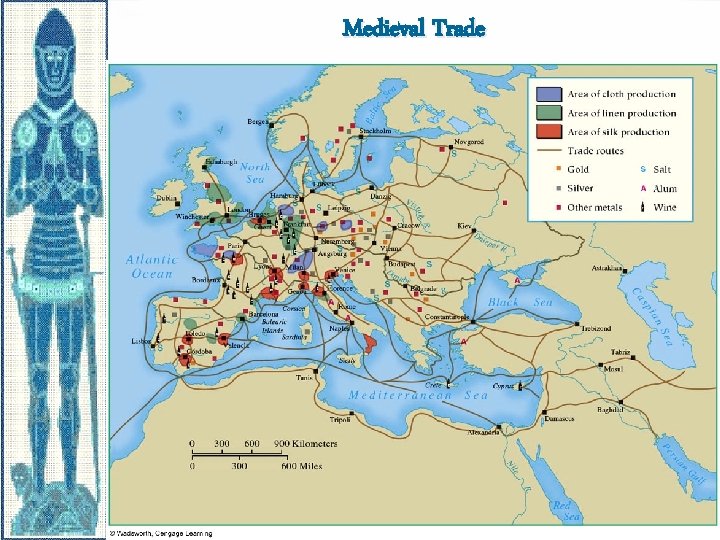
Medieval Trade
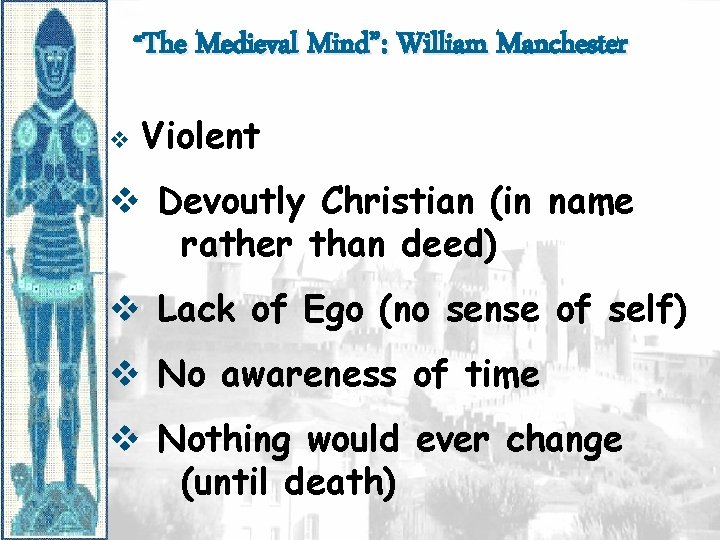
“The Medieval Mind”: William Manchester v Violent v Devoutly Christian (in name rather than deed) v Lack of Ego (no sense of self) v No awareness of time v Nothing would ever change (until death)
What caused the down fall of the three pillars of the Middle Ages? Why?
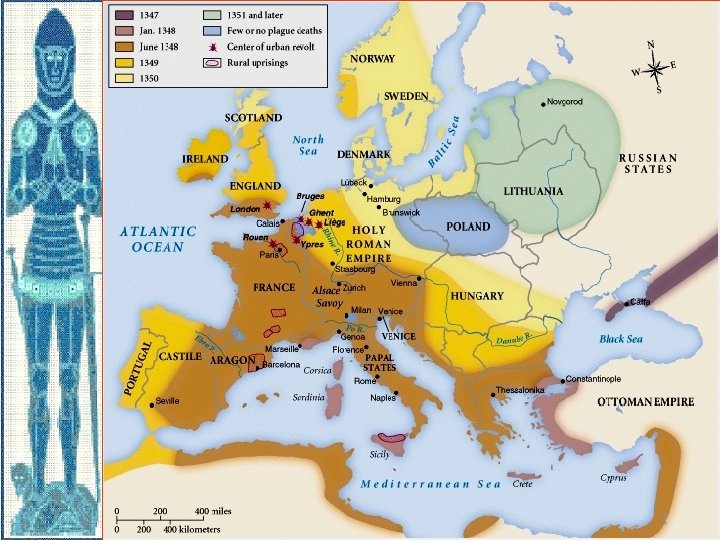
The Black Death
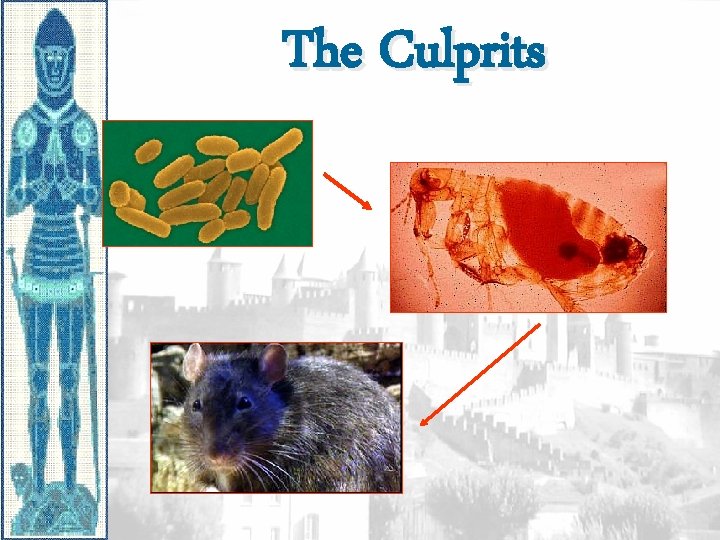
The Culprits
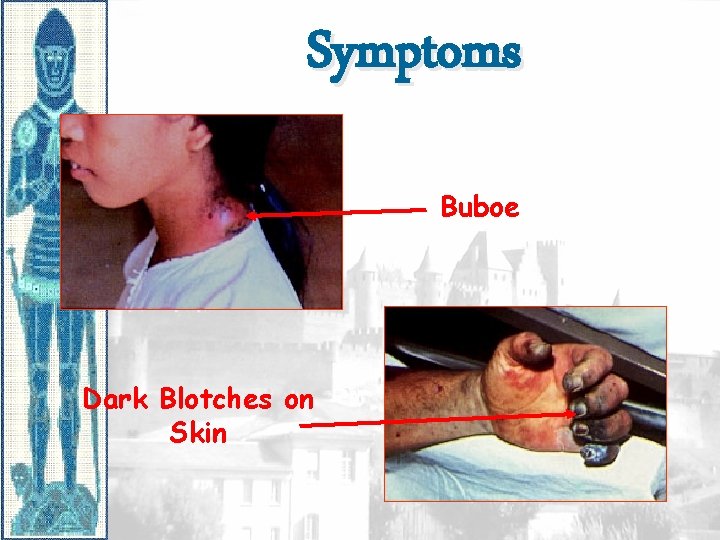
Symptoms Buboe Dark Blotches on Skin
Causes of the Black Death: v “Little Ice Age” in Europe (1300 -1450) v Great Famine (1315 -1322)= chronic malnutrition v Gov’ts ineffective in famine relief v Little land left in Europe for agriculture v New long-distance trade routes opened (Italians); acquire grain from abroad
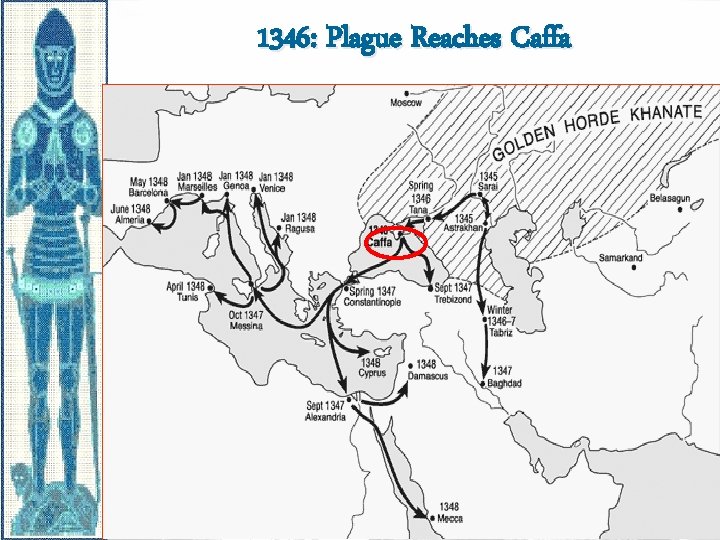
1346: Plague Reaches Caffa
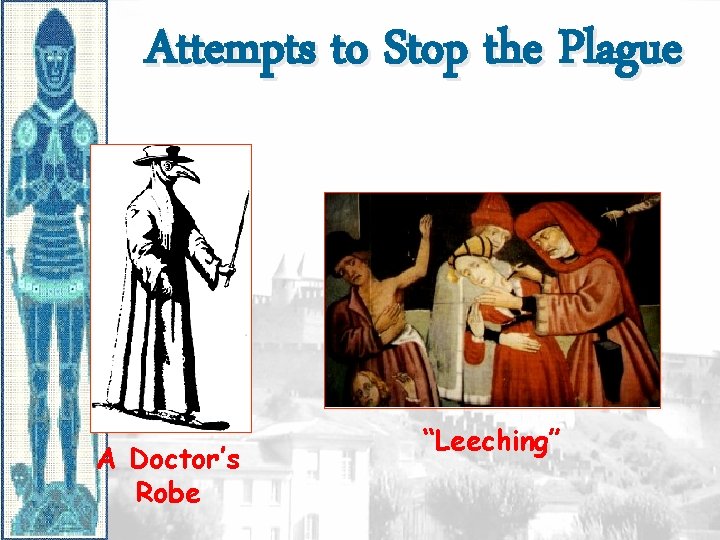
Attempts to Stop the Plague A Doctor’s Robe “Leeching”
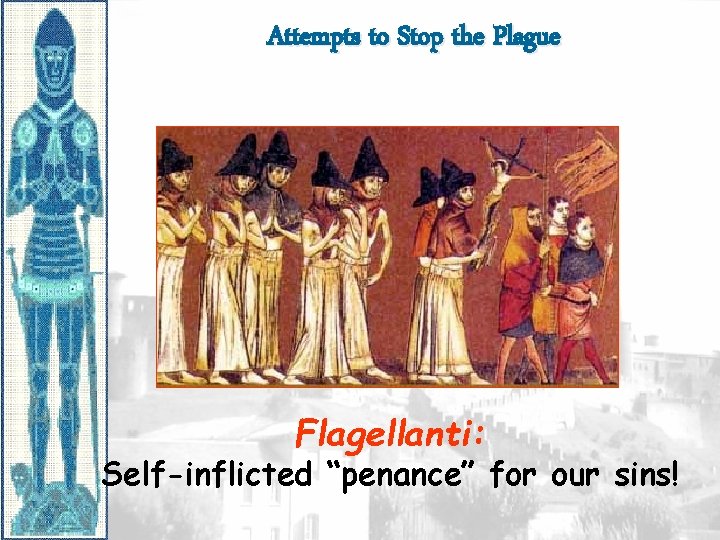
Attempts to Stop the Plague Flagellanti: Self-inflicted “penance” for our sins!
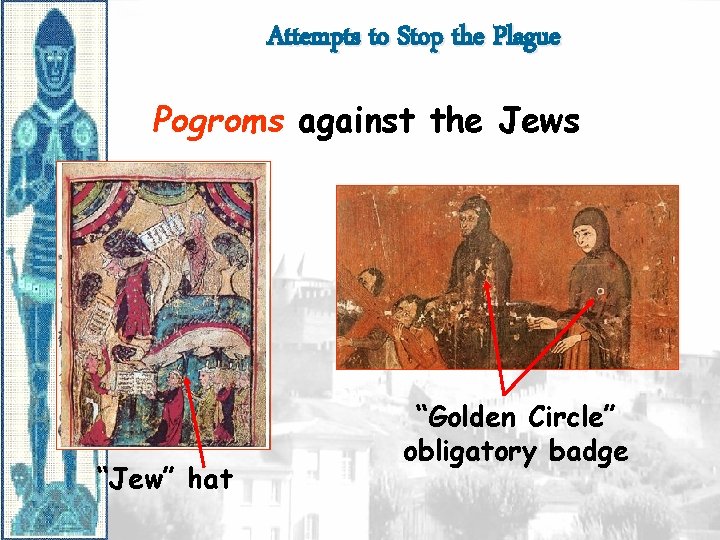
Attempts to Stop the Plague Pogroms against the Jews “Jew” hat “Golden Circle” obligatory badge
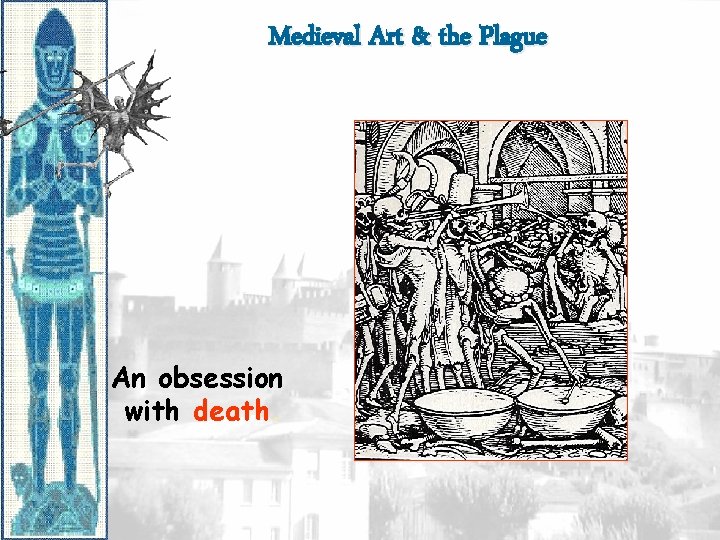
Medieval Art & the Plague An obsession with death.
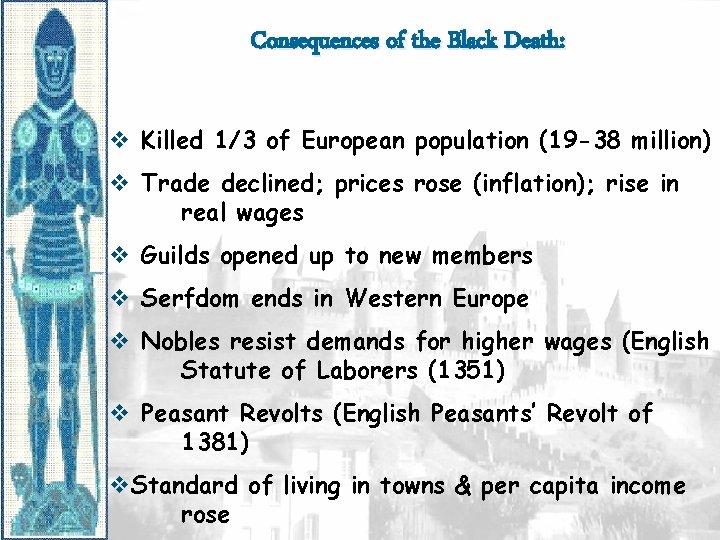
Consequences of the Black Death: v Killed 1/3 of European population (19 -38 million) v Trade declined; prices rose (inflation); rise in real wages v Guilds opened up to new members v Serfdom ends in Western Europe v Nobles resist demands for higher wages (English Statute of Laborers (1351) v Peasant Revolts (English Peasants’ Revolt of 1381) v. Standard of living in towns & per capita income rose
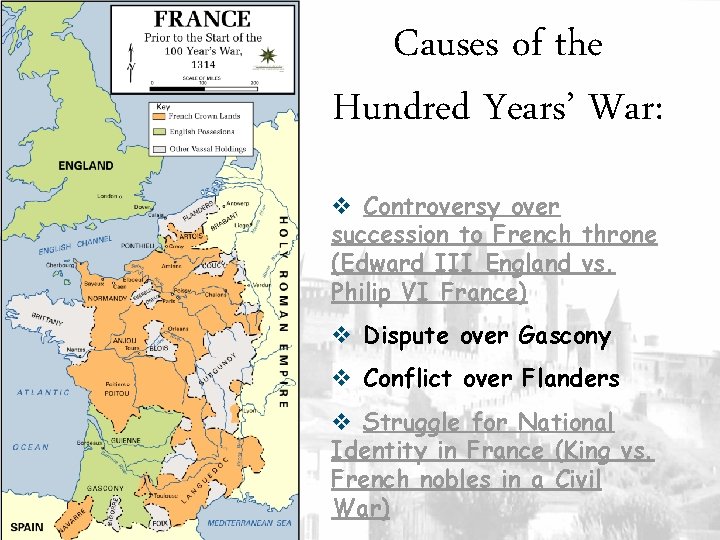
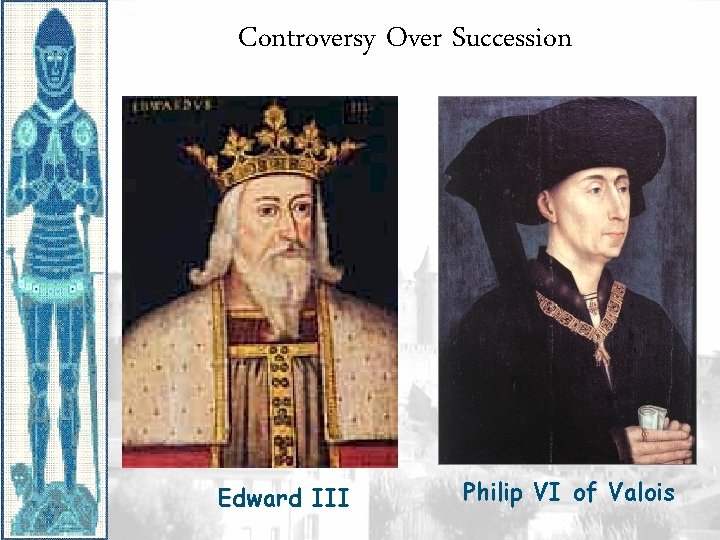
Causes of the Hundred Years’ War: v Controversy over succession to French throne (Edward III England vs. Philip VI France) v Dispute over Gascony v Conflict over Flanders v Struggle for National Identity in France (King vs. French nobles in a Civil War)
Controversy Over Succession Edward III Philip VI of Valois
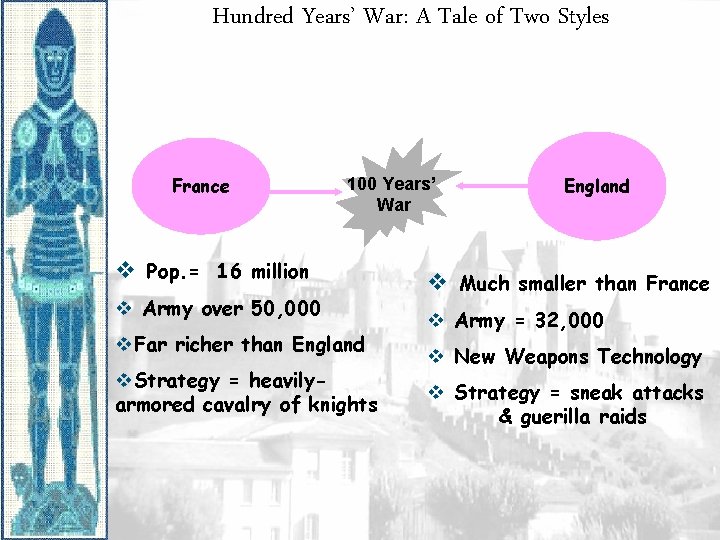
Hundred Years’ War: A Tale of Two Styles France 100 Years’ War v Pop. = 16 million v Army over 50, 000 v. Far richer than England v. Strategy = heavilyarmored cavalry of knights England v Much smaller than France v Army = 32, 000 v New Weapons Technology v Strategy = sneak attacks & guerilla raids
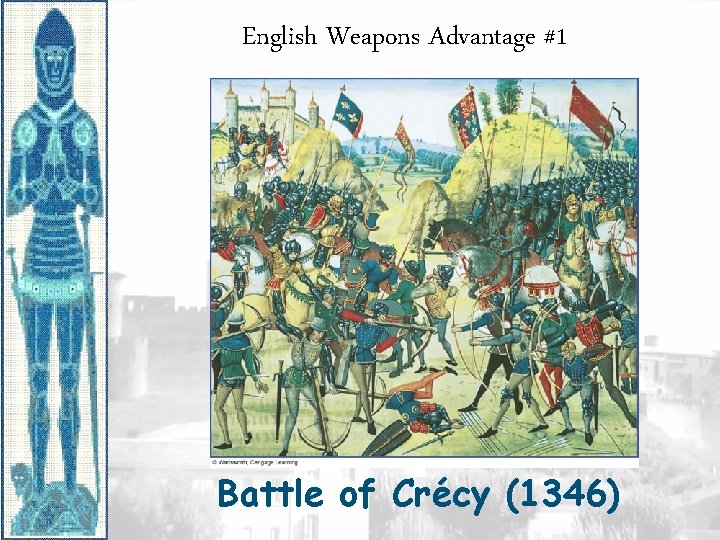
English Weapons Advantage #1 Battle of Crécy (1346)
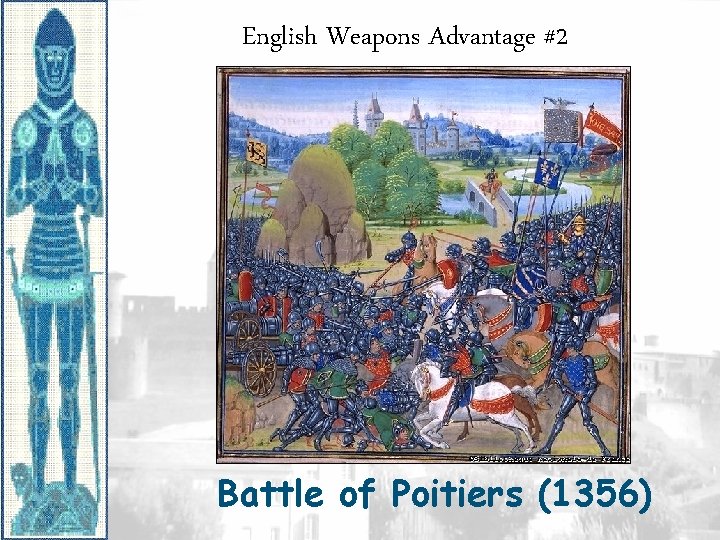
English Weapons Advantage #2 Battle of Poitiers (1356)
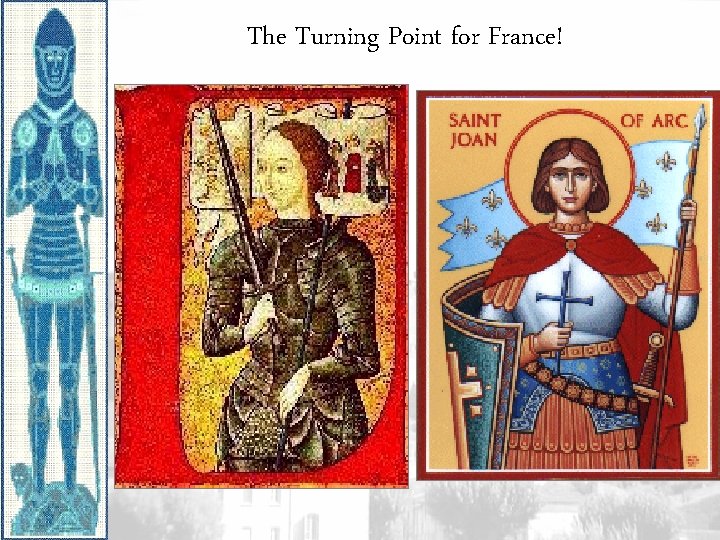
The Turning Point for France!
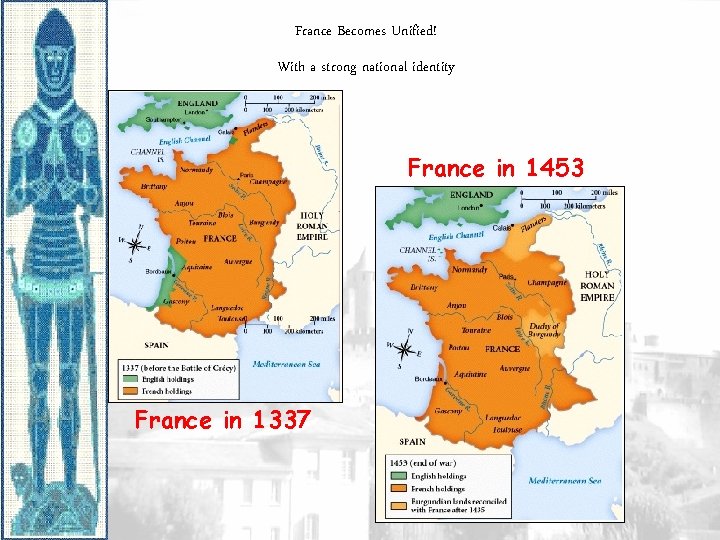
France Becomes Unified! With a strong national identity France in 1453 France in 1337
Consequences of the 100 Years’ War: v Death toll was huge on both sides; Economies of both countries (+ Low Countries) devastated v. Ended feudal tactics & chivalrous rules of war (knights & castles now obsolete) v Formation of national identities in England & France v People in both countries now saw king as a national leader v Fostered development of Parliament in England (Power of the Purse!)
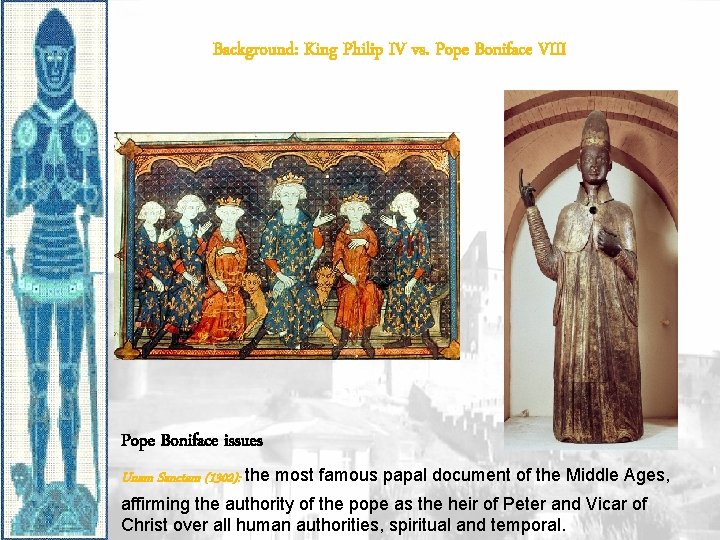
Background: King Philip IV vs. Pope Boniface VIII Pope Boniface issues Unam Sanctam (1302): the most famous papal document of the Middle Ages, affirming the authority of the pope as the heir of Peter and Vicar of Christ over all human authorities, spiritual and temporal.
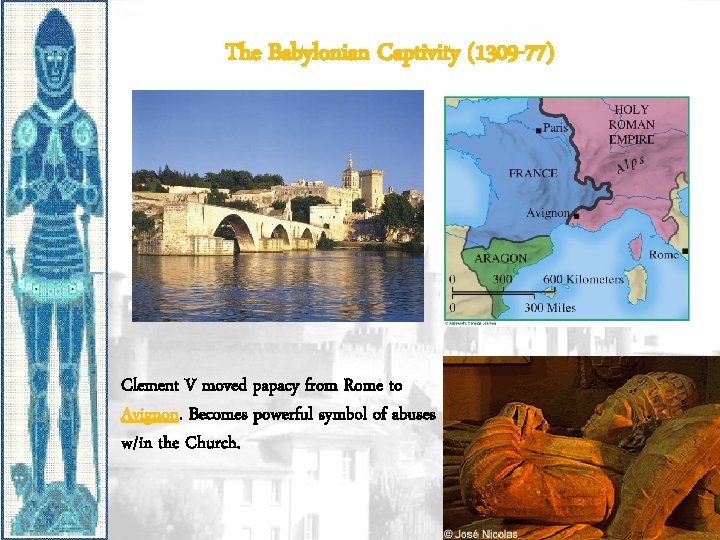
The Babylonian Captivity (1309 -77) Clement V moved papacy from Rome to Avignon. Becomes powerful symbol of abuses w/in the Church.
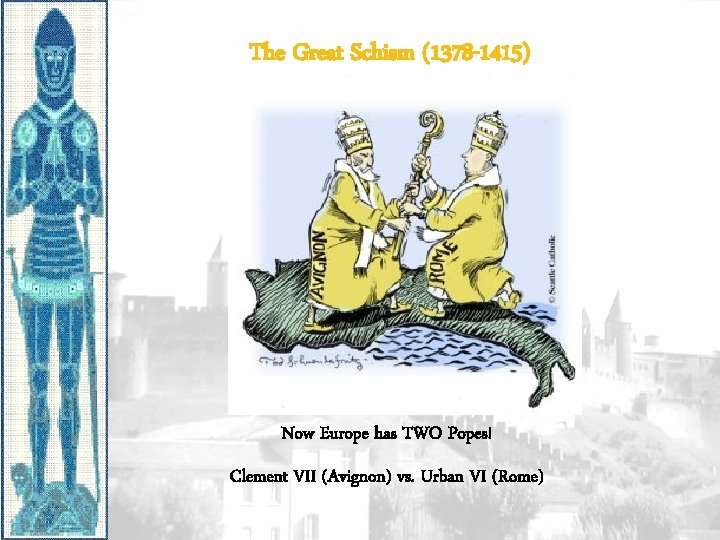
The Great Schism (1378 -1415) Now Europe has TWO Popes! Clement VII (Avignon) vs. Urban VI (Rome)
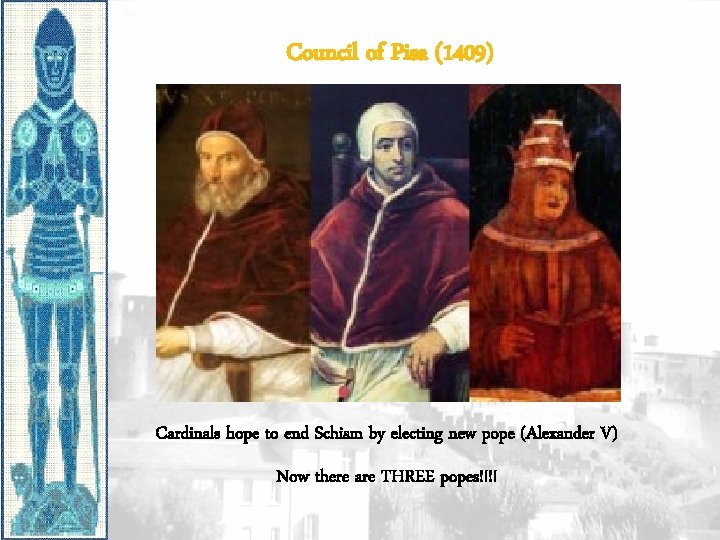
Council of Pisa (1409) Cardinals hope to end Schism by electing new pope (Alexander V) Now there are THREE popes!!!!
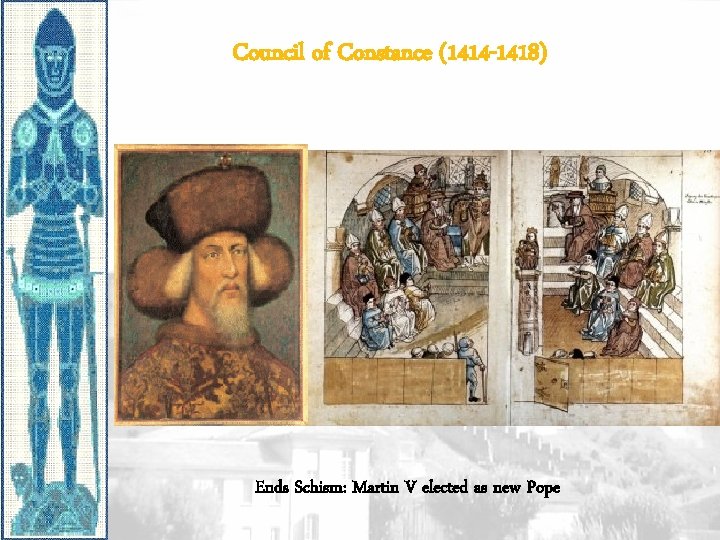
Council of Constance (1414 -1418) Ends Schism: Martin V elected as new Pope
Consequences of the Great Schism: v Badly damaged the faith of many Christians v Weakened the power & prestige of papacy v Call to restructure Church from papal hierarchy to councils made up of clergy (conciliarism) v growth of lay piety & mysticism (ex. Thomas à Kempis, Imitation of Christ & Bridget of Sweden) v Scholars such as Wyclif & Hus began to challenge church practices