
Were passionate about Putting patients first Quality safety
We’re passionate about • Putting patients first • Quality, safety and patient experience • Transforming services to meet the health needs of future generations

Opening of the Stockton and Darlington Railway Painting in 1880’s, crowds are watching the inaugural train cross the Skerne Bridge in Darlington.
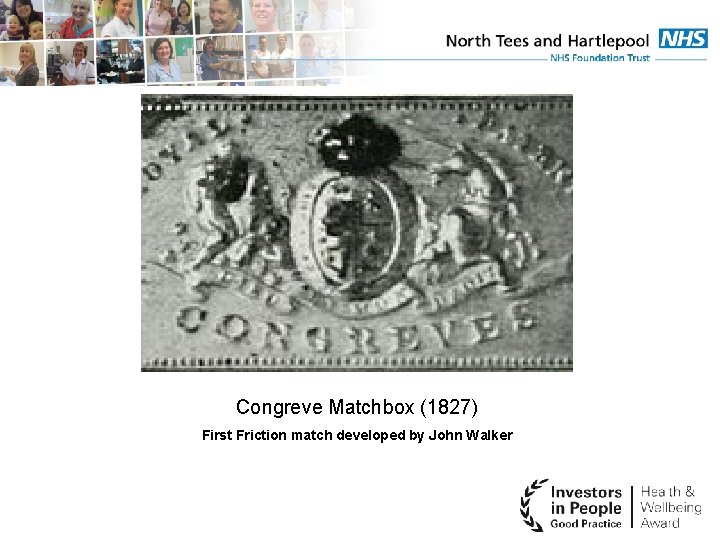
Congreve Matchbox (1827) First Friction match developed by John Walker
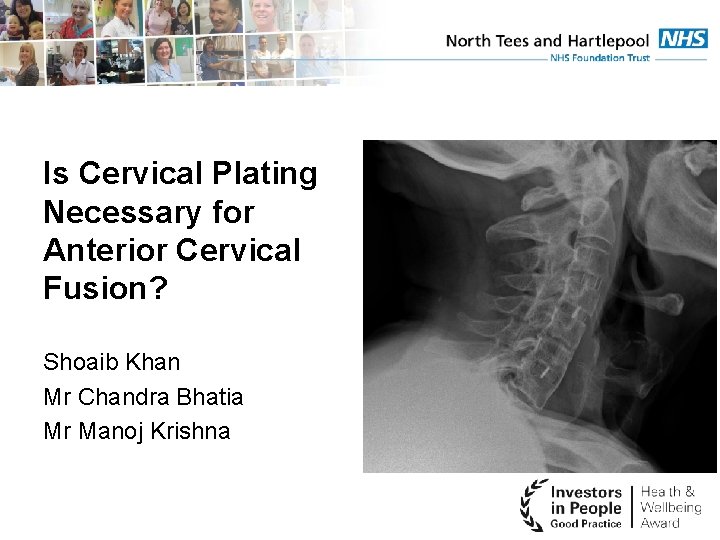
Is Cervical Plating Necessary for Anterior Cervical Fusion? Shoaib Khan Mr Chandra Bhatia Mr Manoj Krishna
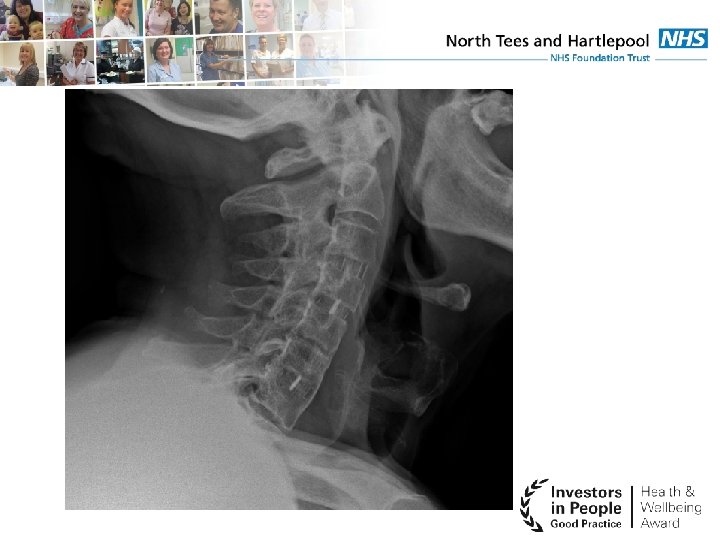
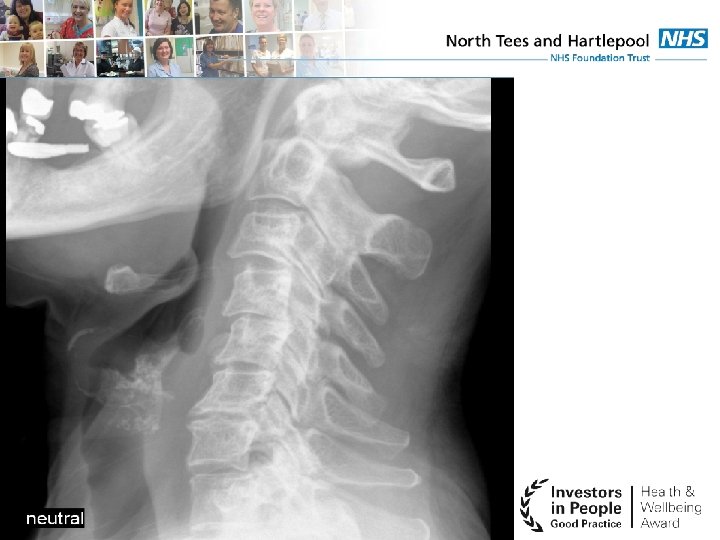
Degenerative Disc Disease • Natural Aging Process • Nerve Root or Spinal Cord compression • Significant pain, Instability, Radiculopathy, Myelopathy or a combination of symptoms. • Loss of disc space height, loss of foraminal area, disc bulging or protruding osteophytes.
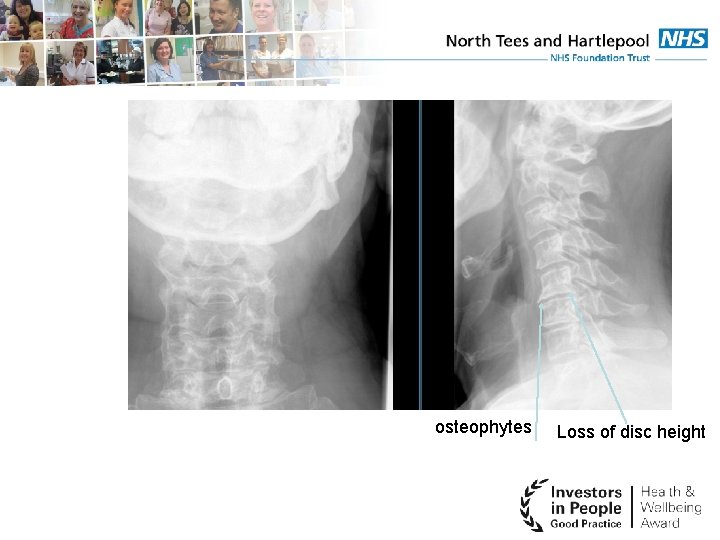
osteophytes Loss of disc height
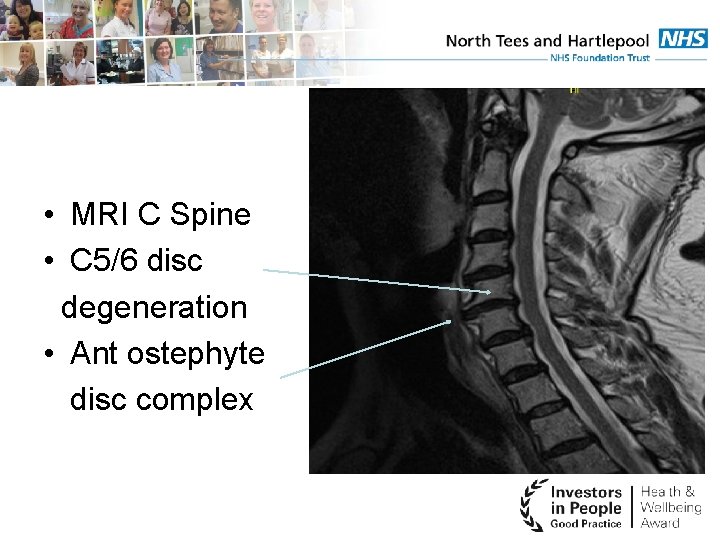
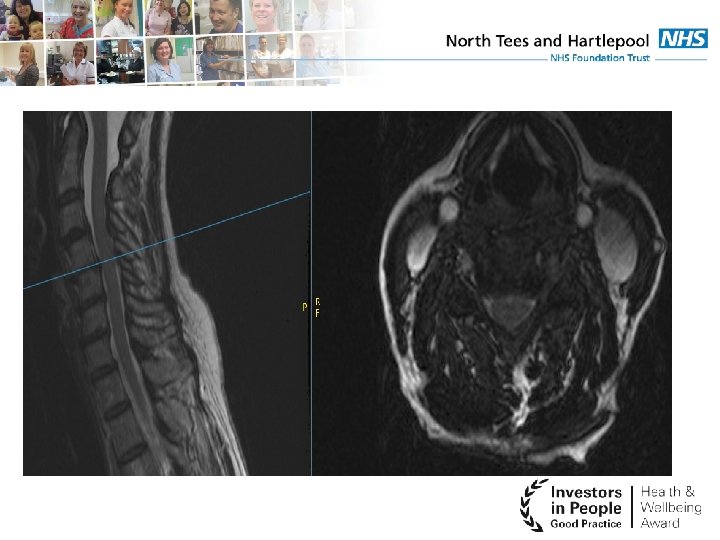
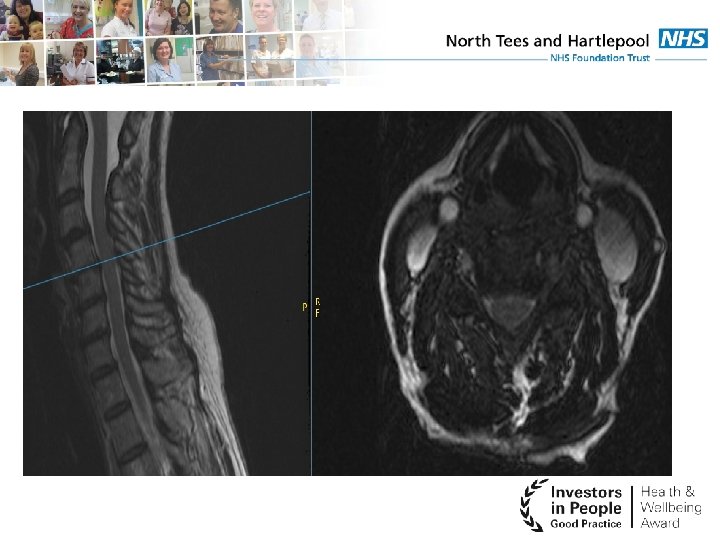
• MRI C Spine • C 5/6 disc degeneration • Ant ostephyte disc complex
Management • Conservative/non-operative treatment • Failure to improve surgical treatment • Surgical Treatment: Decompression, restoration of alignment and stability – Cervical Fusion – Cervical Disc replacement
History of Procedure Three common techniques for cervical fusion using autograft: • Robinson and Smith- tricortical iliac crest autograft • Cloward- circular dowel graft • Bailey and Badgley- slot graft or trough-type graft
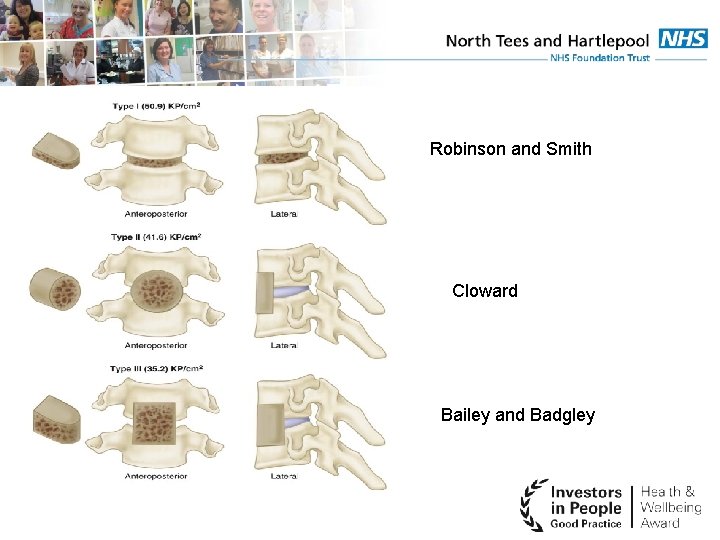
Robinson and Smith Cloward Bailey and Badgley
Mechanism • Load on the vertebrae: Axial compression • Strong configuration of Robinson & Smith: intact cortical shell of the vertebral body • Preserving endplate prevents collapse into cancellous portion of body
Surgical Treatment • Decompression: Removal of disc or bony structures freeing up nerve/spinal cord. • Restoration of alignment: Disc and neural foraminal height and normal vertebral angle • Stability: Elimination of motion of segment
Surgical Treatment • Fusion: Structural support to replace the disc • Discectomy with or without fusion • Discectomy without fusion: Fusion rate 70% to 80%
Surgical Technique • Bone grafts: Stimulate the fusion, generally maintains its structural integrity, harvested from Iliac Crest • Structural support: Auto/Allograft, Cage filled with bone graft or artificial bone and/or an anterior plate
Bone Grafts • • Autograft: Iliac crest Allograft: Iliac bone or fibula Demineralized bone matrix Bovine bone or calf bone (Xenograft)
Bone Graft Problems • Short and long-term morbidity • Postoperative pain • Wound hematoma • Infection • Pelvic fracture • Nerve palsy • Chronic donor site pain (Mconnel 2003)
Graft Failure • Collapse • Extrusion • Impaction into the spinal canal or related foramens • Subsidence • Resorption
Bone Substitutes (obviate the need for bone graft) • Polymethylmethacrylate • Ceramics (osteoconductive scaffolds) • Biocompatible polymers
Advantages of Plate • • • Initial stability Early mobilization Minimizing external bracing, Prevention of bone graft collapse/extrusion Improved bone fusion Maintenance of sagittal alignment.
Problems with Plate • • Hardware Failure Recurrent Laryngeal Nerve Injury Esophageal Injury Spinal Cord/ Nerve Root Injury Vertebral Artery Injury Wound Infection ASD
Interbody Cages • Provide stability, fills the disc space, require less structural bone graft • Maintain spinal alignment, neuroforaminal height, prevent graft dislodgement and collapse, enhance fusion rates • Carriers for osteoinductive or osteoconductive materials
Varieties of Cages • • PEEK Metal Thread Metal Mesh Tricalcium Phosphate
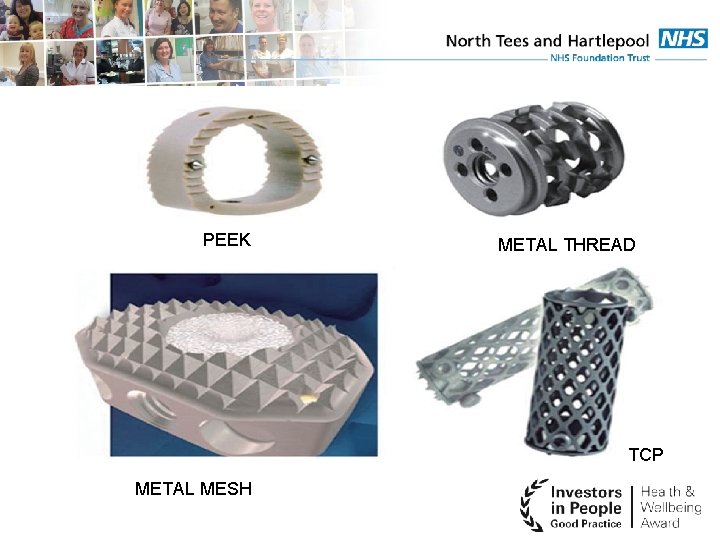
PEEK METAL THREAD TCP METAL MESH
Advantages of Cages • • Simpler surgical procedure Short operating time Smaller amount of harvested bone Less invasive Decreased blood loss Correct cervical kyphosis Restore disc height.
Post Op Care • • Analgesia Orally as tolerated Monitoring Mobilize as comfortable
Reported Complications • • • Retropharyngeal hematoma Dysphagia Dysphonia Nerve Injuries Spinal Cord Injuries Vascular Injuries Esophageal Injury Trachea Injury Thoracic Duct Injury Pseudarthrosis ASD

LITERATURE REVIEW
Solis cage (PEEK) for anterior cervical fusion: preliminary radiological results with emphasis on fusion and subsidence • • Retrospective Study Single Level ACDF with Solis (PEEK) cages Radiculopathy & Myelopathy Fusion rate: 93. 33% at 6 months No migration or extrusion of the cage Low subsidence rate Stable construct Arvind G. Kulkarni, MS(Orth), D’Orth, FCPS*, Hwan T. Hee, FRCS, Hee K. Wong, FRCS, MCh
Stand-alone interbody cage versus anterior cervical plate for treatment of cervical disc herniation: Sequential changes in cage subsidence • • • 18 patients single-level cervical disc herniation Radiculopathy & Myelopathy Fusion rate: 88. 8% of patients in both groups. 6 mon in cage & 7. 7 mon in plate group 1– 2 mm of subsidence early postop period No migration of cage was observed Shunsuke Fujibayashi *, Masashi Neo, Takashi Nakamura
Three-level anterior cervical discectomy and fusion with self-locking stand-alone polyetherketone cages • 15 patients with 3 -level degenerative disc disease • Radiculopathy & Myelopathy • Mean follow-up was 19. 8 months • The fusion was 93. 3% at 5. 7 months • Of 45 cages, 4 (8. 89%) cages subsided. • Subsidence cases were asymptomatic • Jian Zhou, Xilei Li, Jian Dong, Xiaogang Zhou, Taolin Fang, Hong Lin, Yiqun Ma
Our Study • • • Retrospective Radiographic Analysis ACDF without plating August 2005 to February 2014 Radiologist and Spinal Surgeon All procedures were performed in our Unit.
Assessment Criteria • Brantigan-Steffee fusion Criteria: – Denser and more mature bone fusion area than originally achieved at surgery – No interspace between the cage and the vertebral body – Mature bony trabeculae bridging the fusion area.
Demographics • • • Number of Patients: 39 Males: 18 Females: 21 Average Age: 62 years Average Follow Up: 25. 8 months Five excluded from study –Inadequate follow up
Indications for Fusion • Degenerative disc disease with Radiculopathy • Cervical Myelopathy
Number of Levels • One Level: 10 • Two Levels: 27 • Three/Four Levels: 1
Results • Fusion achieved (assessed by Independent Observer) • 28 patients (82%) at all levels • 3 patients(9%) with 2 -level surgery, one level fused • No definite fusion was observed in the remaining 3 patients (9%) CT is more accurate to assess fusion but will increase cost and exposure to radiation and is not clinically and ethically indicated if patient is asymptomatic
Non Union • Two had 2 levels fusion • One had 1 level fusion
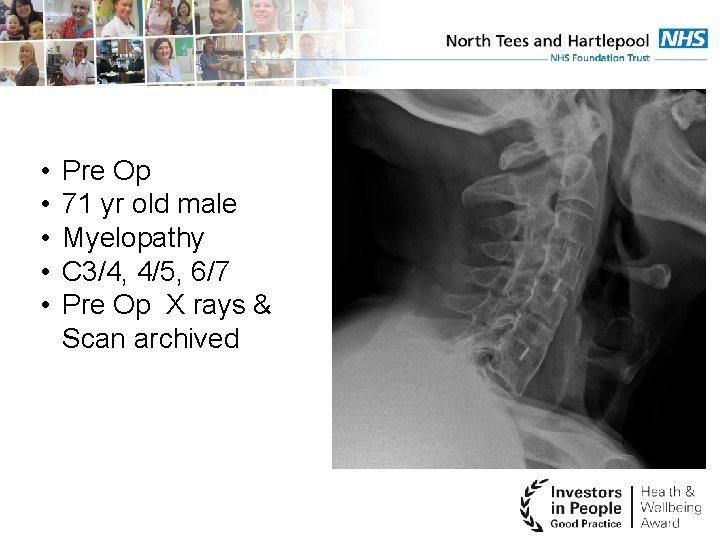
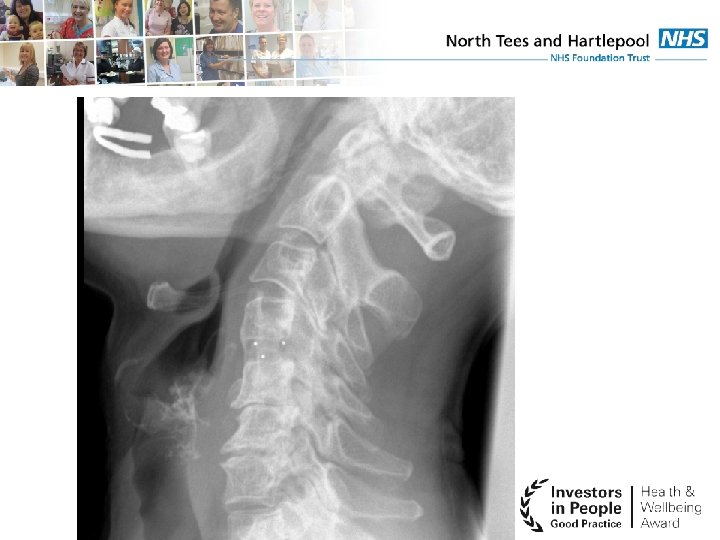
• • • Pre Op 71 yr old male Myelopathy C 3/4, 4/5, 6/7 Pre Op X rays & Scan archived
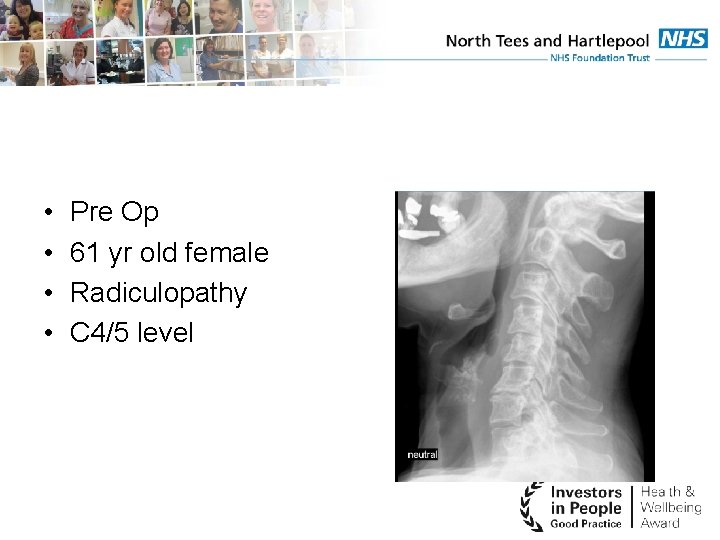
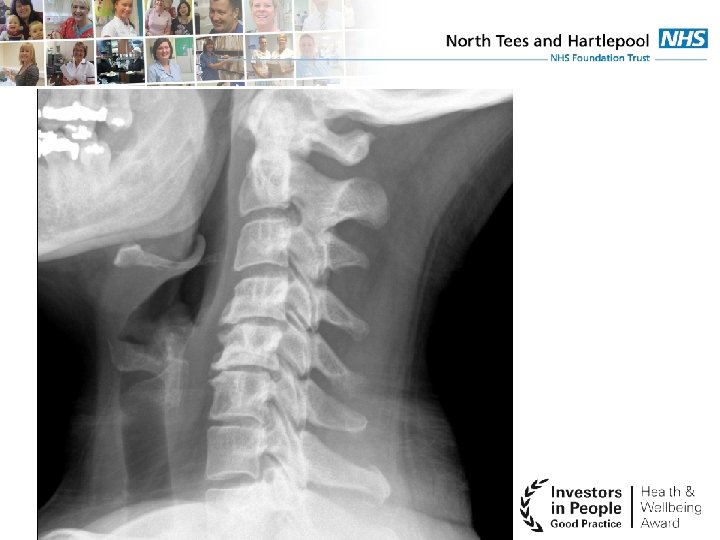
• • Pre Op 61 yr old female Radiculopathy C 4/5 level
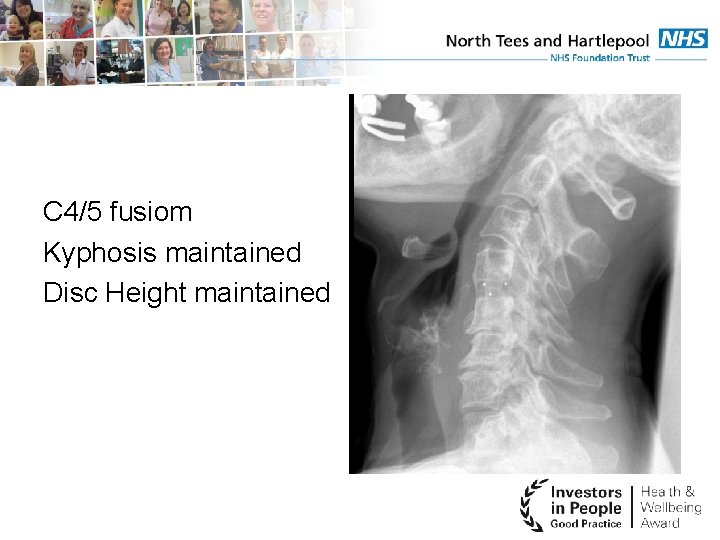
C 4/5 fusiom Kyphosis maintained Disc Height maintained
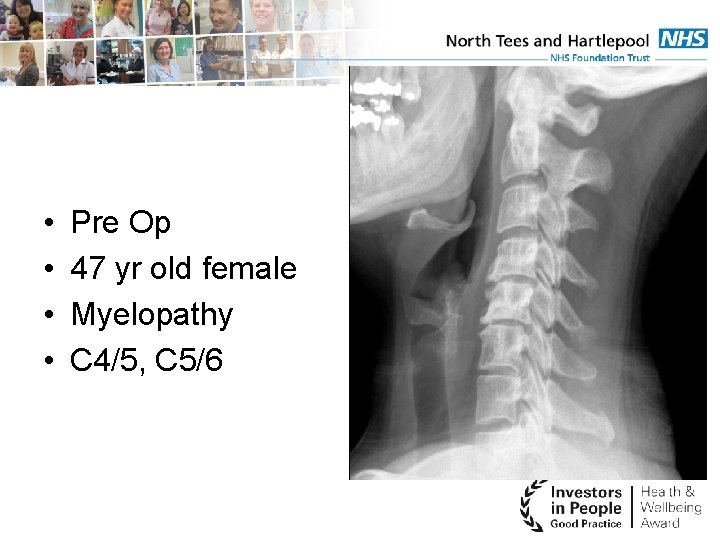
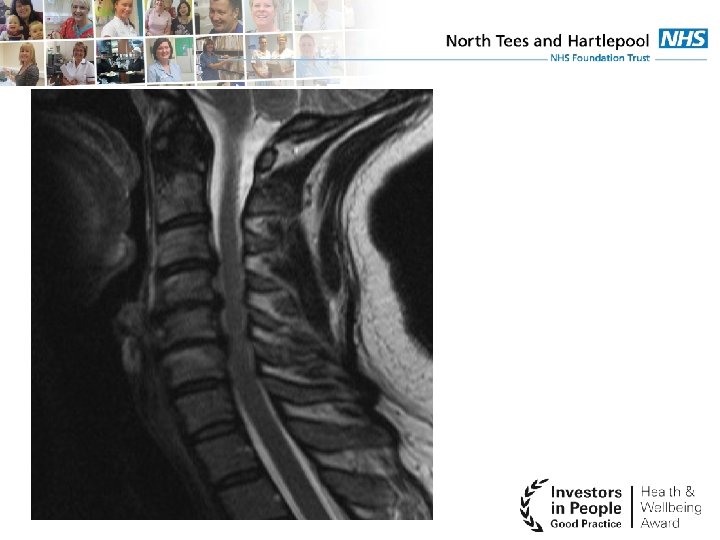
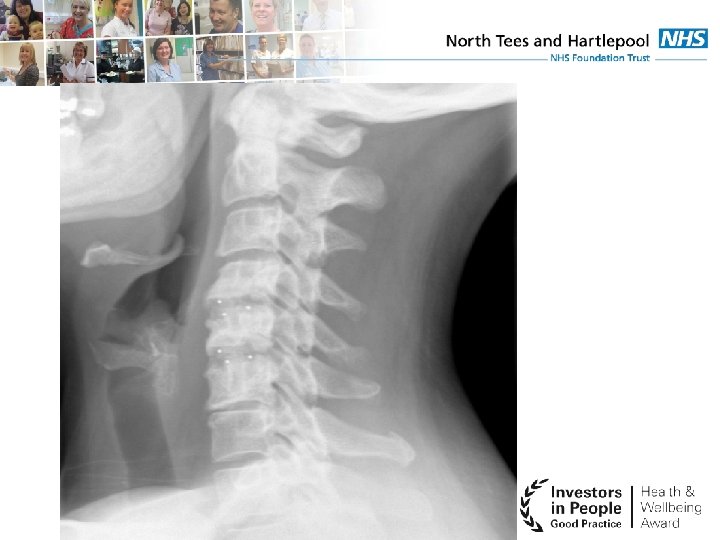
• • Pre Op 47 yr old female Myelopathy C 4/5, C 5/6
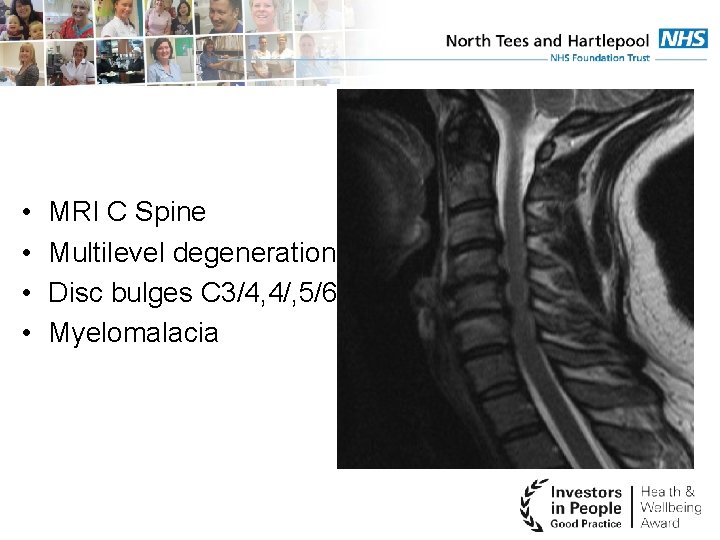
• • MRI C Spine Multilevel degeneration Disc bulges C 3/4, 4/, 5/6 Myelomalacia
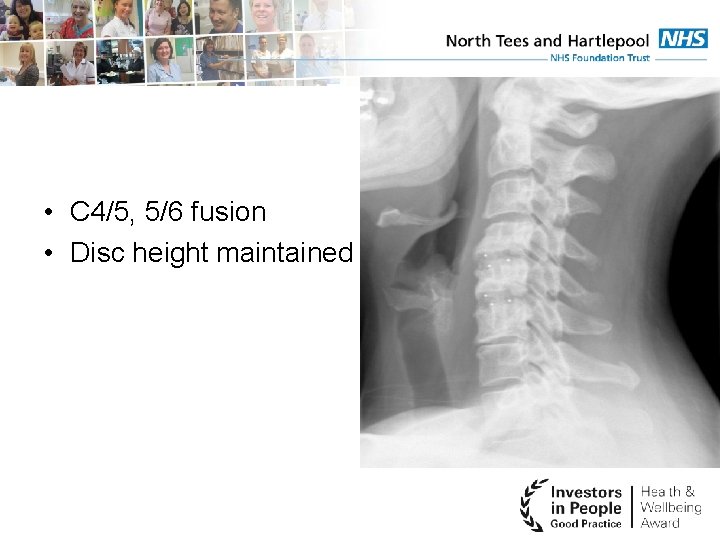
• C 4/5, 5/6 fusion • Disc height maintained
Conclusion • Rate of fusion on X rays: 82% • None of the patients required revision surgery • Plating is not necessary to attain fusion for ACDF
Our Practice • Disadvantages of Plate - Longer Surgical time - More Blood Loss - Increased cost of Surgery - ASD development - Metal work Failure
Cages Used • Solis (PEEK) by Stryker • Carbon Fiber by Depuy • PEEK cages by MBA and Alphatech.
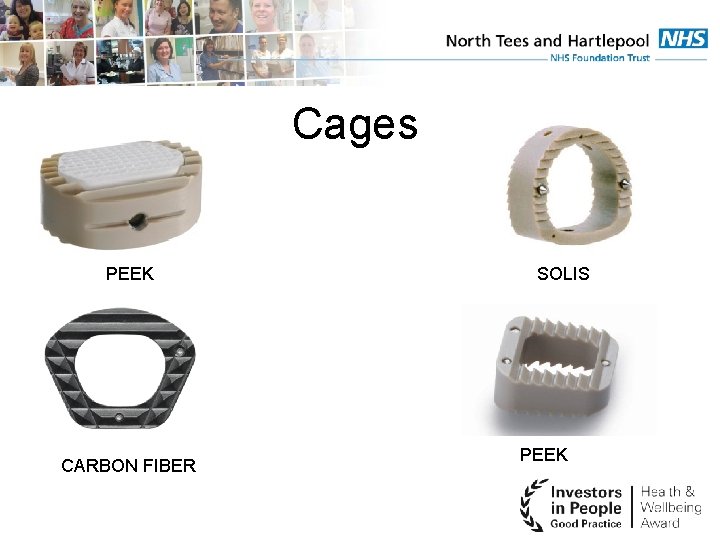
Cages PEEK CARBON FIBER SOLIS PEEK
Surgical Approach • Standard Cervical Approach between Strap muscles and Sternocleidomastoid
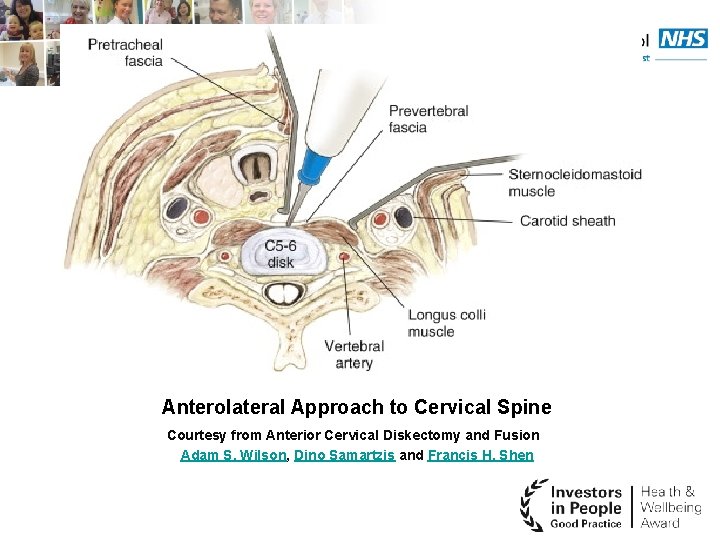
Anterolateral Approach to Cervical Spine Courtesy from Anterior Cervical Diskectomy and Fusion Adam S. Wilson, Dino Samartzis and Francis H. Shen
Surgical Technique • Distraction achieved by Caspar Distractor • Cage holder with stopper used for cage insertion • Cage insertion under Image Intensifier control • Intrinsic Compression of ligaments keep cages in situ
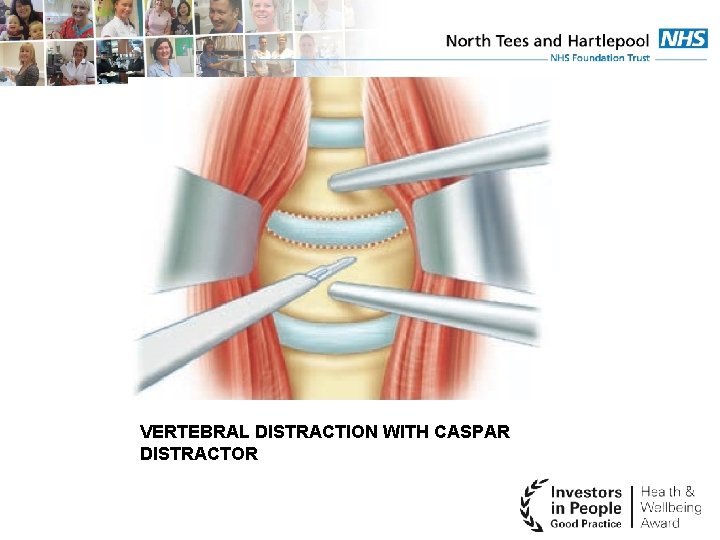
VERTEBRAL DISTRACTION WITH CASPAR DISTRACTOR
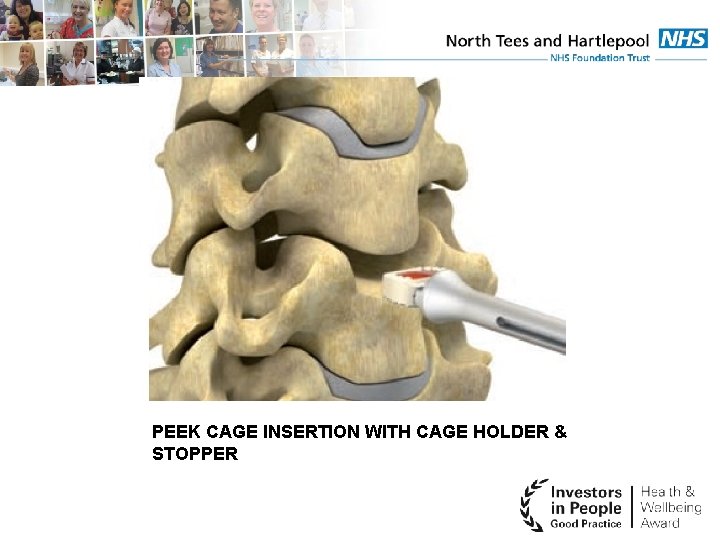
PEEK CAGE INSERTION WITH CAGE HOLDER & STOPPER
Graft options 1. Autograft (Iliac bone) 2. Iliac Crest Trephine Graft 3. Autograft from Osteophytes/bone from decompression 4. Pre filled cages(60% hydroxyapatite & 40% tricalcic phosphate) 5. Other Bone substitutes
Limitations • Subsidence: Need to work on it • Assessment of Flexion/Extension X rays • ASD development
Conclusion • Better cage designs • Tight fit to prevent migration • Cervical Spine has inherent tendency for fusion • In the economic environment nowadays, cost is an important factor in management
Conclusion • Supplementary plating with modern cages is not necessary to obtain satisfactory fusion

THANK YOU VERY MUCH
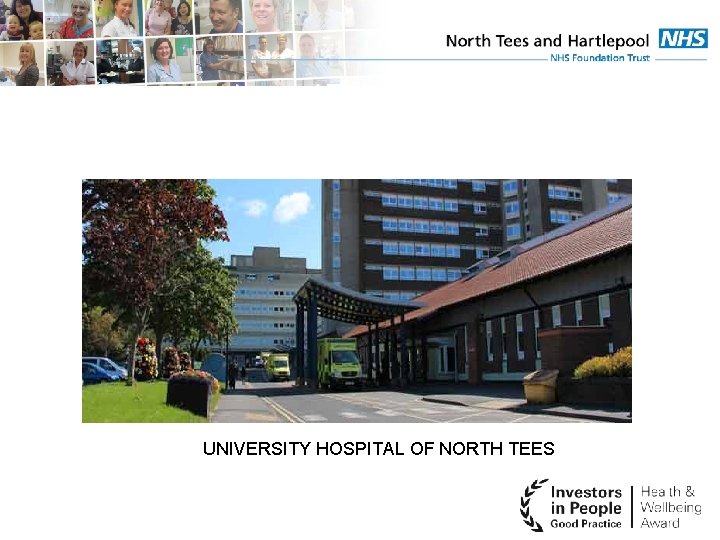
UNIVERSITY HOSPITAL OF NORTH TEES

- Slides: 68