
Wellness What is Health Think of the healthiest
- Slides: 43
Wellness
What is Health ?
Think of the healthiest person you know…. . What about them made you classify them as “Healthy? ” Discuss with the person next to you
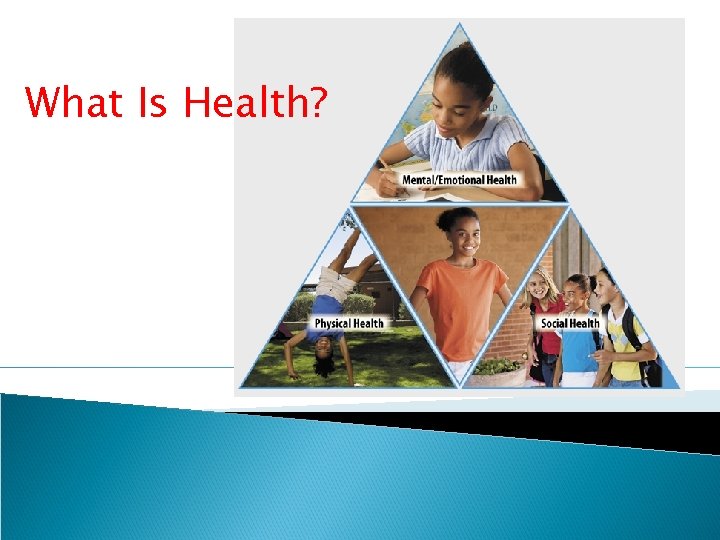
What Is Health? The sports activities you participate in, the kinds of foods you eat, and the people you spend time with affect your total health A combination of physical, mental/emotional, and social well-being.
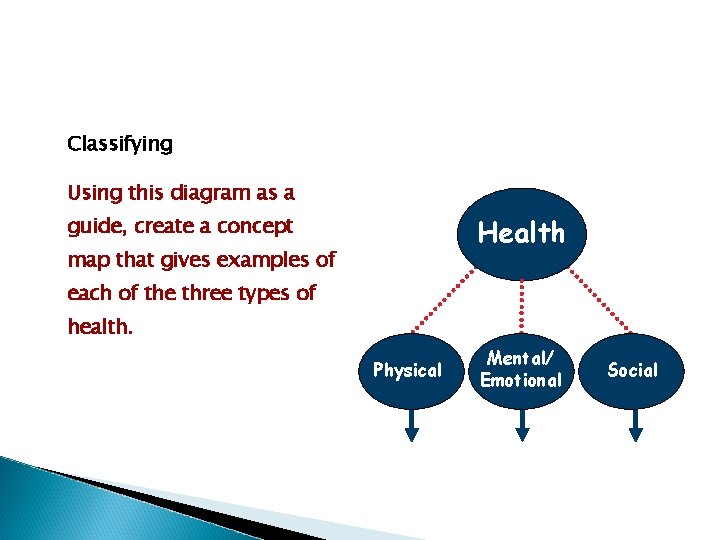
Classifying Using this diagram as a guide, create a concept Health map that gives examples of each of the three types of health. Physical Mental/ Emotional Social
What Is Health?
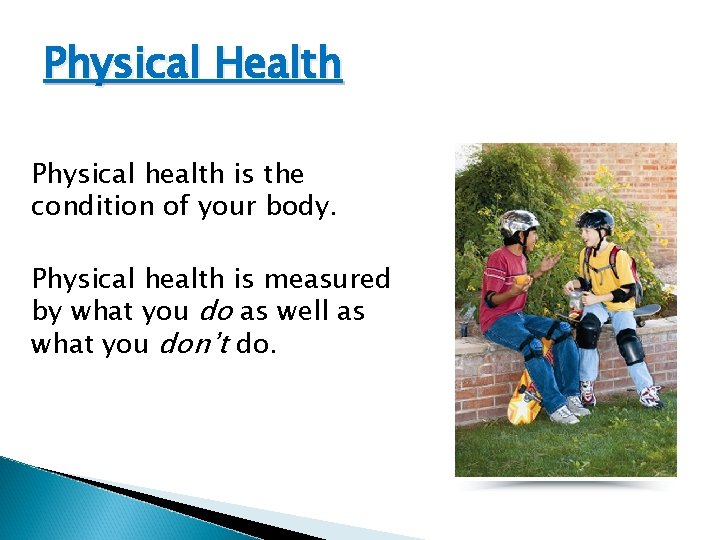
Physical Health Physical health is the condition of your body. Physical health is measured by what you do as well as what you don’t do.
Mental/Emotional Health Mental/emotional health is measured by the way you think and express your feelings. You can develop good mental/emotional health by learning to think positively and to express your feelings in healthy ways.
Social Health Good social health means communicating well with and having respect for family, friends, and acquaintances. Good social health also means building relationships with people you can trust and who can trust you.
Healthy Habits and Wellness When all three sides of your health triangle are balanced, you have achieved wellness A state of wellbeing, or total health
Healthy Habits and Wellness You can improve your wellness by developing good habits. habit A pattern of behavior that you follow almost without thinking
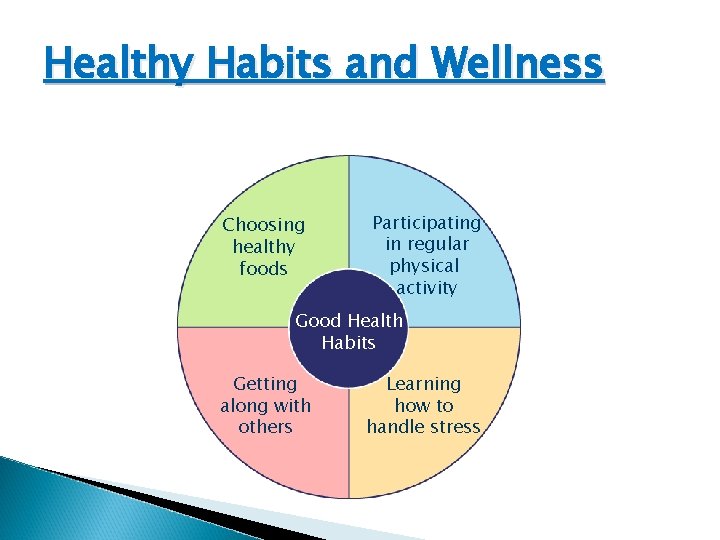
Healthy Habits and Wellness Choosing healthy foods Participating in regular physical activity Good Health Habits Getting along with others Learning how to handle stress
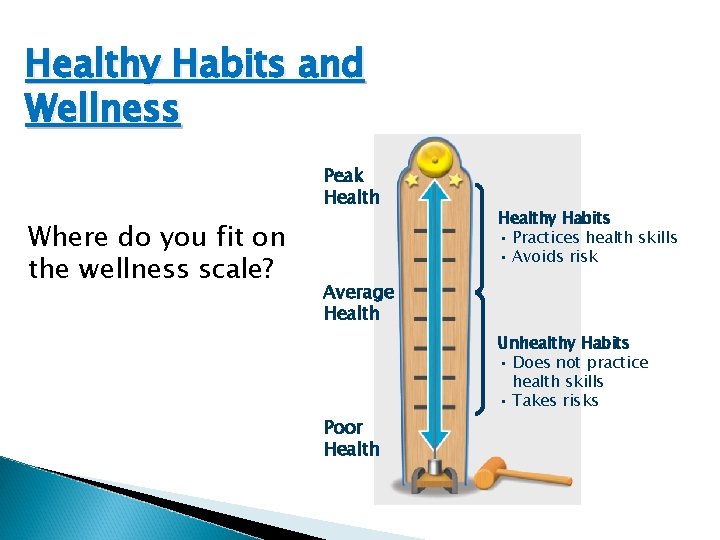
Healthy Habits and Wellness Peak Health Where do you fit on the wellness scale? Healthy Habits • Practices health skills • Avoids risk Average Health Unhealthy Habits • Does not practice health skills • Takes risks Poor Health
Lesson 2 Influences on Your Health
Factors that Affect Your Health Your health is influenced by your personal tastes and outside influences.
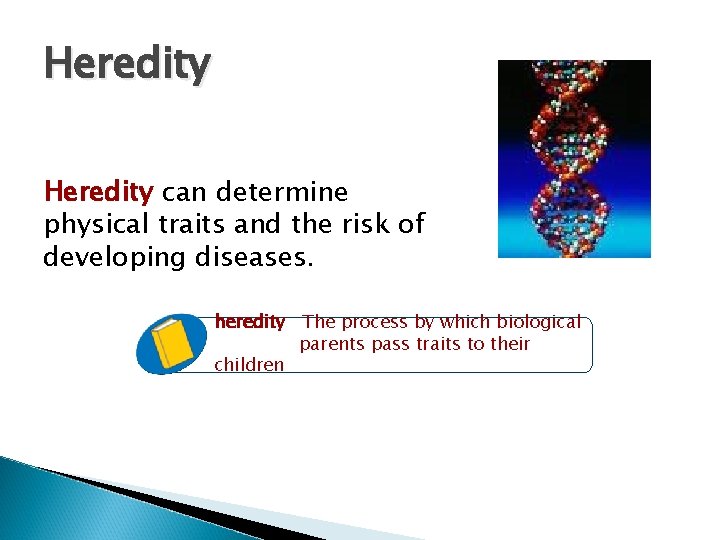
Heredity can determine physical traits and the risk of developing diseases. heredity The process by which biological parents pass traits to their children
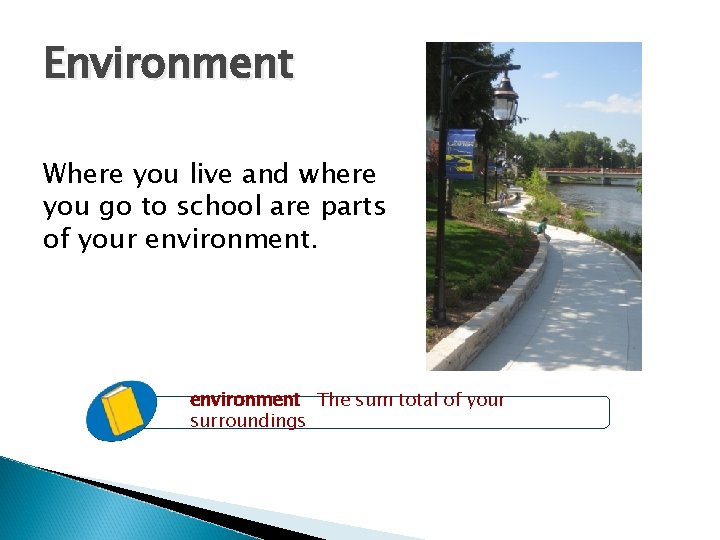
Environment Where you live and where you go to school are parts of your environment The sum total of your surroundings
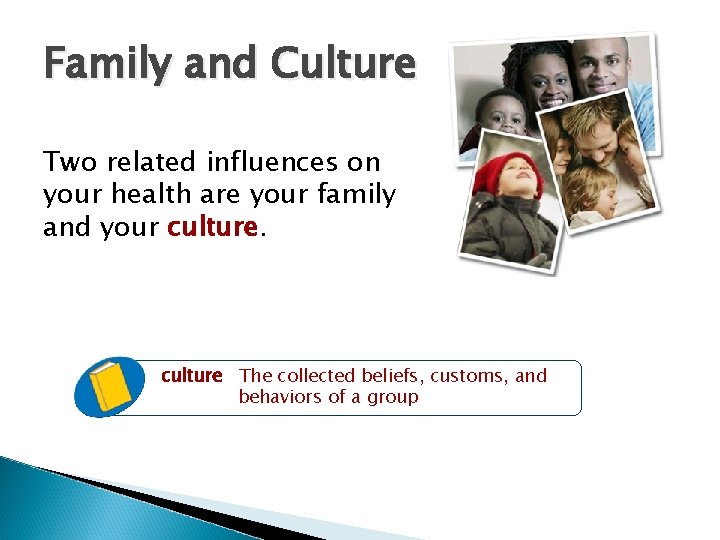
Family and Culture Two related influences on your health are your family and your culture The collected beliefs, customs, and behaviors of a group
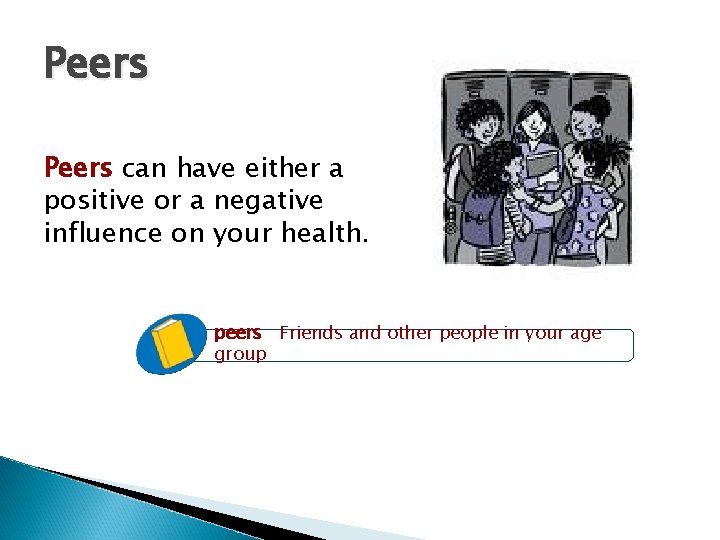
Peers can have either a positive or a negative influence on your health. peers Friends and other people in your age group
Media The media is often used by companies to encourage us to buy their products. media Various methods of communicating information, including newspapers, magazines, radio, television, and the Internet Messages from media and other sources influence health behavior.
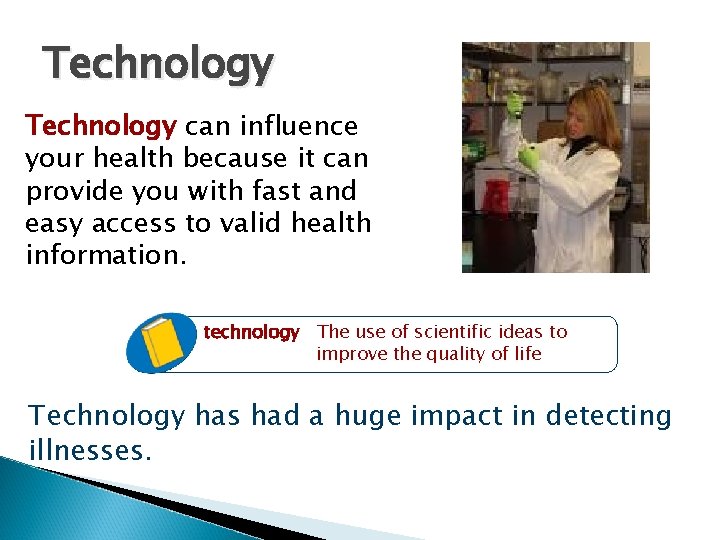
Technology can influence your health because it can provide you with fast and easy access to valid health information. technology The use of scientific ideas to improve the quality of life Technology has had a huge impact in detecting illnesses.
Your Health Choices and Behaviors You have control over your behavior and the choices you make. behavior The way you act in the many different situations and events in your life.
Personal Attitudes If you have a positive attitude about wearing safety belts, you’ll probably wear one when riding in a car. attitude What you believe or feel about someone or something
Lesson 4 Your Decisions Count
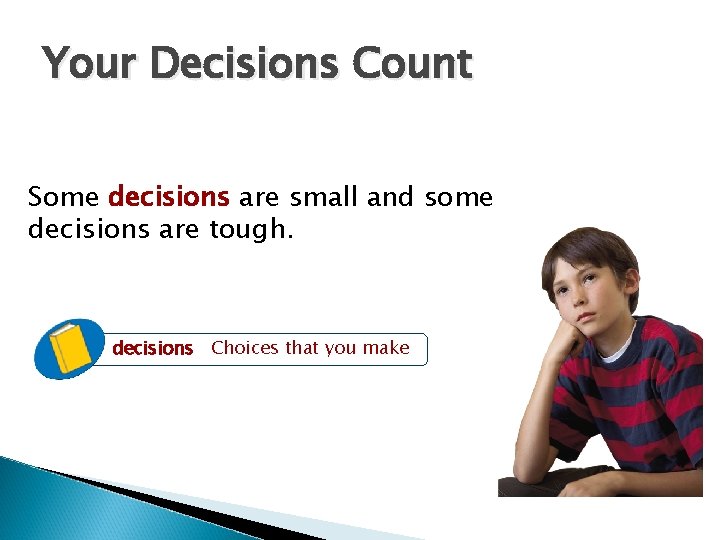
Your Decisions Count Some decisions are small and some decisions are tough. decisions Choices that you make
Your Decisions Count Decisions can have serious consequences Results
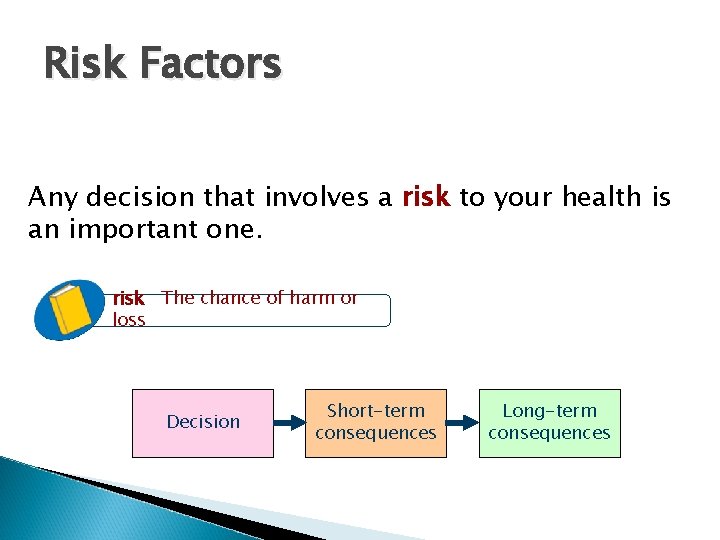
Risk Factors Any decision that involves a risk to your health is an important one. risk The chance of harm or loss Decision Short-term consequences Long-term consequences
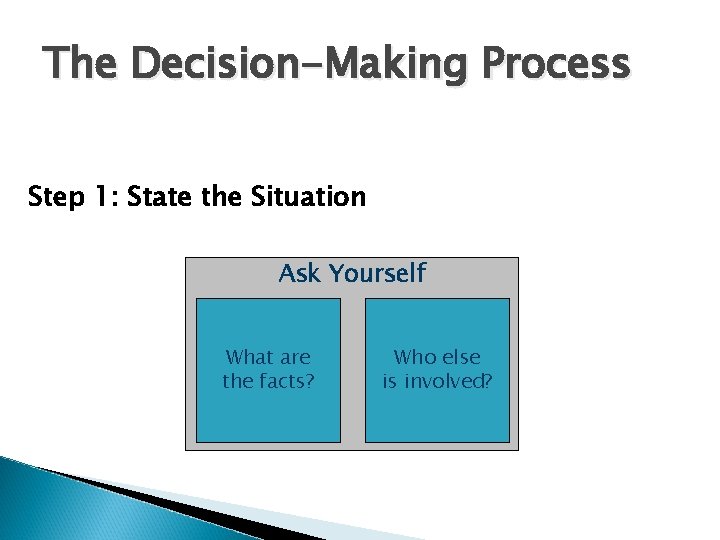
The Decision-Making Process Step 1: State the Situation Ask Yourself What are the facts? Who else is involved?
The Decision-Making Process Step 2: List the options Think of all your options and ask other people for suggestions.
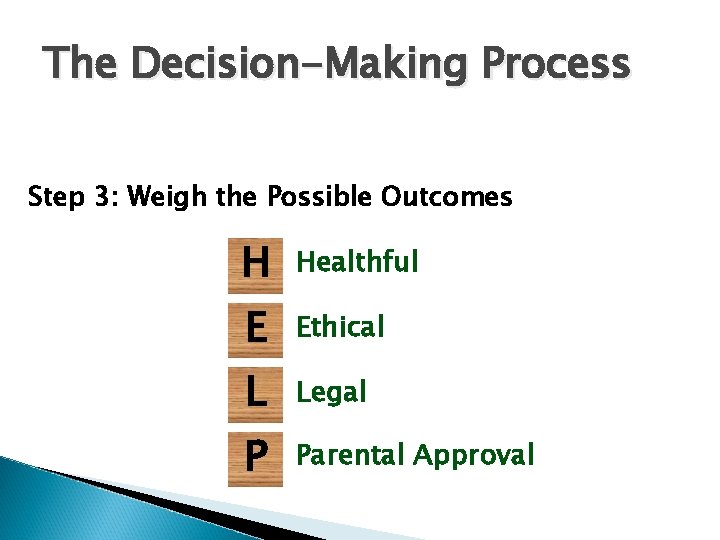
The Decision-Making Process Step 3: Weigh the Possible Outcomes H Healthful E Ethical L Legal P Parental Approval
The Decision-Making Process Riding in a car without a safety belt and exceeding the speed limit is an example of cumulative risk The addition of one risk factor to another, increasing the chance of harm or loss
The Decision-Making Process Step 4: Consider Values Your values should guide any important decision you make. values Beliefs you feel strongly about that help the way you live
The Decision-Making Process Step 5: Make a Decision and Act on It If you’ve weighed the options, mapped out the risks and consequences, and are comfortable with your decision, you are ready for action.
The Decision-Making Process Step 6: Evauluate the Decision Ask yourself: Were the results positive or negative? Were there any unexpected outcomes? Was there anything I could have done differently? What have I learned from the experience?
Lesson 5 Setting Health Goals
Comparing and Contrasting What do you think is the difference between a short-term and a long-term goal? What is an example of each?
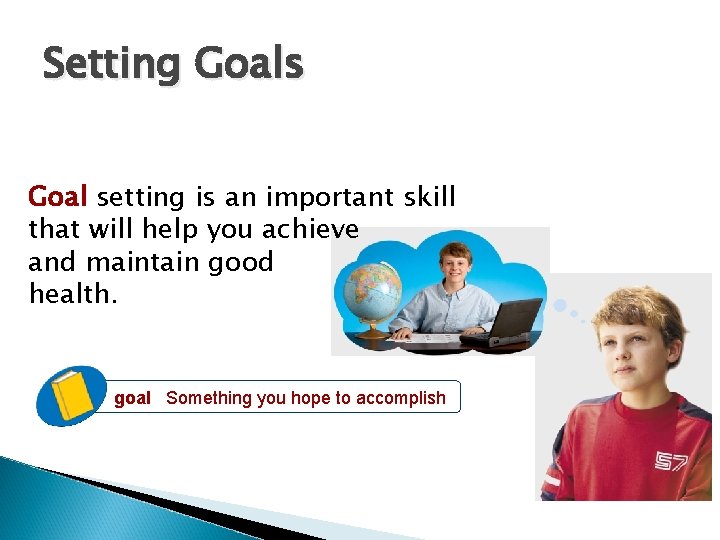
Setting Goals Goal setting is an important skill that will help you achieve and maintain good health. goal Something you hope to accomplish
Types of Goals The two types of goals are: Short-term goal Long-term goal short-term goal A goal that you plan to accomplish in a short time long-term goal A goal that you hope to achieve within a period of months or years
What is an example of a short-term goal? What is an example of a long-term goal?
Setting Goals in a Group Setting goals can be a challenge, especially when a whole group is involved.
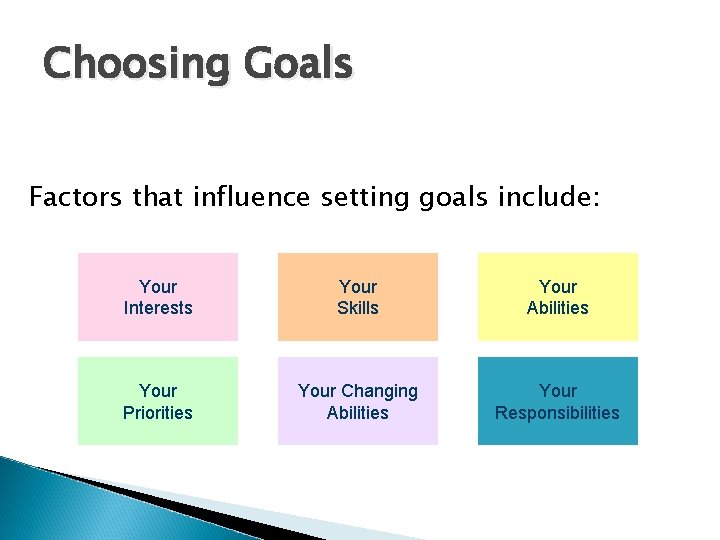
Choosing Goals Factors that influence setting goals include: Your Interests Your Skills Your Abilities Your Priorities Your Changing Abilities Your Responsibilities
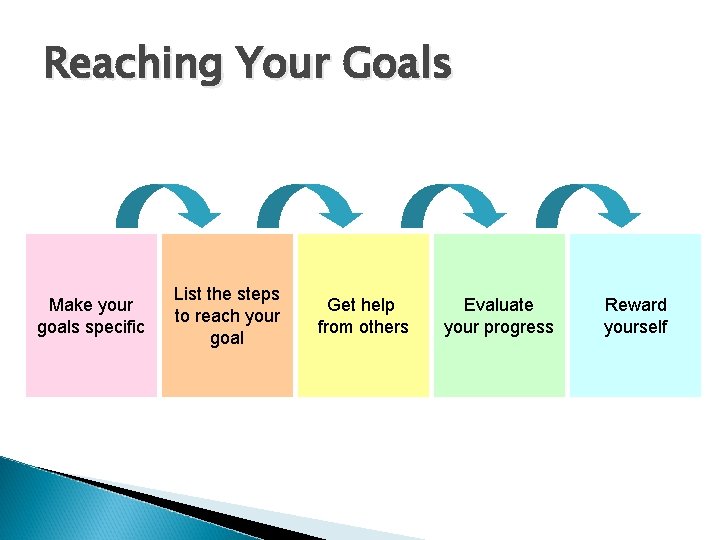
Reaching Your Goals Make your goals specific List the steps to reach your goal Get help from others Evaluate your progress Reward yourself
Lesson 5 Review What I Learned Describe Why is it important to set a realistic goal?