
Well Development and Efficiency Groundwater Hydraulics Daene C
- Slides: 17
Well Development and Efficiency Groundwater Hydraulics Daene C. Mc. Kinney 1
Introduction • Well Completion – – Unconsolidated formations Consolidated Formations Well Screens Gravel Packs • Well Development – – – Well Drawdown Well Losses Specific Capacity Step Drawdown Test Well Efficiency 2
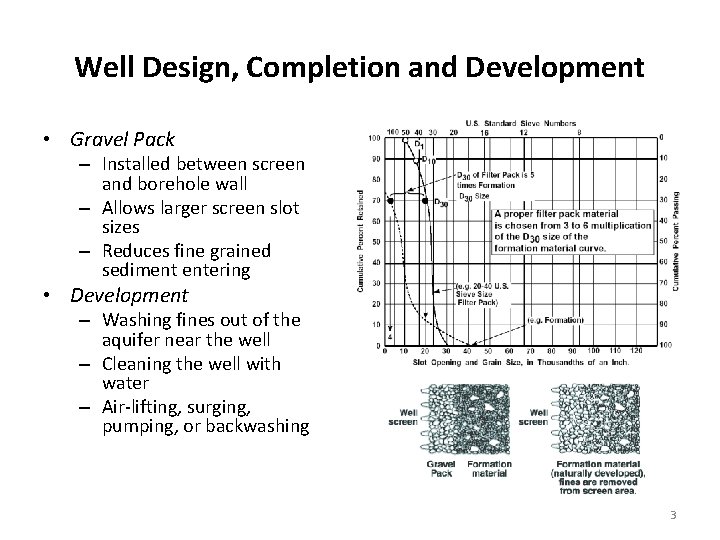
Well Design, Completion and Development • Gravel Pack – Installed between screen and borehole wall – Allows larger screen slot sizes – Reduces fine grained sediment entering • Development – Washing fines out of the aquifer near the well – Cleaning the well with water – Air-lifting, surging, pumping, or backwashing 3
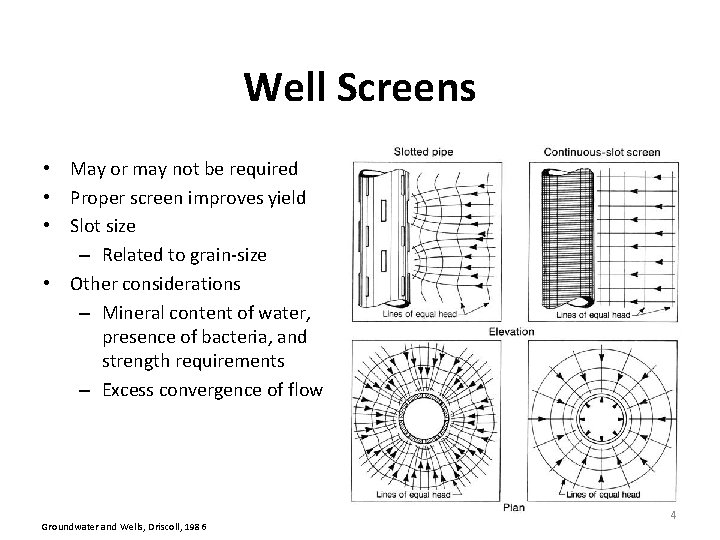
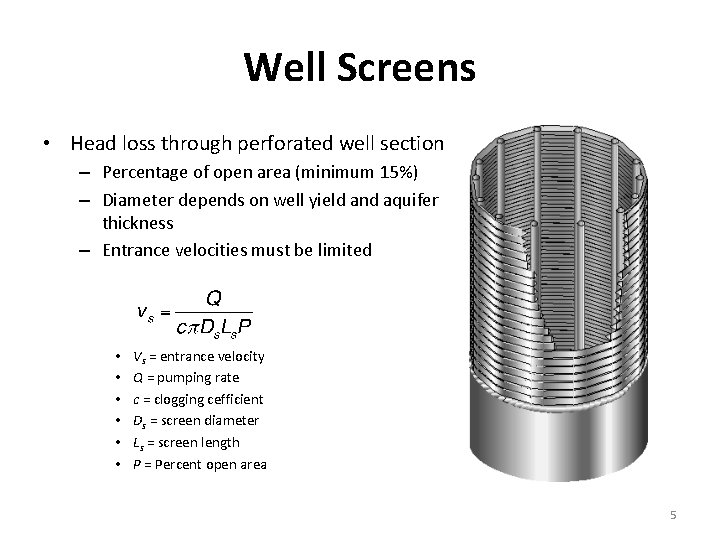
Well Screens • May or may not be required • Proper screen improves yield • Slot size – Related to grain-size • Other considerations – Mineral content of water, presence of bacteria, and strength requirements – Excess convergence of flow Groundwater and Wells, Driscoll, 1986 4
Well Screens • Head loss through perforated well section – Percentage of open area (minimum 15%) – Diameter depends on well yield and aquifer thickness – Entrance velocities must be limited • • • Vs = entrance velocity Q = pumping rate c = clogging cefficient Ds = screen diameter Ls = screen length P = Percent open area 5
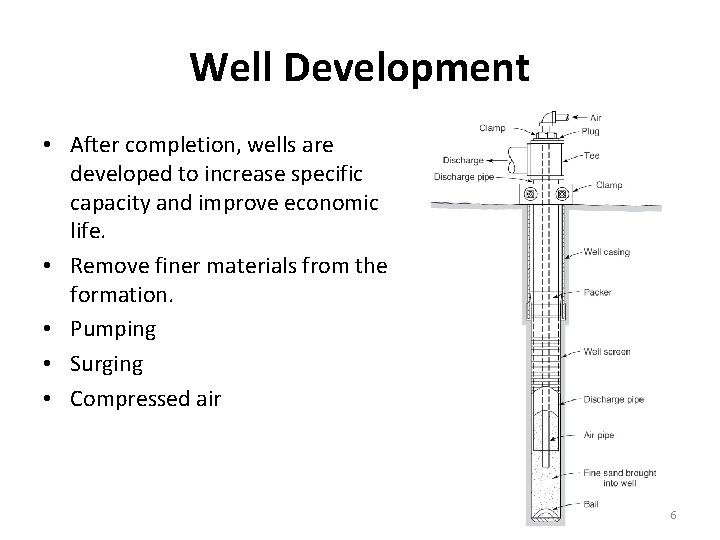
Well Development • After completion, wells are developed to increase specific capacity and improve economic life. • Remove finer materials from the formation. • Pumping • Surging • Compressed air 6
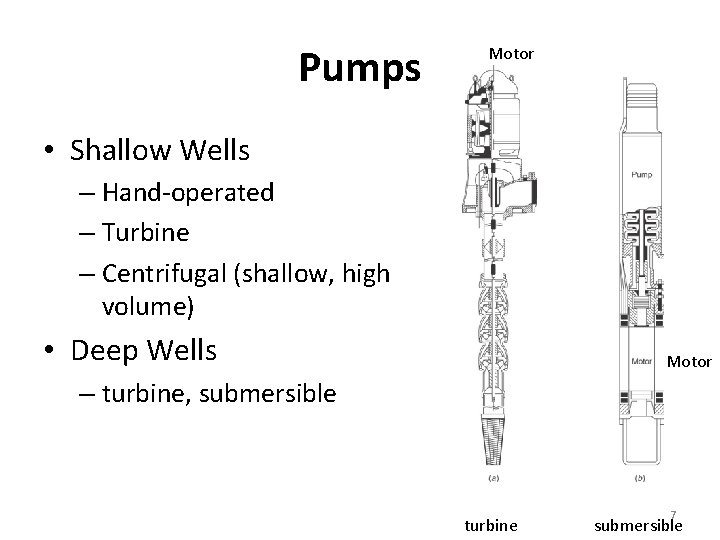
Pumps Motor • Shallow Wells – Hand-operated – Turbine – Centrifugal (shallow, high volume) • Deep Wells Motor – turbine, submersible turbine 7 submersible
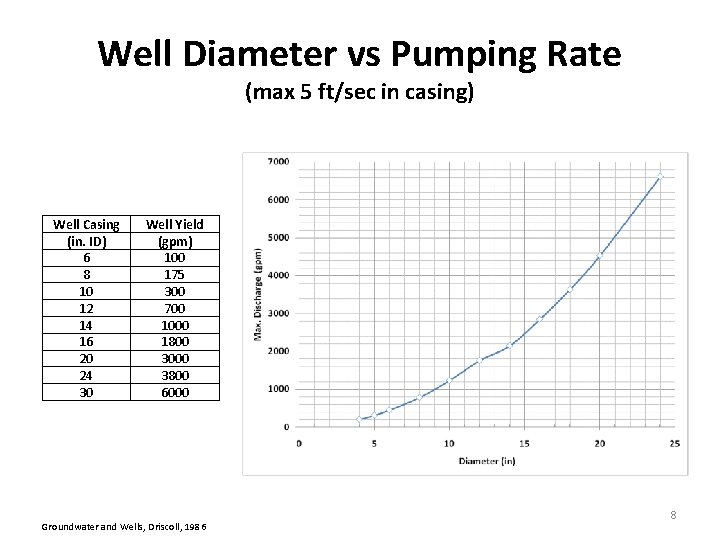
Well Diameter vs Pumping Rate (max 5 ft/sec in casing) Well Casing (in. ID) 6 8 10 12 14 16 20 24 30 Well Yield (gpm) 100 175 300 700 1000 1800 3000 3800 6000 Groundwater and Wells, Driscoll, 1986 8
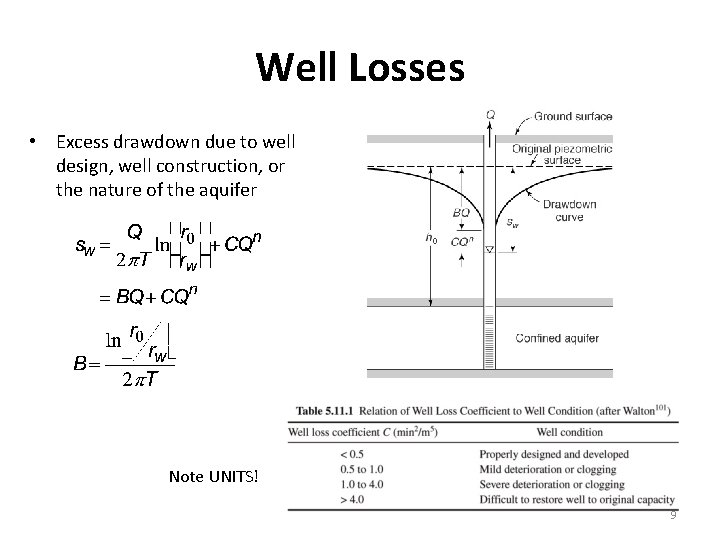
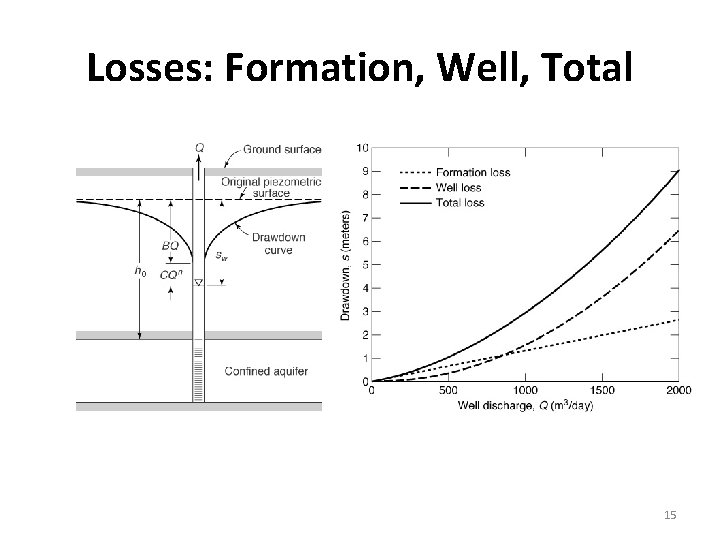
Well Losses • Excess drawdown due to well design, well construction, or the nature of the aquifer Note UNITS! 9
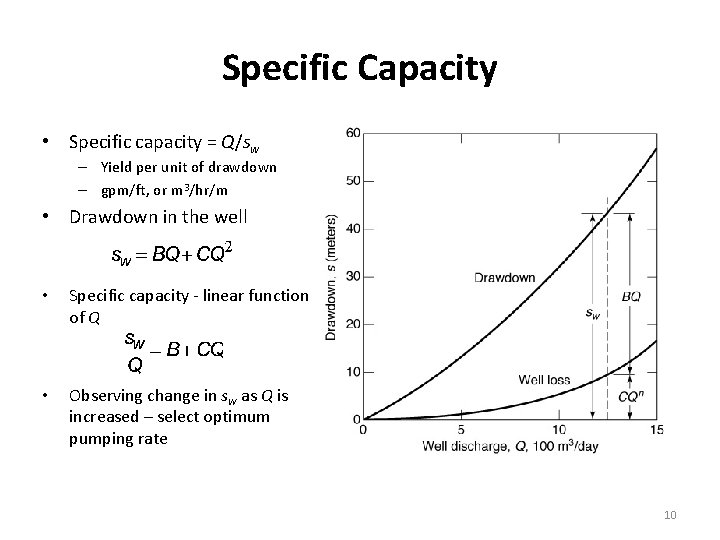
Specific Capacity • Specific capacity = Q/sw – Yield per unit of drawdown – gpm/ft, or m 3/hr/m • Drawdown in the well • Specific capacity - linear function of Q • Observing change in sw as Q is increased – select optimum pumping rate 10
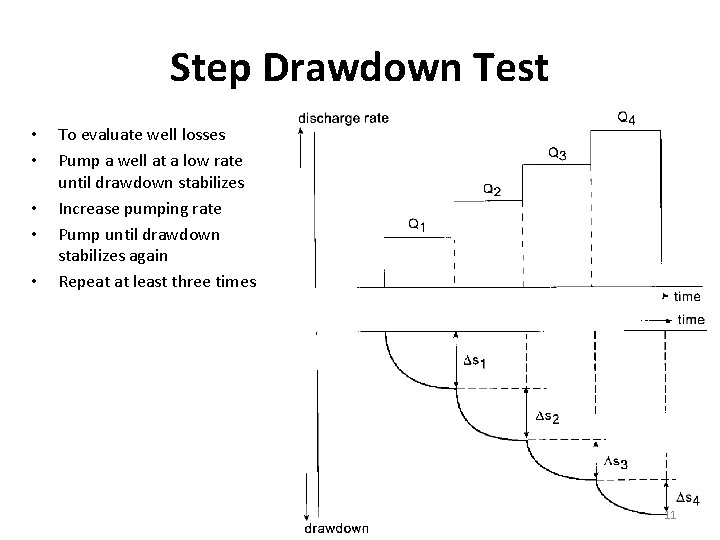
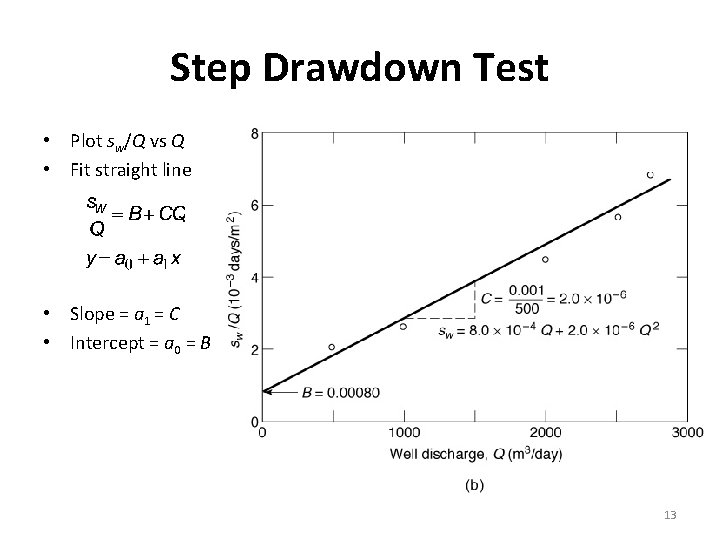
Step Drawdown Test • • • To evaluate well losses Pump a well at a low rate until drawdown stabilizes Increase pumping rate Pump until drawdown stabilizes again Repeat at least three times 11
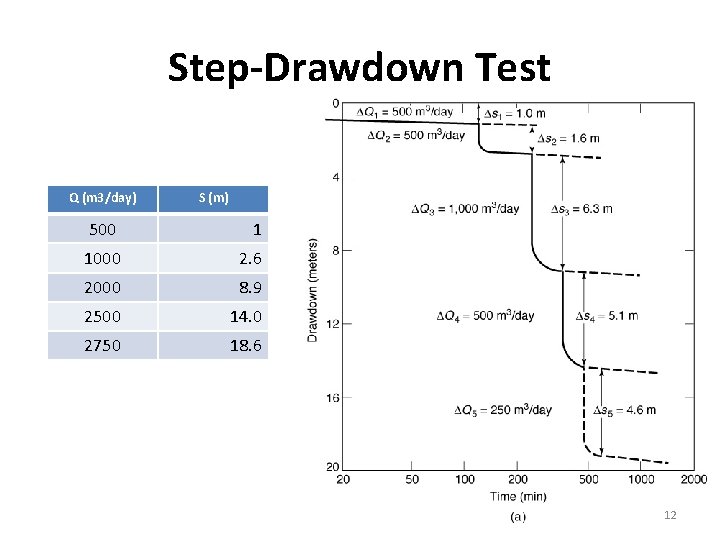
Step-Drawdown Test Q (m 3/day) S (m) 500 1 1000 2. 6 2000 8. 9 2500 14. 0 2750 18. 6 12
Step Drawdown Test • Plot sw/Q vs Q • Fit straight line • Slope = a 1 = C • Intercept = a 0 = B 13
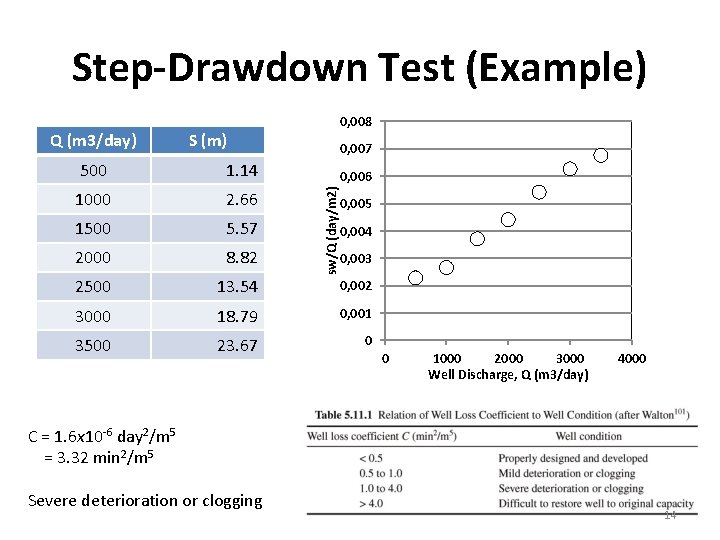
Step-Drawdown Test (Example) Q (m 3/day) 0, 008 S (m) 0, 007 500 1. 14 1000 2. 66 1500 5. 57 2000 8. 82 2500 13. 54 3000 18. 79 0, 001 3500 23. 67 0 sw/Q (day/m 2) 0, 006 0, 005 0, 004 0, 003 0, 002 0 1000 2000 3000 Well Discharge, Q (m 3/day) 4000 C = 1. 6 x 10 -6 day 2/m 5 = 3. 32 min 2/m 5 Severe deterioration or clogging 14
Losses: Formation, Well, Total 15
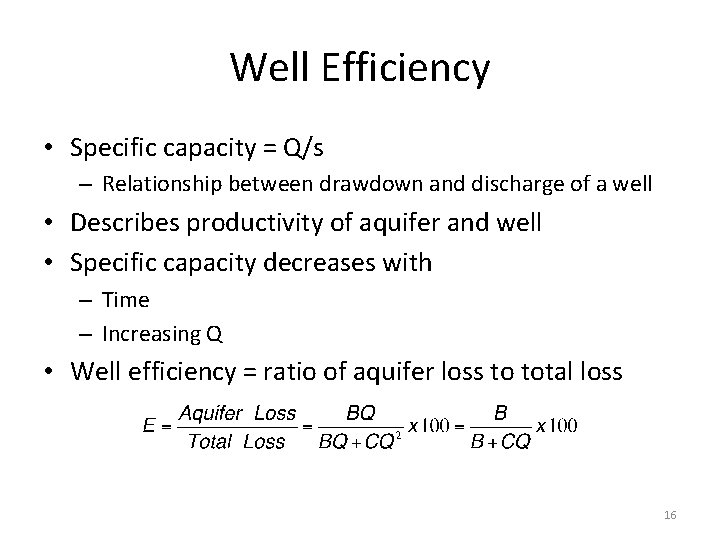
Well Efficiency • Specific capacity = Q/s – Relationship between drawdown and discharge of a well • Describes productivity of aquifer and well • Specific capacity decreases with – Time – Increasing Q • Well efficiency = ratio of aquifer loss to total loss 16
Summary • Well Completion – – Unconsolidated formations Consolidated Formations Well Screens Gravel Packs • Well Development – – – Well Drawdown Well Losses Specific Capacity Step Drawdown Test Well Efficiency 17