
Welding and Cutting for construction Welding safety program
- Slides: 31
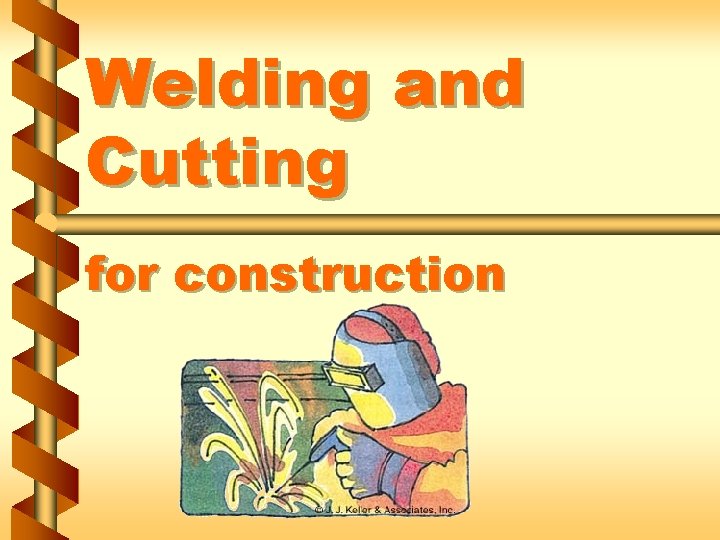
Welding and Cutting for construction
Welding safety program guidelines v Person responsible v Accountability v Job and enforcement hazard assessment v Special procedures 1 a
Welding safety program guidelines v Engineering controls v Administrative controls v Personal protective equipment 1 b
Welding safety program guidelines v Equipment inspection/maintenance v "Near miss" investigation 1 c
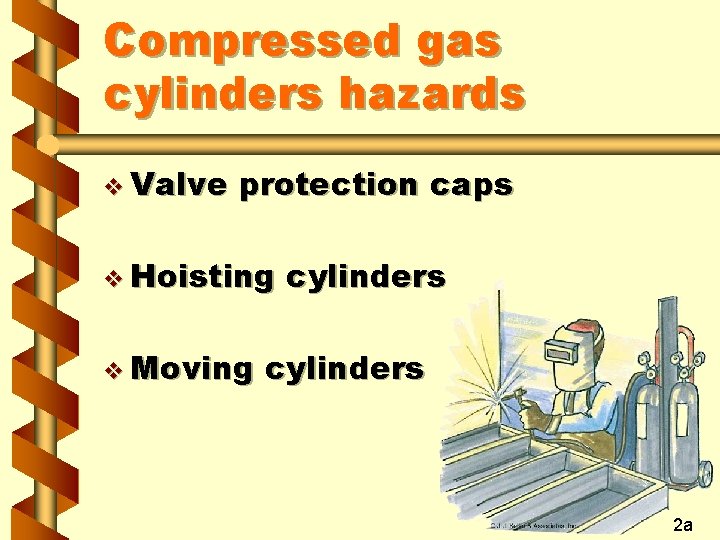
Compressed gas cylinders hazards v Valve protection caps v Hoisting v Moving cylinders 2 a
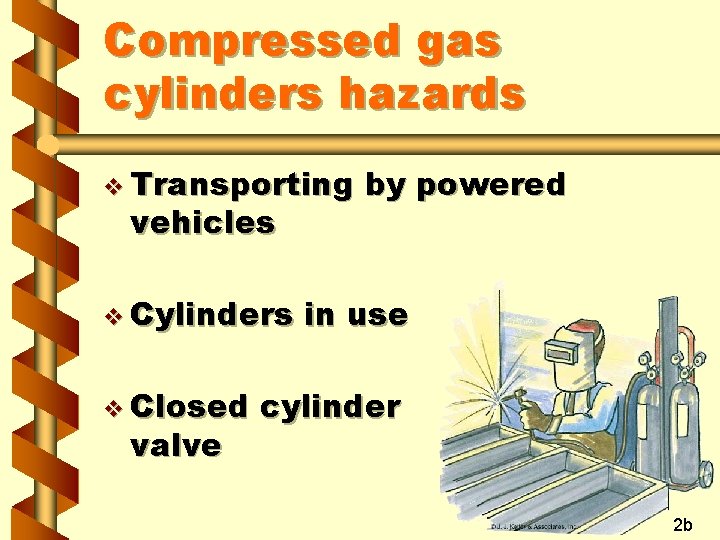
Compressed gas cylinders hazards v Transporting vehicles v Cylinders v Closed valve by powered in use cylinder 2 b
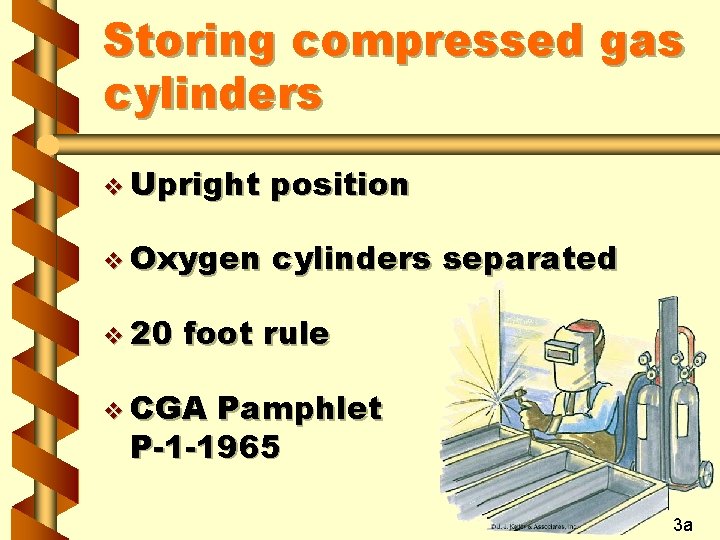
Storing compressed gas cylinders v Upright position v Oxygen cylinders separated v 20 foot rule v CGA Pamphlet P-1 -1965 3 a
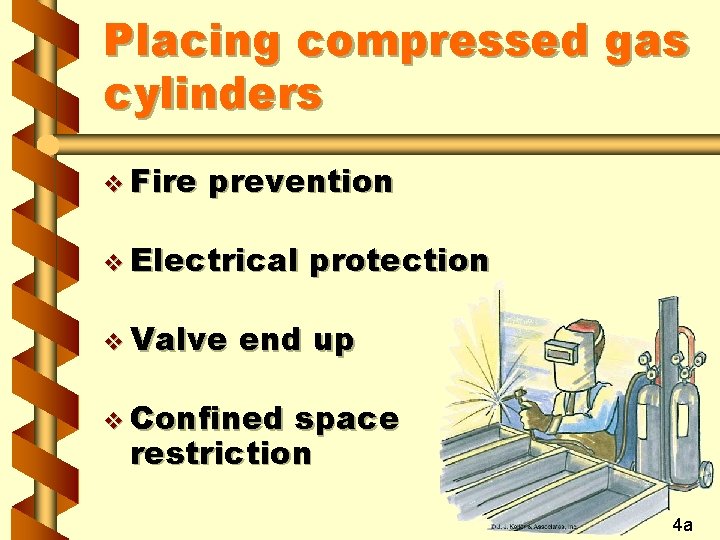
Placing compressed gas cylinders v Fire prevention v Electrical v Valve protection end up v Confined space restriction 4 a
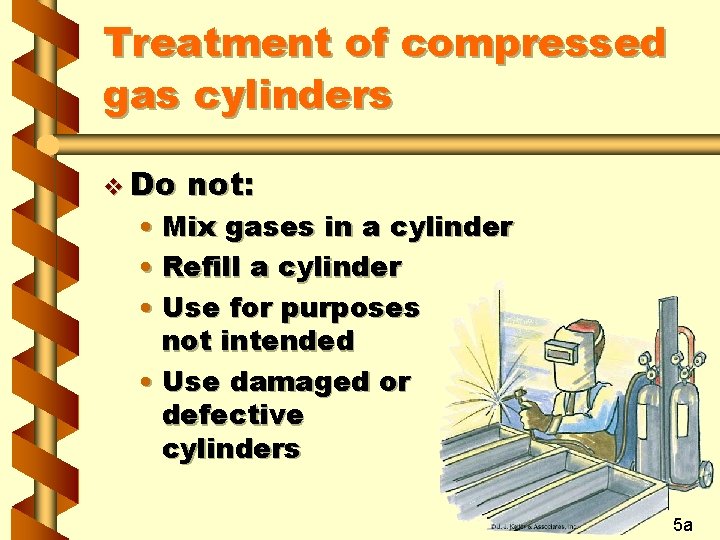
Treatment of compressed gas cylinders v Do not: • Mix gases in a cylinder • Refill a cylinder • Use for purposes not intended • Use damaged or defective cylinders 5 a
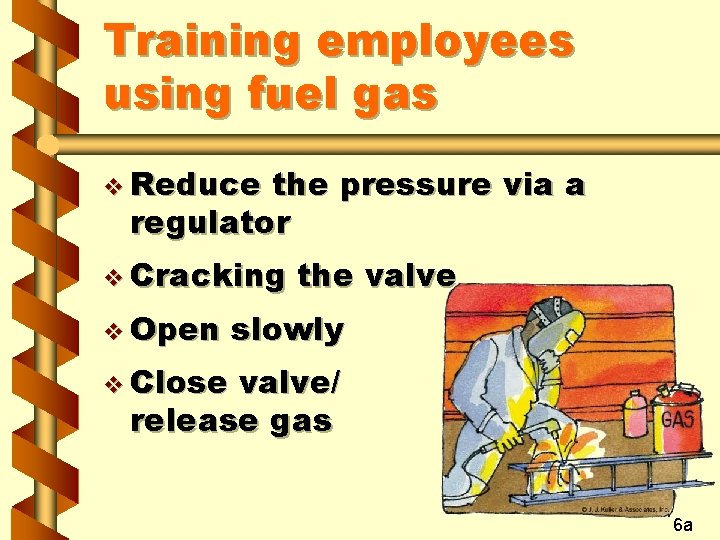
Training employees using fuel gas v Reduce the pressure via a regulator v Cracking v Open the valve slowly v Close valve/ release gas 6 a
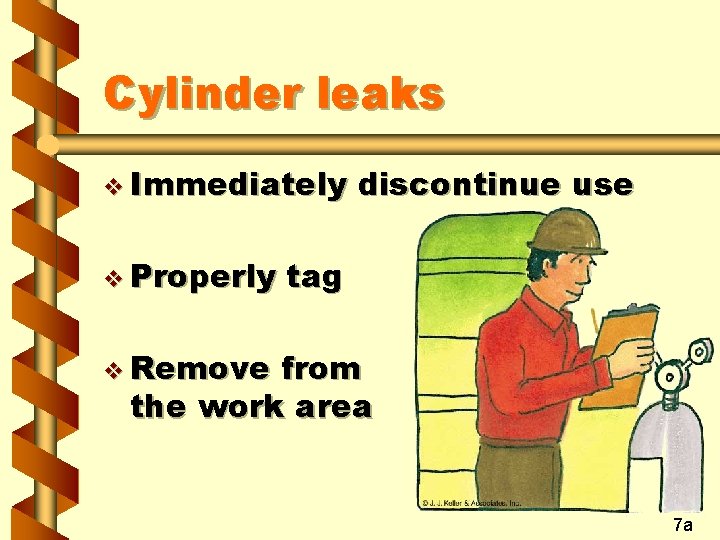
Cylinder leaks v Immediately v Properly discontinue use tag v Remove from the work area 7 a
Fuel gas and oxygen manifolds v Manifolds v Safe, correctly marked well ventilated locations v Hose connections keep free of grease and oil 8 a
Fuel gas and oxygen hose v Easily other v Not distinguishable from each interchangeable v Parallel sections taped together v Inspect before using 9 a
Fuel gas and oxygen hose v Remove service defective hose from v Test to twice the normal pressure v Keep out of passageways 9 b
Torches v Clean clogged torch tip openings v Inspect v Don’t v Use before using use defective torches friction lighters 10 a
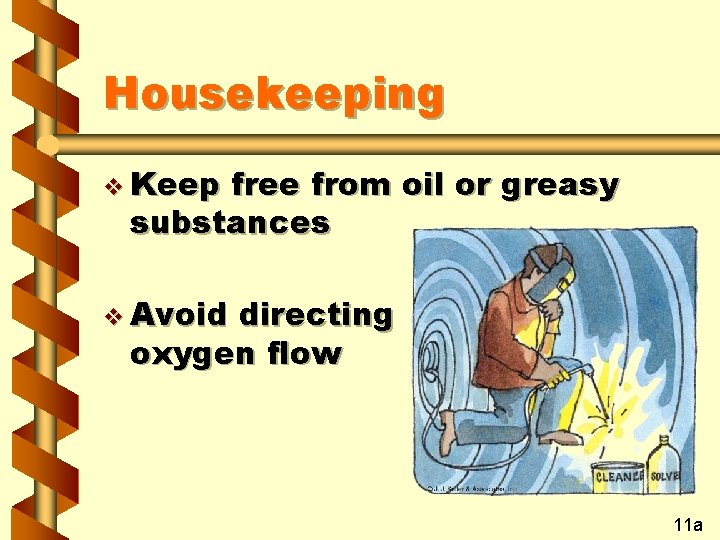
Housekeeping v Keep free from oil or greasy substances v Avoid directing oxygen flow 11 a
Manual electrode holders v Specifically v Fully designed insulated 12 a
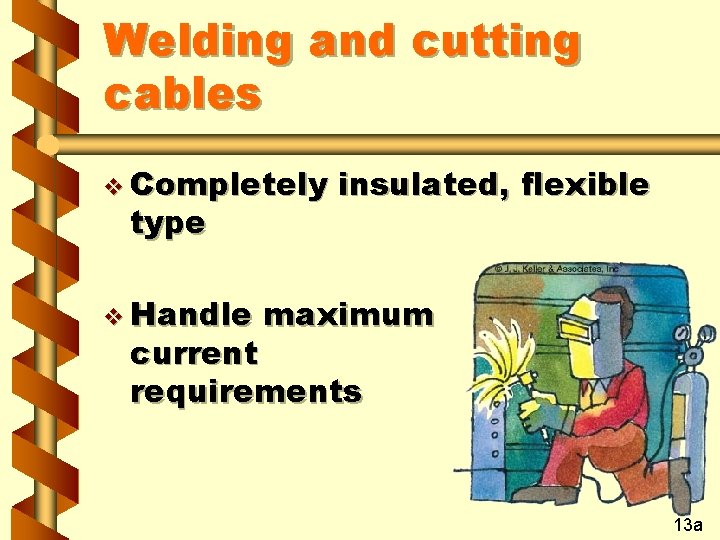
Welding and cutting cables v Completely type v Handle insulated, flexible maximum current requirements 13 a
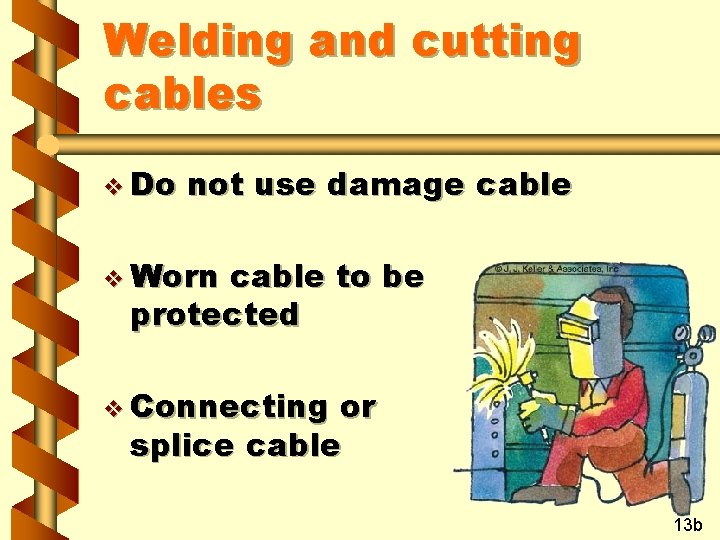
Welding and cutting cables v Do not use damage cable v Worn cable to be protected v Connecting or splice cable 13 b
Training for arc welding and cutting v Remove electrodes if left unattended v Avoid electric shock v Open power supply switch 14 a
Training for arc welding and cutting v Report defective equipment v Provide supply circuit disconnect v Provide breaker switch or circuit 14 b
Five common arcwelding processes v Shielded metal (SMAW) v Gas metal (GMAW) v Gas tungsten (GTAW) v Flux cored (FCAW) v Submerged (SAW) 15 a
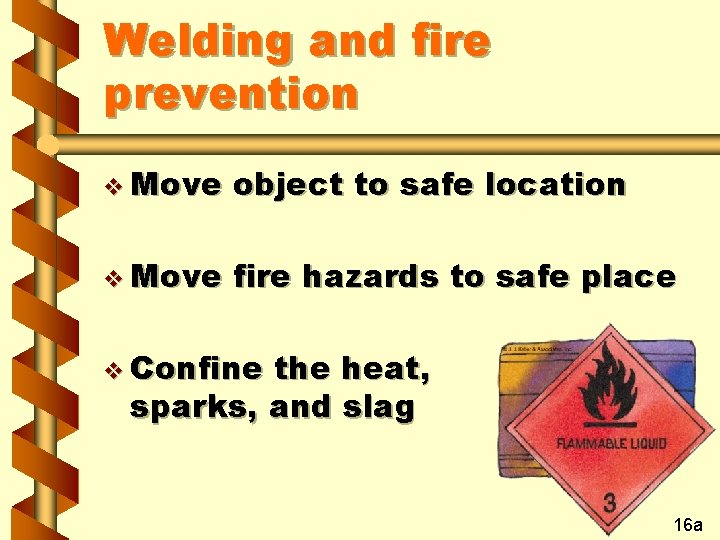
Welding and fire prevention v Move object to safe location v Move fire hazards to safe place v Confine the heat, sparks, and slag 16 a
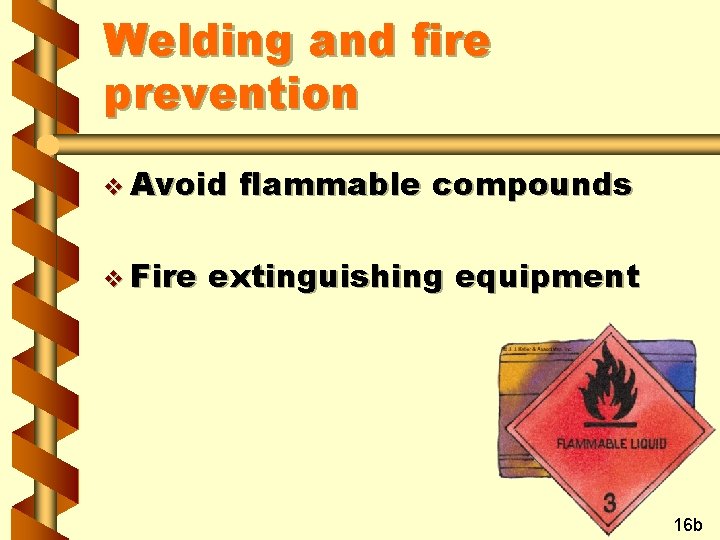
Welding and fire prevention v Avoid v Fire flammable compounds extinguishing equipment 16 b
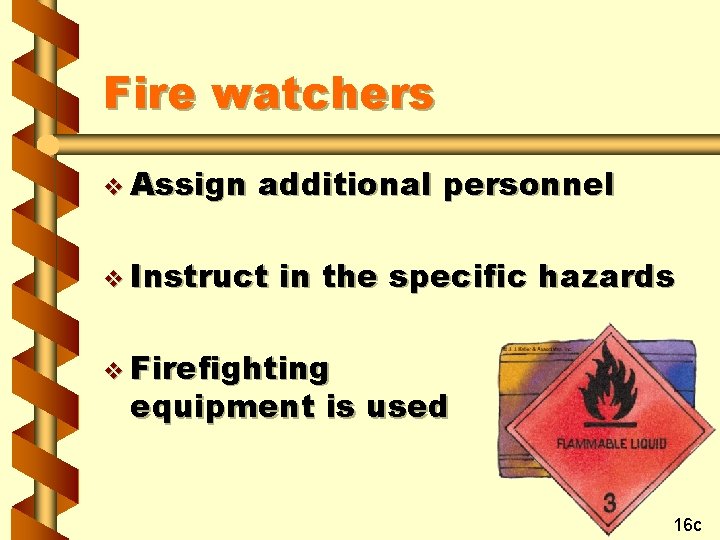
Fire watchers v Assign additional personnel v Instruct in the specific hazards v Firefighting equipment is used 16 c
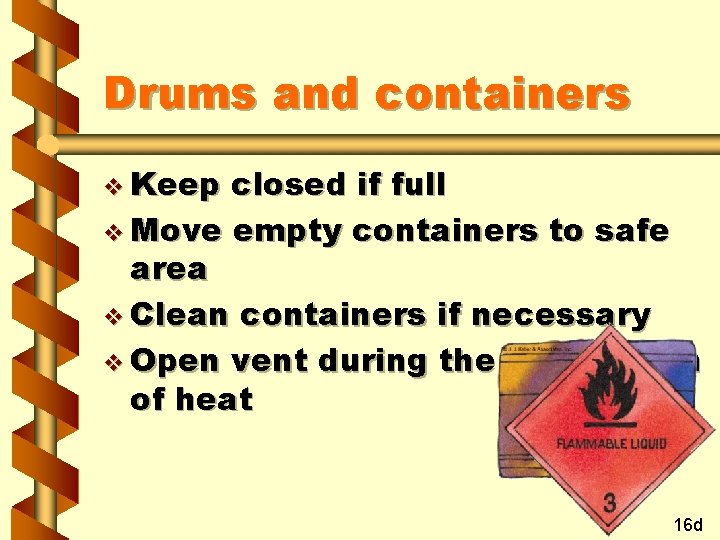
Drums and containers v Keep closed if full v Move empty containers to safe area v Clean containers if necessary v Open vent during the application of heat 16 d
Mechanical ventilation v General systems v Local mechanical ventilation exhaust systems v Oxygen restrictions 17 a
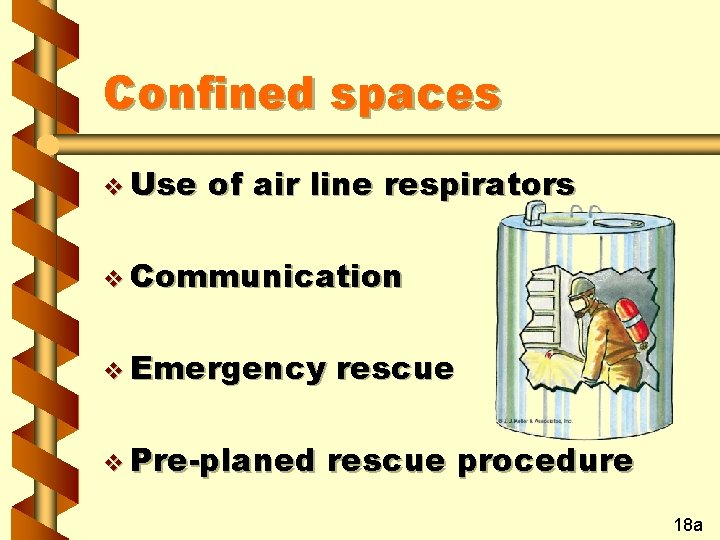
Confined spaces v Use of air line respirators v Communication v Emergency v Pre-planed rescue procedure 18 a
General welding, cutting, and heating v Absence of hazards conditions v Absence of toxic materials v No special requirements v Eye protective equipment needed 19 a
Preservative coatings v Testing by a competent person v Determine v Remove flammability from welding area 20 a
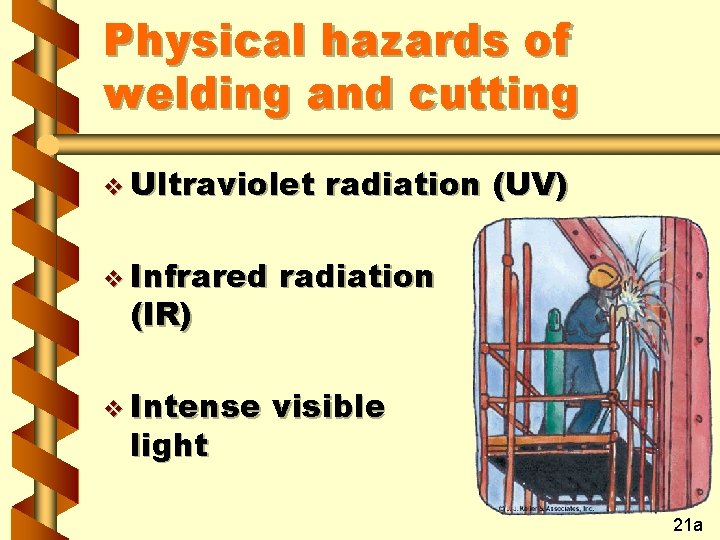
Physical hazards of welding and cutting v Ultraviolet radiation (UV) v Infrared radiation v Intense visible (IR) light 21 a