
Welcome to Year 3 shared reading Destination Reader

- Slides: 15
Welcome to Year 3 shared reading
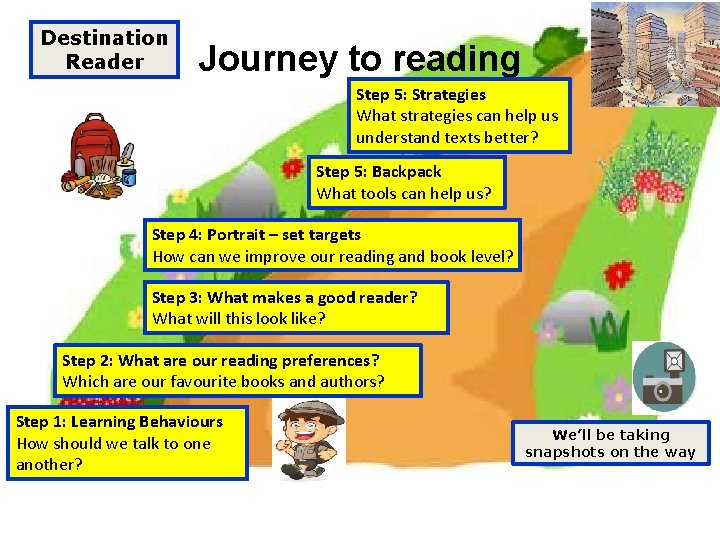
Destination Reader Journey to reading Step 5: Strategies What strategies can help us understand texts better? Step 5: Backpack What tools can help us? Step 4: Portrait – set targets How can we improve our reading and book level? Step 3: What makes a good reader? What will this look like? Step 2: What are our reading preferences? Which are our favourite books and authors? Step 1: Learning Behaviours How should we talk to one another? We’ll be taking snapshots on the way
Destination Reader We’re going to explore 3 learning behaviours which will help us when we are reading. The 3 learning behaviours are: • • • Support and actively listen to others. Discuss and explain your ideas. Take responsibility for your own and your group’s learning.
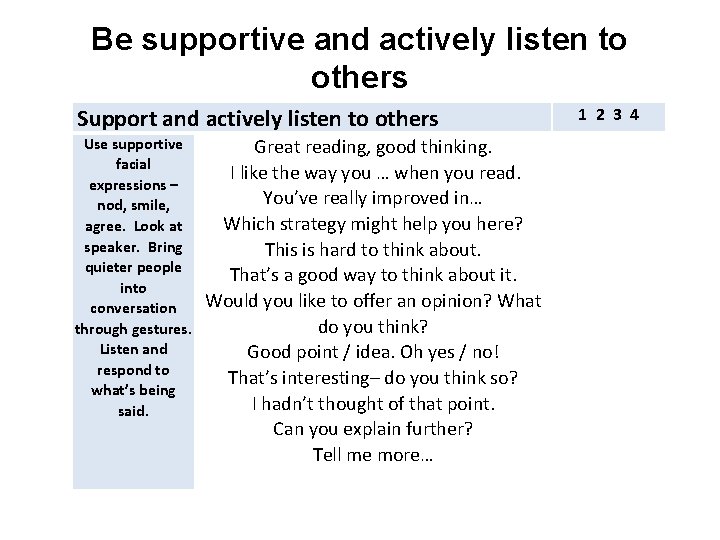
Be supportive and actively listen to others Support and actively listen to others Use supportive facial expressions – nod, smile, agree. Look at speaker. Bring quieter people into conversation through gestures. Listen and respond to what’s being said. Great reading, good thinking. I like the way you … when you read. You’ve really improved in… Which strategy might help you here? This is hard to think about. That’s a good way to think about it. Would you like to offer an opinion? What do you think? Good point / idea. Oh yes / no! That’s interesting– do you think so? I hadn’t thought of that point. Can you explain further? Tell me more… 1 2 3 4
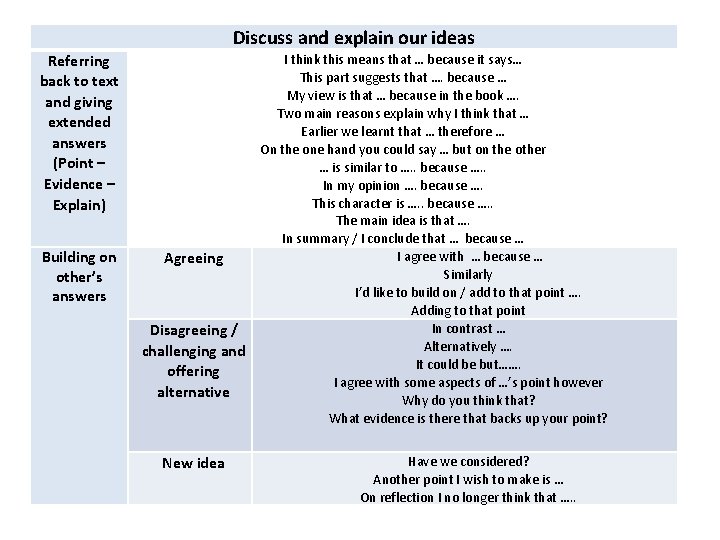
Discuss and explain our ideas Referring back to text and giving extended answers (Point – Evidence – Explain) Building on other’s answers Agreeing Disagreeing / challenging and offering alternative New idea I think this means that … because it says… This part suggests that …. because … My view is that … because in the book …. Two main reasons explain why I think that … Earlier we learnt that … therefore … On the one hand you could say … but on the other … is similar to …. . because …. . In my opinion …. because …. This character is …. . because …. . The main idea is that …. In summary / I conclude that … because … I agree with … because … Similarly I’d like to build on / add to that point …. Adding to that point In contrast … Alternatively …. It could be but……. I agree with some aspects of …’s point however Why do you think that? What evidence is there that backs up your point? Have we considered? Another point I wish to make is … On reflection I no longer think that …. .
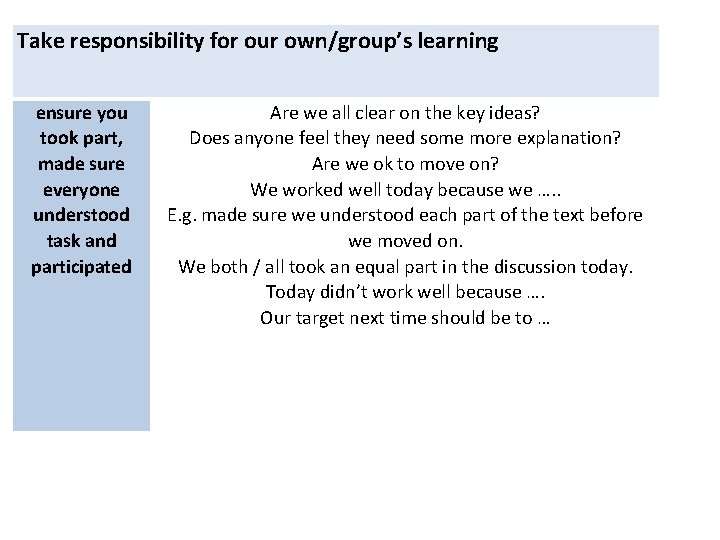
Take responsibility for our own/group’s learning ensure you took part, made sure everyone understood task and participated Are we all clear on the key ideas? Does anyone feel they need some more explanation? Are we ok to move on? We worked well today because we …. . E. g. made sure we understood each part of the text before we moved on. We both / all took an equal part in the discussion today. Today didn’t work well because …. Our target next time should be to …
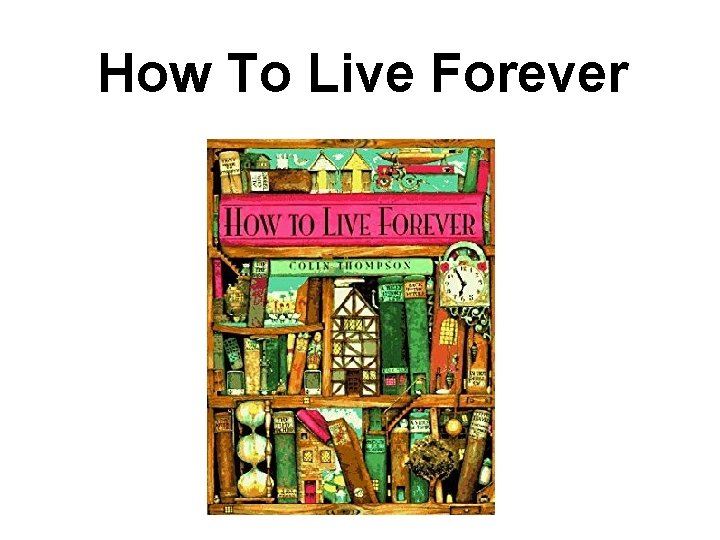
How To Live Forever
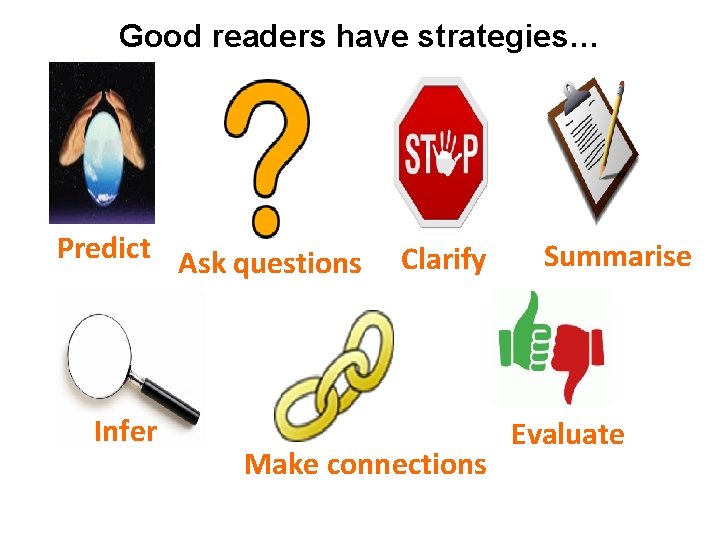
Good readers have strategies… Predict Ask questions Infer Clarify Make connections Summarise Evaluate
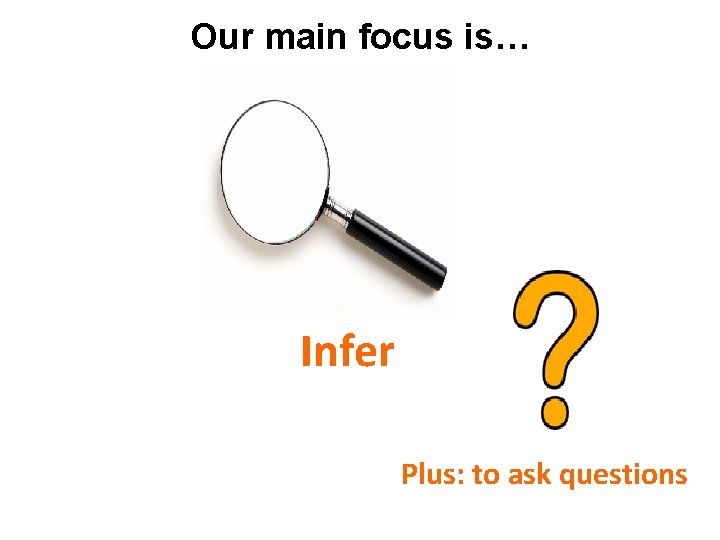
Our main focus is… Infer Plus: to ask questions
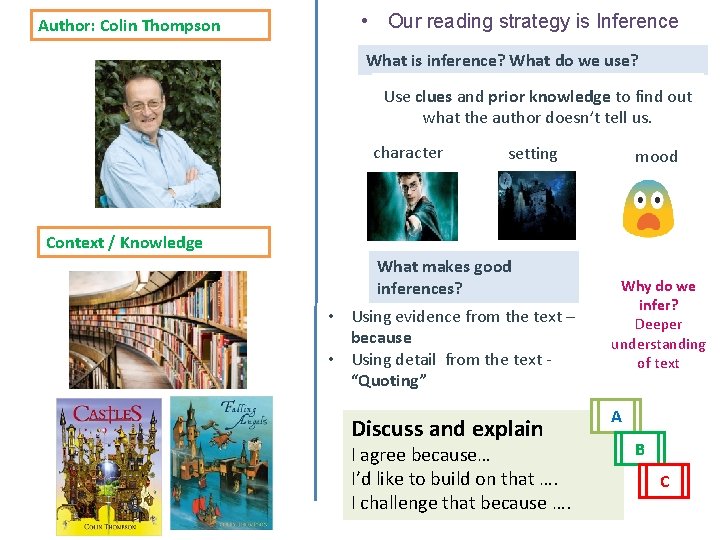
Author: Colin Thompson • Our reading strategy is Inference What is inference? What do we use? Use clues and prior knowledge to find out what the author doesn’t tell us. character setting mood Context / Knowledge What makes good inferences? • Using evidence from the text – because • Using detail from the text “Quoting” Discuss and explain I agree because… I’d like to build on that …. I challenge that because …. Why do we infer? Deeper understanding of text A B C
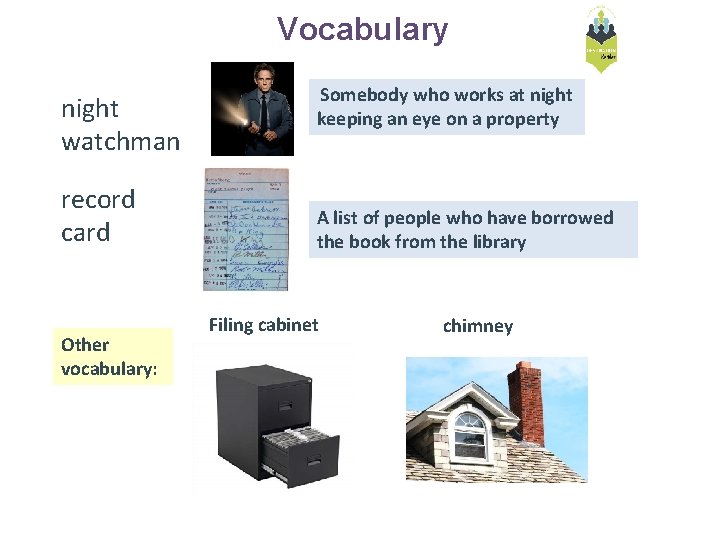
Vocabulary night watchman record card Other vocabulary: Somebody who works at night keeping an eye on a property A list of people who have borrowed the book from the library Filing cabinet chimney
Text: In a quiet street of tall trees there is a library with a thousand rooms. On the shelves are copies of every book that has ever been written. But one book is missing. Two hundred years ago someone hid its record card under the bottom drawer of a filing cabinet, and the book quietly vanished. The book is called ‘How To Live Forever’ (TA) When the library is closed and the night watchman has fallen asleep in his big armchair, the shelves come to life. Doors and windows appear on the backs of the books, lights come on, and the sound of voices drifts out between the pages. Full-grown trees spring up and the chimney begins to smoke. Staircases and ladders join the shelves into great cities, and in the distance, small dogs bark. (TA) Key questions: • What do we know about the library? • What do you think ‘How To Live Forever’ is about? • Why do you think someone hid the record card? Inference stems Linked with because … • The word * tells me… • The part * tells me … • This make me think that … • I think this character… • I think the setting is … • I think the mood is … • I think the writer’s viewpoint is … • I think the character’s viewpoint is …
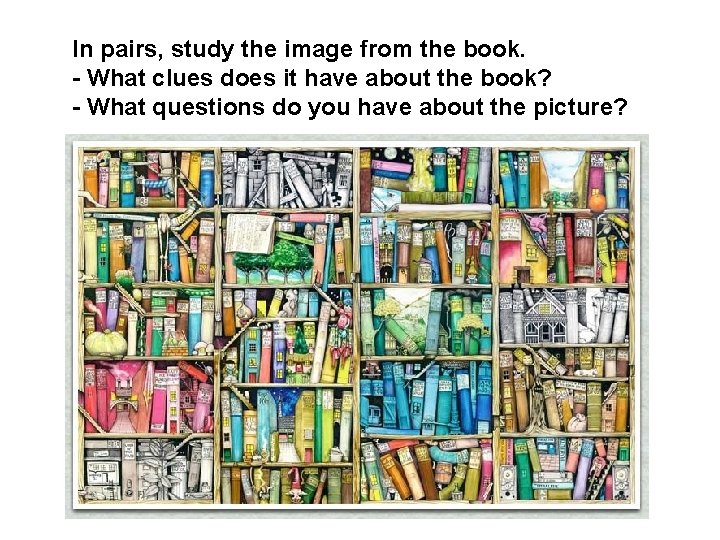
In pairs, study the image from the book. - What clues does it have about the book? - What questions do you have about the picture?
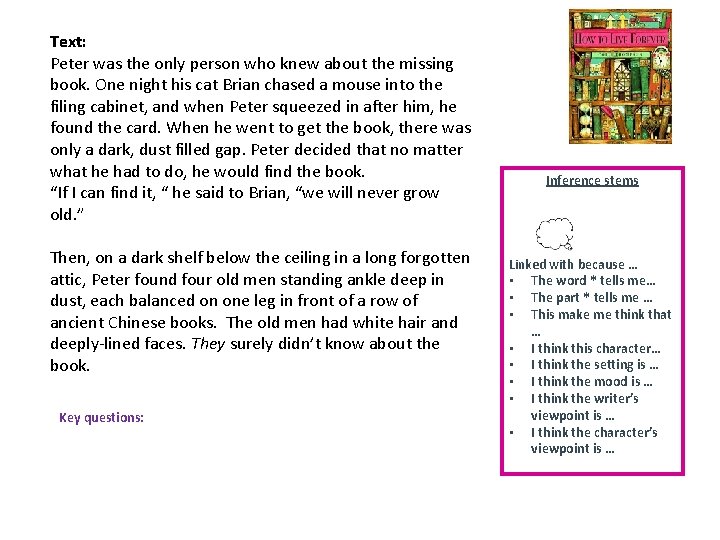
Text: Peter was the only person who knew about the missing book. One night his cat Brian chased a mouse into the filing cabinet, and when Peter squeezed in after him, he found the card. When he went to get the book, there was only a dark, dust filled gap. Peter decided that no matter what he had to do, he would find the book. “If I can find it, “ he said to Brian, “we will never grow old. ” Then, on a dark shelf below the ceiling in a long forgotten attic, Peter found four old men standing ankle deep in dust, each balanced on one leg in front of a row of ancient Chinese books. The old men had white hair and deeply-lined faces. They surely didn’t know about the book. Key questions: Inference stems Linked with because … • The word * tells me… • The part * tells me … • This make me think that … • I think this character… • I think the setting is … • I think the mood is … • I think the writer’s viewpoint is … • I think the character’s viewpoint is …
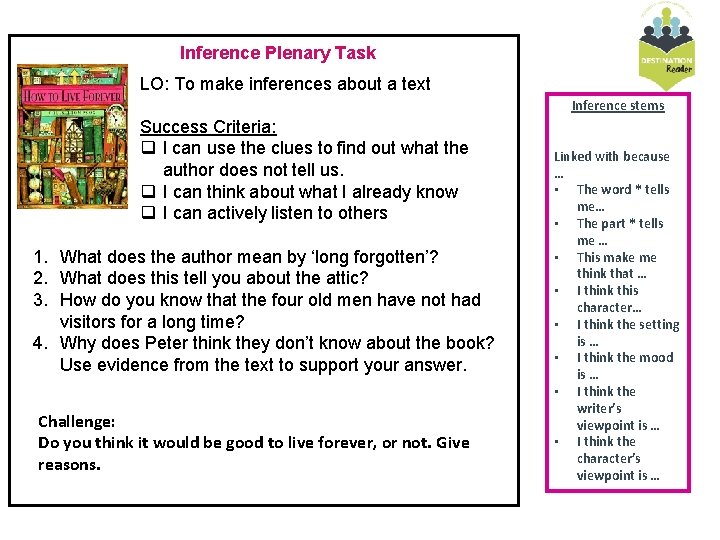
Inference Plenary Task LO: To make inferences about a text Inference stems Success Criteria: q I can use the clues to find out what the author does not tell us. q I can think about what I already know q I can actively listen to others 1. What does the author mean by ‘long forgotten’? 2. What does this tell you about the attic? 3. How do you know that the four old men have not had visitors for a long time? 4. Why does Peter think they don’t know about the book? Use evidence from the text to support your answer. Challenge: Do you think it would be good to live forever, or not. Give reasons. Linked with because … • The word * tells me… • The part * tells me … • This make me think that … • I think this character… • I think the setting is … • I think the mood is … • I think the writer’s viewpoint is … • I think the character’s viewpoint is …