
Welcome to Woodmancote School Reception Curriculum Evening Stages





- Slides: 51
Welcome to Woodmancote School Reception Curriculum Evening
Stages at Woodmancote School § Foundation stage – Reception § Key Stage 1 (KS 1) – Year 1+2 § Key Stage 2 (KS 2) – Years 3 -6
Foundation Stage Records § We use the Foundation Stage curriculum to assess your child’s progress throughout the year. This is a continuation of the records that pre school settings kept and passed on to school. § This is based on ongoing assessments and observations of the children. It covers all seven areas of learning in the Foundation Stage curriculum.
Foundation Stage Curriculum § § § § 1) Personal, Social and Emotional 2) Communication and Language 3) Literacy 4) Mathematics 5) Understanding of the World 6) Physical Development 7) Expressive Arts and Design
Parental Involvement § Parental contribution to our Foundation Stage record is important. § We gather information from you through: Information sheets Informal chats Notes in reading diaries/Home. School diaries Parent consultation evenings Home-learning celebrations WOW vouchers
Parents as Partners and Communication § § § § Curriculum newsletters DOJO and class story Use the home – school diary (send in every day) and the reading record book Pop in to see us Read letters Help with home learning Help your child to choose things to bring into school that are related to our theme or that they have made themselves
Reading
Books your child will bring home Picture books – lots of talk and story telling Books with repetition Books with words that can be blended (sounded out) § Books that contain words that can not be blended (high frequency words) § As your child learns more sounds they will bring home books with them in § In addition they will bring home word cards to learn § § §
Changing books § Books will be sent home soon § Please record in the reading record when your child has completed a book § Books will be changed on a Mon, Wed and Fri – BUT only if it has been recorded in the reading record § It is OK to read a book more than once or read a book over a few days § Keep enjoying books you have at home or borrow from the library
Ways to get words off the page § § § Use the pictures Use repetition and rhyme Know the letter sounds Try to make sense of the text (a good guess) Know words by sight We need to use all of these strategies to be confident readers
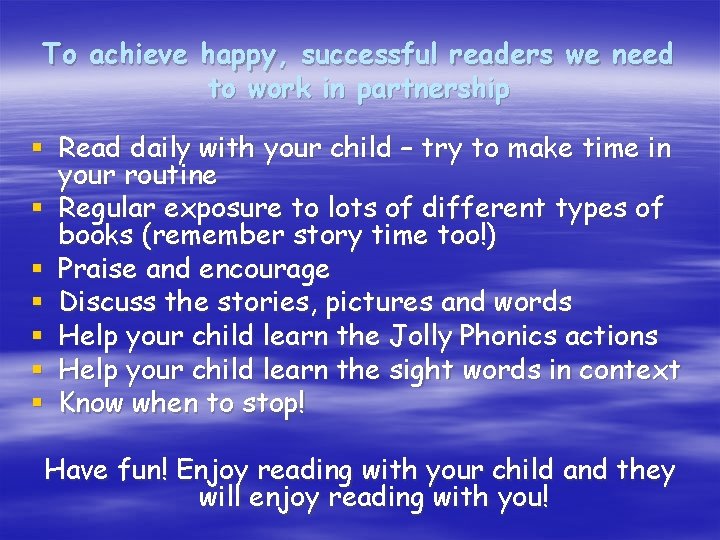
To achieve happy, successful readers we need to work in partnership § Read daily with your child – try to make time in your routine § Regular exposure to lots of different types of books (remember story time too!) § Praise and encourage § Discuss the stories, pictures and words § Help your child learn the Jolly Phonics actions § Help your child learn the sight words in context § Know when to stop! Have fun! Enjoy reading with your child and they will enjoy reading with you!
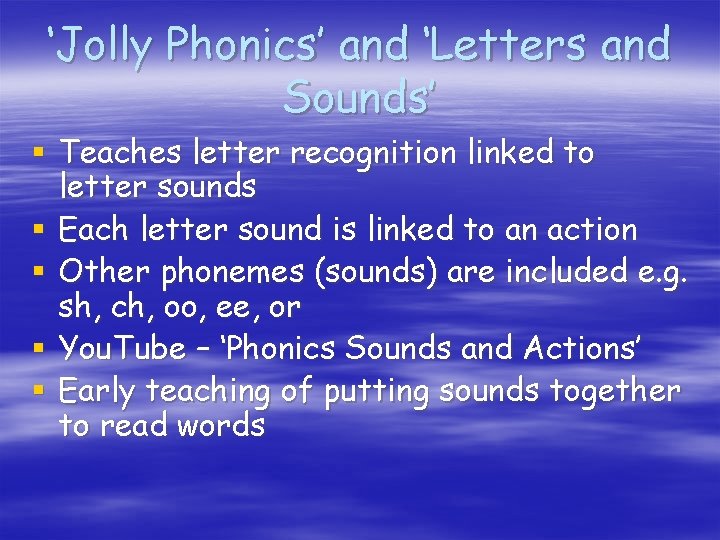
‘Jolly Phonics’ and ‘Letters and Sounds’ § Teaches letter recognition linked to letter sounds § Each letter sound is linked to an action § Other phonemes (sounds) are included e. g. sh, ch, oo, ee, or § You. Tube – ‘Phonics Sounds and Actions’ § Early teaching of putting sounds together to read words
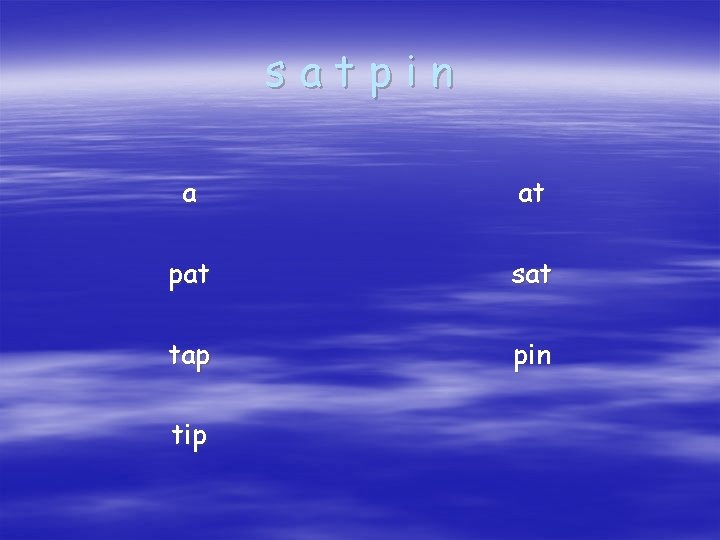
satpin a at pat sat tap pin tip
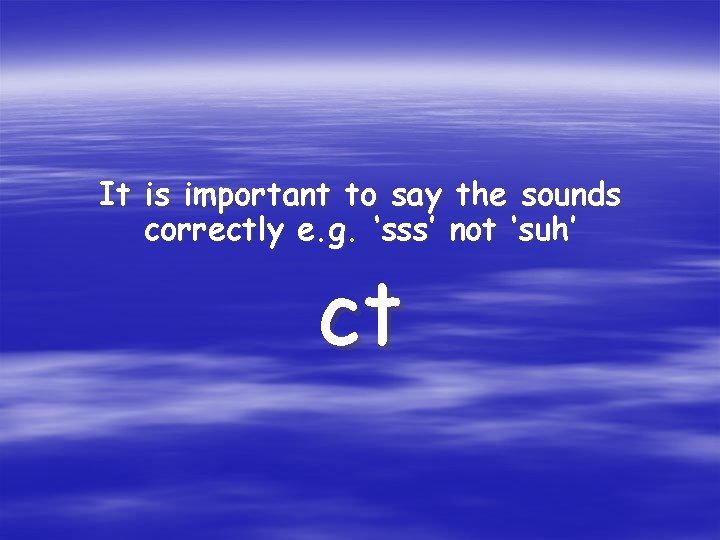
It is important to say the sounds correctly e. g. ‘sss’ not ‘suh’ ct
§ Phonics books
Writing
Writing is hard! Many things are involved in writing. You have to… § Have an idea § Think of words to express that idea § Know how to write remembering direction, spaces, letter formation, punctuation etc. § Still remember your idea!
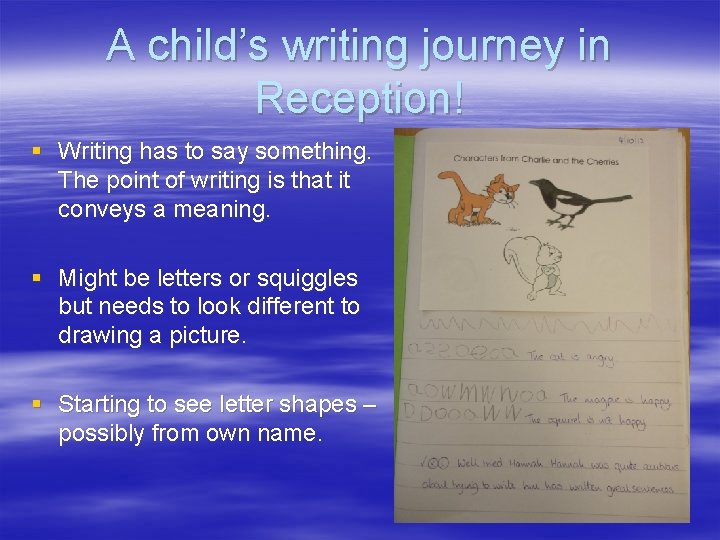
A child’s writing journey in Reception! § Writing has to say something. The point of writing is that it conveys a meaning. § Might be letters or squiggles but needs to look different to drawing a picture. § Starting to see letter shapes – possibly from own name.
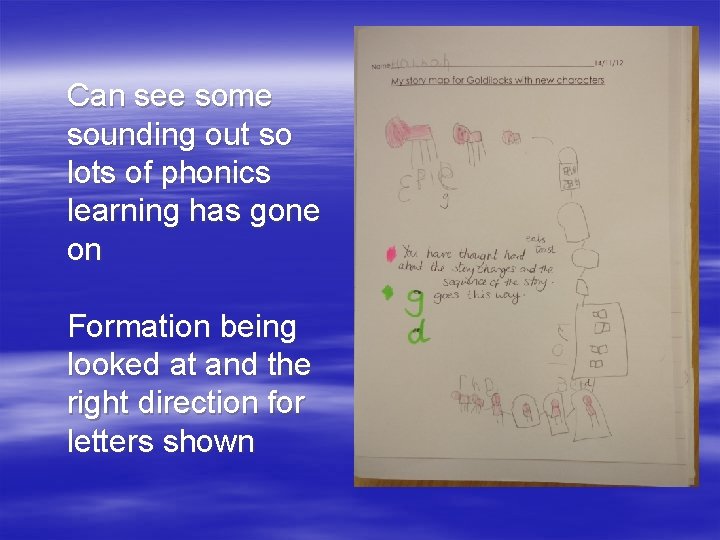
Can see some sounding out so lots of phonics learning has gone on Formation being looked at and the right direction for letters shown
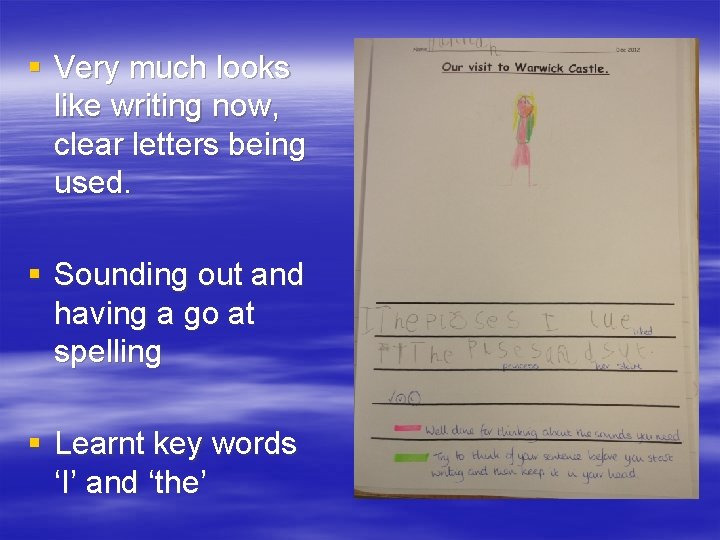
§ Very much looks like writing now, clear letters being used. § Sounding out and having a go at spelling § Learnt key words ‘I’ and ‘the’
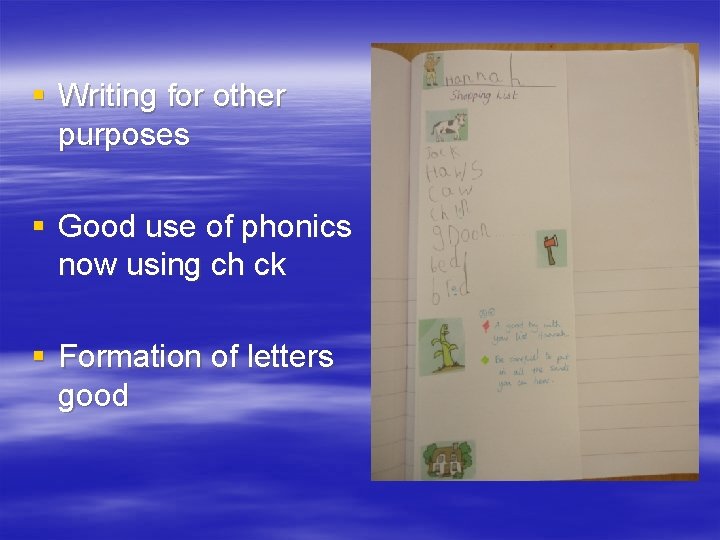
§ Writing for other purposes § Good use of phonics now using ch ck § Formation of letters good
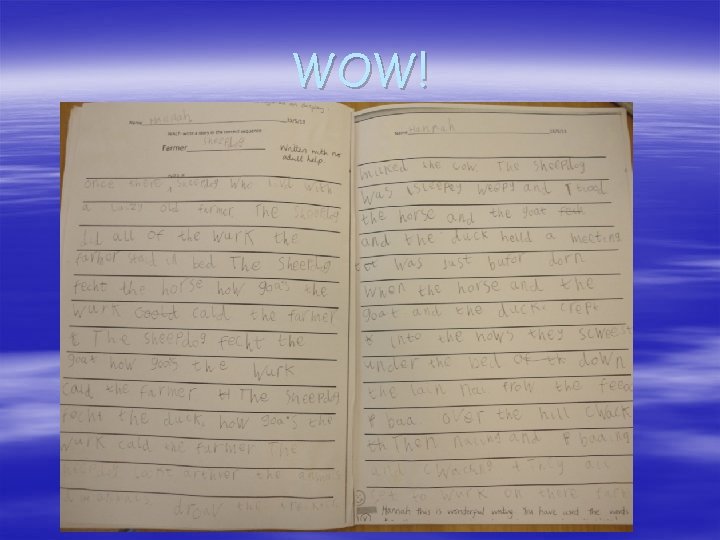
WOW!
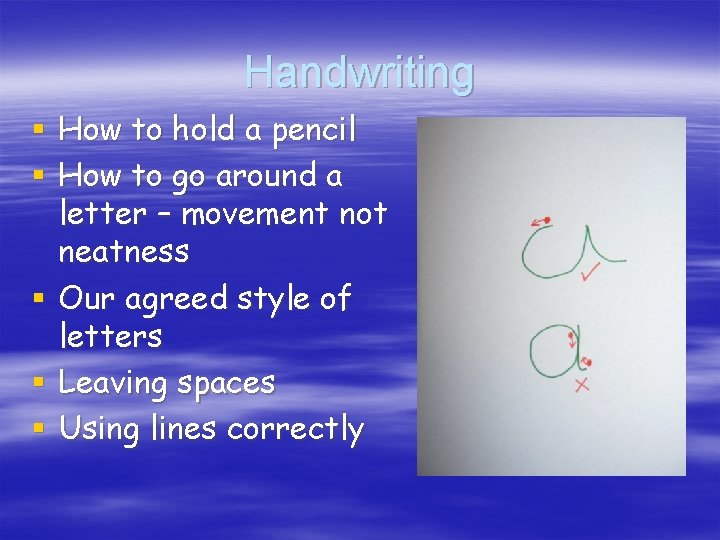
Handwriting § How to hold a pencil § How to go around a letter – movement not neatness § Our agreed style of letters § Leaving spaces § Using lines correctly
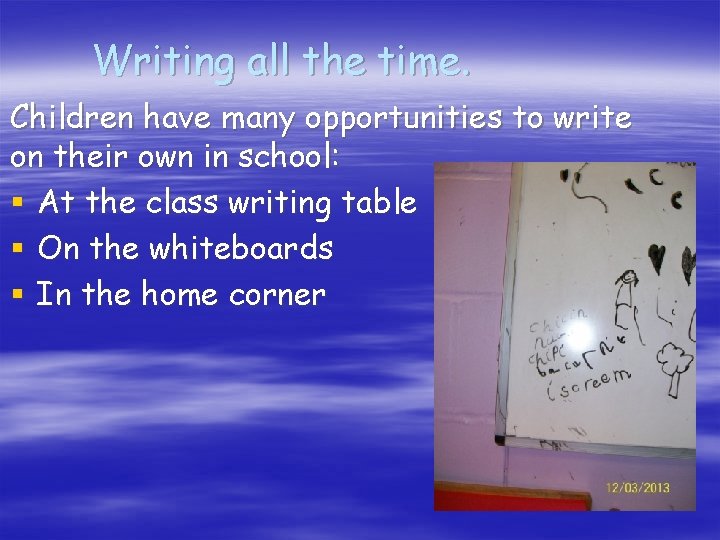
Writing all the time. Children have many opportunities to write on their own in school: § At the class writing table § On the whiteboards § In the home corner
Writing at home § Let your child see you write – lists etc § Praise and encourage as much as possible – get them to tell you what it says § Write for different purposes – cards, lists, post its, treasure hunts …anything! § Correct formation and grip
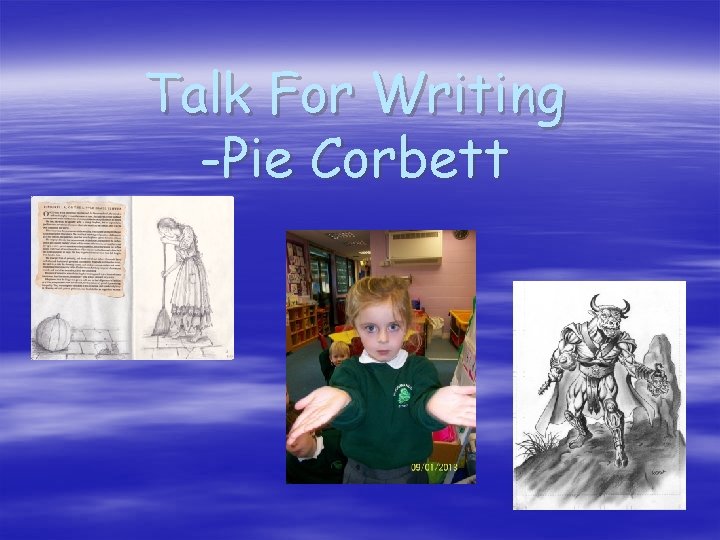
Talk For Writing -Pie Corbett
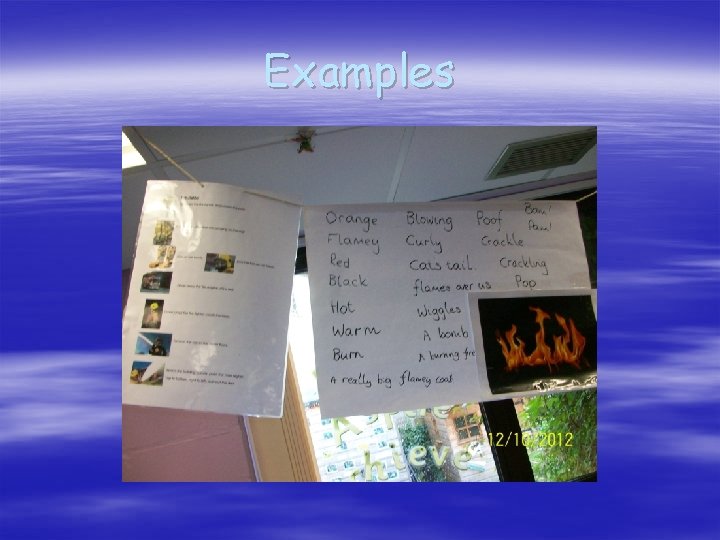
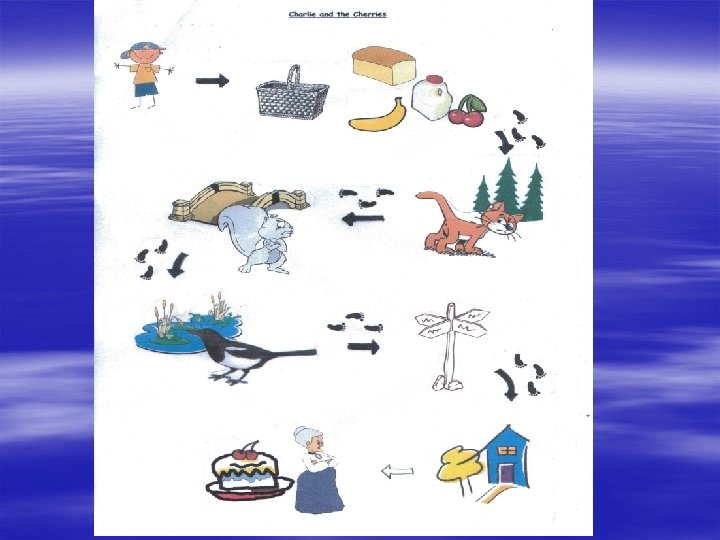
Imitation and Immersion in a story - Familiarisation § Learning of a story really well off by heart using story language like ‘Once upon a time’ § We use maps/mountains, actions. § Getting into the story – book talk, drama, model making, art, etc. § Very repetitive. § Underpinned by phonics, sentence work and hand writing teaching in letters and sounds
Examples
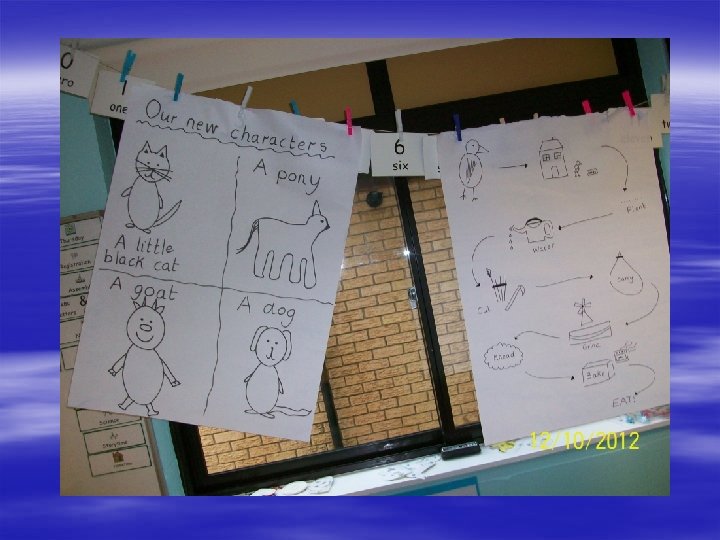
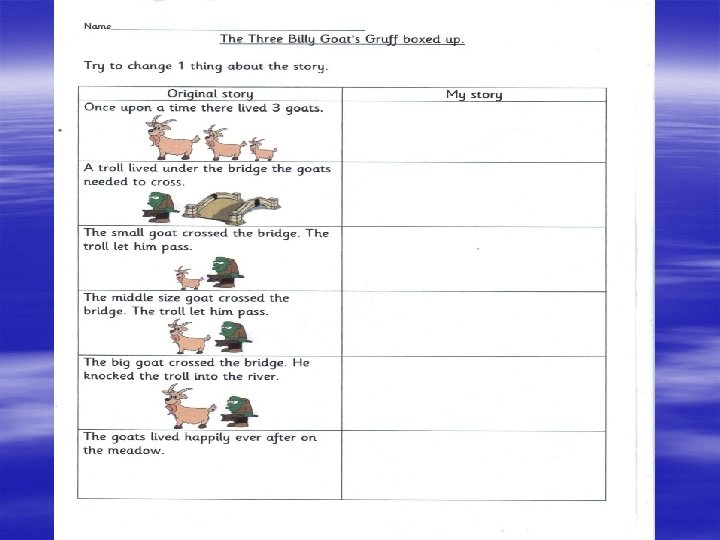
INNOVATION – adapting the well-known text. § Change small parts of the well known stories e. g. Charlie and the Cherries becomes Thea and the Apples § Act out again and draw their own story maps § Re learn as a class a new version § Write parts of the story hugging very closely to the original
Later on in the school INVENTION – creating your own new text § Same text type and focus, e. g. non-chronological report/traditional story § Draw a new map/toolkit for new piece. § Independent writing and teacher feedback § Can be very creative
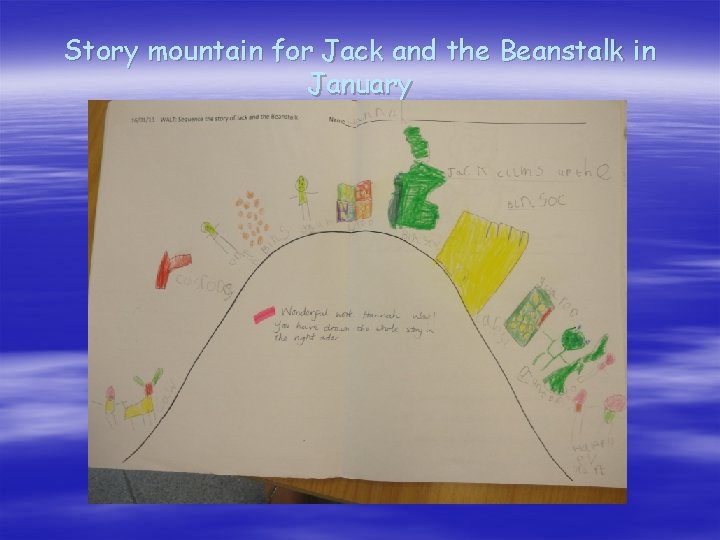
Story mountain for Jack and the Beanstalk in January
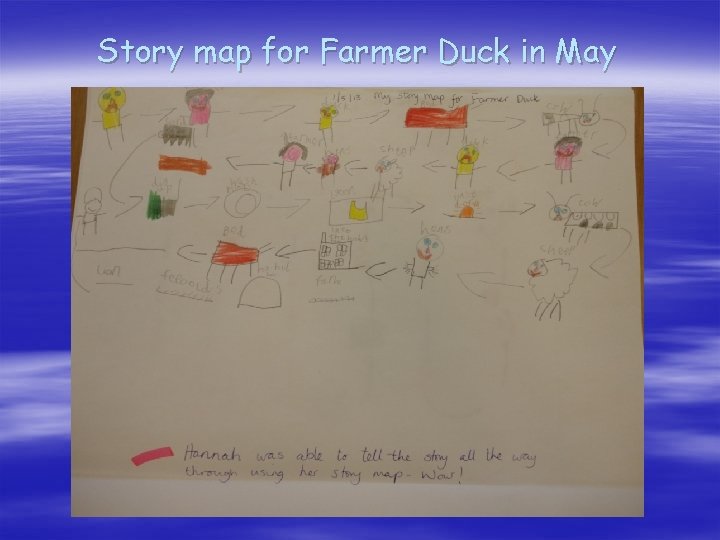
Story map for Farmer Duck in May
Teaching Maths in Reception
First Steps § Try not to influence your child based on your own experience of maths… § Your children will have come into school with a varied knowledge of maths concepts – try not to compare with other children at this stage.
Now your child is in Reception, they should begin to…. . § Know the sequence of numbers § Know and understand early maths language of measurement, shapes, spaces, positions, early numbers, orders and patterns § Begin to understand positional words: in, outside, next to, between § Show an awareness of time § Be aware of shapes in their environment § Learn number rhymes and songs, e. g. one, two, buckle my shoe etc…
When we say ‘children know their numbers’ , they may be able to recite them in order. But, they need to know what numbers mean in context; learning through play is the best way for children to understand number. Number conservation: 3 is always 3 no matter how it is arranged or presented: the letters for three, 3 bricks, 3 buttons on a coat, 3 Billy Goats Gruff, 3 sides on a triangle, 3 birds in the tree… Children need real objects which can be seen and handled (a practical experience) with a chance to check that the count is right each time before they can understand numbers for things that can’t be seen – 3 miles, 3 years old
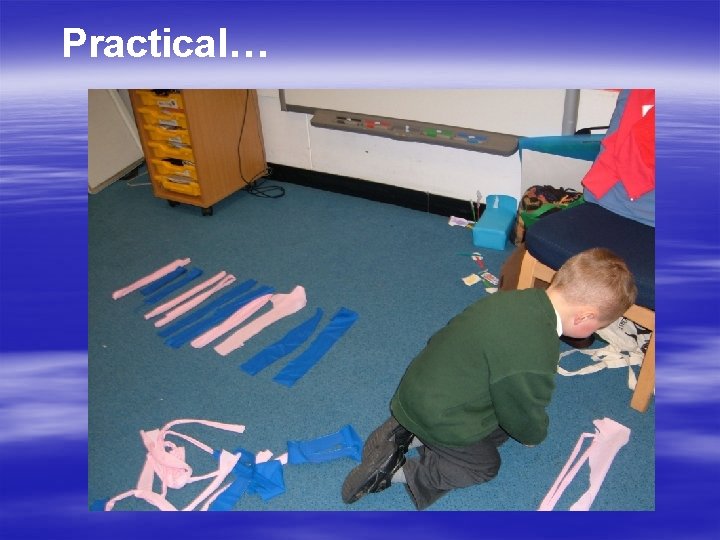
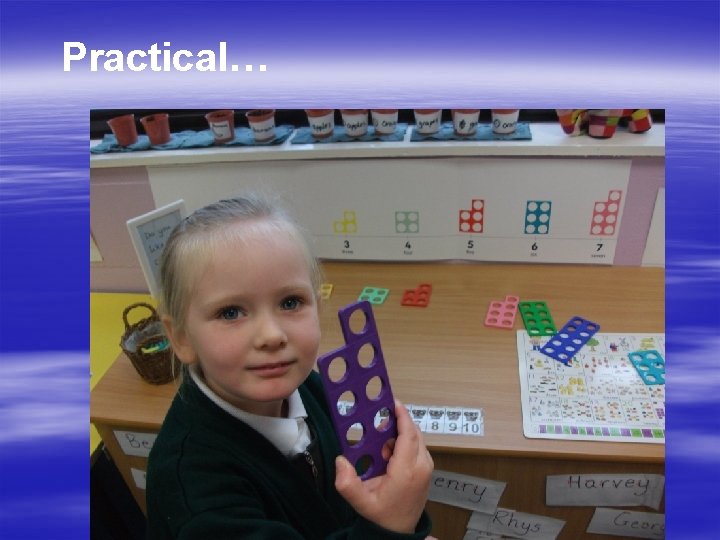
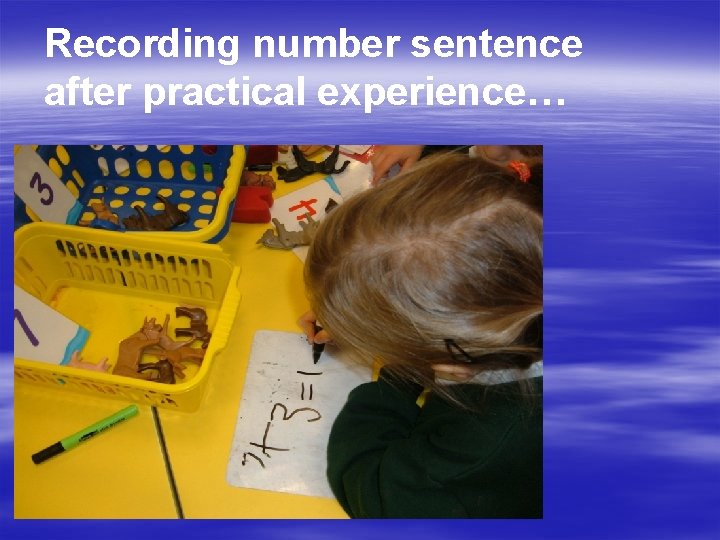
3 Steps to Sound Understanding § PRACTICAL – “Put 3 animals in a field, add 2 more animals to the field. How many do we have now? ” § ORAL – children will explain what they have done e. g. “ 3 animals add another 2 animals makes 5 animals altogether”. § MENTAL RECALL – through lots of practical work the children will develop basic mental recall skills e. g. 3+2=5 § PROBLEM SOLVING – everyday and real life problems.
Practical…
Practical…
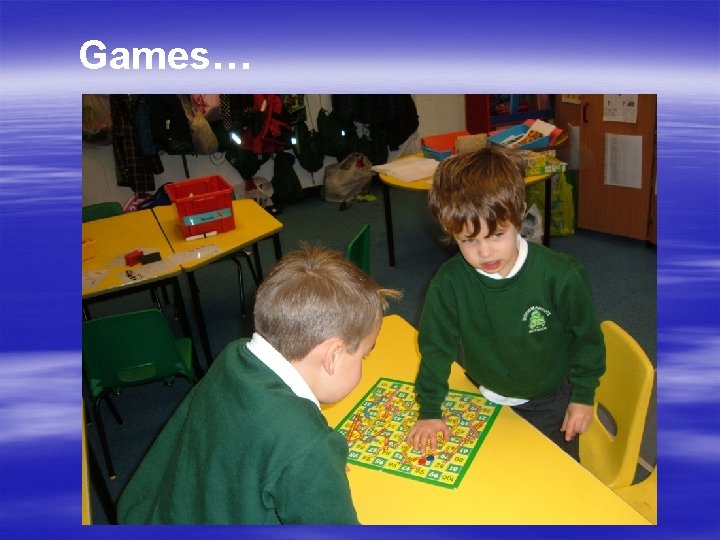
Games…
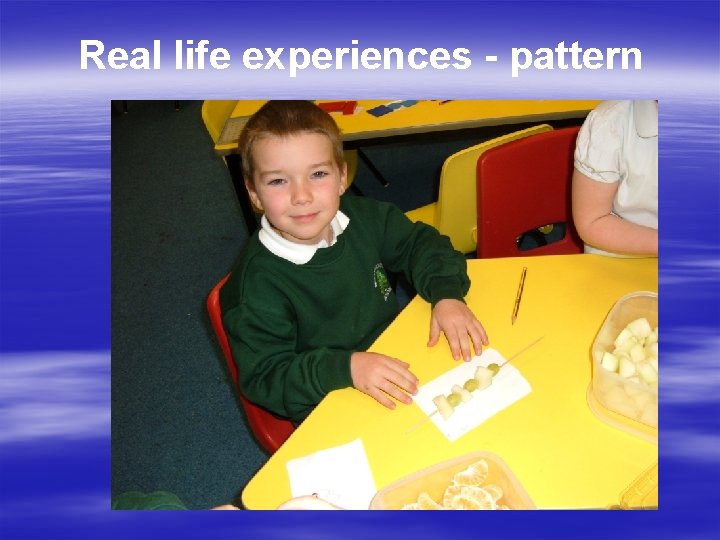
Real life experiences - pattern
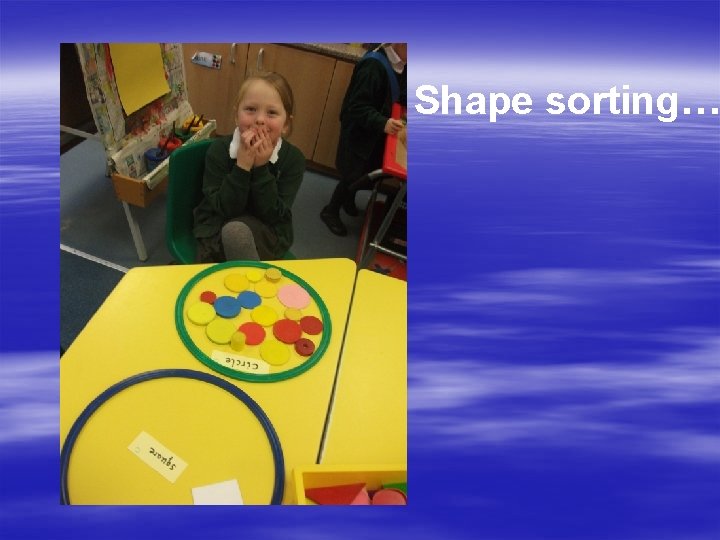
Shape sorting…
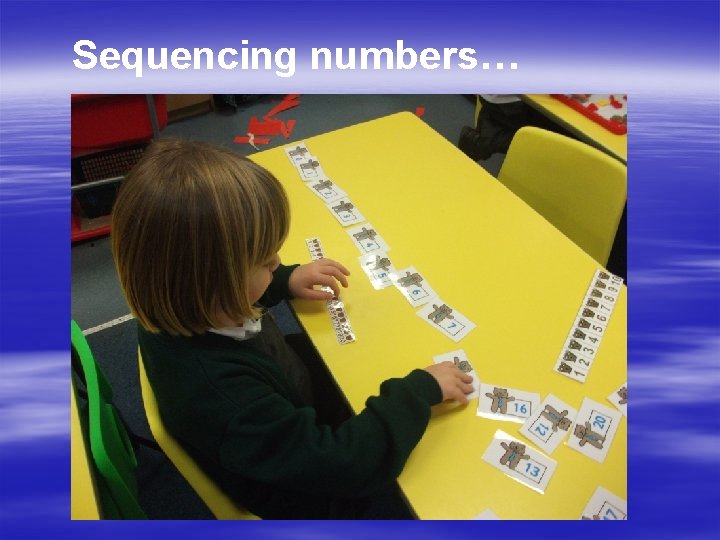
Sequencing numbers…
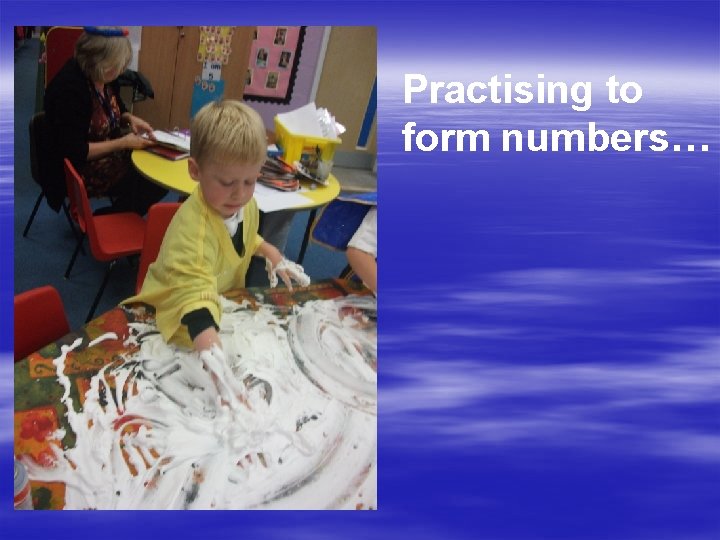
Practising to form numbers…
Recording number sentence after practical experience…
Ways to help at home § Count the stairs in your house, steps on a walk etc. In fact, count everything and anything! § Talk about daily routine in order to understand concept of time § Setting places at the table eg, a cup for me, a cup for you, can you set the table for three people? Can you find a bigger plate? § Steering the pram / car journeys (directional language) § Helping to sort the washing, matching socks, big shirt / small shirt
Ways to help at home § Tidying up – putting similar items together, sorting toys § Matching lids to saucepans § Compare weights and quantities of everyday household objects § Let your child count out items in books – how many animals are on the page, how many items are blue. § Using rhymes can also help develop your child’s awareness of sequencing
Thank you for coming and do catch us tonight, after school or via email if you have any questions.