
WELCOME TO WILLIAM FARR C OF E COMPREHENSIVE
- Slides: 30
WELCOME TO WILLIAM FARR C. OF E. COMPREHENSIVE SCHOOL YEAR 9 OPTIONS EVENING THURSDAY 30 TH JANUARY 2020
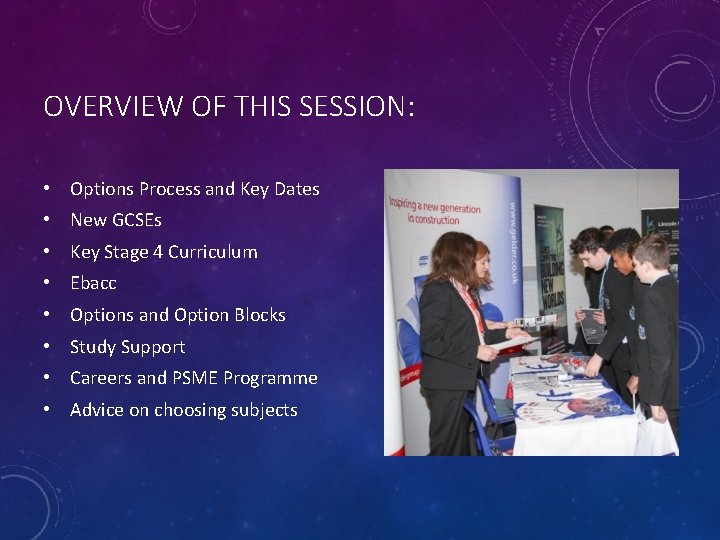
OVERVIEW OF THIS SESSION: • Options Process and Key Dates • New GCSEs • Key Stage 4 Curriculum • Ebacc • Options and Option Blocks • Study Support • Careers and PSME Programme • Advice on choosing subjects
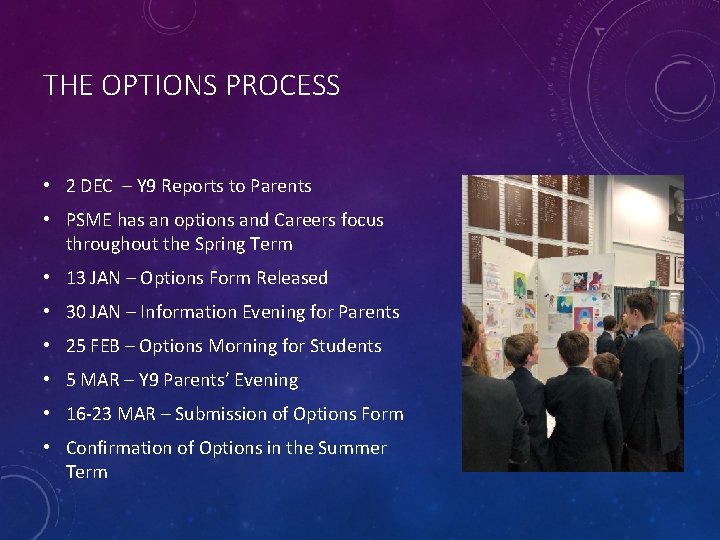
THE OPTIONS PROCESS • 2 DEC – Y 9 Reports to Parents • PSME has an options and Careers focus throughout the Spring Term • 13 JAN – Options Form Released • 30 JAN – Information Evening for Parents • 25 FEB – Options Morning for Students • 5 MAR – Y 9 Parents’ Evening • 16 -23 MAR – Submission of Options Form • Confirmation of Options in the Summer Term
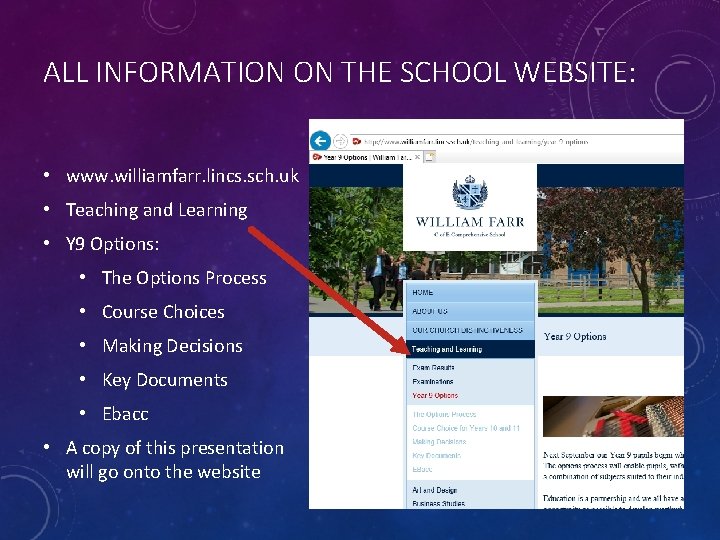
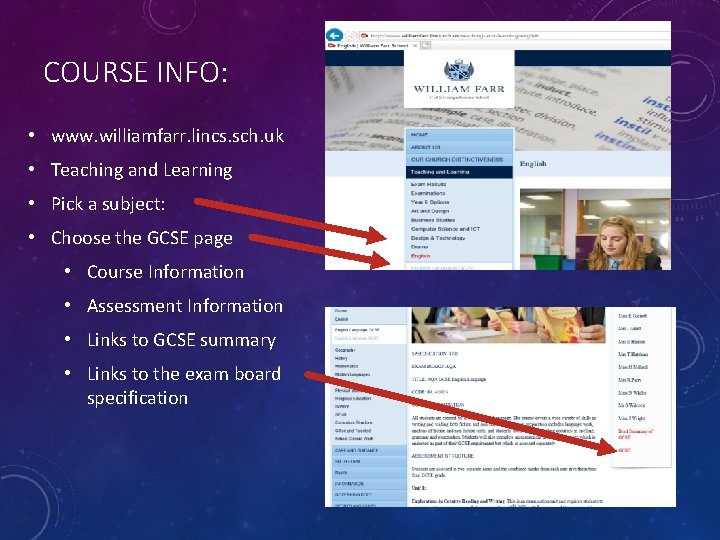
ALL INFORMATION ON THE SCHOOL WEBSITE: • www. williamfarr. lincs. sch. uk • Teaching and Learning • Y 9 Options: • The Options Process • Course Choices • Making Decisions • Key Documents • Ebacc • A copy of this presentation will go onto the website
COURSE INFO: • www. williamfarr. lincs. sch. uk • Teaching and Learning • Pick a subject: • Choose the GCSE page • Course Information • Assessment Information • Links to GCSE summary • Links to the exam board specification
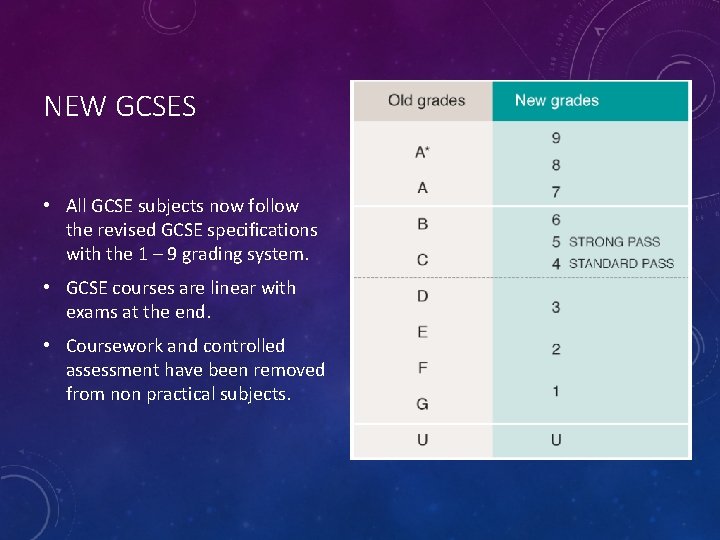
NEW GCSES • All GCSE subjects now follow the revised GCSE specifications with the 1 – 9 grading system. • GCSE courses are linear with exams at the end. • Coursework and controlled assessment have been removed from non practical subjects.
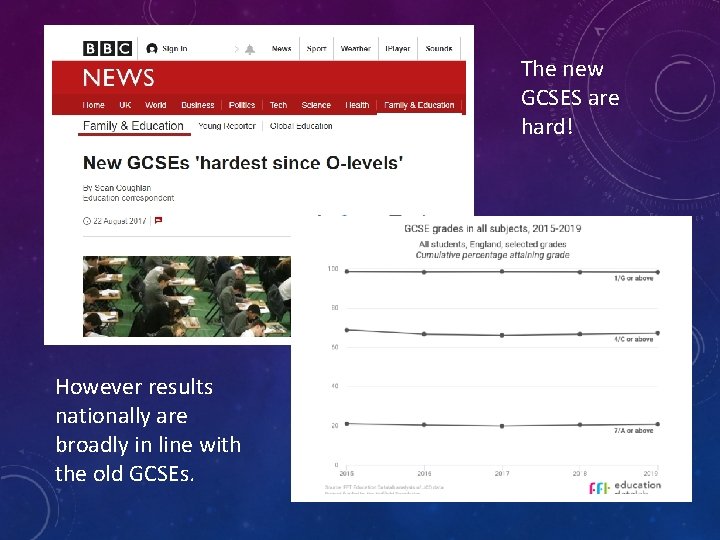
The new GCSES are hard! However results nationally are broadly in line with the old GCSEs.
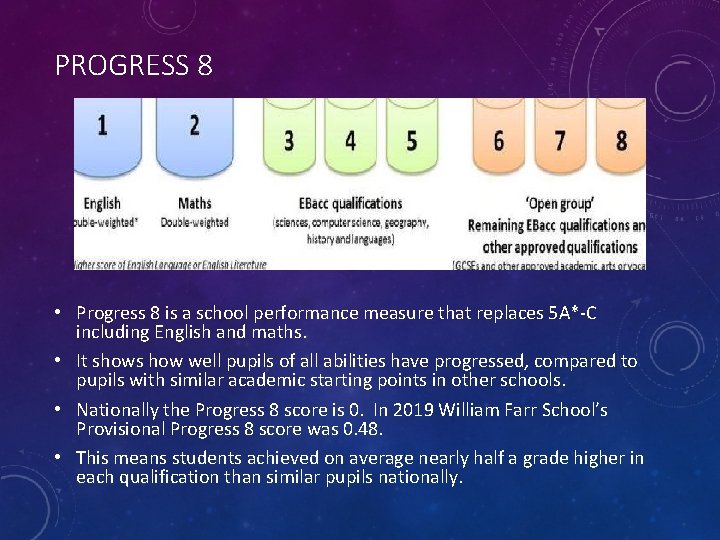
PROGRESS 8 • Progress 8 is a school performance measure that replaces 5 A*-C including English and maths. • It shows how well pupils of all abilities have progressed, compared to pupils with similar academic starting points in other schools. • Nationally the Progress 8 score is 0. In 2019 William Farr School’s Provisional Progress 8 score was 0. 48. • This means students achieved on average nearly half a grade higher in each qualification than similar pupils nationally.
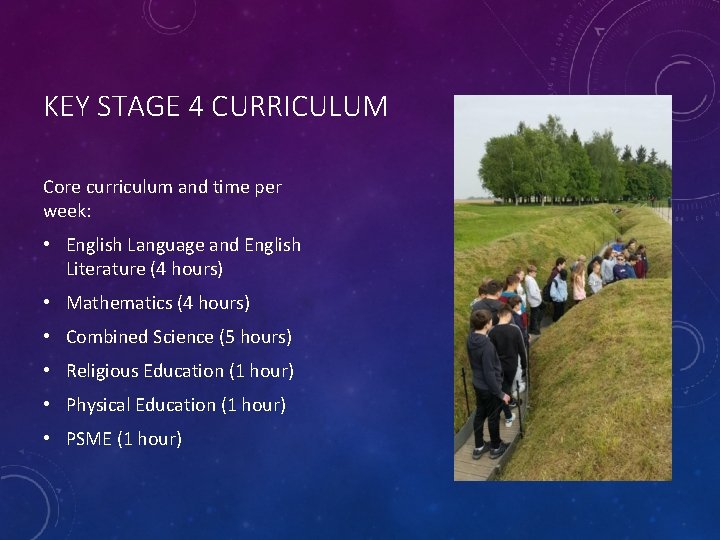
KEY STAGE 4 CURRICULUM Core curriculum and time per week: • English Language and English Literature (4 hours) • Mathematics (4 hours) • Combined Science (5 hours) • Religious Education (1 hour) • Physical Education (1 hour) • PSME (1 hour)
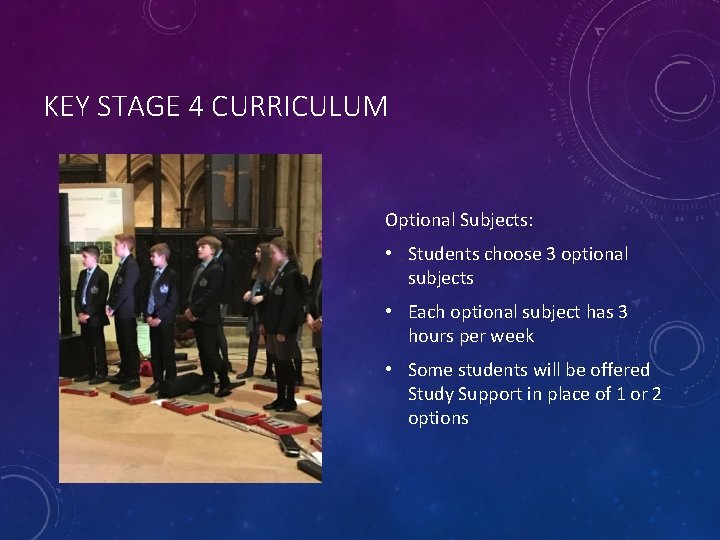
KEY STAGE 4 CURRICULUM Optional Subjects: • Students choose 3 optional subjects • Each optional subject has 3 hours per week • Some students will be offered Study Support in place of 1 or 2 options
THE ENGLISH BACCALAUREATE • The English Baccalaureate (or EBacc) is a school performance measure rather than an actual qualification for students. • The EBacc is: • English language and literature • mathematics • the sciences • geography or history • a language • It was introduced in 2010 by the government and represented a core of subjects that it wanted pupils to have the opportunity to study. • The government’s ambition is to see 75% of pupils studying the EBacc subject combination at GCSE by 2022, and 90% by 2025. • The English Baccalaureate is not compulsory.
OPTIONS AT WILLIAM FARR SCHOOL • Our whole curriculum offer at Key Stage 4 has high ambition and is grounded in developing the knowledge and understanding that students need to effectively build on their prior learning to prepare them for the next stage in their education. • Our options process encourages students to consider all of the subjects that we offer and make a choice based on their own interests, strengths and future plans. • Students can pursue a range of different subject combinations that leave their options open for further study and future careers. • We believe that this approach strongly fits with our school vision to provide all members of the school community with the opportunities to engage with 'life in all its fullness' (John 10: 10) through the highest quality of education, encouragement and endeavour. We are committed to striving for excellence and ensuring that all students are known, valued and can achieve.
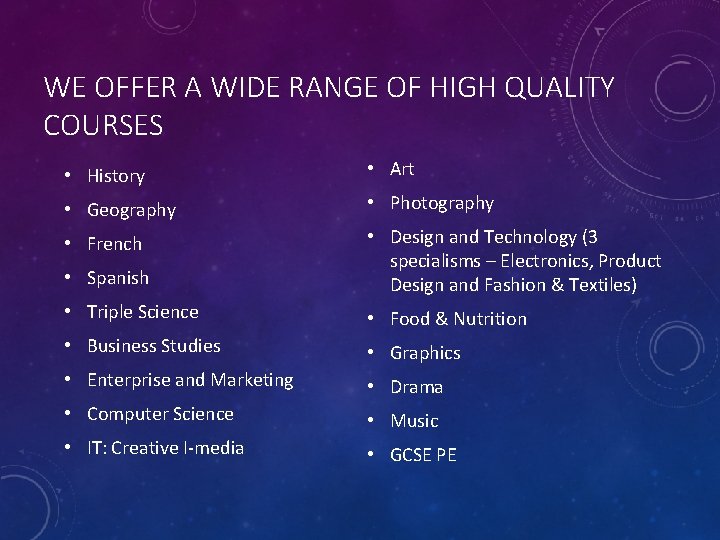
WE OFFER A WIDE RANGE OF HIGH QUALITY COURSES • History • Art • Geography • Photography • French • Spanish • Design and Technology (3 specialisms – Electronics, Product Design and Fashion & Textiles) • Triple Science • Food & Nutrition • Business Studies • Graphics • Enterprise and Marketing • Drama • Computer Science • Music • IT: Creative I-media • GCSE PE
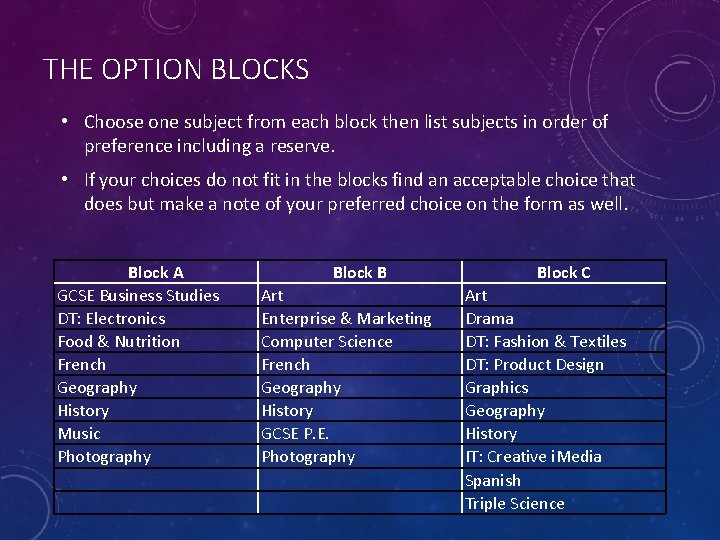
THE OPTION BLOCKS • Choose one subject from each block then list subjects in order of preference including a reserve. • If your choices do not fit in the blocks find an acceptable choice that does but make a note of your preferred choice on the form as well. Block A GCSE Business Studies DT: Electronics Food & Nutrition French Geography History Music Photography Block B Art Enterprise & Marketing Computer Science French Geography History GCSE P. E. Photography Block C Art Drama DT: Fashion & Textiles DT: Product Design Graphics Geography History IT: Creative i. Media Spanish Triple Science
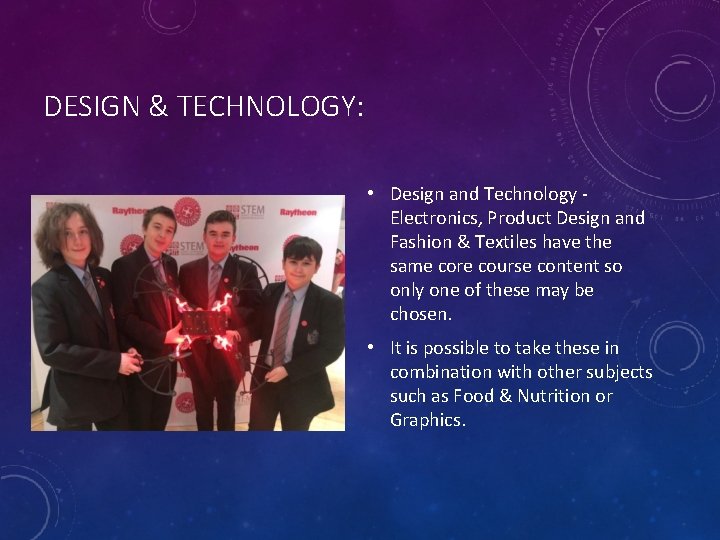
DESIGN & TECHNOLOGY: • Design and Technology Electronics, Product Design and Fashion & Textiles have the same core course content so only one of these may be chosen. • It is possible to take these in combination with other subjects such as Food & Nutrition or Graphics.
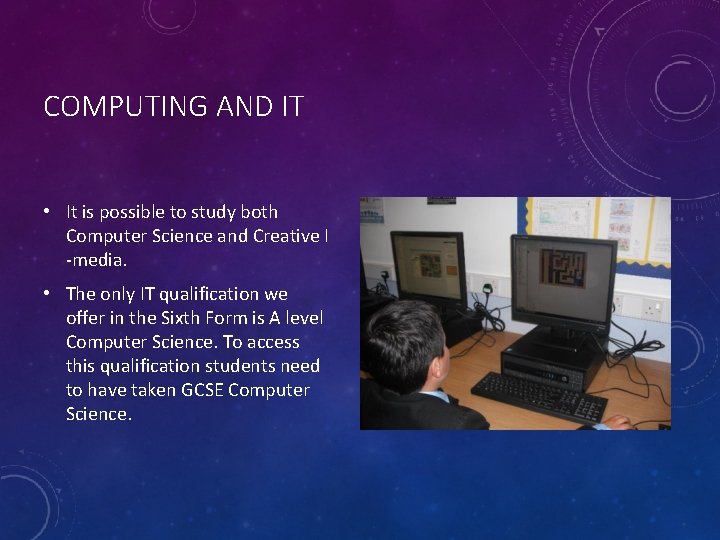
COMPUTING AND IT • It is possible to study both Computer Science and Creative I -media. • The only IT qualification we offer in the Sixth Form is A level Computer Science. To access this qualification students need to have taken GCSE Computer Science.
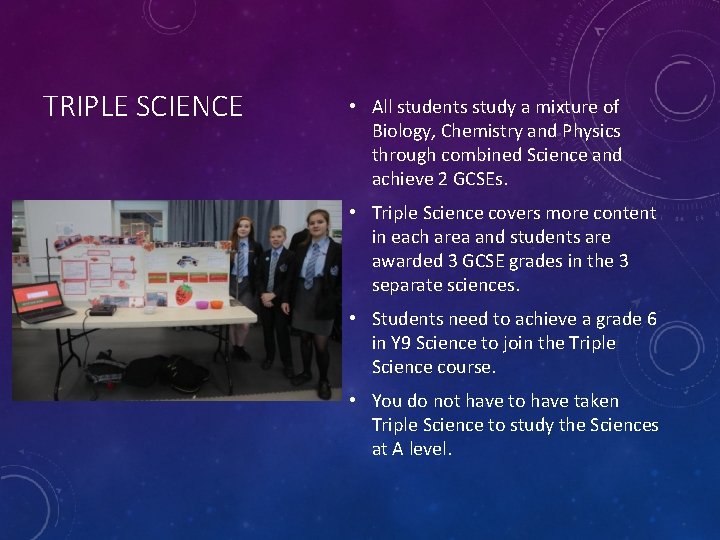
TRIPLE SCIENCE • All students study a mixture of Biology, Chemistry and Physics through combined Science and achieve 2 GCSEs. • Triple Science covers more content in each area and students are awarded 3 GCSE grades in the 3 separate sciences. • Students need to achieve a grade 6 in Y 9 Science to join the Triple Science course. • You do not have to have taken Triple Science to study the Sciences at A level.
SPANISH • Students wishing to take Spanish GCSE should take the extra-curricular opportunities offered by Spanish department to learn the basics of the subject in Year 9. • Alternatively students need to achieve a grade 6 in GCSE French in Year 9.
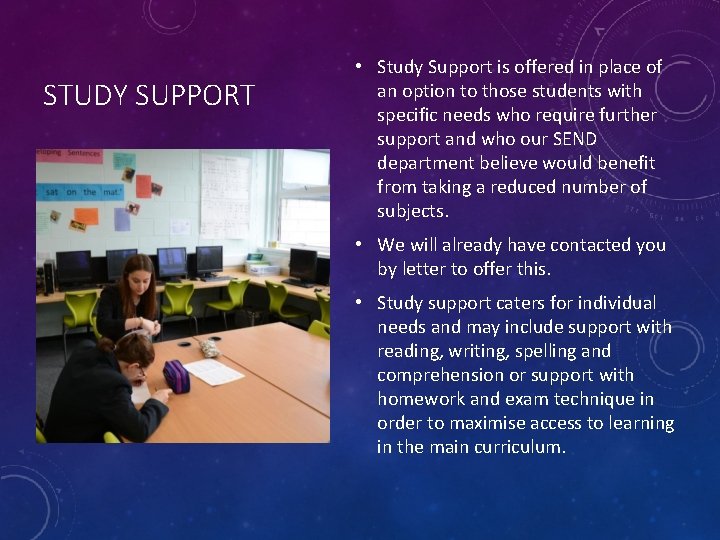
STUDY SUPPORT • Study Support is offered in place of an option to those students with specific needs who require further support and who our SEND department believe would benefit from taking a reduced number of subjects. • We will already have contacted you by letter to offer this. • Study support caters for individual needs and may include support with reading, writing, spelling and comprehension or support with homework and exam technique in order to maximise access to learning in the main curriculum.
CAREERS, PSME AND OPTIONS ADVICE • In England, you must stay in some form of Education or Training until the end of the academic year you turn 18 years old. • This does not mean only staying in school, it can be: • Full time education, eg at a school or college • An Apprenticeship • Full-time employment (over 20 Hrs a week) combined with some part-time training
KEY RESPONSIBILITIES FOR SCHOOLS • Schools have a duty to secure independent and impartial careers guidance to students • Schools have a role to play in supporting their pupils in making informed and realistic decisions regarding their future. • It is for schools to decide how this careers guidance is made available, based on the needs of the pupils and opportunities available. • Schools should provide guidance and support to avoid NEETS (Not in Education, Employment or Training)
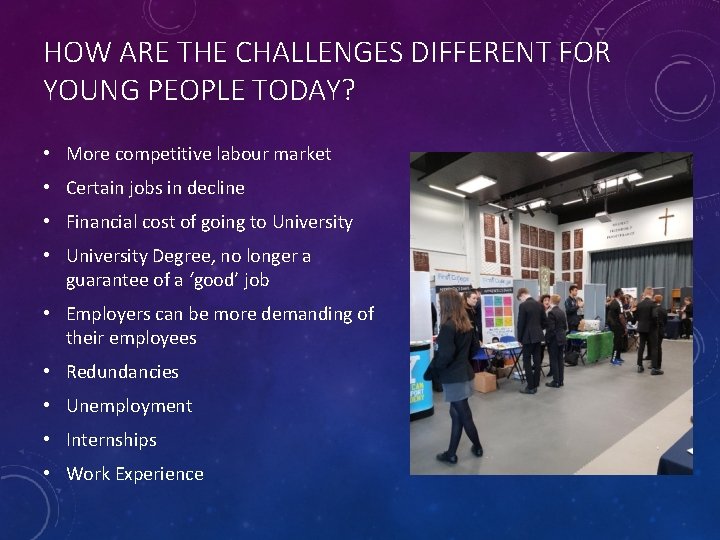
HOW ARE THE CHALLENGES DIFFERENT FOR YOUNG PEOPLE TODAY? • More competitive labour market • Certain jobs in decline • Financial cost of going to University • University Degree, no longer a guarantee of a ‘good’ job • Employers can be more demanding of their employees • Redundancies • Unemployment • Internships • Work Experience
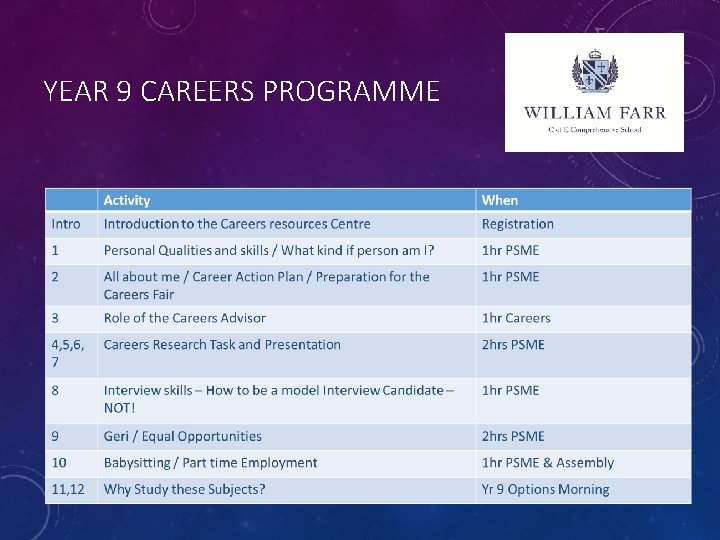
YEAR 9 CAREERS PROGRAMME
QUESTIONS TO ASK WHEN CHOOSING YOUR OPTIONS… • Do I enjoy the subject? Students usually do better at the subjects they like. • Does the course description interest me? Look at the information about each course on the school website (with a parent or guardian) and follow the links to the exam board specifications for further information. • Am I prepared for the demands of the course? Look at your Year 9 report and your grades. The subjects where you have higher grades are the ones where you are making the best progress currently.
• Does my teacher advise me to choose the subject? We would strongly recommend that you talk to your teachers. They will offer you expert but impartial advice. • Which teacher will be teaching me? You should not choose a subject based on who might teach you. Teachers' timetables are not written until after the Year 9 option choices are made. • What are my friends doing? The choices you make give you an individual set of subjects best suited to your own talents and needs. It is very unwise to simply follow friends. They may be better suited to other courses and, in some cases, you may be able to get on with your work better without your friends.
• Will the subject give me a balanced course? Our Key Stage 4 curriculum provides a good balance of subjects. You should aim to achieve variety between the Arts, Sciences and Humanities, and avoid an over emphasis on one aspect unless there is good reason to do so. • Could I study the subject in the future even if I don’t study it at GCSE? It is important to realise that some future opportunities might be lost if you drop certain subjects. A number of subjects will require you to have studied them at GCSE before you can study them at Sixth Form or College. However, this is not always the case. Please see the ‘A Level Subjects’ page under the Sixth Form section of the school website for more details. • Which subjects do I need for my chosen career? If you have a clear idea about your future you need to research the required subjects very carefully. If you have no clear ideas about your future, try to choose subjects which will give you a wide range of future options. Visit the Resource Centre/Careers Library or ask Mrs Bates or Mrs Harris for a Careers interview.
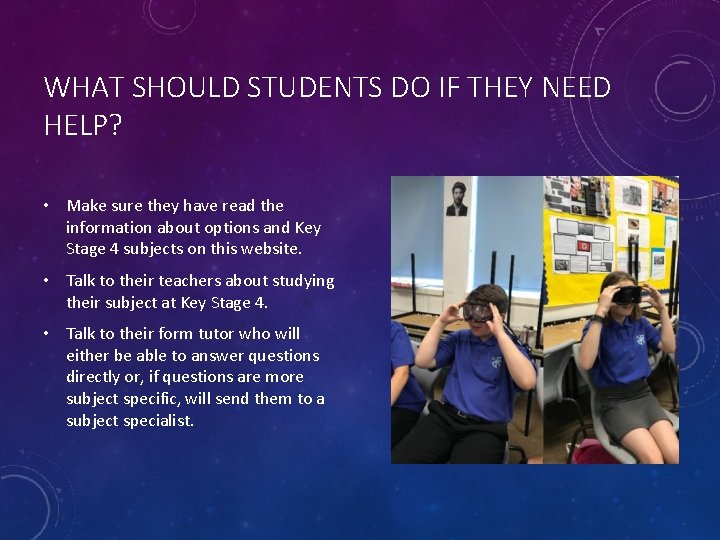
WHAT SHOULD STUDENTS DO IF THEY NEED HELP? • Make sure they have read the information about options and Key Stage 4 subjects on this website. • Talk to their teachers about studying their subject at Key Stage 4. • Talk to their form tutor who will either be able to answer questions directly or, if questions are more subject specific, will send them to a subject specialist.
HOW CAN PARENTS SUPPORT AT HOME? • Set aside time to read through the subject information on the website. • Go through the questions we’ve posed here (on school website) • Begin discussions about the future interests, strengths and possible careers is a good starting point. • Go through the Year 9 report with your child looking at target grades and teacher comments. Discuss areas of strength as well as subjects that balance and keep doors to the future open.
HOW CAN PARENTS SUPPORT AT HOME? • Encourage your child to make the most of the options morning sessions to learn about subjects and ask questions. • Use the Year 9 Parents’ Evening to ask teaching staff for advice. • Some students can still feel undecided as the deadline draws near. Reassure them, support them and encourage them to speak to a member of staff at school. • We are here to help!
THANK YOU! • We are here to answer your questions!