
Welcome to the World of Chemistry The Language
- Slides: 11
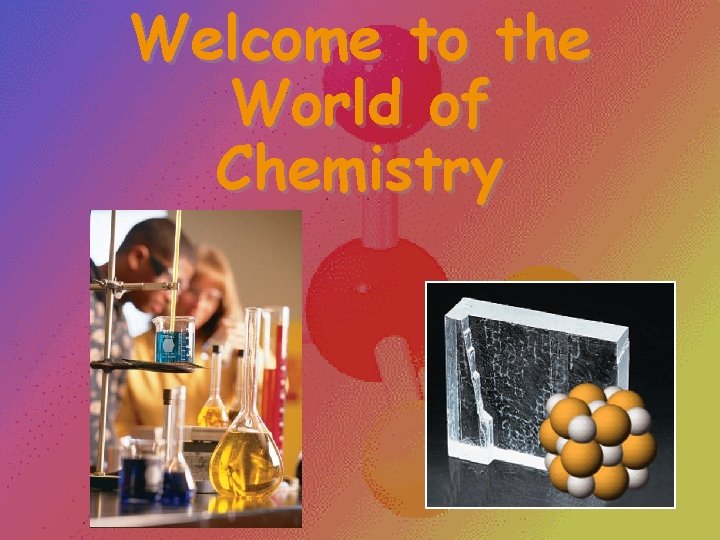
Welcome to the World of Chemistry
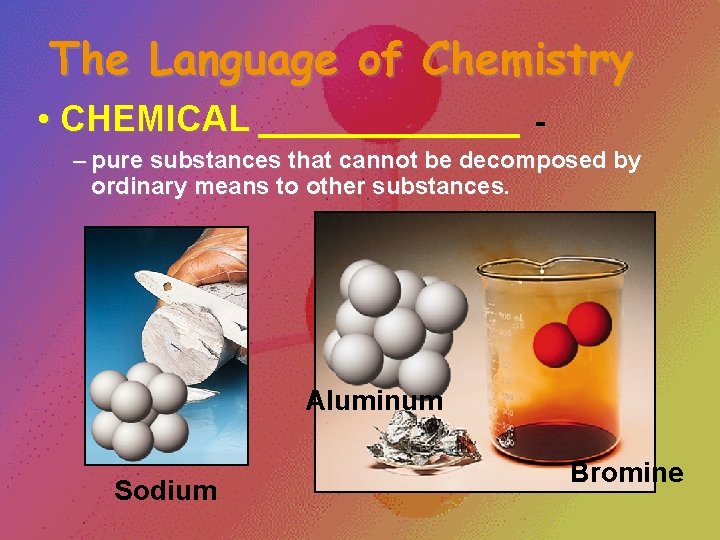
The Language of Chemistry • CHEMICAL _______ - – pure substances that cannot be decomposed by ordinary means to other substances. Aluminum Sodium Bromine
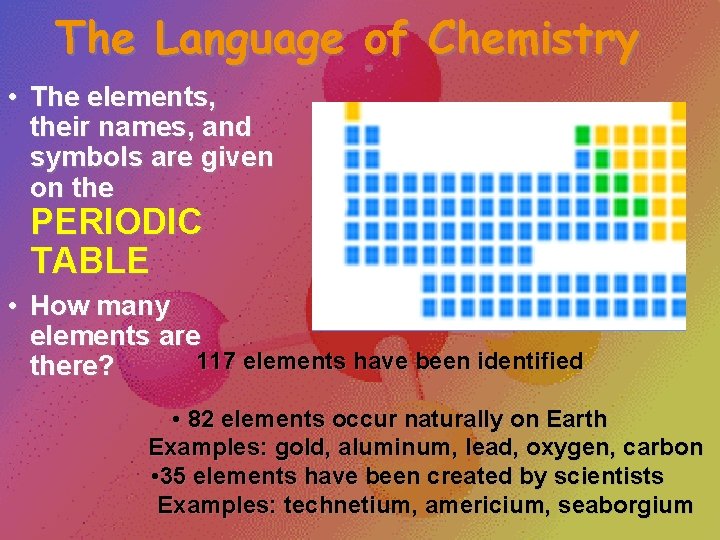
The Language of Chemistry • The elements, their names, and symbols are given on the PERIODIC TABLE • How many elements are 117 elements have been identified there? • 82 elements occur naturally on Earth Examples: gold, aluminum, lead, oxygen, carbon • 35 elements have been created by scientists Examples: technetium, americium, seaborgium
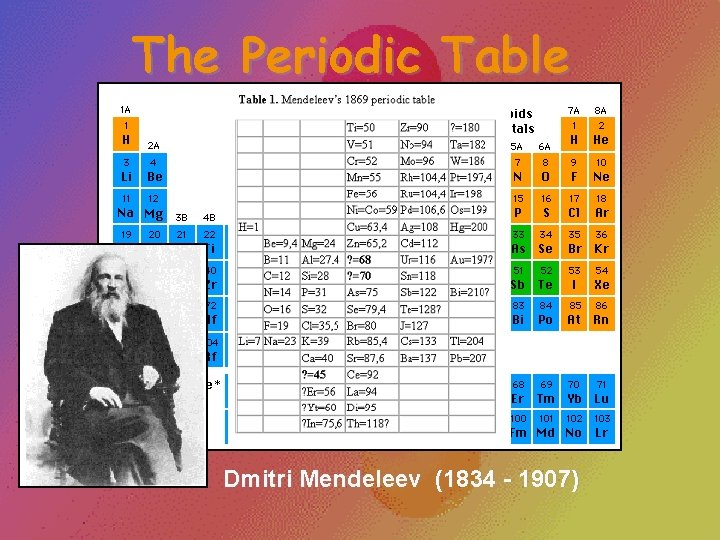
The Periodic Table Dmitri Mendeleev (1834 - 1907)
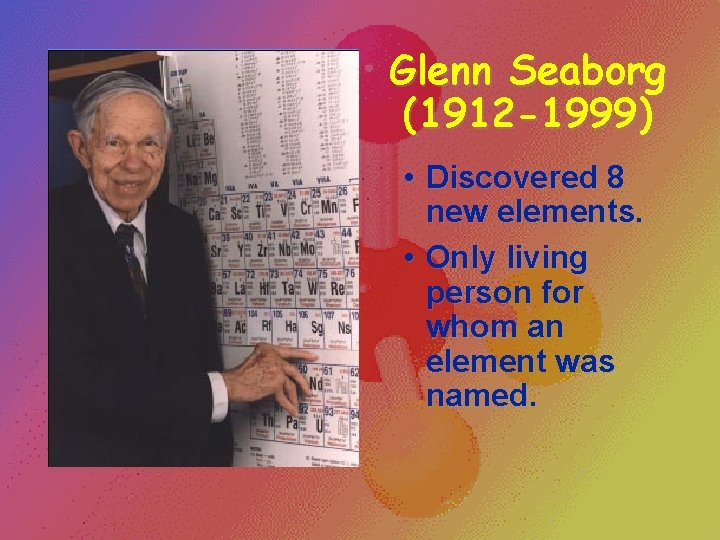
Glenn Seaborg (1912 -1999) • Discovered 8 new elements. • Only living person for whom an element was named.
Branches of Chemistry • Many major areas of study for specialization • Several career opportunities • Also used in many other jobs
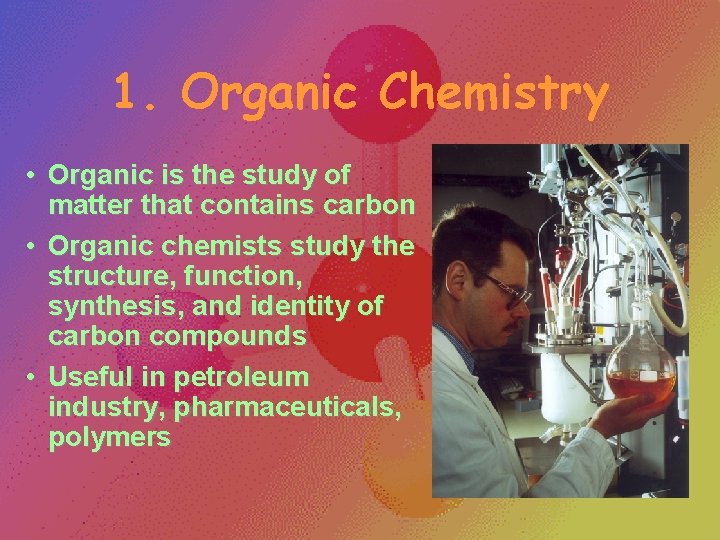
1. Organic Chemistry • Organic is the study of matter that contains carbon • Organic chemists study the structure, function, synthesis, and identity of carbon compounds • Useful in petroleum industry, pharmaceuticals, polymers
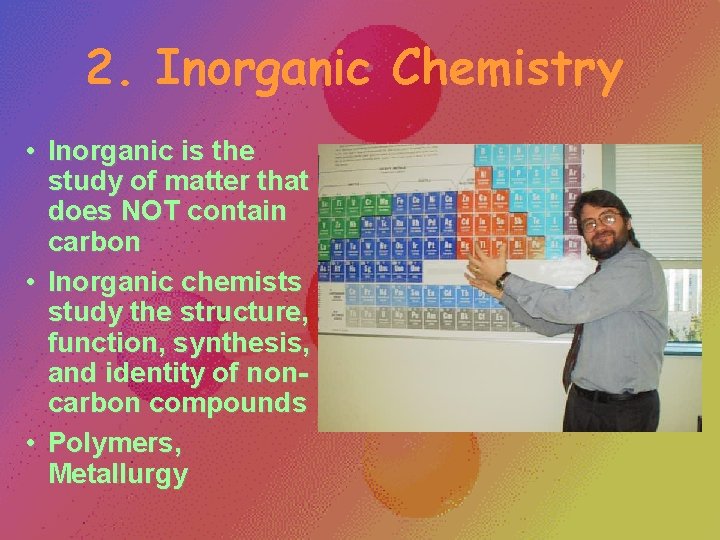
2. Inorganic Chemistry • Inorganic is the study of matter that does NOT contain carbon • Inorganic chemists study the structure, function, synthesis, and identity of noncarbon compounds • Polymers, Metallurgy
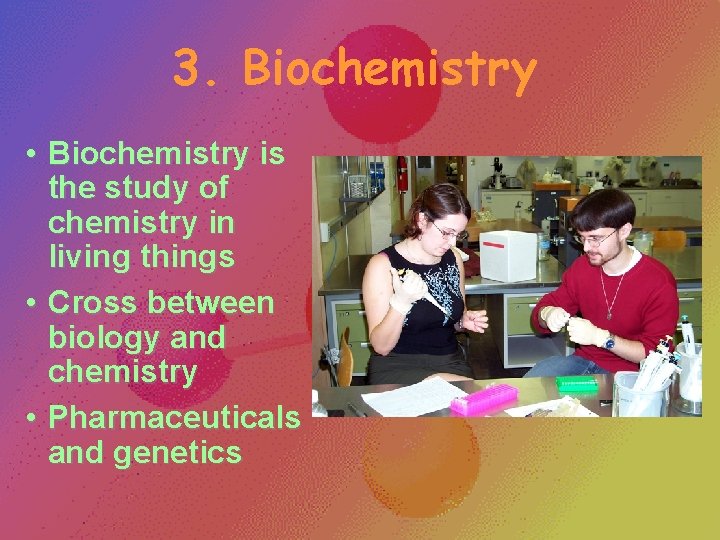
3. Biochemistry • Biochemistry is the study of chemistry in living things • Cross between biology and chemistry • Pharmaceuticals and genetics
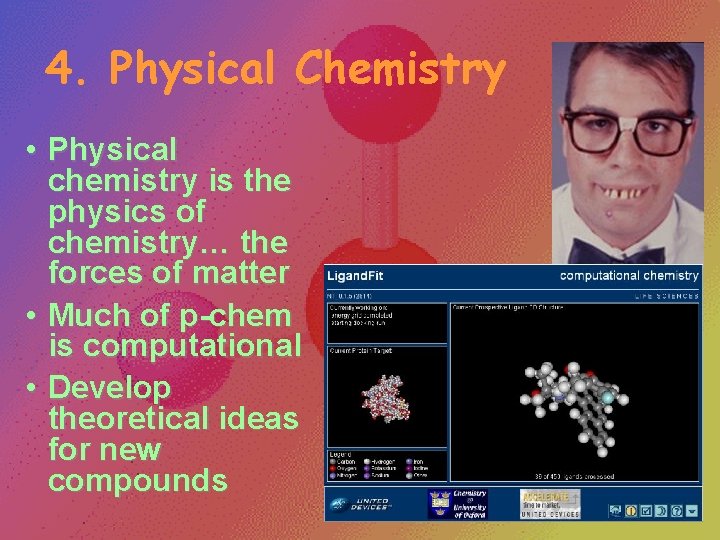
4. Physical Chemistry • Physical chemistry is the physics of chemistry… the forces of matter • Much of p-chem is computational • Develop theoretical ideas for new compounds
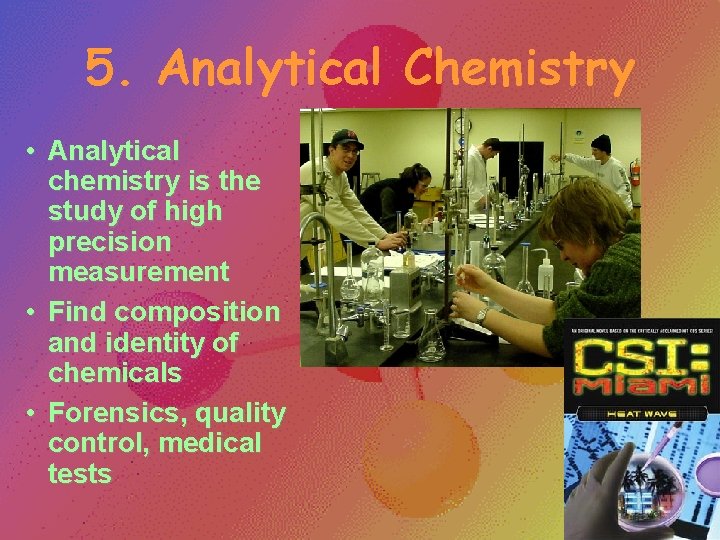
5. Analytical Chemistry • Analytical chemistry is the study of high precision measurement • Find composition and identity of chemicals • Forensics, quality control, medical tests