
Welcome to the World of Cell Division Mitosis
- Slides: 21
Welcome to the World of Cell Division Mitosis
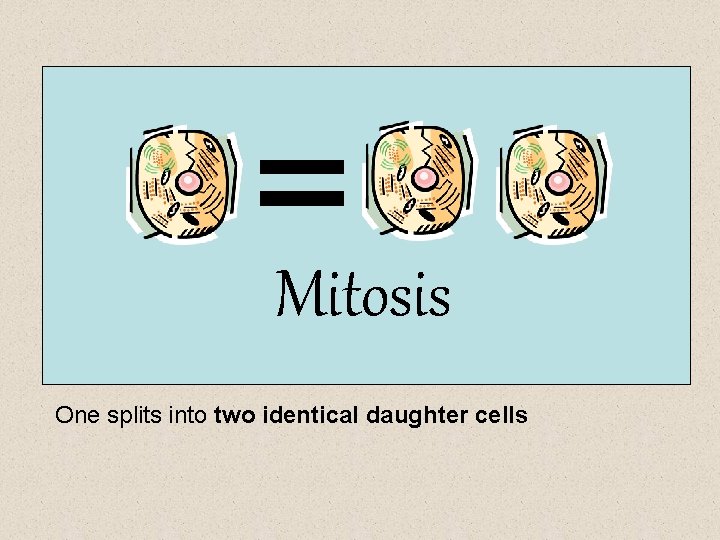
Mitosis One splits into two identical daughter cells
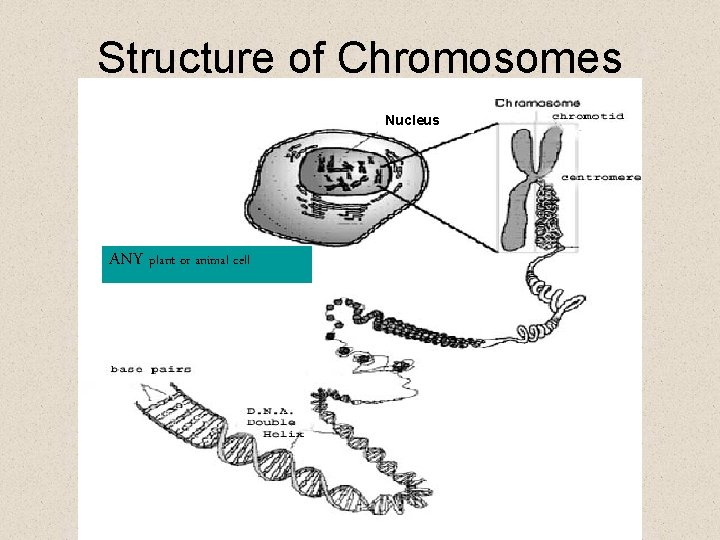
Chromosomes • All chromosomes are made of D. N. A. or deoxyribonucleic acid • D. N. A. is a blueprint for the cell • D. N. A. stores and passes on all the genetic material from one generation to the next • D. N. A. was discovered by two scientists— James Watson, an American, and Francis Crick, a Brit
Structure of Chromosomes Nucleus ANY plant or animal cell
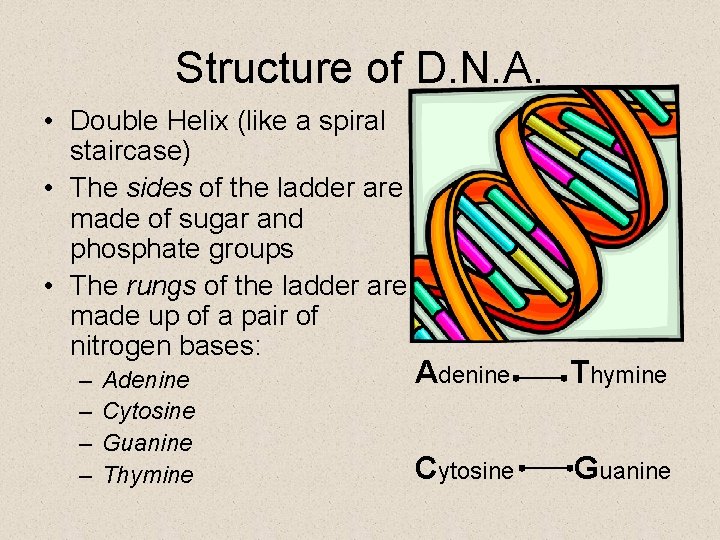
Structure of D. N. A. • Double Helix (like a spiral staircase) • The sides of the ladder are made of sugar and phosphate groups • The rungs of the ladder are made up of a pair of nitrogen bases: – – Adenine Cytosine Guanine Thymine Adenine Thymine Cytosine Guanine
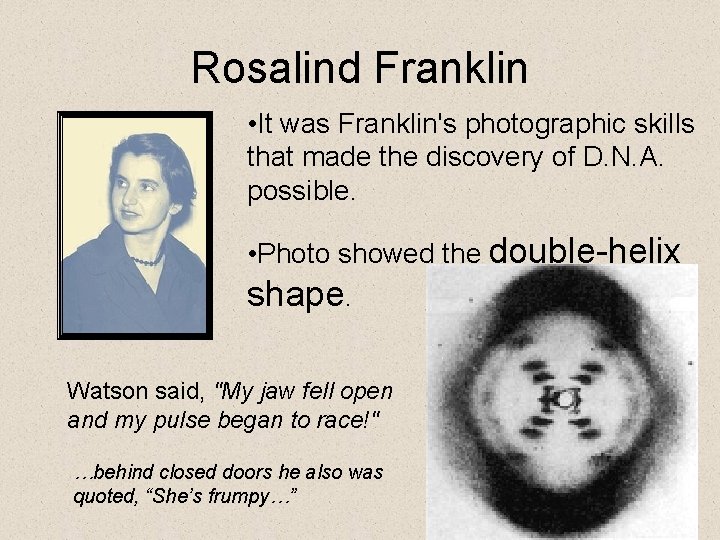
Rosalind Franklin • It was Franklin's photographic skills that made the discovery of D. N. A. possible. • Photo showed the double-helix shape. Watson said, "My jaw fell open and my pulse began to race!" …behind closed doors he also was quoted, “She’s frumpy…”
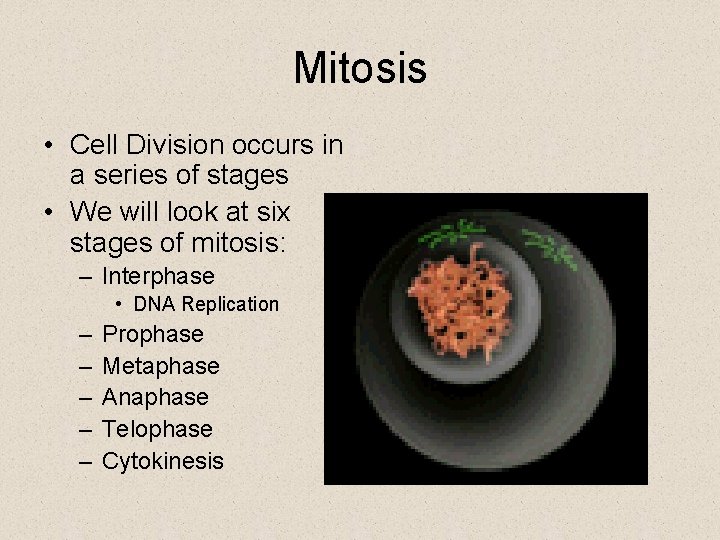
Mitosis • Cell Division occurs in a series of stages • We will look at six stages of mitosis: – Interphase • DNA Replication – – – Prophase Metaphase Anaphase Telophase Cytokinesis
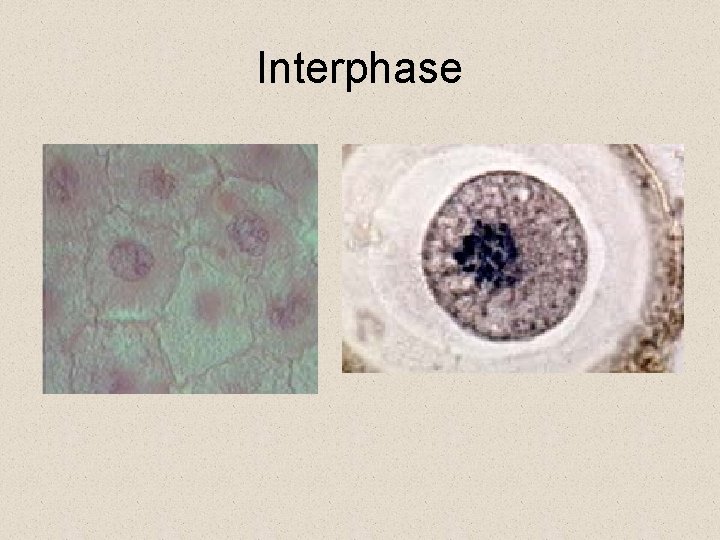
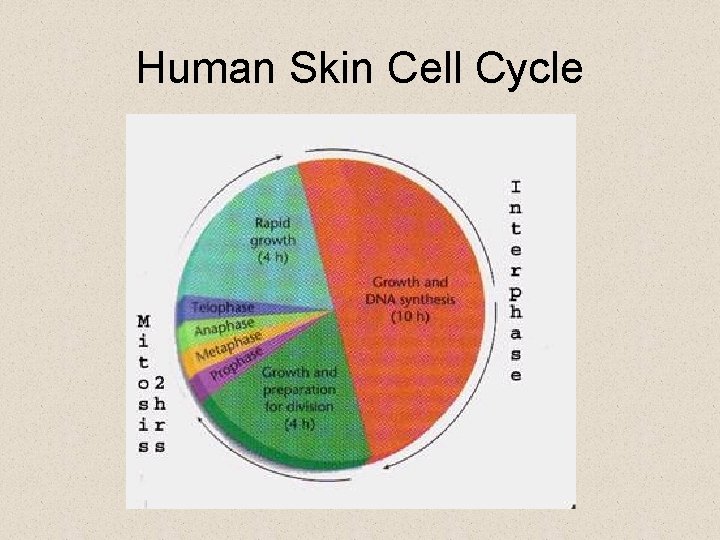
Interphase • This is the phase of a cell’s life when it is not undergoing mitosis (10 -14 hrs). There are two parts: D. N. A. Replication and Growth and development • At the beginning of interphase: – Chromosomes are threadlike and called chromatin – Centrioles are located outside the nucleus in animal cells • At the end of interphase: – Chromosomes duplicate – Sister Chromatids (products of duplication) are connected at centromere – Cell increases in size and the organelles duplicate
Interphase
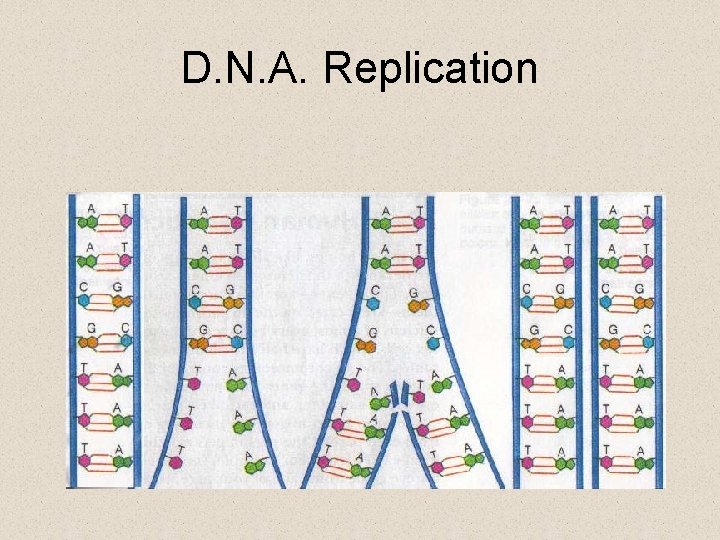
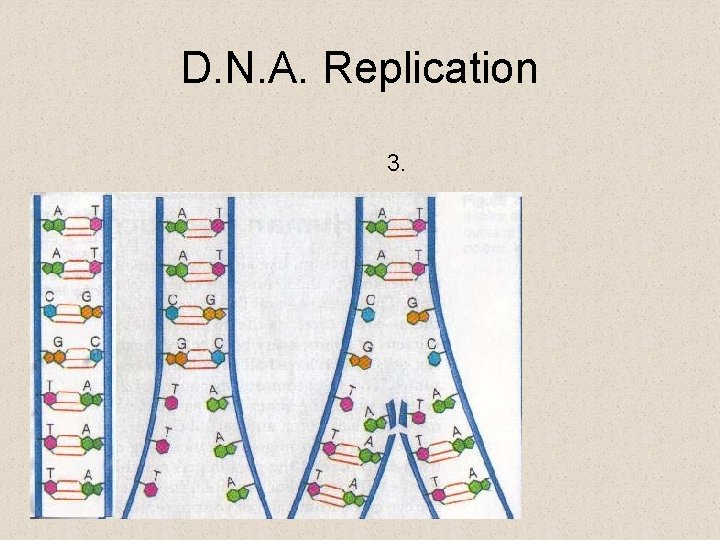
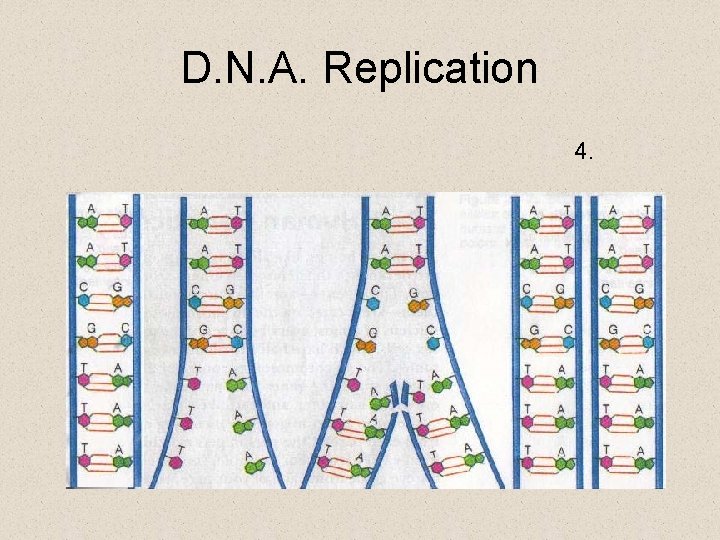
D. N. A. Replication
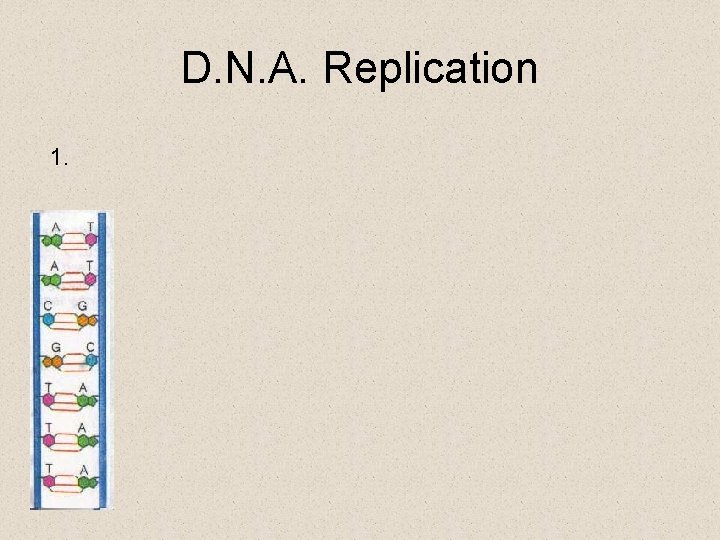
D. N. A. Replication 1.
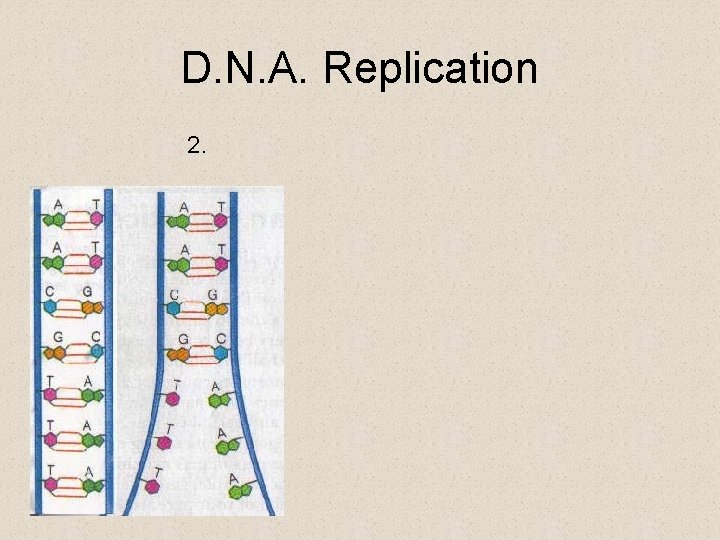
D. N. A. Replication 2.
D. N. A. Replication 3.
D. N. A. Replication 4.
DNA Replication 1. The double helix uncurls. 2. DNA unzips along the nitrogen bases 3. Free nitrogen bases in the nucleus match up with their pair. 4. Sides of the ladder reform. Now there are two identical copies of D. N. A. molecules (the sisters).
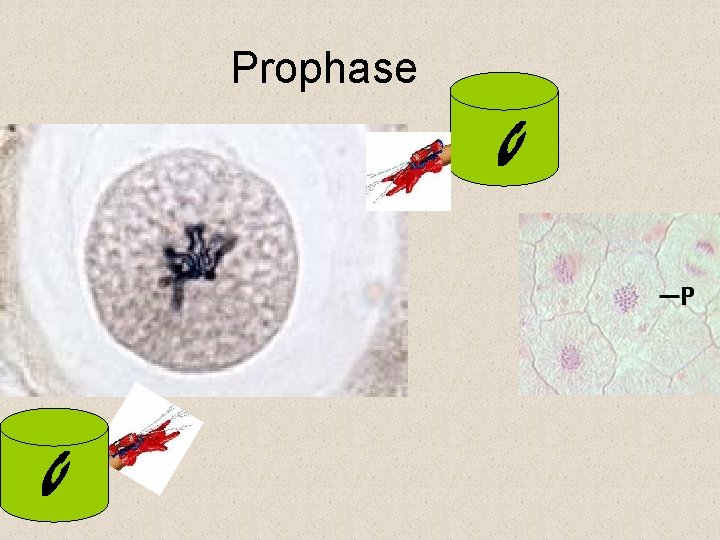
Prophase • Centrioles move to opposite sides of the cell • Spindle fibers form between centrioles • Nuclear Membrane breaks down • Nucleolus disappears
Prophase
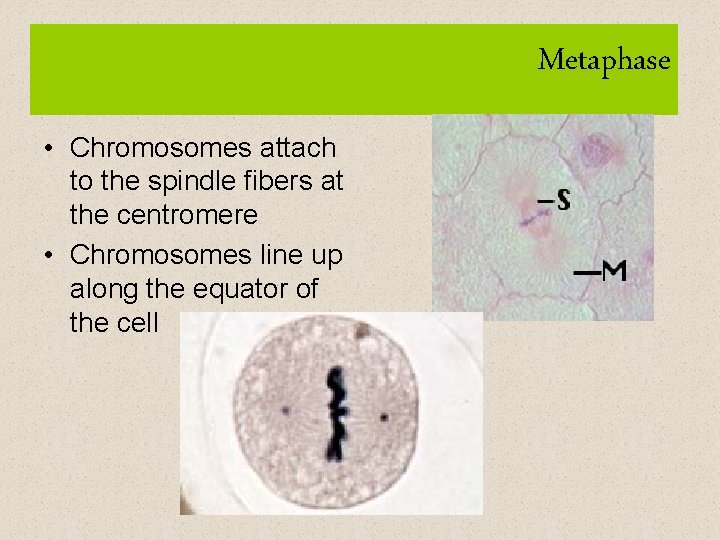
Metaphase • Chromosomes attach to the spindle fibers at the centromere • Chromosomes line up along the equator of the cell
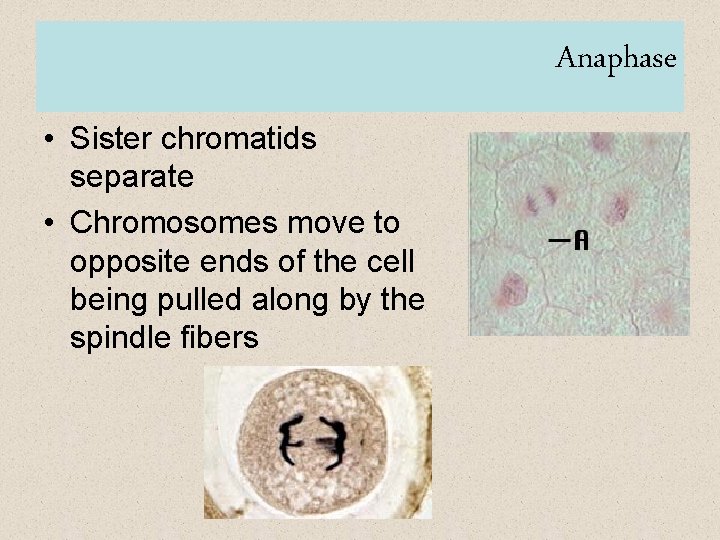
Anaphase • Sister chromatids separate • Chromosomes move to opposite ends of the cell being pulled along by the spindle fibers
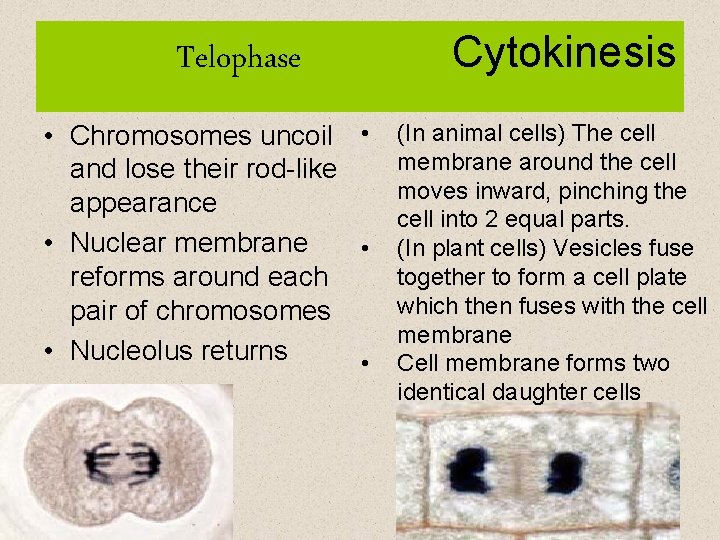
Telophase Cytokinesis • Chromosomes uncoil • (In animal cells) The cell membrane around the cell and lose their rod-like moves inward, pinching the appearance cell into 2 equal parts. • Nuclear membrane • (In plant cells) Vesicles fuse together to form a cell plate reforms around each which then fuses with the cell pair of chromosomes membrane • Nucleolus returns • Cell membrane forms two identical daughter cells
Human Skin Cell Cycle