
Welcome to the Powahay Round Table Training Dec
Welcome to the Powahay Round Table Training – Dec 5, 2018 The Wonderful World of Winter Camping Presented By: Evan Atkins Stamford CT- Troop
What We’ll Cover… • • • Winter Camping defined Remember, it’s Cold outside! First, Keeping You Warm & Dry a) The Old vs. The New b) The Basics of Dressing for Cold Weather
• • Keeping Warm by staying C. O. L. D. Layering a) Proper clothing choices b) Clothing layering techniques c) Body heat management • Keeping You Warm at Night a) Equipment & Techniques a) -sleeping bags, insulated ground pads b) - sleeping clothes b) Tents - 3 & 4 Season designs c) Food – calorie rich food & drink water
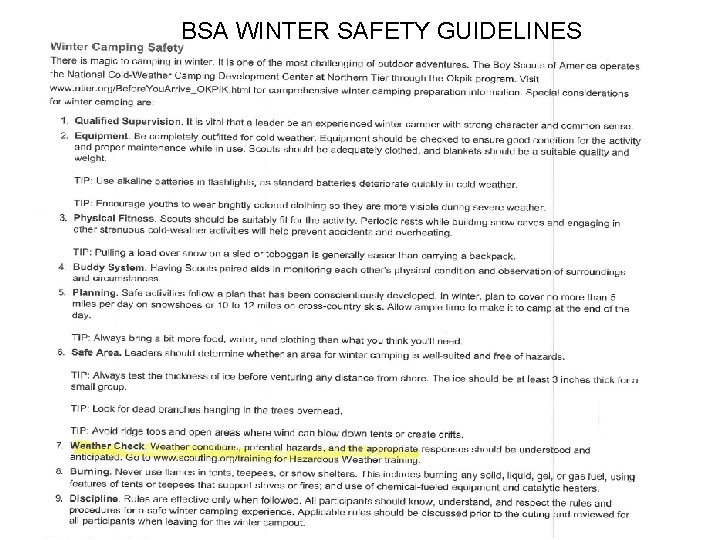
BSA WINTER SAFETY GUIDELINES
Trip Prep -Practical Skills – Communication • Parents will have questions, spoken and unspoken, about their child’s safety and leader qualifications. • Prepare and distribute a Winter camping gear list & trip plan to scouts and parents. Get the parents onboard. • Show the parents how the troop is going to prepare for the outing. Explain the limits and cancellation of the trip if necessary. • Expect the Scouts to have prepared ahead of time by practicing the winter procedures [mud, lost glove in snow, cold weather buddy, tent set-up, winter clothing requirements…] • Practice with the Scouts these words, • “Mr. Leader, I’m cold. I need help. ” • It’s Okay to say these words.
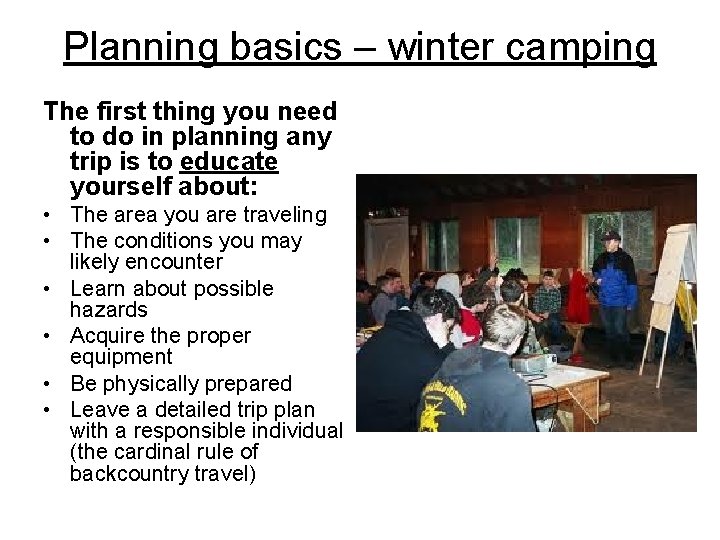
Planning basics – winter camping The first thing you need to do in planning any trip is to educate yourself about: • The area you are traveling • The conditions you may likely encounter • Learn about possible hazards • Acquire the proper equipment • Be physically prepared • Leave a detailed trip plan with a responsible individual (the cardinal rule of backcountry travel)
IMPORTANT! • Consider Winter Camping HIGH ADVENTURE a) b) • It requires specialized preparation You assume added risk in challenging temperatures. High Adventure activities require properly trained adults. a) b) c) d) • Your unit should make sure at least 2 adults have proper instruction in Winter Camping. Set up Winter Camping classes for Scouts. Schedule pack & equipment shakedown sessions before first winter campout. Communicate equipment needs and instructions with parents especially new Scouts as they join. Research Winter High Adventure Training: OKPIK
Beginning Winter weather camping: Warm Weather vs. Cold Weather clothing • • Summer clothes Let heat escape Keep cool Let moisture escape Winter clothes Keep heat close to body Stay warm & dry Allow moisture to escape • When your active • Loosely woven fabric • Cotton - absorbs moisture and promotes evaporation Retain 60% moisture on skin Need to layer & ventilate Wool and fleece work well • COTTON KILLS! Cotton still cools you in the winter. Leave it at home for the winter campout. • Choose: Wool, Fleece & Synthetic materials. • Thickness = warmth = dead air spaces
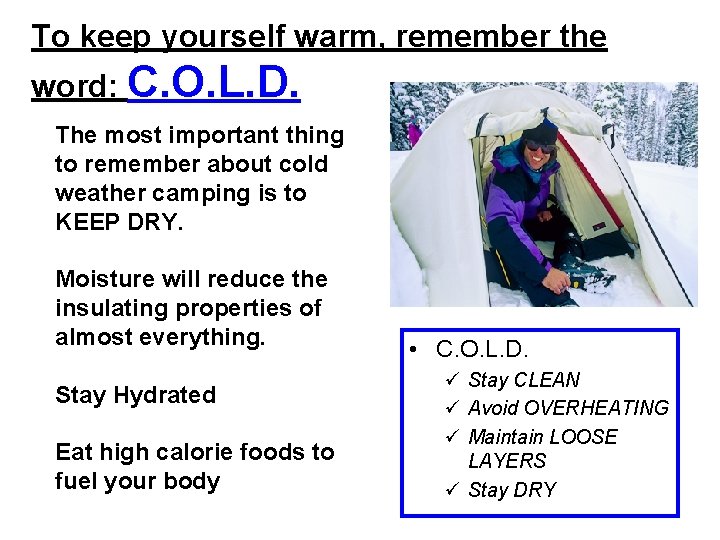
To keep yourself warm, remember the word: C. O. L. D. The most important thing to remember about cold weather camping is to KEEP DRY. Moisture will reduce the insulating properties of almost everything. Stay Hydrated Eat high calorie foods to fuel your body • C. O. L. D. ü Stay CLEAN ü Avoid OVERHEATING ü Maintain LOOSE LAYERS ü Stay DRY
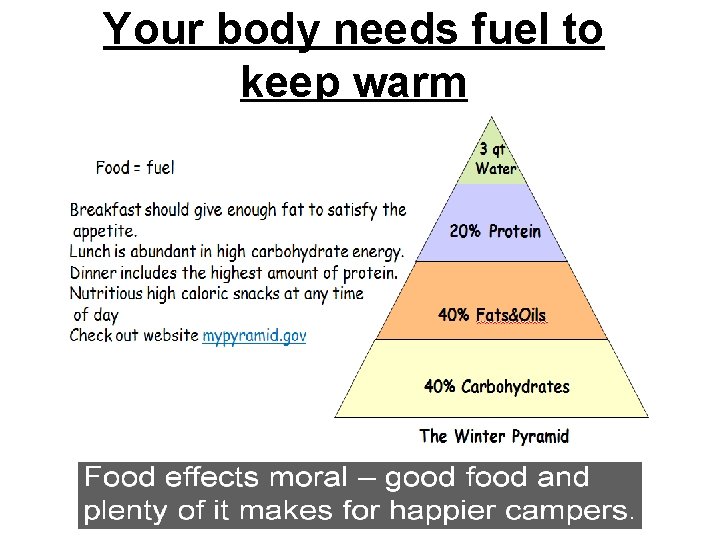
Your body needs fuel to keep warm
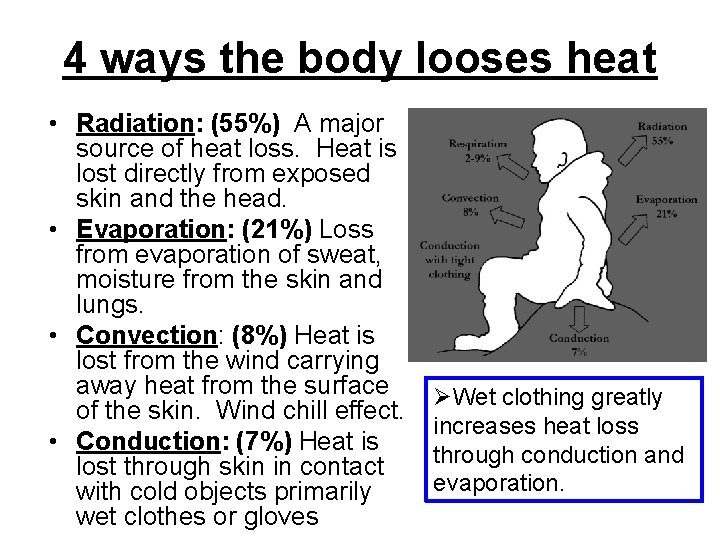
4 ways the body looses heat • Radiation: (55%) A major source of heat loss. Heat is lost directly from exposed skin and the head. • Evaporation: (21%) Loss from evaporation of sweat, moisture from the skin and lungs. • Convection: (8%) Heat is lost from the wind carrying away heat from the surface of the skin. Wind chill effect. • Conduction: (7%) Heat is lost through skin in contact with cold objects primarily wet clothes or gloves ØWet clothing greatly increases heat loss through conduction and evaporation.
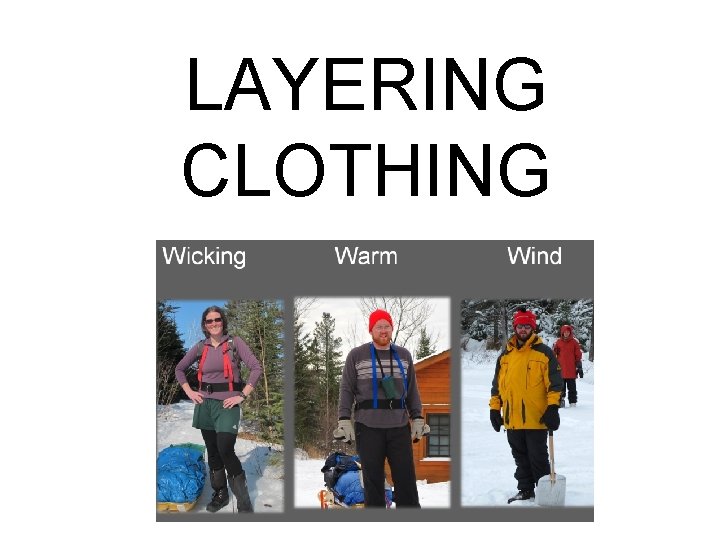
LAYERING CLOTHING
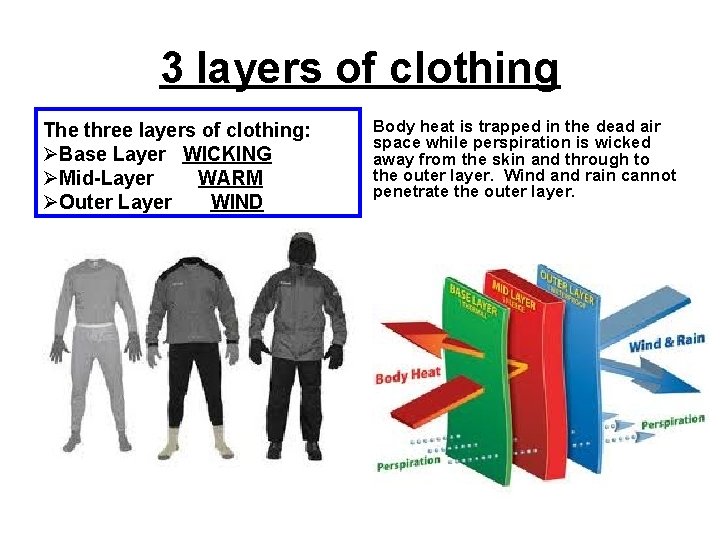
3 layers of clothing The three layers of clothing: ØBase Layer WICKING ØMid-Layer WARM ØOuter Layer WIND Body heat is trapped in the dead air space while perspiration is wicked away from the skin and through to the outer layer. Wind and rain cannot penetrate the outer layer.
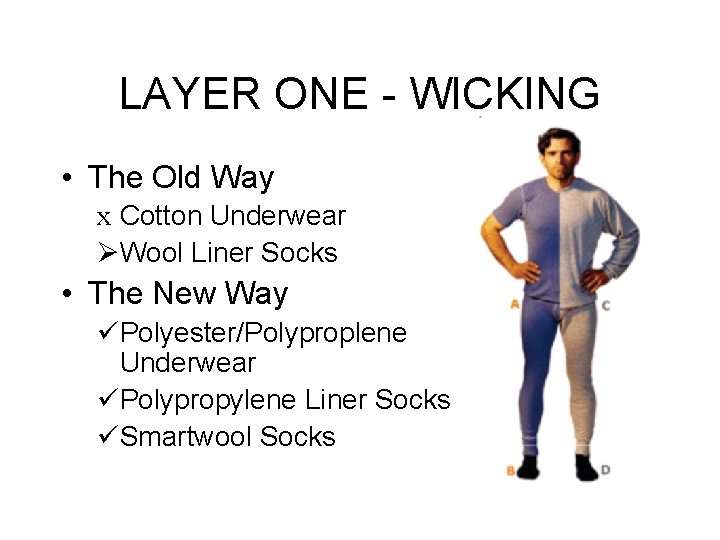
LAYER ONE - WICKING • The Old Way x Cotton Underwear ØWool Liner Socks • The New Way üPolyester/Polyproplene Underwear üPolypropylene Liner Socks üSmartwool Socks
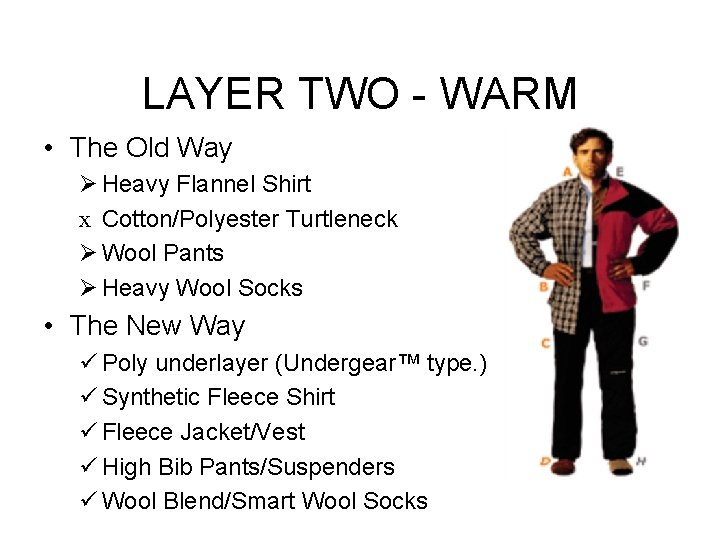
LAYER TWO - WARM • The Old Way Ø Heavy Flannel Shirt x Cotton/Polyester Turtleneck Ø Wool Pants Ø Heavy Wool Socks • The New Way ü Poly underlayer (Undergear™ type. ) ü Synthetic Fleece Shirt ü Fleece Jacket/Vest ü High Bib Pants/Suspenders ü Wool Blend/Smart Wool Socks
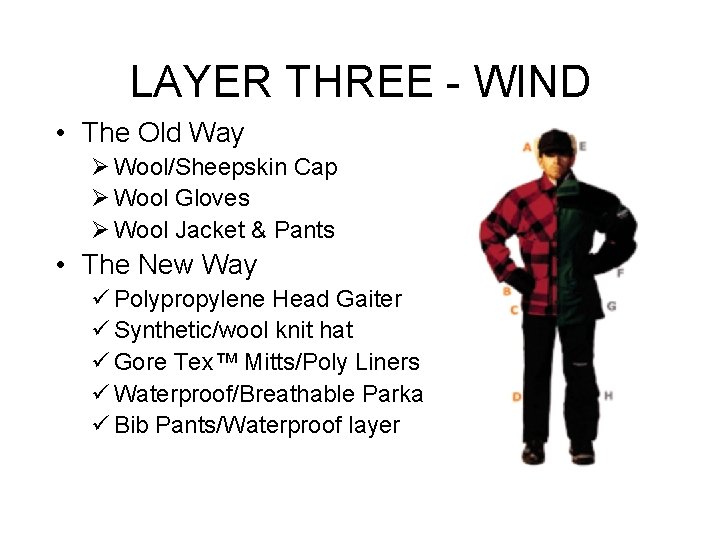
LAYER THREE - WIND • The Old Way Ø Wool/Sheepskin Cap Ø Wool Gloves Ø Wool Jacket & Pants • The New Way ü Polypropylene Head Gaiter ü Synthetic/wool knit hat ü Gore Tex™ Mitts/Poly Liners ü Waterproof/Breathable Parka ü Bib Pants/Waterproof layer
Clothing & Heat Management REVIEW: Dress in layers • Maintain a waterproof outside layer. • Stay as dry as possible -vent excess heat & perspiration as necessary • Wear a hat & gloves (have extras) • Protect feet – Inner liner sock and warm outer sock. • Wear waterproof boots, that fit! • Keeping warm at night • Remember: WICKING, WARM & WIND
Essentials: Sleeping out in Cold weather • Use a Closed-cell foam sleeping pad & ground insulation. • Sleeping bag with an appropriate low temperature rating +20 degrees to -20 degrees • Wear synthetic or wool base layers • Wear technical cold-weather hat, socks & gloves • Shelter or Tent w/ wind-resistant fly & tent stakes • Eat Nutrient-dense snacks, high calorie foods (Protein, Fat & Sugars) • Use an insulated water bottle & thermos bottle • Use a tent brush to remove snow in tent
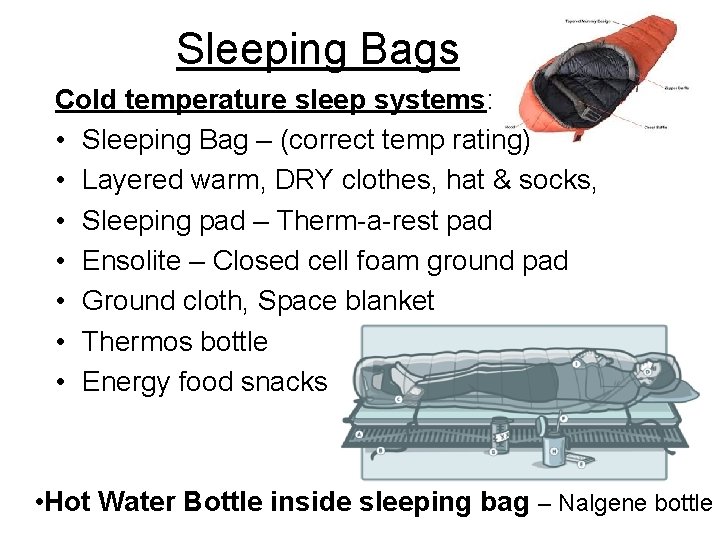
Sleeping Bags Cold temperature sleep systems: • Sleeping Bag – (correct temp rating) • Layered warm, DRY clothes, hat & socks, • Sleeping pad – Therm-a-rest pad • Ensolite – Closed cell foam ground pad • Ground cloth, Space blanket • Thermos bottle • Energy food snacks • Hot Water Bottle inside sleeping bag – Nalgene bottle i
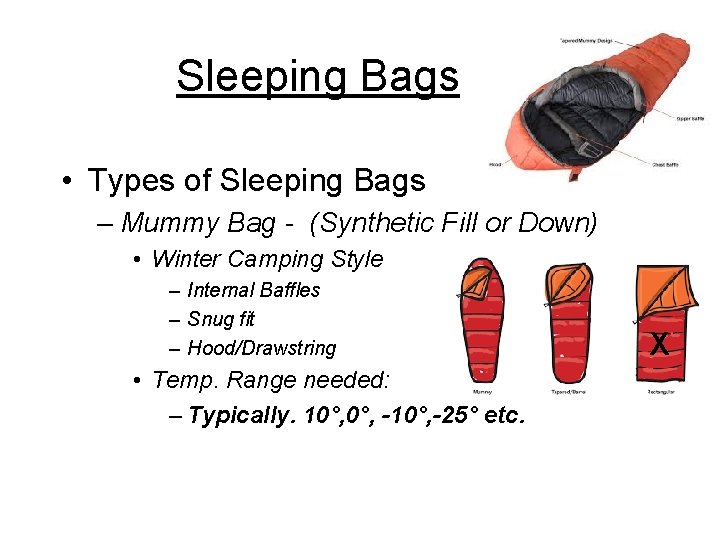
Sleeping Bags • Types of Sleeping Bags – Mummy Bag - (Synthetic Fill or Down) • Winter Camping Style – Internal Baffles – Snug fit – Hood/Drawstring • Temp. Range needed: – Typically. 10°, -10°, -25° etc. X
Get better performance from your existing Sleeping Bags • Change out of day time clothes to dry “sleep clothing” dress for bed in layers • Fleece pants, polypro long johns, hat & wool socks, polargard booties, vest and neck gaiter • Use Overbag / Bivy Sack - adds 10°warmth • Waterproof or use summer weight sleeping bag inside your Winter bag • Fleece Liner Bag * (layered system) • Adds Comfort & 10°to sleeping bag rating • Insert zippered bag or blanket
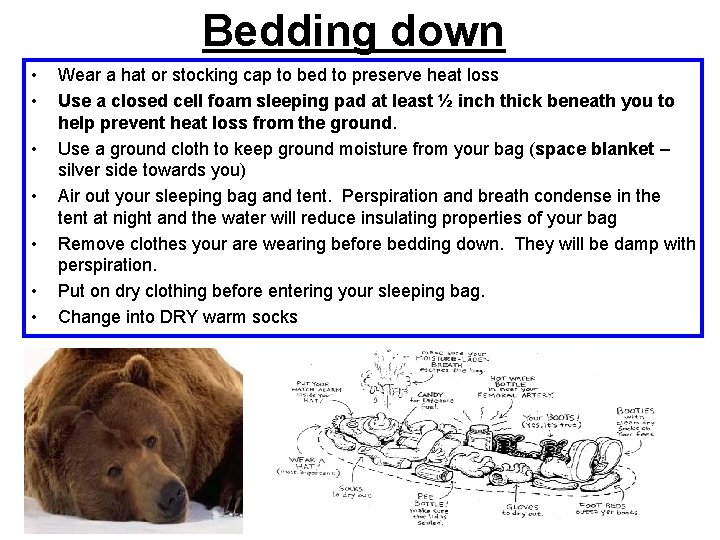
Bedding down • • Wear a hat or stocking cap to bed to preserve heat loss Use a closed cell foam sleeping pad at least ½ inch thick beneath you to help prevent heat loss from the ground. Use a ground cloth to keep ground moisture from your bag (space blanket – silver side towards you) Air out your sleeping bag and tent. Perspiration and breath condense in the tent at night and the water will reduce insulating properties of your bag Remove clothes your are wearing before bedding down. They will be damp with perspiration. Put on dry clothing before entering your sleeping bag. Change into DRY warm socks
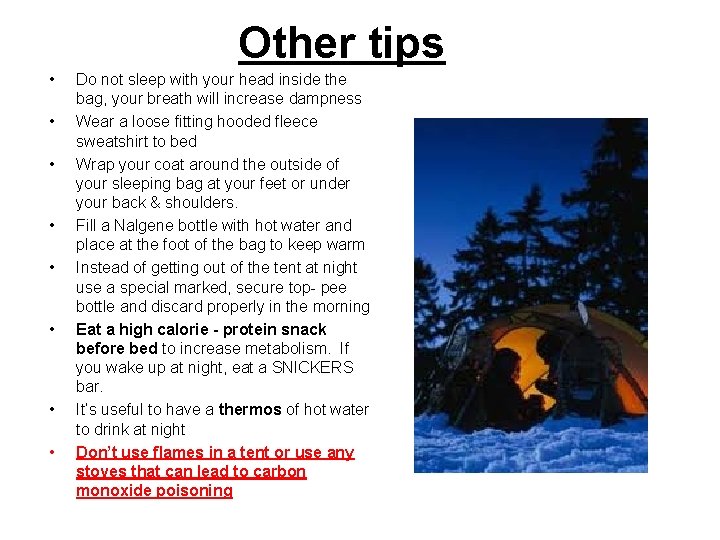
Other tips • • Do not sleep with your head inside the bag, your breath will increase dampness Wear a loose fitting hooded fleece sweatshirt to bed Wrap your coat around the outside of your sleeping bag at your feet or under your back & shoulders. Fill a Nalgene bottle with hot water and place at the foot of the bag to keep warm Instead of getting out of the tent at night use a special marked, secure top- pee bottle and discard properly in the morning Eat a high calorie - protein snack before bed to increase metabolism. If you wake up at night, eat a SNICKERS bar. It’s useful to have a thermos of hot water to drink at night Don’t use flames in a tent or use any stoves that can lead to carbon monoxide poisoning
Helpful Hints to Keep Warm Overnight Your body metabolism affects how warm or cold you are when you sleep, anyone can improve their comfort and warmth while sleeping by remembering the following tips: • 1. Sleep on a ground pad that provide insulation and comfort. Avoid “Air mattresses”, while soft and comfortable, offer virtually no insulation. • 2. Drink plenty of water, even in cold weather. Dehydration from lack of liquids results in poor circulation to the extremities, causing them to become cold or even to freeze. • 3. Eat before you go to bed. Hot foods are especially helpful. • 4. Go to bed warm. Exercise to raise your body heat before sleeping. • 5. Wear a stocking cap or fleece hat to bed to control heat loss from the head and neck area. (balaclava hat) • 6. Wear dry clothing for sleeping, dress in layers, but don’t feel constricted. Waterproof clothing adds lots of warmth, but will cause some condensation of perspiration. • 7. Use tents, shelters, or sleeping bag covers to get out of the wind. Wind reduces the insulation effectiveness of sleeping bags just as it does with clothing. • 8. Place a bottle of hot water in your bag. ( Hot water in Nalgene bottle, placed inside a wool sock. ) • 9. Sleep close to another person. (crowd into the tent for extra body heat) • 10. Place extra clothing under your shoulder sand hips. • 11. Bring a warmer bag than you think you will need. (layer sleeping bag with Fleece blanket) • 12. use a space blanket for extra warmth ( “silver” side towards you)
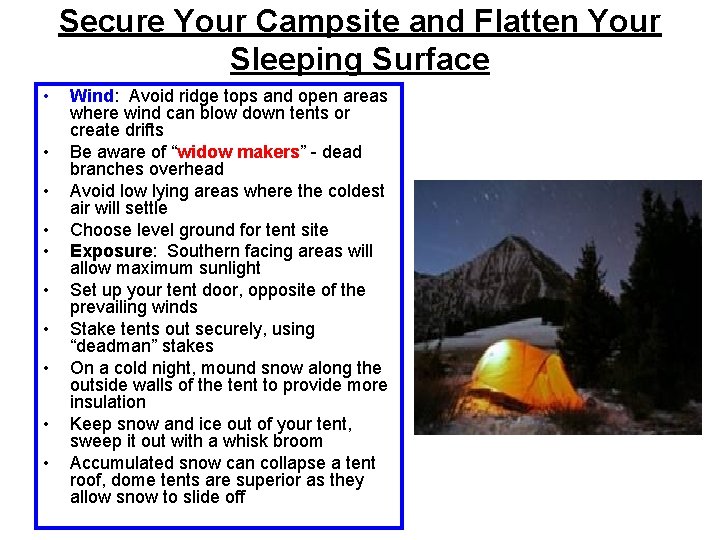
Secure Your Campsite and Flatten Your Sleeping Surface • • • Wind: Avoid ridge tops and open areas where wind can blow down tents or create drifts Be aware of “widow makers” - dead branches overhead Avoid low lying areas where the coldest air will settle Choose level ground for tent site Exposure: Southern facing areas will allow maximum sunlight Set up your tent door, opposite of the prevailing winds Stake tents out securely, using “deadman” stakes On a cold night, mound snow along the outside walls of the tent to provide more insulation Keep snow and ice out of your tent, sweep it out with a whisk broom Accumulated snow can collapse a tent roof, dome tents are superior as they allow snow to slide off
Winter Shelter: Tents 3 & 4 Season
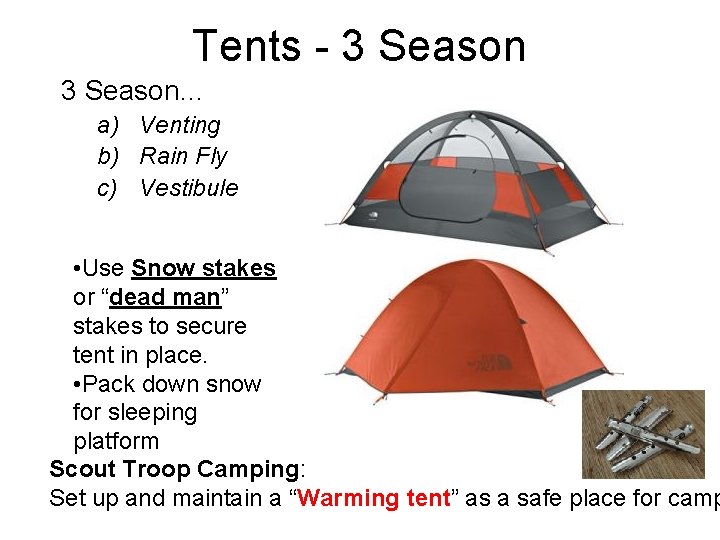
Tents - 3 Season… a) Venting b) Rain Fly c) Vestibule • Use Snow stakes or “dead man” stakes to secure tent in place. • Pack down snow for sleeping platform Scout Troop Camping: Set up and maintain a “Warming tent” as a safe place for camp
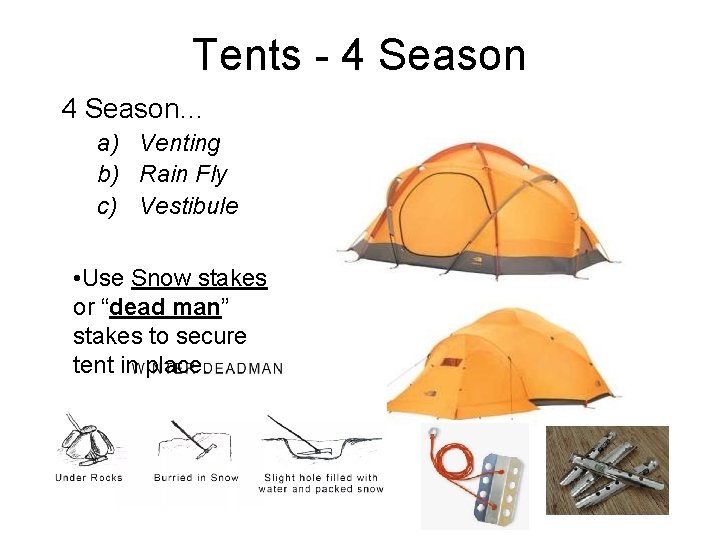
Tents - 4 Season… a) Venting b) Rain Fly c) Vestibule • Use Snow stakes or “dead man” stakes to secure tent in place.
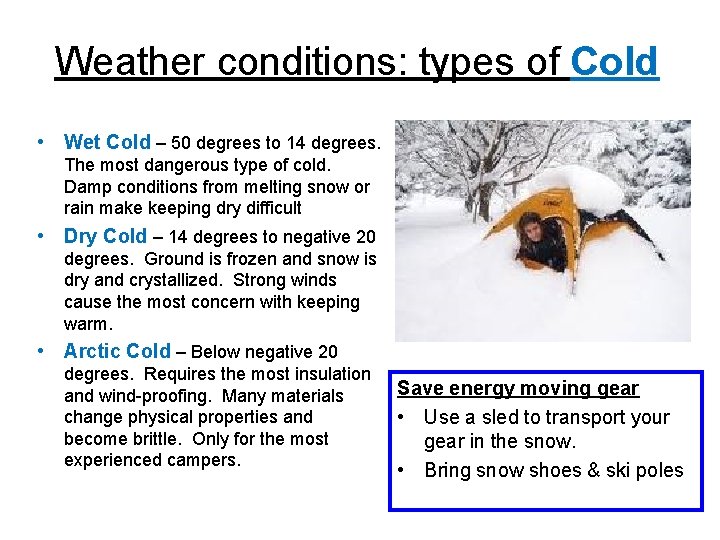
Weather conditions: types of Cold • Wet Cold – 50 degrees to 14 degrees. The most dangerous type of cold. Damp conditions from melting snow or rain make keeping dry difficult • Dry Cold – 14 degrees to negative 20 degrees. Ground is frozen and snow is dry and crystallized. Strong winds cause the most concern with keeping warm. • Arctic Cold – Below negative 20 degrees. Requires the most insulation and wind-proofing. Many materials change physical properties and become brittle. Only for the most experienced campers. Save energy moving gear • Use a sled to transport your gear in the snow. • Bring snow shoes & ski poles
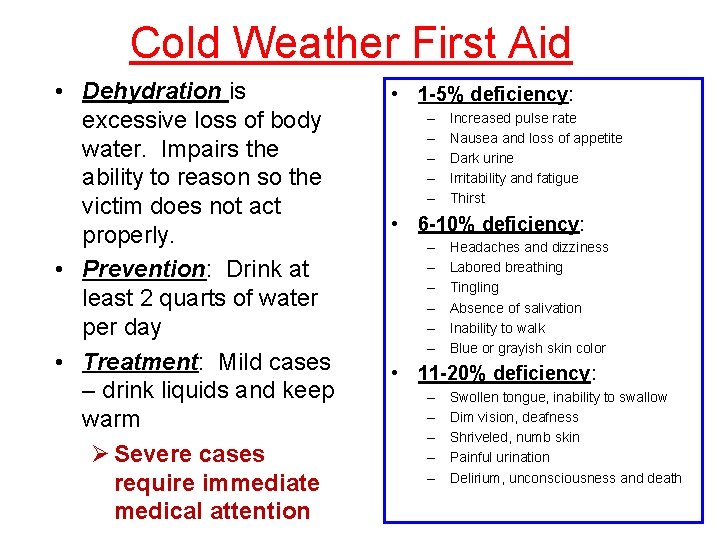
Cold Weather First Aid • Dehydration is excessive loss of body water. Impairs the ability to reason so the victim does not act properly. • Prevention: Drink at least 2 quarts of water per day • Treatment: Mild cases – drink liquids and keep warm Ø Severe cases require immediate medical attention • 1 -5% deficiency: – – – Increased pulse rate Nausea and loss of appetite Dark urine Irritability and fatigue Thirst • 6 -10% deficiency: – – – Headaches and dizziness Labored breathing Tingling Absence of salivation Inability to walk Blue or grayish skin color • 11 -20% deficiency: – – – Swollen tongue, inability to swallow Dim vision, deafness Shriveled, numb skin Painful urination Delirium, unconsciousness and death
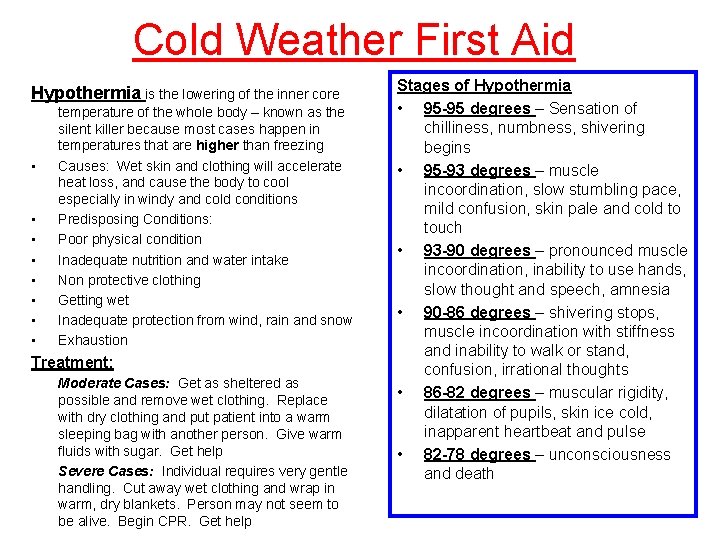
Cold Weather First Aid Hypothermia is the lowering of the inner core • • temperature of the whole body – known as the silent killer because most cases happen in temperatures that are higher than freezing Causes: Wet skin and clothing will accelerate heat loss, and cause the body to cool especially in windy and cold conditions Predisposing Conditions: Poor physical condition Inadequate nutrition and water intake Non protective clothing Getting wet Inadequate protection from wind, rain and snow Exhaustion Treatment: Moderate Cases: Get as sheltered as possible and remove wet clothing. Replace with dry clothing and put patient into a warm sleeping bag with another person. Give warm fluids with sugar. Get help Severe Cases: Individual requires very gentle handling. Cut away wet clothing and wrap in warm, dry blankets. Person may not seem to be alive. Begin CPR. Get help Stages of Hypothermia • 95 -95 degrees – Sensation of chilliness, numbness, shivering begins • 95 -93 degrees – muscle incoordination, slow stumbling pace, mild confusion, skin pale and cold to touch • 93 -90 degrees – pronounced muscle incoordination, inability to use hands, slow thought and speech, amnesia • 90 -86 degrees – shivering stops, muscle incoordination with stiffness and inability to walk or stand, confusion, irrational thoughts • 86 -82 degrees – muscular rigidity, dilatation of pupils, skin ice cold, inapparent heartbeat and pulse • 82 -78 degrees – unconsciousness and death
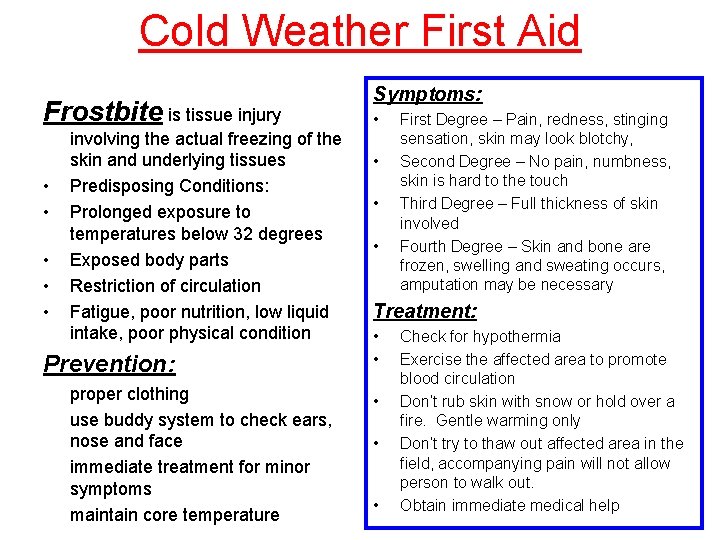
Cold Weather First Aid Frostbite is tissue injury • • • involving the actual freezing of the skin and underlying tissues Predisposing Conditions: Prolonged exposure to temperatures below 32 degrees Exposed body parts Restriction of circulation Fatigue, poor nutrition, low liquid intake, poor physical condition Prevention: proper clothing use buddy system to check ears, nose and face immediate treatment for minor symptoms maintain core temperature Symptoms: • • First Degree – Pain, redness, stinging sensation, skin may look blotchy, Second Degree – No pain, numbness, skin is hard to the touch Third Degree – Full thickness of skin involved Fourth Degree – Skin and bone are frozen, swelling and sweating occurs, amputation may be necessary Treatment: • • • Check for hypothermia Exercise the affected area to promote blood circulation Don’t rub skin with snow or hold over a fire. Gentle warming only Don’t try to thaw out affected area in the field, accompanying pain will not allow person to walk out. Obtain immediate medical help
Cold Weather First Aid • Snow Blindness is inflammation of the eye caused by exposure to reflected ultraviolet rays when the sun is shining brightly on an expanse of snow. • Prevention : wear glasses when any danger is present. Do not wait for discomfort to begin • Symptoms: Sensation of grit in the eye, made worse by eye movement, watering, redness, headache and increased pain with exposure to light • Treatment: blindfold the patient or cover eyes with the darkest glasses. Eyes heals in a few days without permanent damage
WHAT SHOULD WE BRING? - OKPIK Winter packing list Personal Gear: Required: • 2 Winter Hats (preferably fleece) • 2 pairs of synthetic long underwear (tops and bottoms; NO COTTON) • 2 pairs liner gloves • 2 -3 pairs wool socks & wicking liner socks • 2 pairs wool or fleece pants • 2 sweaters* – preferably wool or polar fleece – NO COTTON • 1 winter jacket • 1 pair snow-pants or rain-pants • Sleeping bag. cold weather sleeping bag, or 3 -season bag & fleece liner • - closed cell foam- ensolite ground pad • - Sleeping pad – therm-a-rest. • - Space blanket • Stuff sack for all personal gear • Toiletry articles (toothbrush, toothpaste)* • towel, soap, etc. • clothes for the trip home Recommended: �Headlamp & flashlight and extra batteries (MUST HAVE – days are short in the winter)* �Cup, bowl and spoon, fork- NOT Metal �Scarf or Neck Gaitor* �Pocketknife/matches/bandana * �Sunscreen and chapstick * � 2 -3 pairs of gloves / mittens (mittens are warmer than gloves) � �Warm/winter boots (Sorels or Kamiks) with removable liners �Sunglasses* or Ski Goggles �Snowshoes & poles, or X-country skis �Sled for healing gear
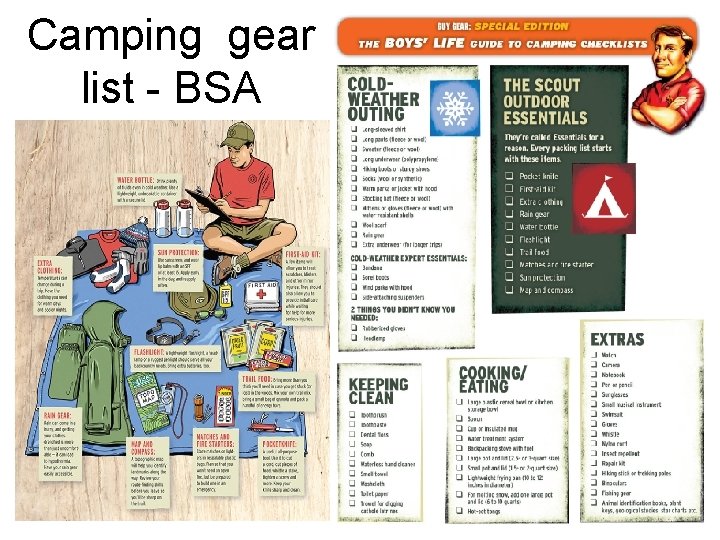
Camping gear list - BSA
Resource Links: • https: //www. ntier. org/individuals/cwlt/ – Northern Tier – OKPIK – cold weather training info • http: //www. therainshield. com – Fabrics (Polartec Fleece, etc. ), Buckles, etc. • http: //www 7. mailordercentral. com/longlifefood/About. Us. asp – Long Life Food Depot (Fmrly Resourceful Foods Co. ) MREs ($3 ea) • http: //www. rei. com – Camping/hiking Gear-Great Deals if you know what you’re buying • http: //www. scoutstuff. org – Camping/hiking Gear Official Scout Site • http: //www. coleman. com – Camping/hiking Gear-Special Non-Profit Section • http: //www. cabelas. com – Camping/hiking Gear-Great Deals if you know what you’re buying • http: //www. smartwool. com – Smart. Wool Socks and under clothing
- Slides: 36