
Welcome to the Kewabi Aliya language Presentation Mendi
Welcome to the Kewabi (Aliya) language Presentation…………. . Mendi – Southern Highlands Province, Papua New Guinea. Wanpis Pokea, B/Ed Graduate, University of Goroka wpokea@gmail. com/ wanpiswallacepokea@yahoo. com. au
Introduction • The Kewabi (Aliya) language is one of the small languages spoken in Papua New Guinea. • It is spoken by almost 1000 people living in the remote parts of Southern Highlands Province, especially in the Kagua/ Erave electorate. • This presentation will focus on the basic grammatical features of the Kewabi language including phonology, morphology and syntax.
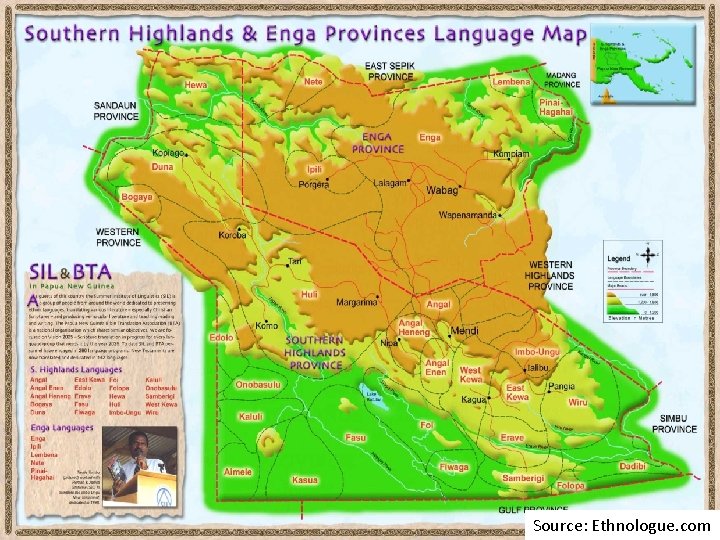
Source: Ethnologue. com
• 1. Phonology • 1. 1. Consonants § The Kewabi language has the following consonants. § § § § § / l/ /m/ /k/ /n/ /p/ /r/ /w/ /s/ /b/ /d/ as in lapo 'two' as in musa 'to lift it up' as in kalu 'head' as in mena 'pig' as in paita 'to sleep' as in rara 'medicine leaf' as in wasa 'to look for' as in papasi 'kinship term' as in banapa 'lets go' as in dia 'no'
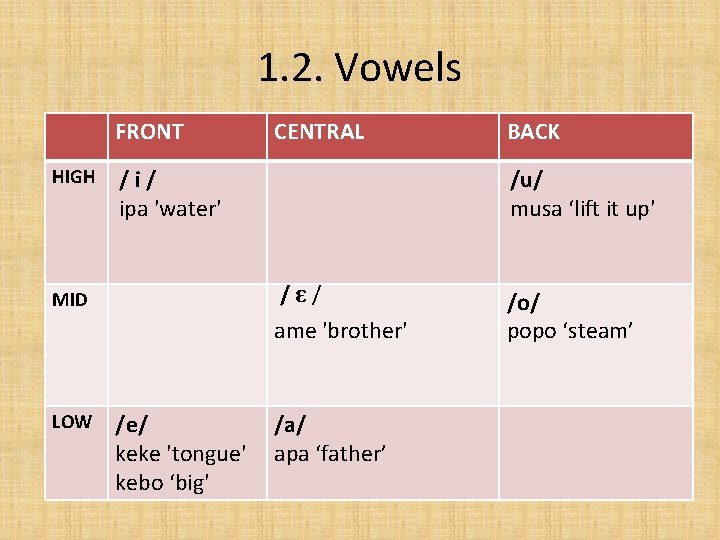
1. 2. Vowels FRONT HIGH CENTRAL /i/ ipa 'water' /u/ musa ‘lift it up' /ɛ/ MID ame 'brother' LOW /e/ keke 'tongue' kebo ‘big' BACK /a/ apa ‘father’ /o/ popo ‘steam’
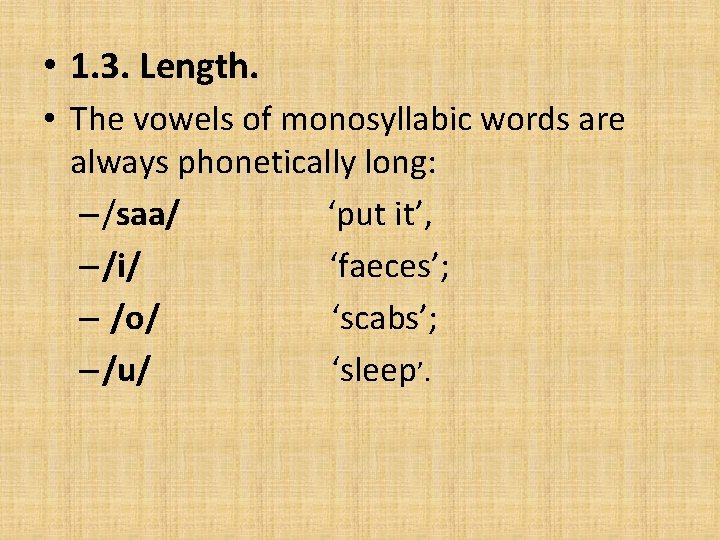
• 1. 3. Length. • The vowels of monosyllabic words are always phonetically long: – /saa/ ‘put it’, – /i/ ‘faeces’; – /o/ ‘scabs’; – /u/ ‘sleep’.
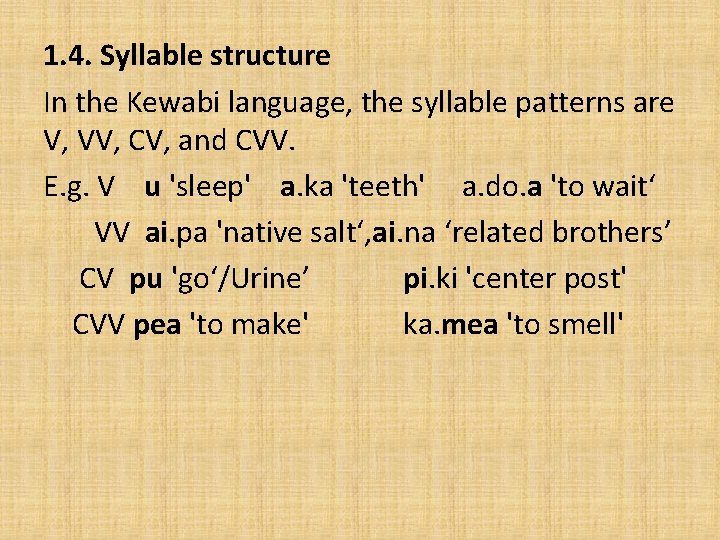
1. 4. Syllable structure In the Kewabi language, the syllable patterns are V, VV, CV, and CVV. E. g. V u 'sleep' a. ka 'teeth' a. do. a 'to wait‘ VV ai. pa 'native salt‘, ai. na ‘related brothers’ CV pu 'go‘/Urine’ pi. ki 'center post' CVV pea 'to make' ka. mea 'to smell'
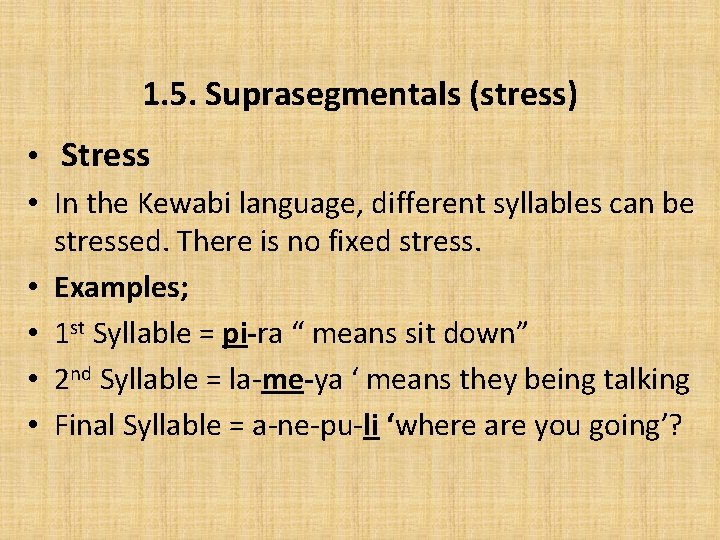
1. 5. Suprasegmentals (stress) • Stress • In the Kewabi language, different syllables can be stressed. There is no fixed stress. • Examples; • 1 st Syllable = pi-ra “ means sit down” • 2 nd Syllable = la-me-ya ‘ means they being talking • Final Syllable = a-ne-pu-li ‘where are you going’?
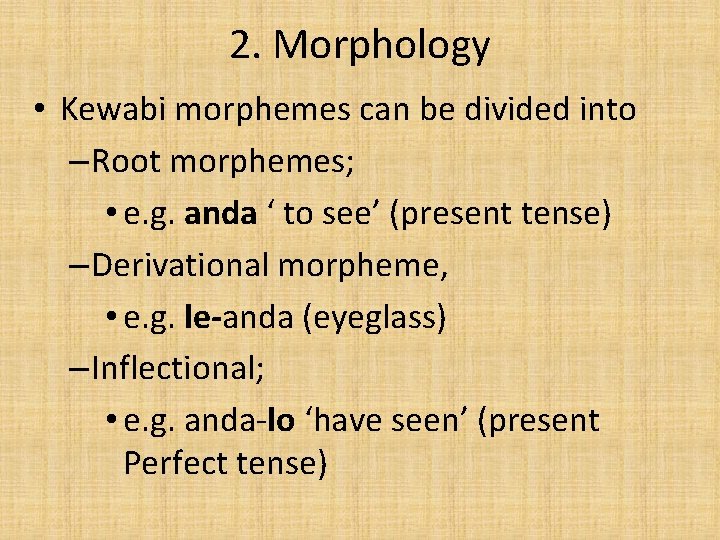
2. Morphology • Kewabi morphemes can be divided into – Root morphemes; • e. g. anda ‘ to see’ (present tense) – Derivational morpheme, • e. g. le-anda (eyeglass) – Inflectional; • e. g. anda-lo ‘have seen’ (present Perfect tense)
• By far the most frequent types of affixes in Kewabi are prefixes and suffixes. – E. g. le-anda, anda-lo • The Kewabi language does not have infixes, circumfixes or reduplication.
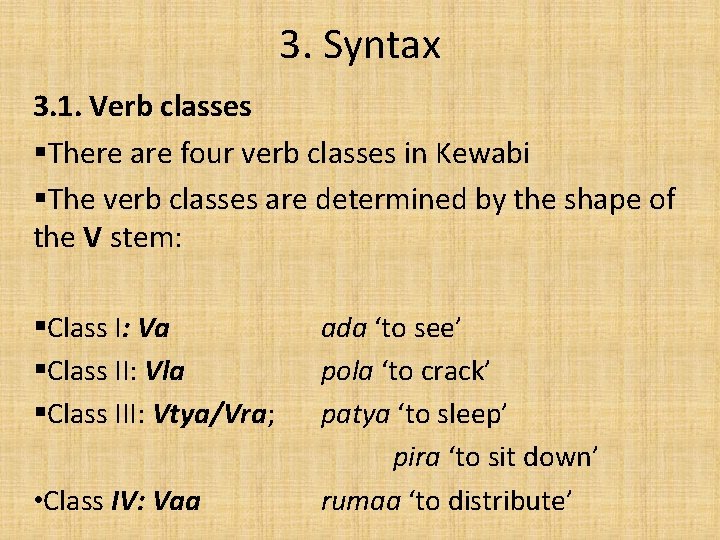
3. Syntax 3. 1. Verb classes §There are four verb classes in Kewabi §The verb classes are determined by the shape of the V stem: §Class I: Va §Class II: Vla §Class III: Vtya/Vra; • Class IV: Vaa ada ‘to see’ pola ‘to crack’ patya ‘to sleep’ pira ‘to sit down’ rumaa ‘to distribute’
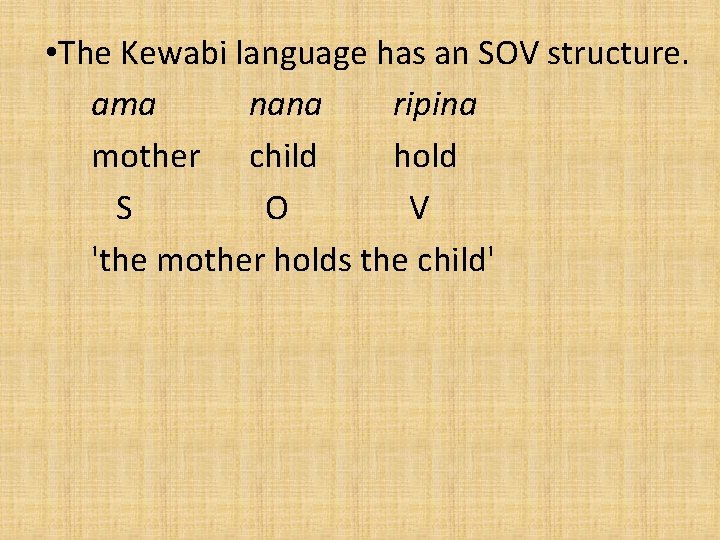
• The Kewabi language has an SOV structure. ama nana ripina mother child hold S O V 'the mother holds the child'
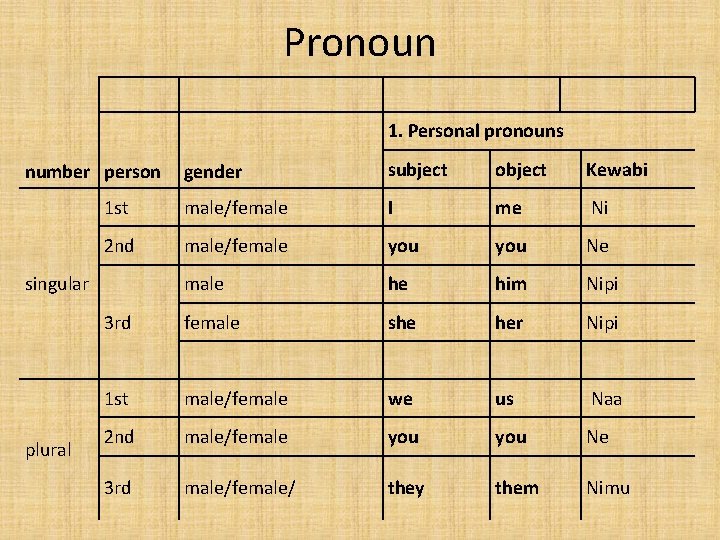
Pronoun 1. Personal pronouns gender subject object Kewabi 1 st male/female I me Ni 2 nd male/female you Ne male he him Nipi 3 rd female she her Nipi 1 st male/female we us Naa 2 nd male/female you Ne 3 rd male/female/ they them Nimu number person singular plural
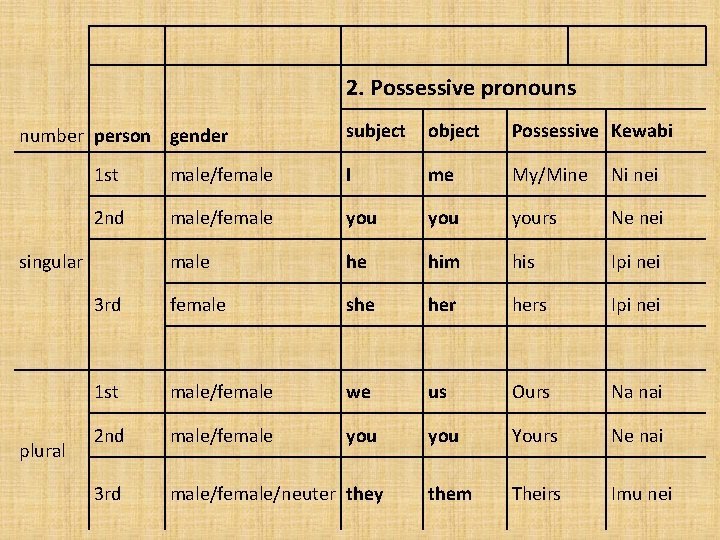
2. Possessive pronouns number person gender object Possessive Kewabi 1 st male/female I me My/Mine Ni nei 2 nd male/female you yours Ne nei male he him his Ipi nei 3 rd female she hers Ipi nei 1 st male/female we us Ours Na nai 2 nd male/female you Yours Ne nai 3 rd male/female/neuter they them Theirs Imu nei singular plural subject
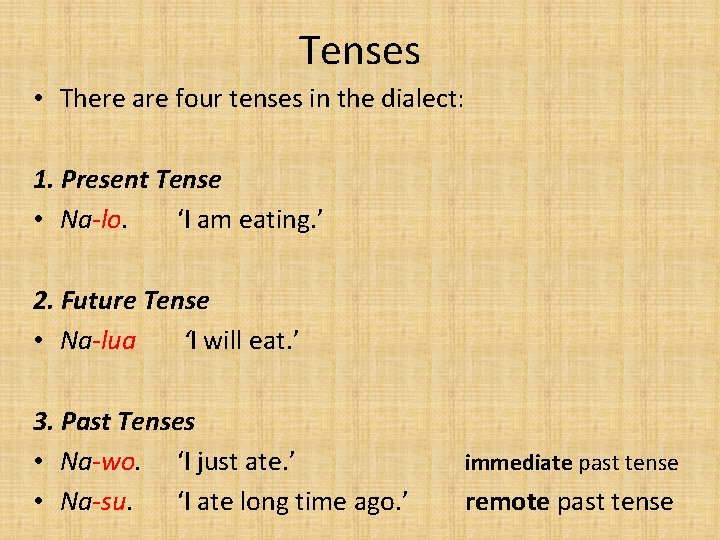
Tenses • There are four tenses in the dialect: 1. Present Tense • Na-lo. ‘I am eating. ’ 2. Future Tense • Na-lua ‘I will eat. ’ 3. Past Tenses • Na-wo. ‘I just ate. ’ • Na-su. ‘I ate long time ago. ’ immediate past tense remote past tense
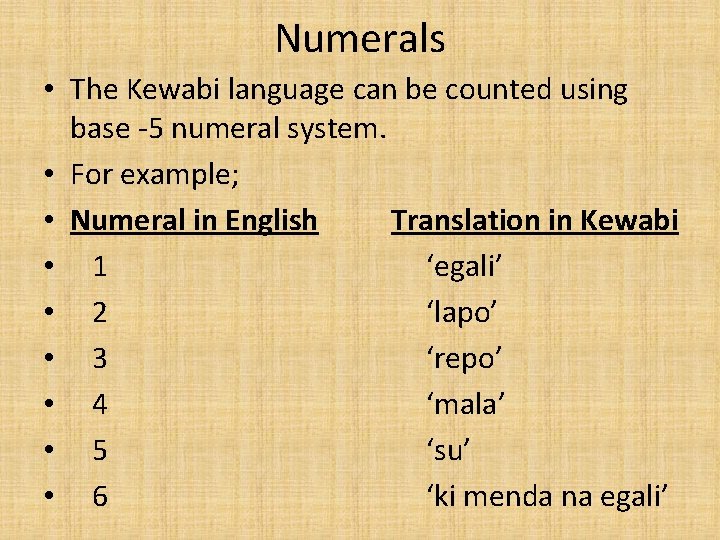
Numerals • The Kewabi language can be counted using base -5 numeral system. • For example; • Numeral in English Translation in Kewabi • 1 ‘egali’ • 2 ‘lapo’ • 3 ‘repo’ • 4 ‘mala’ • 5 ‘su’ • 6 ‘ki menda na egali’
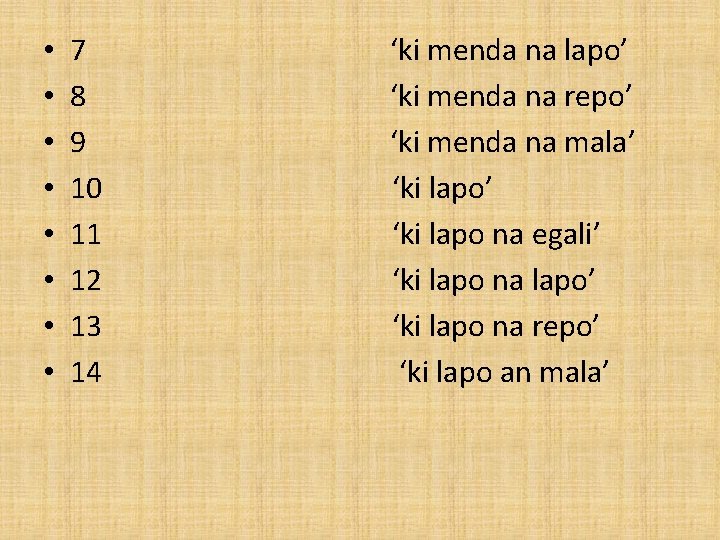
• • 7 8 9 10 11 12 13 14 ‘ki menda na lapo’ ‘ki menda na repo’ ‘ki menda na mala’ ‘ki lapo na egali’ ‘ki lapo na lapo’ ‘ki lapo na repo’ ‘ki lapo an mala’
Conclusion § The Kewabi (Aliya) language is too isolated, and it has therefore not been described by any linguists. § More research needs to be done on the Kewabi language. § Reference hpp//www. Ethnologue. com
• Thank you for your attention! • Any questions?
- Slides: 19