
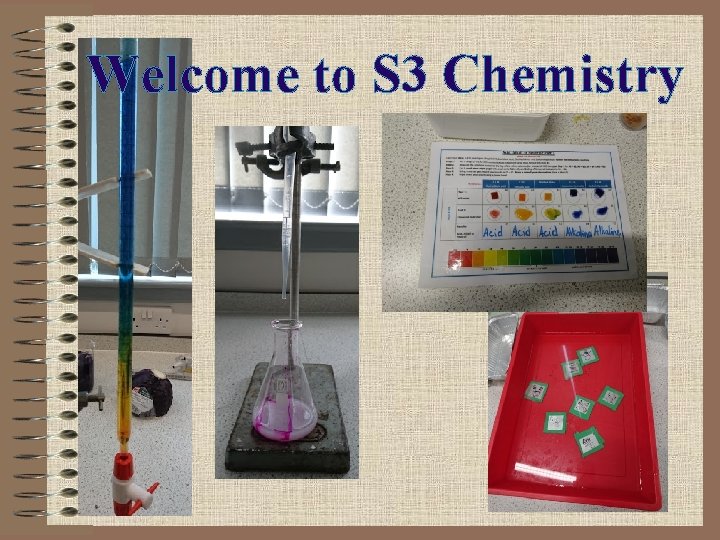
Welcome to S 3 Chemistry S 3 Chemistry
- Slides: 40
Welcome to S 3 Chemistry
S 3 Chemistry • Introduction – Topics – Assessment – Investigation – Making the best use of your time
Topics • • Safety in Chemistry Chemical Reactions Atomic Theory and Nuclear Chemistry Acids and Bases
Assessment • These will be a test at the end of each topic • End of S 3 Assessment
AVU – Added Value Unit • You will be learning the skills of – Planning – Researching – Writing a report in the accepted formats – Referencing – Evaluating procedures and results
Time keeping and notetaking • Class notes jotter, all Power. Points will be available on Glow Blog. • Out with class you are expected to make revision notes of your own and NOT JUST DO HOMEWORK!!!!!
Revision notes • Use the learning outcomes, printed notes and evans 2 chemweb: • http: //www. evans 2 chemweb. co. uk • User names: stjosephs • Password: initial
Organising revision notes • You may prefer to – Annotate the learning outcomes e. g. write an explanation in your own words for each one – Make a mind map – Make summary notes
Headings and subheadings • Help organise the notes and clarify the main points. • Holiday (heading) – Travel (subheading) – Activities(subheading) – Food and drink (subheading)
Safety in Chemistry • We are learning… • About safety in the chemistry classroom • I can… • Identify hazard safety symbols • Record an observation of a demonstration and highlight the risk associated with certain chemicals
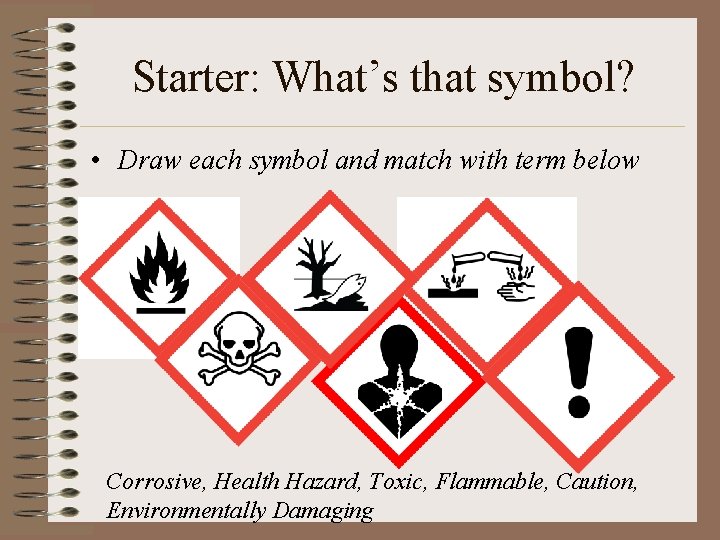
Starter: What’s that symbol? • Draw each symbol and match with term below Corrosive, Health Hazard, Toxic, Flammable, Caution, Environmentally Damaging
Safety and Rules of the Lab
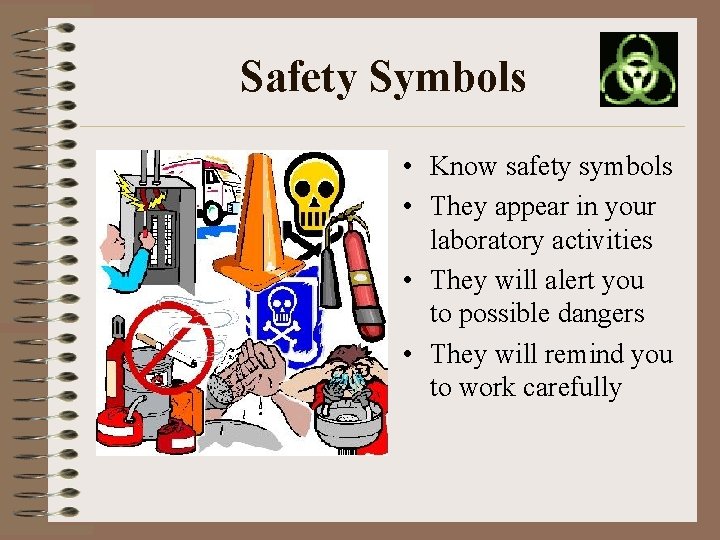
Safety Symbols • Know safety symbols • They appear in your laboratory activities • They will alert you to possible dangers • They will remind you to work carefully
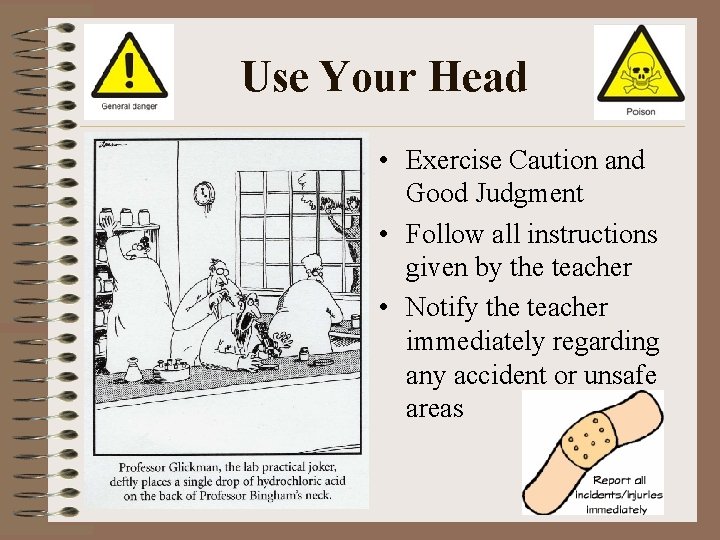
Use Your Head • Exercise Caution and Good Judgment • Follow all instructions given by the teacher • Notify the teacher immediately regarding any accident or unsafe areas
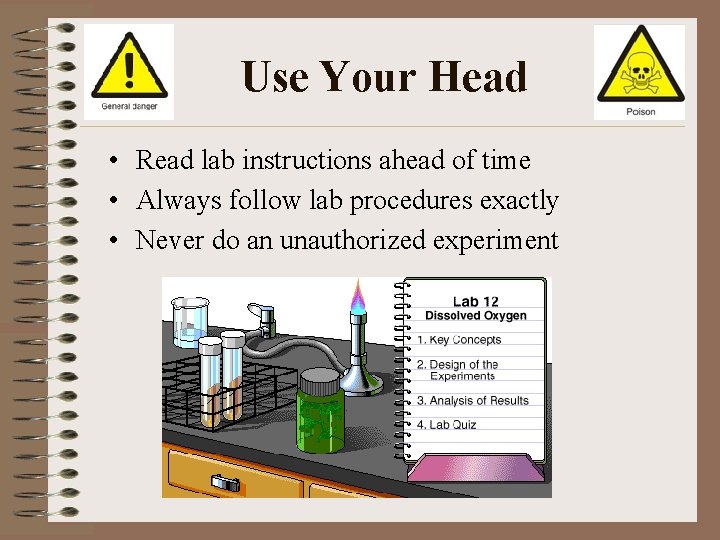
Use Your Head • Read lab instructions ahead of time • Always follow lab procedures exactly • Never do an unauthorized experiment
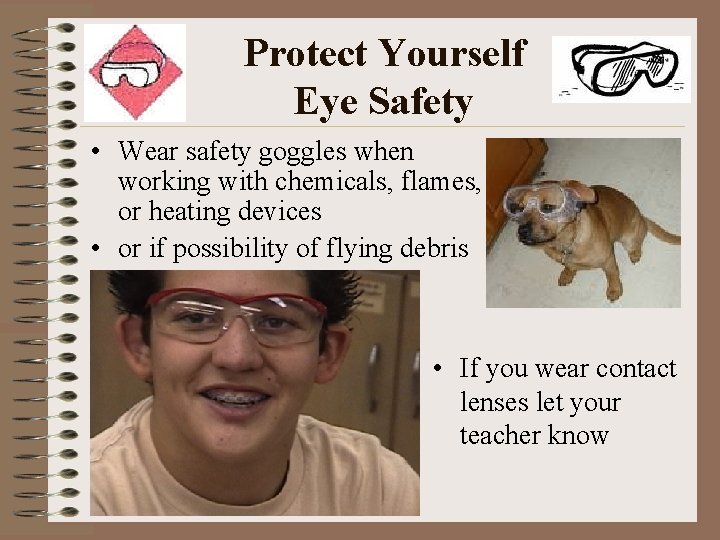
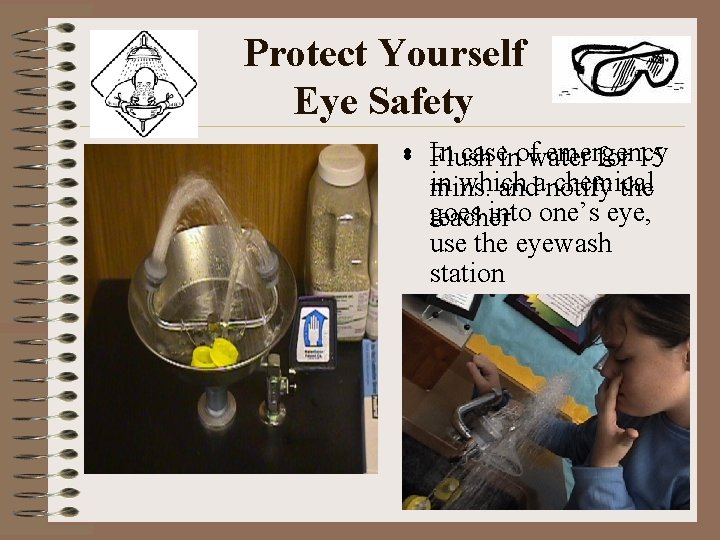
Protect Yourself Eye Safety • Wear safety goggles when working with chemicals, flames, or heating devices • or if possibility of flying debris • If you wear contact lenses let your teacher know
Protect Yourself Eye Safety • In caseinofwater emergency Flush for 15 in which chemical mins. andanotify the goes into one’s eye, teacher use the eyewash station
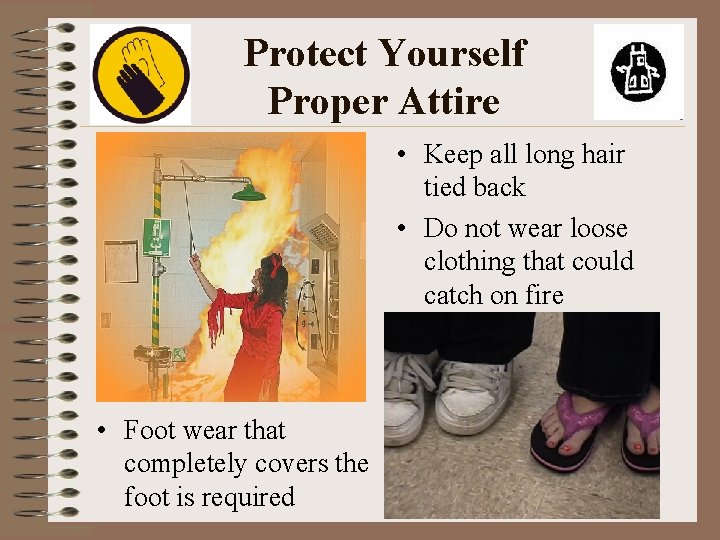
Protect Yourself Proper Attire • Keep all long hair tied back • Do not wear loose clothing that could catch on fire • Foot wear that completely covers the foot is required
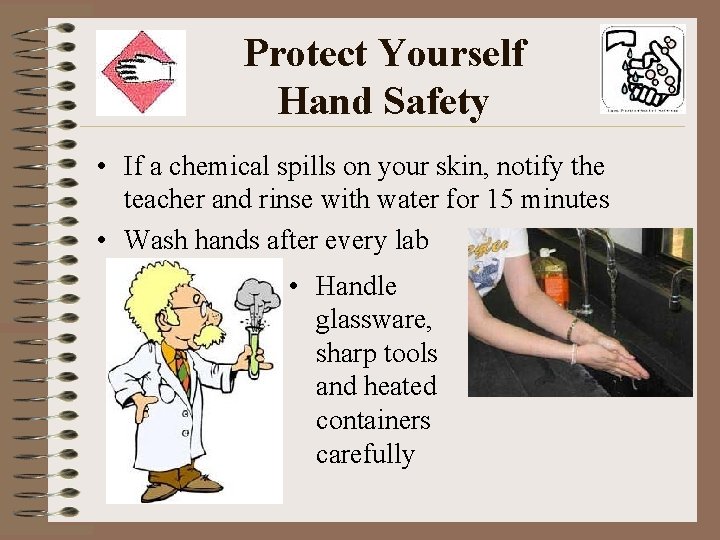
Protect Yourself Hand Safety • If a chemical spills on your skin, notify the teacher and rinse with water for 15 minutes • Wash hands after every lab • Handle glassware, sharp tools and heated containers carefully
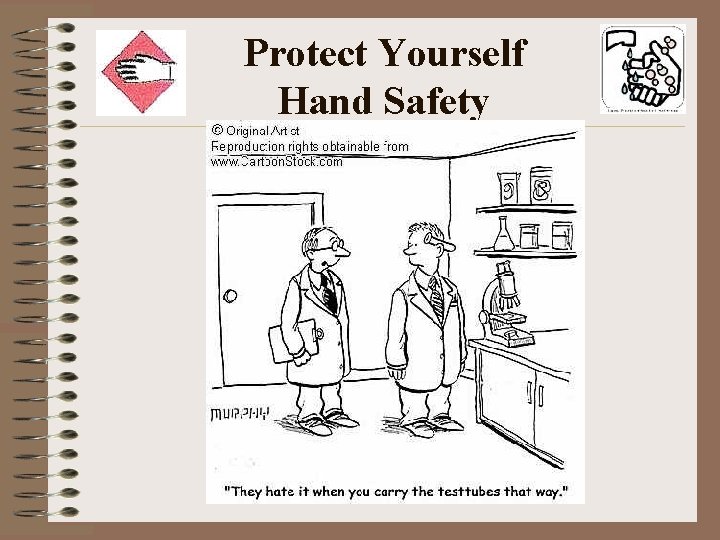
Protect Yourself Hand Safety
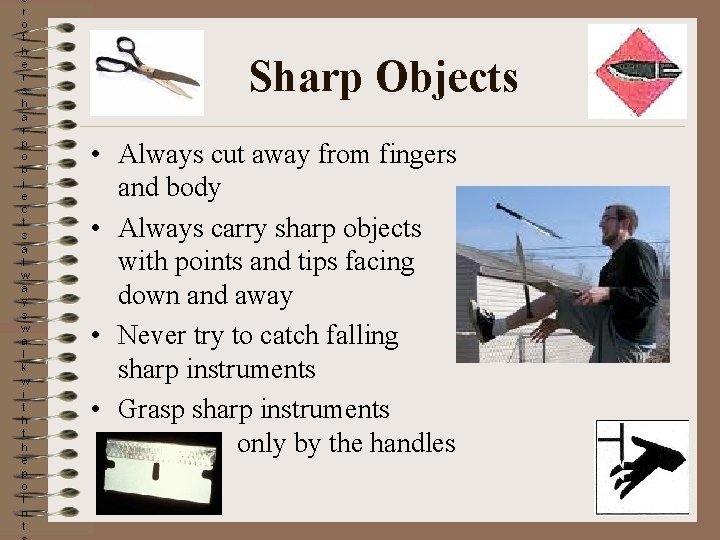
o r o t h e r s h a r p o b j e c t s a l w a y s w a l k w i t h e p o i n t Sharp Objects • Always cut away from fingers and body • Always carry sharp objects with points and tips facing down and away • Never try to catch falling sharp instruments • Grasp sharp instruments only by the handles
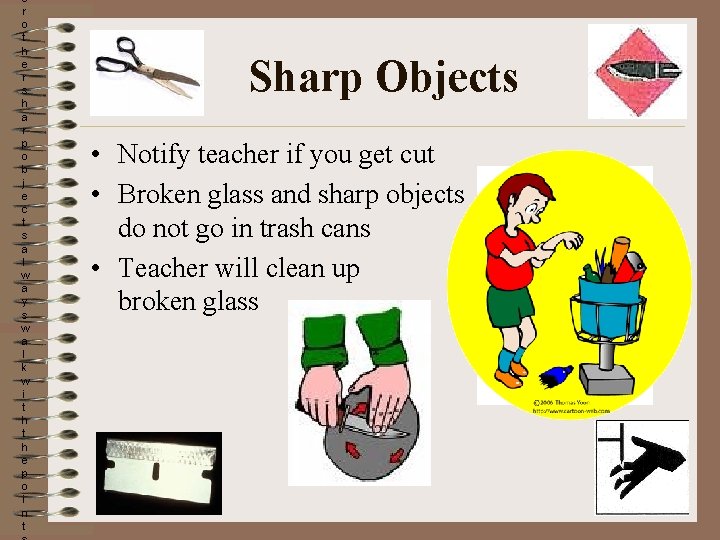
o r o t h e r s h a r p o b j e c t s a l w a y s w a l k w i t h e p o i n t Sharp Objects • Notify teacher if you get cut • Broken glass and sharp objects do not go in trash cans • Teacher will clean up broken glass
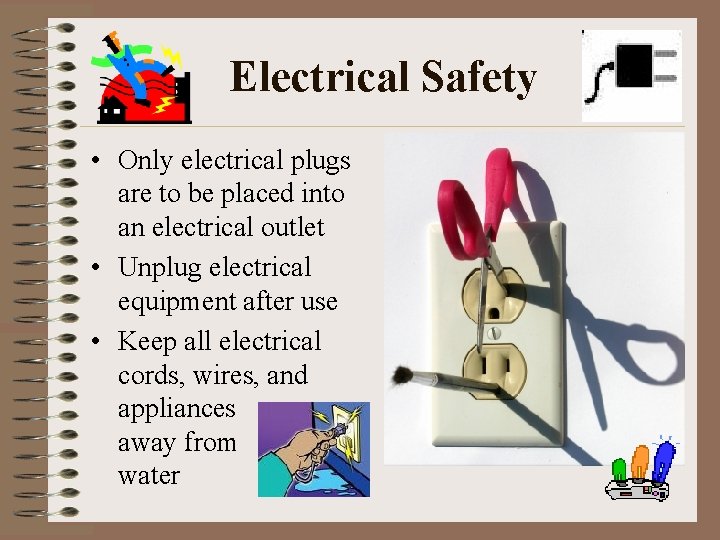
Electrical Safety • Only electrical plugs are to be placed into an electrical outlet • Unplug electrical equipment after use • Keep all electrical cords, wires, and appliances away from water
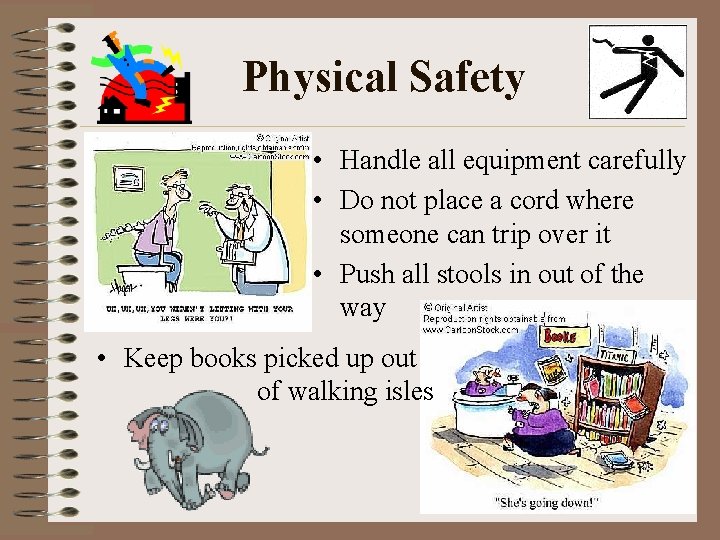
Physical Safety • Handle all equipment carefully • Do not place a cord where someone can trip over it • Push all stools in out of the way • Keep books picked up out of walking isles
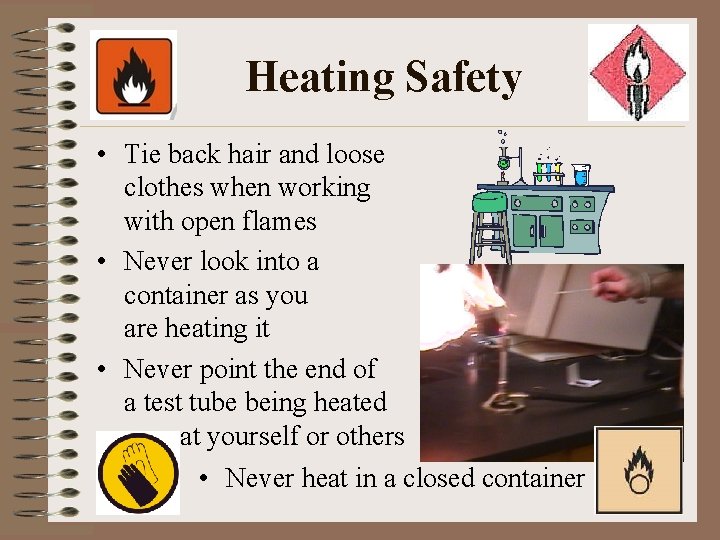
Heating Safety • Tie back hair and loose clothes when working with open flames • Never look into a container as you are heating it • Never point the end of a test tube being heated at yourself or others • Never heat in a closed container
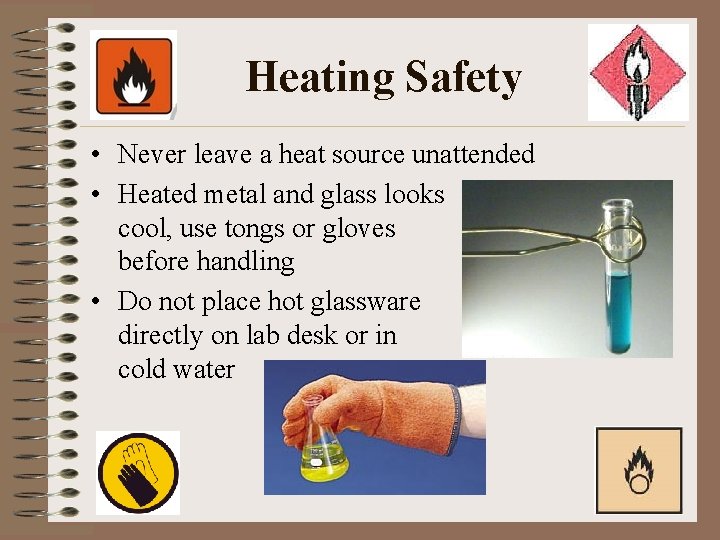
Heating Safety • Never leave a heat source unattended • Heated metal and glass looks cool, use tongs or gloves before handling • Do not place hot glassware directly on lab desk or in cold water
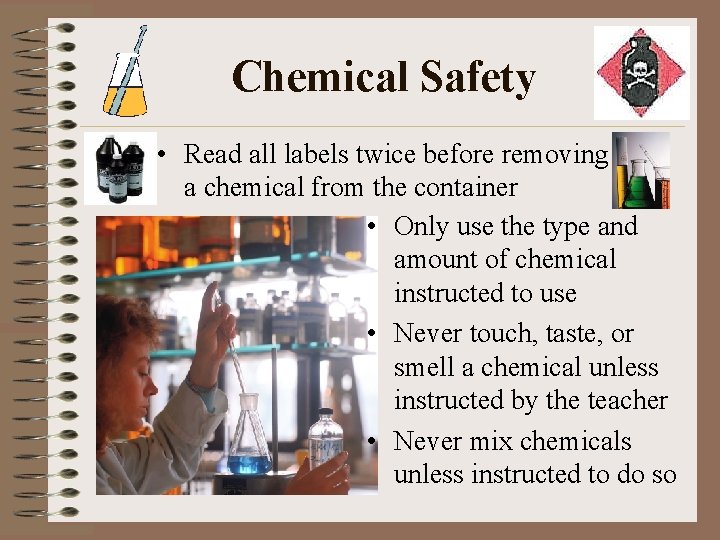
Chemical Safety • Read all labels twice before removing a chemical from the container • Only use the type and amount of chemical instructed to use • Never touch, taste, or smell a chemical unless instructed by the teacher • Never mix chemicals unless instructed to do so
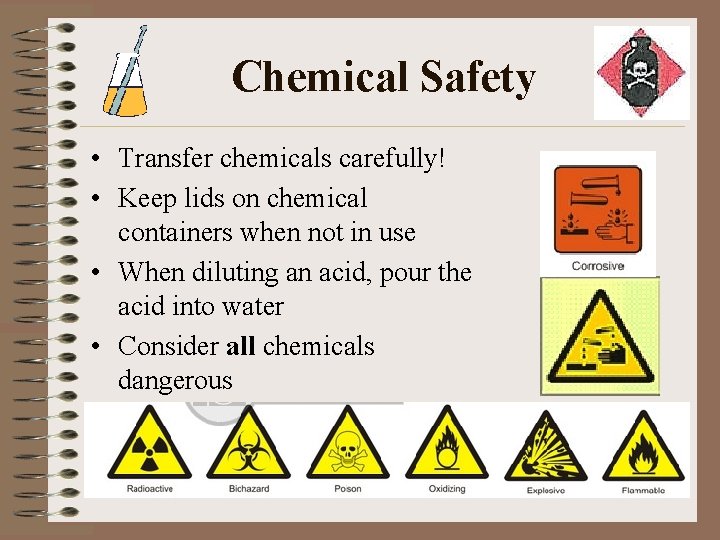
Chemical Safety • Transfer chemicals carefully! • Keep lids on chemical containers when not in use • When diluting an acid, pour the acid into water • Consider all chemicals dangerous
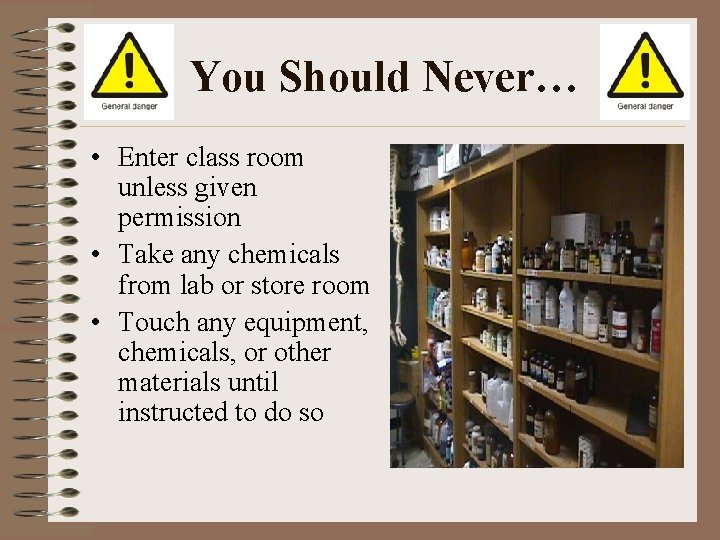
You Should Never… • Enter class room unless given permission • Take any chemicals from lab or store room • Touch any equipment, chemicals, or other materials until instructed to do so
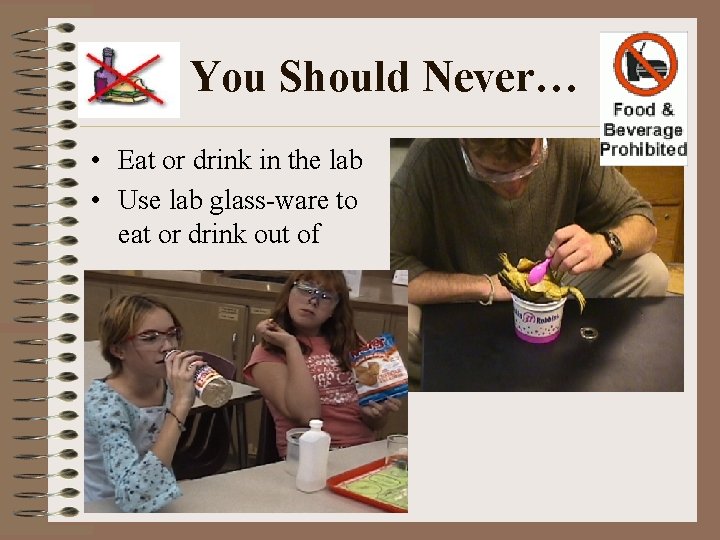
You Should Never… • Eat or drink in the lab • Use lab glass-ware to eat or drink out of
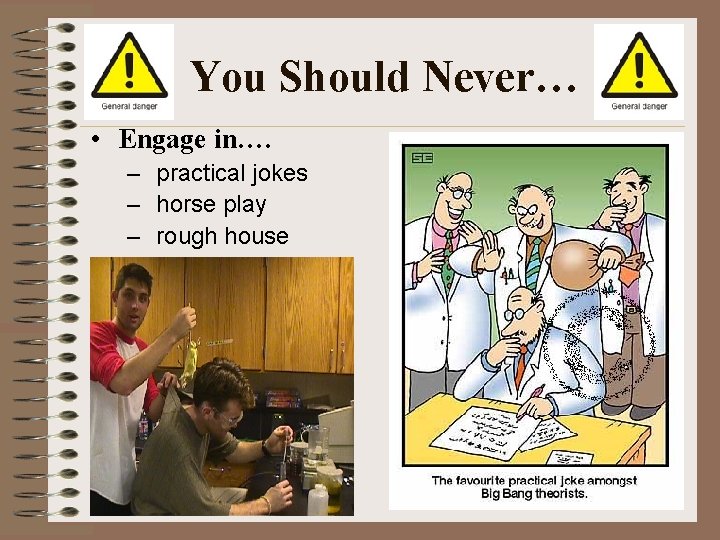
You Should Never… • Engage in…. – practical jokes – horse play – rough house
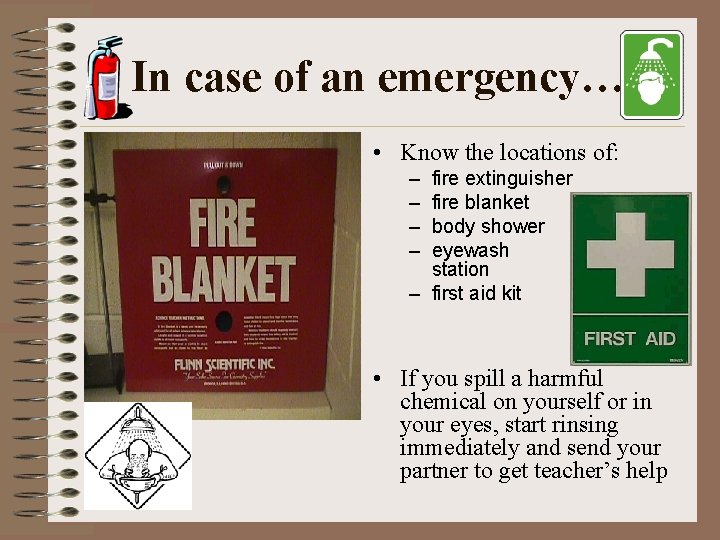
In case of an emergency… • Know the locations of: – – fire extinguisher fire blanket body shower eyewash station – first aid kit • If you spill a harmful chemical on yourself or in your eyes, start rinsing immediately and send your partner to get teacher’s help
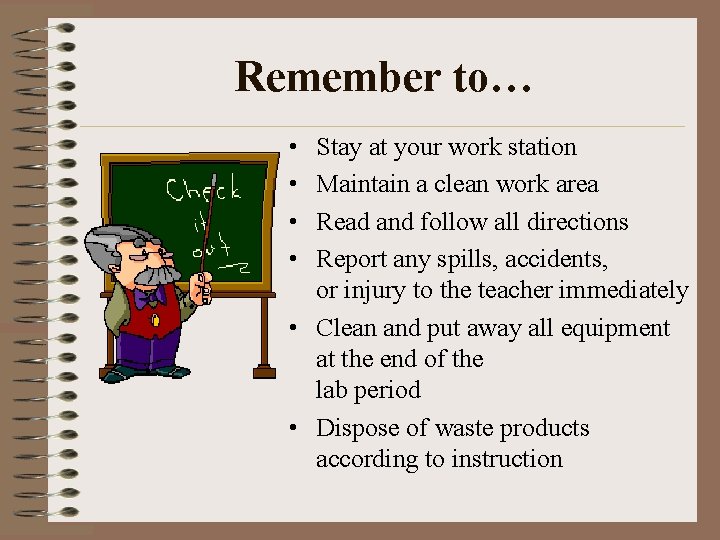
Remember to… • • Stay at your work station Maintain a clean work area Read and follow all directions Report any spills, accidents, or injury to the teacher immediately • Clean and put away all equipment at the end of the lab period • Dispose of waste products according to instruction
It’s not all water! • Your teacher will show you a demonstration where a piece of liver is added to several colourless liquids. • Observe what happens, then record your observations in your jotter • Then write a conclusion based on your observations
Safety in Chemistry • We are learning… • About safety in the chemistry classroom • I can… • Identify hazard safety symbols • Record an observation of a demonstration and highlight the risk associated with certain chemicals
Chemical Attacks • We are learning… – About chemical attacks in the UK • I can… – Research and deliver a presentation on a recent chemical attack in the UK
Task • Using the internet find a recent chemical attack in the last 10 -15 years • Prepare a 3 minute presentation using notes only. No Power. Points! • You should include: – Who was involved – What chemicals were used – What were the consequences
Chemical Attacks • We are learning… – About chemical attacks in the UK • I can… – Research and deliver a presentation on a recent chemical attack in the UK