
WELCOME TO PUBLIC SPEAKING SPEECH 110 C Shore
WELCOME TO PUBLIC SPEAKING SPEECH 110 C. Shore Fall 2015 East San Gabriel Valley, ROP #Bright. Future: https: //www. youtube. com/watch? v=60 P 5 S 5 VTa 9 1 8
Learning Objectives l l l 1. 1: Identify the principal things you will learn in this course and how they will benefit you outside the classroom. 1. 2: Describe public speaking as a communication process in which the speaker and listeners jointly create meaning and understanding. 1. 3: Name the elements of a rhetorical situation and explain the steps by which a speech affects the situation. 1. 4: Define the public forum and describe how studying public speaking will prepare you to participate effectively in it. 1. 5: Identify the principal ethical obligations of 2 listeners and speakers.
1. 1: Why Study Public Speaking l Develop specific communication skills – Listening critically – Deciding what to say – Organizing your speech – Using your voice and body – Overcoming speech anxiety 3
1. 1: Why Study Public Speaking l Critical thinking – Facts = Verifiable – Opinions = Subjective statements l l Strategic planning Apply what you learn – – Evaluate messages and appeals Increase sensitivity Adapt to diverse audiences Improve self-confidence 4
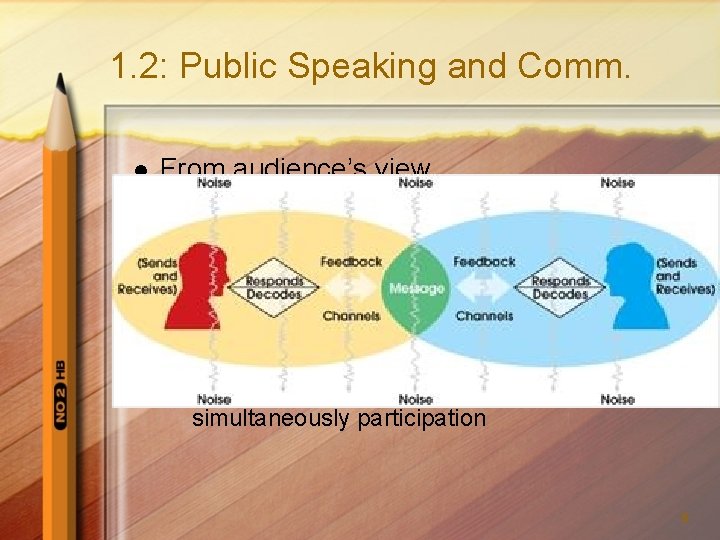
1. 2: Public Speaking and Comm. l From audience’s view – Prior knowledge, beliefs, values influence decoding & interpretations l From speaker’s view – How to deliver a speech, match listener expectations, adjust l As interplay – Expect various responses, monitor feedback = simultaneously participation 5
1. 3: The Rhetorical Situation l Rhetorical situation – Rhetoric l How – – – message affects people Shaping, reaffirming, modifying values Binding groups together or apart Celebrating Conveying information Nurturing, strengthening, changing beliefs Leading people to not/take action – Situation l Context of speech 6
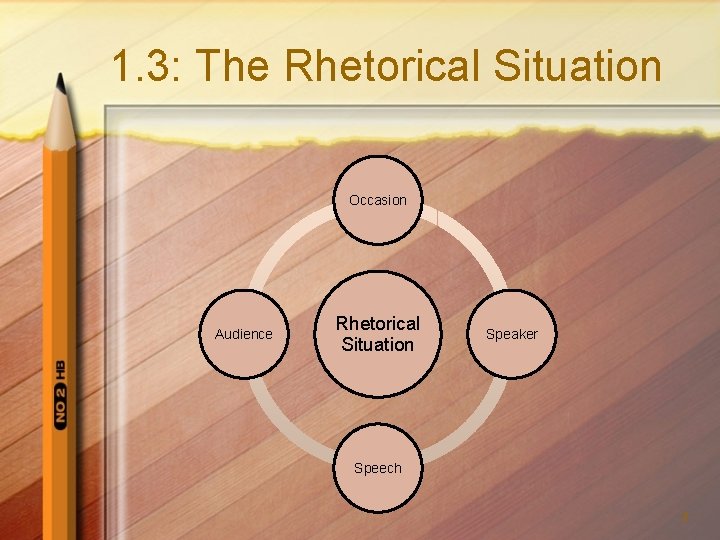
1. 3: The Rhetorical Situation Occasion Audience Rhetorical Situation Speaker Speech 7
1. 3: The Rhetorical Situation Constraints and opportunities Strategy: Plan of action Elements a speaker can impact Invention Arrangement Style Delivery Memory 8
1. 4: The Public Forum l The “Public” in Public Speaking – Designates speaking is open and accessible – Affects people beyond the immediate audience l Public Forum – An imagined space to discuss issues – Characterized by certain assumptions about the need for cooperative action & subjective judgment to resolve a problem – A decision is required 9
1. 4: The Public Forum l Ex. : Immigration – – l All were harmed by acts of discrimination Speakers and listeners discussed reform Solution involves more than one person Decision has to be made Ex. : Health care – Immunizations l Public v. Private – Music – Tattoos 10
1. 5: Ethics: Respect for Audience, Topic, and Occasion l Audience – – – l l Understand their perspective Acknowledge their intelligence and judgment Ensure message merits their time Advocate with integrity Respect cultural diversity Topic Occasion – Cite sources – Paraphrase – Draw upon several sources 11
1. 5: Ethics: Respect for Audience, Topic, and Occasion (cont. ) l Consequences of your speech – Realize speech has consequences – Adhere to high ethical standards – Develop sensitivity to ethical issues 12
Activity l 1. 2. Donald Trump 2016 Presidential Announcement (1: 50): https: //www. youtube. com/watch? v=p DRqz. KOPSOM Identify the rhetorical situation Discuss ethical dilemmas 13
Take Away l 1. 1: Identify the principal things you will learn in this course and how they will benefit you outside the classroom. – How to effectively organize a speech, critical thinking, application, improved self confidence l 1. 2: Describe public speaking as a communication process in which the speaker and listeners jointly create meaning and understanding. – Audience: Prior knowledge influences receptiveness – Speaker: Match expectations of listeners – Interplay: Feedback 14
Take Away l 1. 3: Name the elements of a rhetorical situation and explain the steps by which a speech affects the situation. – Audience, Speaker, Occasion, Speech l 1. 4: Define the public forum and describe how studying public speaking will prepare you to participate effectively in it. – Speech effects individuals beyond the immediate audience & results in decisions l 1. 5: Identify the principal ethical obligations of listeners and speakers. – Speakers must be respectful of their audience, topic, occasion, & consequences 15
- Slides: 15