
Welcome to LAMC CD 2 Early Childhood Principles
- Slides: 15
Welcome to LAMC CD 2: Early Childhood Principles & Practices Spring 2015 Thursdays 8: 50 am to 12 pm Dr. Allen Week 2!
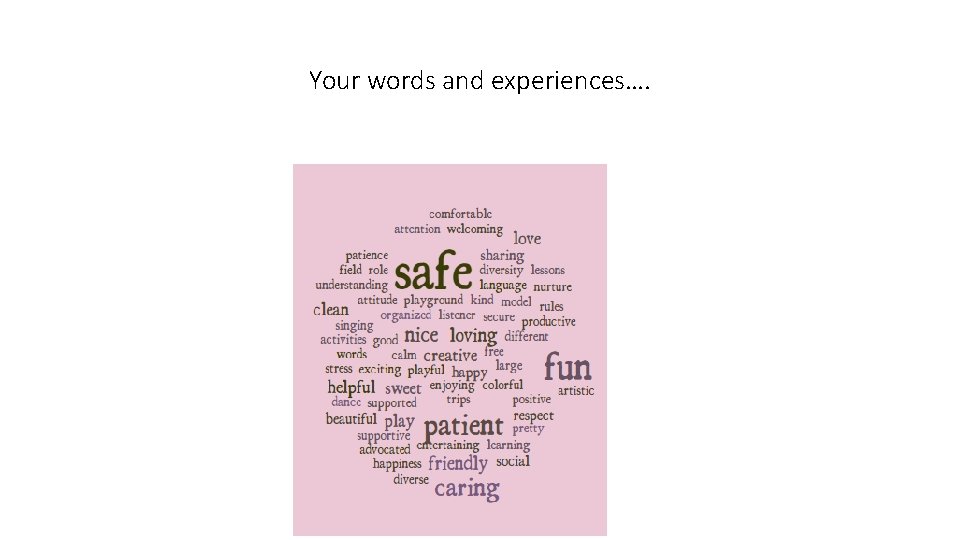
Your words and experiences….
Review: Foundations of Preschool • Individuals with Disabilities Education Act (IDEA), Parts B & C: • Nations education law: free appropriate public education • Assists birth – 21 years of age (part B) • Services to infants & toddlers (part C) • IDEA- B & C- ensures that public programs like Head Start are inclusive to special needs children/
Review: Types of programs • Center based: non-residential center, 13+ children • CB: are licensed by state; regulations & quality varies from state to state • Half day to full-day programs • Infants to kinder • May be funded by parents, state, private, church, employer, etc.
• Head Starts: Funded by state; nationwide • “Compensatory” sites: originally used to compensate for deficiencies in the child’s home • 1965: to offer comprehensive education, nutrition, health & parent involvement, for children living in poverty • 1994: Congress created Early Head Start; for pregnant women, infant & toddlers
Types of programs contd. • Montessori Schools: Privately funded schools • Ages 3 to 6 years • Multiage classrooms • Children choose, freely to work with specially prepared materials • Individual learning • https: //www. youtube. com/watch? v=i. OZl. Q-43 o. X 0 • Start at 45 sec.
• Family Child Care: Care for a small group of children in a “provider’s” own home (6 – 12 children) • Mostly infants & toddlers • Smaller, home-like environment; flexible hours • Some are licensed by state; most are not licensed • Regulations vary from state to state
• Todays Topic: What is the role of the teacher?
Todays Topic: The Role of the Teacher • Good communication: Teacher need’s to show a positive attitude • Parent involvement leads to higher morale of teachers & enhances child achievement • Family diversity: Teacher need’s to understand the child’s family, culture & support it as best we can • Essential attitudes (Sweitzer & King, 2009): open to diversity, receptive to feedback, flexible, open-minded • Teacher should ask appropriate questions about child & family, when they first meet
How do you build an alliance? • Show genuine concern for the child, to the parent (families sense the teacher’s good will); parents more likely to forgive teacher; trust building • How can you show genuine care? i. Valuing what children made (placing carefully in cubby) ii. Personal belongings are kept track of iii. Children are tended to (i. e. – wiping their nose) iv. Child is clean for pick up (hands, face, etc. ) v. Gently enforcing health & safety regulations vi. Curriculum is planned, varied, interesting; families are made aware in advance vii. Adapt program to children with special needs (good-faith effort) viii. Statements to families demonstrate teacher was attentive to what child did (see p. 40)
What is cultural competence? How can it help a preschool teacher? • Definition: Cultural competence refers to an ability to interact effectively with people of different cultures and socio-economic backgrounds. • Learning about different points of view and beliefs, regarding raising a child (customs, practices, traditions, greetings, leave takings, etc. ) • Equity minded vs. deficit minded… Which are you?
Prevention: What to do before an unpleasant situation arises… • Teacher needs to reflect on their own values & belief system • Be honest • Know your “red buttons” or “pressure points” that will make you uncomfortable or get you upset • Activity: Make a list of your top 5 values
Intervention • Stop before you respond verbally • Take a minute to breathe & gather your thoughts/emotions • Don’t be reactive • Listen to the words being spoken; where are they coming from? • Intent vs. impact of message • Do not defend; respond by rephrasing the statement in an “I” message • Refer to director for resolution
Aftermath… what to do after an unpleasant encounter • Discuss the matter in a professional manner, only using facts • Discuss with a director, or trusted colleague • Refer to the NAEYC Code of Ethical Conduct & Statement of Commitment • Bring a third party in for resolution • In future, think about who is doing most of the talking (then, this person is not listening) • Resolution minded: What can we do to relieve this matter?
How would you conduct a conference? • Don’t waste your time or the families time; be prepared • Observations, or developmental checklists; photos of important activities…professionalize your job! • Start by sharing the materials you have prepared (tangible documents) • Time to “confer & collaborate” (alliance); let the parent speak & express interests/ concerns/ expectations for their child • Set a clear time/date & time frame • Avoid interrupting, but keep track of time; do a follow up afterwards • Confidentiality