
Welcome to IP Boot Camp Thanks for your
Welcome to IP Boot Camp!
Thanks for your support!
Introduction-what do you want to know? �The agenda is flexible, this is your time to learn, network and participate with colleagues. �Use the sticky notes to write down any questions that you may have and we will post them to the community board. �We want to answer your questions as the day goes along!
Nursing Contact Hours (NCH) The Alaska Division of Public Health is an approved with distinction as a provider of continuing nursing education by Montana Nurses Association, an accredited approver by the American Nurse’s Credentialing Center’s Commission on Accreditation. �There is no identified conflict of interest by any planner or presenter involved in this learning activity. �In order to receive nursing contact hours: �Register (sign in) and attend 80% of each day. �Participate and complete an evaluation form at the end of day. �Contact Kim Spink at 907 -269 -8085 or kimberly. spink@alaska. gov for any concerns for NCH
Regulatory overview Kim Spink, RN, BSN, CIC State of Alaska, Department of Health and Social Services Section of Epidemiology HAI Program/Nurse Consultant II Phone 907 -269 -8085 Kimberly. spink@alaska. gov

Objectives 1. Know where to find your facilities licensure requirements. 2. Review AK reportable conditions and describe what diseases need to be reported.
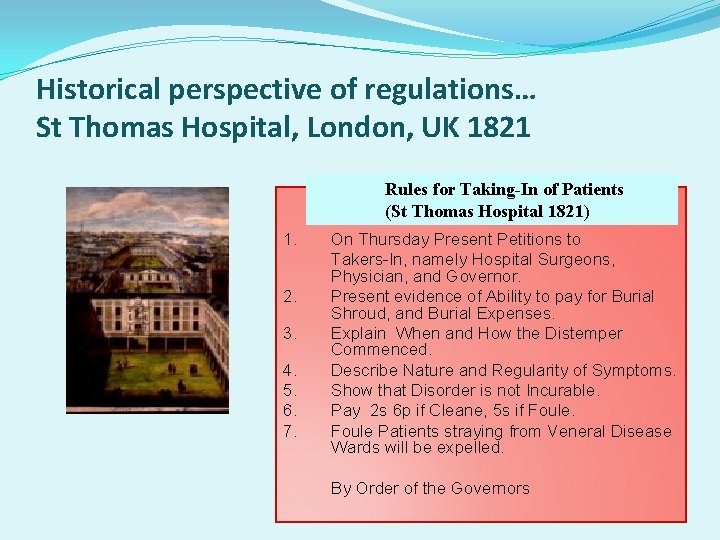
Historical perspective of regulations… St Thomas Hospital, London, UK 1821 Rules for Taking-In of Patients (St Thomas Hospital 1821) 1. 2. 3. 4. 5. 6. 7. On Thursday Present Petitions to Takers-In, namely Hospital Surgeons, Physician, and Governor. Present evidence of Ability to pay for Burial Shroud, and Burial Expenses. Explain When and How the Distemper Commenced. Describe Nature and Regularity of Symptoms. Show that Disorder is not Incurable. Pay 2 s 6 p if Cleane, 5 s if Foule Patients straying from Veneral Disease Wards will be expelled. By Order of the Governors
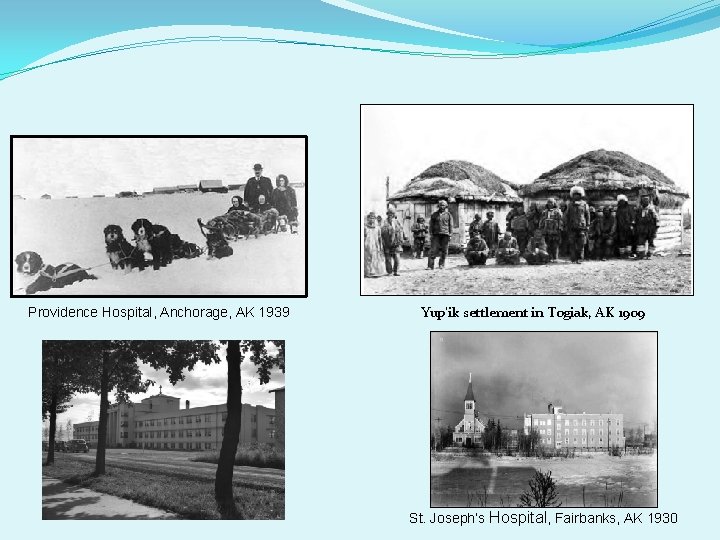
Providence Hospital, Anchorage, AK 1939 Yup’ik settlement in Togiak, AK 1909 St. Joseph’s Hospital, Fairbanks, AK 1930
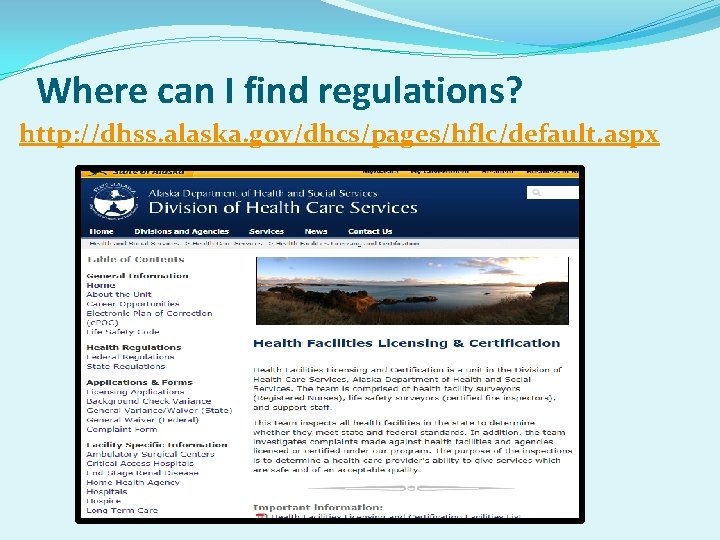
Where can I find regulations? http: //dhss. alaska. gov/dhcs/pages/hflc/default. aspx
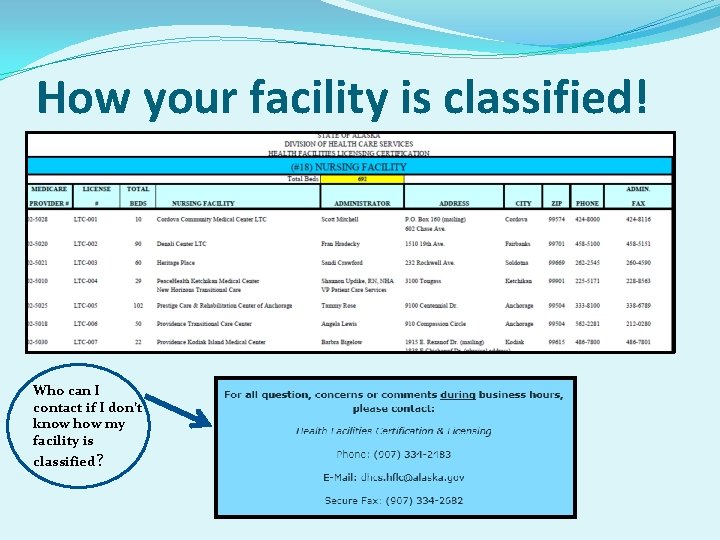
How your facility is classified! Who can I contact if I don’t know how my facility is classified?
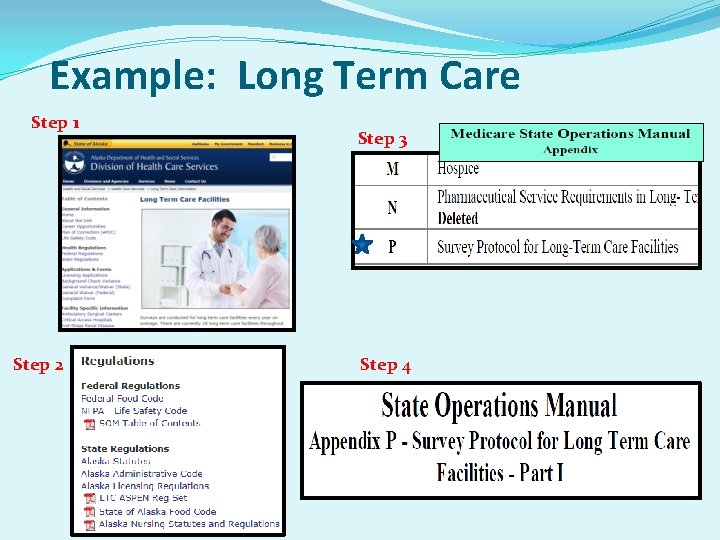
Example: Long Term Care Step 1 Step 2 Step 3 Step 4
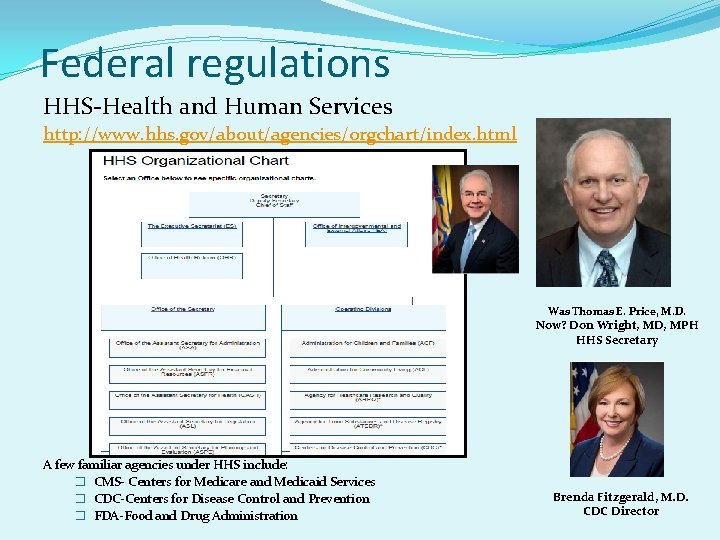
Federal regulations HHS-Health and Human Services http: //www. hhs. gov/about/agencies/orgchart/index. html Was Thomas E. Price, M. D. Now? Don Wright, MD, MPH HHS Secretary A few familiar agencies under HHS include: � CMS- Centers for Medicare and Medicaid Services � CDC-Centers for Disease Control and Prevention � FDA-Food and Drug Administration Brenda Fitzgerald, M. D. CDC Director
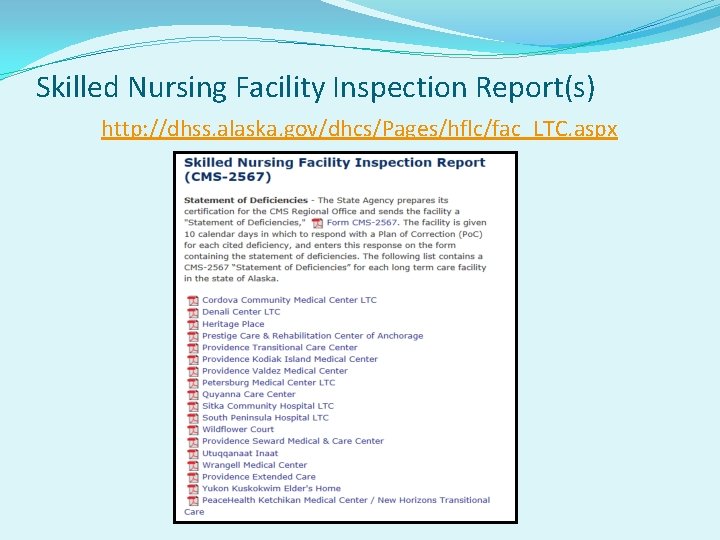
Skilled Nursing Facility Inspection Report(s) http: //dhss. alaska. gov/dhcs/Pages/hflc/fac_LTC. aspx
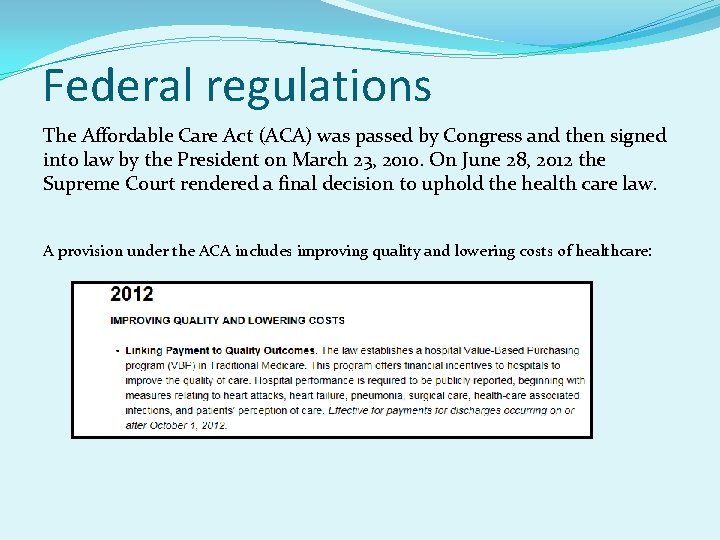
Federal regulations The Affordable Care Act (ACA) was passed by Congress and then signed into law by the President on March 23, 2010. On June 28, 2012 the Supreme Court rendered a final decision to uphold the health care law. A provision under the ACA includes improving quality and lowering costs of healthcare:
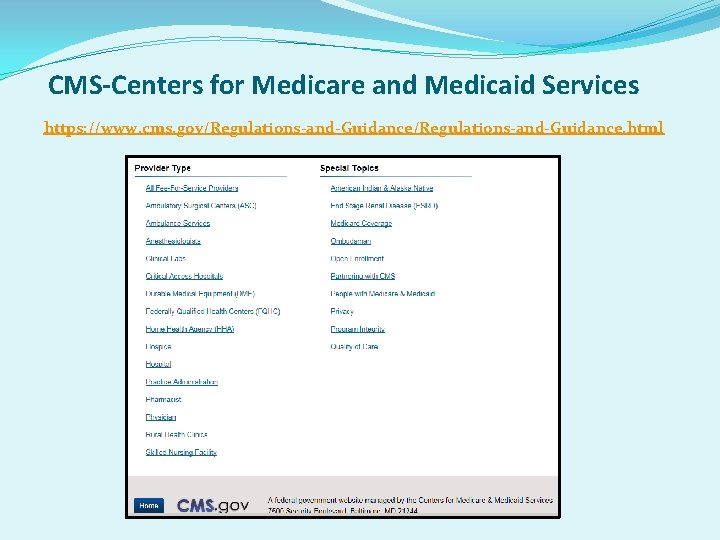
CMS-Centers for Medicare and Medicaid Services https: //www. cms. gov/Regulations-and-Guidance. html
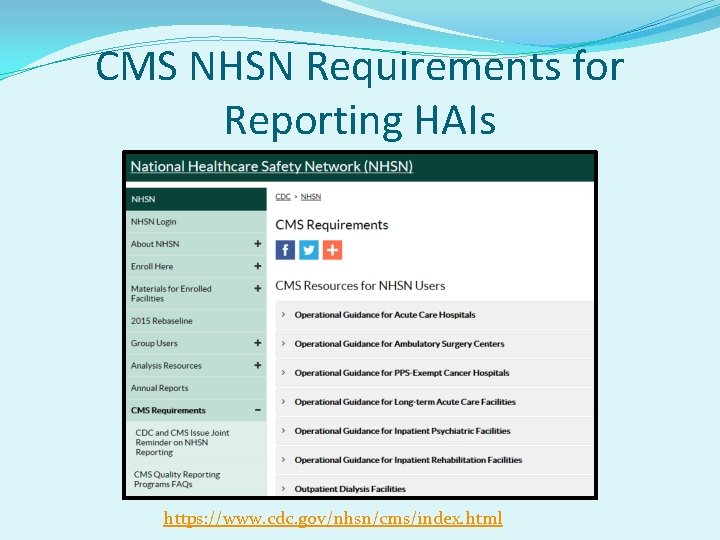
CMS NHSN Requirements for Reporting HAIs https: //www. cdc. gov/nhsn/cms/index. html
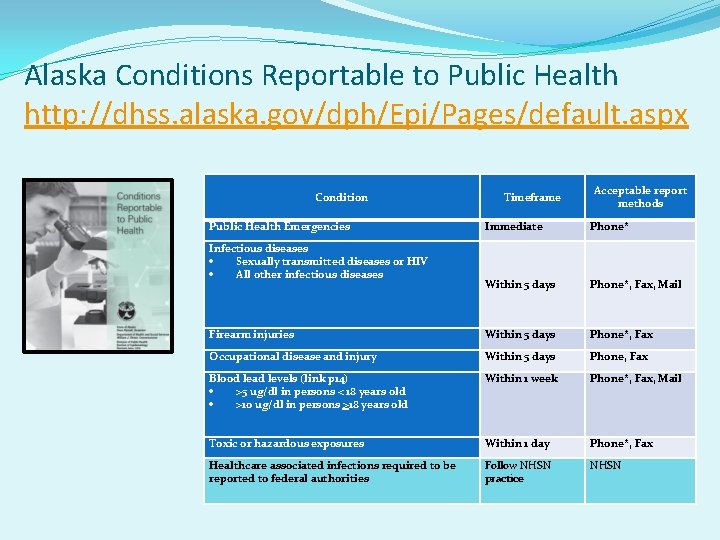
Alaska Conditions Reportable to Public Health http: //dhss. alaska. gov/dph/Epi/Pages/default. aspx Condition Public Health Emergencies Timeframe Acceptable report methods Immediate Phone* Within 5 days Phone*, Fax, Mail Firearm injuries Within 5 days Phone*, Fax Occupational disease and injury Within 5 days Phone, Fax Blood lead levels (link p 14) >5 ug/dl in persons < 18 years old >10 ug/dl in persons >18 years old Within 1 week Phone*, Fax, Mail Toxic or hazardous exposures Within 1 day Phone*, Fax Healthcare associated infections required to be reported to federal authorities Follow NHSN practice NHSN Infectious diseases Sexually transmitted diseases or HIV All other infectious diseases
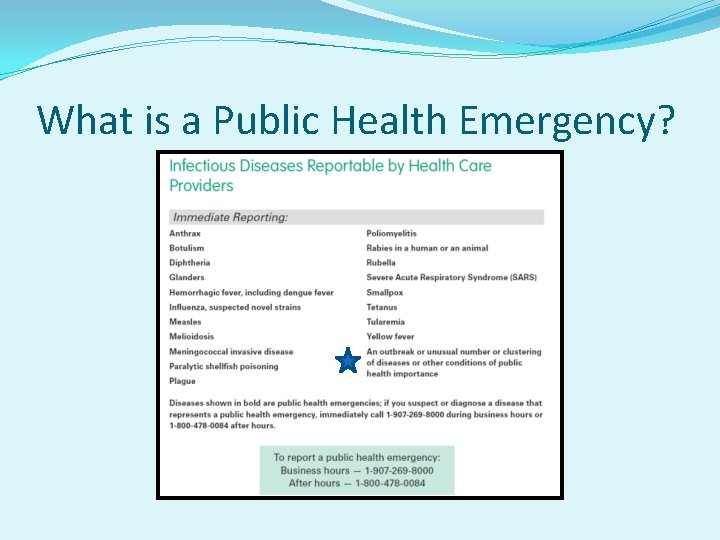
What is a Public Health Emergency?
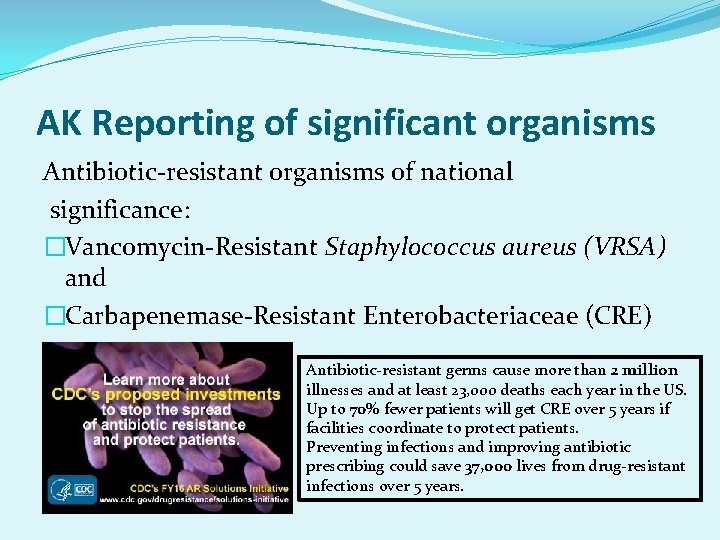
AK Reporting of significant organisms Antibiotic-resistant organisms of national significance: �Vancomycin-Resistant Staphylococcus aureus (VRSA) and �Carbapenemase-Resistant Enterobacteriaceae (CRE) Antibiotic-resistant germs cause more than 2 million illnesses and at least 23, 000 deaths each year in the US. Up to 70% fewer patients will get CRE over 5 years if facilities coordinate to protect patients. Preventing infections and improving antibiotic prescribing could save 37, 000 lives from drug-resistant infections over 5 years.
It’s complicated!
Voluntary accreditations Accreditation has been a voluntary process through which the organization is able to measure the quality of its services and performance against nationally or internationally recognized standards. Examples: � The Joint Commission (TJC) � Health Facilities Accreditation Program (HFAP) � Det Norske Veritas Healthcare, Inc. (DNV) � Accreditation Association for Ambulatory Health Care (AAAHC) � American Accreditation Association for Ambulatory Surgery Facilities (AAAASF) � Commission for the Accreditation of Birth Centers (CABC)
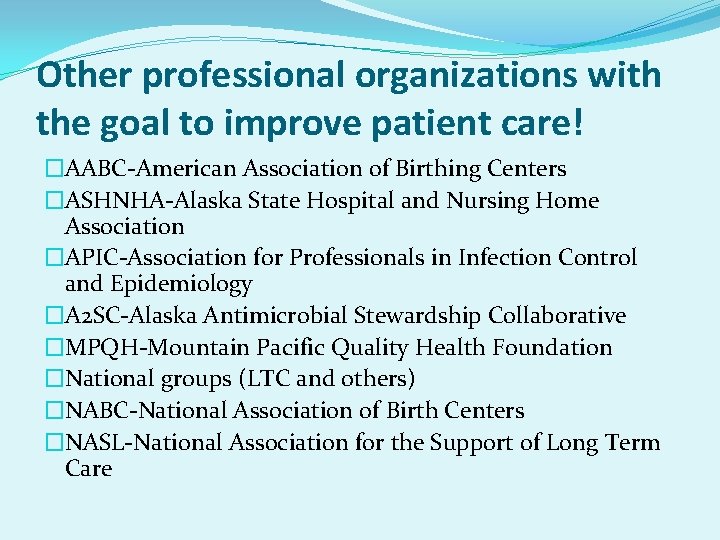
Other professional organizations with the goal to improve patient care! �AABC-American Association of Birthing Centers �ASHNHA-Alaska State Hospital and Nursing Home Association �APIC-Association for Professionals in Infection Control and Epidemiology �A 2 SC-Alaska Antimicrobial Stewardship Collaborative �MPQH-Mountain Pacific Quality Health Foundation �National groups (LTC and others) �NABC-National Association of Birth Centers �NASL-National Association for the Support of Long Term Care
Regulatory Overview �Shelley White
INFECTION PREVENTION AND CONTROL PROGRAM Shelley White, RN Cert/Licensing
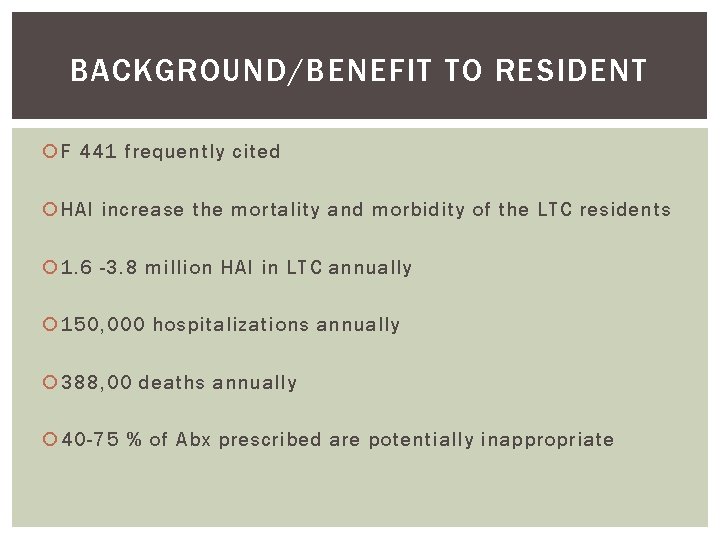
BACKGROUND/BENEFIT TO RESIDENT F 441 frequently cited HAI increase the mortality and morbidity of the LTC residents 1. 6 -3. 8 million HAI in LTC annually 150, 000 hospitalizations annually 388, 00 deaths annually 40 -75 % of Abx prescribed are potentially inappropriate
REGULATORY GROUPS Infection Control § F 880: Infection Prevention and Control § Facility Assessment § F 881: Abx Stewardship Program § F 882: Infection Preventionist 11/28/19 § F 883: Influenza and Pneumococcal Immunizations (334)
EXPANDED GUIDANCE Hand Hy gie ne Tran smissio n Based P recaut ions Respirat ory etiquette Med i cal Device s Lin en s Pn eum oco ccal Vaccines Surveillance Report ing Occupat ional policie s
HAND HYGIENE C-difficile Infection and Norovirus Infection outbreaks § Contact precautions § **strict adherence to glove use § HH with soap and water Colonization or single case of CDI or norovirus § Contact precautions § **strict adherence to glove use § AHBS **Surveyors will review Process and Outcome Surveillance & observe adherence to best practice standards https: //www. shea-online. org/images/patients/CDI-hand-hygiene-Update. pdf
TRANSMISSION BASED PRECAUTIONS § Contact precautions § Least restrictive as possible § Used for the least amount of time § Individualized, based on the likelihood of transmission § § Pathogen Resident risk factors Psychological impact Other considerations **Surveyor will observe the practice, review policy and medical record, surveillance, & training
TRANSMISSION BASED PRECAUTIONS Donning and doffing PPE § Upon entry and before exit § Discard PPE in room § Hand hygiene after glove removal in the room Droplet precautions § Mask, face shield or goggles upon entry to room § Visitors during influenza season Surveillance of practice **Surveyor will observe practice, review policy and medical record, surveillance, & training
UPDATE POLICIES Hand hygiene best practices How and when to use transmission based precautions Donning and doffing of PPE Selection Room assignments When and how to limit movement Time frame and process for reassessment of isolation
MEDICAL DEVICES Blood glucose and INR meters Cleaned per manufacturers recommendation EPA disinfectant, no alcohol Individual meters Single use or auto-disabling finger stick devices
LINEN Standard precautions § Sorting and Rinsing of linen at point of use is prohibited Transport § Held away from clothing, minimize agitation Manufacturer’s instructions for use § Washing machines and dryers § Detergents § Linens Chlorine bleach rinse not required for low temp wash
PNEUMONIA AND INFLUNZA F 883 = F 334 § Policies to be updated based on best practice § CDC changes: PCV 13 in addition to PPSV 23 **Surveyors will review documentation § vaccine dates, education, refusal, risk and benefits, and contradiction from MD
SURVEILLANCE Must establish a system for surveillance based on national standards of practice. Must establish routing, ongoing, and systematic collection, analysis interpretations, and dissemination of data that: § § § Identifies infections Infection risks Communicable diseases outbreaks to state/local public health Monitors staff performance when needed Document follow-up activity in response to findings
SURVEILLANCE SYSTEM CON’T Must identify how reports will be provided to staff and/or prescribing practitioners. Process for communicating information upon transfer Include both process and outcome surveillance **Surveyor triggers may lead to review of additional regulatory requirements
INFECTION CONTROL PLAN A sy st em for pre venting, identifying, reporting, investigating, and controlling in fectio ns and communicable diseases that: Cove rs all re side nts, staff, volunteers, visitors, and other indiv iduals providing service s unde r a contractu al arrangement; Is based o n the individual facility assessment; Fo llows acce pted national standards; Writt en standards, policie s and procedures A sy st em for re cording in cidents identified under the IPCP and corrective act ion s tak en by the facility; and An an tibio tic ste wardship pr og ram (ASP) (F 881). An n ual review
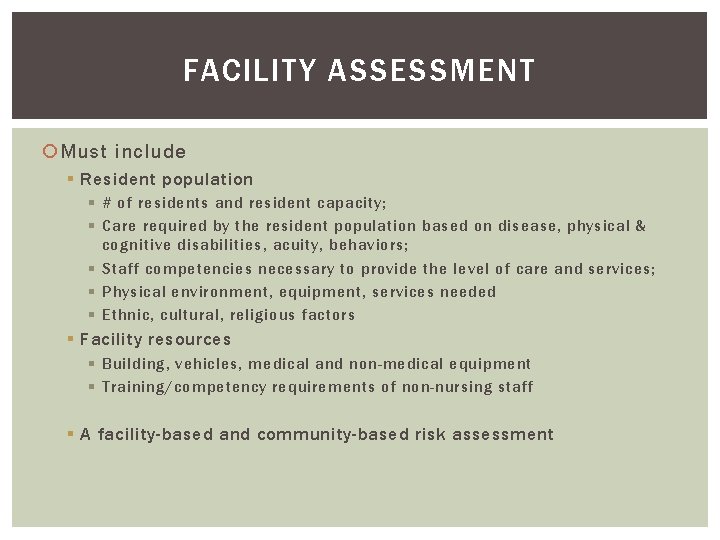
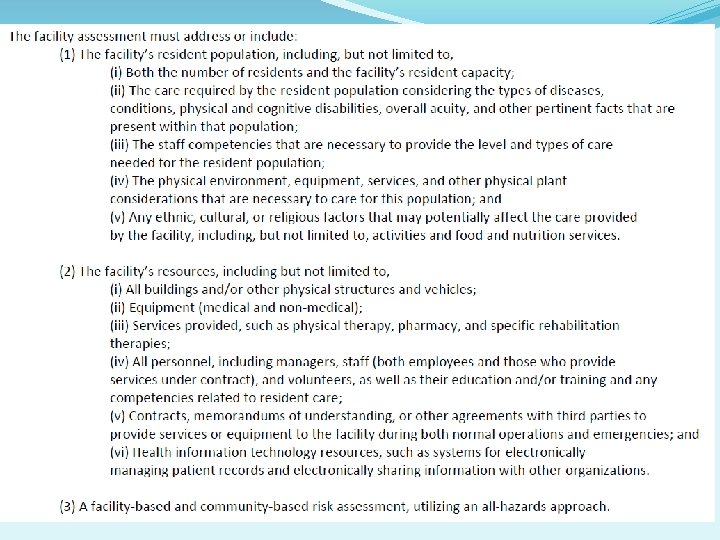
FACILITY ASSESSMENT Must include § Resident population § # of residents and resident capacity; § Care required by the resident population based on disease, physical & cognitive disabilities, acuity, behaviors; § Staff competencies necessary to provide the level of care and services; § Physical environment, equipment, services needed § Ethnic, cultural, religious factors § Facility resources § Building, vehicles, medical and non-medical equipment § Training/competency requirements of non-nursing staff § A facility-based and community-based risk assessment
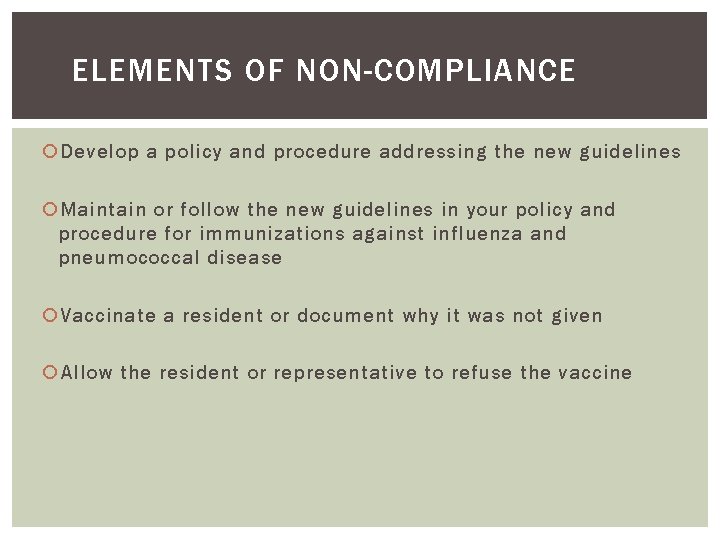
ELEMENTS OF NON-COMPLIANCE Develop a policy and procedure addressing the new guidelines Maintain or follow the new guidelines in your policy and procedure for immunizations against influenza and pneumococcal disease Vaccinate a resident or document why it was not given Allow the resident or representative to refuse the vaccine
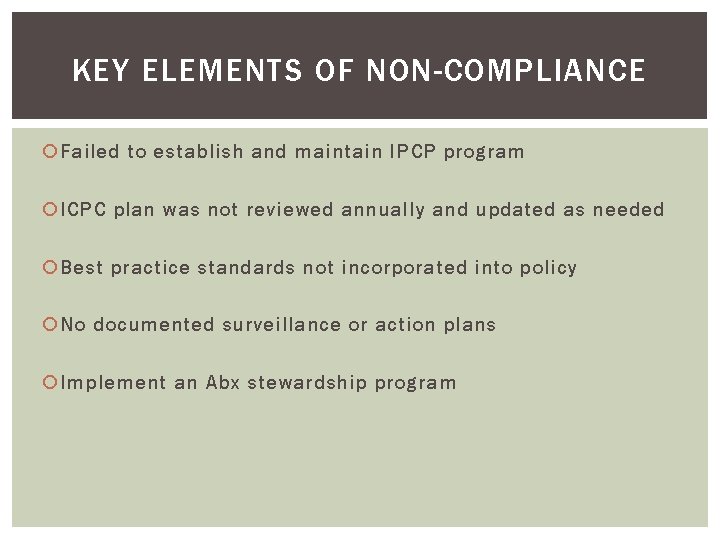
KEY ELEMENTS OF NON-COMPLIANCE Failed to establish and maintain IPCP program ICPC plan was not reviewed annually and updated as needed Best practice standards not incorporated into policy No documented surveillance or action plans Implement an Abx stewardship program
UPDATES Tablets Survey process Pathways Tags Expanded Regulatory language Expanded interpretative guidance
RILEY AND RIGGINS
MAYLEE KAY
What is a risk assessment? Ø “Living document that forms the foundation of a comprehensive IPC program” Marcia Patrick, MSN, CIC Ø Identifies risks Ø Population: (residents/patients) health and safety Ø Geography & weather: earthquake, fire, flood Ø Employees: communicable infectious diseases Ø Environment: physical space, ventilation systems, cleanliness Ø Infections: endemic, seasonal or outbreak related Ø Procedures: medical devices, injections, dialysis Ø Emergency management: loss of utilities or water Ø CMS Intent: For the facility to evaluate their resident population and identify resources needed to provide necessary person-centered care and services required by residents Ø Refer to tools/procedures/plans already in place to prevent infection, such as staff training
What’s the point? Ø Identify and prioritize your risks (infections) Ø Plan to prevent and control factors affecting transmission Ø Helps you keep track of all the balls Minimize transmitting infections, keep it safe for residents/staff and visitors!
What information do you need? http: //qioprogram. org/facility-assessment-tool When using the CMS Template the Risk Assessment is organized into 3 parts: q. Resident profile q. Services and care offered q. Facility Resources needed ***Caveats: Use of this tool is not mandated by CMS, nor does its completion ensure regulatory compliance. You can use or adapt this tool to comply with regulations and fit your needs!
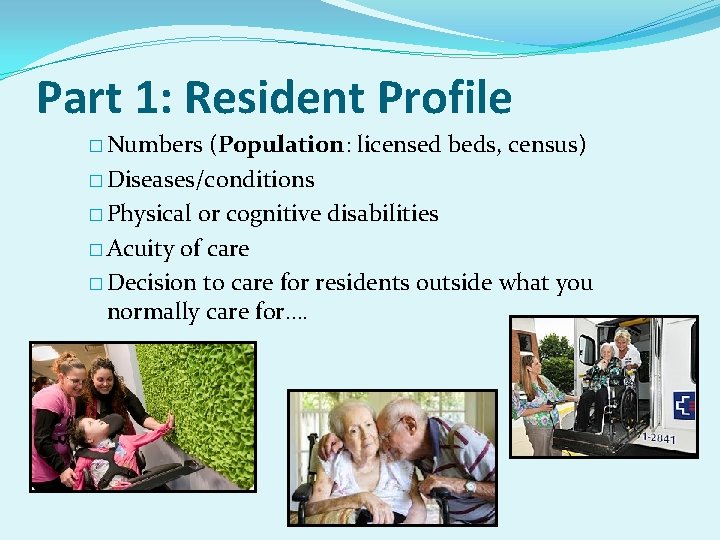
Part 1: Resident Profile � Numbers (Population: licensed beds, census) � Diseases/conditions � Physical or cognitive disabilities � Acuity of care � Decision to care for residents outside what you normally care for….
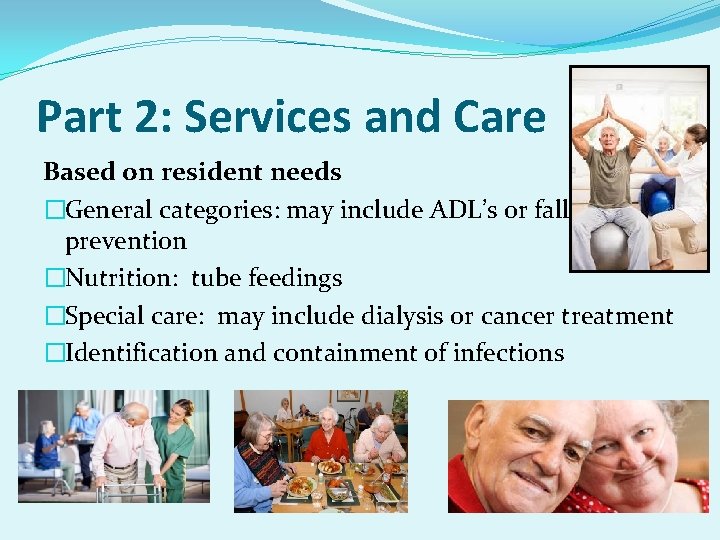
Part 2: Services and Care Based on resident needs �General categories: may include ADL’s or fall prevention �Nutrition: tube feedings �Special care: may include dialysis or cancer treatment �Identification and containment of infections
Part 3: Facility Resources Identify what is needed to provide competent care �Staff and staffing plan �Staff education and training �Physical environment/building �Technology based resources and systems �Can refer to your current emergency plans and risk assessment!
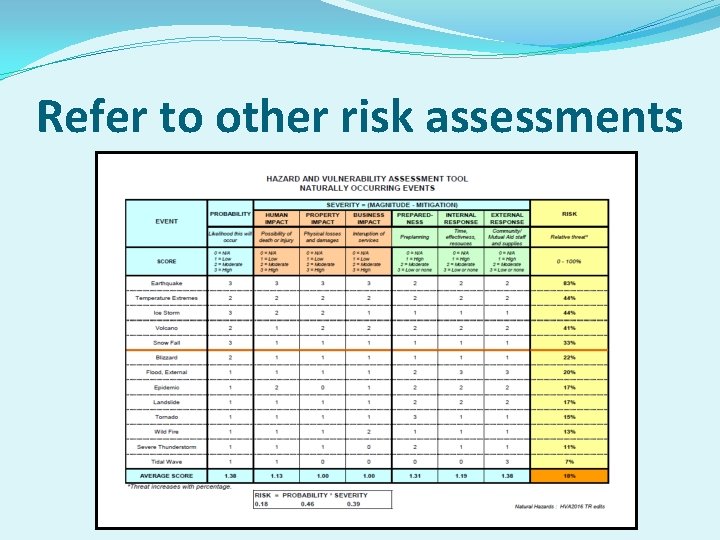
Refer to other risk assessments
Group Work 1. Your turn to practice! (15 minutes) Individually-fill in the Fishbone Diagram with specific information that applies to your residents and facility. 2. Next…. write on a sticky notes one factoid you have identified for your residents or facility and add it to the larger Fishbone Diagram in the room. 3. This exercise will help you identify elements for your own Risk Assessment and share ideas with others! Go! ***Note: There a variety of risk assessment tools, choose one that works for you and make it your own!
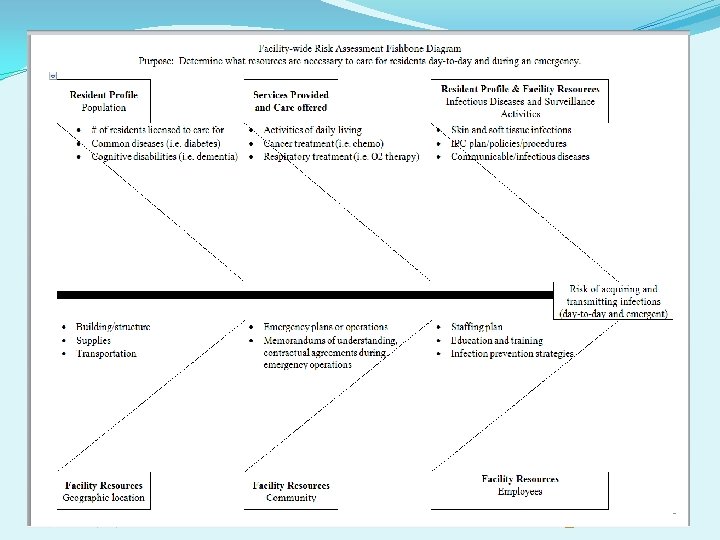

Recap of the Resident Profile � Numbers: licensed beds, average daily census, # persons admitted/discharged � Common diseases/conditions, physical and cognitive disabilities (to help identify types of resources needed to meet the needs of residents living with these conditions or combinations of conditions) � Decisions regarding caring for residents with conditions that you not commonly see � Ethnic, culture, religious or other factors that may affect the care provided
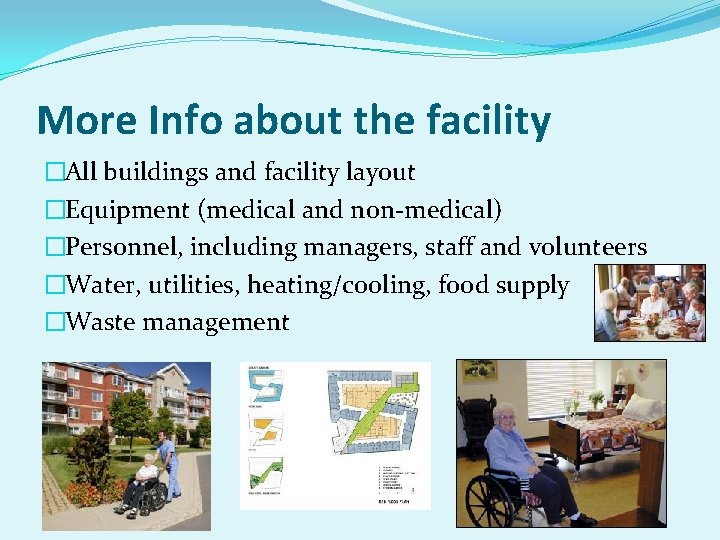
More Info about the facility �All buildings and facility layout �Equipment (medical and non-medical) �Personnel, including managers, staff and volunteers �Water, utilities, heating/cooling, food supply �Waste management
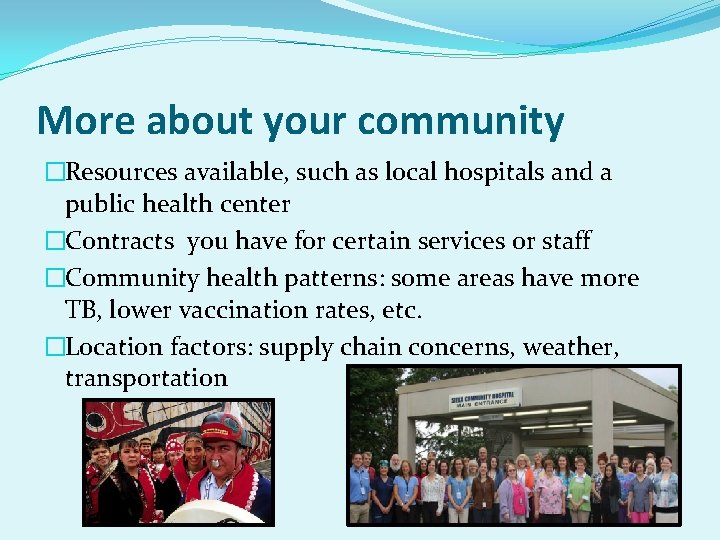
More about your community �Resources available, such as local hospitals and a public health center �Contracts you have for certain services or staff �Community health patterns: some areas have more TB, lower vaccination rates, etc. �Location factors: supply chain concerns, weather, transportation
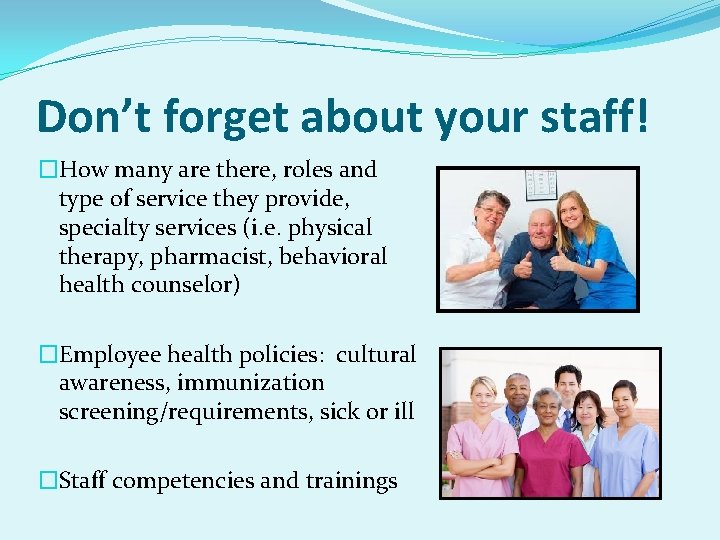
Don’t forget about your staff! �How many are there, roles and type of service they provide, specialty services (i. e. physical therapy, pharmacist, behavioral health counselor) �Employee health policies: cultural awareness, immunization screening/requirements, sick or ill �Staff competencies and trainings
Risk Assessment Basics �Review and updated annually, or when there are major changes �Include required content (as per regulations) �Determine resources necessary to care for residents on a day-to-day basis and during an emergency �Several tools/formats exist; but can also DIY �Get input from other departments
Guidelines for conducting RA �At a minimum involve: administrator, representative from the governing body, medical director and director of nursing. �May include input from corporation but must be conducted at facility level. �Determine your timeline for completion. �Review and update annually or when there is a significant change requiring modification. RA is a living document…. changes can be made! �Appendix PP: provides surveyor guidance thru SOM (State Operations Manual)
What do you do with your RA �Based on identified risks, develop an infection prevention plan to minimize the risks of transmitting infections �Determine high-risk, high volume, and problem prone areas to prioritize �Plan ahead, assemble your team and set your timeline!
Questions? Hey, I got one! I’m thinking ….
LUNCH!!
Surveillance Anna Frick, MPH, CIC
What is surveillance? �“a comprehensive method of measuring outcomes and related processes of care, analyzing the data, and providing information to members of the healthcare team to assist in improving those outcomes. ” –APIC �Essential to infection prevention
A quote “I think what’s important to note is that we’re not necessarily talking about very sophisticated epidemiology using complex statistical methods to determine associations – sometimes this is literally as simple as making a line list of the patients who were involved, what infections they had, what people took care of them or where they were in the hospital, ” he says. “In many instances it’s those very simple epidemiologic tools that are the most important and the most helpful in terms of getting to the bottom of an outbreak. ” -Dr. Arjun Srinivasan, quoted in Infection Control Today
Why do we do surveillance? �Because we have to �To identify problems early and intervene �Isolate and use precautions EARLY to prevent spread �To monitor for less-obvious problems �So we can work towards having NO HAIs!
Elements of a surveillance plan �What infections/events are you looking for? �How will you find/identify events? �What data elements will you collect? �How will you collect the data? �How will the data be analyzed? �What will you do with the results?
Choosing what to monitor �Regulatory requirements �Things that are identified as risks for your facility �Formal risk assessment �Type of facility �“It seems like we’ve seen a lot of X lately” �Known issues �High volume procedures
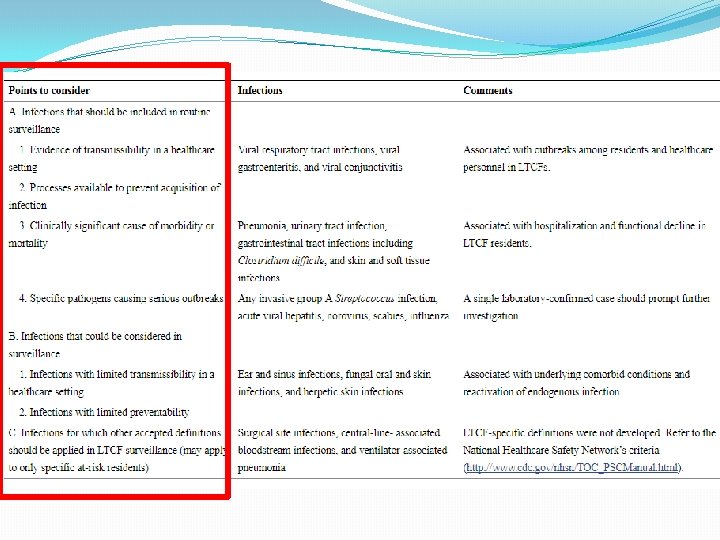
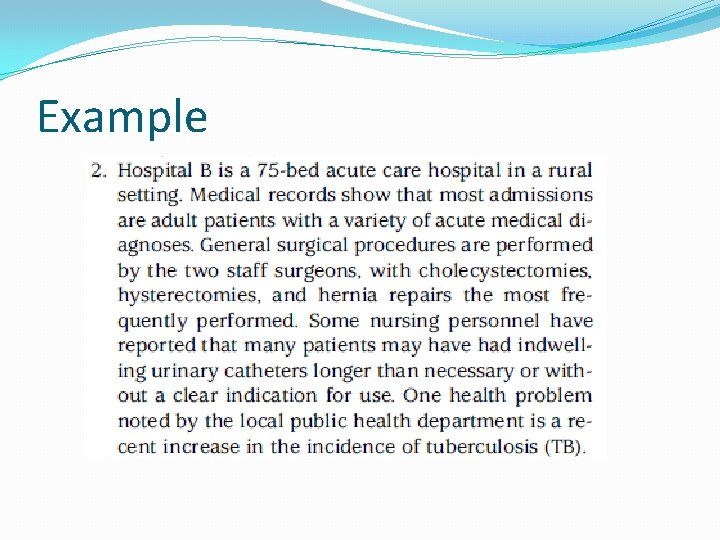
Example
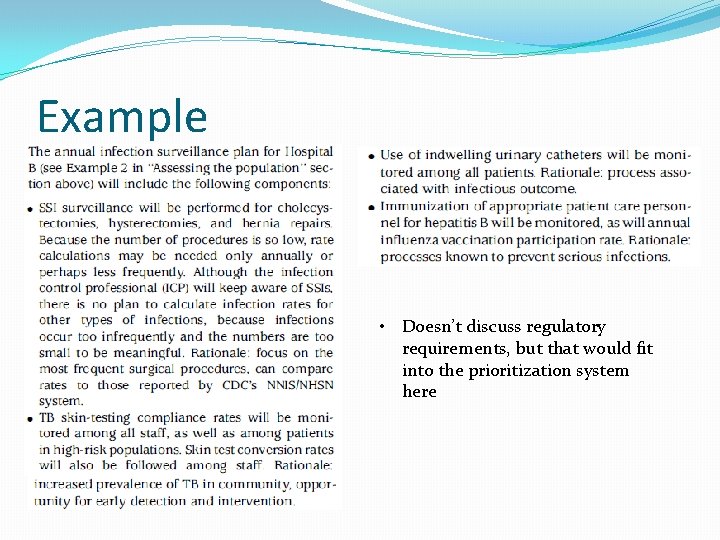
Example • Doesn’t discuss regulatory requirements, but that would fit into the prioritization system here
Case definitions �A set of uniform criteria used to define a disease �Include attributes of risk (who can be a case? ) �Include attributes of symptoms �Include attributes of diagnosis (lab confirmed? ) �Should be written, so can be consistent
Where to find ‘official’ case definitions �Nice to use sometimes because it makes it easier to compare with other facilities �Mc. Geer Criteria designed for LTC: https: //www. ncbi. nlm. nih. gov/pmc/articles/PMC 3538836/ �https: //wwwn. cdc. gov/nndss/case-definitions. html is where CDC keeps its reportable disease definitions �CDC’s HAI definitions are at http: //www. cdc. gov/nhsn/enrolled-facilities/index. html
Clinical vs. surveillance definitions �Clinical definitions are for patient treatment �Up to the clinician �Surveillance definitions are for data purposes �Must be applied consistently �Not for treatment �Not relevant for clinical actions
How to find cases? �Passive surveillance: wait for someone to tell you �Lab notifications of positive blood cultures �Staff report a resident with influenza �Less work for you; may miss cases �Active surveillance: go look for cases �Check every new resident’s record for infectious disease �Go visit patients and ask about symptoms �Review medical records, look at boards �More work for you; makes sure you find cases
Important data elements to consider �Demographics �Risk factor details �Underlying medical conditions �Procedure/current visit details �When patient was where �Information about infection �Onset �Symptoms �Pathogen �Other info needed to prove case meets case definition
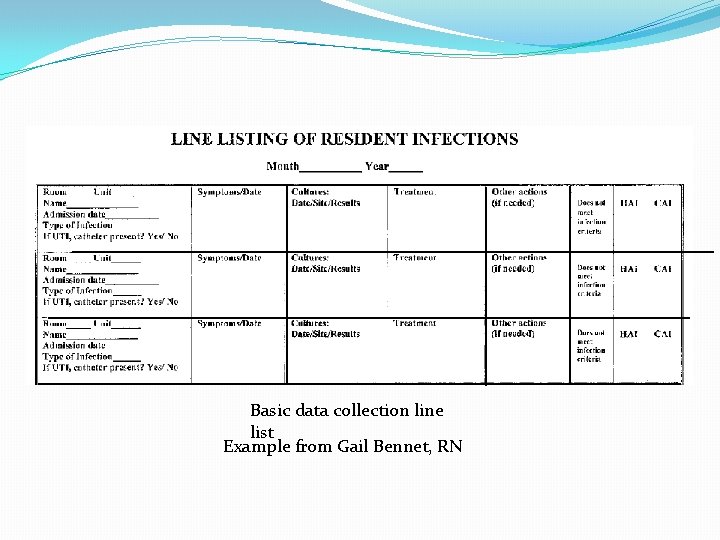
Basic data collection line list Example from Gail Bennet, RN
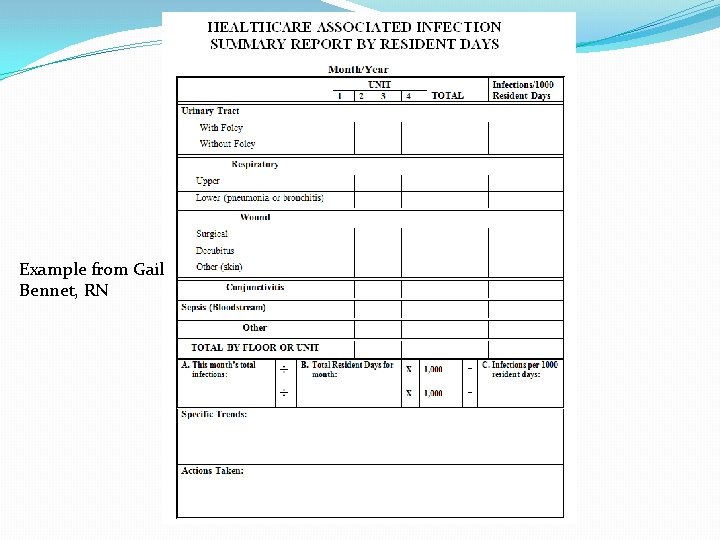
Example from Gail Bennet, RN
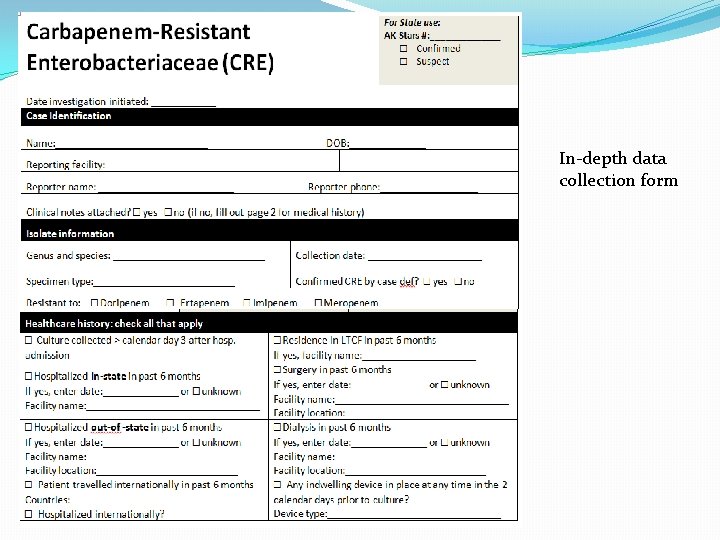
In-depth data collection form
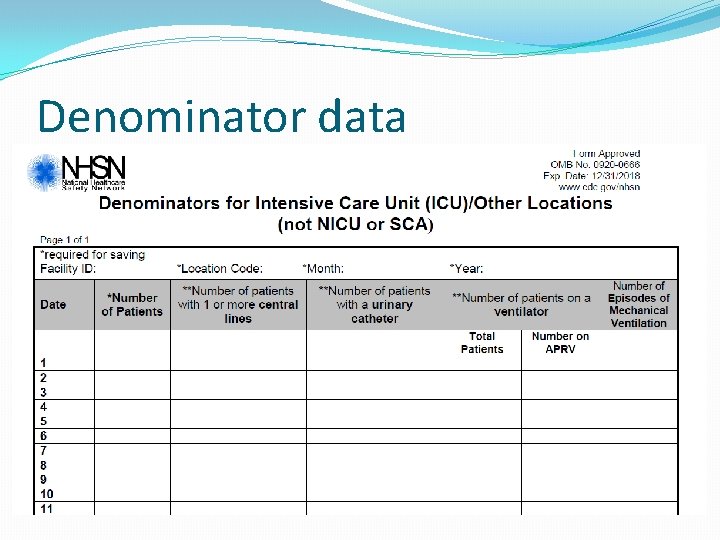
Denominator data
Key: consistency �Collect the same minimum information on all patients �Log it in the same way �Have clear criteria defining cases �Collect denominator data at the same time each day TRAIN YOUR DATA COLLECTORS!
Practice �You’ve noticed your facility has a lot of catheterized patients, and you’re worried about CAUTIs. �What kind of surveillance will you do (how will you find your cases? ) �What data will you need? �How will you collect data? �On cases? �For denominator data?
Analysis �Doesn’t have to be complicated or scary!
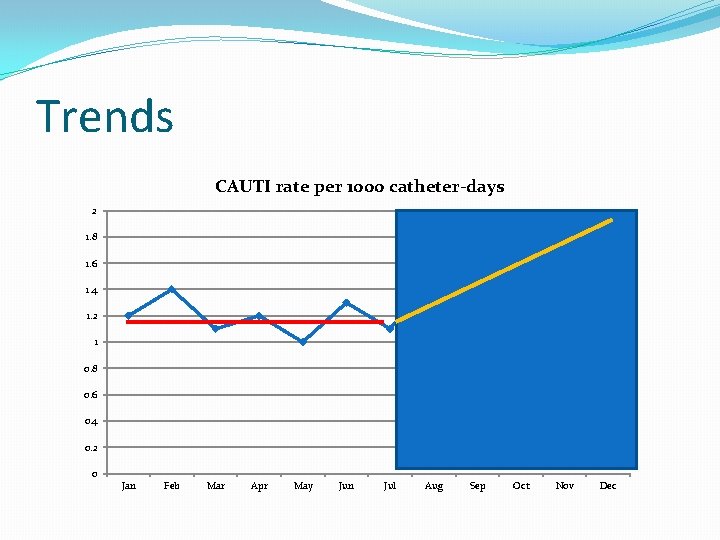
Ways to see a problem �Time series clustering �Number of infections �Unusual events �Pathogens with a ‘trademark’ �“Weird” bugs or infections �“Outbreak” or excess of infections �Trends
Which facility has a bigger problem? �Facility A had 5 catheter-associated UTIs last month �Facility B had 8 catheter-associated UTIs last year �Which one are you more worried about?
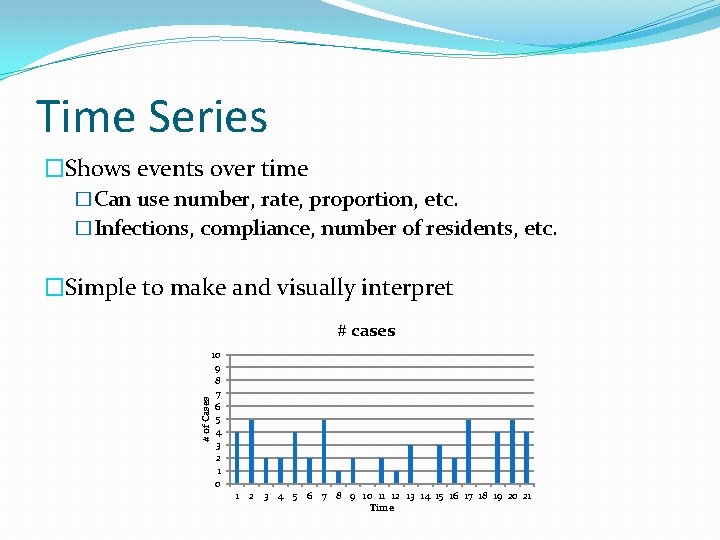
Time Series �Shows events over time �Can use number, rate, proportion, etc. �Infections, compliance, number of residents, etc. �Simple to make and visually interpret # of Cases # cases 10 9 8 7 6 5 4 3 2 1 0 1 2 3 4 5 6 7 8 9 10 11 12 13 14 15 16 17 18 19 20 21 Time
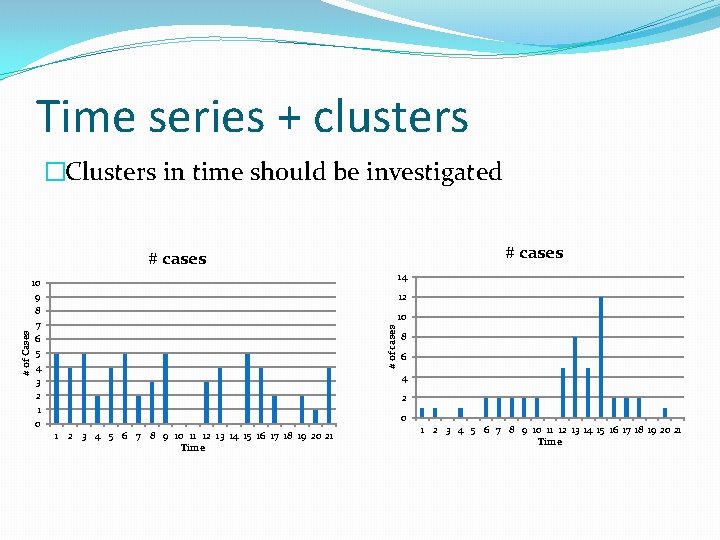
Time series + clusters �Clusters in time should be investigated # cases 14 10 9 8 7 6 5 4 3 2 1 0 12 10 # of cases # of Cases # cases 8 6 4 2 0 1 2 3 4 5 6 7 8 9 10 11 12 13 14 15 16 17 18 19 20 21 Time

How to make in Excel �Put dates in one column �If you want to do things by week, it sometimes is easier to use the week ending/starting date �Put number of cases in the second �Select both columns insert “Column chart”
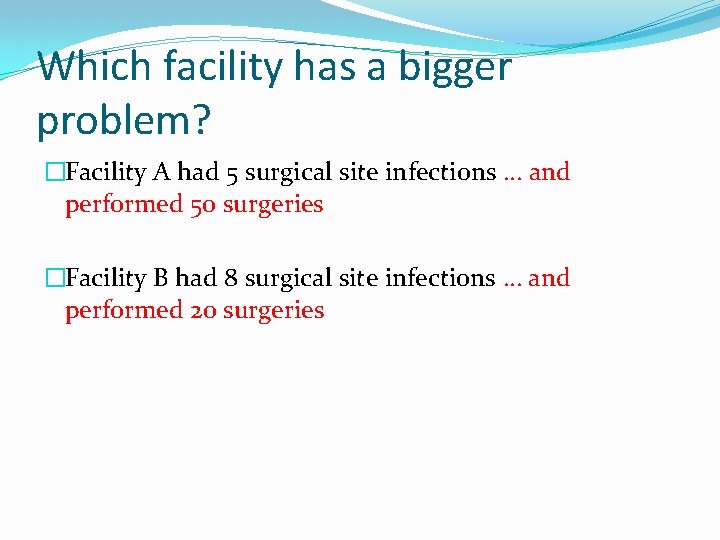
Which facility has a bigger problem? �Facility A had 5 surgical site infections … and performed 50 surgeries �Facility B had 8 surgical site infections … and performed 20 surgeries
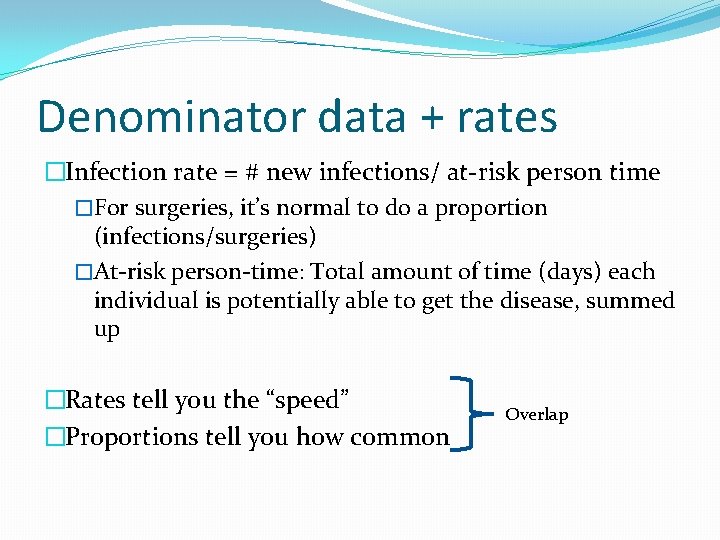
Denominator data + rates �Infection rate = # new infections/ at-risk person time �For surgeries, it’s normal to do a proportion (infections/surgeries) �At-risk person-time: Total amount of time (days) each individual is potentially able to get the disease, summed up �Rates tell you the “speed” �Proportions tell you how common Overlap
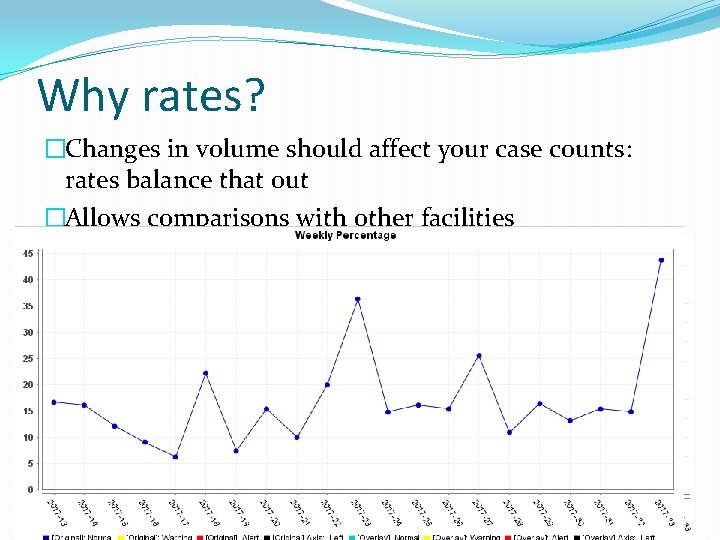
Why rates? �Changes in volume should affect your case counts: rates balance that out �Allows comparisons with other facilities
How to calculate a rate �Count number of infections �Count number of at-risk days �Divide infections/days, and multiply by a scaling factor �i. e. common to do CAUTIs per 1, 000 catheter days
Ways to see a problem �Time series clustering �Number of infections �Unusual events �Pathogens with a ‘trademark’ �“Weird” bugs or infections � Example: a case of a very drug-resistant organism

Opportunistic infections Exogenous Endogenous � Coagulase-negative Staphylococci � Enterococcus spp. � Streptococcus bovis � Clostridium septicum � Candida and Torulopsis glabrata � Malassezia furfur � Coccidioides immitis � Histoplasma capsulatum � Mycobacterium TB � Pneumocystis jiroveci � Toxoplasma gondii � Herpes simplex � Herpes zoster � Aerobic Gramnegatives � Staphylococcus aureus � Clostridium difficile � Legionella pneumophila � Rhodococcus equi � Aspergillus spp. � Zygomycetes � Rapid-growing mycobacteria � Cryptosporidium � Viruses other than the herpes group
Ways to see a problem �Time series clustering �Number of infections �Unusual events �Pathogens with a ‘trademark’ �“Weird” bugs or infections �“Outbreak” or excess of infections
How do I know there’s an outbreak? �Need to know the baseline �Baseline= “normal” number of cases for a given time period and population �Requires you to have historical data � 6 months+ is preferable �For seasonal infections, need a year �How many more cases? Does it seem like a lot? Are there any patterns?
Ways to see a problem �Time series clustering �Number of infections �Unusual events �Pathogens with a ‘trademark’ �“Weird” bugs or infections �“Outbreak” or excess of infections �Trends
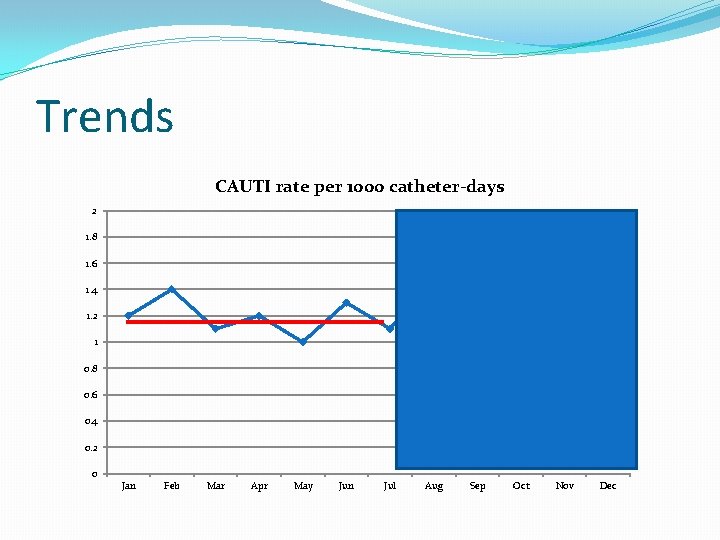
Trends CAUTI rate per 1000 catheter-days 2 1. 8 1. 6 1. 4 1. 2 1 0. 8 0. 6 0. 4 0. 2 0 Jan Feb Mar Apr May Jun Jul Aug Sep Oct Nov Dec
Trends CAUTI rate per 1000 catheter-days 2 1. 8 1. 6 1. 4 1. 2 1 0. 8 0. 6 0. 4 0. 2 0 Jan Feb Mar Apr May Jun Jul Aug Sep Oct Nov Dec

Good Stats Resources �http: //stattrek. com/ �Has tutorials �Has some tools to help you decide what math to do with the data you have �Onlinestatbook. com �http: //www. biostathandbook. com/testchoice. html �Can also take free stats classes online from universities for a more formal training
How often should you analyze? �Monthly is common �Calculate rates and add to time series �Update epi curve �At least quarterly for timely response �People need regular feedback in order to improve �If there is a problem, you want to solve it! �Makes the data burden easier
Ways to monitor progress �Look for downward trends! �Benchmarks �Can compare to national benchmark, or to your facility’s history �Some have percentile distributions �Statistically compare your rate or SIR to the benchmark
Results communication �Should be part of the plan �Infection control committee should see data �Share with management �Post somewhere so staff can see? �Some places “compete” for lowest HAI rates
What to do if you see a problem �Call Epidemiology- we can chat! 269 -8000 �Management: show them your data �Look at the literature for ideas on what the problem might be and how to solve it
THANK YOU FOR YOUR TIME! This material was developed by Mountain-Pacific Quality Health, the Medicare Quality Innovation Network-Quality Improvement Organization (QIN-QIO) for Montana, Wyoming, Alaska, Hawaii and the U. S. Pacific Territories of Guam and American Samoa and the Commonwealth of the Northern Mariana Islands, under contract with the Centers for Medicare & Medicaid Services (CMS), an agency of the U. S. Department of Health and Human Services. The contents presented do not necessarily reflect CMS policy. 11 SOW-MPQHF-AK-C 2 -17 -48
QAPI “IN A CAN” BASIC OVERVIEW FOR INFECTION PREVENTION Leiza Johnson, BSN, RN NH Quality Improvement Specialist Mountain-Pacific Quality Health
WHAT IS QAPI IN A CAN? Quality Assurance and Performance Improvement (QAPI) training in small, individual-sized servings. There is a whole “pantry” of soup cans that you can use for training. § Each can will cover a different topic related to nursing home quality improvement. Objective is to promote quality tools and techniques by making training short, easy and fun.
BASIC OVERVIEW: WHAT WE’RE SERVING TODAY § Understand definition of “QAPI” § What is/is not QAPI § Examples of QAPI – especially as it relates to infection prevention § Why is QAPI important?
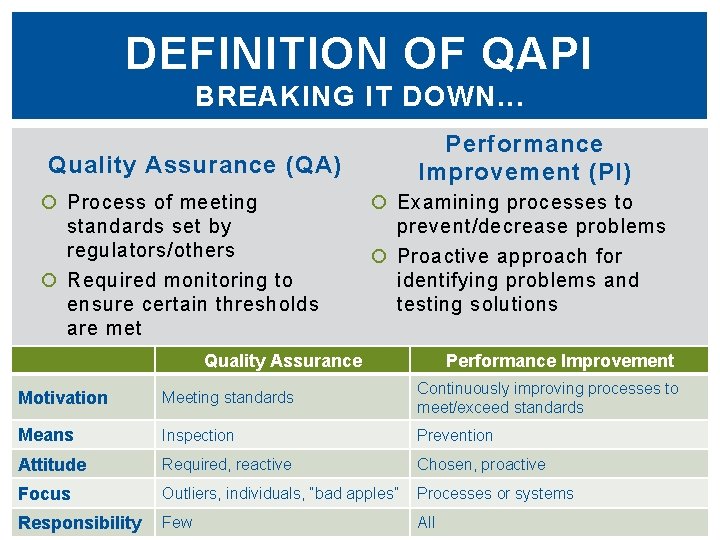
DEFINITION OF QAPI BREAKING IT DOWN. . . Performance Improvement (PI) Quality Assurance (QA) Process of meeting standards set by regulators/others Required monitoring to ensure certain thresholds are met Examining processes to prevent/decrease problems Proactive approach for identifying problems and testing solutions Quality Assurance Performance Improvement Motivation Meeting standards Continuously improving processes to meet/exceed standards Means Inspection Prevention Attitude Required, reactive Chosen, proactive Focus Outliers, individuals, “bad apples” Processes or systems Responsibility Few All

QA + PI = QAPI Identify and correct quality deficiencies Systematic, comprehensive, data-driven, proactive approach All-encompassing to improve quality of life, care and services Involves members at all levels of organization to: § § Identify opportunities for improvement Prioritize and address issues brought forward Implement improvements Monitor the effectiveness of interventions
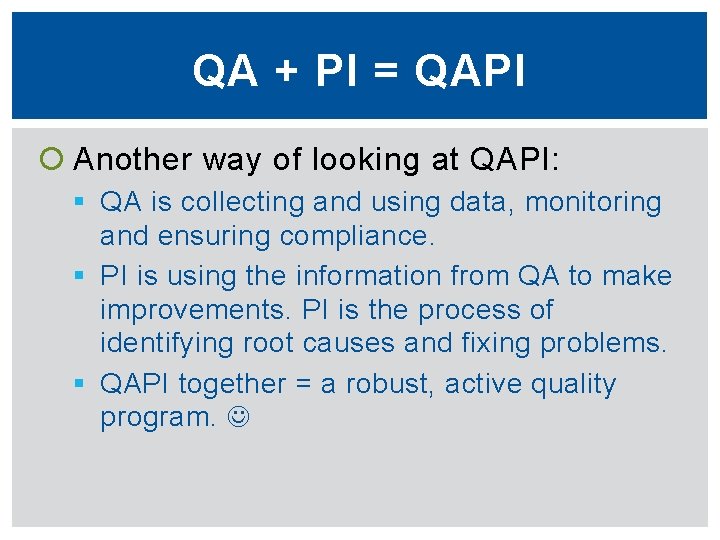
QA + PI = QAPI Another way of looking at QAPI: § QA is collecting and using data, monitoring and ensuring compliance. § PI is using the information from QA to make improvements. PI is the process of identifying root causes and fixing problems. § QAPI together = a robust, active quality program.
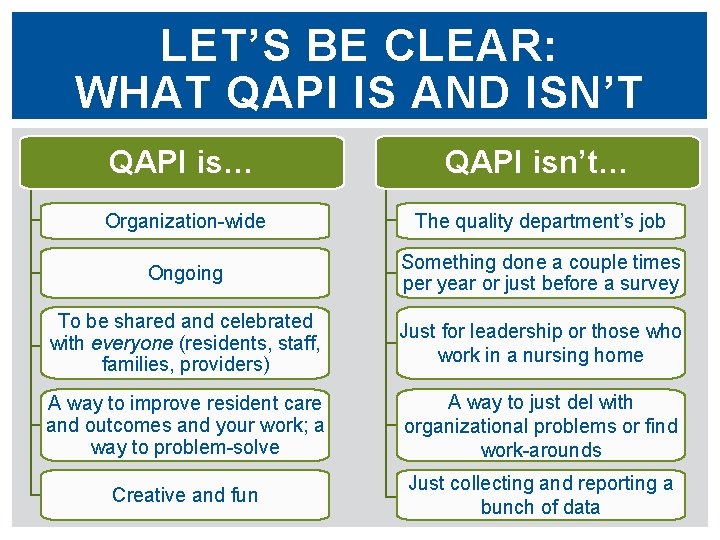
LET’S BE CLEAR: WHAT QAPI IS AND ISN’T QAPI is… QAPI isn’t… Organization-wide The quality department’s job Ongoing Something done a couple times per year or just before a survey To be shared and celebrated with everyone (residents, staff, families, providers) Just for leadership or those who work in a nursing home A way to improve resident care and outcomes and your work; a way to problem-solve A way to just del with organizational problems or find work-arounds Creative and fun Just collecting and reporting a bunch of data
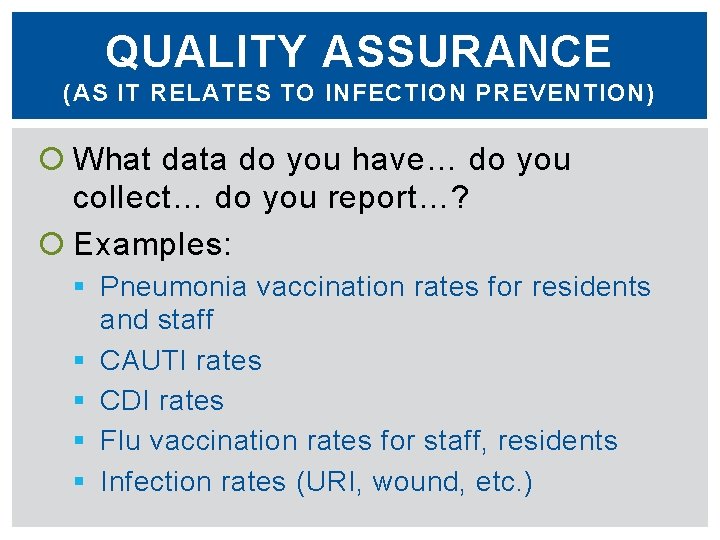
QUALITY ASSURANCE (AS IT RELATES TO INFECTION PREVENTION) What data do you have… do you collect… do you report…? Examples: § Pneumonia vaccination rates for residents and staff § CAUTI rates § CDI rates § Flu vaccination rates for staff, residents § Infection rates (URI, wound, etc. )
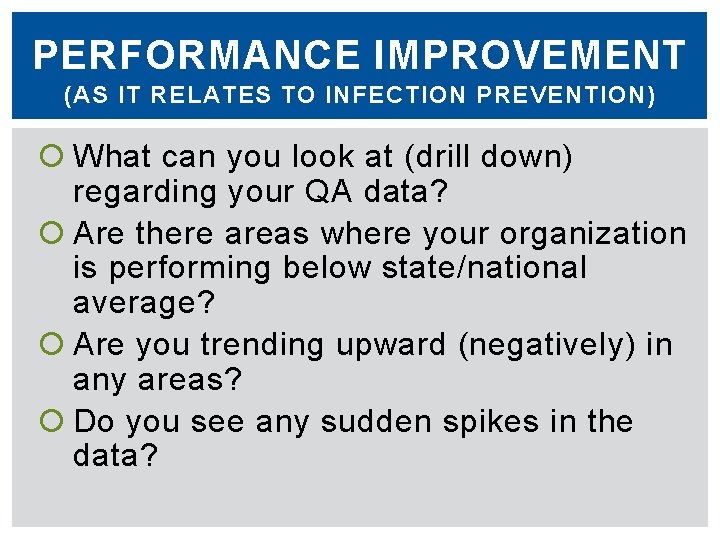
PERFORMANCE IMPROVEMENT (AS IT RELATES TO INFECTION PREVENTION) What can you look at (drill down) regarding your QA data? Are there areas where your organization is performing below state/national average? Are you trending upward (negatively) in any areas? Do you see any sudden spikes in the data?
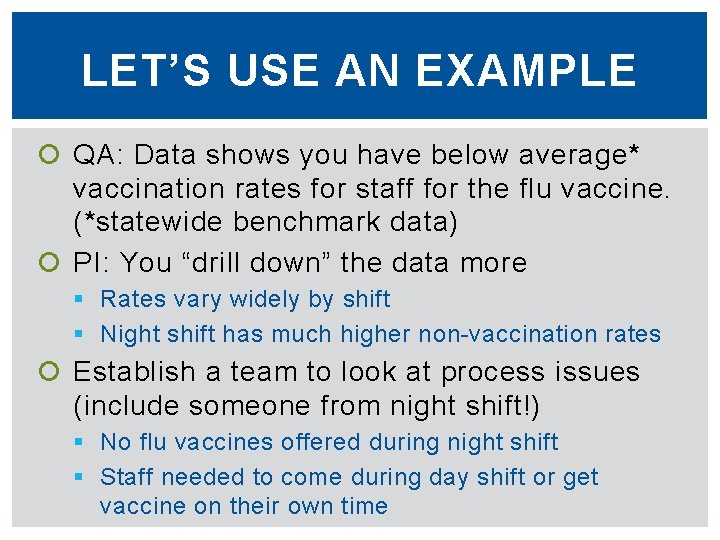
LET’S USE AN EXAMPLE QA: Data shows you have below average* vaccination rates for staff for the flu vaccine. (*statewide benchmark data) PI: You “drill down” the data more § Rates vary widely by shift § Night shift has much higher non-vaccination rates Establish a team to look at process issues (include someone from night shift!) § No flu vaccines offered during night shift § Staff needed to come during day shift or get vaccine on their own time
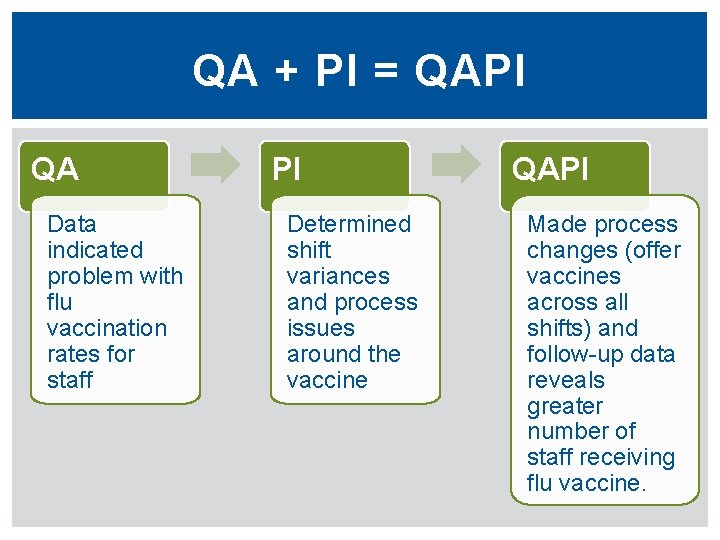
QA + PI = QAPI QA Data indicated problem with flu vaccination rates for staff PI Determined shift variances and process issues around the vaccine QAPI Made process changes (offer vaccines across all shifts) and follow-up data reveals greater number of staff receiving flu vaccine.
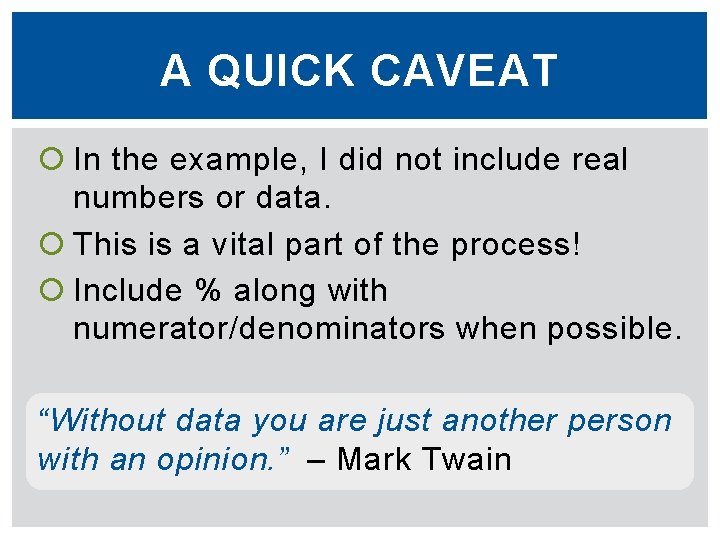
A QUICK CAVEAT In the example, I did not include real numbers or data. This is a vital part of the process! Include % along with numerator/denominators when possible. “Without data you are just another person with an opinion. ” – Mark Twain
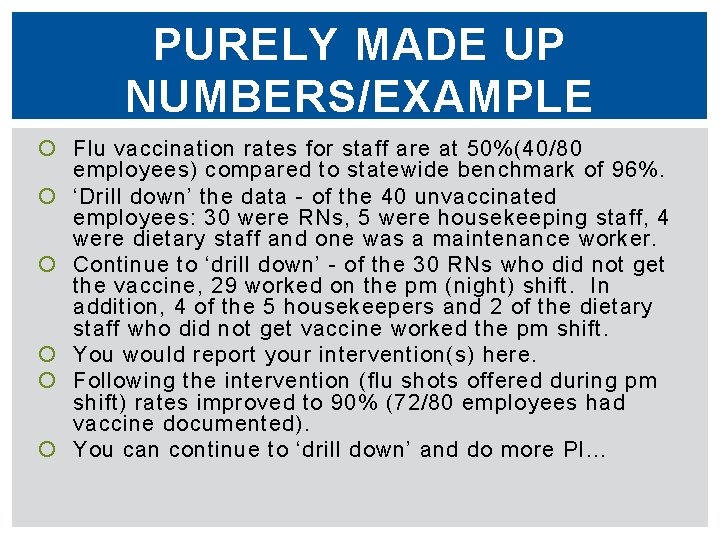
PURELY MADE UP NUMBERS/EXAMPLE Flu vaccination rates for staff are at 50%(40/80 employees) compared to statewide benchmark of 96%. ‘Drill down’ the data - of the 40 unvaccinated employees: 30 were RNs, 5 were housekeeping staff, 4 were dietary staff and one was a maintenance worker. Continue to ‘drill down’ - of the 30 RNs who did not get the vaccine, 29 worked on the pm (night) shift. In addition, 4 of the 5 housekeepers and 2 of the dietary staff who did not get vaccine worked the pm shift. You would report your intervention(s) here. Following the intervention (flu shots offered during pm shift) rates improved to 90% (72/80 employees had vaccine documented). You can continue to ‘drill down’ and do more PI…
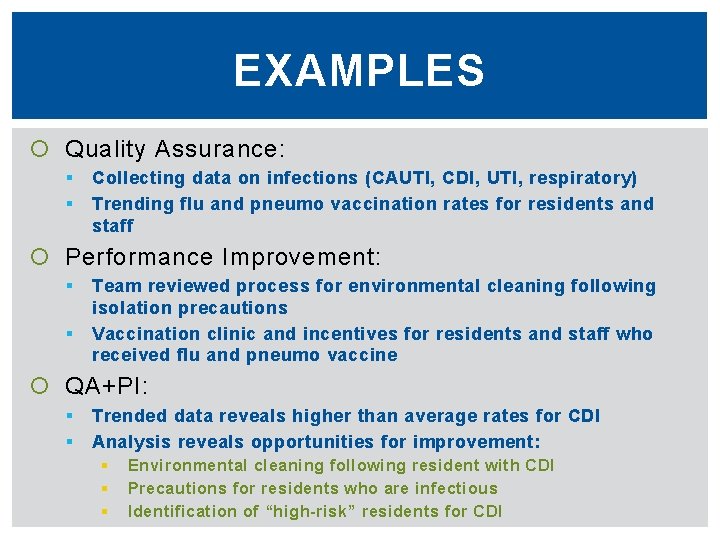
EXAMPLES Quality Assurance: § § Collecting data on infections (CAUTI, CDI, UTI, respiratory) Trending flu and pneumo vaccination rates for residents and staff Performance Improvement: § § Team reviewed process for environmental cleaning following isolation precautions Vaccination clinic and incentives for residents and staff who received flu and pneumo vaccine QA+PI: § § Trended data reveals higher than average rates for CDI Analysis reveals opportunities for improvement: § § § Environmental cleaning following resident with CDI Precautions for residents who are infectious Identification of “high-risk” residents for CDI
Can you think of examples in your department of QA and/or PI activities? e c n ra y Q it l a u u s s A fo r e P e c n rma nt e m e v ro p Im Food for thought…
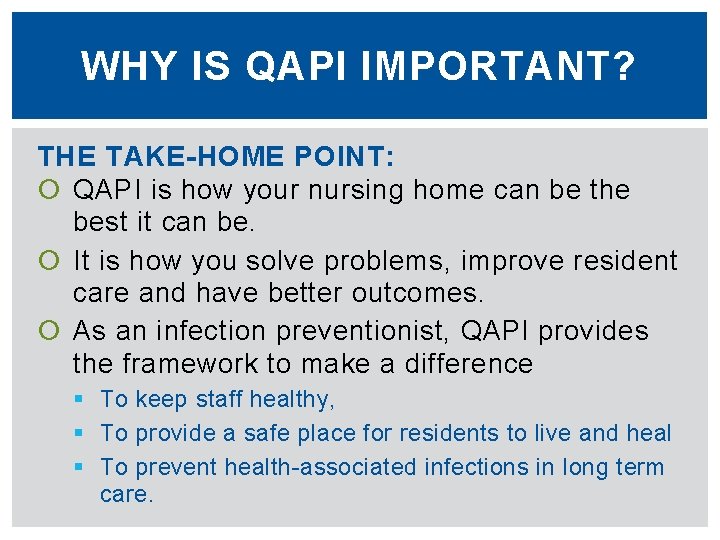
WHY IS QAPI IMPORTANT? THE TAKE-HOME POINT: QAPI is how your nursing home can be the best it can be. It is how you solve problems, improve resident care and have better outcomes. As an infection preventionist, QAPI provides the framework to make a difference § To keep staff healthy, § To provide a safe place for residents to live and heal § To prevent health-associated infections in long term care.
WHY IS QAPI IMPORTANT? Also… It is expected § Families expect you to provide the best care to residents. § Payors (like Medicare) will not pay for outcomes of poor care (example is a healthcare-acquired infection like a new pressure injury) Surveyors will ask § Everyone should know about QAPI (basic understanding) § Staff should be able to talk about improvement projects in your nursing home
QUESTIONS? FINAL THOUGHTS? Leiza Johnson, BSN, RN Mountain-Pacific Quality Health ejohnson@mpqhf. org
THANK YOU FOR YOUR TIME! This material was developed by Mountain-Pacific Quality Health, the Medicare Quality Innovation Network-Quality Improvement Organization (QIN-QIO) for Montana, Wyoming, Alaska, Hawaii and the U. S. Pacific Territories of Guam and American Samoa and the Commonwealth of the Northern Mariana Islands, under contract with the Centers for Medicare & Medicaid Services (CMS), an agency of the U. S. Department of Health and Human Services. The contents presented do not necessarily reflect CMS policy. 11 SOW-MPQHF-AK-C 2 -17 -51
A Day in the Life………. . …. of an Infection Preventionist Helen Lazeration RN, BSN Foundation Health Fairbanks Memorial Hospital
Establishing Daily Routines My priorities for the Day: Prepare for SAFETY HUDDLE each Morning: (House wide multi-disciplinary group that reports on each area they are representing) I report on: Number of Foley Catheters in-house Number of Central Lines in-house Number of in-house Isolations and what the isolation is for i. e. MDRO’s, Flu, TB etc. Any trending communicable disease issues being admitted or may be active in the community that may impact admissions to the hospital/Long Term Care Any unusual occurrences that have happened in the previous 24 hours such as Bed Bugs, Lice, Exposures communicable diseases to staff/patients
Review of new admits that may have infections or communicable diseases that may need isolation. Review current isolations: are patient’s not on isolation that should be? are patient’s on the correct isolation? are the negative air rooms negative can isolation be discontinued? (MOST POPULAR “? ” From nurses and doctors) Review of Surgery Schedule for the day to look for any patient’s that may be going back to surgery for things such as: Joint “Revisions” Hardware removal’s Incision and Drainage etc. (all are clues that a patient may have a problem with infections from a previous surgery)
Review Infection Prevention “WORKLIST” in our EMR (CERNER): The “WORKLIST” contains information on patient’s that helps us with daily surveillance. ( It functions as an electronic culture and readmission list for any patient that may have had surgery within the last 30 -90 days that has had cultures or a return trip to the hospital for x-rays, admission for repeat surgery etc. The “WORKLIST” provides us a list of patients that may be seen inpatient or outpatient that may have had surgery and may need review for SSI’s or HAI’s: It includes patient’s: Seen in our local Clinics In our Long Term Care Facility In our Home Care Services (Hospice and Home Care) Physician Offices that use our lab/imaging/ Outpatient Procedural Area Emergency Room
It includes a list of inpatients that may have had cultures done that clue us in to possible: CAUTI’s CLABSI’s HAI Pneumonia’s Ventilator Associated Conditions Ventilator Associated Pneumonias Inpatient/Outpatient Surgical Site Infections(SSI’s) It provides us a list of all inpatient’s on Isolation. TAKEWAY: If you don’t have access to an EMR worklist for cultures and readmissions - work with your lab/IT dept. to see if they can generate a daily paper list of cultures for your review focus on your surgeons on the list that have ordered cultures patients who have cultures done on day 3 or later in their stay Review your admission’s/patient roster for any patient’s that are re-admitted or having x-rays etc. done that may need follow-up for SSI’s
Rounding on your inpatient units (Acute Care and Long Term Care): Things to do and look for when rounding: Proper Isolation Signs and PPE availability Answering questions for staff about Infection Prevention Issues this is your opportunity for staff education on many topics such as: cleaning and disinfection education about diseases such as meningitis TB, MDRO’s etc. hand hygiene Visit patient’s that have infection control concerns/questions While making rounds I do Audits for compliance on: Hand Hygiene CAUTI Bundles Central Line Bundles Ventilator Bundles Pre-Klenz Isolation
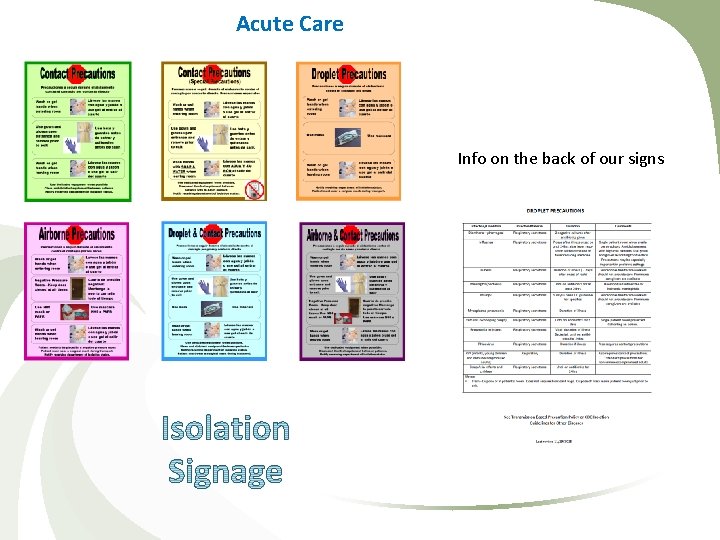
Acute Care Info on the back of our signs
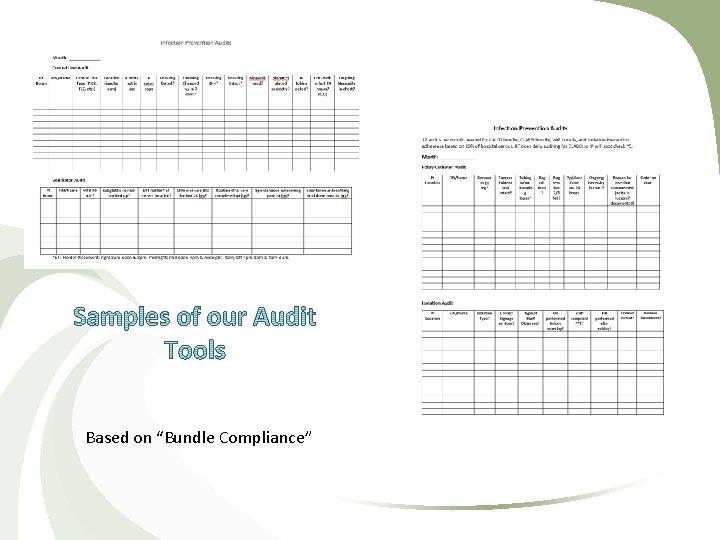
Based on “Bundle Compliance”
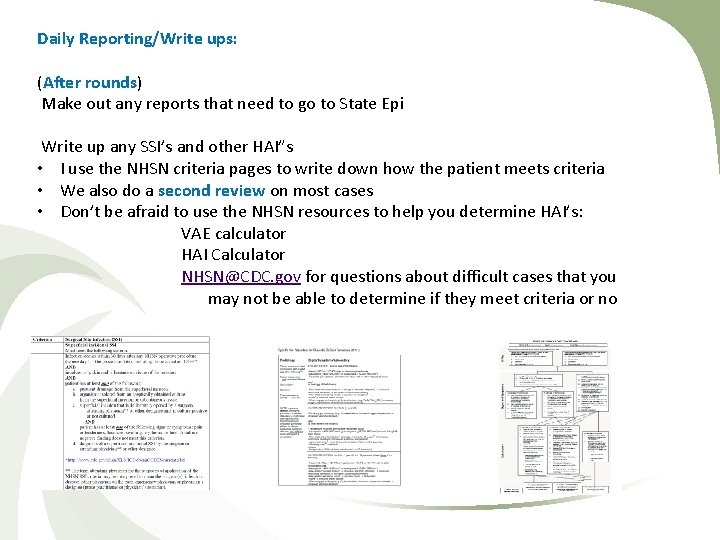
Daily Reporting/Write ups: (After rounds) Make out any reports that need to go to State Epi Write up any SSI’s and other HAI”s • I use the NHSN criteria pages to write down how the patient meets criteria • We also do a second review on most cases • Don’t be afraid to use the NHSN resources to help you determine HAI’s: VAE calculator HAI Calculator NHSN@CDC. gov for questions about difficult cases that you may not be able to determine if they meet criteria or no
ATP TESTING We do random ATP testing throughout the house in the following areas: Operating Room Patient Rooms Wound Care and Infusion Clinics Cardiac Cath Labs ICRA’s (Infection Control Risk Assessments) Become good friends with your Plant Operations and Engineering Staff and construction crews Weekly rounds on all active construction and remodeling projects to monitor for compliance with: - Construction barriers/walk-off mats - Air handling set-ups are appropriate - Transporting of construction equipment/debris is done correctly - SIGNING OFF on the Infection Control Risk Assessments (ICRA’s) - Reviewing the pre-construction Infection Control Risk Assessments (PICRA’s)
WEEKLY ACTIVITIES: RED TEAM ROUNDS: (Ready Every Day) Multi-disciplinary team that rounds on all clinical areas of the hospital twice a year and non-clinical areas once a year looking for items/issues that are out of compliance with regulatory requirements and for areas that may need education on a subject related to your area of expertise. Members of the RED TEAM: Infection Prevention EVS Engineering/Plant Operations Human Resources Performance Improvement Security Biomedical (Clinical Equipment Services) Supply Chain Management ICRA Rounding: Round weekly with the Facilities Operations Coordinator on all construction and renovation activities to make sure that the barriers for construction and renovation are appropriate and that the contractors/construction crews are adhering to expected Infection Control guidelines.
Monthly Activities: Auditing: OR cases High Level Disinfection Sterilization Processes in SPD (review IUSS logs) Review any temperature and humidity fallouts monthly and prn as they occur
Annual Activities: Review of Policies ( State of Alaska requires an annual review) Review of your facilities: Bloodborne Pathogen Plan Respiratory Protection Plan Waterborne Pathogen Plan Annual Infection Control Risk Assessments(HVA’s) for Acute Care/Home Care Services/Clinics and LTC Write Evaluations of the years activities
…………Squeezing in those Committee Meetings and Endless Projects……. . !!!!!
Important Committees…………… • EOC (Environment of Care) – multi-disciplinary group that oversees many interrelated issues: ICRA, Environmental Service and Laundry issues, Supply Chain Management Waterborne Pathogen Management • Emergency Management Committee: Involves designing and writing emergency management plans including the Infection Prevention Component for the Influx of Infectious Patient Plan • Infection Control Committee: Our committee is a House wide multi-disciplinary committee – no longer considered just a medical staff committee (meets quarterly) • Quality/Safety Committee • Events Oversight Committee: Reviews trends in unusual occurrences • Infection Control Committee: ours meets quarterly
Samples of the projects we are working on: Review of employee Mandatory Flu Vaccinations Process (annual) Review of Inpatient Flu Vaccination Requirements/Documentation(annual) Personal Protective Equipment: Isolation Gown Upgrade to meet AAMI Guidelines Pre-op Bathing Protocol Review of Nurse Driven CAUTI Prevention/Foley Removal Protocol/Documentation Review of ATP testing: Areas we perform ATP and Surfaces we are testing Implementation of Testing of all scopes for contamination utilizing the RESI-TEST Technology Education for Home Care Services on Disease Transmission and Sentinel Events related to Infection Control Pre-Klenz Competency ……. . just to name a few!!!!! Many of the projects we are working on are a result of our risk assessments/HVA done at the beginning of the year.
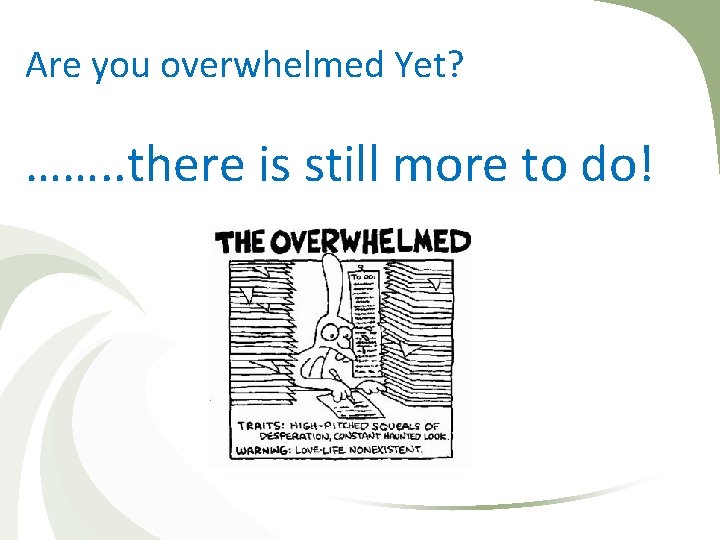
Are you overwhelmed Yet? ……. . there is still more to do!
Most common for us is: Patient or staff exposures to a communicable disease!!!!! Most common exposures: TUBERCULOSIS MENINGITIS ………and the dreaded BED BUGS and LICE!
Remember: Staff tend to underestimate their risk of exposure ESPECIALLY nurses and physician’s at least 50% of the time! When looking at those who were potentially exposed don’t forget to include: X-ray Lab EVS and Ambulance/transport personnel if appropriate
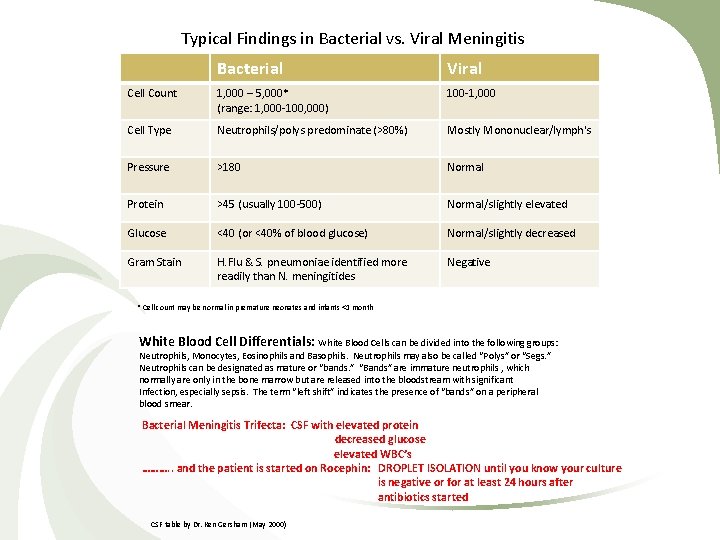
Typical Findings in Bacterial vs. Viral Meningitis Bacterial Viral Cell Count 1, 000 – 5, 000* (range: 1, 000 -100, 000) 100 -1, 000 Cell Type Neutrophils/polys predominate (>80%) Mostly Mononuclear/lymph's Pressure >180 Normal Protein >45 (usually 100 -500) Normal/slightly elevated Glucose <40 (or <40% of blood glucose) Normal/slightly decreased Gram Stain H. Flu & S. pneumoniae identified more readily than N. meningitides Negative * Cell count may be normal in premature neonates and infants <1 month White Blood Cell Differentials: White Blood Cells can be divided into the following groups: Neutrophils, Monocytes, Eosinophils and Basophils. Neutrophils may also be called “Polys” or “Segs. ” Neutrophils can be designated as mature or “bands. ” “Bands” are immature neutrophils , which normally are only in the bone marrow but are released into the bloodstream with significant Infection, especially sepsis. The term “left shift” indicates the presence of “bands” on a peripheral blood smear. Bacterial Meningitis Trifecta: CSF with elevated protein decreased glucose elevated WBC’s ………. . and the patient is started on Rocephin: DROPLET ISOLATION until you know your culture is negative or for at least 24 hours after antibiotics started CSF table by Dr. Ken Gersham (May 2000)
TUBERCULOSIS Patient with history of TB or Positive PPD history – review diagnosis on admission – if respiratory diagnosis review CXR’s, CT scans review admission history for TB S/S Patient with recent exposure Patient who comes in with following s/s: Cough > 2 weeks Coughing up blood Fevers Night sweats Weight Loss CXR: Right Upper Lobe Opacities and/or cavitation Isolate until you know sputum is negative
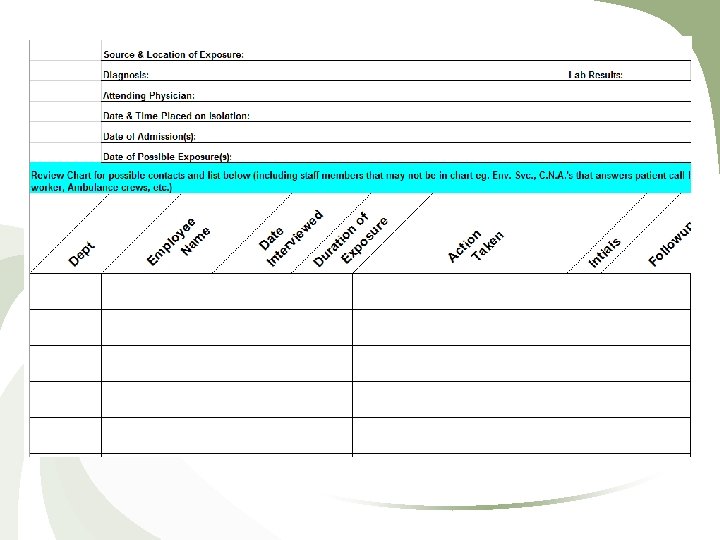
EXPOSURES TAKE A LOT OF TIME TO WORK THROUGH TO DETERMINE • Who was exposed • How it happened • How to prevent Infection Prevention puts together the list of exposed and forwards it to Occupational Health follow up
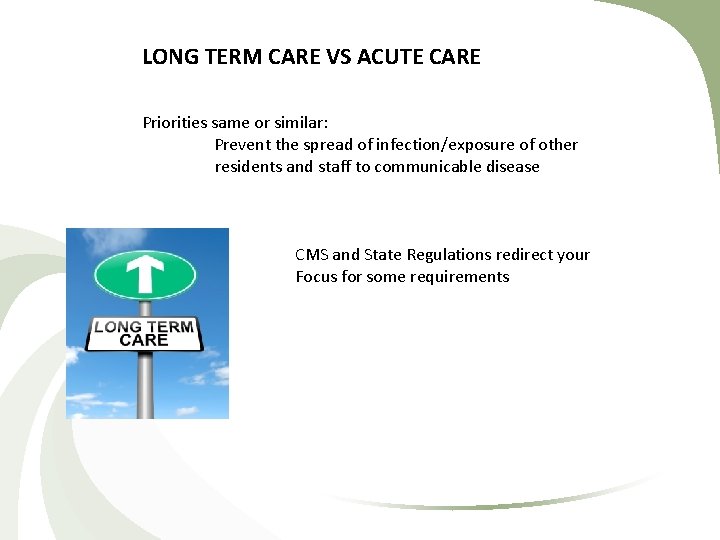
LONG TERM CARE VS ACUTE CARE Priorities same or similar: Prevent the spread of infection/exposure of other residents and staff to communicable disease CMS and State Regulations redirect your Focus for some requirements

The Challenges of Long Term Care for Infection Prevention
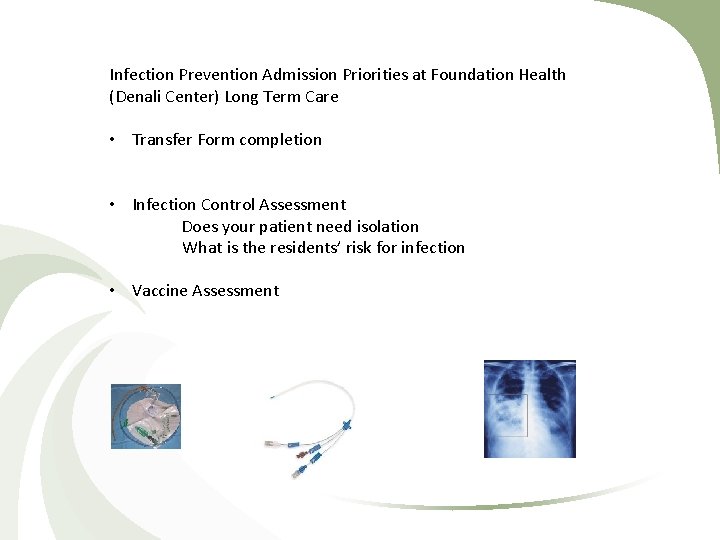
Infection Prevention Admission Priorities at Foundation Health (Denali Center) Long Term Care • Transfer Form completion • Infection Control Assessment Does your patient need isolation What is the residents’ risk for infection • Vaccine Assessment
What “plagues” our Long Term Care Residents: • Residents in Long Term Care some of our most vulnerable citizens to infection/disease • Influenza and gastrointestinal illness can spread easily and quickly visitors can bring in Influenza • Pneumonia, UTI’s are the most common followed by skin breakdown On admission: Assess risk of infection Assess vaccine status: Review reason for admission Review vaccine records: VACTRAK, Clinic records, hospital records, talk with patient/family Determine eligibility for: PPSV 23, Prevnar 13 and Zoster and Flu Vaccines(during flu season) Twice a year review of Vaccine eligibility We Have Standing Orders/Screening forms
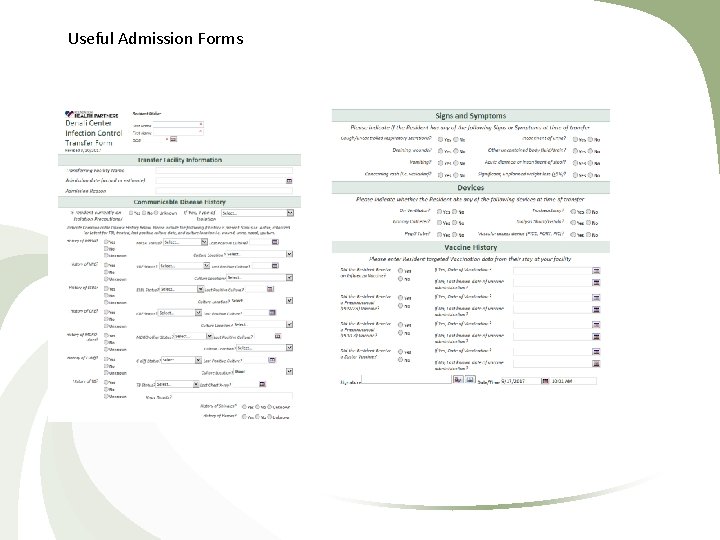
Useful Admission Forms

Occupational Health, Employees and Long Term Care • Employees are encouraged to not come to work sick • Residents are extremely susceptible to the average cold, gastrointestinal bug that a sick employee can bring in • We have a form that is filled out by the RCC’s (Resident Care Coordinators) when an employee calls in sick It automatically goes to Occ Health and Infection Control for review • Majority of the time the employee must be cleared for return to work if it involves a communicable illness • • CMS is very focused on employee illness in Long Term Care and how it is tracked and reviewed
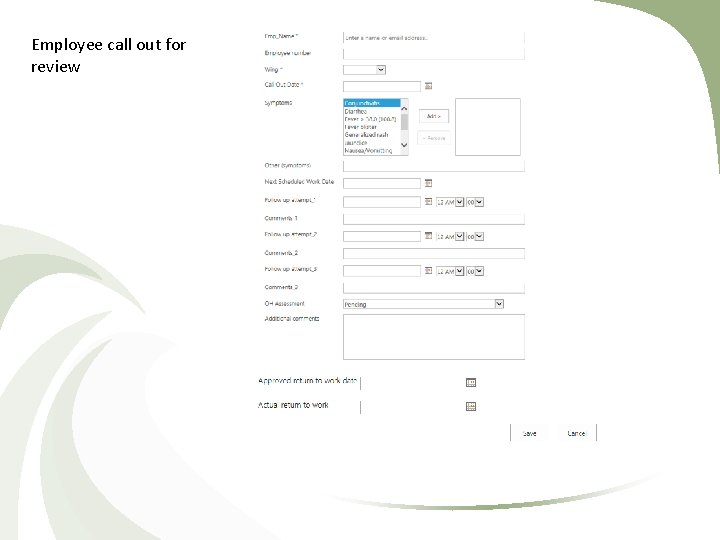
Employee call out for review
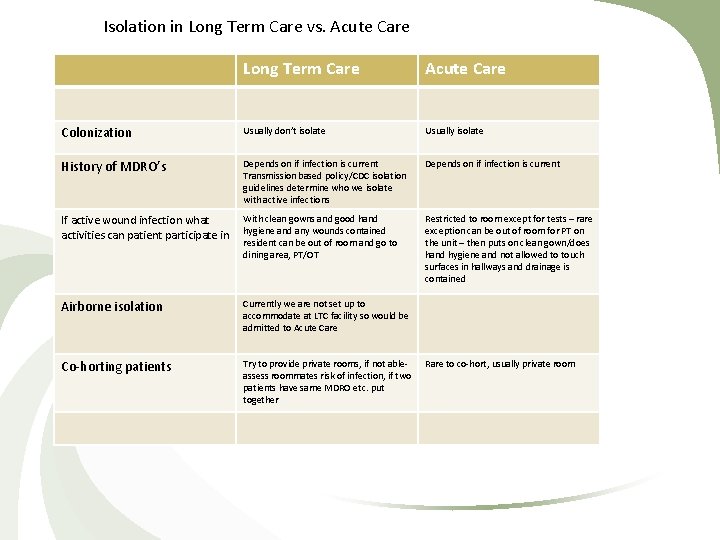
Isolation in Long Term Care vs. Acute Care Long Term Care Acute Care Colonization Usually don’t isolate Usually isolate History of MDRO’s Depends on if infection is current Transmission based policy/CDC isolation guidelines determine who we isolate with active infections Depends on if infection is current If active wound infection what activities can patient participate in With clean gowns and good hand hygiene and any wounds contained resident can be out of room and go to dining area, PT/OT Restricted to room except for tests – rare exception can be out of room for PT on the unit – then puts on clean gown/does hand hygiene and not allowed to touch surfaces in hallways and drainage is contained Airborne isolation Currently we are not set up to accommodate at LTC facility so would be admitted to Acute Care Co-horting patients Try to provide private rooms, if not ableassess roommates risk of infection, if two patients have same MDRO etc. put together Rare to co-hort, usually private room
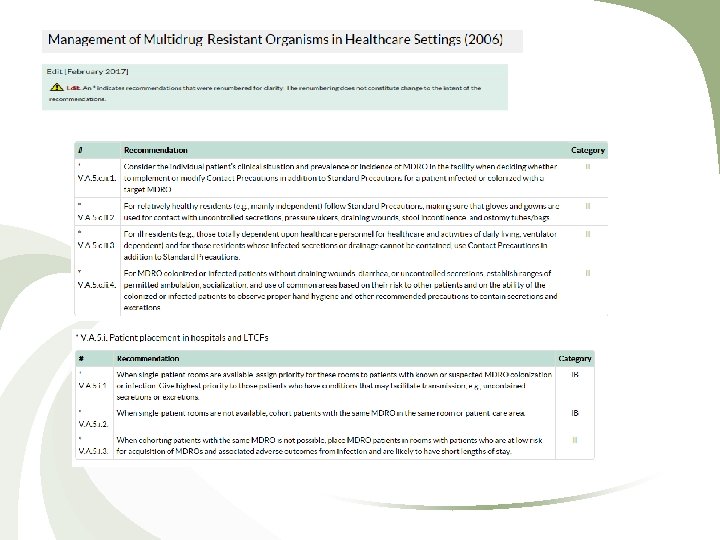
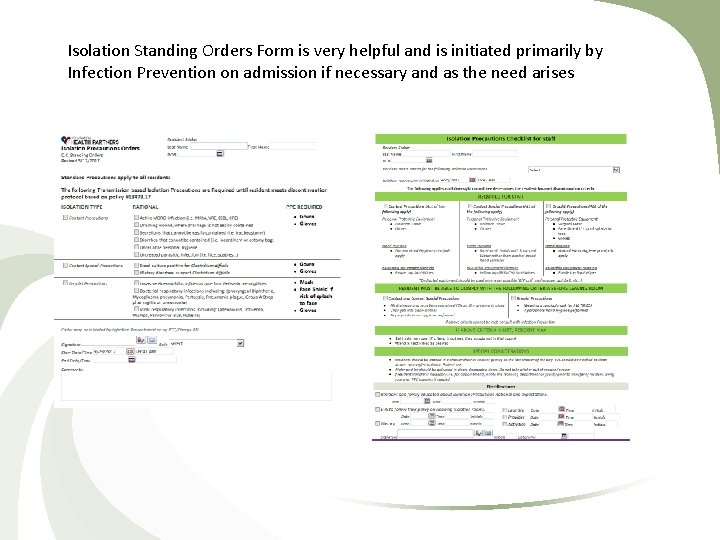
Isolation Standing Orders Form is very helpful and is initiated primarily by Infection Prevention on admission if necessary and as the need arises
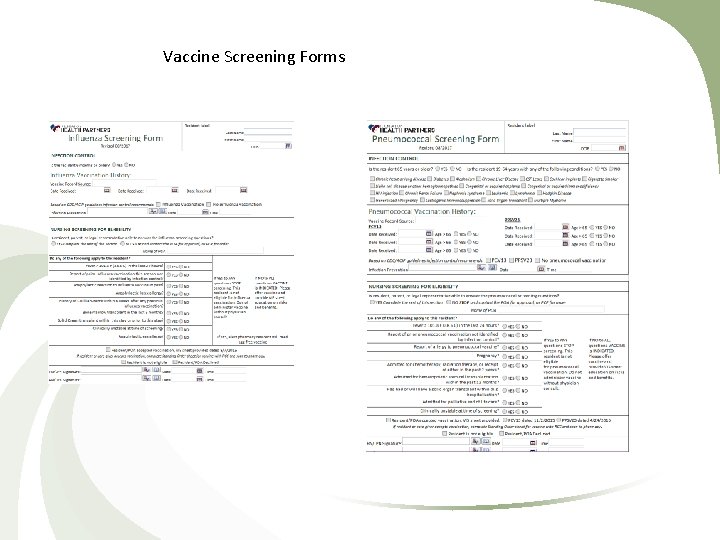
Vaccine Screening Forms
Other important issues in Long Term Care: Maintaining that “homelike” environment: assess each patient’s needs and preferences balance with medical needs Our Long Term Care adheres to the “Eden Philosophy” Maintaining isolation easier in LTC because the recommended criteria for determining the degree of isolation is more “patient friendly” a. Animals in long tem care Our Long Term Care Facility has a Pet Committee meets quarterly and prn meets with family/patient to set up care plan covers: Who takes care of the Pet Needs i. e. litter boxes buying food taking pets outside Care plan is reviewed every six months and prn
Pet Policy in Long Term Care • Allow dogs, cats, birds, fish only • All animals that are facility/patient pets that live in the facility must be cleared by a veterinarian which includes scheduled vaccines, deworming, temperament screens • Visiting animals that come to the facility routinely with groups such as “Companions Inc. ” must also be screened by a Veterinarian- in our facility they are treated as “volunteers” • One time visiting by allowed pets happens without screening • Staff cannot provide the care for the animals such as bathing, toileting, cleaning of cages, tanks, litter boxes unless it is done at the end of their shift and they are not going to provide any more care for the day to residents
NOT In Infection Prevention there is always MORE TO DO! Questions?
IP Practices with Rebecca Hamel
- Slides: 165