
Welcome to IM Department Meeting Gadolinium Based Contrast
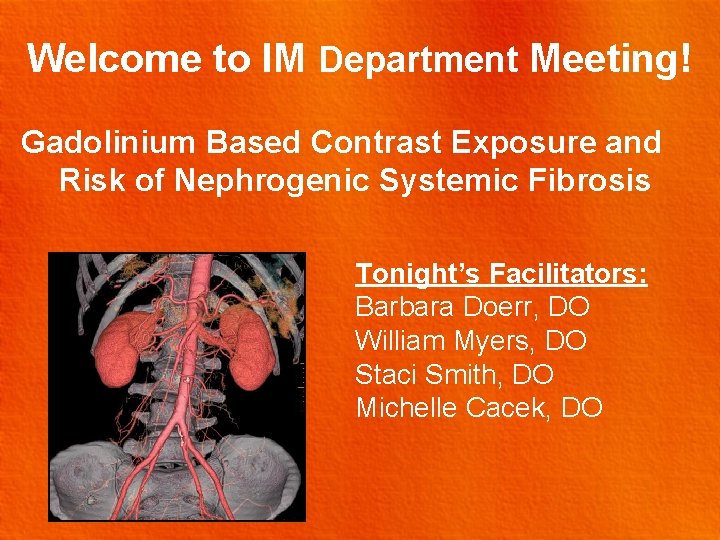
Welcome to IM Department Meeting! Gadolinium Based Contrast Exposure and Risk of Nephrogenic Systemic Fibrosis Tonight’s Facilitators: Barbara Doerr, DO William Myers, DO Staci Smith, DO Michelle Cacek, DO
Nephrogenic Systemic Fibrosis (NSF) o originally named nephrogenic fibrosing dermopathy (NFD) o manifestations initially thought to be confined to the skin o systemic fibrosis on autopsy (NSF) o skeletal muscles , diaphragm , pleura , dura mater, pericardium & myocardium
Nephrogenic Systemic Fibrosis (NSF) o predominately in pts with acute kidney injury or severely impaired renal function o Cr. Cl less than 30 o no predilection for age, race, gender , or location o typically middle aged pts o reported in 8 yo children, as well as elderly
What’s the risk? o risk of NSF estimated at 4. 3 cases per 1, 000 dialysis patients per year o about 2. 4 % for each time a CKD pt is exposed to gadolinium o balancing benefit and risk o majority of pts who receive Gd do not develop NSF
What’s the issue with NSF? o avoidance of GBCA’s o limited radiological studies o roadblocks to specific dx o litigation opportunities
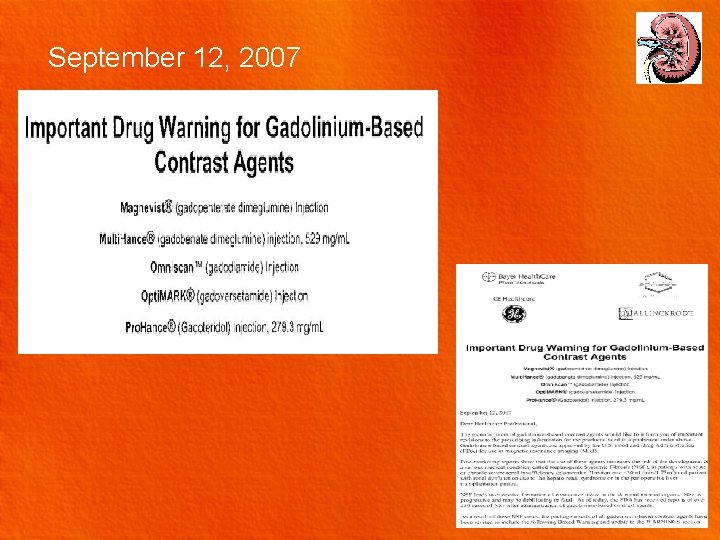
September 12, 2007
Boxed Warning o Gadolinium based contrast agents increase risk of NSF in pts with: o acute and chronic renal failure (GFR < 30) o acute renal insuffciency of any severity due to hepatorenal syndrome or in perioperative liver transplant period
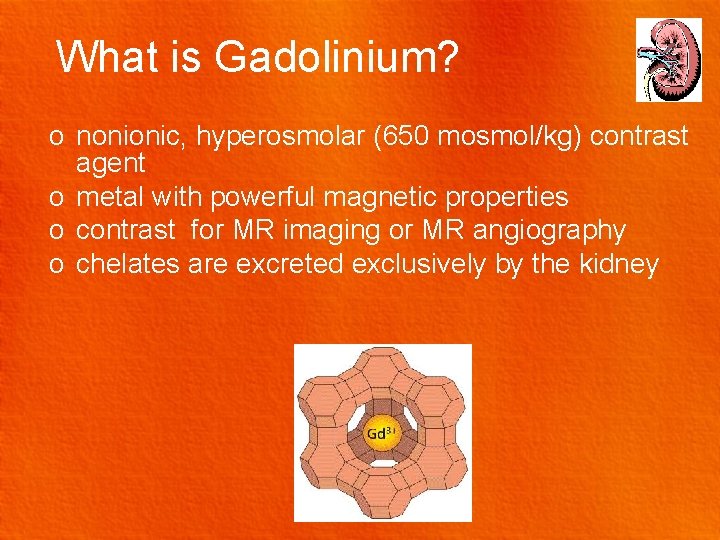
What is Gadolinium? o nonionic, hyperosmolar (650 mosmol/kg) contrast agent o metal with powerful magnetic properties o contrast for MR imaging or MR angiography o chelates are excreted exclusively by the kidney
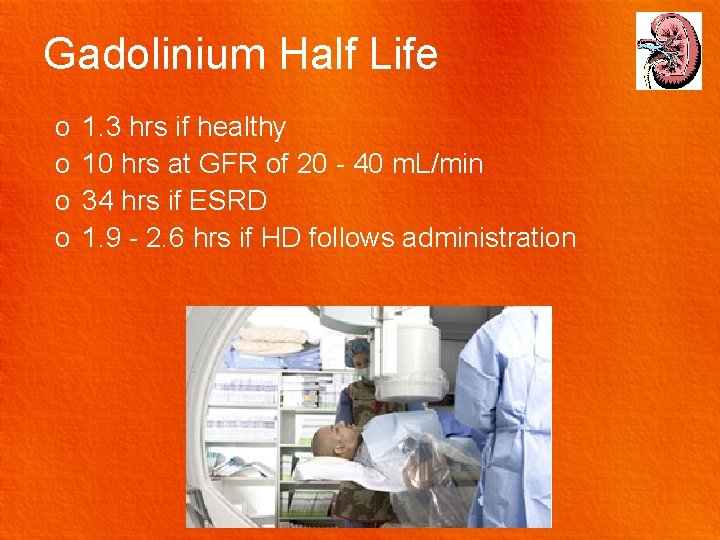
Gadolinium Half Life o o 1. 3 hrs if healthy 10 hrs at GFR of 20 - 40 m. L/min 34 hrs if ESRD 1. 9 - 2. 6 hrs if HD follows administration
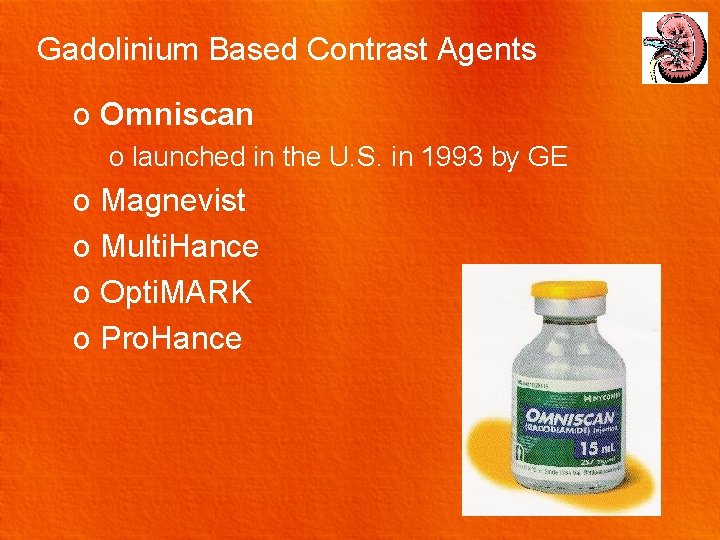
Gadolinium Based Contrast Agents o Omniscan o launched in the U. S. in 1993 by GE o Magnevist o Multi. Hance o Opti. MARK o Pro. Hance
Risk factors for NSF o renal impairment o hypercoagulable state o thrombotic events o recent vascular study o transplant failure
Signs and Symptoms of NSF o o o burning skin itchy skin swelling tight and hard skin red or dark skin patches contractures o o o stiffness in joints trouble moving extremities pain deep in the bones muscle weakness “woody” feel of skin yellow scleral plaques
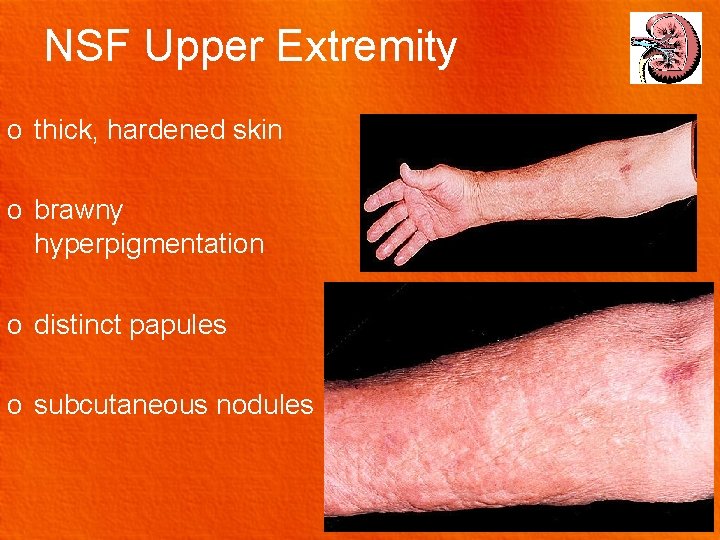
NSF Upper Extremity o thick, hardened skin o brawny hyperpigmentation o distinct papules o subcutaneous nodules
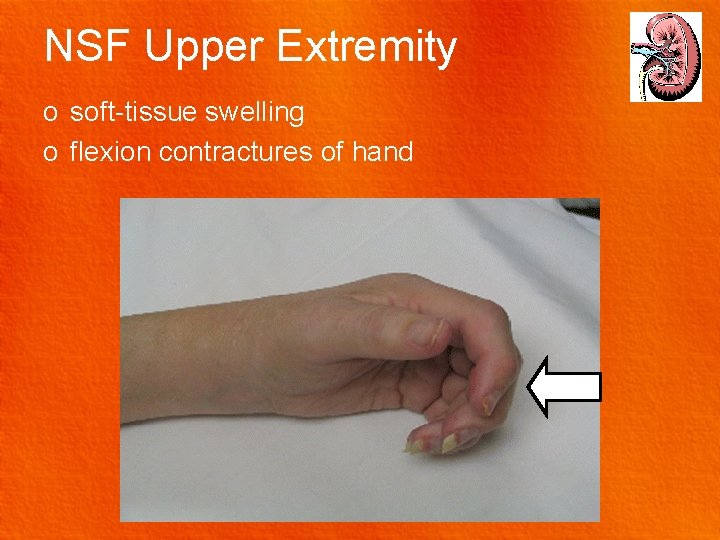
NSF Upper Extremity o soft-tissue swelling o flexion contractures of hand
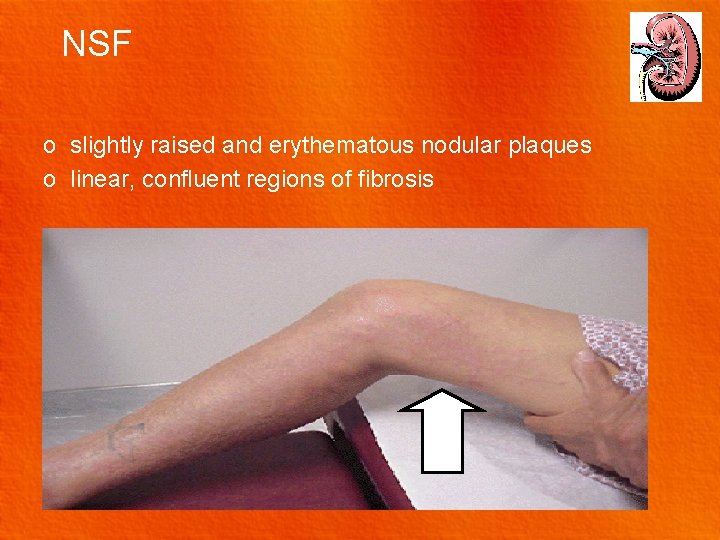
NSF o slightly raised and erythematous nodular plaques o linear, confluent regions of fibrosis
Differential Diagnosis o scleroderma / systemic sclerosis o eosinophilic fasciitis o eosinophilia–myalgia syndrome
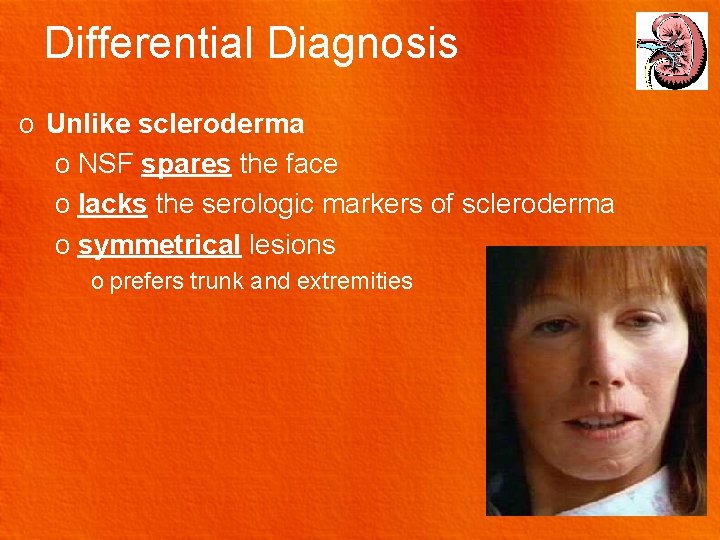
Differential Diagnosis o Unlike scleroderma o NSF spares the face o lacks the serologic markers of scleroderma o symmetrical lesions o prefers trunk and extremities
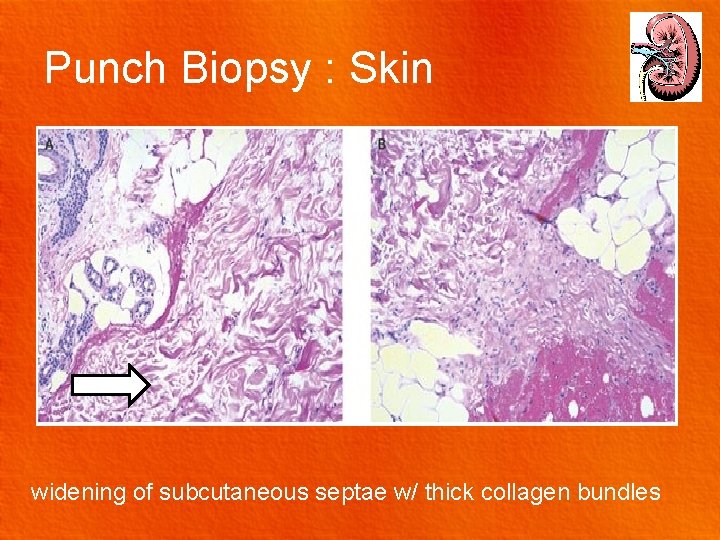
Punch Biopsy : Skin widening of subcutaneous septae w/ thick collagen bundles
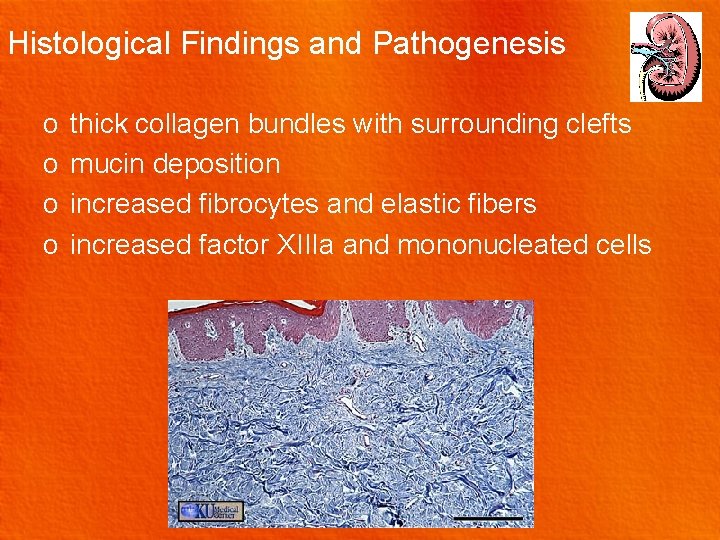
Histological Findings and Pathogenesis o o thick collagen bundles with surrounding clefts mucin deposition increased fibrocytes and elastic fibers increased factor XIIIa and mononucleated cells
Topic Development: PICO o. P Patient Population o. I Intervention or Exposure o. C Comparison Intervention o. O Outcome
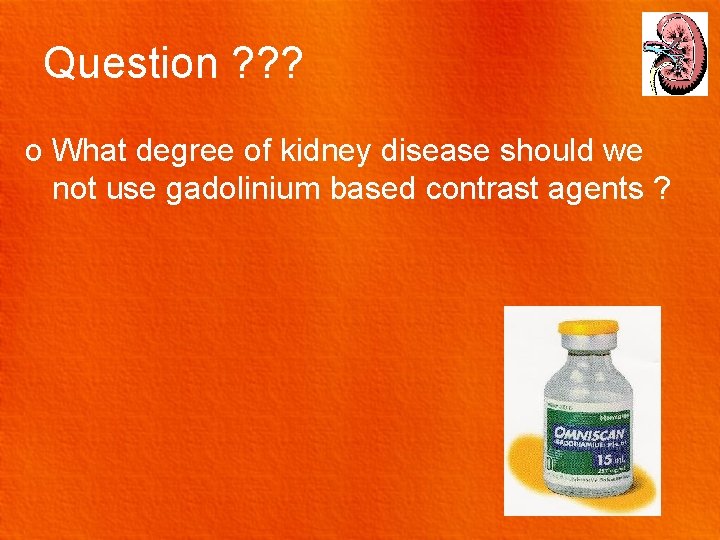
Question ? ? ? o What degree of kidney disease should we not use gadolinium based contrast agents ?
Article o Nephrogenic Fibrosing Dermopathy/ Nephrogenic Systemic Fibrosis: Report of a New Case with Literature Review o Daram, et al. AJKD, Vol 46, No 4, 2005, pp 754 -759.
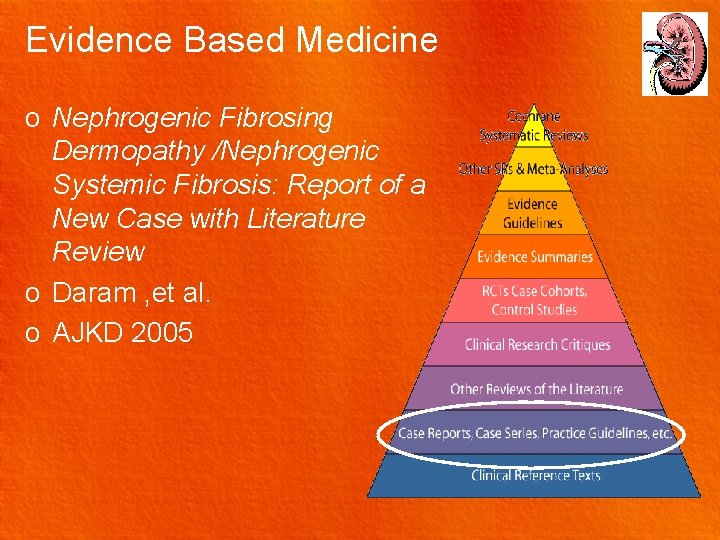
Evidence Based Medicine o Nephrogenic Fibrosing Dermopathy /Nephrogenic Systemic Fibrosis: Report of a New Case with Literature Review o Daram , et al. o AJKD 2005
Introduction- NSF: Report of a New Case o first cases of NSF recognized in 2000 o renal dysfunction pts o regardless of cause o not just HD pts, PD pts as well o other associations: o vascular sx o vascular thrombosis o scleral plaques
The Patient: NSF: Report of a New Case o 39 yo AAM o ESRD on HD d/t HTN for 8 yrs o multiple medical problems o antiphospholipid ab syndrome o no other rheumatologic history o 3 yrs before hospital admission o stiff fingers and arms o thickening skin on calves and thighs o rapid progression to contractures
The Patient- NSF: Report of a New Case o pt’s lab data -p 755 o autopsy results o extensive fibrosis o fibrosis around o plaque like changes across translumbar HD cath chest, extremities o pt expired after 45 min o contractures of ACLS o thickened pleura o dense collagenous bands o fibrotic cardiac tissue
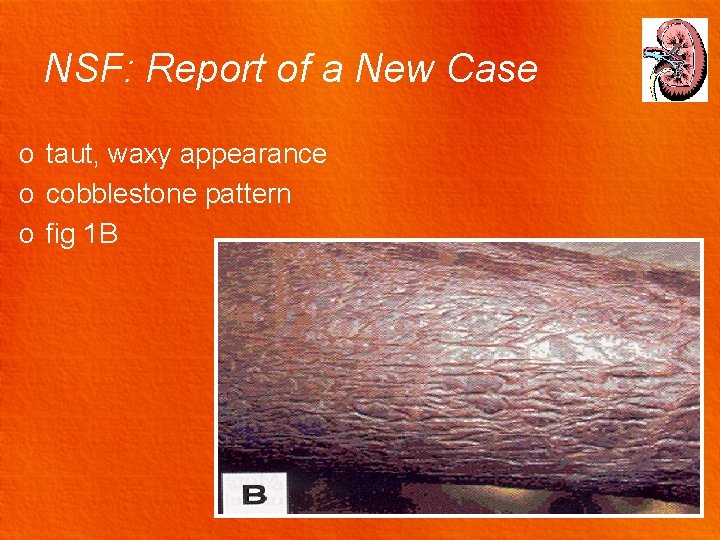
NSF: Report of a New Case o taut, waxy appearance o cobblestone pattern o fig 1 B
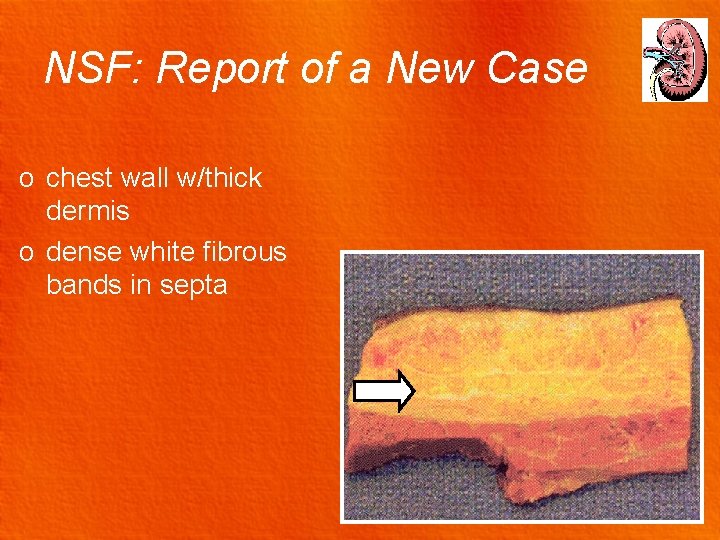
NSF: Report of a New Case o chest wall w/thick dermis o dense white fibrous bands in septa
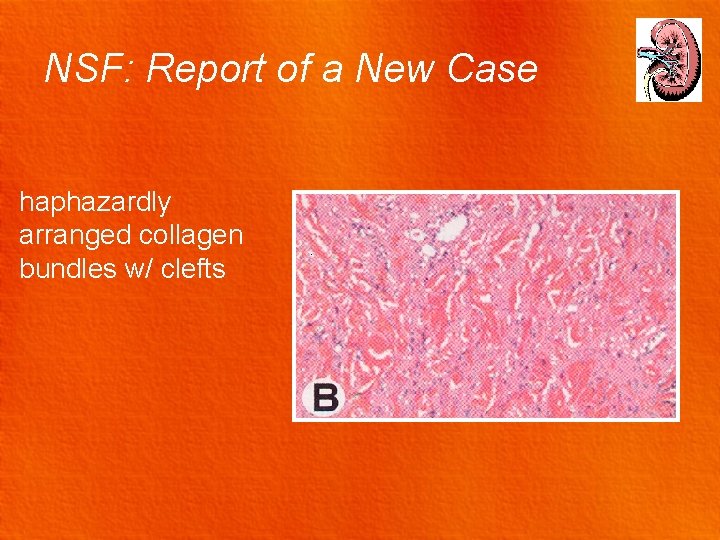
NSF: Report of a New Case haphazardly arranged collagen bundles w/ clefts
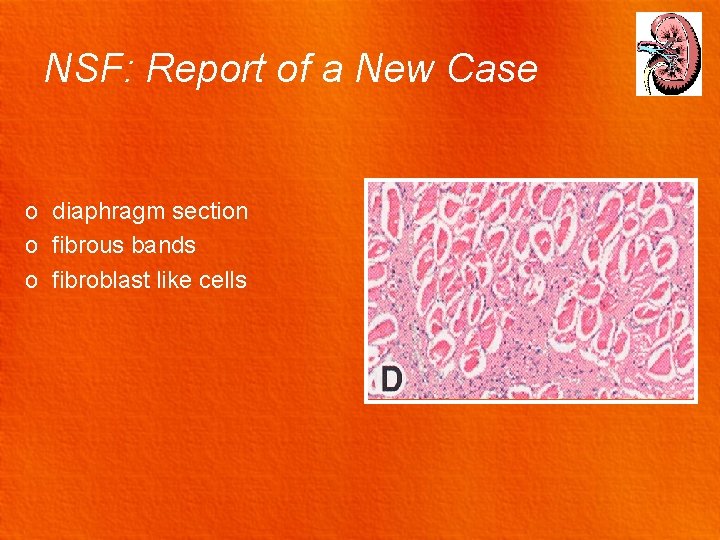
NSF: Report of a New Case o diaphragm section o fibrous bands o fibroblast like cells
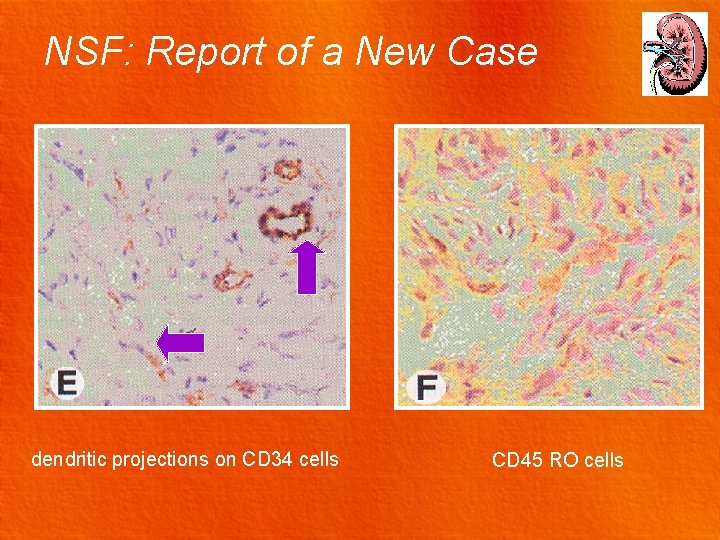
NSF: Report of a New Case dendritic projections on CD 34 cells CD 45 RO cells
Discussion- NSF: Report of a New Case o NFD is not merely a cutaneous disease o systemic manifestations o muscle, pleura, diaphragm, myo and pericardium o initiating factors in NSF o tissue injury o hypercoagulable state
Discussion - NSF: Report of a New Case o NSF involves aberrant fibrocyte recruitment o decrease EPO due to fibrogenic properties o NO consistent treatment proven effective
Article o Nephrogenic Systemic Fibrosis After Exposure to Gadolinium in Patients with Renal Failure o Othersen, J. et al, Nephrology Dialysis Transplantation, Sept 21, 2007, p 1 -7.
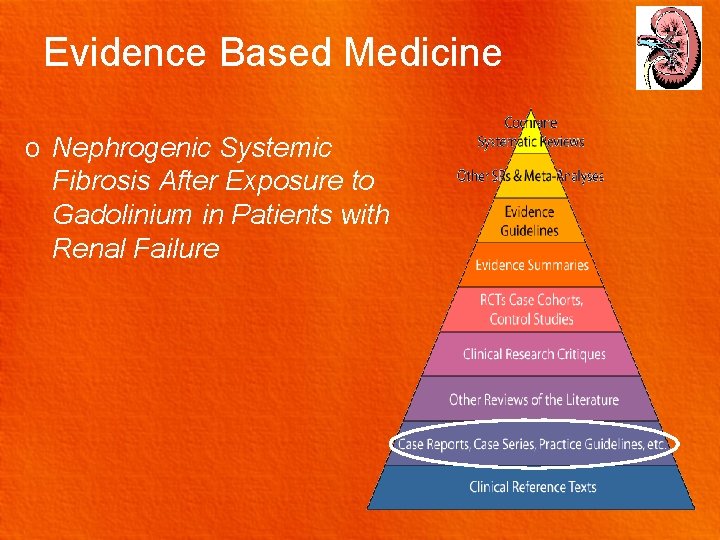
Evidence Based Medicine o Nephrogenic Systemic Fibrosis After Exposure to Gadolinium in Patients with Renal Failure
NSF After Gadolinium Exposure o Purpose: o analyze NSF incidence o association of NSF with gadolinium exposure in CKD pts o both pre-dialysis and dialysis pts o determine if increased gadolinium exposure increases NSF
NSF After Gadolinium Exposure o Methods: o 849 total pts in 5 yr time span (2001 -2006) o Nephrology at Medical University of SC o discussed with Dermatology o stratified by gadolinium exposure o 0, 1, or greater than 1 o statistical association between NSF rate and gad exposure o statistical association of increasing gad exposure and NSF occurrence
NSF After Gadolinium Exposure o Methods: o CKD pts NOT on dialysis o 592 pts or 4% had CKD 3 – 4 o 6, 636 total pts received gad from 2004 -2006 o skin bx w/ immunoperoxidase staining for CD 34
NSF After Gadolinium Exposure o Results: o 849 total pts o 261 had 354 MRI scans o w/ gadolinium (Omniscan) o 1 time exposure in 191 pts o 2 exposures in 53 o 3 exposures in 13 o 4 exposures in 5
NSF After Gadolinium Exposure NSF Incidence Never 0% One time 1. 1% Greater than one time 2. 9%
NSF After Gadolinium Exposure o Results: Pts on Dialysis o overall NSF rate 0. 5% (4 of 261) o 1. 5% risk of NSF after one gad exposure o 98. 5% did not develop NSF o odds ratio 6. 67 w/ one exposure o 44. 5 odds ratio with multiple exposures o skin lesions appeared within 2 -3 mo o strong statistical association with NSF and gadolinium exposure
NSF After Gadolinium Exposure o Results : CKD 3 – 4 pts o no patients discovered to have NSF o incidence estimated at <0. 2% o possibly due to only 4% have CKD 3 -4
NSF After Gadolinium Exposure o Conclusions: o NSF incidence is very low o increased exposure leads to increased risk o higher Ca, Phos, and Epo may be associated with increased NSF incidence o NO need for gad restriction in CKD 3 - 4 o monitor skin for 4 -6 mo if gad is used o consider dialysis immediately after exposure o kidney transplant therapy in future

Concluding Points o. A o Academic Detailing o. R o Reminders o. E o Enticements o. A o Audit

Concluding Points: Academic Details o Academic Detailing: o Medical knowledge o NSF o Patient care o Communication o OMM/OPP o Systems based practice o Physician interacts with healthcare system o Practice based learning o Physicians maintain knowledge and skills to provide ongoing pt care

Osteopathic Considerations o myofascial release o indirect techniques o whole body approach
Osteopathy in Action o NSF registry o collects info about NSF pts from all over the world o General Clinical Research Center at Yale University o e-mail : registermc @juno. com o CDC o www. cdc. gov o FDA o 1 -800 -FDA-1088 o www. FDA. gov
Systems Based Practice o acute NSF: 58089 o chronic NSF: 5829 o include CKD staging: 585. o principal procedure o MRI imaging: 8897
Systems Based Practice o Cerebral a. occlusion w/ cerebral infarction DRG: 43491 $5, 246. 24 Medicare o Cerebral a. occlusion w/ cerebral infarction plus acute NSF DRG: 43491, 58089 $7, 877. 25 Medicare
Reminders o Carepath in future o screening baseline kidney fxn / size o acute kidney injury vs CKD o Cr. Cl –when not to use gadolinium o follow-up labs after gadolinium use o when to dialyze ESRD pts if GBCA used

Enticements/ Systems Based Practice o MRI imaging: DRG 8897 o o MRI brain w/ contrast: $3, 692 MRI brain w/o contrast: $2, 255 MRI thoracic/lumbar spine w/ contrast : $2, 465 MRI thoracic/lumbar w/o contrast: $2, 144

Audit o How can we measure outcomes and progress? o Practice habits changed in the future?
Conclusions : Take Home Points o interest of pt safety o balance benefits and risks of GBCA’s o screen all pts with labs and history o GBCA’s should NOT be used if Cr. Cl <30 o careful consideration if Cr. Cl <60 o alternative imaging methods
Conclusions: Take Home Points o monitor for skin manifestations after GBCA o follow labs after administration o do not exceed recommended dose o 0. 1 -0. 2 mmol/kg o allow time for elimination before readministration
Please Join Us Next Month o IM Journal Club o presented by Dr. Bryan o laryngeal reflux and proton pump inhibitors
References o Nephrogenic Fibrosing Dermopathy /Nephrogenic Systemic Fibrosis: Report of a New Case with Literature Review. Daram , et al. AJKD 2005. o Nephrogenic Systemic Fibrosis After Exposure to Gadolinium in Patients with Renal Failure. Othersen, J. et al, Nephrology Dialysis Transplantation, Sept 21, 2007, p 1 -7.

Happy Halloween !! Trick or treat
References • www. cdc. gov • www. fda. gov • Gadodiamide-Associated Nephrogenic Systemic Fibrosis: Why Radiologists Should Be Concerned. Dale R. Broome et al. AJR 2007; 188: 586 -592. • Adverse Reactions to Gadolinium Contrast Media: A Review of 36 Cases. Murphy, et al. AJR, Oct 1996: 847 -849.
- Slides: 58