
Welcome to IB HL Language and Literature Read
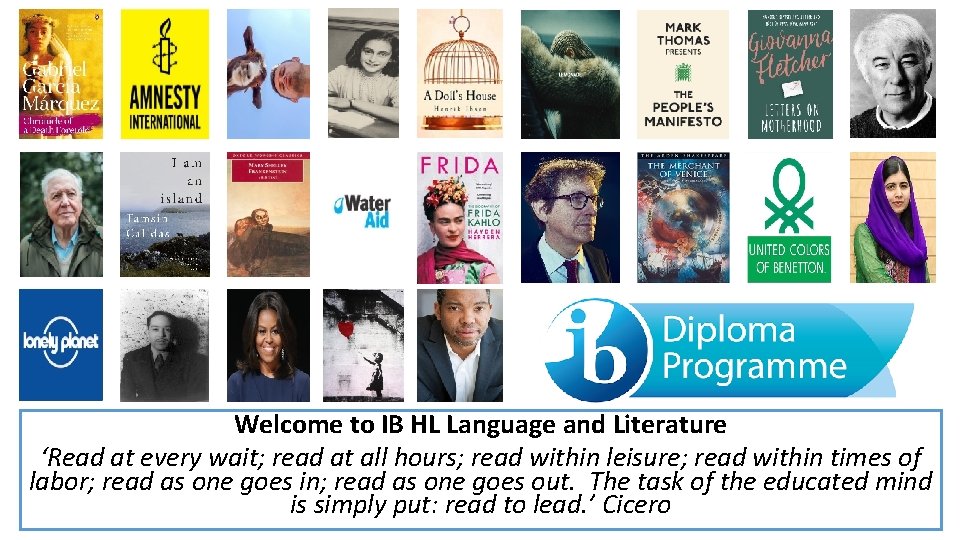
Welcome to IB HL Language and Literature ‘Read at every wait; read at all hours; read within leisure; read within times of labor; read as one goes in; read as one goes out. The task of the educated mind is simply put: read to lead. ’ Cicero

Do it now Why is literature and the study of language so important?
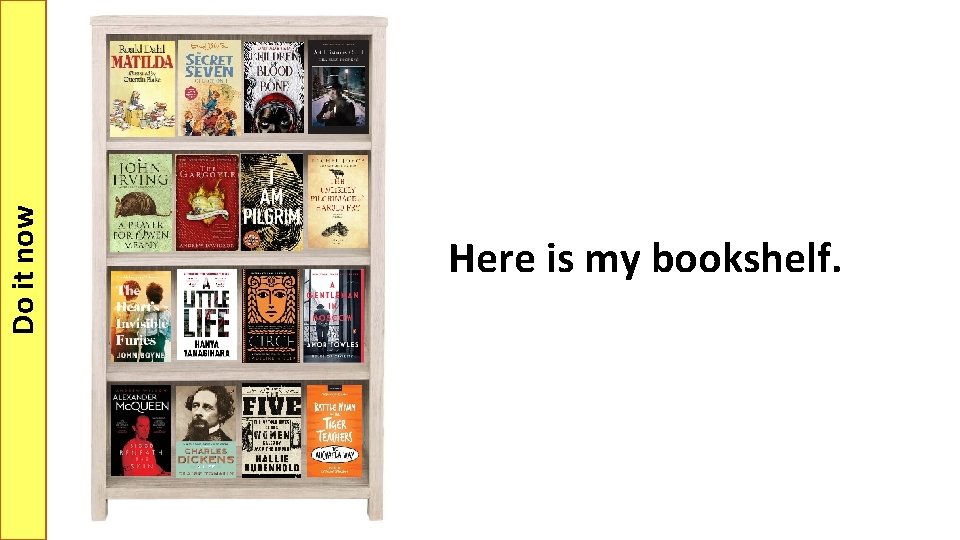
Do it now Here is my bookshelf.
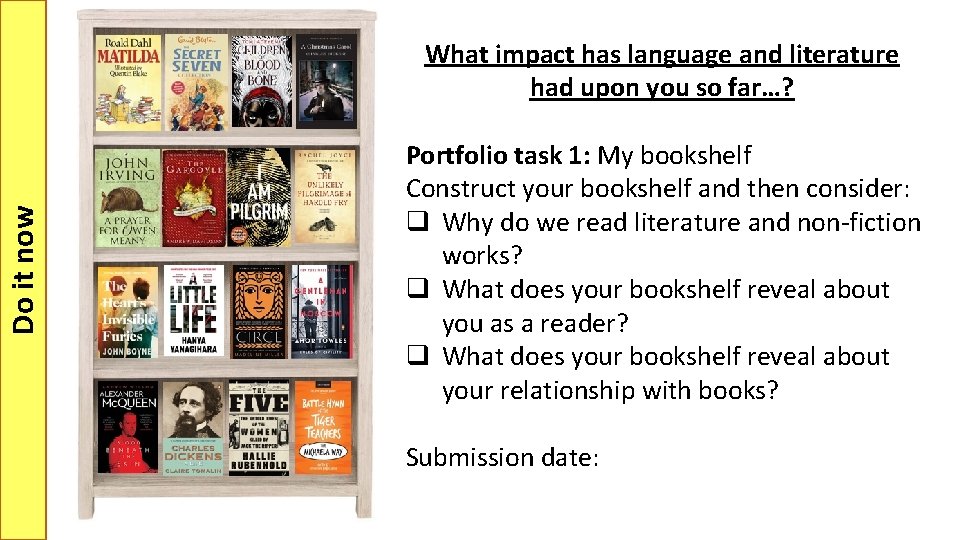
Do it now What impact has language and literature had upon you so far…? Portfolio task 1: My bookshelf Construct your bookshelf and then consider: q Why do we read literature and non-fiction works? q What does your bookshelf reveal about you as a reader? q What does your bookshelf reveal about your relationship with books? Submission date:
New knowledge What is the IB Language and Literature programme? What will I be studying? How will I be assessed?
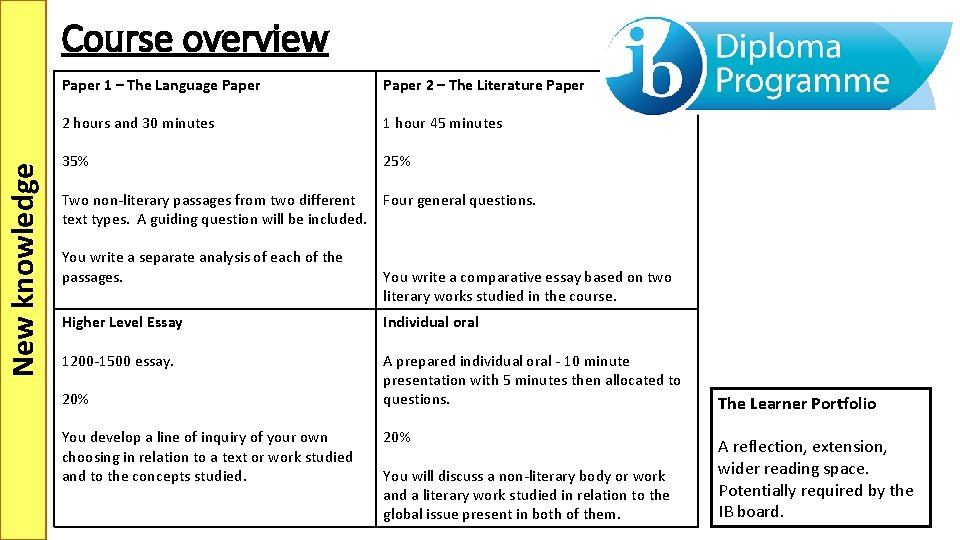
New knowledge Course overview Paper 1 – The Language Paper 2 – The Literature Paper 2 hours and 30 minutes 1 hour 45 minutes 35% 25% Two non-literary passages from two different Four general questions. text types. A guiding question will be included. You write a separate analysis of each of the passages. You write a comparative essay based on two literary works studied in the course. Higher Level Essay Individual oral 1200 -1500 essay. A prepared individual oral - 10 minute presentation with 5 minutes then allocated to questions. 20% You develop a line of inquiry of your own choosing in relation to a text or work studied and to the concepts studied. 20% You will discuss a non-literary body or work and a literary work studied in relation to the global issue present in both of them. The Learner Portfolio A reflection, extension, wider reading space. Potentially required by the IB board.
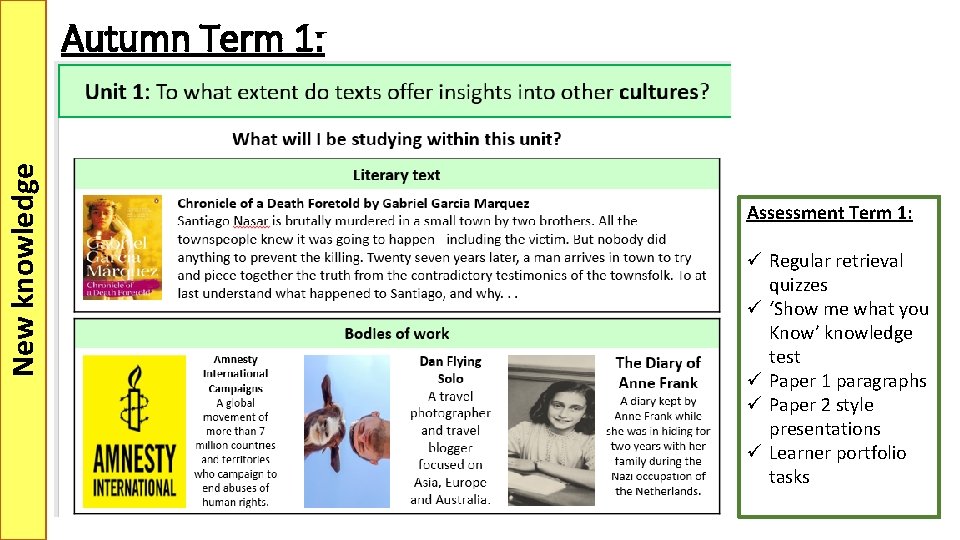
New knowledge Autumn Term 1: Assessment Term 1: ü Regular retrieval quizzes ü ‘Show me what you Know’ knowledge test ü Paper 1 paragraphs ü Paper 2 style presentations ü Learner portfolio tasks
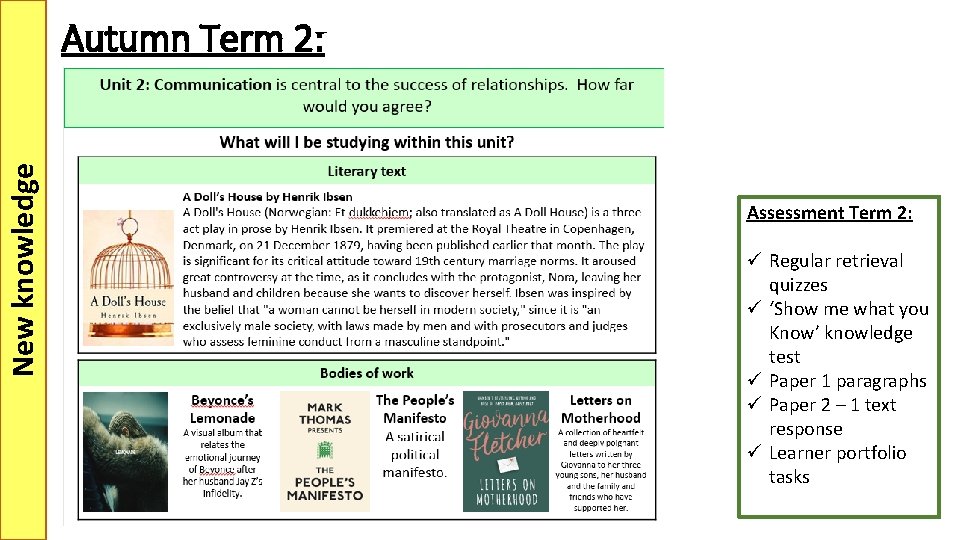
New knowledge Autumn Term 2: Assessment Term 2: ü Regular retrieval quizzes ü ‘Show me what you Know’ knowledge test ü Paper 1 paragraphs ü Paper 2 – 1 text response ü Learner portfolio tasks
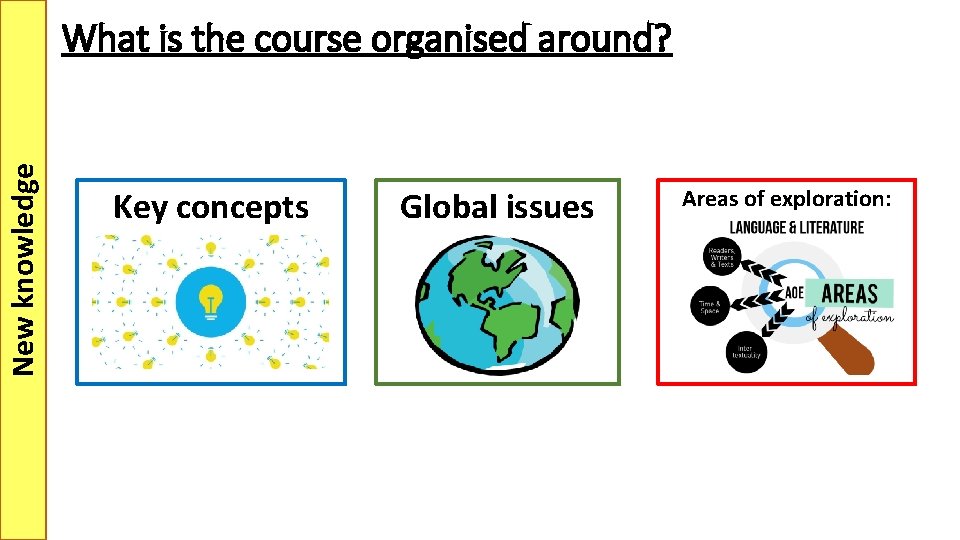
New knowledge What is the course organised around? Key concepts Global issues Areas of exploration:
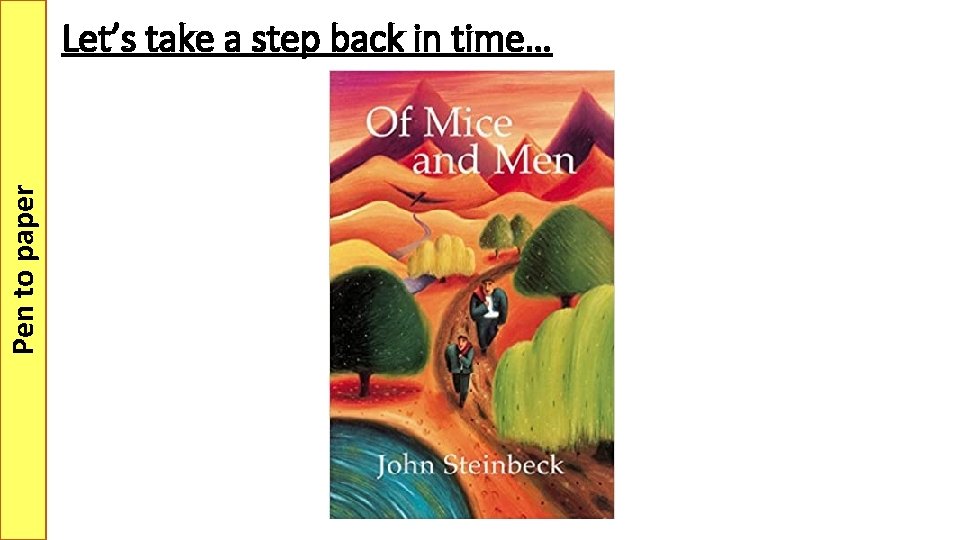
Pen to paper Let’s take a step back in time…
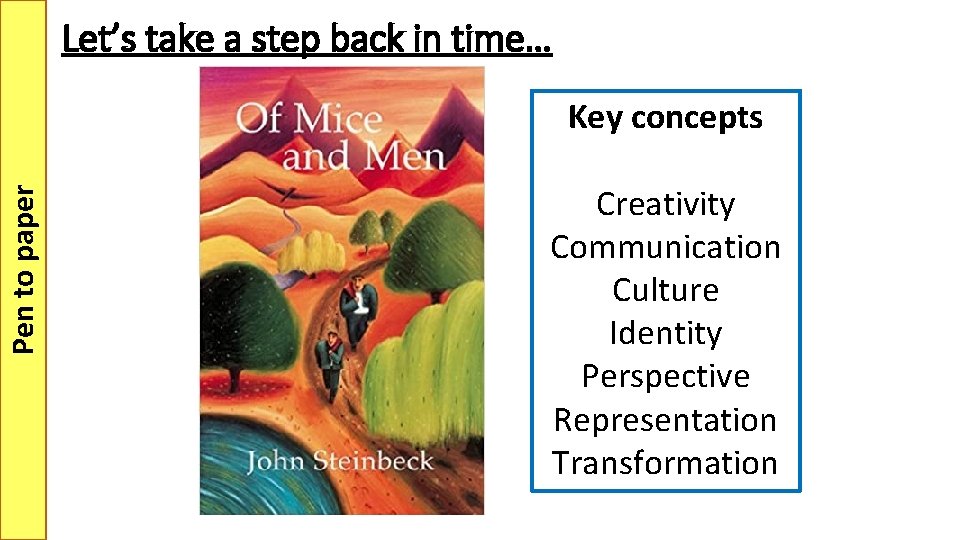
Let’s take a step back in time… Pen to paper Key concepts Creativity Communication Culture Identity Perspective Representation Transformation
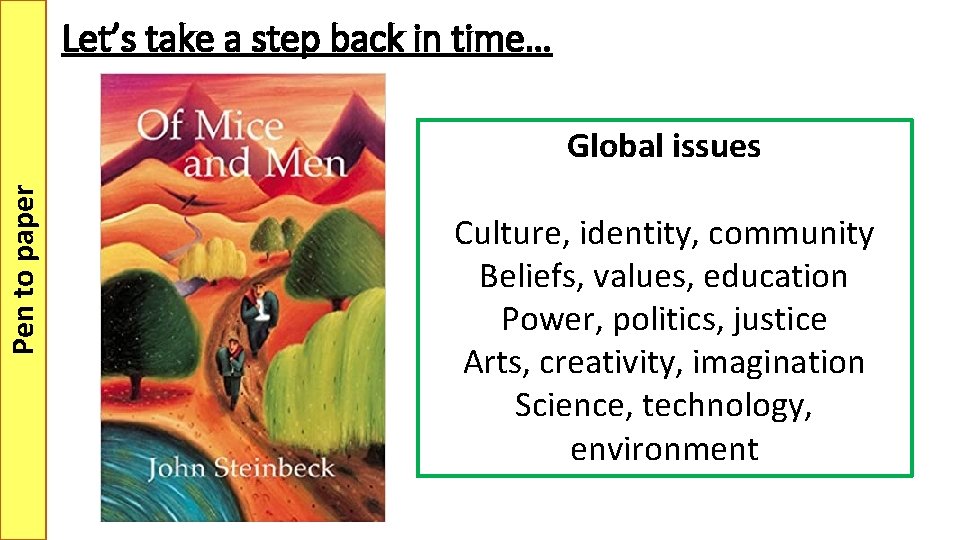
Let’s take a step back in time… Pen to paper Global issues Culture, identity, community Beliefs, values, education Power, politics, justice Arts, creativity, imagination Science, technology, environment
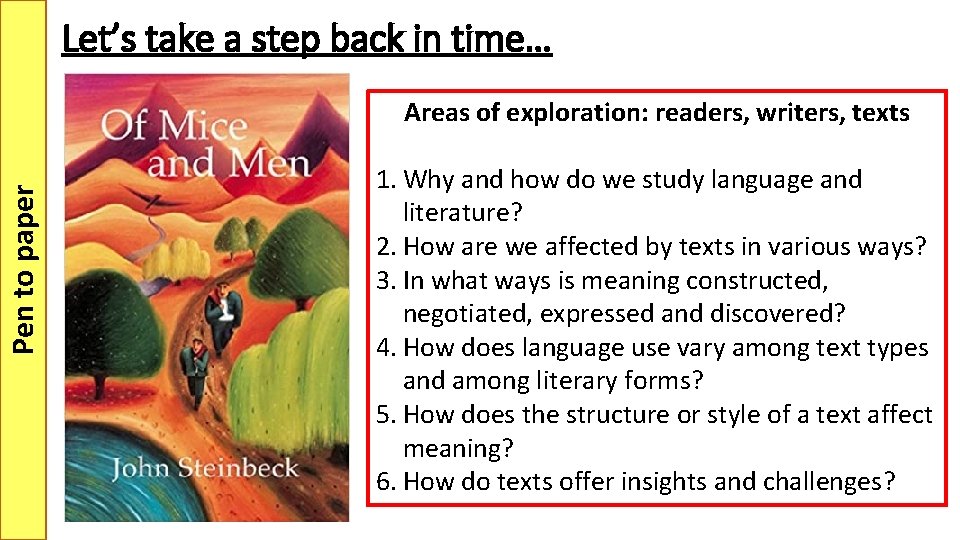
Let’s take a step back in time… Pen to paper Areas of exploration: readers, writers, texts 1. Why and how do we study language and literature? 2. How are we affected by texts in various ways? 3. In what ways is meaning constructed, negotiated, expressed and discovered? 4. How does language use vary among text types and among literary forms? 5. How does the structure or style of a text affect meaning? 6. How do texts offer insights and challenges?
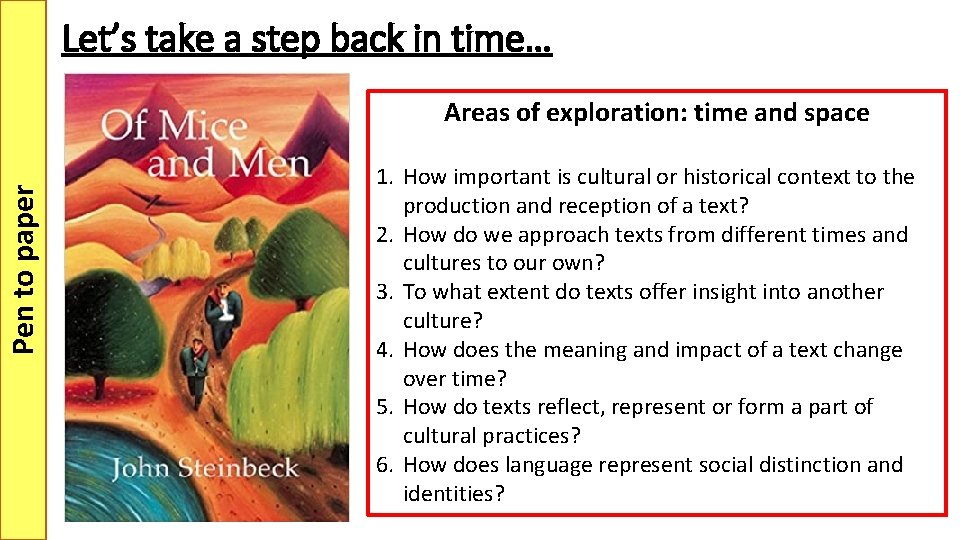
Let’s take a step back in time… Pen to paper Areas of exploration: time and space 1. How important is cultural or historical context to the production and reception of a text? 2. How do we approach texts from different times and cultures to our own? 3. To what extent do texts offer insight into another culture? 4. How does the meaning and impact of a text change over time? 5. How do texts reflect, represent or form a part of cultural practices? 6. How does language represent social distinction and identities?
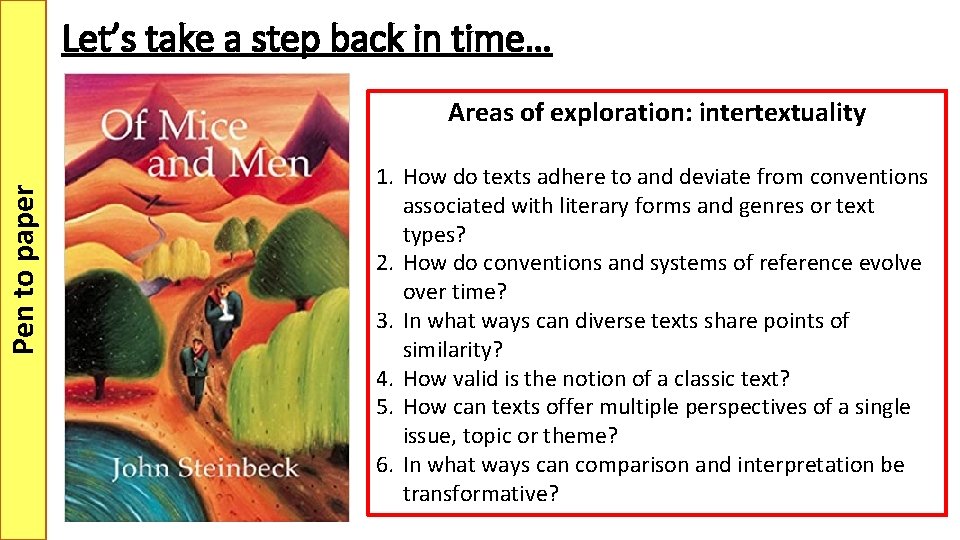
Let’s take a step back in time… Pen to paper Areas of exploration: intertextuality 1. How do texts adhere to and deviate from conventions associated with literary forms and genres or text types? 2. How do conventions and systems of reference evolve over time? 3. In what ways can diverse texts share points of similarity? 4. How valid is the notion of a classic text? 5. How can texts offer multiple perspectives of a single issue, topic or theme? 6. In what ways can comparison and interpretation be transformative?
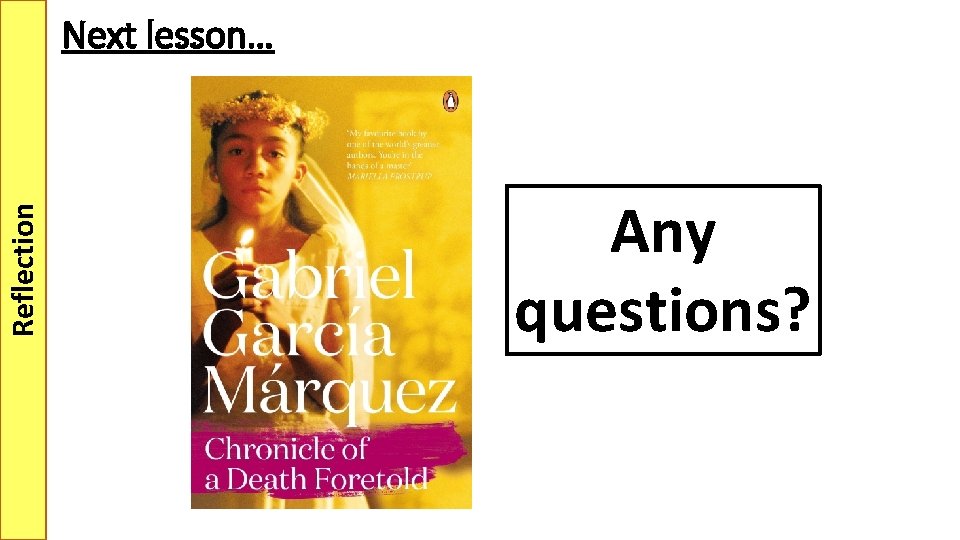
Reflection Next lesson… Any questions?
- Slides: 16