
Welcome To How to Design a Training Program









- Slides: 31
Welcome To How to Design a Training Program (So That Anyone Can Present It Successfully) Help yourself to refreshments and make yourself comfortable. We will begin at 8: 30 a. m.
"Personally, I'm always ready to learn, although I don't always like being taught. ” —Winston Churchill
Training Design Cycle Needed Performance Change? How to Pilot? How to Check Learning? How to Instruct? Who to Train? How Best to Train? What to Train?
Performance Problem Causes ENVIRONMENT
Performance Problem Causes MOTIVATION
Performance Problem Causes LACK OF KNOWLEDGE OR SKILL
Root Cause Analysis Why did that happen? . . . repeat 5 times. . . the “ 5 Y” Process
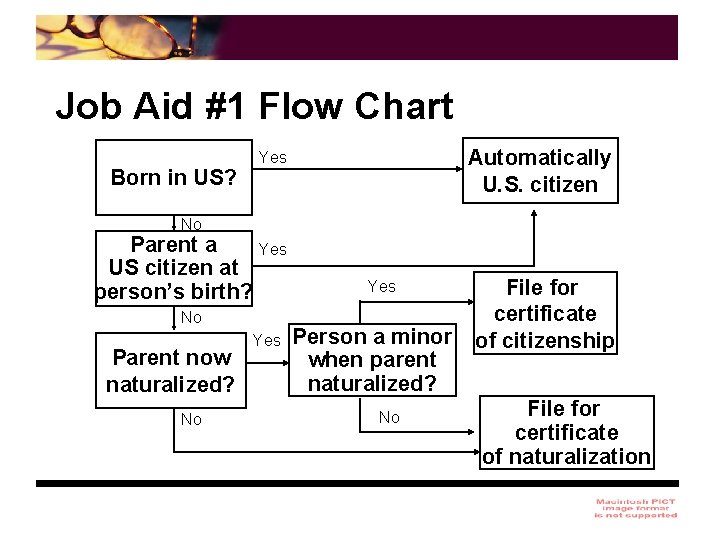
Job Aid #1 Flow Chart Born in US? Automatically U. S. citizen Yes No Parent a Yes US citizen at person’s birth? No Parent now naturalized? No Yes Person a minor when parent naturalized? No File for certificate of citizenship File for certificate of naturalization
Job Aid, #2 Decision Table If dept. is… . . . and traveler …and is. . . distance is. . . Executive Sales Customer Support Major acct. support Other < 500 mi or more < 1000 mi + First class Coach Business
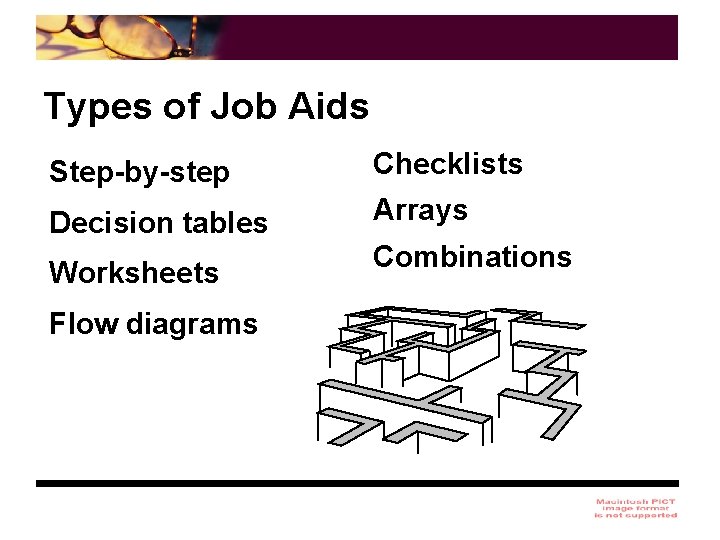
Types of Job Aids Step-by-step Checklists Decision tables Arrays Worksheets Flow diagrams Combinations
Right Training, Wrong Trainee?
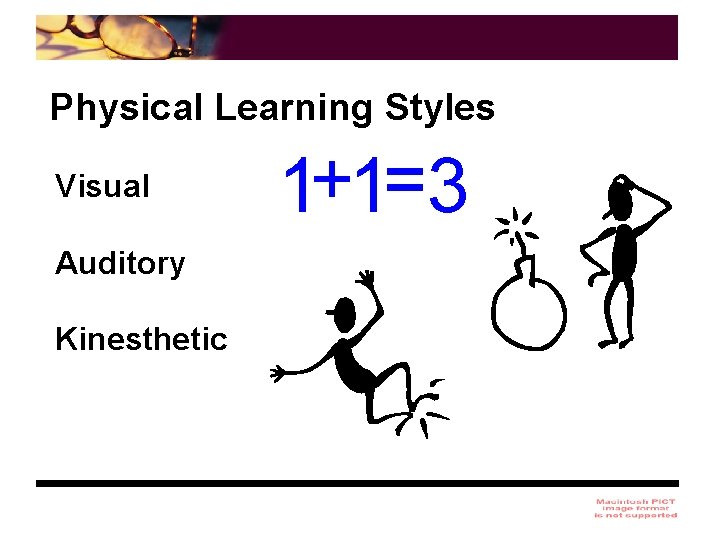
Physical Learning Styles Visual Auditory Kinesthetic 1+1=3
Brain-based Learning Styles n Left-brained, systematic n Right-brained, global
Learning Styles Assessment LOOK: Communicates by writing, drawing diagrams LISTEN: Gathers multiple viewpoints before deciding TALK: or Processes information by talking - to self others MOVE: Internalizes by construction, trial-and-error CONNECT: Relates learning to current experience
Learning Styles Assessment Instrument
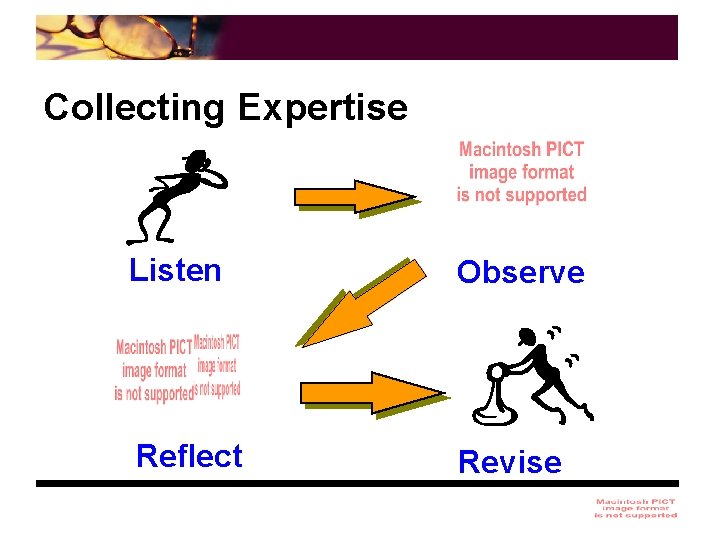
Collecting Expertise Listen Observe Reflect Revise
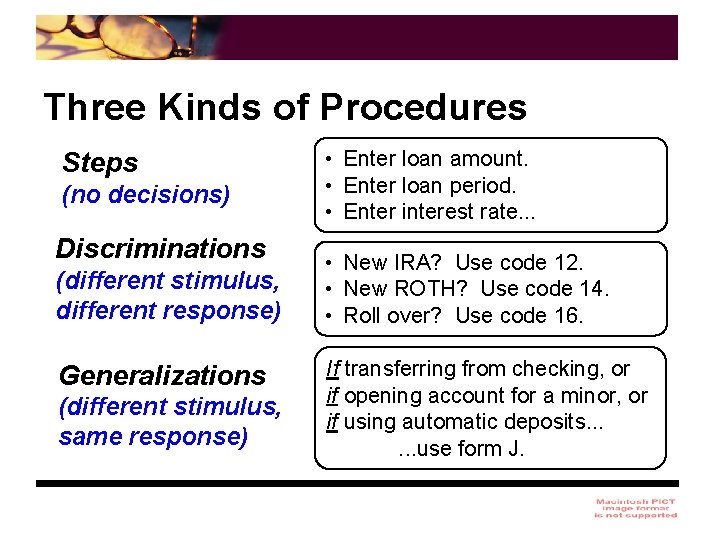
Three Kinds of Procedures Steps (no decisions) Discriminations (different stimulus, different response) Generalizations (different stimulus, same response) • Enter loan amount. • Enter loan period. • Enter interest rate. . . • New IRA? Use code 12. • New ROTH? Use code 14. • Roll over? Use code 16. If transferring from checking, or if opening account for a minor, or if using automatic deposits. . . use form J.
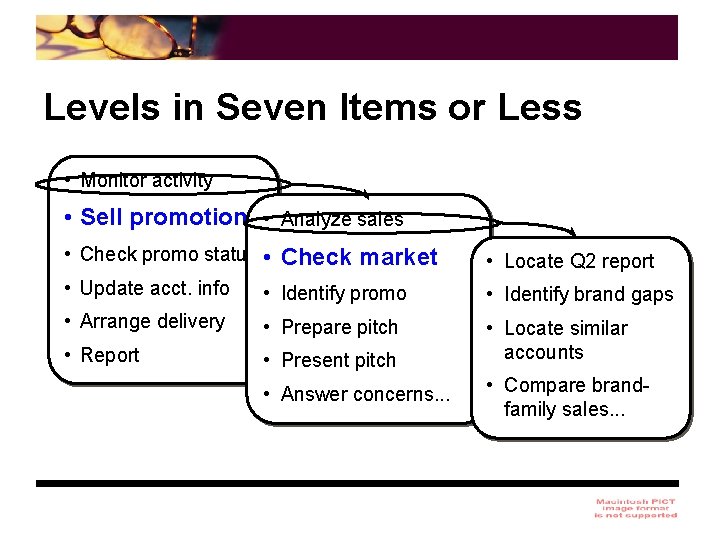
Levels in Seven Items or Less • Monitor activity • Sell promotions • Analyze sales • Check promo status • Check market • Update acct. info • Identify promo • Locate Q 2 report • Arrange delivery • Prepare pitch • Report • Present pitch • Locate similar accounts • Answer concerns. . . • Identify brand gaps • Compare brandfamily sales. . .
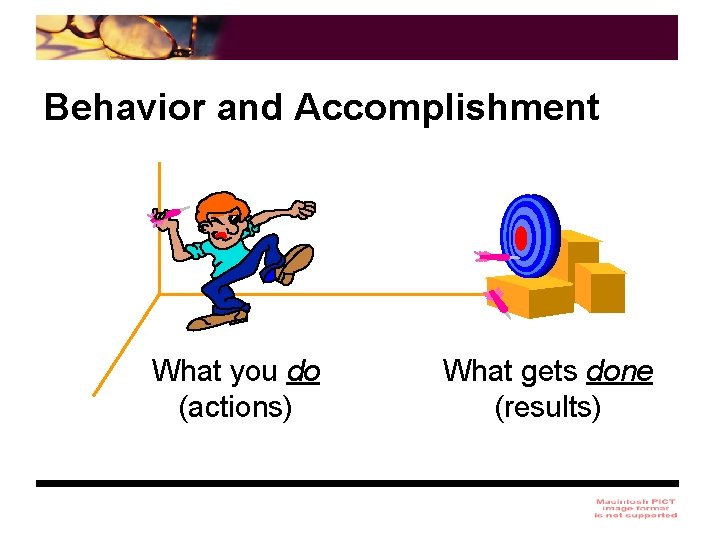
Behavior and Accomplishment What you do (actions) What gets done (results)
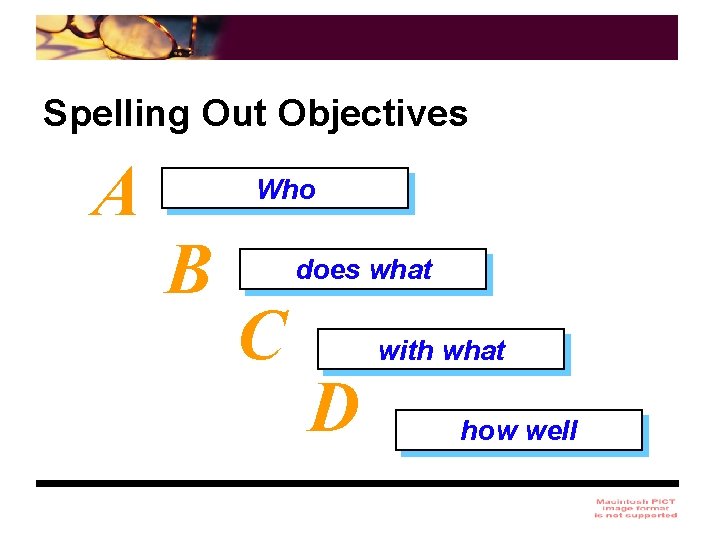
Spelling Out Objectives A Who B does what C with what D how well
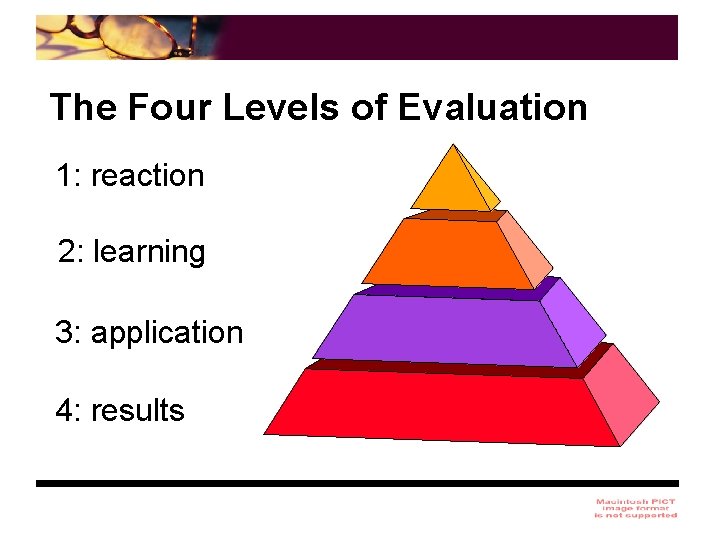
The Four Levels of Evaluation 1: reaction 2: learning 3: application 4: results
Level One: Reactions Feelings about understandabl e outcomes. . . …connected to their jobs. . . …in ways that are important.
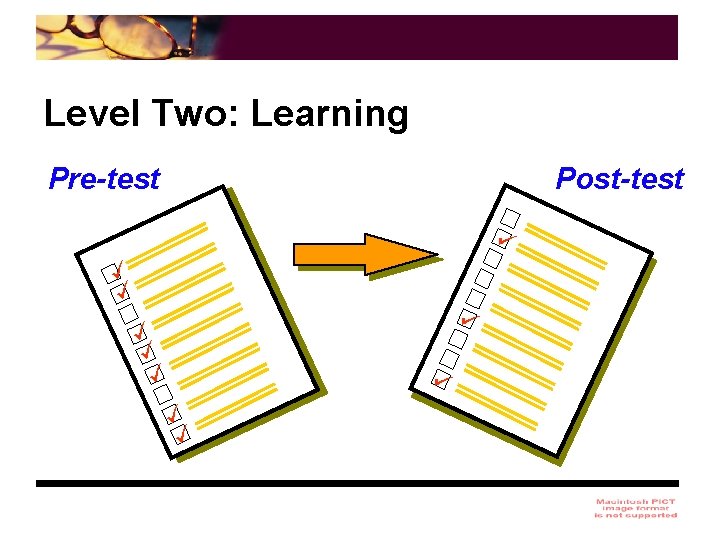
Level Two: Learning Pre-test Post-test ü ü ü ü ü
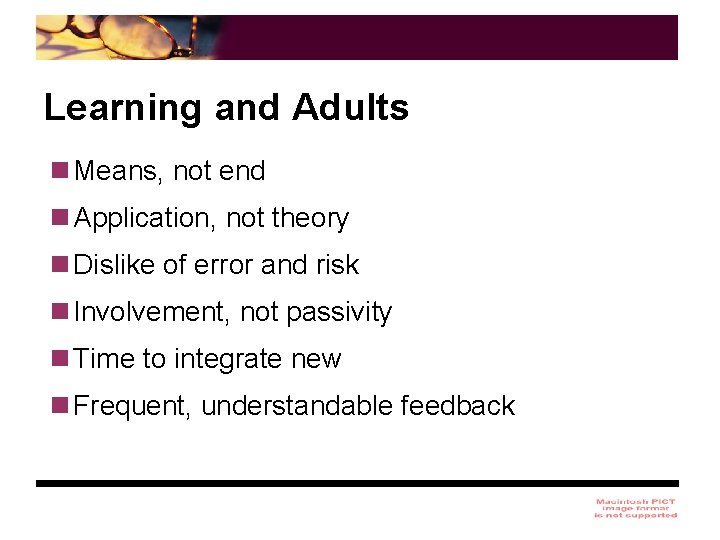
Learning and Adults n Means, not end n Application, not theory n Dislike of error and risk n Involvement, not passivity n Time to integrate new n Frequent, understandable feedback
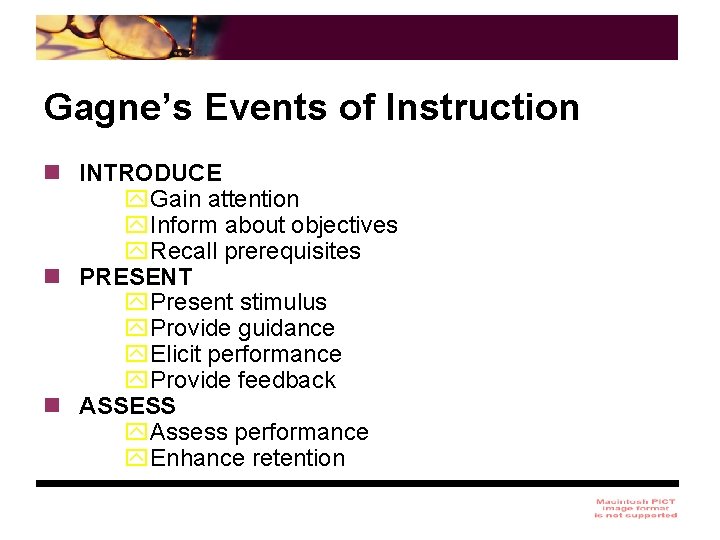
Gagne’s Events of Instruction n INTRODUCE y. Gain attention y. Inform about objectives y. Recall prerequisites n PRESENT y. Present stimulus y. Provide guidance y. Elicit performance y. Provide feedback n ASSESS y. Assess performance y. Enhance retention
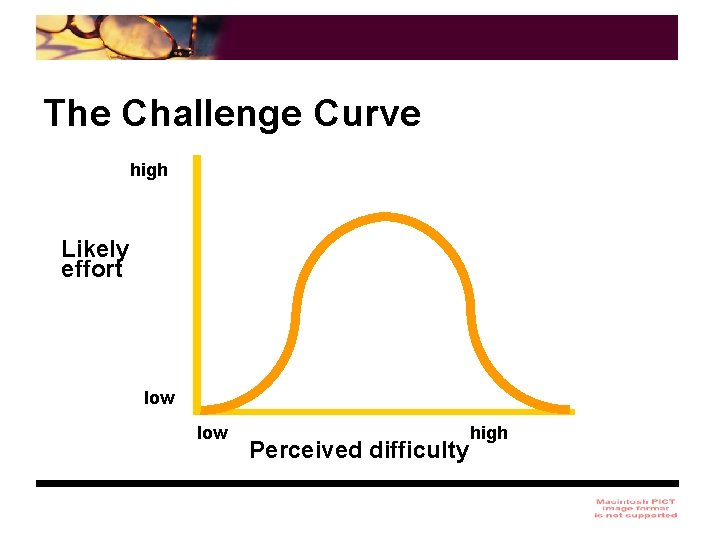
The Challenge Curve high Likely effort low Perceived difficulty high
The Ineffective War Story ! ?
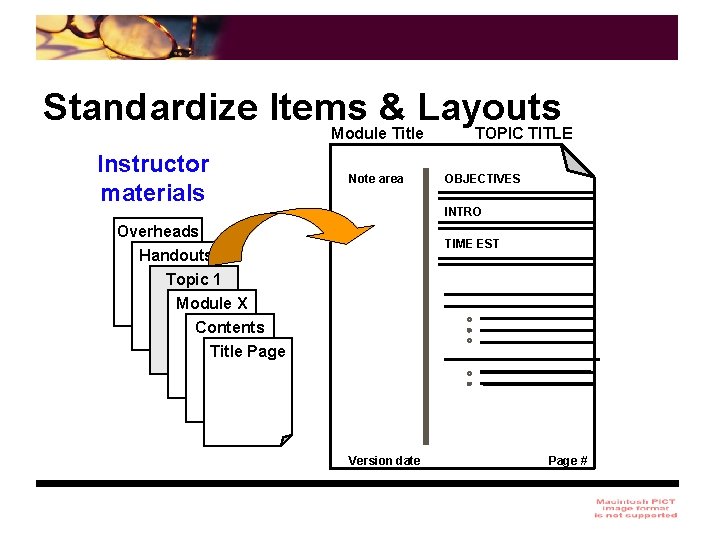
Standardize Items & Layouts Module Title Instructor materials Note area TOPIC TITLE OBJECTIVES INTRO Overheads Handouts TIME EST Topic 1 Module X Contents Title Page Version date Page #
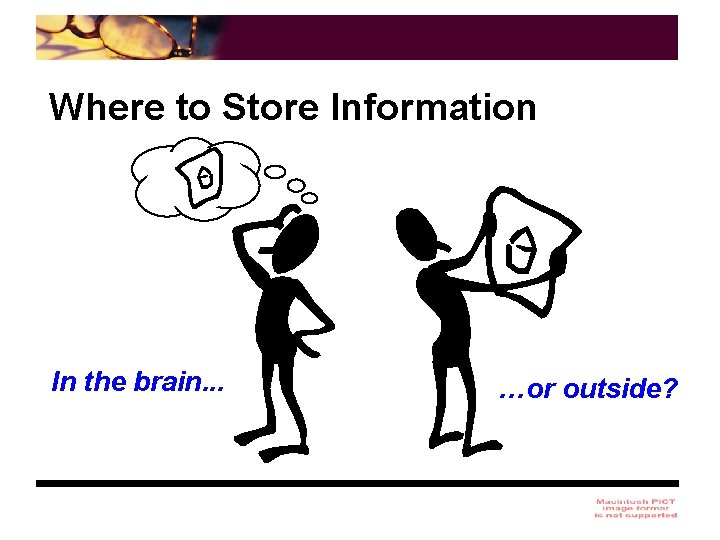
Where to Store Information In the brain. . . …or outside?
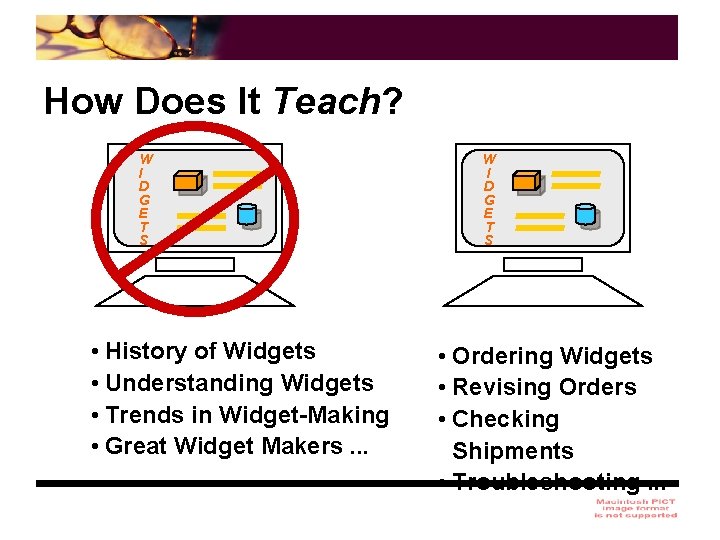
How Does It Teach? W I D G E T S • History of Widgets • Understanding Widgets • Trends in Widget-Making • Great Widget Makers. . . W I D G E T S • Ordering Widgets • Revising Orders • Checking Shipments • Troubleshooting. . .
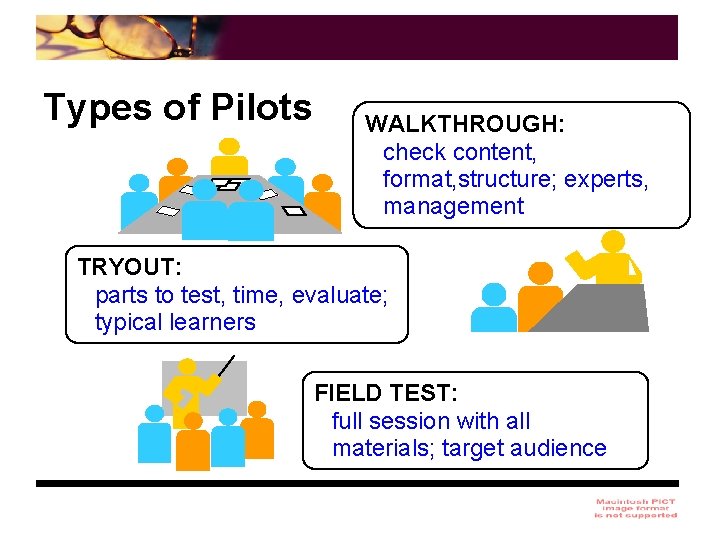
Types of Pilots WALKTHROUGH: check content, format, structure; experts, management TRYOUT: parts to test, time, evaluate; typical learners FIELD TEST: full session with all materials; target audience