
Welcome to Health 1 UNIT 1 LIFE SKILLS
- Slides: 92
Welcome to Health!! 1
UNIT 1 LIFE SKILLS 2
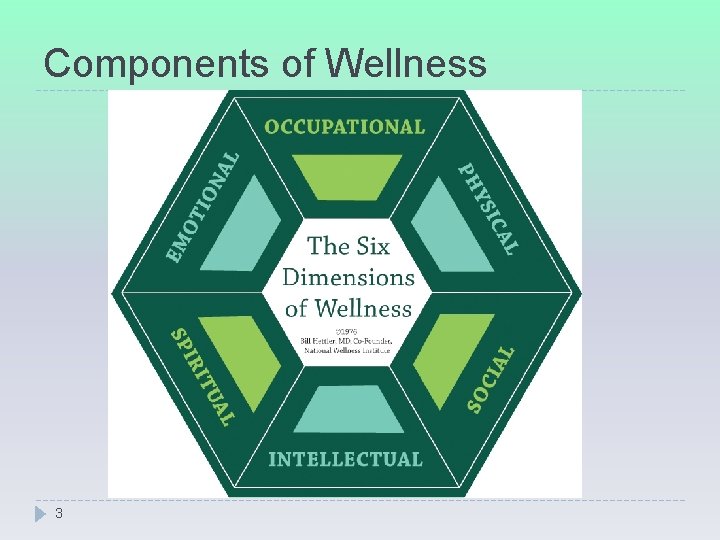
Components of Wellness 3
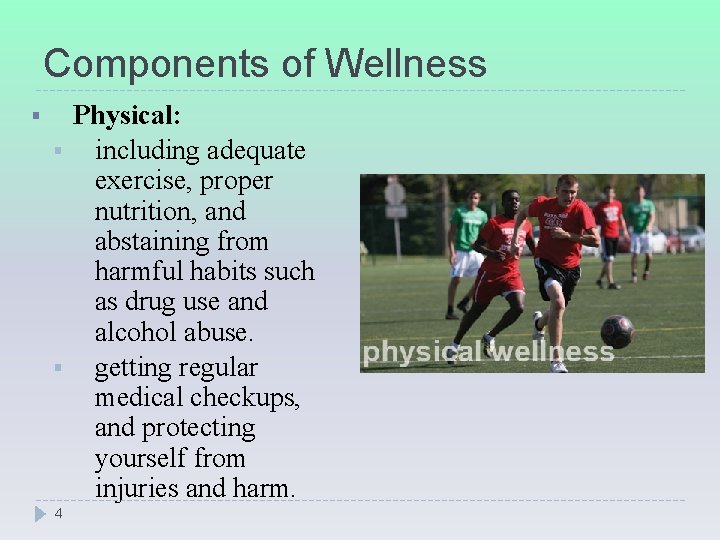
Components of Wellness § § § 4 Physical: including adequate exercise, proper nutrition, and abstaining from harmful habits such as drug use and alcohol abuse. getting regular medical checkups, and protecting yourself from injuries and harm.
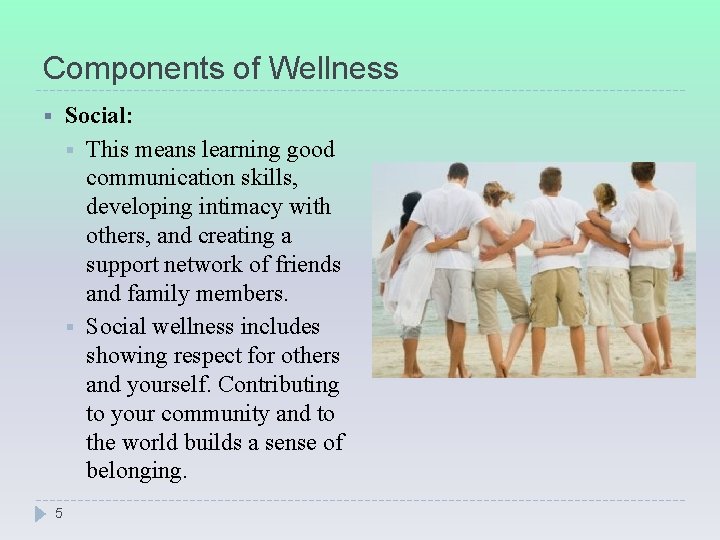
Components of Wellness Social: § This means learning good communication skills, developing intimacy with others, and creating a support network of friends and family members. § Social wellness includes showing respect for others and yourself. Contributing to your community and to the world builds a sense of belonging. § 5
Components of Wellness Spiritual: § § § 6 possessing a set of guiding beliefs, principles, or values that help give direction to one's life. It encompasses a high level of faith, hope, and commitment to your individual beliefs that provide a sense of meaning and purpose.
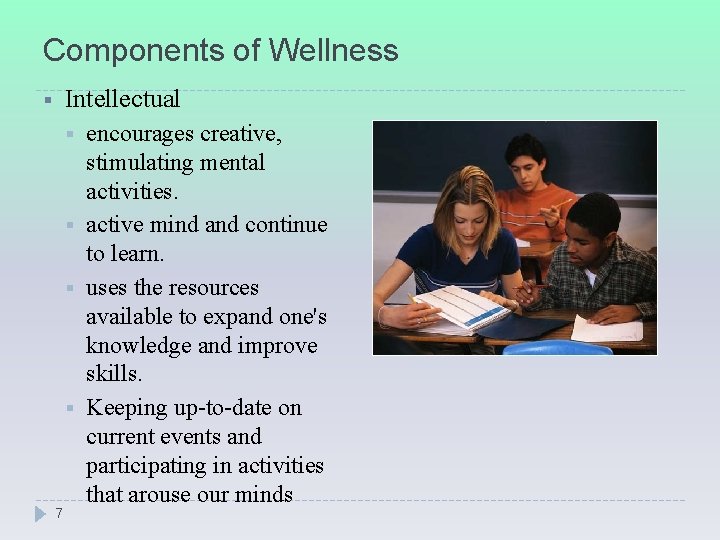
Components of Wellness Intellectual § § § 7 encourages creative, stimulating mental activities. active mind and continue to learn. uses the resources available to expand one's knowledge and improve skills. Keeping up-to-date on current events and participating in activities that arouse our minds
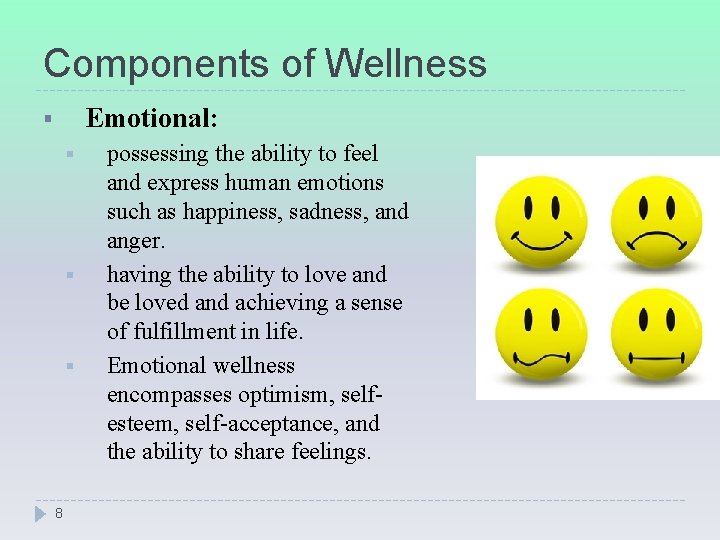
Components of Wellness Emotional: § § 8 possessing the ability to feel and express human emotions such as happiness, sadness, and anger. having the ability to love and be loved and achieving a sense of fulfillment in life. Emotional wellness encompasses optimism, selfesteem, self-acceptance, and the ability to share feelings.
Components of Wellness Environmental Protecting yourself from environmental hazards Minimizing the negative impact of your behavior on the environment Making a positive contribution to improving the environment § § § 9
Components of Wellness Physical Intellectual Emotional Environmental Social Spiritual 10
Components of Wellness Activities Complete the “Personal Wellness Quiz” In Notebook Page: 23 -24 Components of Wellness “Plate Activity” 11
Life Skills Unit Self-Concept, Self-Esteem, Self-Confidence What is the difference between self-concept, self -esteem, & self-confidence? Self-concept: the ideas a person has about himself/herself. It is also how you perceive and understand yourself. 12
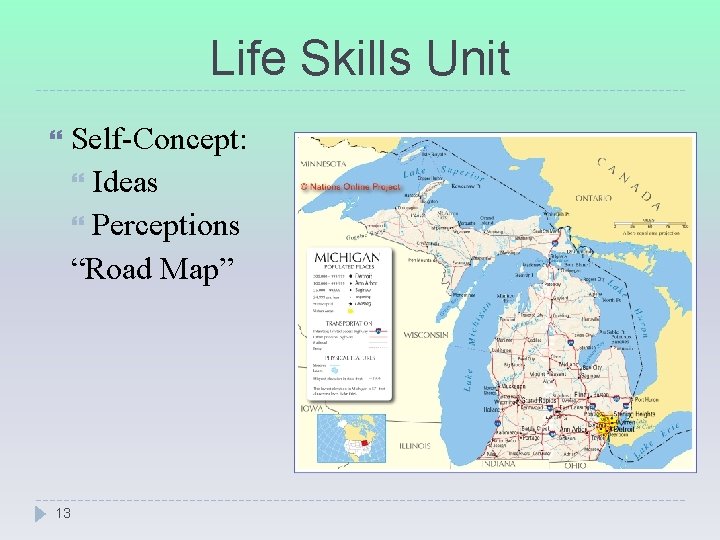
Life Skills Unit Self-Concept: Ideas Perceptions “Road Map” 13
http: //www. youtube. com/watch? v=Xpa. Oj. MX y. JGk What do you think you look like? ? ? 14
Life Skills Unit Self-esteem: the positive feelings a person has about himself or herself. It is also how you judge or feel about yourself. 15
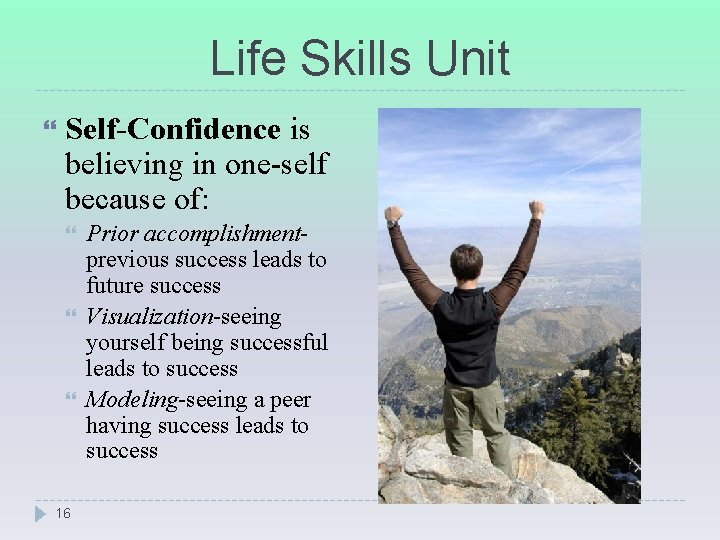
Life Skills Unit Self-Confidence is believing in one-self because of: 16 Prior accomplishmentprevious success leads to future success Visualization-seeing yourself being successful leads to success Modeling-seeing a peer having success leads to success
Life Skills Unit What is Media? Media: is to inform and entertain. What are some types of Media? TV, Music, Magazines and the Internet are some forms of Media. How does the Media affect you? Self-Esteem, Concept, & Confidence 17 Celebrities power point
Average Size Runway Model 0 -2 18
Perception vs. Reality Dove Campaign for Real Beauty “Evolution” http: //www. youtube. com/watch? v=hiby. AJOSW 8 U 19
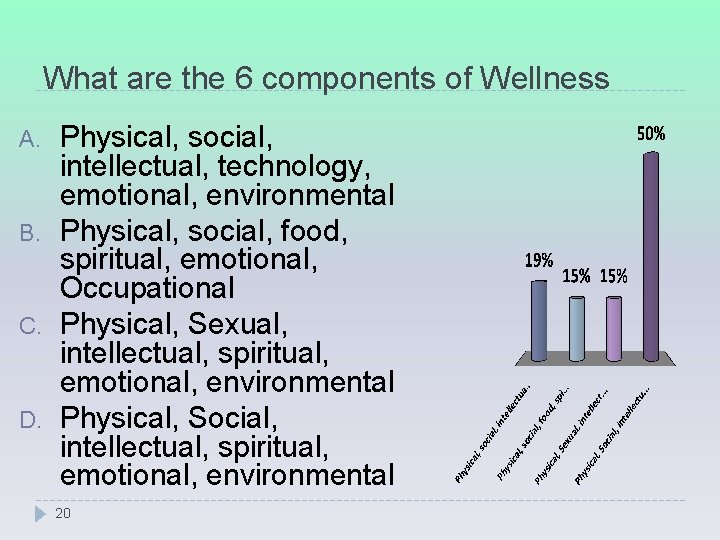
What are the 6 components of Wellness A. B. C. D. Physical, social, intellectual, technology, emotional, environmental Physical, social, food, spiritual, emotional, Occupational Physical, Sexual, intellectual, spiritual, emotional, environmental Physical, Social, intellectual, spiritual, emotional, environmental 20
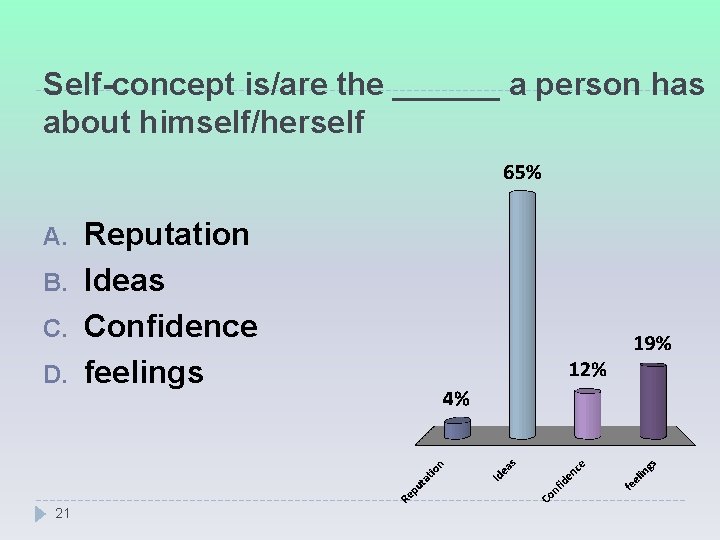
Self-concept is/are the ______ a person has about himself/herself A. B. C. D. 21 Reputation Ideas Confidence feelings
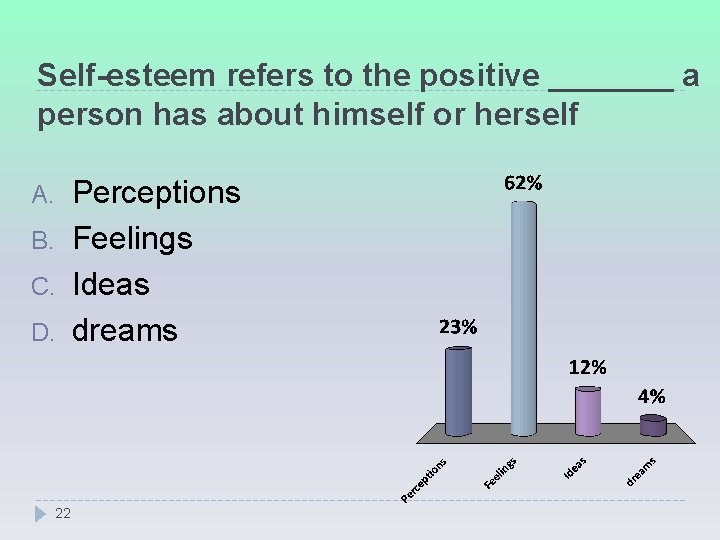
Self-esteem refers to the positive _______ a person has about himself or herself A. B. C. D. 22 Perceptions Feelings Ideas dreams
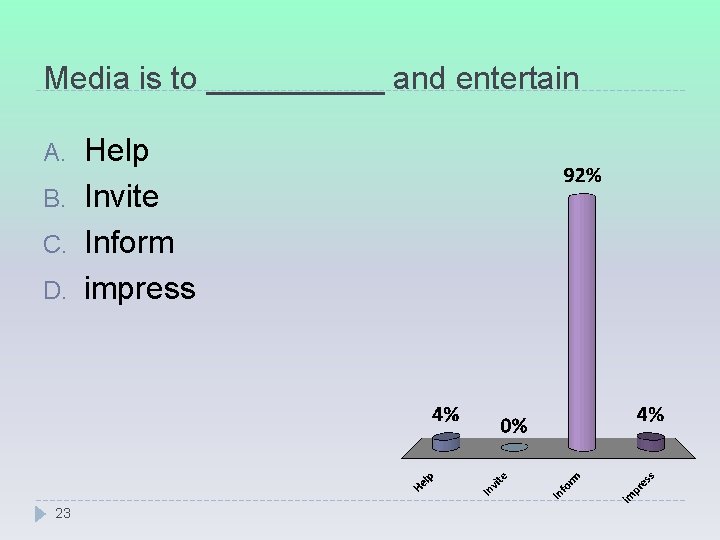
Media is to _____ and entertain A. B. C. D. 23 Help Invite Inform impress
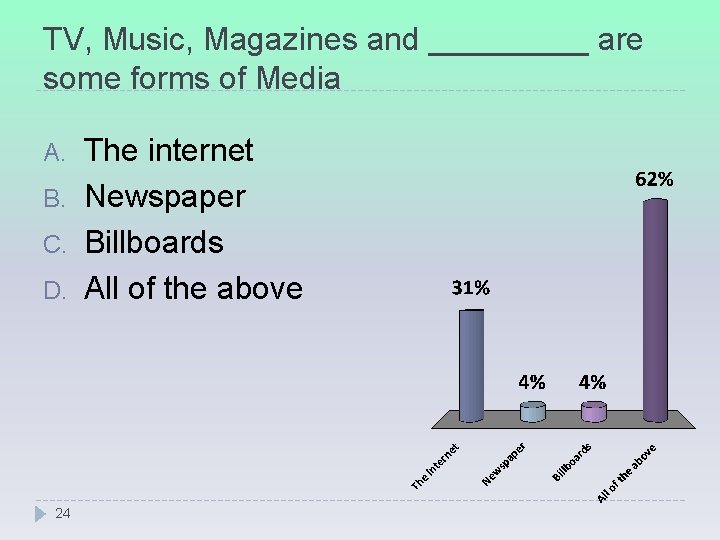
TV, Music, Magazines and _____ are some forms of Media A. B. C. D. 24 The internet Newspaper Billboards All of the above
Life Skills Unit Values: are beliefs and standards of conduct that you find important. Examples of values are: character traits such as honesty, integrity, courage, loyalty, and hard work. Values can come from school, athletic teams, family and work. Values are what you feel is right and what is wrong. Name some values that you have…. 25
Life Skills Unit Acting On Your Values: What would you do and how would you act when you are in a situation where you values are challenged? How can Values affect your: Self-Esteem, Concept & Confidence 26
How To Be A Winner In Life Group Activity: “Post It” Each group is to read and learn about a Character Trait in the Health Notebook. After reading the article, 1. Define your character trait 2. List 3 main ideas. 3. Your group will then present to the class what you learned and how a person can incorporate this character trait into their life. 27
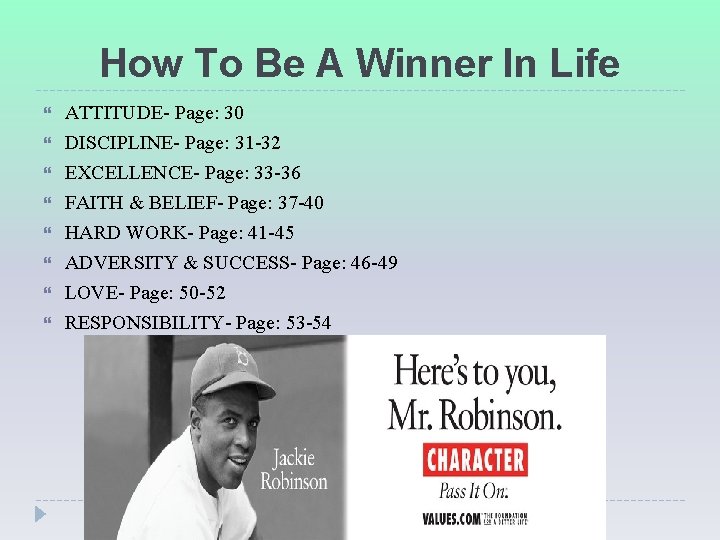
How To Be A Winner In Life ATTITUDE- Page: 30 DISCIPLINE- Page: 31 -32 EXCELLENCE- Page: 33 -36 FAITH & BELIEF- Page: 37 -40 HARD WORK- Page: 41 -45 ADVERSITY & SUCCESS- Page: 46 -49 LOVE- Page: 50 -52 RESPONSIBILITY- Page: 53 -54
Life Skills Unit 29 What are Peers? What are some examples of People of the same group. Positive Peer Pressure? What is Peer Pressure? Negative Peer Pressure? The strong influence that What is the difference people of the same group between Positive and sometimes have on one Negative Peer Pressure? another.
Life Skills Unit Example of Positive Peer Pressure: Helping a friend feel better in a time of need when he/she is not feeling good about themselves or the situation at hand. Example of Negative Peer Pressure: Pressuring a friend into doing something against their beliefs or values. The difference between the two is that + does not try discourage a persons values or beliefs, pushes them to their goals Can peers affect a person? 30
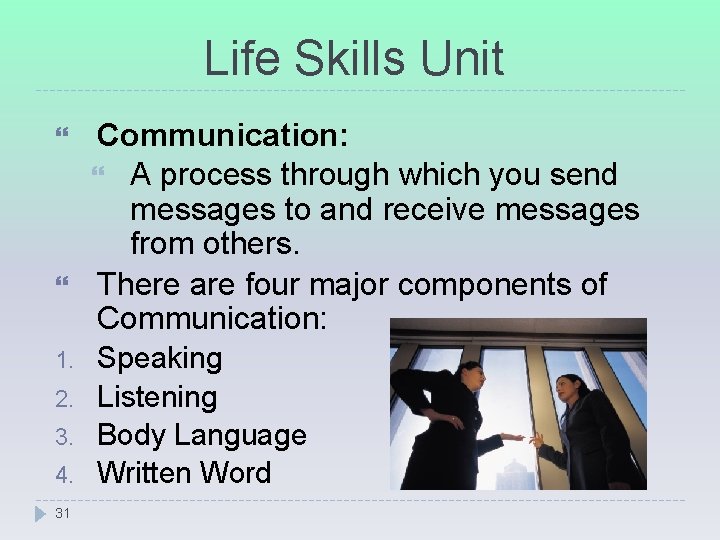
Life Skills Unit 1. 2. 3. 4. 31 Communication: A process through which you send messages to and receive messages from others. There are four major components of Communication: Speaking Listening Body Language Written Word
Life Skills Unit 32 Speaking Skills: Having good speaking skills means saying clearly what you mean. Do not assume that anyone else can read your mind. It is not just what you say that is important but how you say it. Tone of voice, how loud or soft, how fast or slow.
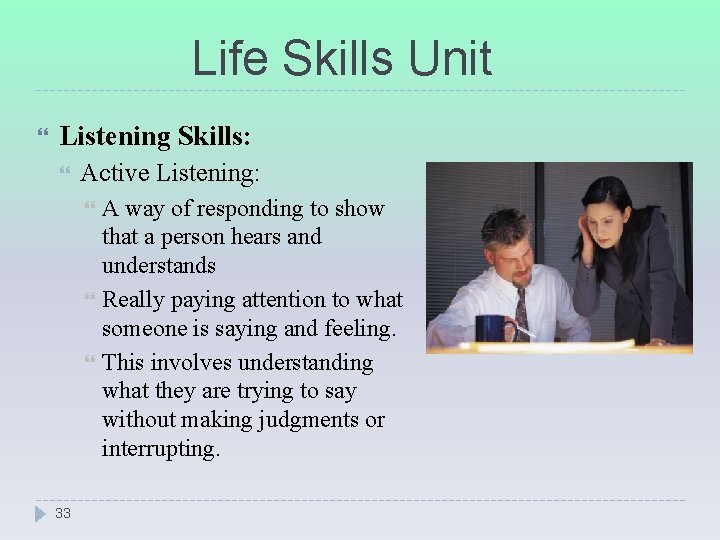
Life Skills Unit Listening Skills: Active Listening: 33 A way of responding to show that a person hears and understands Really paying attention to what someone is saying and feeling. This involves understanding what they are trying to say without making judgments or interrupting.
Life Skills Unit Tips for being a more 1. 2. 3. 4. 34 effective listener: Give your full attention to the person speaking. Make direct eye contact. Do not interrupt. Listen for feelings and watch for gestures. Nonverbal Communication (Body Language): Gestures, facial expressions, and behaviors Being aware of your body language helps you make sure you are sending the messages you intend.
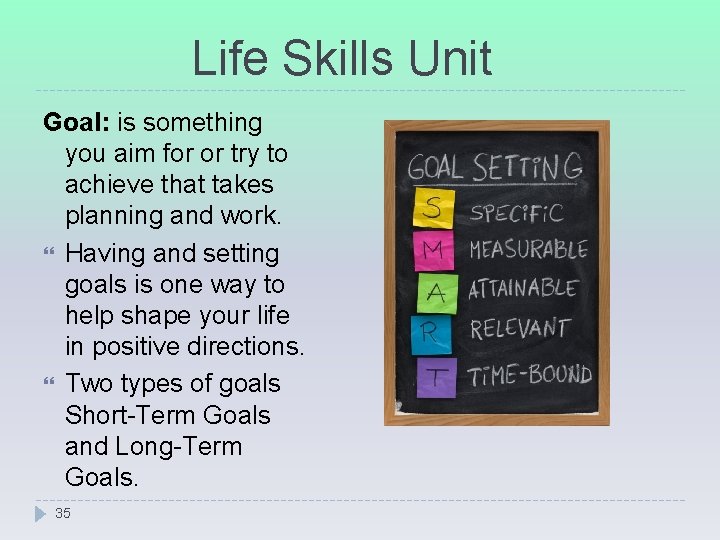
Life Skills Unit Goal: is something you aim for or try to achieve that takes planning and work. Having and setting goals is one way to help shape your life in positive directions. Two types of goals Short-Term Goals and Long-Term Goals. 35
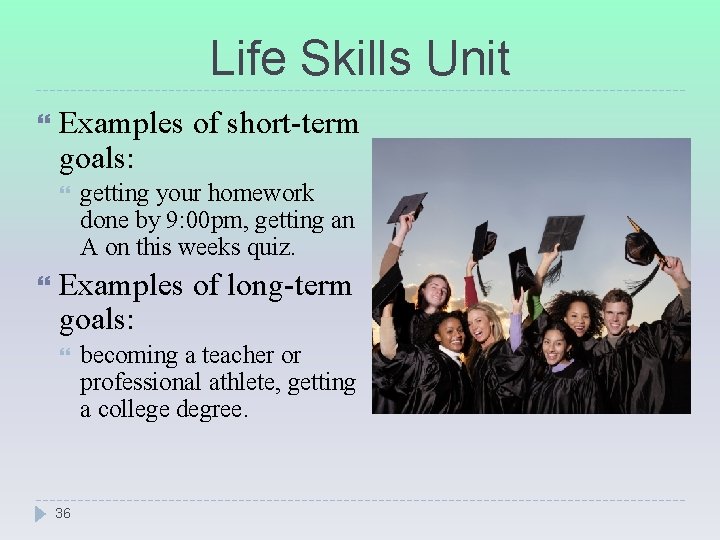
Life Skills Unit Examples of short-term goals: getting your homework done by 9: 00 pm, getting an A on this weeks quiz. Examples of long-term goals: 36 becoming a teacher or professional athlete, getting a college degree.
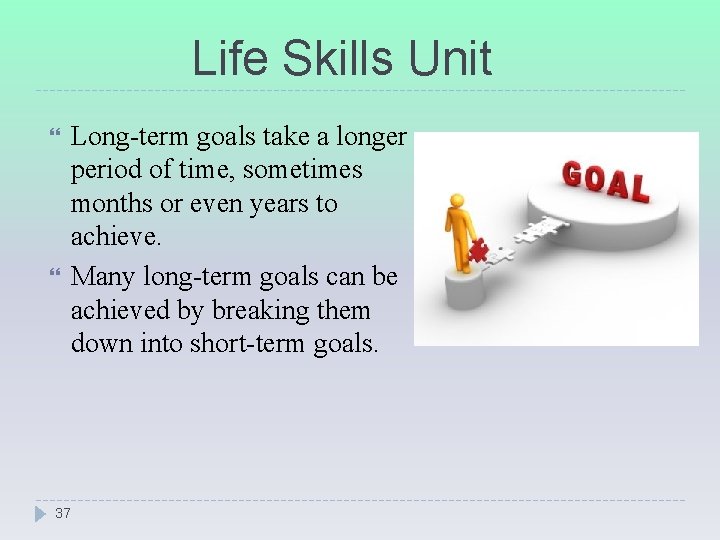
Life Skills Unit Long-term goals take a longer period of time, sometimes months or even years to achieve. Many long-term goals can be achieved by breaking them down into short-term goals. 37
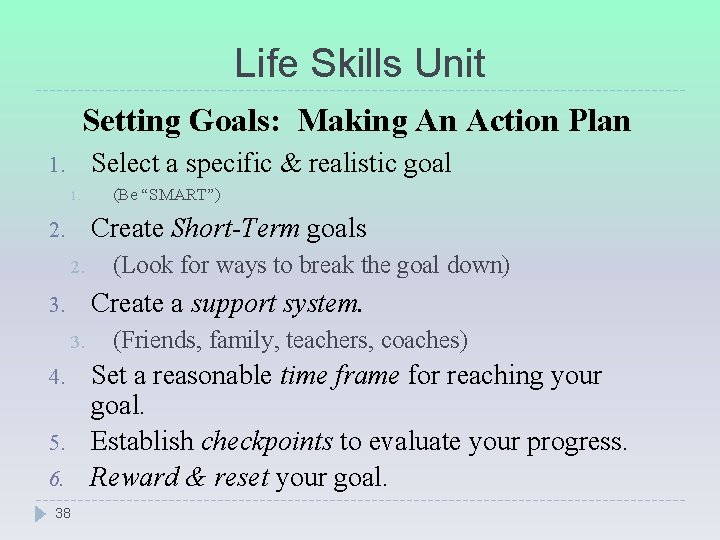
Life Skills Unit Setting Goals: Making An Action Plan Select a specific & realistic goal 1. 1. (Be “SMART”) Create Short-Term goals 2. 2. (Look for ways to break the goal down) Create a support system. 3. 3. 4. 5. 6. 38 (Friends, family, teachers, coaches) Set a reasonable time frame for reaching your goal. Establish checkpoints to evaluate your progress. Reward & reset your goal.
Bell Ringer#6 With a shoulder buddy: Compare notes and make sure all your notes are up to date. So that there in nothing missing. As a group answer the following questions: 1. List the 6 components of wellness. 2. Define values and list 3 examples of values. 3. Define peer pressure. 4. Define communication 5. Define goal. After we review, turn in your group bell ringer. 39
Life Skills Unit Decision Making: A critical thinker is one who has the ability to evaluate information from reliable sources and then make a responsible decision. 40
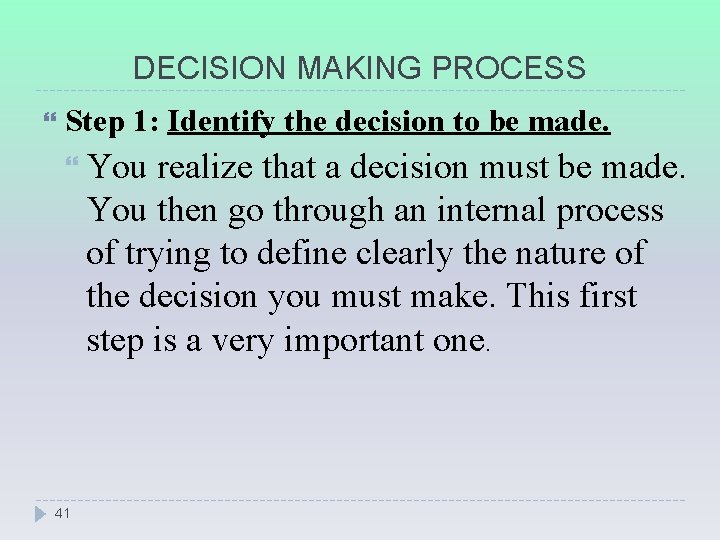
DECISION MAKING PROCESS Step 1: Identify the decision to be made. You realize that a decision must be made. You then go through an internal process of trying to define clearly the nature of the decision you must make. This first step is a very important one. 41
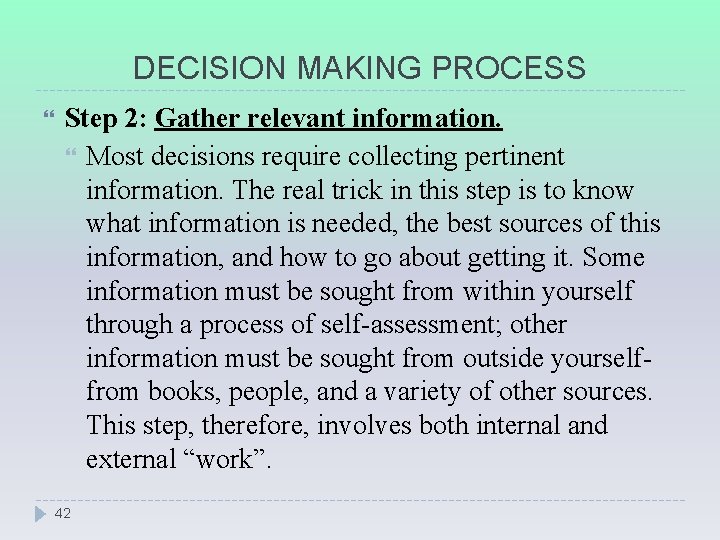
DECISION MAKING PROCESS Step 2: Gather relevant information. Most decisions require collecting pertinent information. The real trick in this step is to know what information is needed, the best sources of this information, and how to go about getting it. Some information must be sought from within yourself through a process of self-assessment; other information must be sought from outside yourselffrom books, people, and a variety of other sources. This step, therefore, involves both internal and external “work”. 42
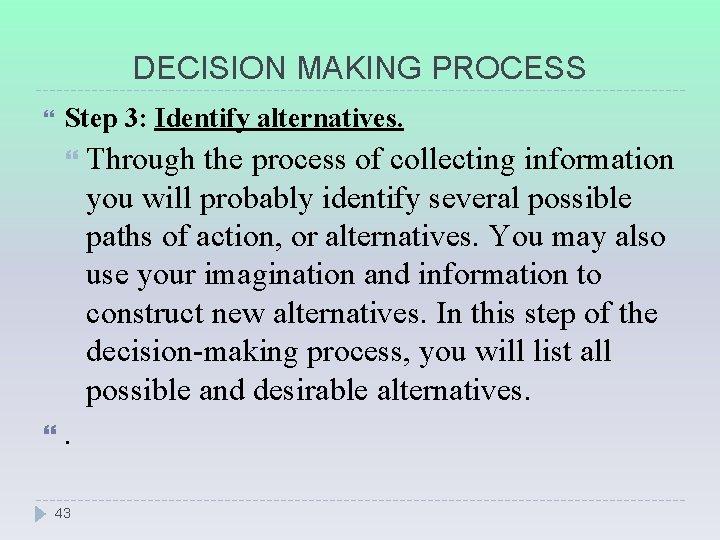
DECISION MAKING PROCESS Step 3: Identify alternatives. . 43 Through the process of collecting information you will probably identify several possible paths of action, or alternatives. You may also use your imagination and information to construct new alternatives. In this step of the decision-making process, you will list all possible and desirable alternatives.
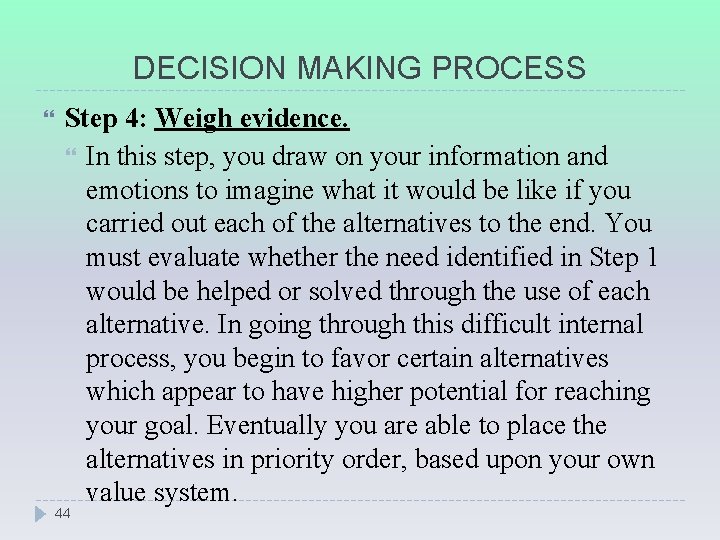
DECISION MAKING PROCESS Step 4: Weigh evidence. In this step, you draw on your information and emotions to imagine what it would be like if you carried out each of the alternatives to the end. You must evaluate whether the need identified in Step 1 would be helped or solved through the use of each alternative. In going through this difficult internal process, you begin to favor certain alternatives which appear to have higher potential for reaching your goal. Eventually you are able to place the alternatives in priority order, based upon your own value system. 44
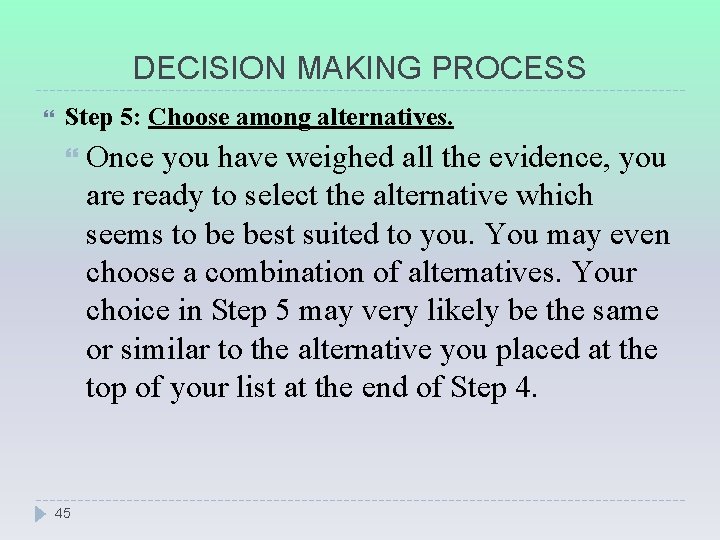
DECISION MAKING PROCESS Step 5: Choose among alternatives. 45 Once you have weighed all the evidence, you are ready to select the alternative which seems to be best suited to you. You may even choose a combination of alternatives. Your choice in Step 5 may very likely be the same or similar to the alternative you placed at the top of your list at the end of Step 4.
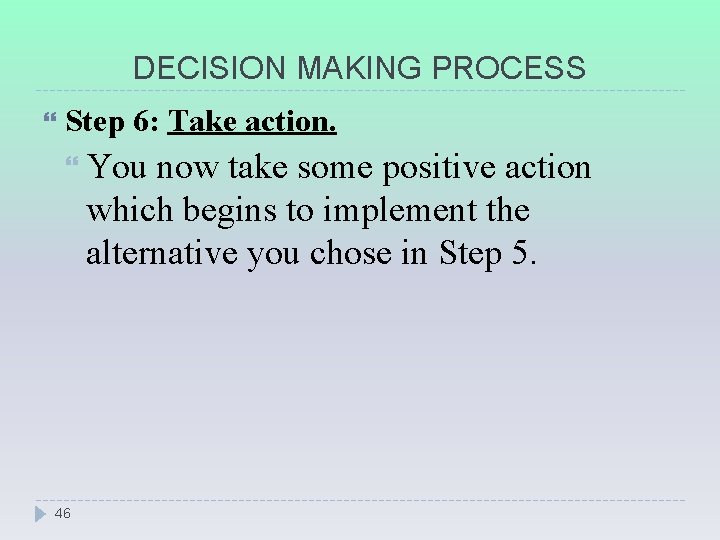
DECISION MAKING PROCESS Step 6: Take action. You now take some positive action which begins to implement the alternative you chose in Step 5. 46
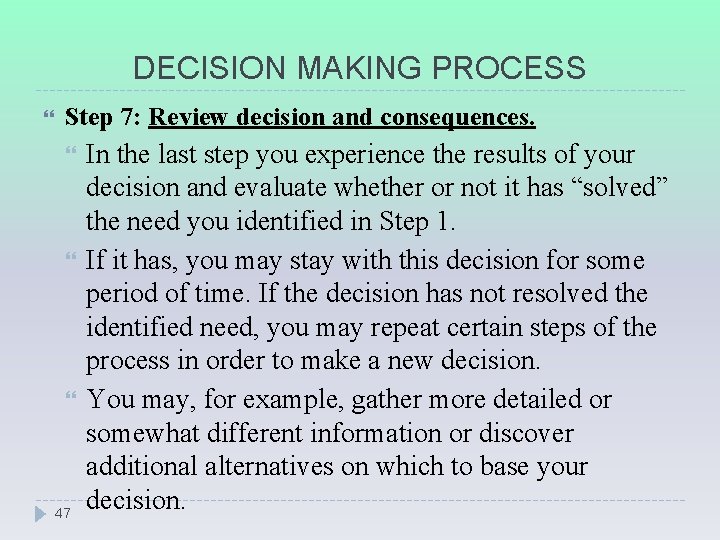
DECISION MAKING PROCESS Step 7: Review decision and consequences. 47 In the last step you experience the results of your decision and evaluate whether or not it has “solved” the need you identified in Step 1. If it has, you may stay with this decision for some period of time. If the decision has not resolved the identified need, you may repeat certain steps of the process in order to make a new decision. You may, for example, gather more detailed or somewhat different information or discover additional alternatives on which to base your decision.
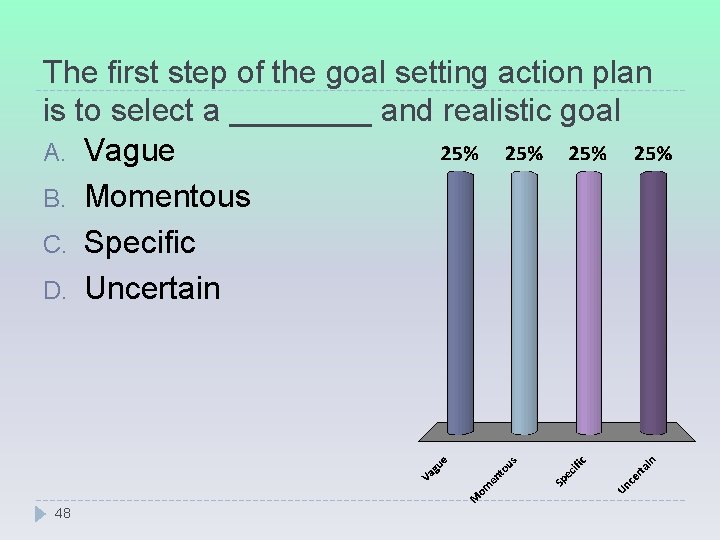
The first step of the goal setting action plan is to select a ____ and realistic goal A. Vague B. Momentous C. Specific D. Uncertain 48
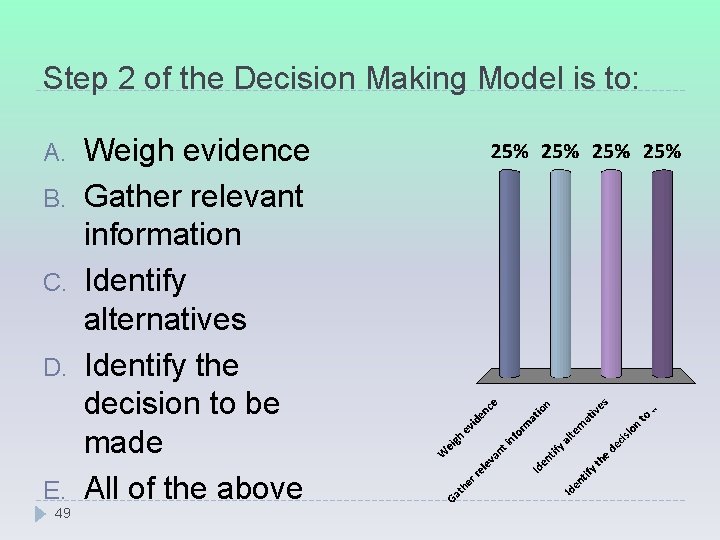
Step 2 of the Decision Making Model is to: A. B. C. D. E. 49 Weigh evidence Gather relevant information Identify alternatives Identify the decision to be made All of the above
Life Skills Unit What is Stress? 50 Stress is the body’s and mind’s reaction to everyday demands or threats. These demands produce changes in both the body and brain.
Life Skills Unit Different Kinds of Stress: Distress (or negative stress) results when there is too much pressure or trauma and you don’t know how to cope with it. 51
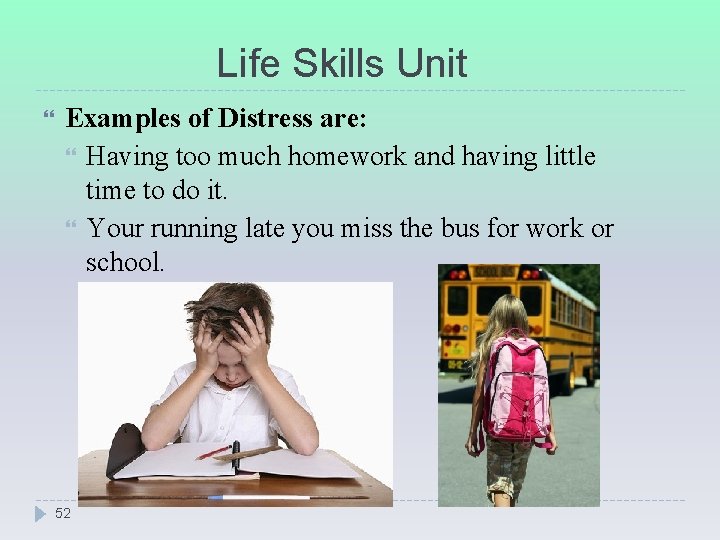
Life Skills Unit Examples of Distress are: Having too much homework and having little time to do it. Your running late you miss the bus for work or school. 52
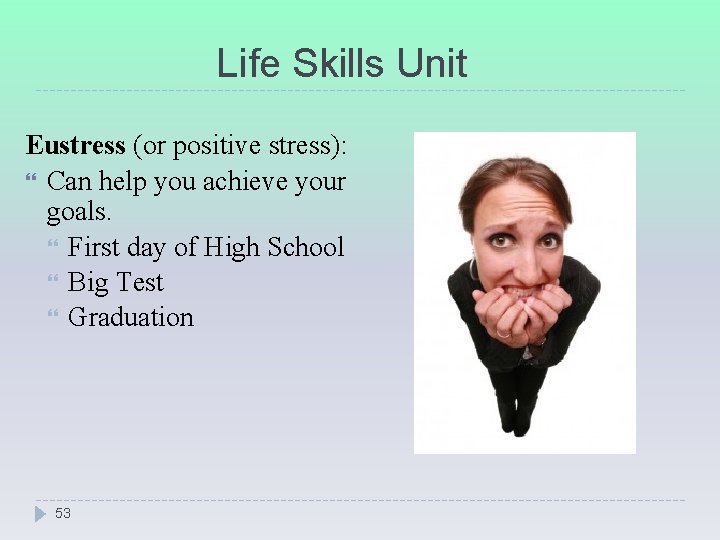
Life Skills Unit Eustress (or positive stress): Can help you achieve your goals. First day of High School Big Test Graduation 53
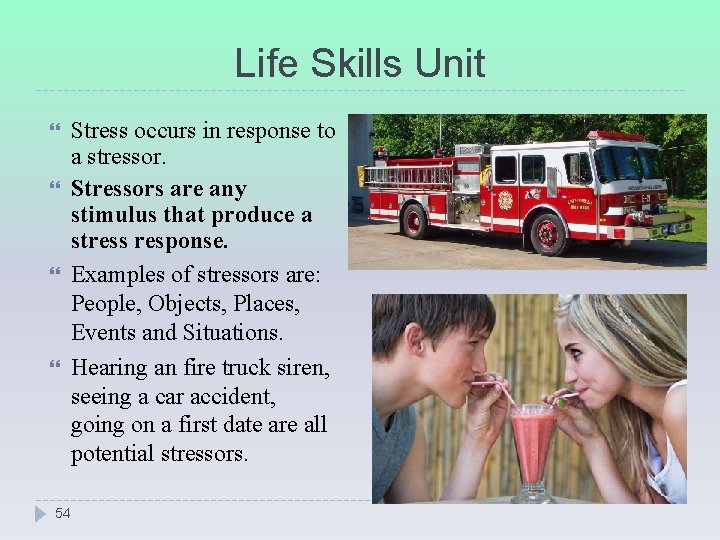
Life Skills Unit Stress occurs in response to a stressor. Stressors are any stimulus that produce a stress response. Examples of stressors are: People, Objects, Places, Events and Situations. Hearing an fire truck siren, seeing a car accident, going on a first date are all potential stressors. 54
Life Skills Unit 55 The Body’s Stress Response: When you perceive a situation or event to be a threat your body begins a stress response. Two major systems of the body are active during stress response: Nervous system Endocrine system
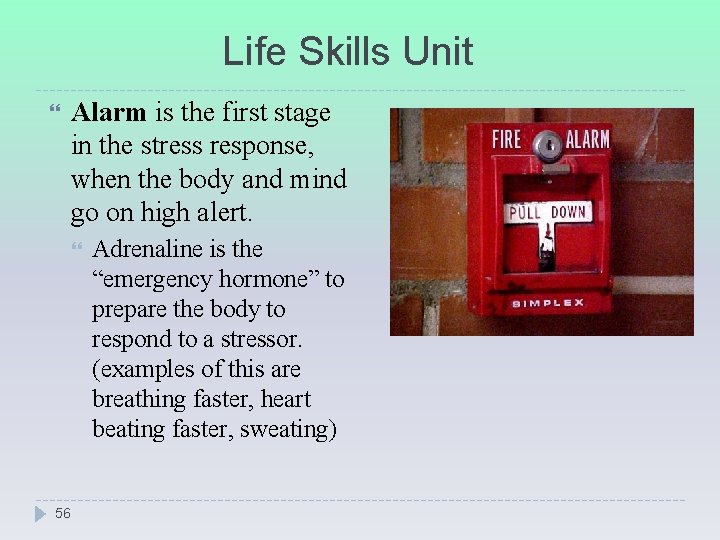
Life Skills Unit Alarm is the first stage in the stress response, when the body and mind go on high alert. 56 Adrenaline is the “emergency hormone” to prepare the body to respond to a stressor. (examples of this are breathing faster, heart beating faster, sweating)
Life Skills Unit Resistance is the second stage in the stress response, when the body tries to repair its damage from the stressful event and return to its normal stage. Fatigue is the third stage of the stress response, resulting in a tired feeling that lowers one’s level of activity. 57
Life Skills Unit There are (3) Types of Fatigue 1. Physical Fatigue: may occur at the end of a long day or after exercise. 2. Pathological Fatigue: is tiredness brought by overworking the body’s defenses in fighting disease. (ex. Having the flu, being overweight, having poor nutrition. ) 3. Psychological Fatigue: can result from constant worry, overwork, depression, boredom, and isolation 58
Life Skills Unit Stress & Your Personality Type Personality is another factor in how you handle stress, personalities are grouped into Type A and Type B personalities. Type A personality is described as a competitive, high achieving personality type that is most likely to develop heart disease or significant health problems. Type B personality is seen as a “laid back” noncompetitive personality type less likely to suffer from heart disease. 59
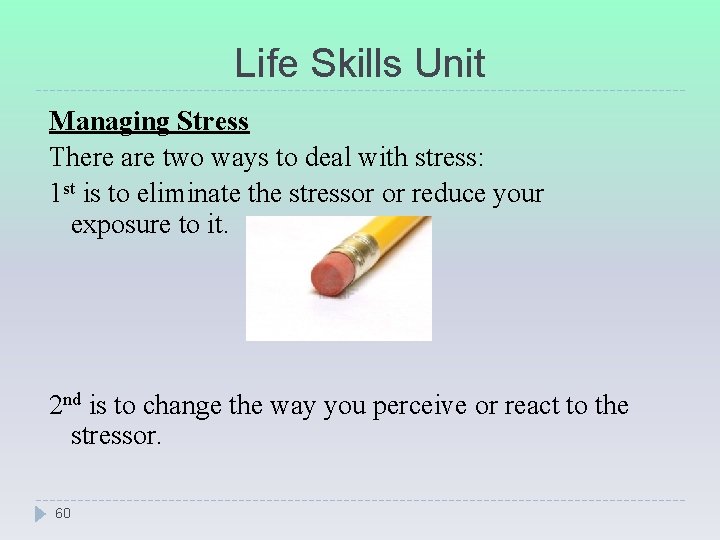
Life Skills Unit Managing Stress There are two ways to deal with stress: 1 st is to eliminate the stressor or reduce your exposure to it. 2 nd is to change the way you perceive or react to the stressor. 60
Life Skills Unit Ways to Manage Stress: Take a stand against over scheduling. Be realistic. Get a good night's sleep. Learn to relax. Treat your body well. Watch what you're thinking. Solve the little problems. 61
• Stress Management Strategies: Ways to Unwind – Wellcast https: //www. youtube. com/watch? v=0 f. L-pn 80 s-c 62
Life Skills Unit Coping With Loss There are different kinds of losses. Some examples are losing a relative, a pet, losing a big game, losing job, breaking up with a boyfriend or a girlfriend, moving to a new city. 63
Life Skills Unit When a loss occurs it is common to experience a grief reaction. Grief Reaction: is an individual’s total response to a major loss. There are five stages that people go through when they experience loss. 64
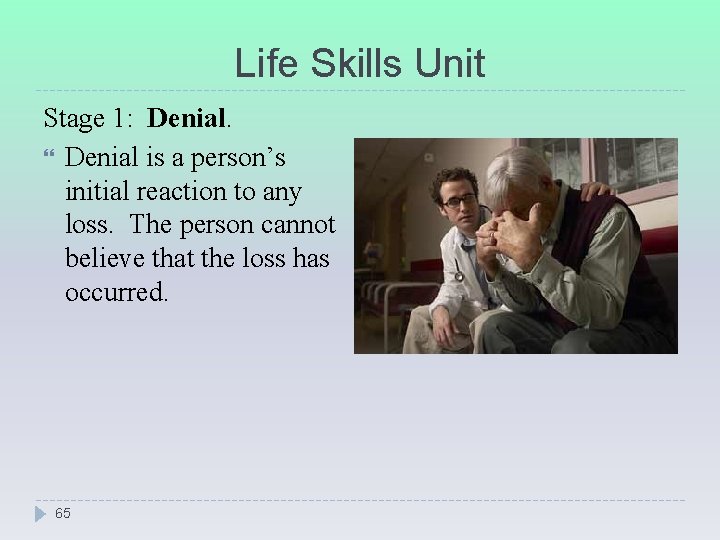
Life Skills Unit Stage 1: Denial is a person’s initial reaction to any loss. The person cannot believe that the loss has occurred. 65
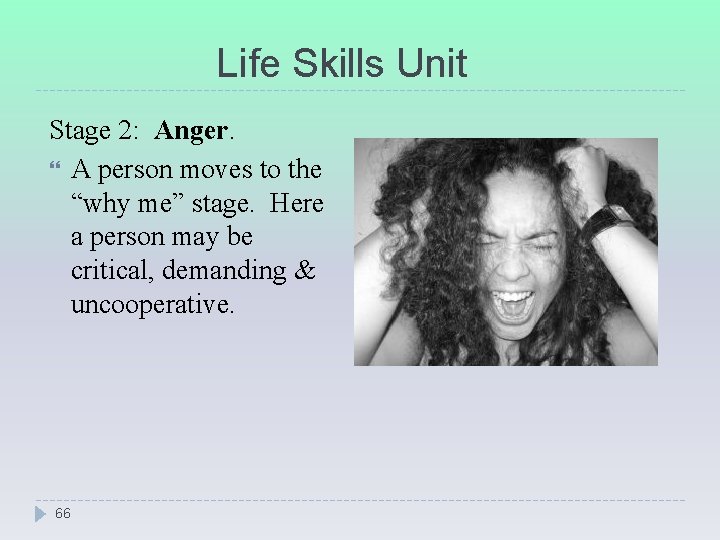
Life Skills Unit Stage 2: Anger. A person moves to the “why me” stage. Here a person may be critical, demanding & uncooperative. 66
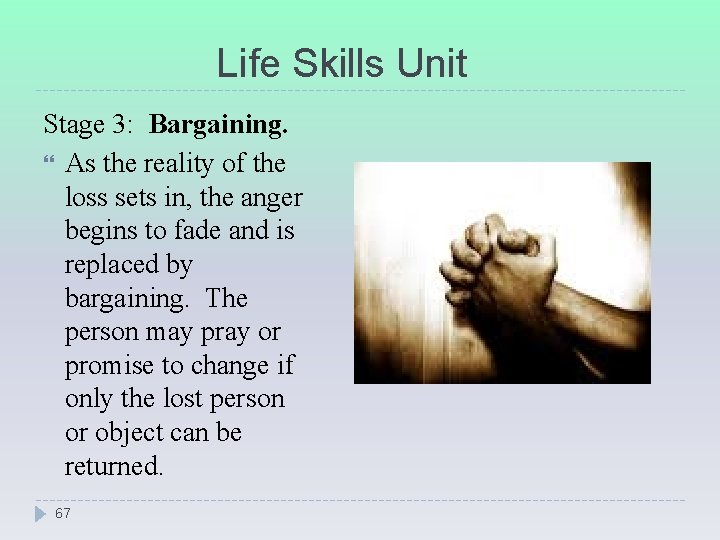
Life Skills Unit Stage 3: Bargaining. As the reality of the loss sets in, the anger begins to fade and is replaced by bargaining. The person may pray or promise to change if only the lost person or object can be returned. 67
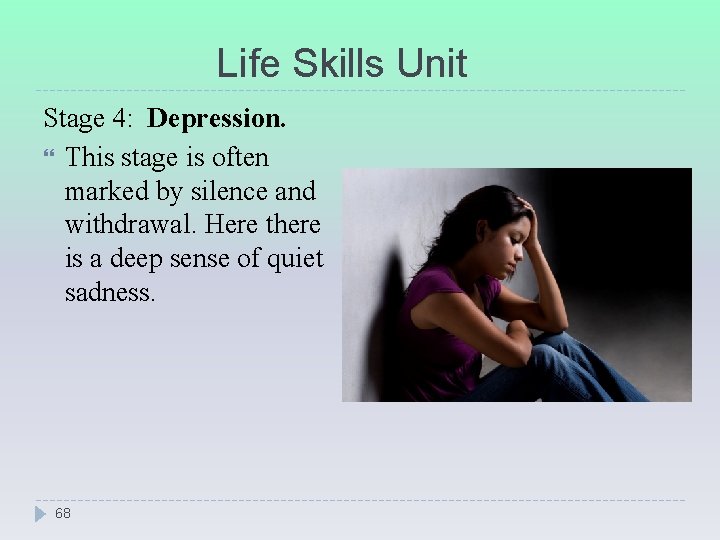
Life Skills Unit Stage 4: Depression. This stage is often marked by silence and withdrawal. Here there is a deep sense of quiet sadness. 68
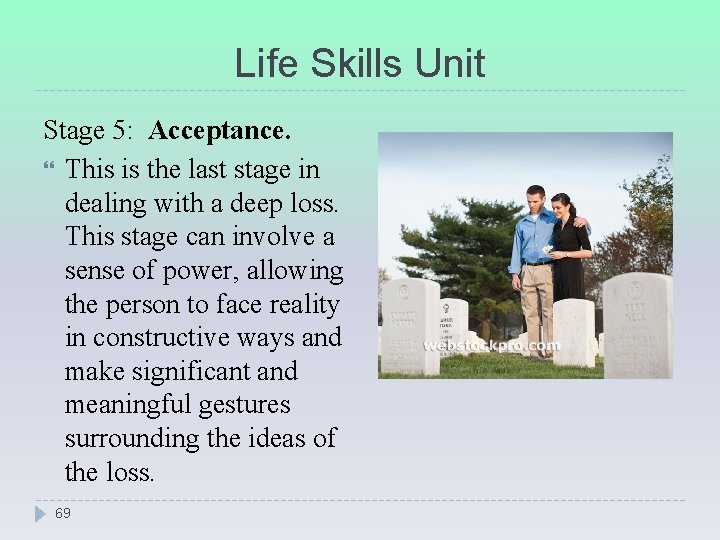
Life Skills Unit Stage 5: Acceptance. This is the last stage in dealing with a deep loss. This stage can involve a sense of power, allowing the person to face reality in constructive ways and make significant and meaningful gestures surrounding the ideas of the loss. 69
_______ is a way to manage stress A. B. C. D. 70 Take a stand against over scheduling Be realistic about goal setting Yell and scream Learn to not care so much
What is an individuals total response to a major loss A. B. C. D. 71 Denial Fatigue Stress response Grief reaction
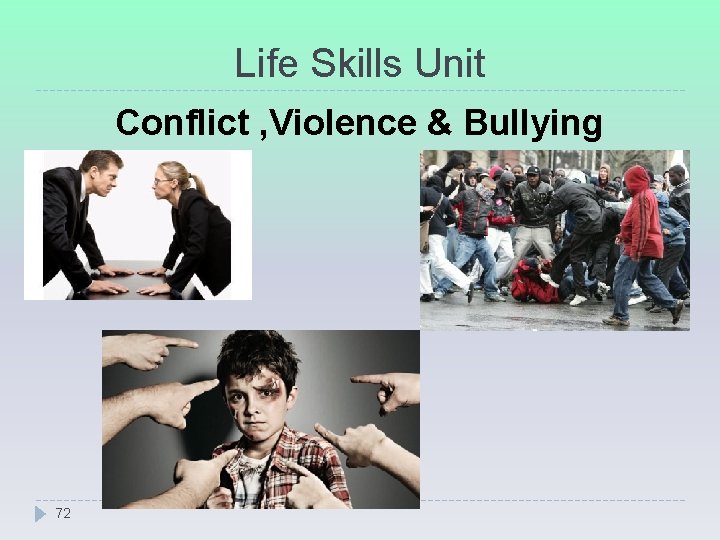
Life Skills Unit Conflict , Violence & Bullying 72
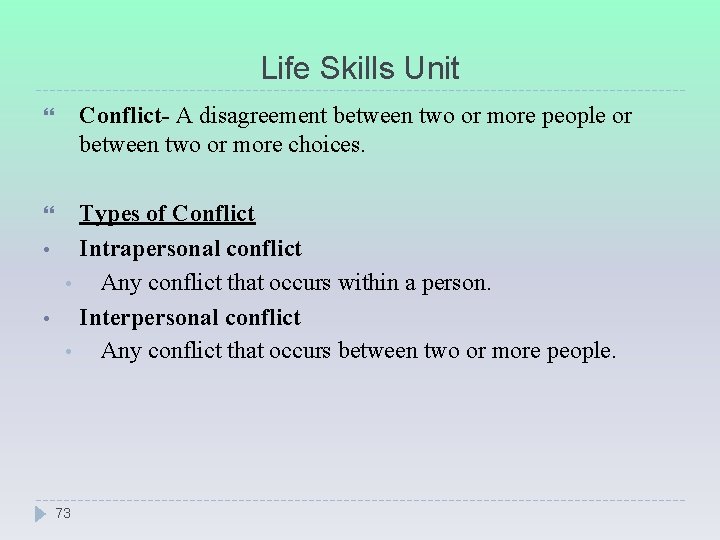
Life Skills Unit Conflict- A disagreement between two or more people or between two or more choices. Types of Conflict Intrapersonal conflict Any conflict that occurs within a person. Interpersonal conflict Any conflict that occurs between two or more people. • • 73
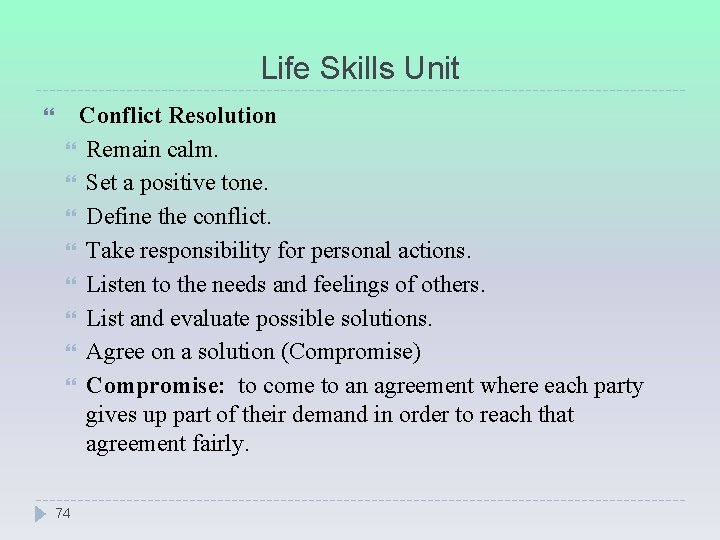
Life Skills Unit Conflict Resolution Remain calm. Set a positive tone. Define the conflict. Take responsibility for personal actions. Listen to the needs and feelings of others. List and evaluate possible solutions. Agree on a solution (Compromise) Compromise: to come to an agreement where each party gives up part of their demand in order to reach that agreement fairly. 74
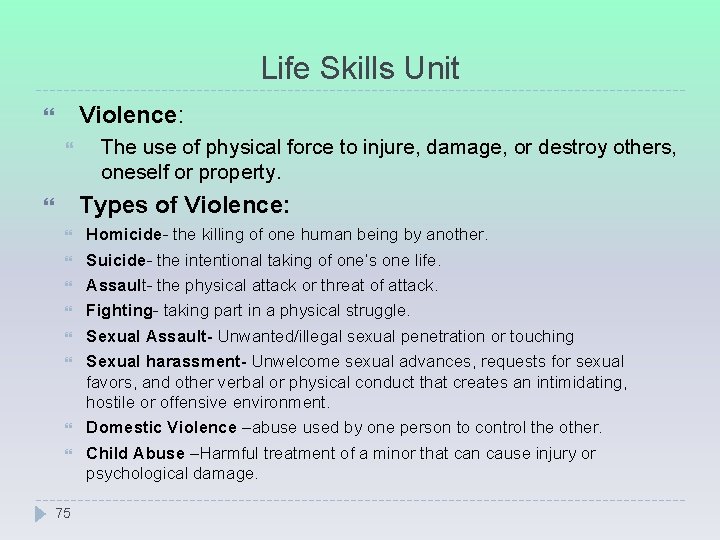
Life Skills Unit Violence: The use of physical force to injure, damage, or destroy others, oneself or property. Types of Violence: 75 Homicide- the killing of one human being by another. Suicide- the intentional taking of one’s one life. Assault- the physical attack or threat of attack. Fighting- taking part in a physical struggle. Sexual Assault- Unwanted/illegal sexual penetration or touching Sexual harassment- Unwelcome sexual advances, requests for sexual favors, and other verbal or physical conduct that creates an intimidating, hostile or offensive environment. Domestic Violence –abuse used by one person to control the other. Child Abuse –Harmful treatment of a minor that can cause injury or psychological damage.
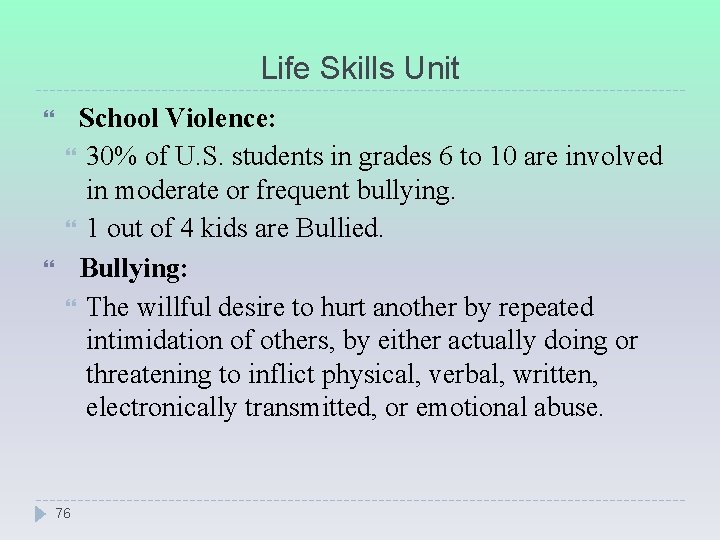
Life Skills Unit School Violence: 30% of U. S. students in grades 6 to 10 are involved in moderate or frequent bullying. 1 out of 4 kids are Bullied. Bullying: The willful desire to hurt another by repeated intimidation of others, by either actually doing or threatening to inflict physical, verbal, written, electronically transmitted, or emotional abuse. 76
Life Skills Unit Teasing Vs. Bullying: With teasing, the students have equal physical or psychological power and usually they are friends who remain friends. With bullying harm and humiliation are intended and felt by the victim. There is an imbalance of physical or psychological power between bully and victim. Bullying action is usually repetitive, occurring over a period of time. Teasing can easily escalate into bullying. 77
Life Skills Unit Effective Ways to Stop Bullying: Report the behavior to a school authority figure (teacher, principal, counselor etc. ) or parent. Be Assertive: Honest expression ideas, feelings and decisions while respecting the rights and feelings of others (Telling someone exactly how you feel). People with assertive behavior confront disrespectful behavior and do not ignore it. People with assertive behavior expect to be treated with respect and do not allow others to take advantage of them. 78
Life Skills Unit The Perpetrator, the Bystander and the Upstander. Perpetrators join in the bullying, escalate the harassment, or initiate new attacks on the target later. Bystanders attempt to remain uninvolved in the situation, often by looking on silently or finding an excuse to walk away. Upstanders take action to oppose the bullying in some way. They might intervene directly and tell the tormentors to stop, but they need not put themselves at risk in order to be helpful. Up standers might also respond in other ways such as making friends with the targeted student or seeking help from adults. 79
Life Skills Unit What Can An Up stander Do? Be clear. Be firm. Tell the aggressor(s) to stop! Refuse to join in and don't support the aggressor(s) by teasing, yelling, pushing, clapping Intervene as a group. The bully typically will leave the victim alone and not turn on another student if there are several standing together saying “quit it. ” 80
Life Skills Unit What You Can Do If You Are Bullied 81 Don’t lose your cool and do talk to a parent or an adult you can trust, such as a teacher, school counselor, principal or any school authority as soon as possible. Walk away and do not blame yourself for a bully's actions. Act confident. Hold your head up, use humor, stand up straight, make eye contact, and walk confidently. Be assertive! Try to make friends with other students. Avoid situations where bullying can happen. If necessary, take steps to rebuild your self-confidence. Do not resort to violence or carry a gun or other weapon.
Life Skills Unit Cyberbullying: When a child, preteen or teen is tormented, threatened, harassed, humiliated, embarrassed or otherwise targeted by another child, preteen or teen using the Internet, interactive and digital technologies or mobile phones. It has to have a minor on both sides, or at least have been instigated by a minor against another minor. Once adults become involved, it is plain and simple cyber-harassment or cyberstalking. 82
Life Skills Unit Cyberbullying: What Can You Do? Never give out or share personal information numbers. Never send a message to others when you are angry. Never open a message from someone you don’t know. Do not keep this to yourself! You are NOT alone! Tell an adult you know and trust! Inform your Internet, Instant Messaging or mobile phone service provider. Inform your local police. Don’t reply to messages from cyberbullies!! Do not erase or delete messages from cyberbullies. 83
Life Skills Unit Cyberbullying: What Can You Do? Never give out or share personal information numbers. Never send a message to others when you are angry. Never open a message from someone you don’t know. Do not keep this to yourself! You are NOT alone! Tell an adult you know and trust! Inform your Internet, Instant Messaging or mobile phone service provider. Inform your local police. Don’t reply to messages from cyberbullies!! Do not erase or delete messages from cyberbullies. 84
Life Skills Unit Depression and Suicide Depression: An emotional state characterized by exaggerated feelings of sadness, melancholy, dejection, worthlessness, emptiness, and hopelessness that are inappropriate and out of proportion to reality. Depression can appear at any age and is the major cause of suicide in this country. 85
Life Skills Unit Causes of Depression Heredity Environment Background and Personality Biochemical Factors Physical Illness 86
Life Skills Unit Common Myths About Depression is just a feeling. Only a few “crazy” people really get depressed. Depression only occurs when bad things happen. It’s easy to make yourself feel better. Only adults suffer from depression. 87
Life Skills Unit Suicide Prevention 88 Most people don’t want to die, they just want to end the emotional pain they are suffering. Life can seem extremely stressful, especially one with low self-esteem. A person under great stress experiences a crisis. Life seems UNBEARABLE!!!
Life Skills Unit Suicide Prevention When a person is depressed an event that at other times would be tolerable might seem impossible to deal with. Suicidal Mind Set: The feeling that suicide is the ONLY solution to life’s problems. **Suicide is a PERMANENT response to what is usually a TEMPORARY problem. 89
Life Skills Unit Suicide Prevention Possible Reasons for an Increase Teenage Suicide: 90 Rising divorce rates People relocate more often Pressure to succeed in school and future careers. Increase in alcohol/drug use. Lack ability to solve problems. Physical, sexual, emotional abuse.
Life Skills Unit Suicide Prevention Warning Signs: Verbal Direct statements: “Life isn’t worth living anymore. ” “I’d be better off dead. ” Indirect statements: “They’ll be sorry when I’m gone. ” “I just feel sad and lonely all the time. ” Warning Signs: Behavioral Withdrawal from family and friends. Change in school performance. Problems at home Giving away possessions or making a will. Not taking care of personal appearance. Abusing alcohol or drugs. 91
Life Skills Unit Suicide Prevention 90% OF PEOPLE WHO ATTEMPT OR COMPLETE SUICIDE GIVE WARNING SIGNS AS A CRY FOR HELP!!!!! How can you help? Take ANY threat seriously. Show the person that you care. Encourage the person to talk to a professional. Take charge!! Never keep it a secret…Tell someone! Remain with the person until help arrives. 92