
Welcome to Economics Terminology Economics Microeconomics Macroeconomics Want

- Slides: 19
Welcome to Economics!
Terminology Economics Microeconomics Macroeconomics Want Need Scarcity Goods Services Shortage Factors of Production Labor Capital Entrepreneurs
What is Economics? • The dictionary definition of Economics is that Economics is the study of the production, distribution, and consumption of goods and services. • Let’s make it simple! • The study of how people seek to satisfy their needs and wants by making choices.
Micro-Economics • Individual people and individual businesses
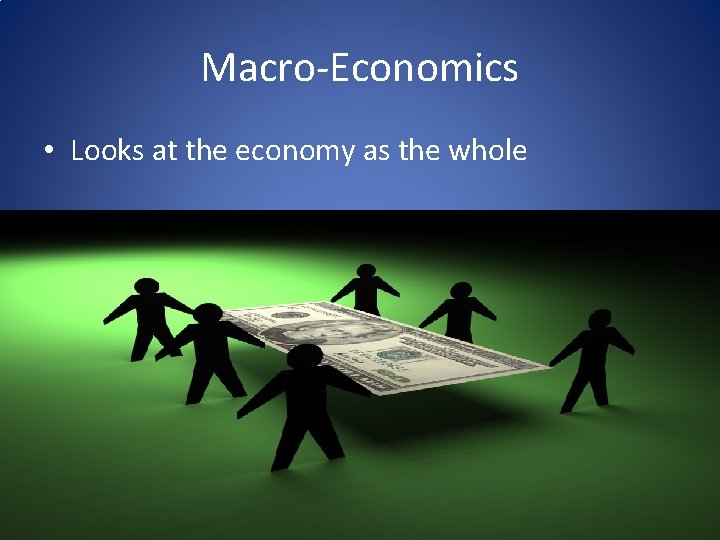
Macro-Economics • Looks at the economy as the whole
Needs • Something you must have to survive. Without a need, you will die.
Wants • Something one would like but is not necessary for survival.
Remember: • No matter how much money we have, we always want more. More is better!!! • http: //www. youtube. com/watch? v=48 tc. Ri. BNj 4 • Keeping Up With the Joneses
Scarcity • Why do we always want more? • Economists believe in a concept called scarcity. • Scarcity is the idea that our resources are limited but our wants and desires are unlimited. • If you had 50 dollars what would you buy? There are so many options but you cannot have everything. You must choose! This is the dilemma that economists look at.
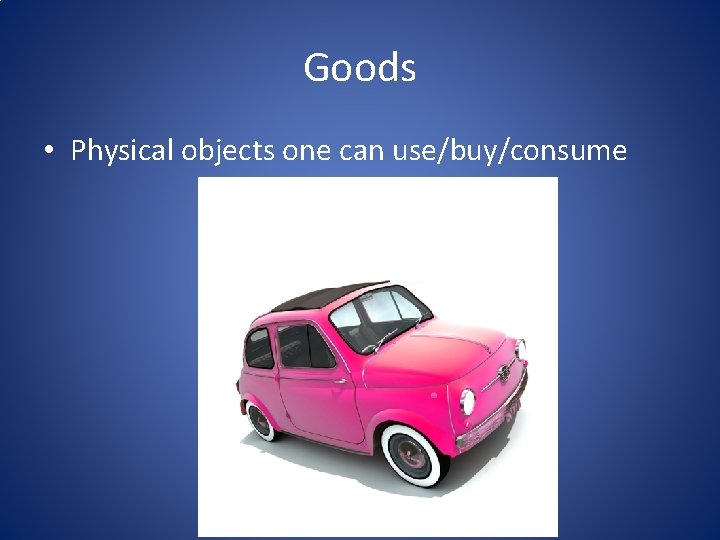
Goods • Physical objects one can use/buy/consume
Services • Actions or activities one does for another
REMEMBER • All goods and services we produce are scarce.
Shortage • When a good or service is no longer available – shortages occur when producers cannot or will not offer goods and services at the current prices • Don’t confuse scarcity for shortage!
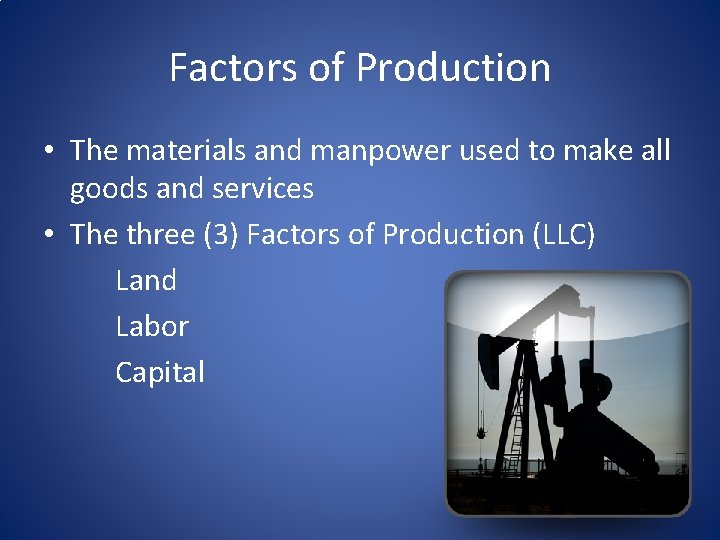
Factors of Production • The materials and manpower used to make all goods and services • The three (3) Factors of Production (LLC) Land Labor Capital
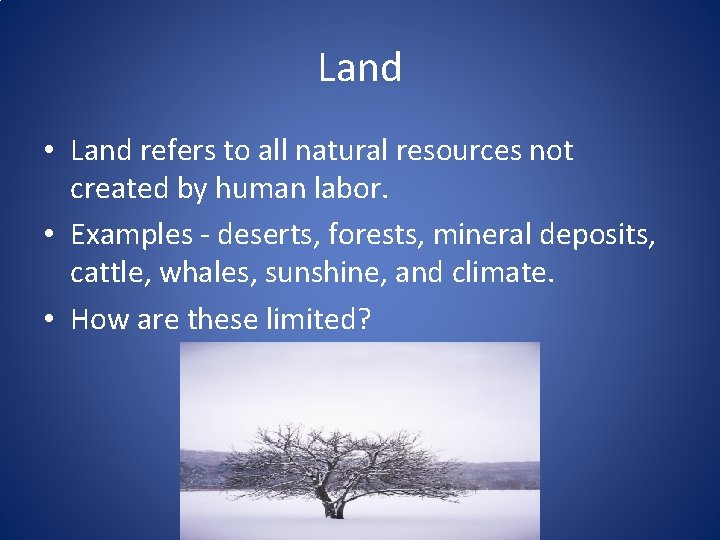
Land • Land refers to all natural resources not created by human labor. • Examples - deserts, forests, mineral deposits, cattle, whales, sunshine, and climate. • How are these limited?
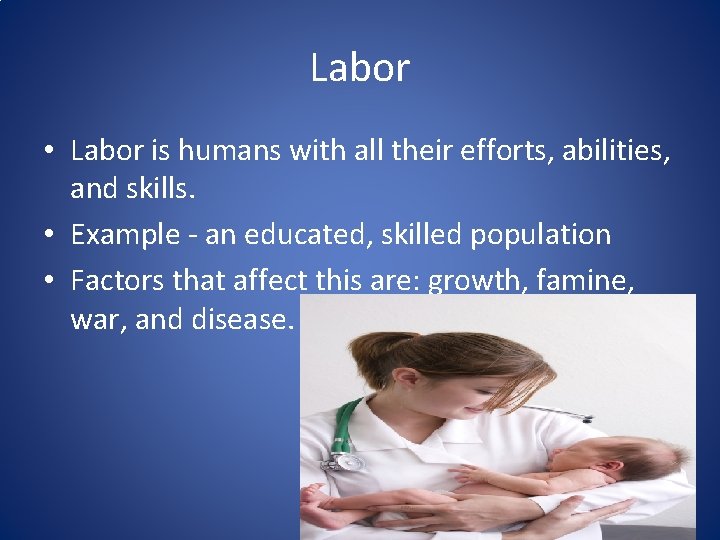
Labor • Labor is humans with all their efforts, abilities, and skills. • Example - an educated, skilled population • Factors that affect this are: growth, famine, war, and disease.
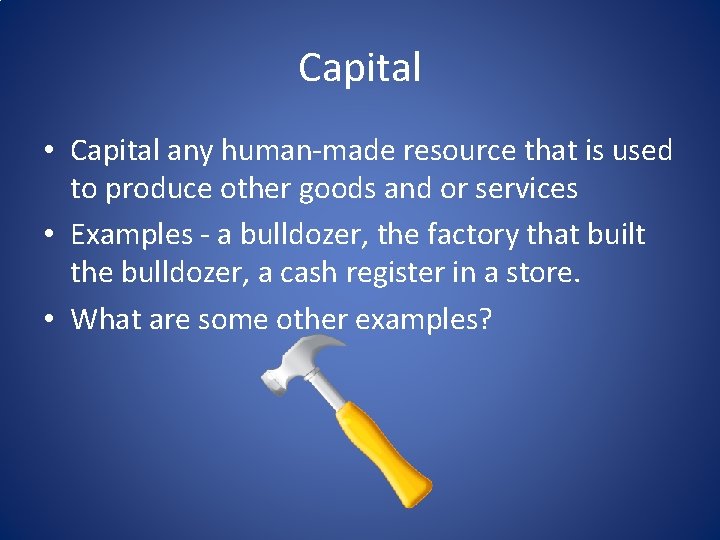
Capital • Capital any human-made resource that is used to produce other goods and or services • Examples - a bulldozer, the factory that built the bulldozer, a cash register in a store. • What are some other examples?
Two Types of Capital Physical Capital – Human made objects used to create or make other goods and services Human Capital – Knowledge and skill a worker gains through education and experience
Entrepreneurs are people who decide how to combine land, labor, and capital resources to create new goods and services. • Henry Ford • Bill Gates