
Welcome to CPPC 2019 Alison Stirling www metoffice
- Slides: 14
Welcome to CPPC 2019! Alison Stirling www. metoffice. gov. uk © Crown Copyright 2018 Met Office
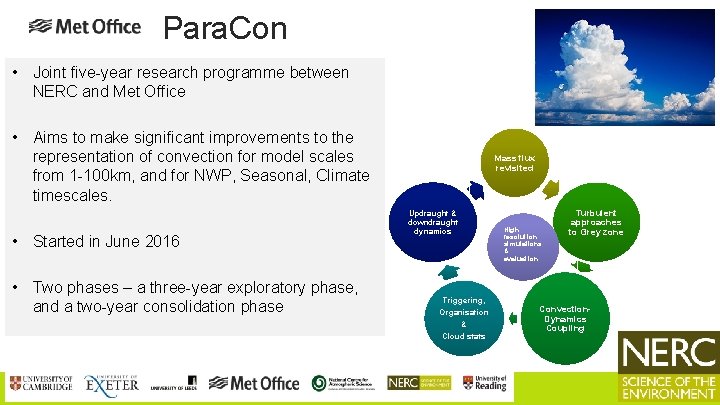
Para. Con • Joint five-year research programme between NERC and Met Office • Aims to make significant improvements to the representation of convection for model scales from 1 -100 km, and for NWP, Seasonal, Climate timescales. • Started in June 2016 • Two phases – a three-year exploratory phase, and a two-year consolidation phase Mass flux revisited Updraught & downdraught dynamics Triggering, Organisation & Cloud stats High resolution simulations & evaluation Turbulent approaches to Grey zone Convection. Dynamics Coupling
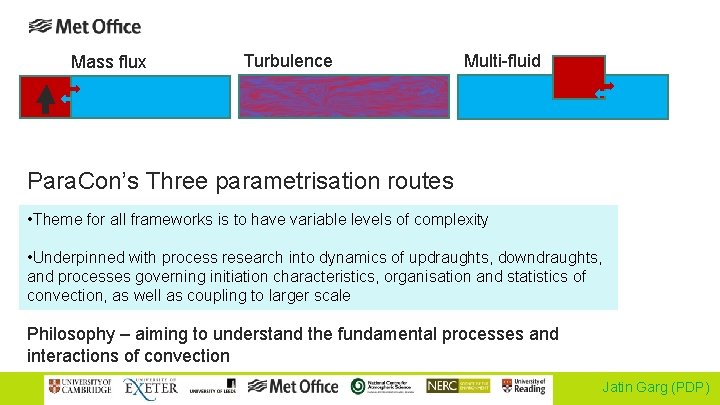
Mass flux Turbulence Multi-fluid Para. Con’s Three parametrisation routes • Theme for all frameworks is to have variable levels of complexity • Underpinned with process research into dynamics of updraughts, downdraughts, and processes governing initiation characteristics, organisation and statistics of convection, as well as coupling to larger scale Philosophy – aiming to understand the fundamental processes and interactions of convection Jatin Garg (PDP)
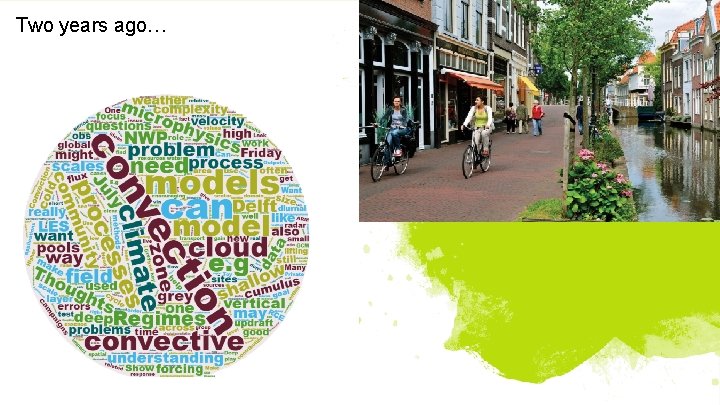
Two years ago…
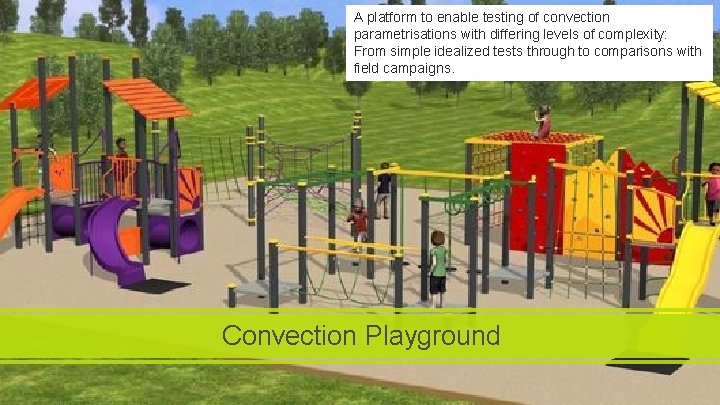
A platform to enable testing of convection parametrisations with differing levels of complexity: From simple idealized tests through to comparisons with field campaigns. Convection Playground
Delft Convection Challenges • 1) Show that convective mass flux is (or is not) usefully separable into: • updraft velocity (related to vertical instability), and • updraft area fraction (related to subcloud lifting energy and large scale forcing). • 2) Show that cold pools are (or are not) key sources of subcloud lifting energy, convective organization, and convective memory. • 3) Show that the organization of convection and its near environment is (or is not) key for representing the reduction of cloud buoyancy due to entrainment. • 4) Show transitions between different convective states (e. g. shallow to deep convection) depend on properties of the flow, forcing, and boundary conditions.
More Delft challenges • What is the role of microphysics in determining the humidity profile? • What determines the water fluxes in the atmosphere? • What is the interaction of convection with the larger circulation?
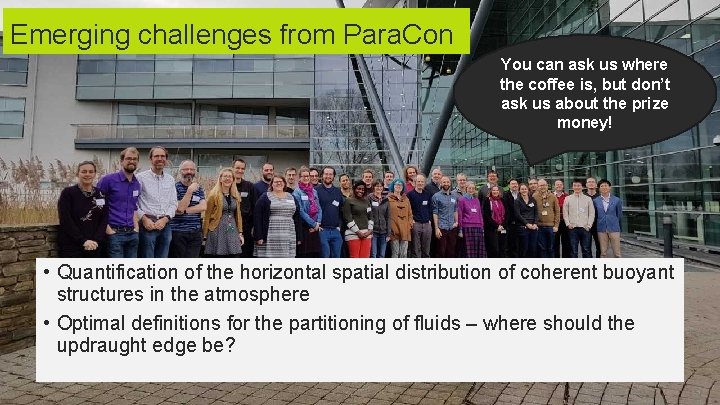
Emerging challenges from Para. Con You can ask us where the coffee is, but don’t ask us about the prize money! • Quantification of the horizontal spatial distribution of coherent buoyant structures in the atmosphere • Optimal definitions for the partitioning of fluids – where should the updraught edge be?
www. metoffice. gov. uk © Crown copyright Met Office © Crown Copyright 2016, Met Office
www. metoffice. gov. uk © Crown copyright Met Office © Crown Copyright 2016, Met Office
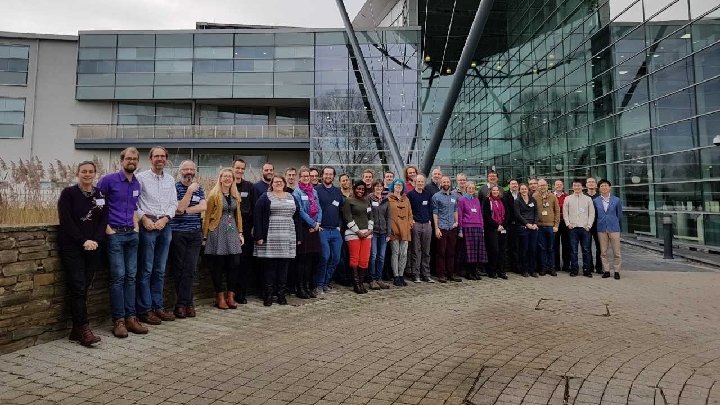
CPPC 2019 Exeter • What are the latest priorities for the convection parametrisation community? • How can we help each other to make progress on these? • Have a great week!
www. metoffice. gov. uk © Crown copyright Met Office © Crown Copyright 2016, Met Office