
Welcome to Biology Welcome 10213 Objective Students will
Welcome to Biology!
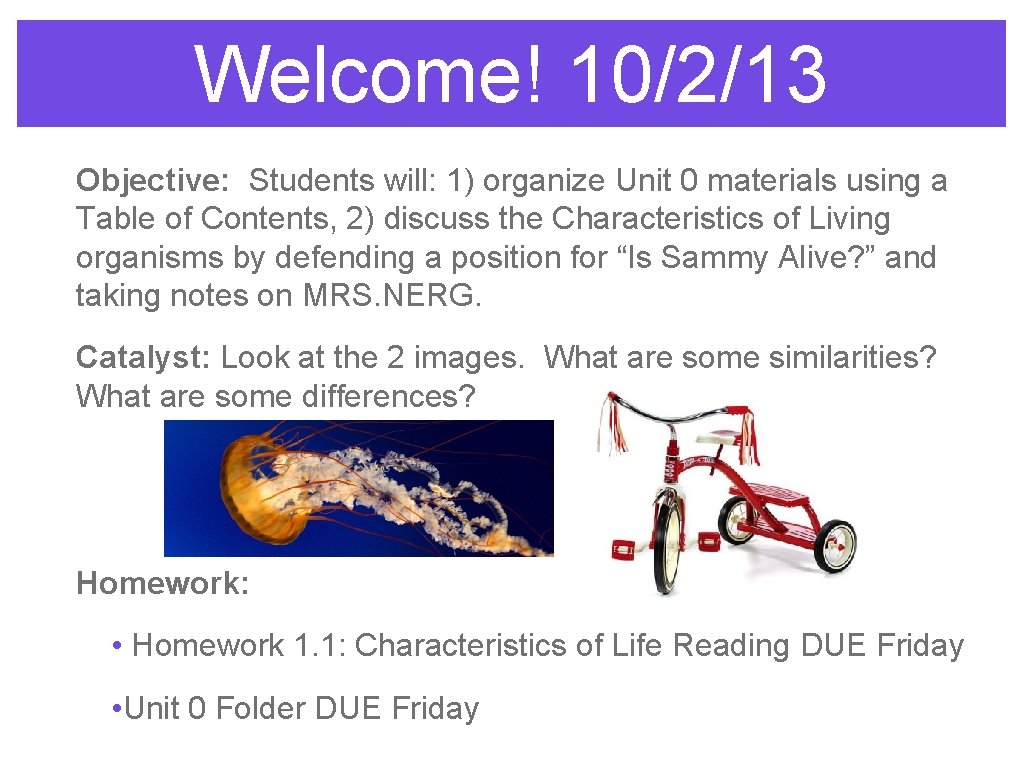
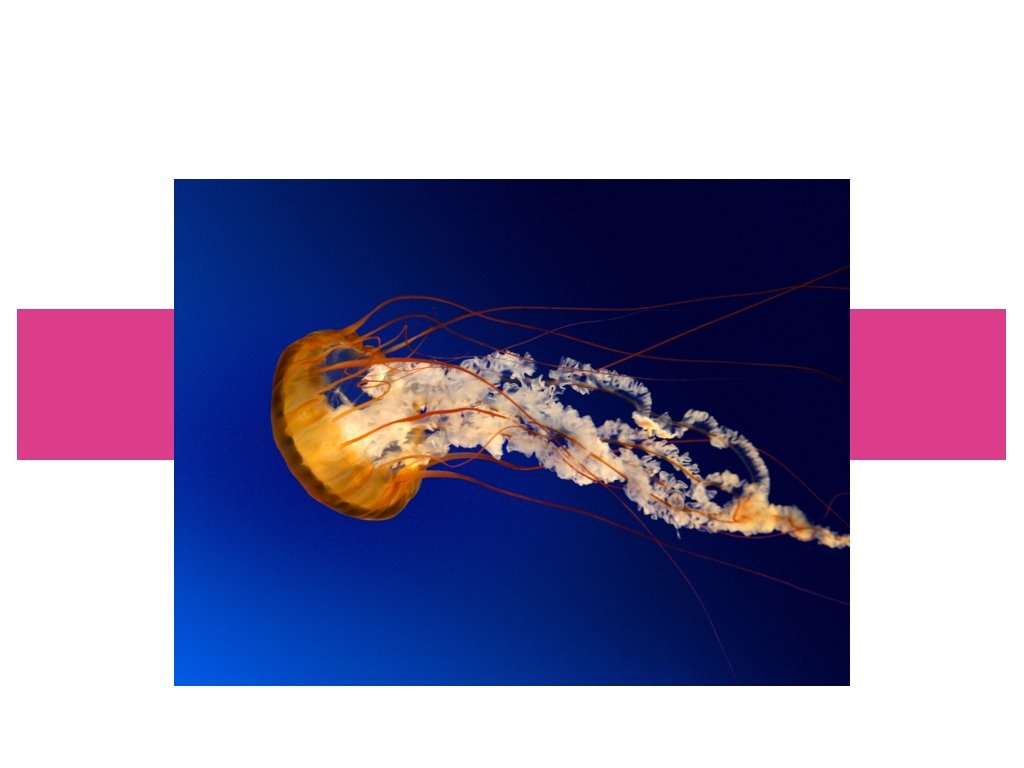
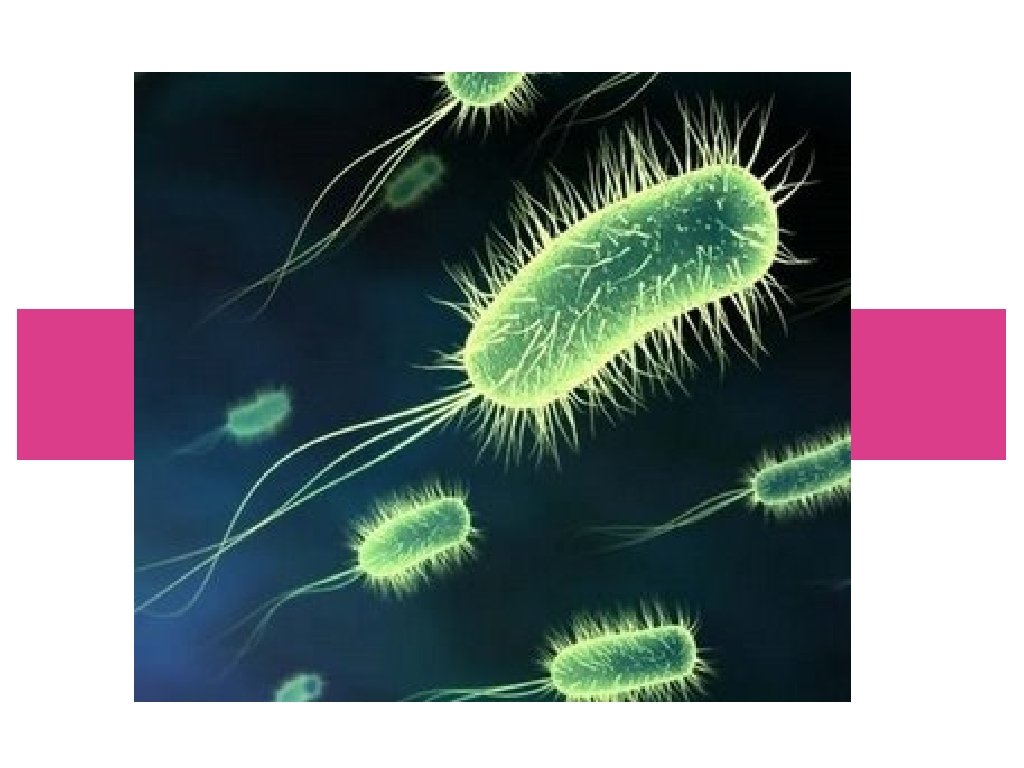
Welcome! 10/2/13 Objective: Students will: 1) organize Unit 0 materials using a Table of Contents, 2) discuss the Characteristics of Living organisms by defending a position for “Is Sammy Alive? ” and taking notes on MRS. NERG. Catalyst: Look at the 2 images. What are some similarities? What are some differences? Homework: • Homework 1. 1: Characteristics of Life Reading DUE Friday • Unit 0 Folder DUE Friday
Agenda • Catalyst • Organize Unit 0 Materials • Is Sammy Alive? • MRS. NERG Notes • Independent Practice • Exit Slip
1. Come to class ON TIME and PREPARED. 2. RESPECT people, materials, ideas, and learning. 3. LISTEN and FOLLOW directions. 4. Give 100% every day. 5. Show good character (INTEGRITY)
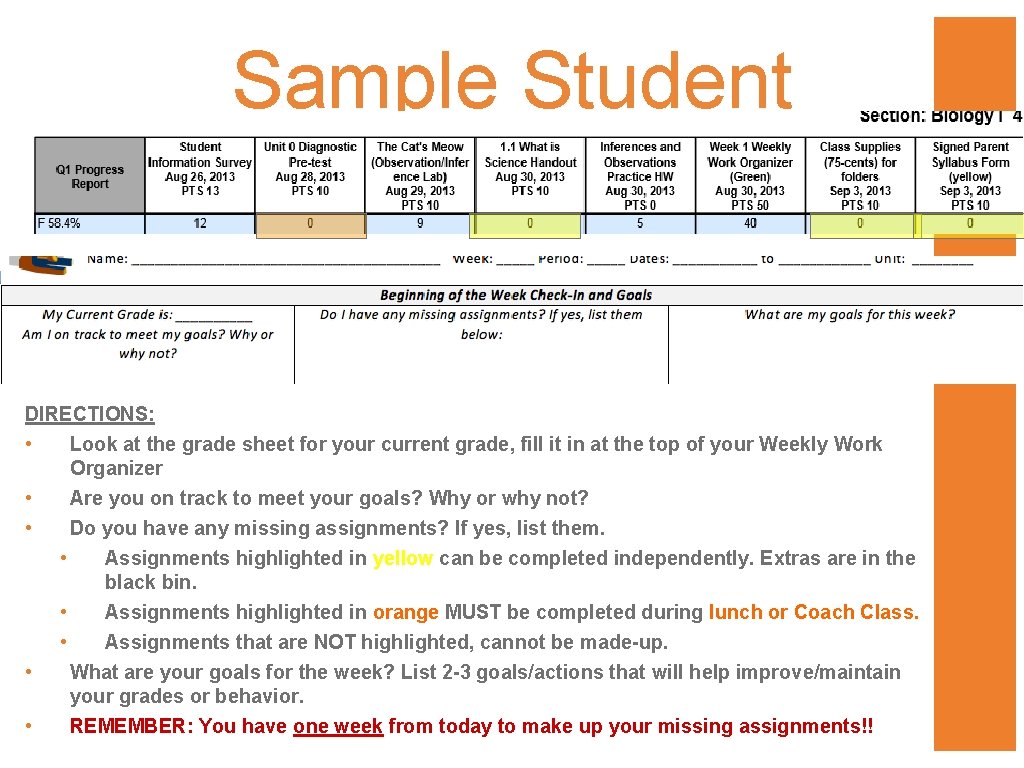
Sample Student DIRECTIONS: • Look at the grade sheet for your current grade, fill it in at the top of your Weekly Work Organizer • Are you on track to meet your goals? Why or why not? • Do you have any missing assignments? If yes, list them. • Assignments highlighted in yellow can be completed independently. Extras are in the black bin. • Assignments highlighted in orange MUST be completed during lunch or Coach Class. • Assignments that are NOT highlighted, cannot be made-up. • What are your goals for the week? List 2 -3 goals/actions that will help improve/maintain your grades or behavior. • REMEMBER: You have one week from today to make up your missing assignments!!
Getting Organized • You should have the pages listed on the Unit 0 Table of Contents. • Put them in order in your Purple folder. • Add page numbers to the bottom of each page. • If you did not bring in your 75 -cents (or see Mrs. Reigel after-school), and do not have a folder… • organize your papers, add page numbers and staple them together until you get a folder. • You MUST have your papers in a folder to get a grade for the project AND for folder-quizzes!!
Is Sammy Alive?
Is Sammy Alive? • Stand up. Listen to the story about Sammy. • Periodically, I will ask, “Is Sammy alive? ” Remain standing if you think Sammy is still alive. Sit down if you think he is no longer considered living. • When you sit down, answer the following questions on a notecard: • Why do you think Sammy is no longer considered living? • What piece of information/evidence changed your mind?
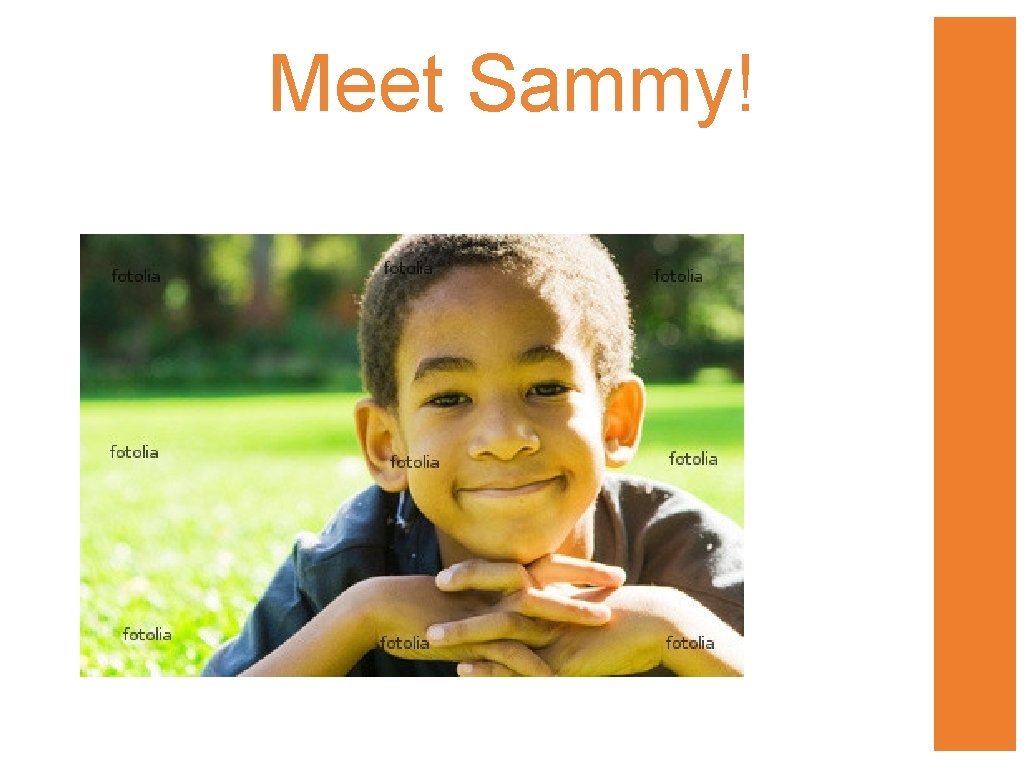
Meet Sammy!
Is Sammy Alive? • Stand up. Listen to the story about Sammy. • Periodically, I will ask, “Is Sammy alive? ” Remain standing if you think Sammy is still alive. Sit down if you think he is no longer considered living. • When you sit down, answer the following questions on a notecard: • Why do you think Sammy is no longer considered living? • What piece of information/evidence changed your mind?
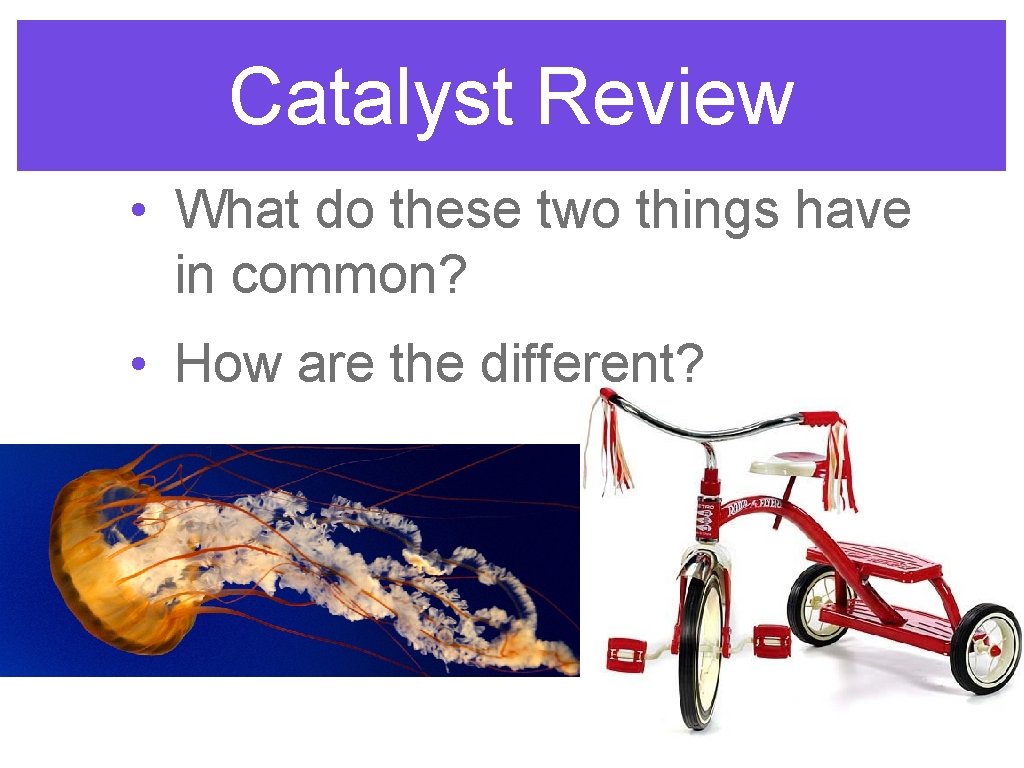
Catalyst Review • What do these two things have in common? • How are the different?
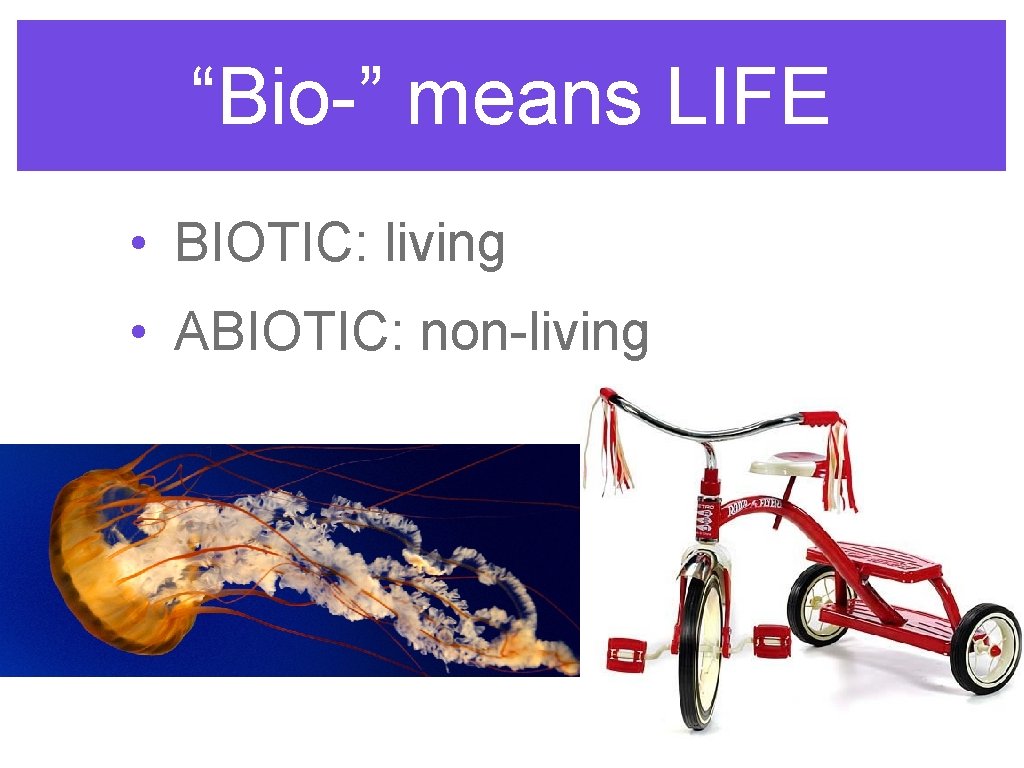
“Bio-” means LIFE • BIOTIC: living • ABIOTIC: non-living
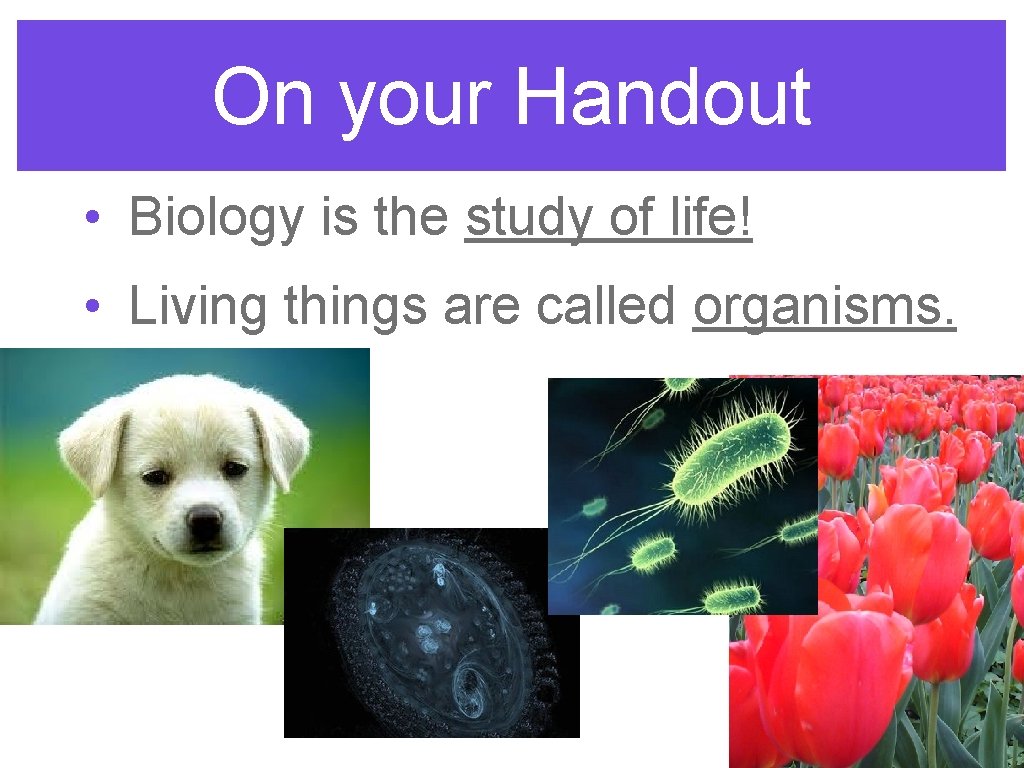
On your Handout • Biology is the study of life! • Living things are called organisms.

Meet MRS. NERG!
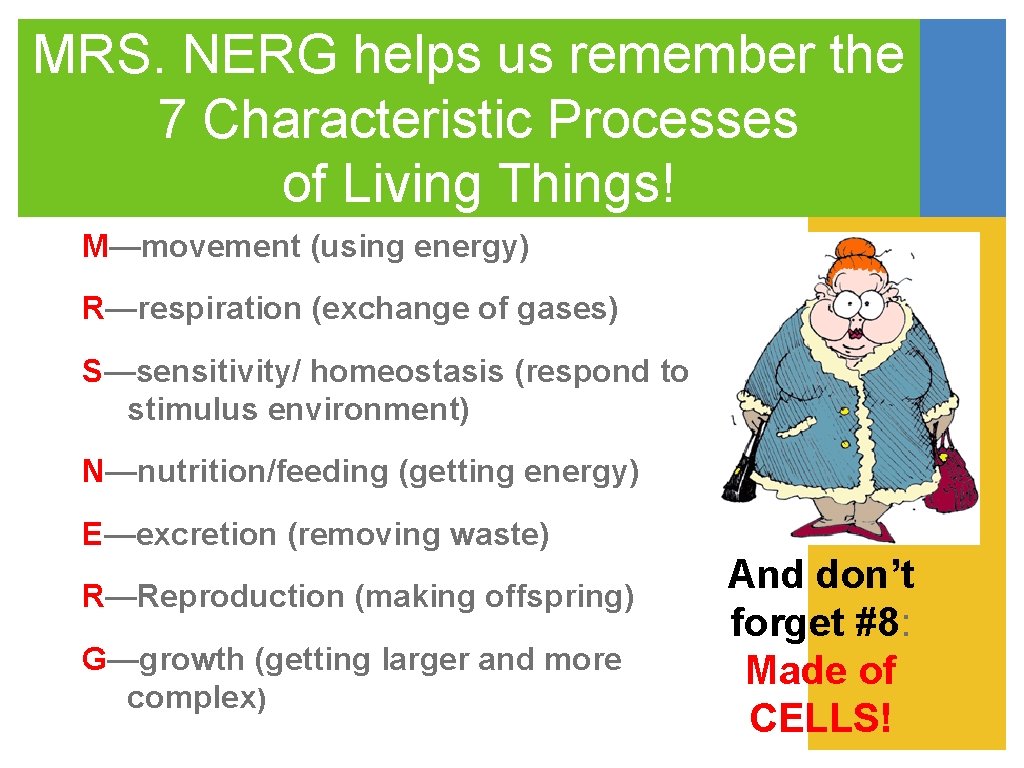
MRS. NERG helps us remember the 7 Characteristic Processes of Living Things! M—movement (using energy) R—respiration (exchange of gases) S—sensitivity/ homeostasis (respond to stimulus environment) N—nutrition/feeding (getting energy) E—excretion (removing waste) R—Reproduction (making offspring) G—growth (getting larger and more complex) And don’t forget #8: Made of CELLS!
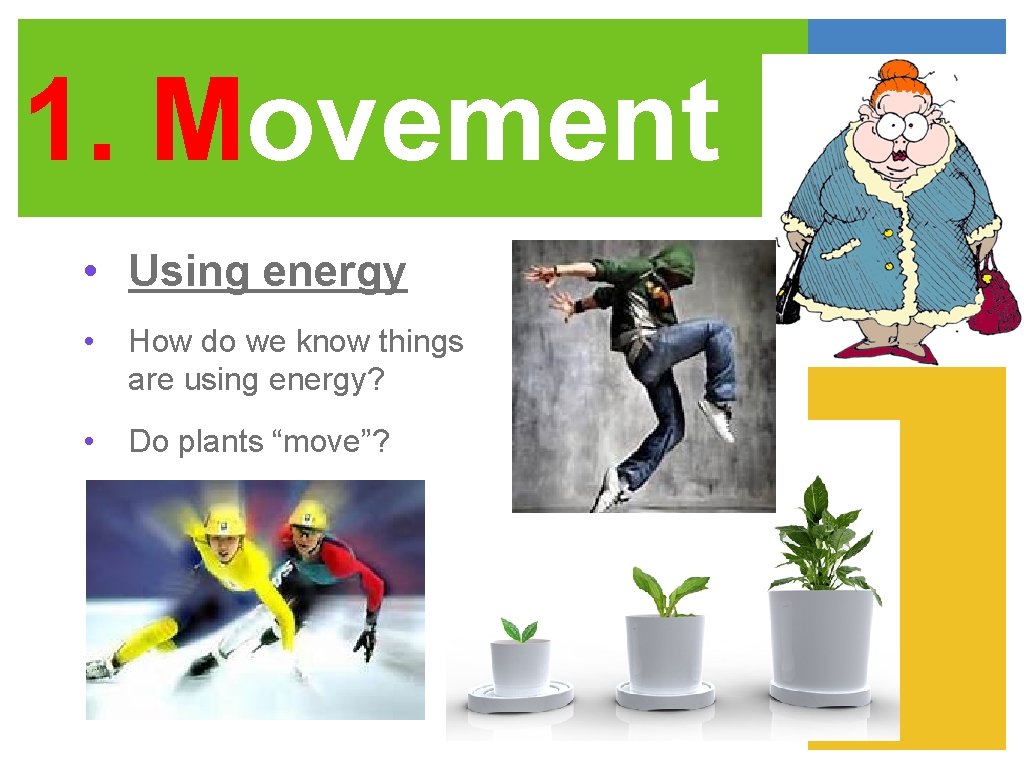
1. Movement • Using energy • How do we know things are using energy? • Do plants “move”?
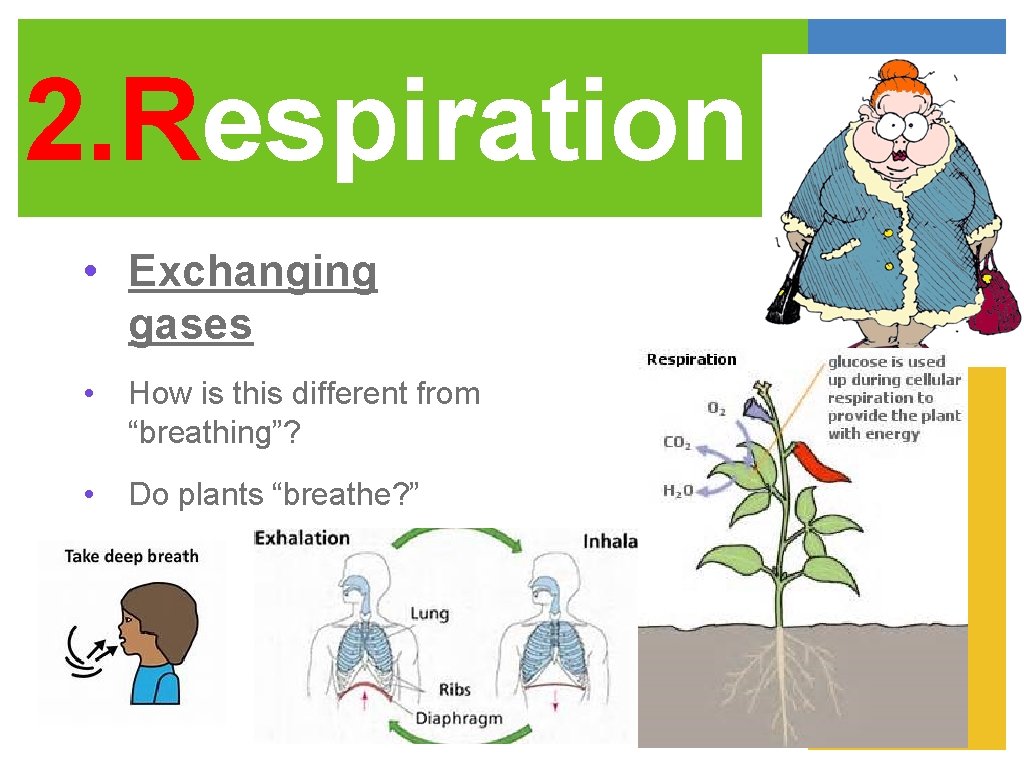
2. Respiration • Exchanging gases • How is this different from “breathing”? • Do plants “breathe? ”
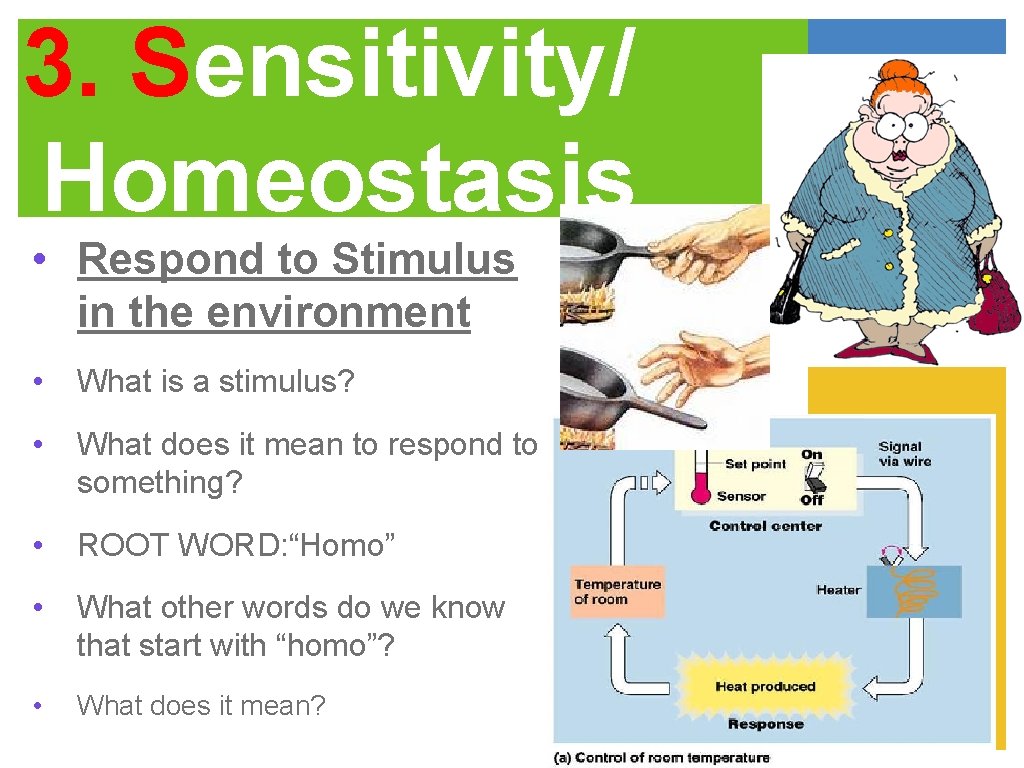
3. Sensitivity/ Homeostasis • Respond to Stimulus in the environment • What is a stimulus? • What does it mean to respond to something? • ROOT WORD: “Homo” • What other words do we know that start with “homo”? • What does it mean?
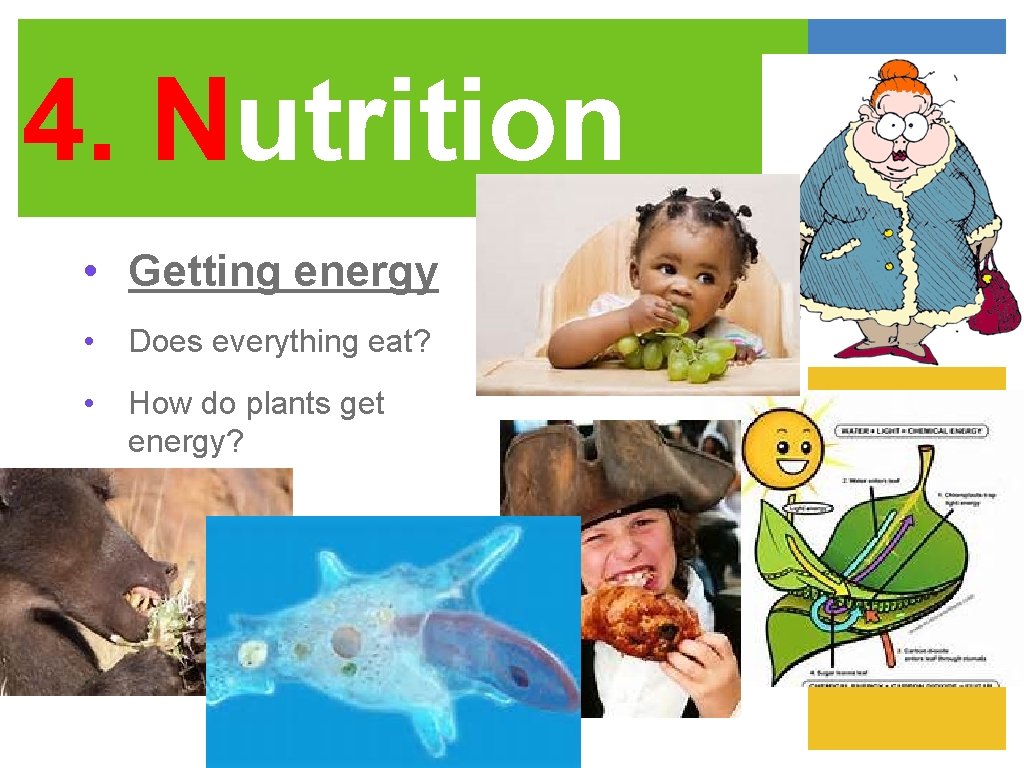
4. Nutrition • Getting energy • Does everything eat? • How do plants get energy?
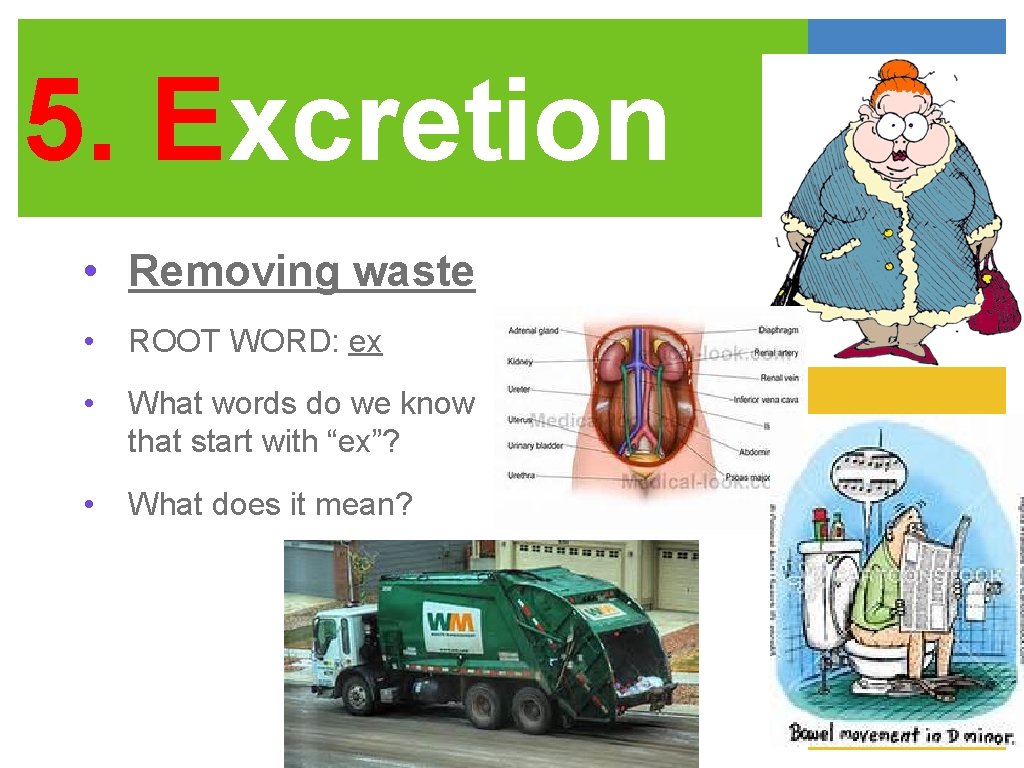
5. Excretion • Removing waste • ROOT WORD: ex • What words do we know that start with “ex”? • What does it mean?
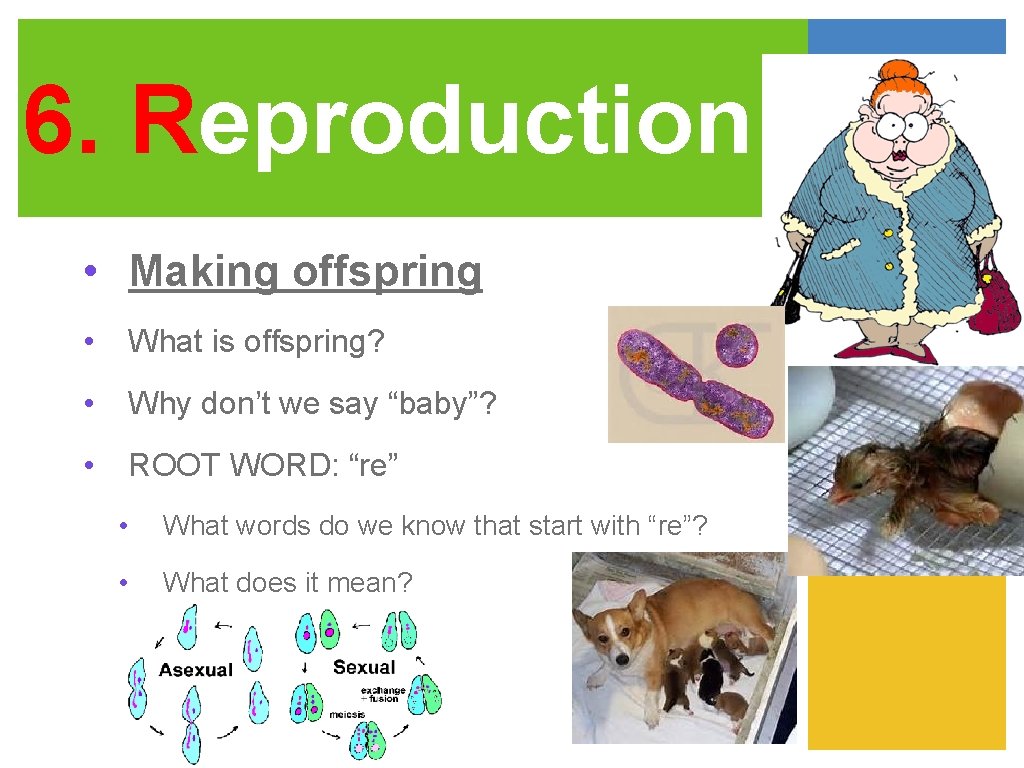
6. Reproduction • Making offspring • What is offspring? • Why don’t we say “baby”? • ROOT WORD: “re” • What words do we know that start with “re”? • What does it mean?
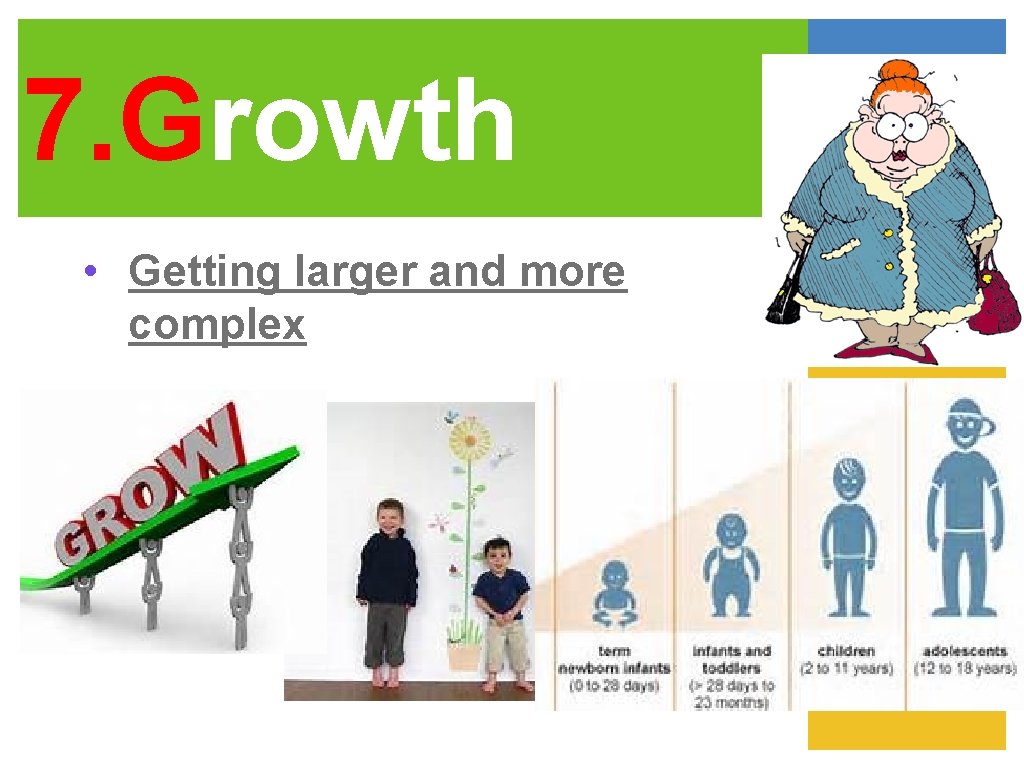
7. Growth • Getting larger and more complex
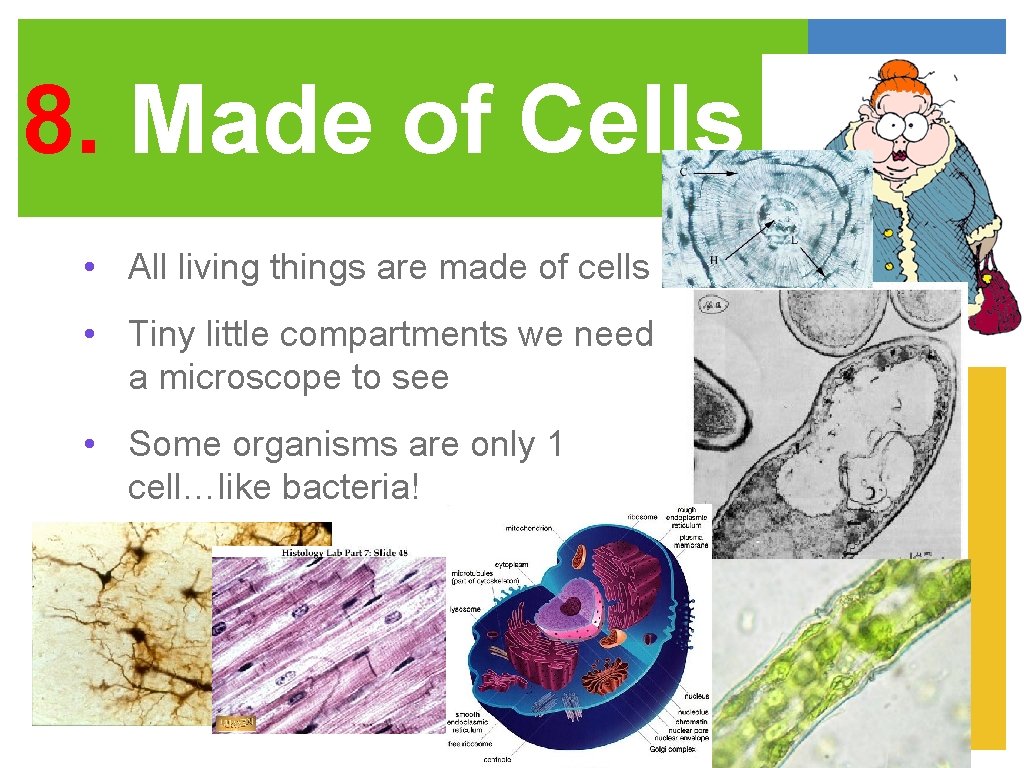
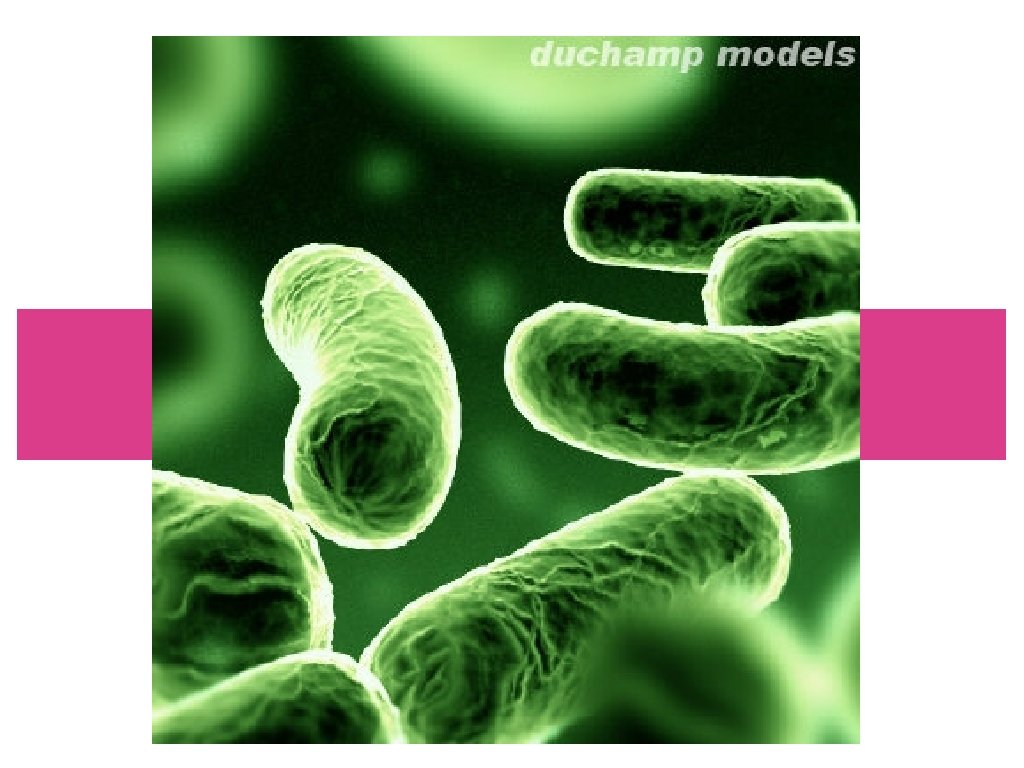
8. Made of Cells • All living things are made of cells • Tiny little compartments we need a microscope to see • Some organisms are only 1 cell…like bacteria!
MRS. NERG helps us remember the 7 Characteristic Processes of Living Things! M—movement (using energy) R—respiration (exchange of gases) S—sensitivity/ homeostasis (respond to stimulus environment) N—nutrition/feeding (getting energy) E—excretion (removing waste) R—Reproduction (making offspring) G—growth (getting larger and more complex) And don’t forget #8: Made of CELLS!
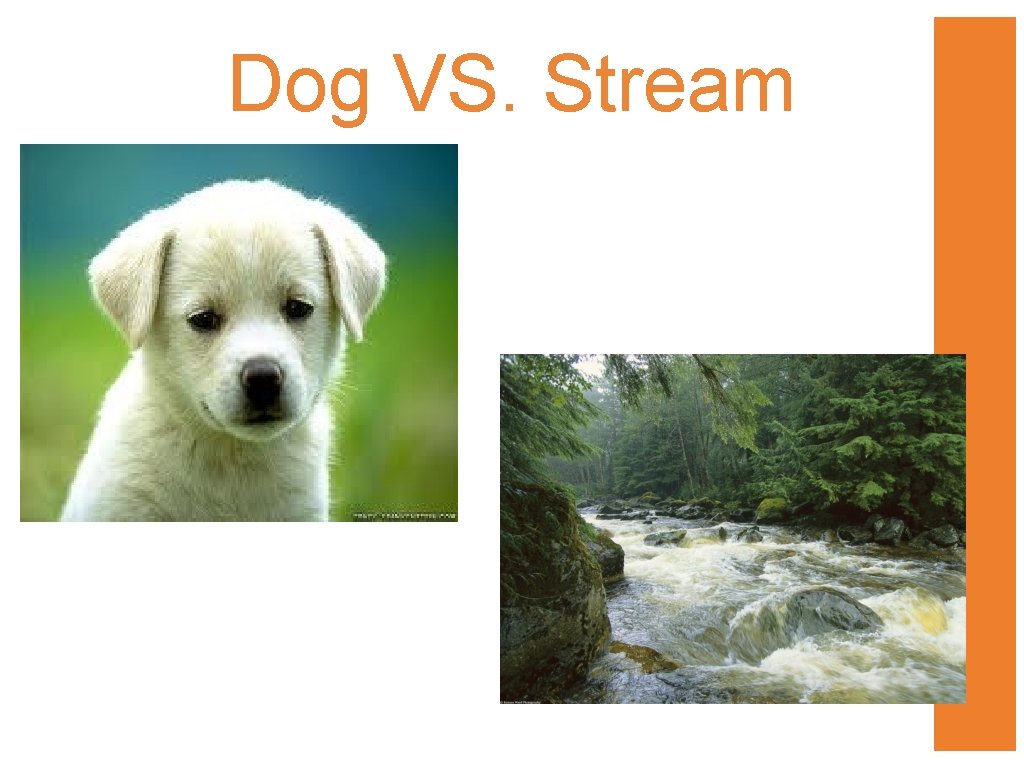
Dog VS. Stream
Dog vs. Stream • In your groups, fill out the table on your handout comparing a dog to a fast moving stream. • Explain HOW it shows each feature of life IF it does. • Ex. Characteristic Dog Fast Moving Stream Reproduces? Yes, a dog can reproduce and have puppies. No, it does not create more of itself, it is a collection of water from other places.
Now you try! • INDEPENDENTLY complete the back of the handout. Use your notes on the front to help you • Some vocab to know: • Stimulus—something that causes a response (ex. The sun makes you sweat. The heat of the sun is a stimulus for sweating) • Response—the resulting action of a stimulus; what happens (ex. Sweating)

Is it Alive?

Let’s Review






Exit Slip • EXIT SLIP: TURN IN: • Blue Work Organizer • Is Sammy Alive? Writing • PUT IN YELLOW FOLDER: Give 3 examples of • Notes how YOU demonstrate • TAKE HOME: characteristics • Homework 1. 1: Characteristics of Life Reading of living things! • • Purple Unit 0 Folder (DUE FRIDAY) Make sure ALL papers are put away, trash thrown away, desk is neat

Have a great day!
- Slides: 40