
Welcome to Biology NOTES http tinyurl comSP 16
Welcome to Biology! NOTES: http: //tinyurl. com/SP 16 -317 and 18 Date: 10/29/15 Topic: Lesson 3. 17 and (Light Dependent Reactions) and 3. 18 (Photosynthesis and Glucose The student will be able to describe the products of the light dependent reactions of photosynthesis

WELCOME TO SMALL GROUP! LET ME KNOW WHAT I CAN DO FOR YOU.
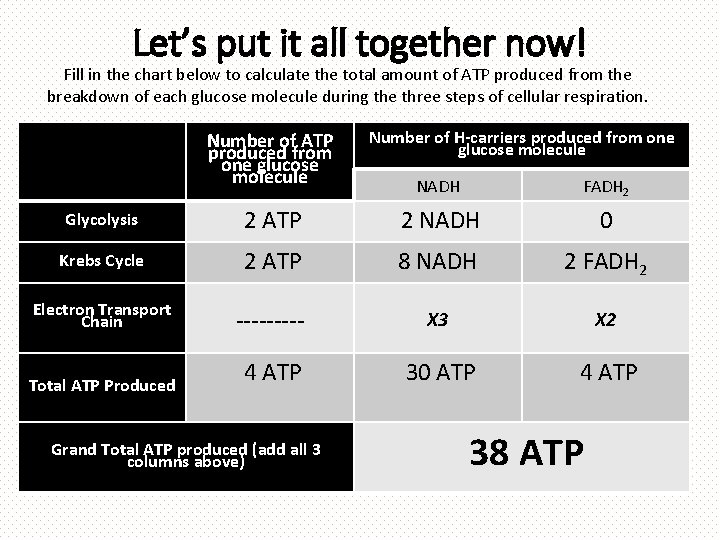
Let’s put it all together now! Fill in the chart below to calculate the total amount of ATP produced from the breakdown of each glucose molecule during the three steps of cellular respiration. Number of ATP produced from one glucose molecule Number of H-carriers produced from one glucose molecule NADH FADH 2 Glycolysis 2 ATP 2 NADH 0 Krebs Cycle 2 ATP 8 NADH 2 FADH 2 Electron Transport Chain ----- X 3 X 2 4 ATP 30 ATP 4 ATP Total ATP Produced Grand Total ATP produced (add all 3 columns above) 38 ATP
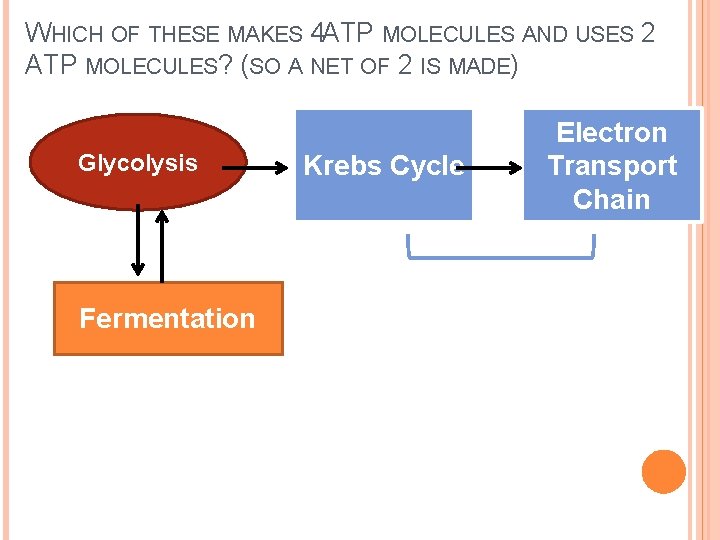
WHICH OF THESE MAKES 4 ATP MOLECULES AND USES 2 ATP MOLECULES? (SO A NET OF 2 IS MADE) Glycolysis Fermentation Krebs Cycle Electron Transport Chain
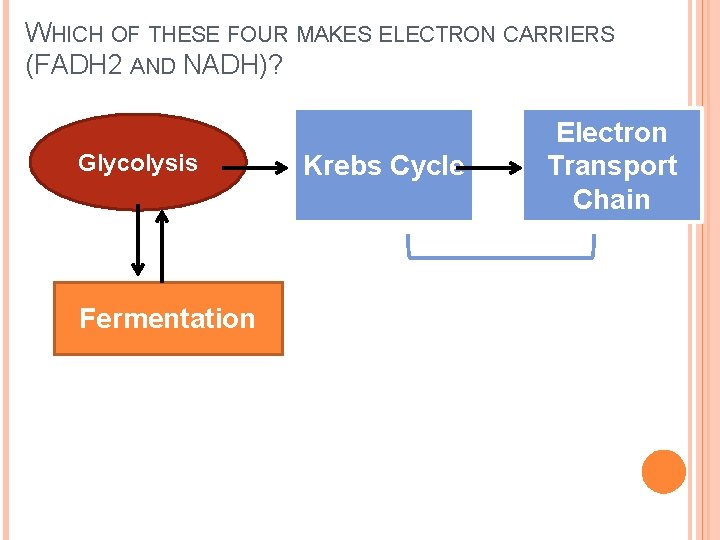
WHICH OF THESE FOUR MAKES ELECTRON CARRIERS (FADH 2 AND NADH)? Glycolysis Fermentation Krebs Cycle Electron Transport Chain
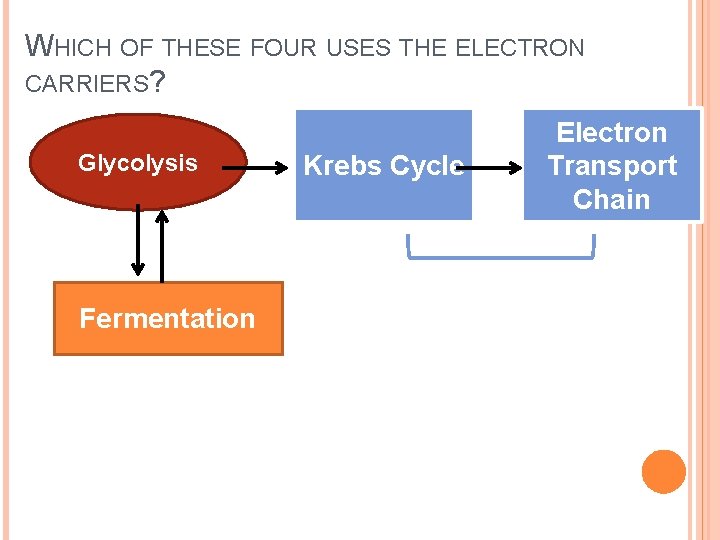
WHICH OF THESE FOUR USES THE ELECTRON CARRIERS? Glycolysis Fermentation Krebs Cycle Electron Transport Chain
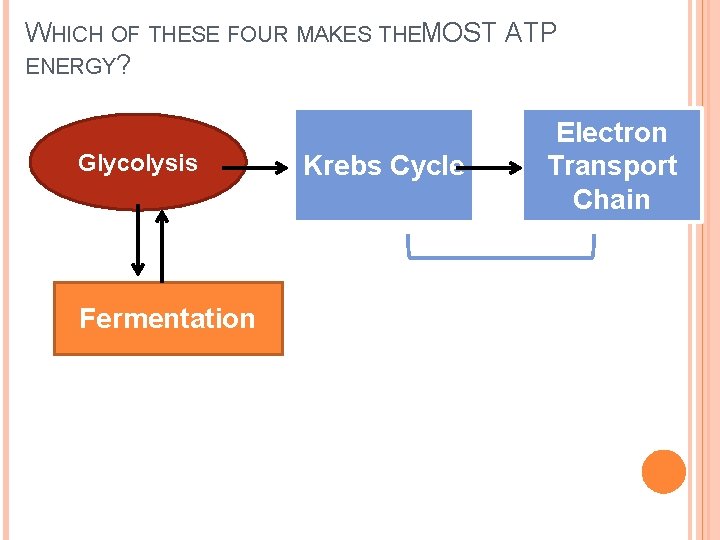
WHICH OF THESE FOUR MAKES THEMOST ATP ENERGY? Glycolysis Fermentation Krebs Cycle Electron Transport Chain
During the electron transport chain. . . _______ A. B. C. D. E. A protein pump uses energy from electron carriers to pump H+ ions out of the matrix The H+ ions are more concentrated outside than inside The H+ ions come in through a special protein and the energy from this attaches a phosphate to ADP LOTS of ATP is made All of the above Review. . .
So—we use glucose to ultimately make ATP (after a LOT of steps). Where do we get the glucose from?
LESSON 3. 17 Light and Photosynthesis What does photosynthesis have to do with glucose? ? ?
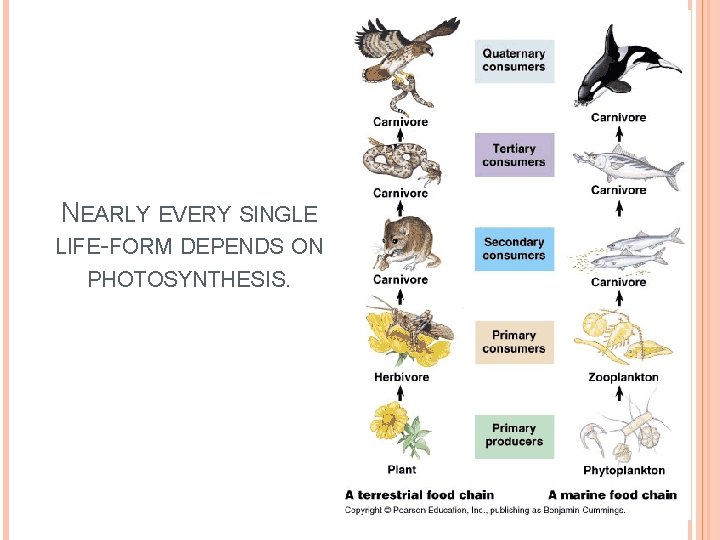
NEARLY EVERY SINGLE LIFE-FORM DEPENDS ON PHOTOSYNTHESIS.
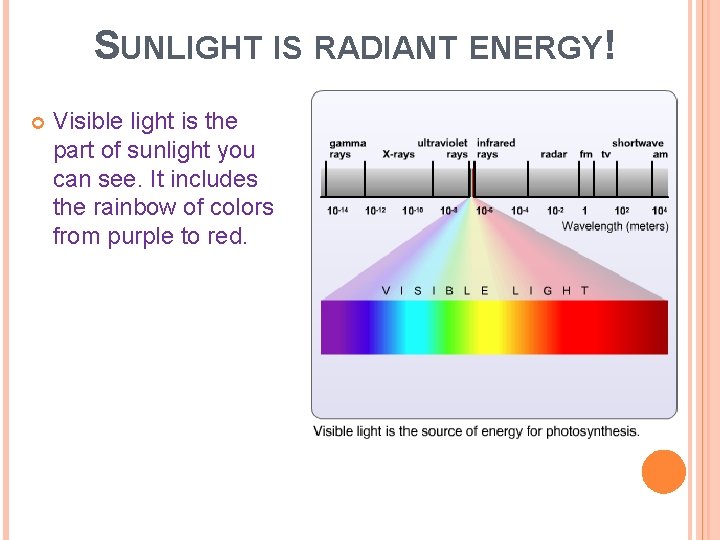
SUNLIGHT IS RADIANT ENERGY! Visible light is the part of sunlight you can see. It includes the rainbow of colors from purple to red.
THERE IS A CERTAIN PART OF A PLANT THAT DOES A LOT OF PHOTOSYNTHESIS. WHAT PART DO YOU THINK IT IS? WHY?
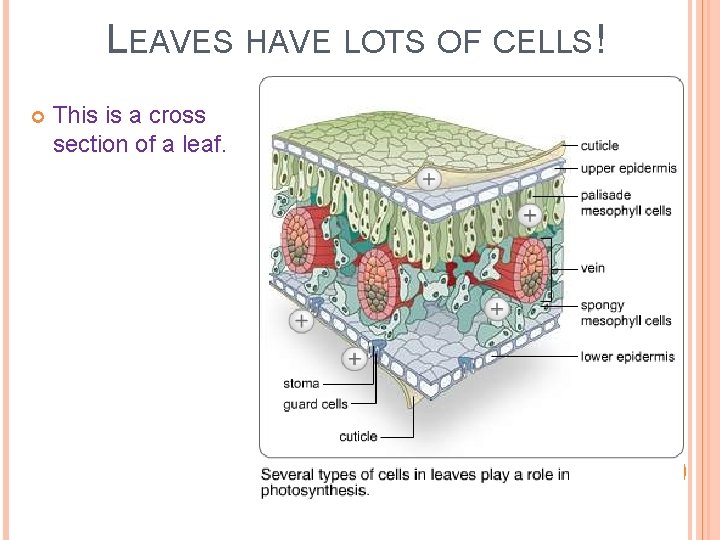
LEAVES HAVE LOTS OF CELLS! This is a cross section of a leaf.

CHLOROPLASTS HAVE SPECIFIC STRUCTURES INVOLVED IN PHOTOSYNTHESIS. Chloroplasts make a plant turn GREEN Photosynthesis takes place inside of a chloroplast!

THE STRUCTURE OF CHLOROPHYLL ALLOWS IT TO CAPTURE ENERGY FROM SUNLIGHT. What is a plant’s favorite color? Chlorophyll absorbs Red and Blue wavelengths of light and reflects green.
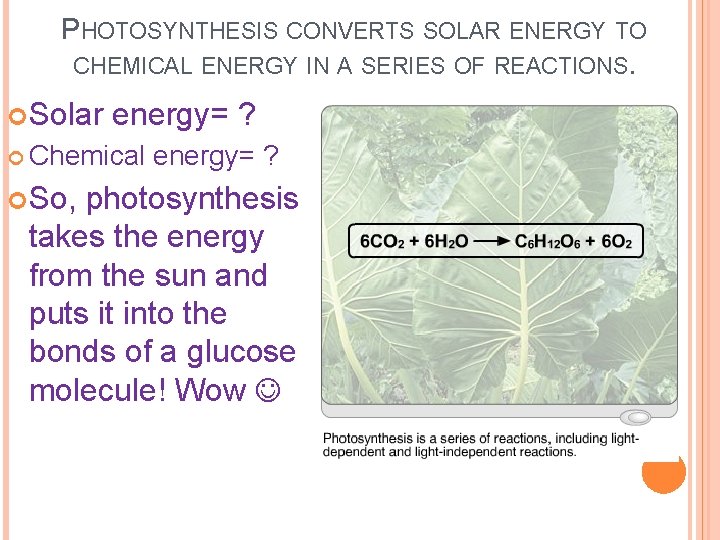
PHOTOSYNTHESIS CONVERTS SOLAR ENERGY TO CHEMICAL ENERGY IN A SERIES OF REACTIONS. Solar energy= ? Chemical So, energy= ? photosynthesis takes the energy from the sun and puts it into the bonds of a glucose molecule! Wow
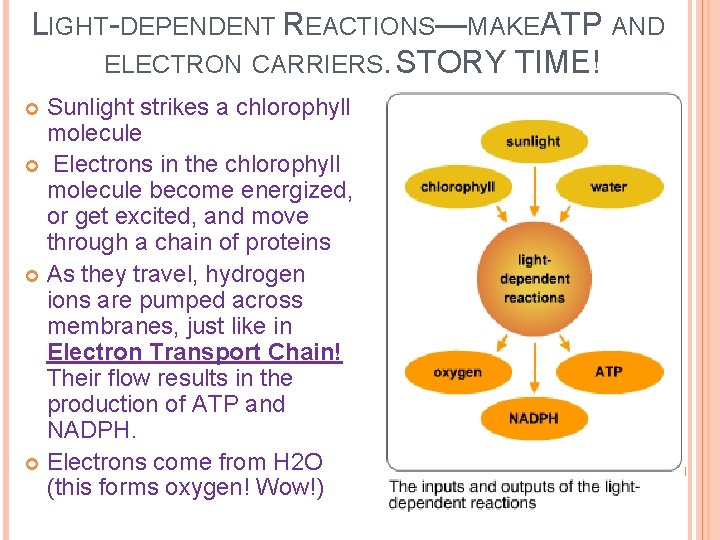
LIGHT-DEPENDENT REACTIONS—MAKEATP AND ELECTRON CARRIERS. STORY TIME! Sunlight strikes a chlorophyll molecule Electrons in the chlorophyll molecule become energized, or get excited, and move through a chain of proteins As they travel, hydrogen ions are pumped across membranes, just like in Electron Transport Chain! Their flow results in the production of ATP and NADPH. Electrons come from H 2 O (this forms oxygen! Wow!)
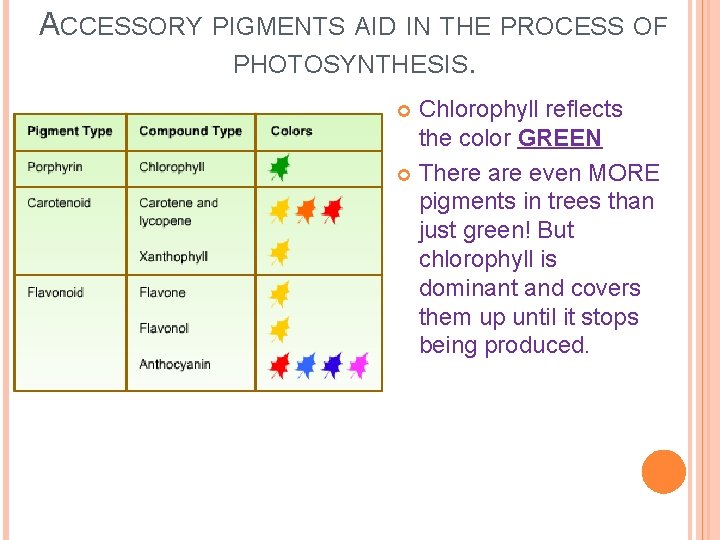
ACCESSORY PIGMENTS AID IN THE PROCESS OF PHOTOSYNTHESIS. Chlorophyll reflects the color GREEN There are even MORE pigments in trees than just green! But chlorophyll is dominant and covers them up until it stops being produced.
WHAT TYPE OF ORGANISM DOES PHOTOSYNTHESIS? ARE THEY THE ONLY TYPES THAT DO IT? ?
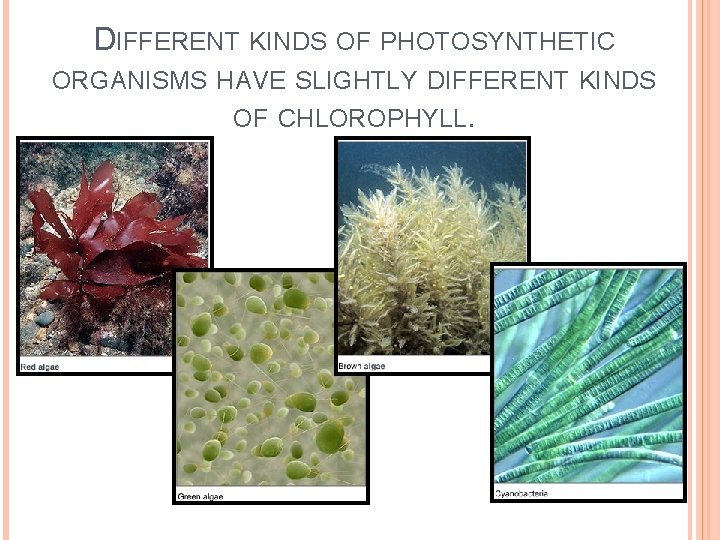
DIFFERENT KINDS OF PHOTOSYNTHETIC ORGANISMS HAVE SLIGHTLY DIFFERENT KINDS OF CHLOROPHYLL.
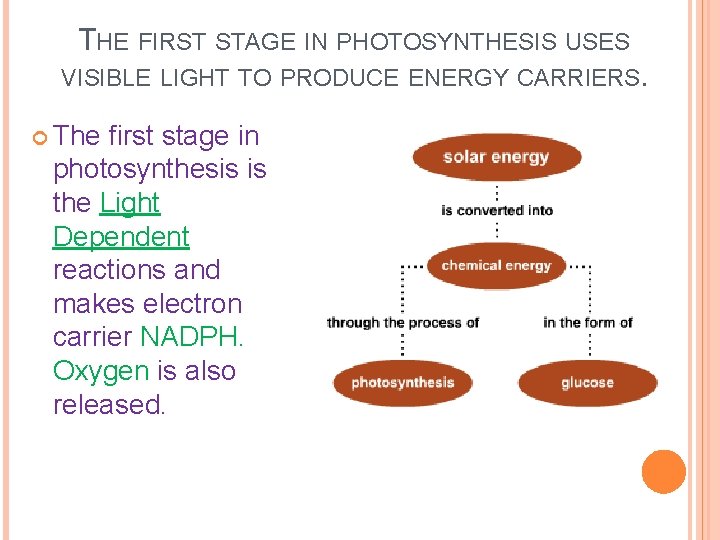
THE FIRST STAGE IN PHOTOSYNTHESIS USES VISIBLE LIGHT TO PRODUCE ENERGY CARRIERS. The first stage in photosynthesis is the Light Dependent reactions and makes electron carrier NADPH. Oxygen is also released.
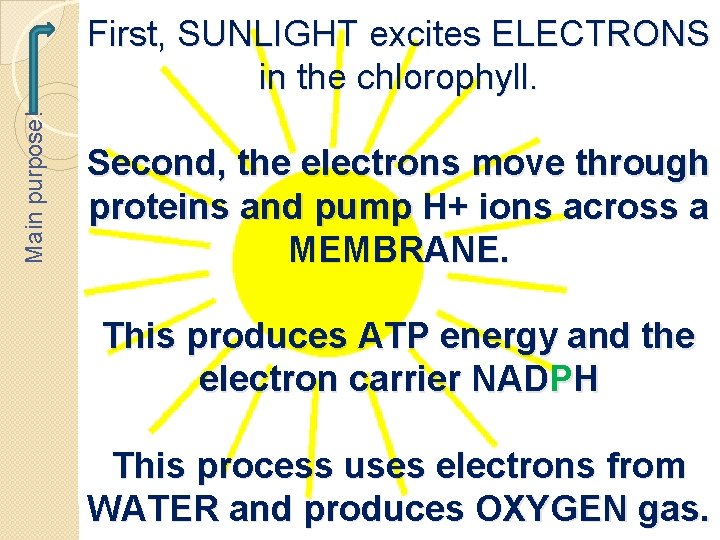
Main purpose! First, SUNLIGHT excites ELECTRONS in the chlorophyll. Second, the electrons move through proteins and pump H+ ions across a MEMBRANE. This produces ATP energy and the electron carrier NADPH This process uses electrons from WATER and produces OXYGEN gas.
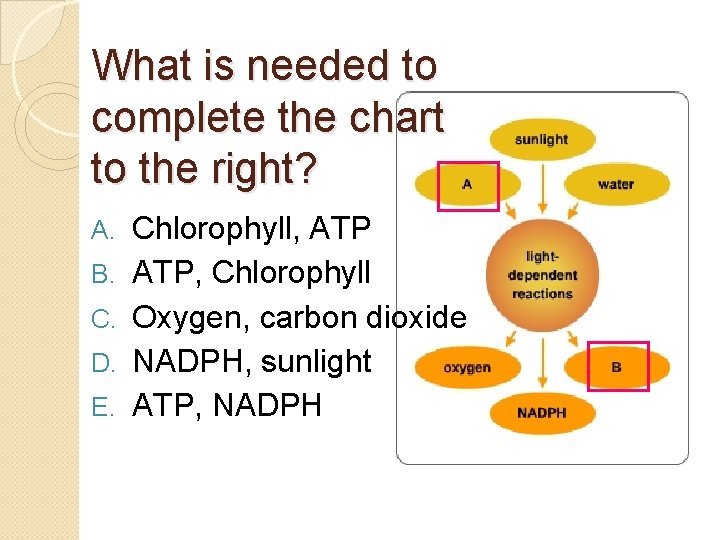
What is needed to complete the chart to the right? A. B. C. D. E. Chlorophyll, ATP, Chlorophyll Oxygen, carbon dioxide NADPH, sunlight ATP, NADPH
LESSON 3. 18 Photosynthesis and Glucose Guess what we will make TODAY!
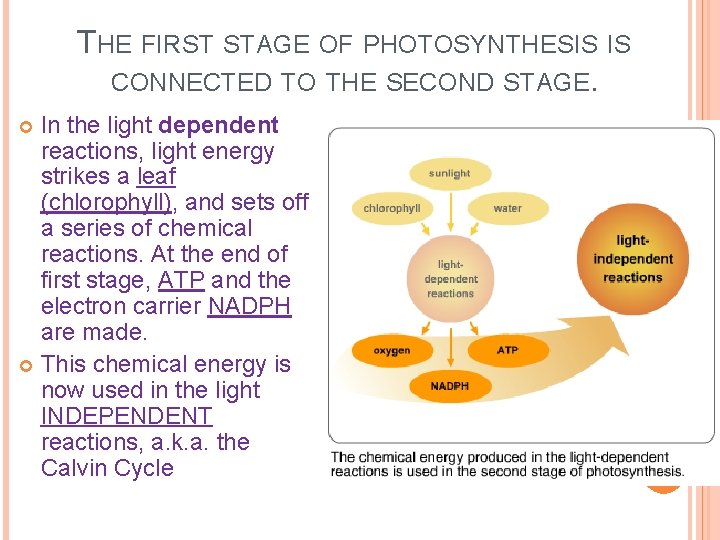
THE FIRST STAGE OF PHOTOSYNTHESIS IS CONNECTED TO THE SECOND STAGE. In the light dependent reactions, light energy strikes a leaf (chlorophyll), and sets off a series of chemical reactions. At the end of first stage, ATP and the electron carrier NADPH are made. This chemical energy is now used in the light INDEPENDENT reactions, a. k. a. the Calvin Cycle
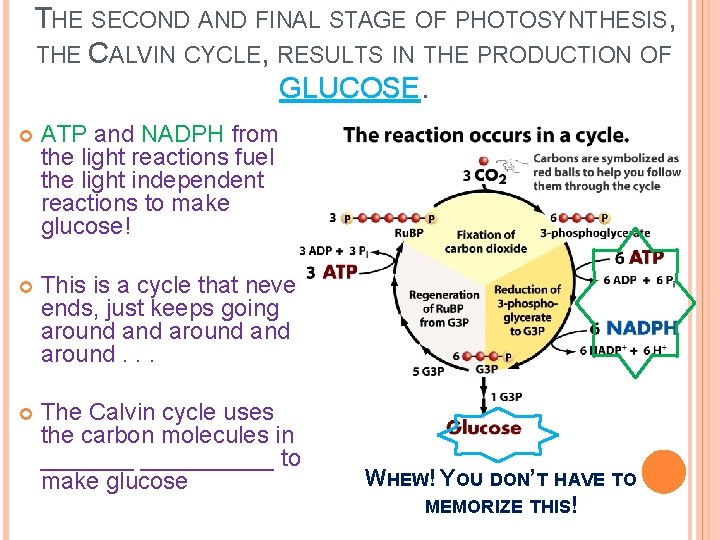
THE SECOND AND FINAL STAGE OF PHOTOSYNTHESIS, THE CALVIN CYCLE, RESULTS IN THE PRODUCTION OF GLUCOSE. ATP and NADPH from the light reactions fuel the light independent reactions to make glucose! This is a cycle that never ends, just keeps going around and around. . . The Calvin cycle uses the carbon molecules in __________ to make glucose WHEW! YOU DON’T HAVE TO MEMORIZE THIS!
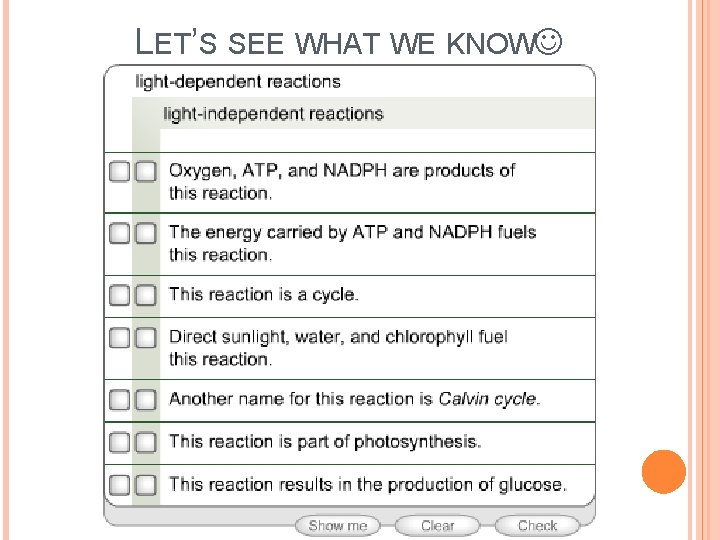
LET’S SEE WHAT WE KNOW
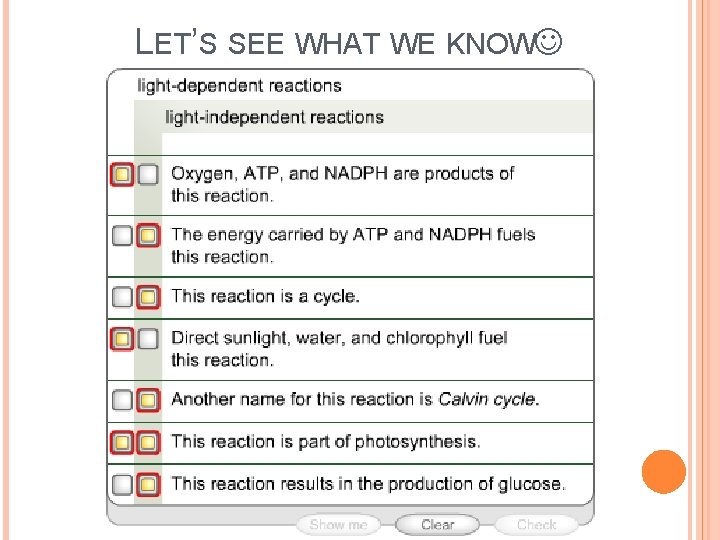
LET’S SEE WHAT WE KNOW
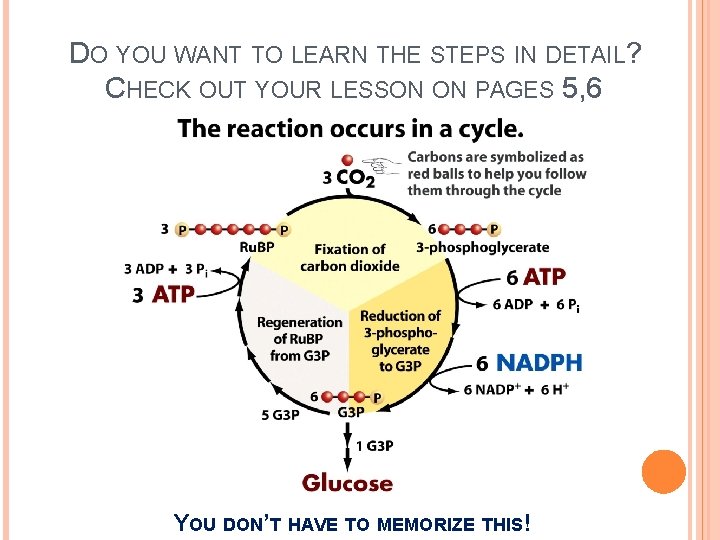
DO YOU WANT TO LEARN THE STEPS IN DETAIL? CHECK OUT YOUR LESSON ON PAGES 5, 6 YOU DON’T HAVE TO MEMORIZE THIS!
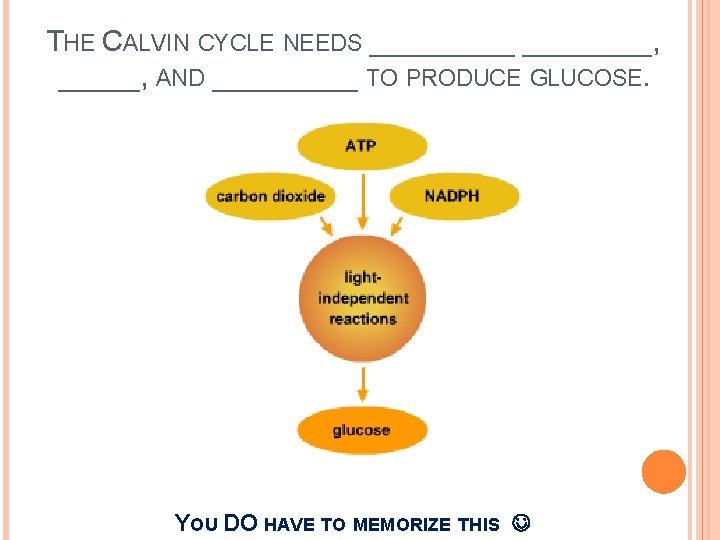
THE CALVIN CYCLE NEEDS _____, _____, AND _____ TO PRODUCE GLUCOSE. YOU DO HAVE TO MEMORIZE THIS
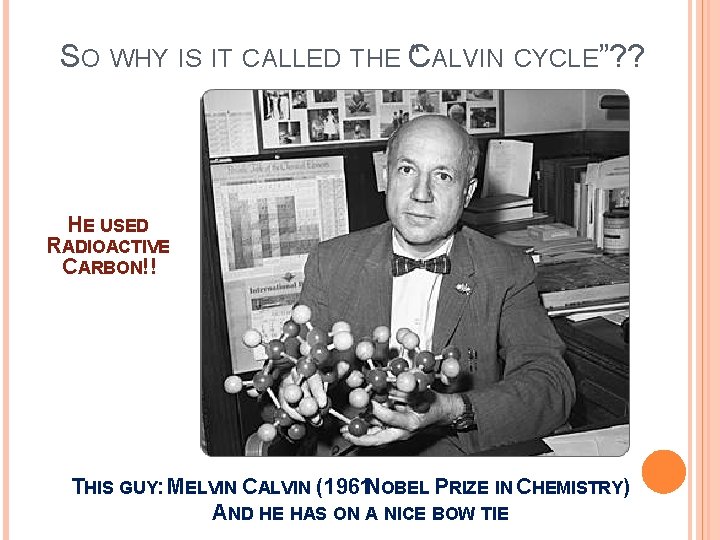
SO WHY IS IT CALLED THE C “ ALVIN CYCLE”? ? HE USED RADIOACTIVE CARBON!! THIS GUY: MELVIN CALVIN (1961 NOBEL PRIZE IN CHEMISTRY) AND HE HAS ON A NICE BOW TIE
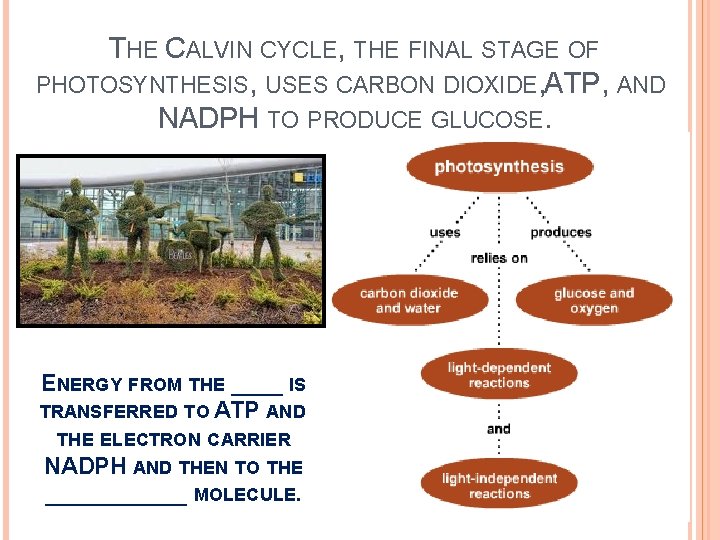
THE CALVIN CYCLE, THE FINAL STAGE OF PHOTOSYNTHESIS, USES CARBON DIOXIDE, ATP, AND NADPH TO PRODUCE GLUCOSE. ENERGY FROM THE ____ IS TRANSFERRED TO ATP AND THE ELECTRON CARRIER NADPH AND THEN TO THE ______ MOLECULE.
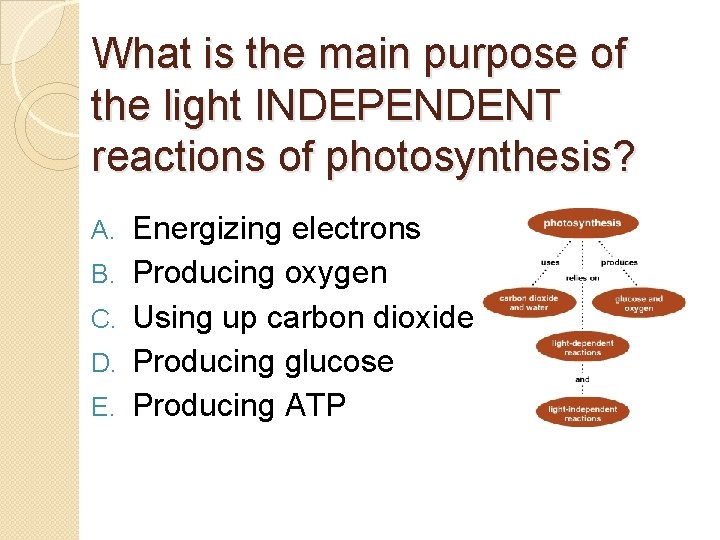
What is the main purpose of the light INDEPENDENT reactions of photosynthesis? A. B. C. D. E. Energizing electrons Producing oxygen Using up carbon dioxide Producing glucose Producing ATP
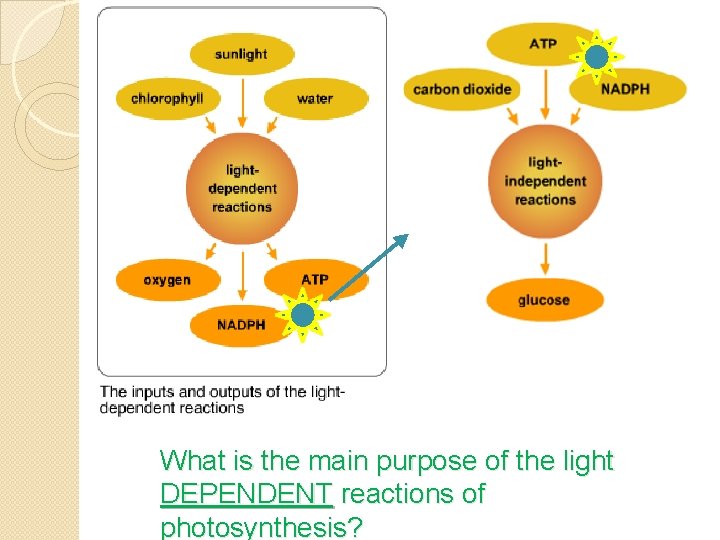
What is the main purpose of the light DEPENDENT reactions of photosynthesis?
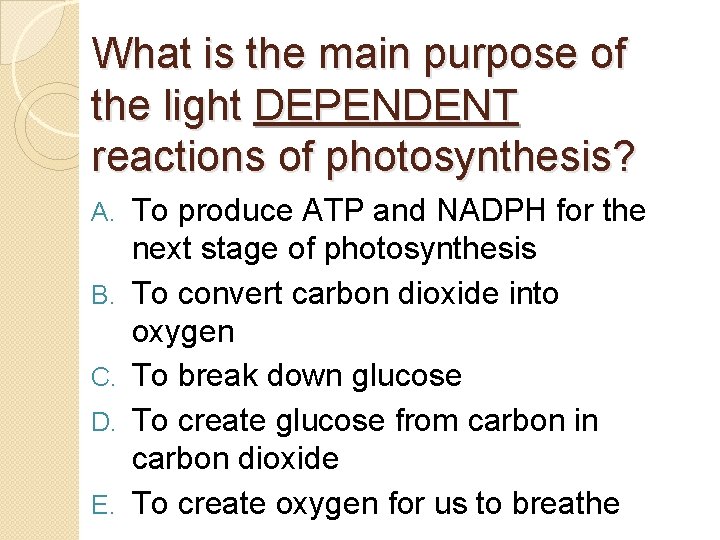
What is the main purpose of the light DEPENDENT reactions of photosynthesis? A. B. C. D. E. To produce ATP and NADPH for the next stage of photosynthesis To convert carbon dioxide into oxygen To break down glucose To create glucose from carbon in carbon dioxide To create oxygen for us to breathe
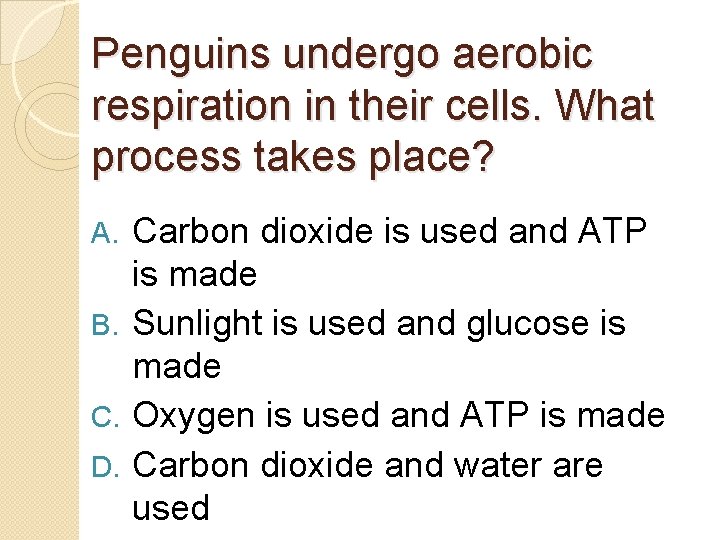
Penguins undergo aerobic respiration in their cells. What process takes place? Carbon dioxide is used and ATP is made B. Sunlight is used and glucose is made C. Oxygen is used and ATP is made D. Carbon dioxide and water are used A.
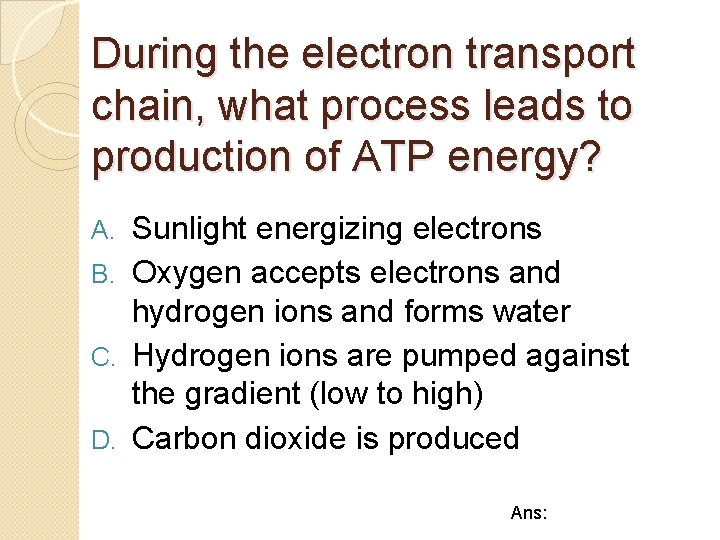
During the electron transport chain, what process leads to production of ATP energy? Sunlight energizing electrons B. Oxygen accepts electrons and hydrogen ions and forms water C. Hydrogen ions are pumped against the gradient (low to high) D. Carbon dioxide is produced A. Ans:
Have a GREAT day!! Let’s do the quiz together!!
HAVE A GREAT DAY!!
- Slides: 40