
Welcome to Applying the VCAA online Language Assessments
- Slides: 25
Welcome to 'Applying the VCAA online Language Assessments in your classroom' This webinar will start promptly at 3: 45 pm
Going further: Using the Language Assessments Victorian Curriculum F-10 and Languages Units ACER
PRESENTERS VCAA Languages Unit: Maree Dellora F-10 Unit: Craig Smith ACER Fusae Nojima: Project Director Scott Haines: Online Support Coordinator
Contents • • Overview Introducing the language assessments New features in online report (web tour) Applying the language assessments in your classroom • Contacts
Overview • The Language assessments are a free online resource for teachers • They are available in eight languages (Chinese, French, German, Indonesian, Italian, Japanese, Modern Greek, Spanish) • They provide quick, formative assessments of students receptive skills of listening and reading
Overview • The Language assessments ‒ are suitable for levels 5 -6 onward ‒ can be used any time, but probably best in Term 1 and to retest late in Term 3 ‒ are low-stakes assessments for teacher use only ‒ provide student results immediately.
Introducing the Language Assessments • Multiple-choice format • Assess receptive skills only • Automatic scoring • Interactive online reports
Go to poll • Who has registered to use the Language Assessment resources? • If so, which Language? • Has anyone used them with their class?
Web tour • Demonstration of an online test • Demonstration of the new features of the online report (available for French, Japanese and Italian)
Applying the language assessments in classroom • Snapshot of student progress in listening and reading • Useful diagnostic tool (for formative assessment)
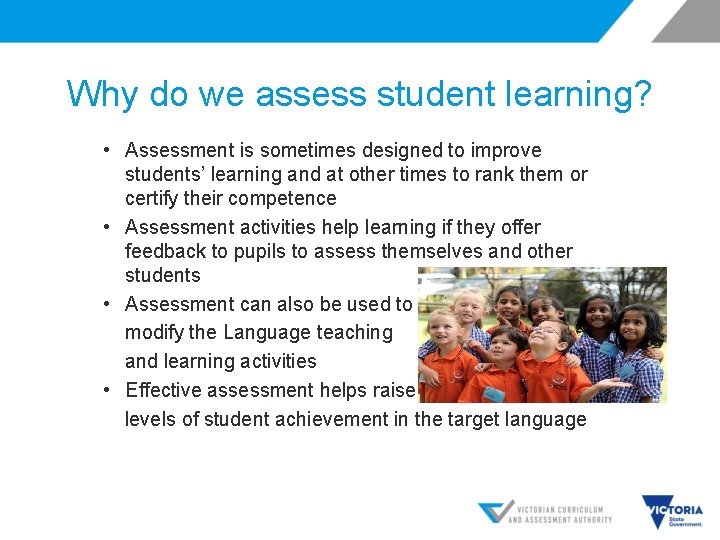
Why do we assess student learning? • Assessment is sometimes designed to improve students’ learning and at other times to rank them or certify their competence • Assessment activities help learning if they offer feedback to pupils to assess themselves and other students • Assessment can also be used to modify the Language teaching and learning activities • Effective assessment helps raise levels of student achievement in the target language
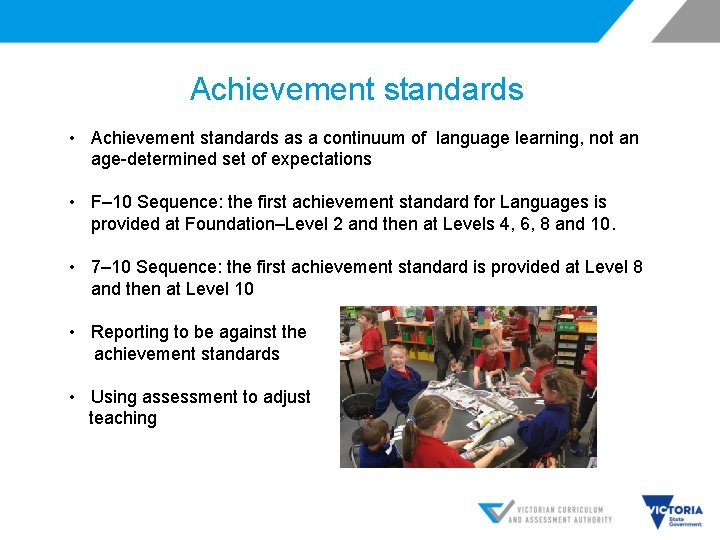
Achievement standards • Achievement standards as a continuum of language learning, not an age-determined set of expectations • F– 10 Sequence: the first achievement standard for Languages is provided at Foundation–Level 2 and then at Levels 4, 6, 8 and 10. • 7– 10 Sequence: the first achievement standard is provided at Level 8 and then at Level 10 • Reporting to be against the achievement standards • Using assessment to adjust teaching
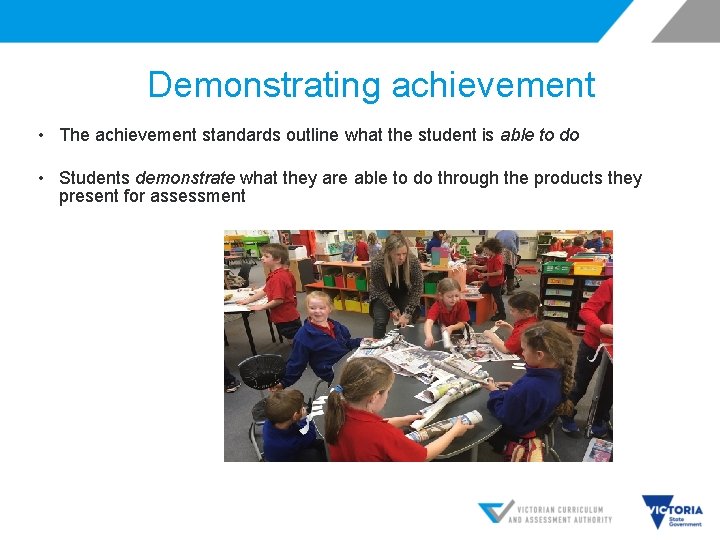
Demonstrating achievement • The achievement standards outline what the student is able to do • Students demonstrate what they are able to do through the products they present for assessment
Assessment of Languages • • • Assessment to be part of teaching and learning program design Give students clear criteria (such as a rubric) Students discuss assessment criteria Collect evidence over time from a range of activities and sources Important to monitor every student’s progress along the Language continuum • These Language Assessments are a valuable tool formative assessment
Alignment with the Victorian Curriculum F− 10 • How do the Language Assessments align with the Victorian Curriculum for Languages? • Which content descriptions cover the skills needed to respond effectively to Listening and Reading tasks? • Are any of these skills reflected in the Achievement standards?
Working with the language assessments - Assessments are designed to help teachers not only to find out what students know and can do, but also to map where a student’s current knowledge ends
The Language Assessments: Underpinning concept • Raw scores cannot be compared across those who have done different assessments. • Using the Rasch model, the items used in the assessments (in all levels) are calibrated on the common scale (scale scores developed). • It is now possible to compare results of the students who have taken different levels (e. g. , Reading A and then Reading B)
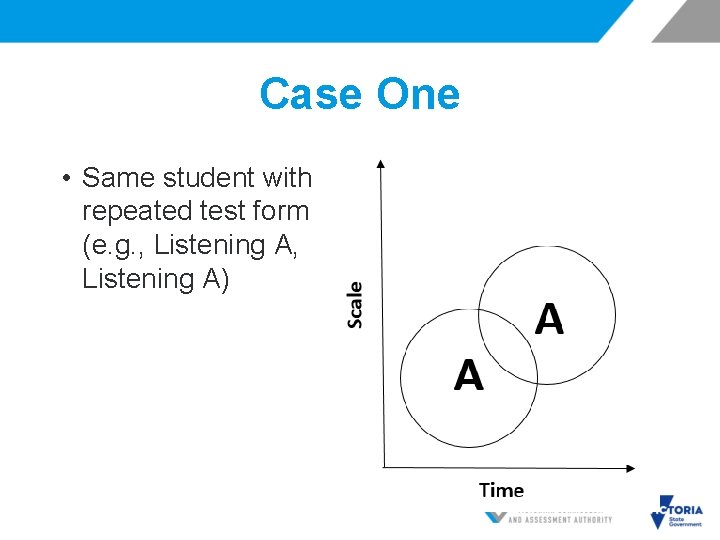
Case One • Same student with repeated test form (e. g. , Listening A)
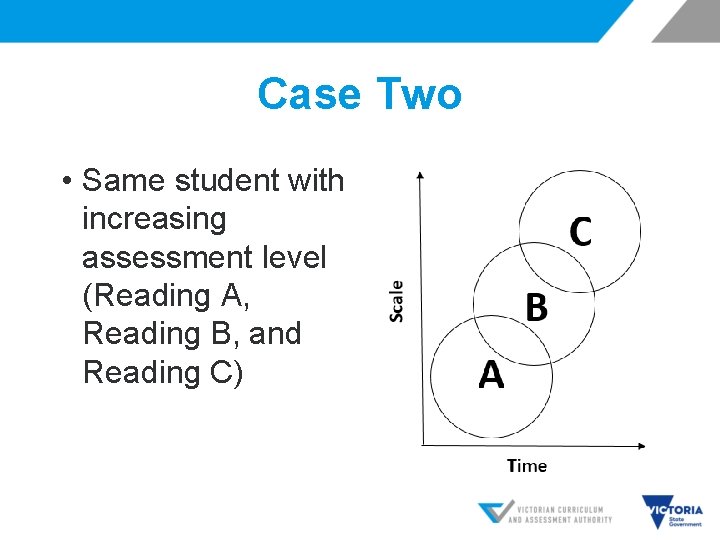
Case Two • Same student with increasing assessment level (Reading A, Reading B, and Reading C)
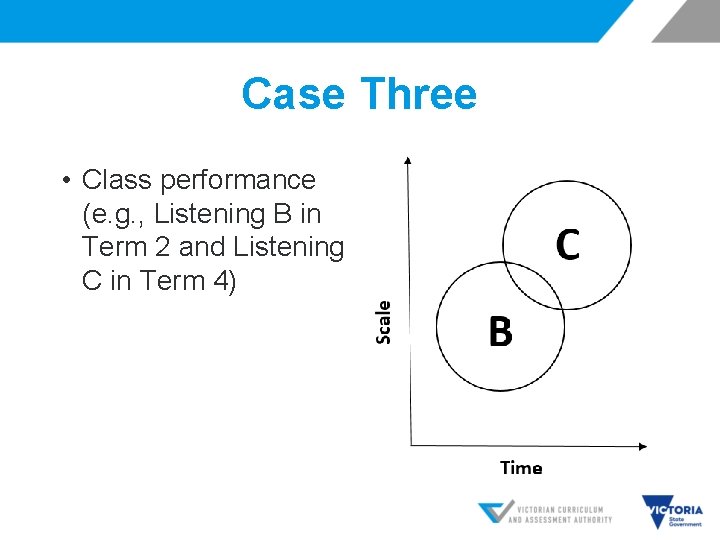
Case Three • Class performance (e. g. , Listening B in Term 2 and Listening C in Term 4)
Questions
Help Page • User Guide ‒ account set up instructions ‒ video demonstrations • Language assessments ‒ FAQs ‒ Recommended levels ‒ Audio transcripts
Questions • Final questions
Support to get started If you have any questions about how to register, create student lists, assign tests or any other questions how to get started, please contact: ACER Helpdesk T. 1300 232 123 E. oarssupport@acer. org
Curriculum support for Languages For Languages, contact Maree Dellora, Manager, Languages Unit E. dellora. maree. r@edumail. vic. gov. au T. 9032 1692 For F-10 curriculum, contact VCAA F-10 Unit: E. vcaa. f 10. curriculum@edumail. vic. gov. au T. 9032 1788