
Welcome New DPA Students Natalie Burclaff Langsdale Library
Welcome New DPA Students! Natalie Burclaff Langsdale Library nburclaff@ubalt. edu August 24, 2015 1
Outline • Information Sources • Finding Sources • Giving Credit
DPA Resources at Langsdale http: //ubalt. libguides. com /publicadministration

Information Sources 4
Information Sources is easy. Why look for other sources? 5
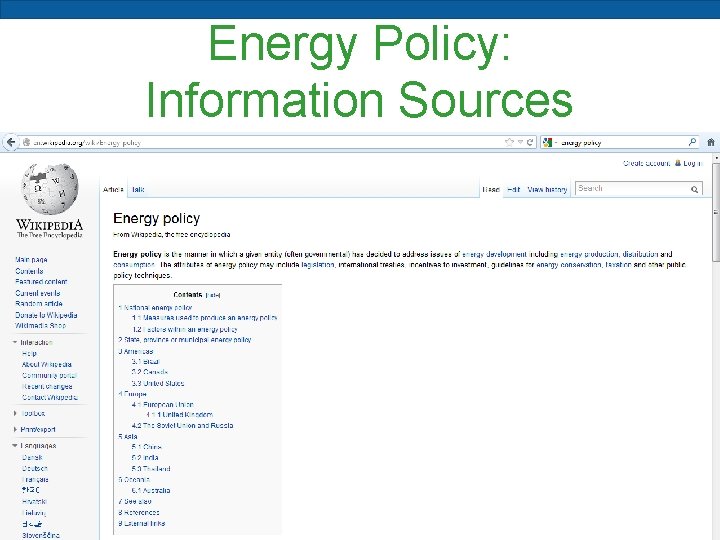
Energy Policy: Information Sources

Energy Policy: Information Sources
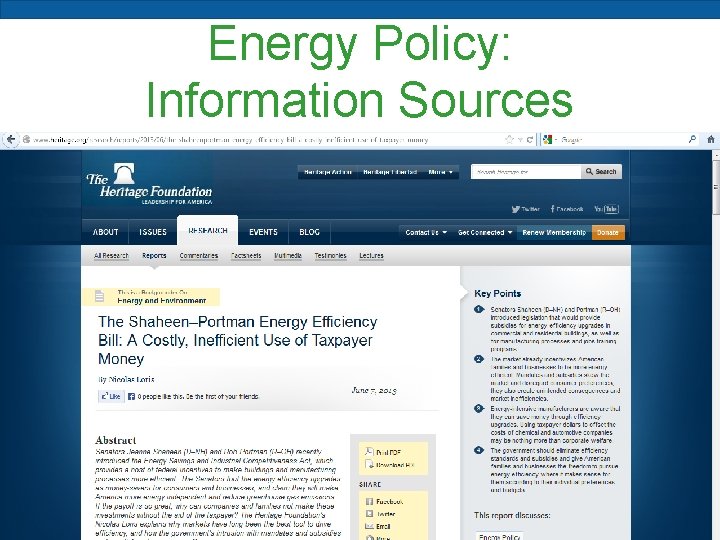
Energy Policy: Information Sources

Energy Policy: Information Sources
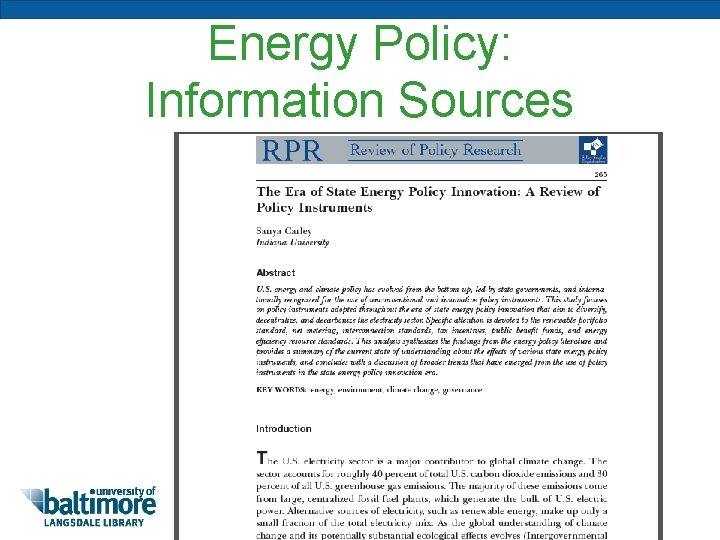
Energy Policy: Information Sources
Evaluating Sources • • • Who wrote this? What expertise do they have? When was it written? What is the intent? What topics are covered? How closely? 11
Evaluating Sources • Who is the intended audience? • Does the author cite sources? • Who published the source? 12
Finding Sources 13
Finding Journal Articles Databases: Public Affairs Index ABI/Inform (business) Business Source Premier (business) Academic Search Premier (general) 14
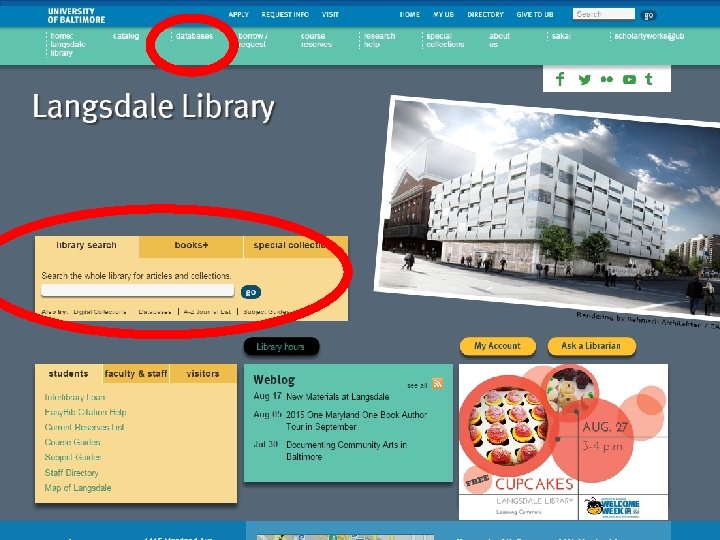
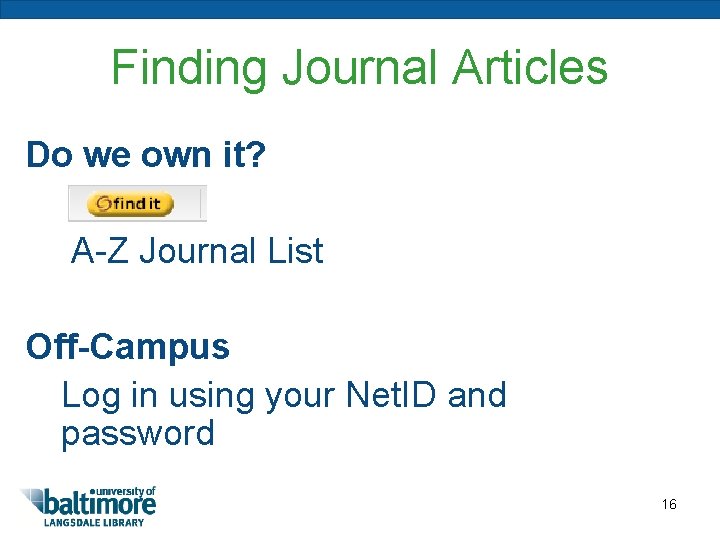
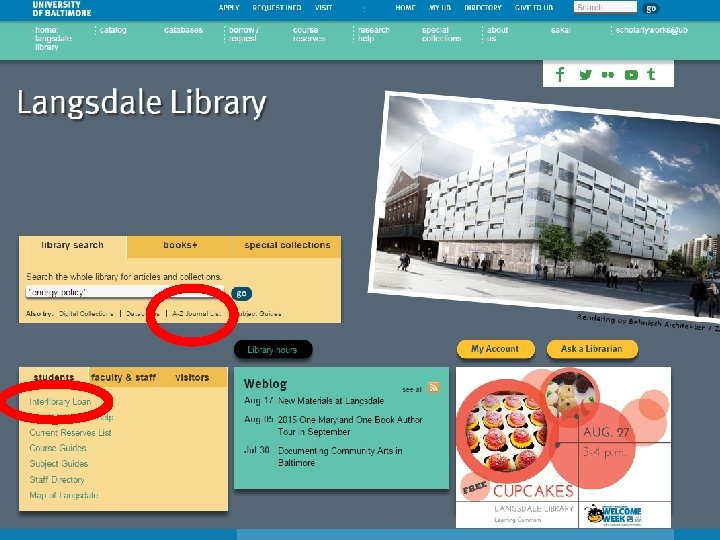
Finding Journal Articles Do we own it? A-Z Journal List Off-Campus Log in using your Net. ID and password 16
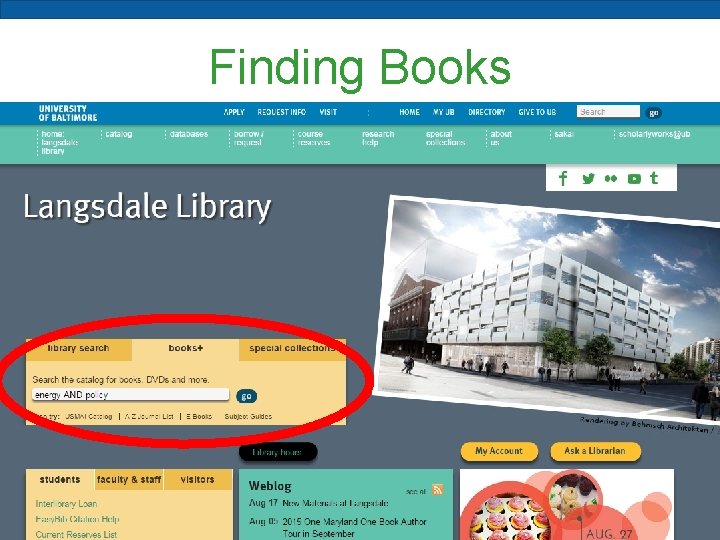
Finding Books
Finding Government Info

USA. gov GPO. gov/fdsys
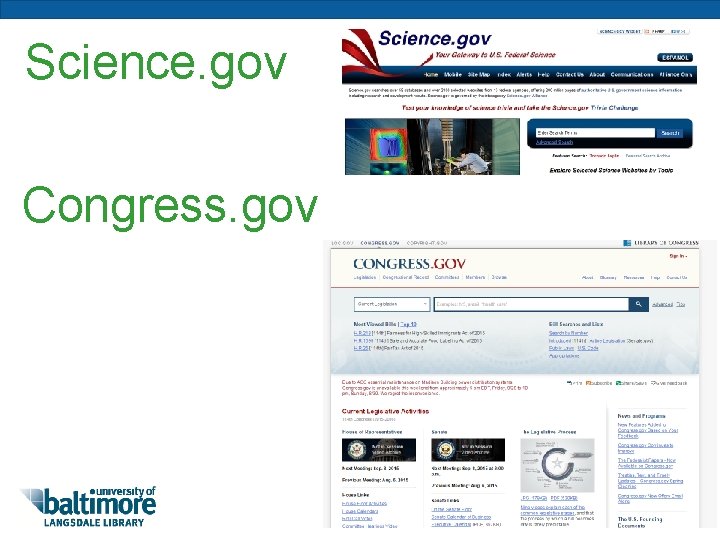
Science. gov Congress. gov
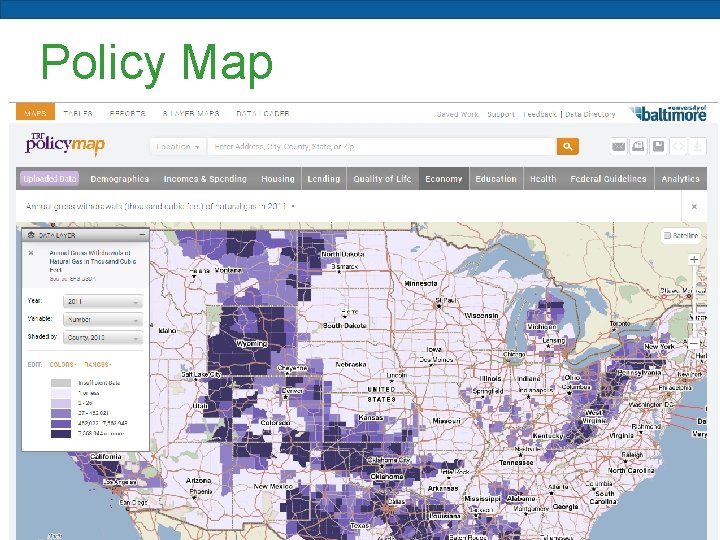
Policy Map
Government Documents Librarian Mike Kiel skiel@ubalt. edu 410. 837. 4236
Academic Integriy 24
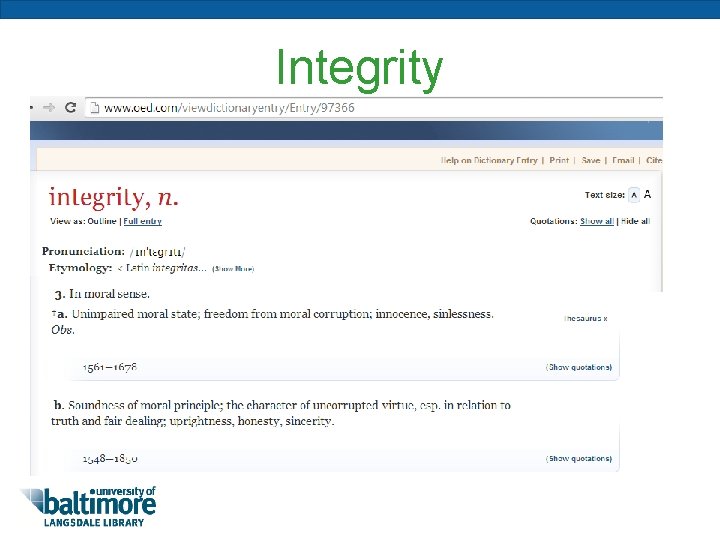
Integrity
UB Values Integrity Class: • Do the reading • Come prepared having thought about the text • Be engaged • Respect the classroom
UB Values Integrity Assignments & Exams: • Give it your all • Do your own work • Get help from appropriate sources • Give full credit to your sources
Citations Give Credit where Credit is Due credit is due anytime you borrow someone else's words or ideas. 28
Why Cite? 29
Why Cite? Supports your argument Honest Legal Helps reader find your sources 30
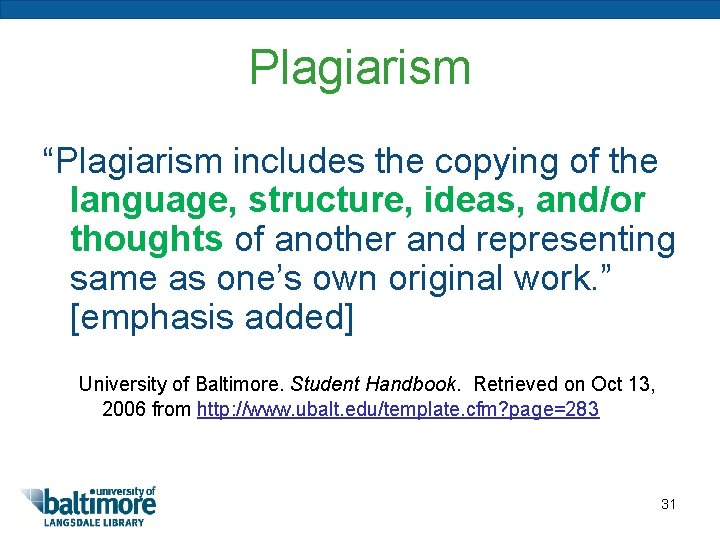
Plagiarism “Plagiarism includes the copying of the language, structure, ideas, and/or thoughts of another and representing same as one’s own original work. ” [emphasis added] University of Baltimore. Student Handbook. Retrieved on Oct 13, 2006 from http: //www. ubalt. edu/template. cfm? page=283 31
Plagiarism Cite every time you borrow: language (quotation) sentence structure (paraphrase) ideas (paraphrase) 32
Plagiarism Penalties can include: “F” on the assignment “F” for the class Suspension Expulsion University of Baltimore. Student Handbook. Retrieved on July 14, 2005 from http: //www. ubalt. edu/template. cfm? page=283 33
Intentional Plagiarism Knowingly, Without Citing… Quoting (using words) Paraphrasing (using ideas or structure) Cutting and Pasting Entire Sections Buying a Paper 34
Unintentional Plagiarism Accidentally using an author’s words or ideas without citing them. 35
Unintentional Plagiarism Accidentally using an author’s words or ideas without citing them. Causes: Careless Notes Incomplete/Lost Citation Information Too Little Time… Cultural Differences 36
Why Worry About Format? Let’s Play Spot the Author! 37
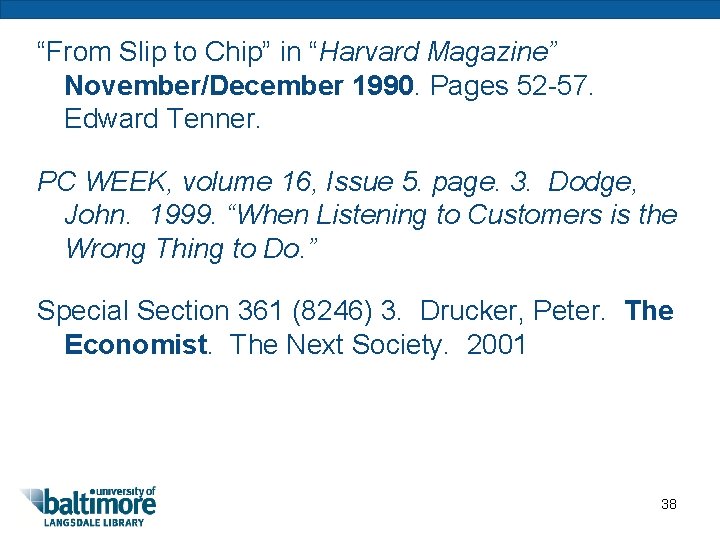
“From Slip to Chip” in “Harvard Magazine” November/December 1990. Pages 52 -57. Edward Tenner. PC WEEK, volume 16, Issue 5. page. 3. Dodge, John. 1999. “When Listening to Customers is the Wrong Thing to Do. ” Special Section 361 (8246) 3. Drucker, Peter. The Economist. The Next Society. 2001 38
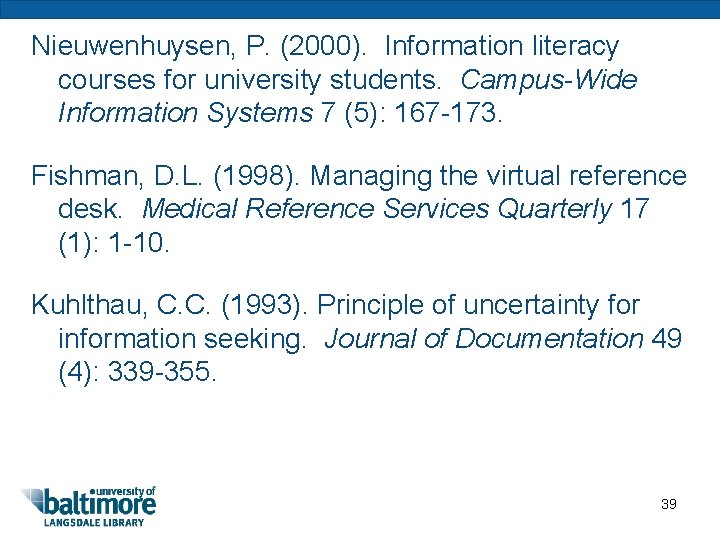
Nieuwenhuysen, P. (2000). Information literacy courses for university students. Campus-Wide Information Systems 7 (5): 167 -173. Fishman, D. L. (1998). Managing the virtual reference desk. Medical Reference Services Quarterly 17 (1): 1 -10. Kuhlthau, C. C. (1993). Principle of uncertainty for information seeking. Journal of Documentation 49 (4): 339 -355. 39
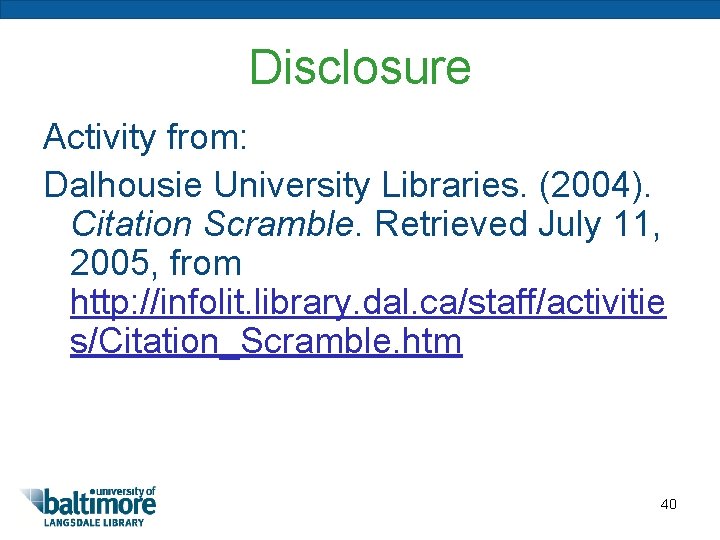
Disclosure Activity from: Dalhousie University Libraries. (2004). Citation Scramble. Retrieved July 11, 2005, from http: //infolit. library. dal. ca/staff/activitie s/Citation_Scramble. htm 40
Citation Style APA style Publication Manual of the American Psychological Association (6 th ed. ) 41
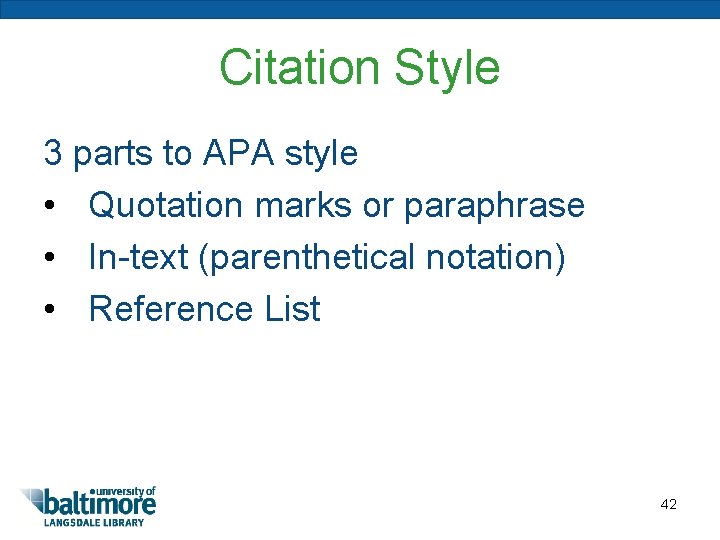
Citation Style 3 parts to APA style • Quotation marks or paraphrase • In-text (parenthetical notation) • Reference List 42
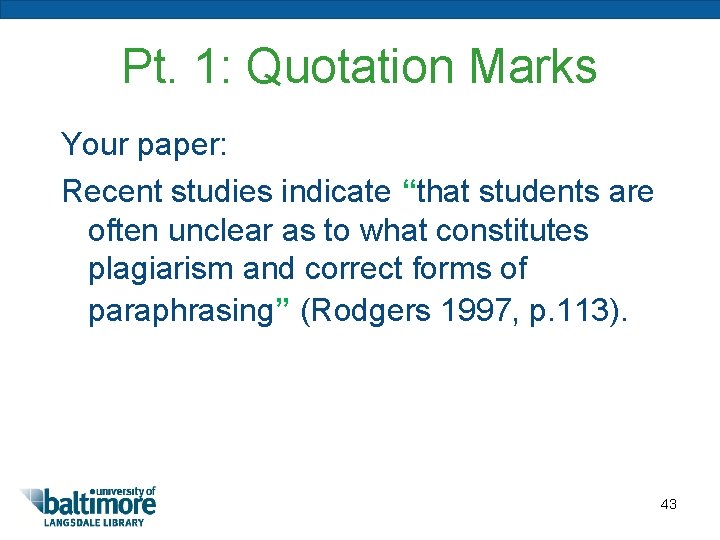
Pt. 1: Quotation Marks Your paper: Recent studies indicate “that students are often unclear as to what constitutes plagiarism and correct forms of paraphrasing” (Rodgers 1997, p. 113). 43
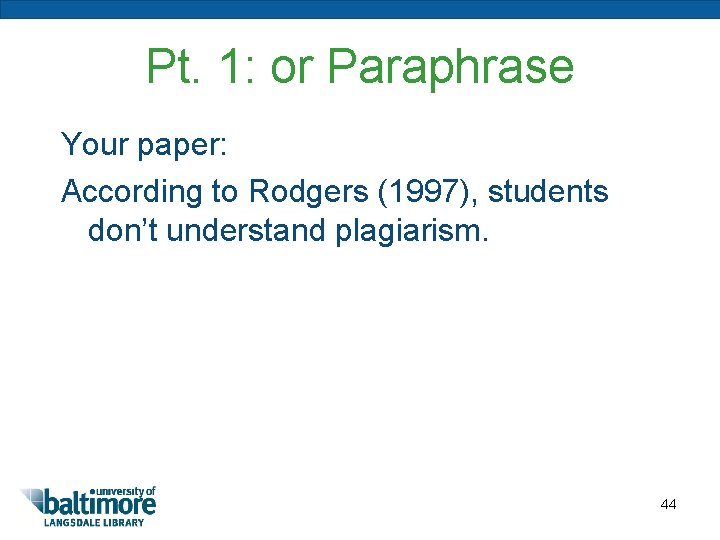
Pt. 1: or Paraphrase Your paper: According to Rodgers (1997), students don’t understand plagiarism. 44
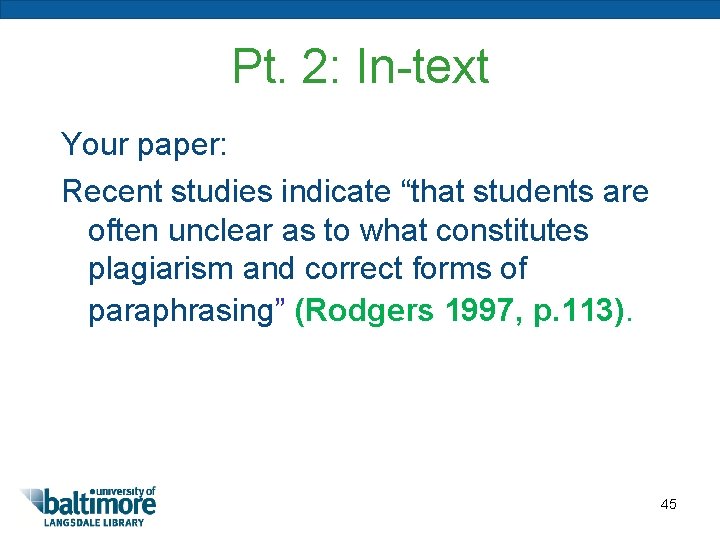
Pt. 2: In-text Your paper: Recent studies indicate “that students are often unclear as to what constitutes plagiarism and correct forms of paraphrasing” (Rodgers 1997, p. 113). 45
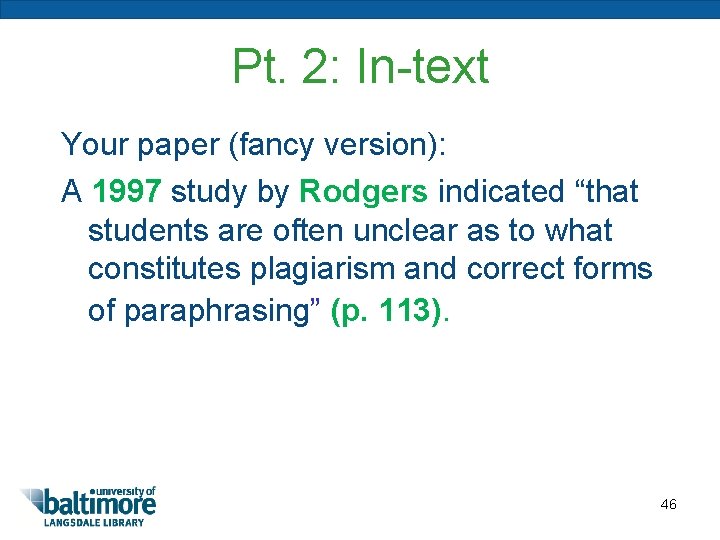
Pt. 2: In-text Your paper (fancy version): A 1997 study by Rodgers indicated “that students are often unclear as to what constitutes plagiarism and correct forms of paraphrasing” (p. 113). 46
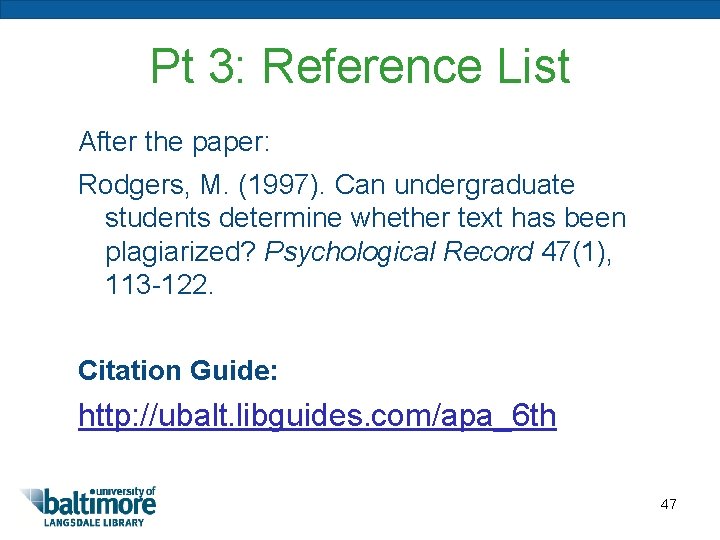
Pt 3: Reference List After the paper: Rodgers, M. (1997). Can undergraduate students determine whether text has been plagiarized? Psychological Record 47(1), 113 -122. Citation Guide: http: //ubalt. libguides. com/apa_6 th 47
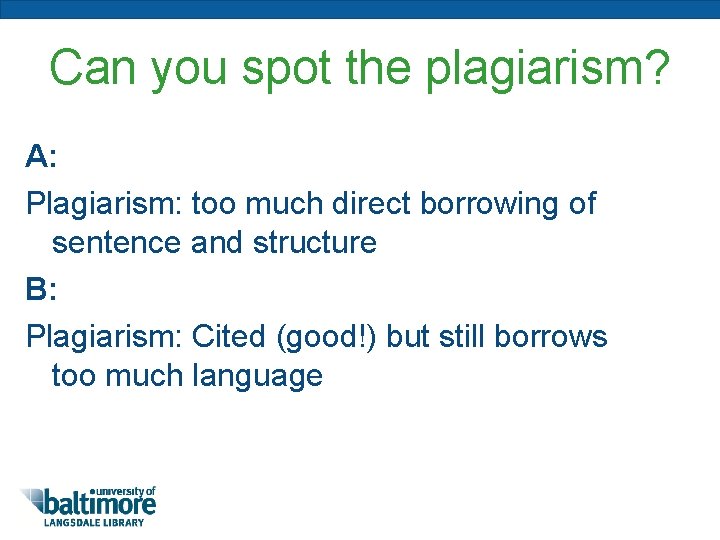
Can you spot the plagiarism? A: Plagiarism: too much direct borrowing of sentence and structure B: Plagiarism: Cited (good!) but still borrows too much language
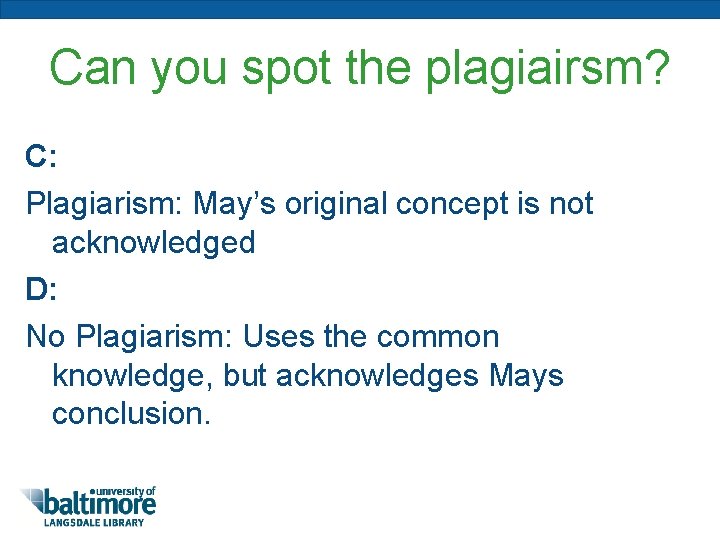
Can you spot the plagiairsm? C: Plagiarism: May’s original concept is not acknowledged D: No Plagiarism: Uses the common knowledge, but acknowledges Mays conclusion.
Citation Shortcuts 50
Outline • Information Sources • Finding Sources • Giving Credit
Questions? Natalie Burclaff nburclaff@ubalt. edu 410 -837 -5072 52
- Slides: 52