
Welcome National Dignity Council Aims to promote the







- Slides: 26
Welcome
National Dignity Council Aims to promote the importance of ‘Dignity’ for all through: - • To lead in raising awareness of Dignity and its importance in delivering excellent services. • Developing clear guidelines to raise citizen’s awareness on their right to access respectful dignified and compassionate services • To lead and inspire people to take action to promote Dignity • To lead and stimulate a National Dignity Campaign. • To support and maintain growing networks of Dignity Champions • Inspire champions to be true to their role and uphold the ten Dignity Dos • To lead in designing, planning and promoting an annual National Dignity Action Day. • To ensure the sustainability of the National Dignity Council.
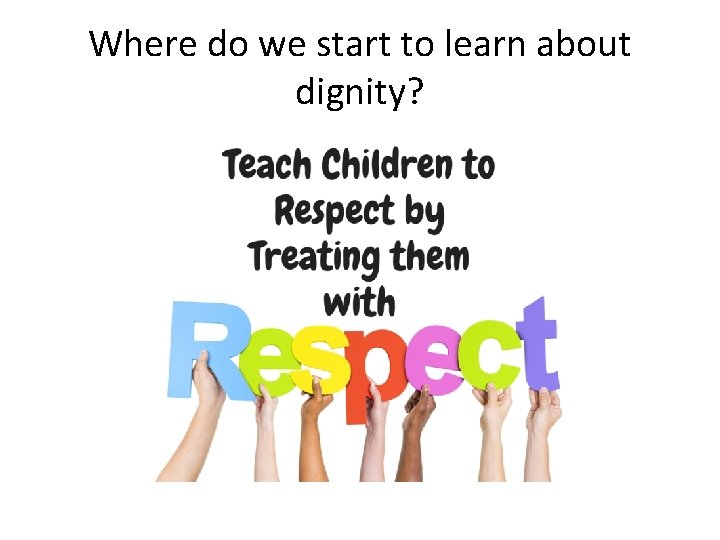
Where do we start to learn about dignity?
How do you define dignity?
Definition of dignity • Dignity consists of many overlapping aspects, involving respect, privacy, autonomy and selfworth • a standard dictionary definition: a state, quality or manner worthy of esteem or respect; and (by extension) self-respect. • Dignity in care, therefore, means the kind of care, in any setting, which supports and promotes, and does not undermine, a person’s self- respect regardless of any perceived difference. • While ‘dignity’ may be difficult to define, what is clear is that people know when they have not been treated with dignity and respect SCIE- Dignity in care guide
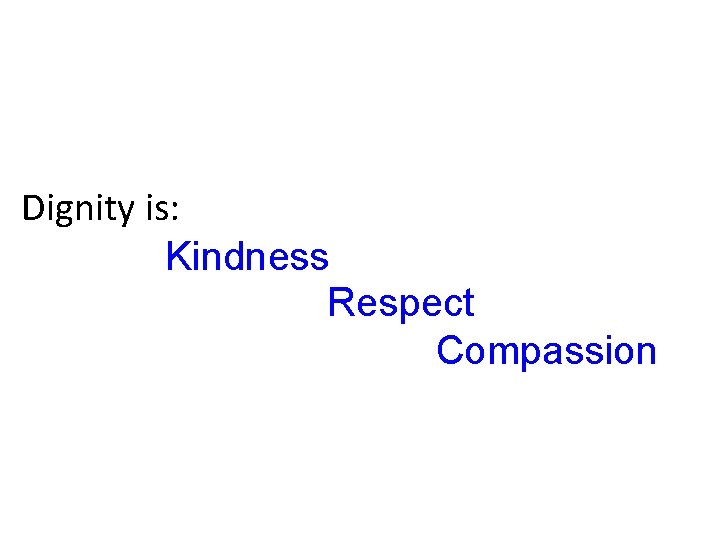
Dignity is: Kindness Respect Compassion
When was the last time you were not treated with dignity and respect? What happened? How did you feel? How did you behave?
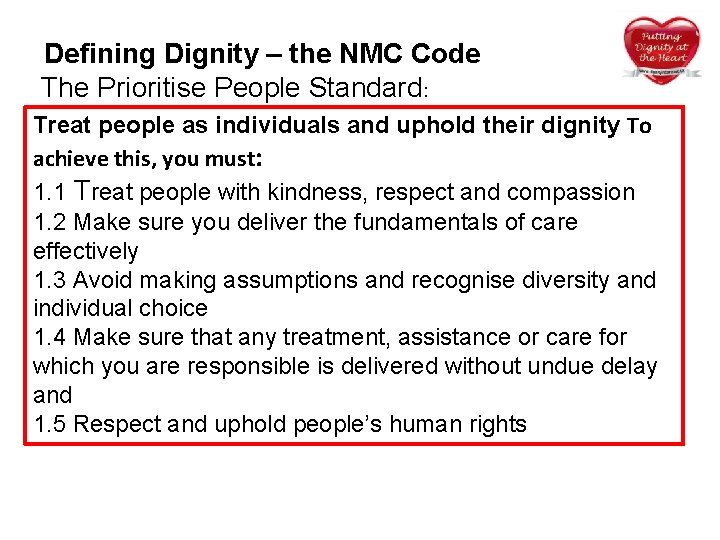
Defining Dignity – the NMC Code The Prioritise People Standard: Treat people as individuals and uphold their dignity To achieve this, you must: 1. 1 Treat people with kindness, respect and compassion 1. 2 Make sure you deliver the fundamentals of care effectively 1. 3 Avoid making assumptions and recognise diversity and individual choice 1. 4 Make sure that any treatment, assistance or care for which you are responsible is delivered without undue delay and 1. 5 Respect and uphold people’s human rights
Delivering Services with Dignity.
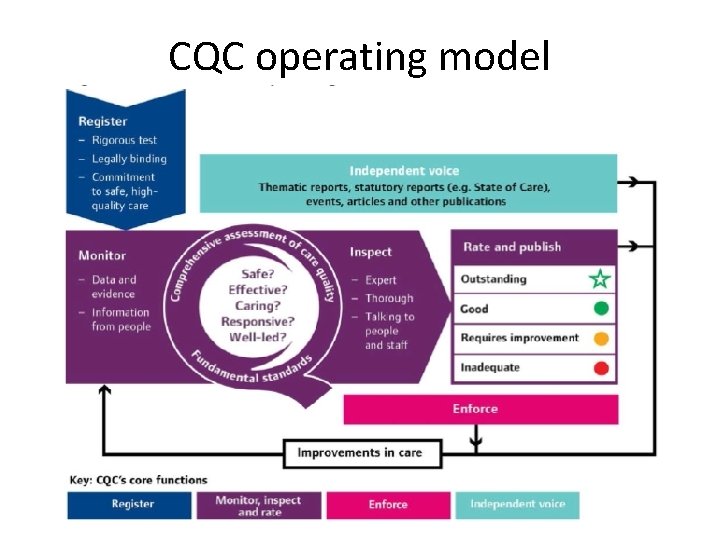
CQC operating model 11
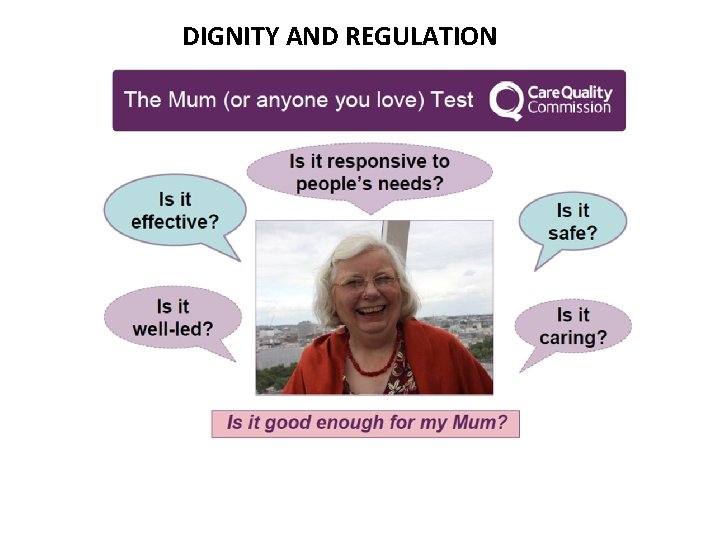
DIGNITY AND REGULATION
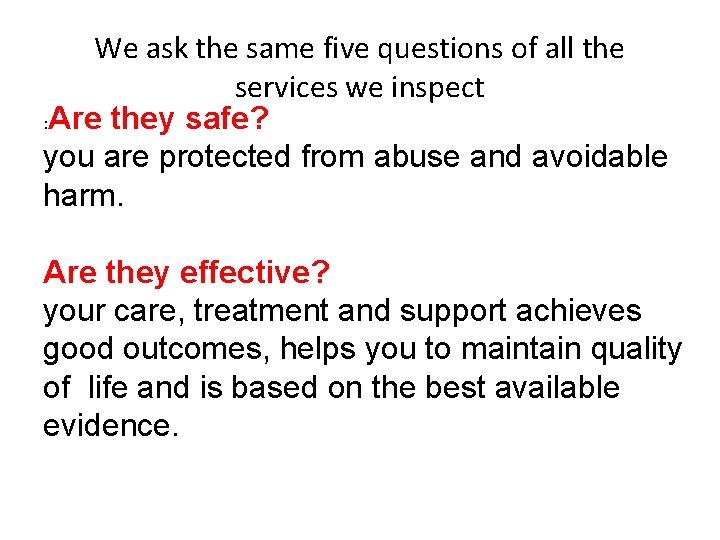
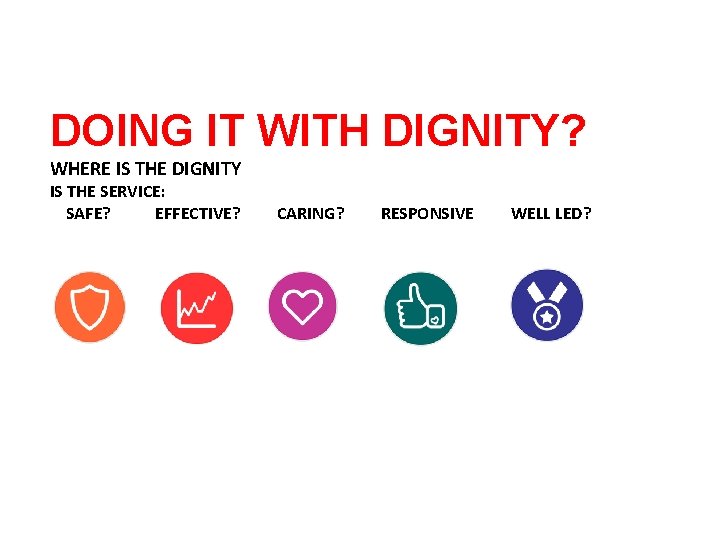
We ask the same five questions of all the services we inspect : Are they safe? you are protected from abuse and avoidable harm. Are they effective? your care, treatment and support achieves good outcomes, helps you to maintain quality of life and is based on the best available evidence.
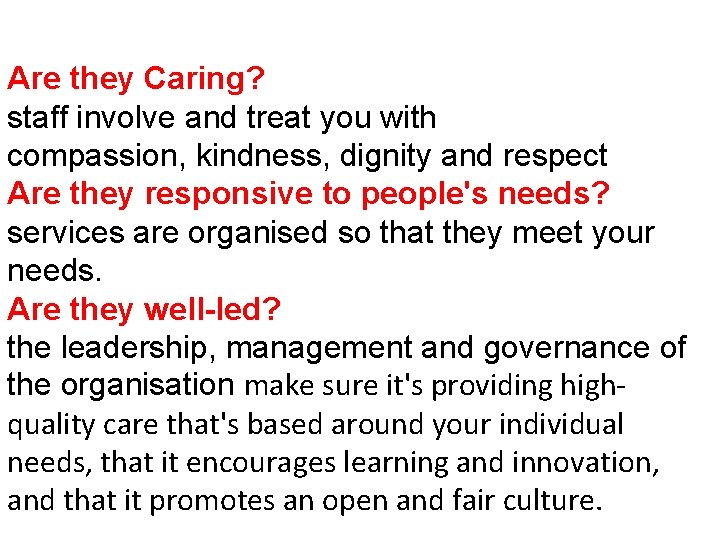
Are they Caring? staff involve and treat you with compassion, kindness, dignity and respect Are they responsive to people's needs? services are organised so that they meet your needs. Are they well-led? the leadership, management and governance of the organisation make sure it's providing highquality care that's based around your individual needs, that it encourages learning and innovation, and that it promotes an open and fair culture.
DOING IT WITH DIGNITY? WHERE IS THE DIGNITY IS THE SERVICE: SAFE? EFFECTIVE? CARING? RESPONSIVE WELL LED?
Definition of Wellbeing is a broad concept, and the statutory guidance defines it as relating to the following nine areas in particular: Ø personal dignity (including treatment of the individual with respect) Ø physical and mental health and emotional wellbeing Ø protection from abuse and neglect Ø control by the individual over day-to-day life (including over care and support provided and the way it is provided) Ø participation in work, education, training or recreation Ø social and economic wellbeing Ø domestic, family and personal relationships Ø suitability of living accommodation Ø the individual’s contribution to society
Caring for our Future: Reforming care and support 5 statements: Maintaining independence: I am supported to maintain my independence for as long as possible Quality: I am happy with the quality of my care and support Dignity and respect: I know that the person giving me care and support will treat me with dignity and respect. Taking control: I am in control of my care and support How care and support works: I understand how care and support works, and what my entitlements and responsibilities are.
What is a Champion?
Ten Dignity Do’s.
Key Aims for Dignity Champions • Stand up and challenge disrespectful behaviour rather than just tolerate it. • Act as a good role model by treating other people with respect particularly those who are less able to stand up for themselves • Speak up about Dignity to improve the way that services are organised and delivered • Influence and inform colleagues • Listen to and understand the views and experiences of citizens • Making sure dignity, compassion and respect is at the heart of everyday practice and isn’t an addition to it. • Treating everyone as a unique individual • Promoting independence, well-being and quality of care /life • Uphold and promote the Ten Dignity Do’s
DIGNITY CHAMPIONS SIGN UP TO UPHOLD THE TEN DIGNITY DO'S
1. Have zero tolerance of all forms of abuse 2. Support people with the same respect and compassion that you would want for yourself or A member of your family! 3. Treat each person as an individual by offering a personalised service 4. Listen and support people to express their needs and wants 5. Respect people’s right to privacy 6. Enable people to maintain the maximum possible level of independence, choice and control 7. Ensure people are able to complain without fear of retribution 8. Engage with family members and carers 9. Assist people to maintain confidence and a positive self-esteem 10. Act to alleviate people’s loneliness and isolation
SAFE JOURNEY!