
Welcome Introduction to a Trauma Informed Approach in




- Slides: 39
Welcome! Introduction to a Trauma Informed Approach in Relationship Education We will begin promptly at 4 PM Eastern time.
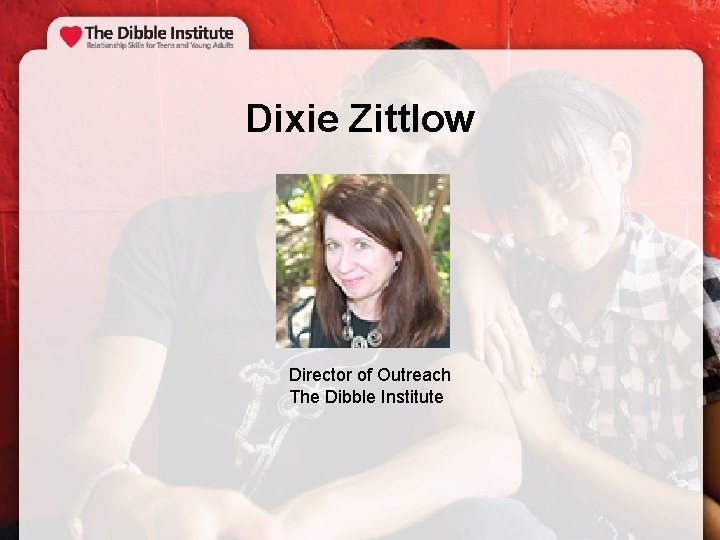
Dixie Zittlow Director of Outreach The Dibble Institute
Webinar Information • If you are unable to access audio through your computer, please use your phone: 1 (213) 929 -4231 /access code: 909 -010 -605. All attendees are muted Ways to participate: • Type your questions in the “Questions” box • Raise your hand • Answer the poll questions • This webinar will be archived at: www. dibbleinstitute. org/webinar-archives/
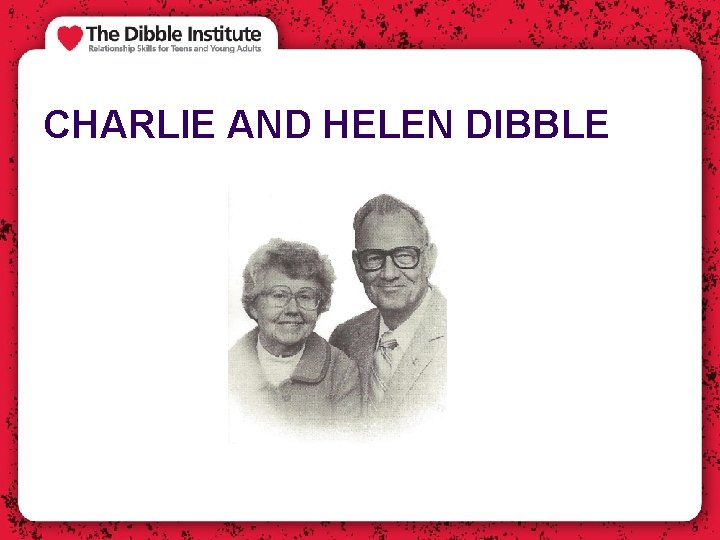
CHARLIE AND HELEN DIBBLE
What the Dibble Institute believes …
Carolyn Rich Curtis Ph. D. Founder Emeritus The Relationship Skill Center
TRAUMA Informed Care And Beyond Carolyn Rich Curtis, Ph. D.
l Who we serve: l l Low income couples with children Low income single parents Youth Curricula l l l Love Notes Mastering the Mysteries of Love Money Habitudes
What is trauma informed care 1. 2. 3. 4. 5. 6. Appreciate high prevalence of trauma Program, organization or system realizes widespread impact of trauma Recognizes signs and symptoms of trauma in staff, clients, and others Recognizes paths for healing with trauma informed, evidenced based and emerging best practices Responds by fully integrating knowledge about trauma into policies, procedures, practices and settings. Recognizes individual differences & no one method works with all people
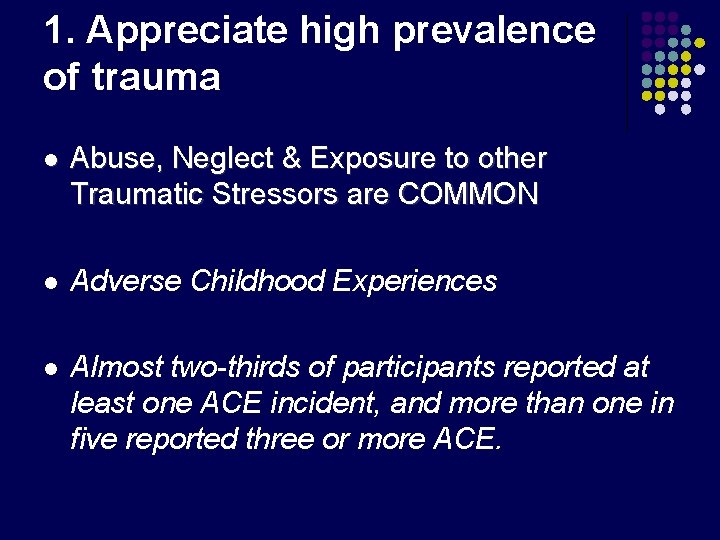
1. Appreciate high prevalence of trauma l Abuse, Neglect & Exposure to other Traumatic Stressors are COMMON l Adverse Childhood Experiences l Almost two-thirds of participants reported at least one ACE incident, and more than one in five reported three or more ACE.
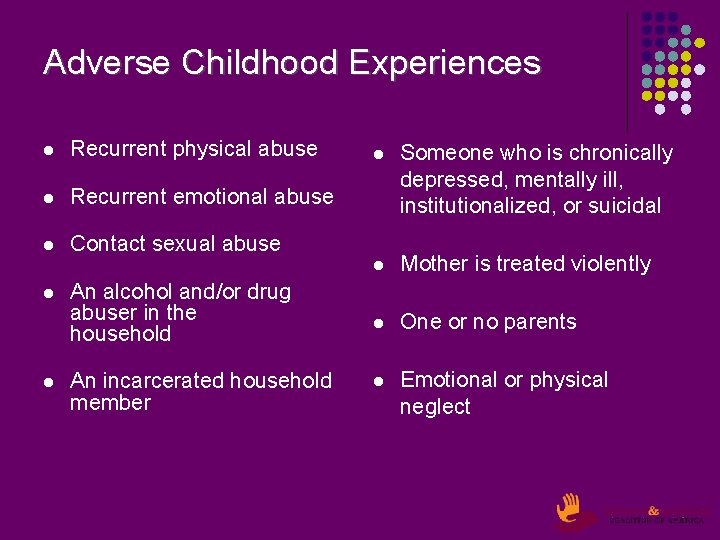
Adverse Childhood Experiences l Recurrent physical abuse l Recurrent emotional abuse l Contact sexual abuse l l An alcohol and/or drug abuser in the household An incarcerated household member l Someone who is chronically depressed, mentally ill, institutionalized, or suicidal l Mother is treated violently l One or no parents l Emotional or physical neglect
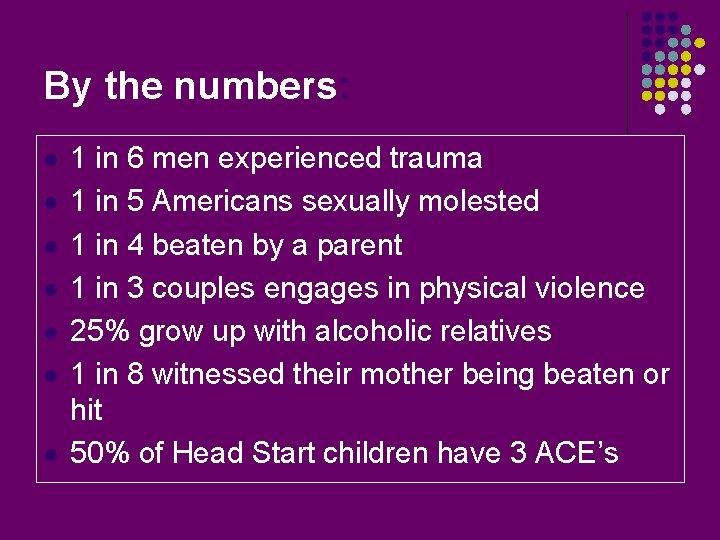
By the numbers: l l l l 1 in 6 men experienced trauma 1 in 5 Americans sexually molested 1 in 4 beaten by a parent 1 in 3 couples engages in physical violence 25% grow up with alcoholic relatives 1 in 8 witnessed their mother being beaten or hit 50% of Head Start children have 3 ACE’s
2. Program, organization or system realizes widespread impact of trauma 3. Recognizes signs and symptoms of trauma in staff, clients, and others
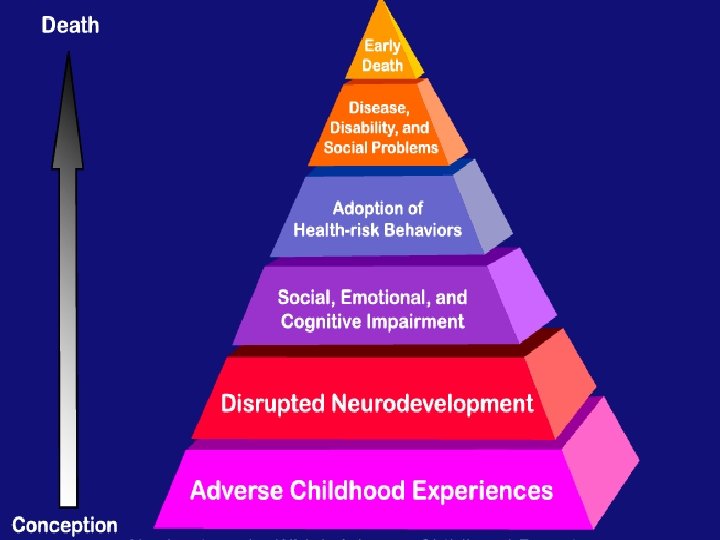
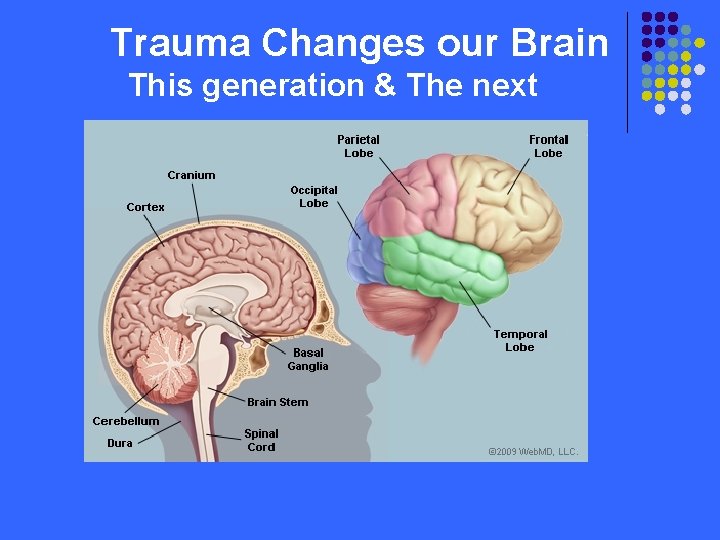
Trauma Changes our Brain This generation & The next
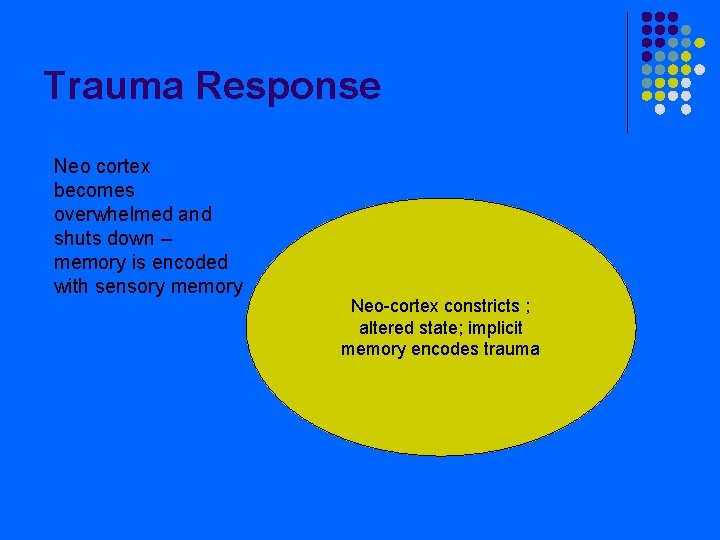
Trauma Response Neo cortex becomes overwhelmed and shuts down – memory is encoded with sensory memory Neo-cortex constricts ; altered state; implicit memory encodes trauma
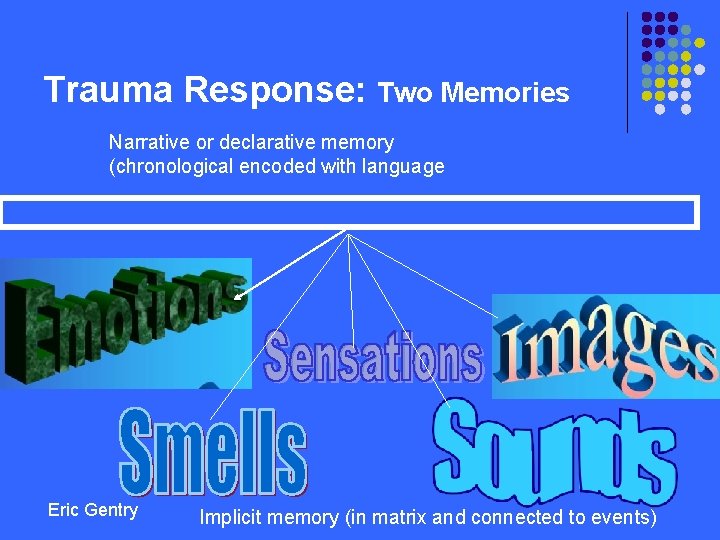
Trauma Response: Two Memories Narrative or declarative memory (chronological encoded with language Eric Gentry Implicit memory (in matrix and connected to events)
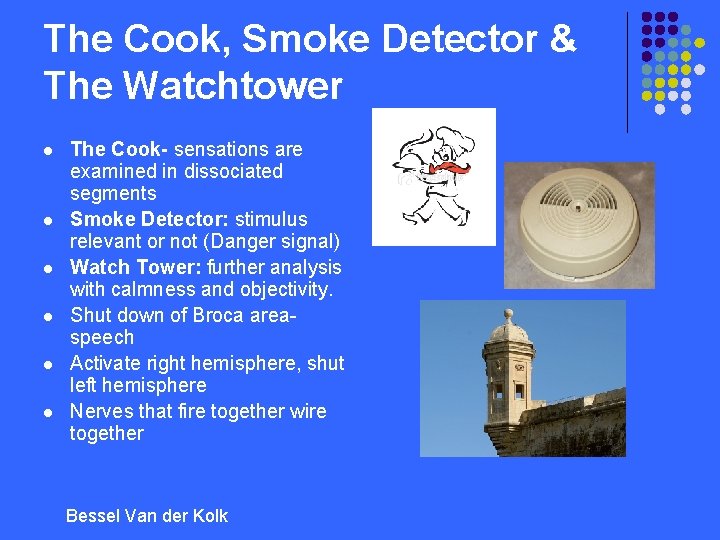
The Cook, Smoke Detector & The Watchtower l l l The Cook- sensations are examined in dissociated segments Smoke Detector: stimulus relevant or not (Danger signal) Watch Tower: further analysis with calmness and objectivity. Shut down of Broca areaspeech Activate right hemisphere, shut left hemisphere Nerves that fire together wire together Bessel Van der Kolk
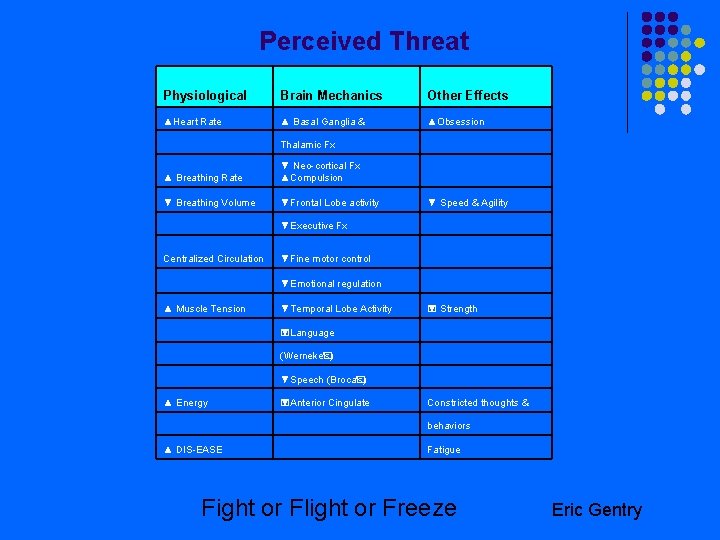
Perceived Threat Physiological Brain Mechanics Other Effects ▲Heart Rate ▲ Basal Ganglia & ▲Obsession Thalamic Fx ▲ Breathing Rate ▼ Neo-cortical Fx ▲Compulsion ▼ Breathing Volume ▼Frontal Lobe activity ▼ Speed & Agility ▼Executive Fx Centralized Circulation ▼Fine motor control ▼Emotional regulation ▲ Muscle Tension ▼Temporal Lobe Activity ▼ Strength � ▼Language � (Werneke� 's) ▼Speech (Broca� 's) ▲ Energy ▼Anterior Cingulate � Constricted thoughts & behaviors ▲ DIS-EASE Fatigue Fight or Flight or Freeze Eric Gentry
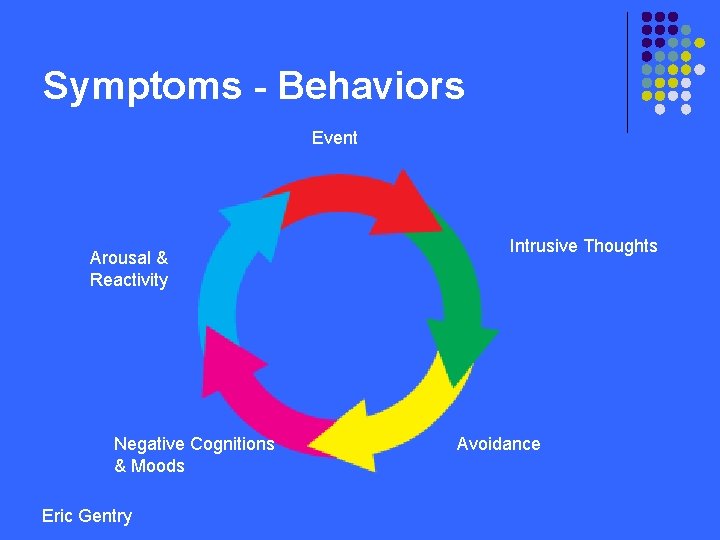
Symptoms - Behaviors Event Arousal & Reactivity Negative Cognitions & Moods Eric Gentry Intrusive Thoughts Avoidance
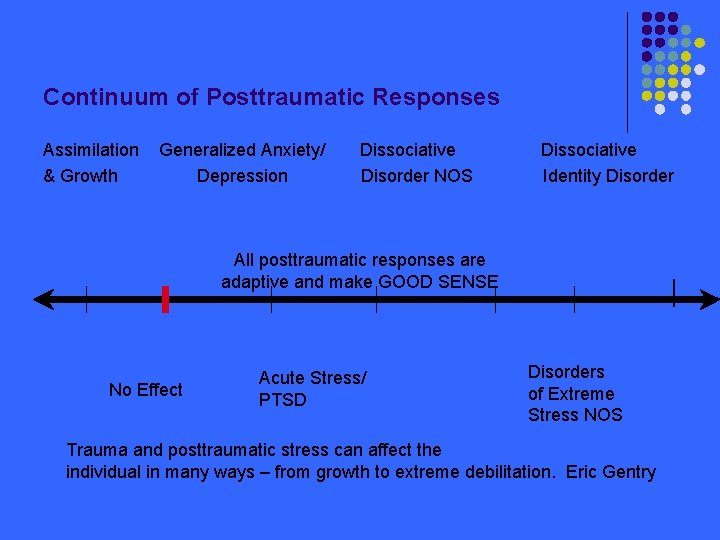
Continuum of Posttraumatic Responses Assimilation & Growth Generalized Anxiety/ Depression Dissociative Disorder NOS Dissociative Identity Disorder All posttraumatic responses are adaptive and make GOOD SENSE No Effect Acute Stress/ PTSD Disorders of Extreme Stress NOS Trauma and posttraumatic stress can affect the individual in many ways – from growth to extreme debilitation. Eric Gentry
4. Recognizes paths for healing with trauma informed, evidenced based and emerging best practices 5. No one method works with all people
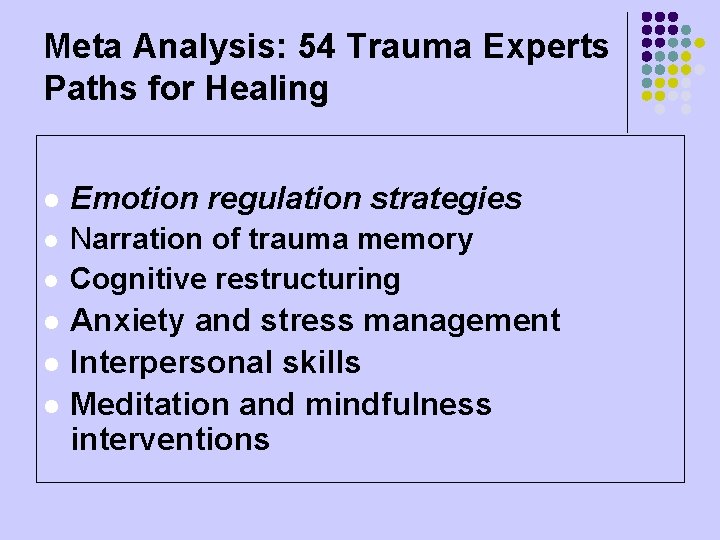
Meta Analysis: 54 Trauma Experts Paths for Healing l Emotion regulation strategies l Narration of trauma memory Cognitive restructuring l l Anxiety and stress management Interpersonal skills Meditation and mindfulness interventions
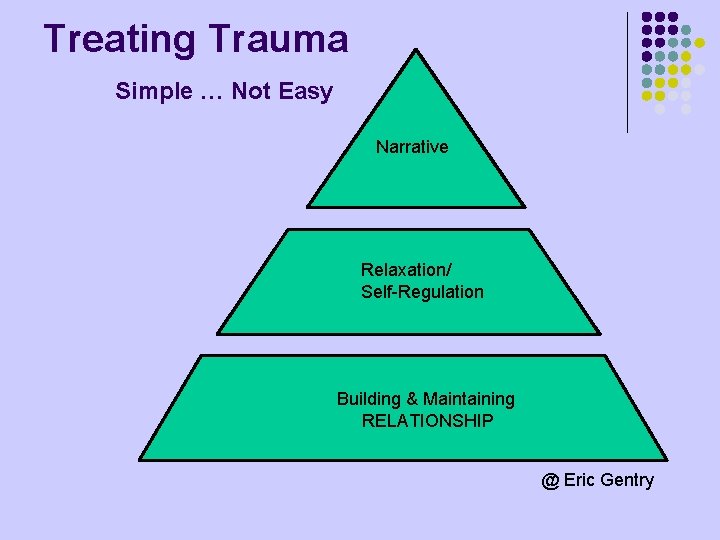
Treating Trauma Simple … Not Easy Narrative Relaxation/ Self-Regulation Building & Maintaining RELATIONSHIP @ Eric Gentry
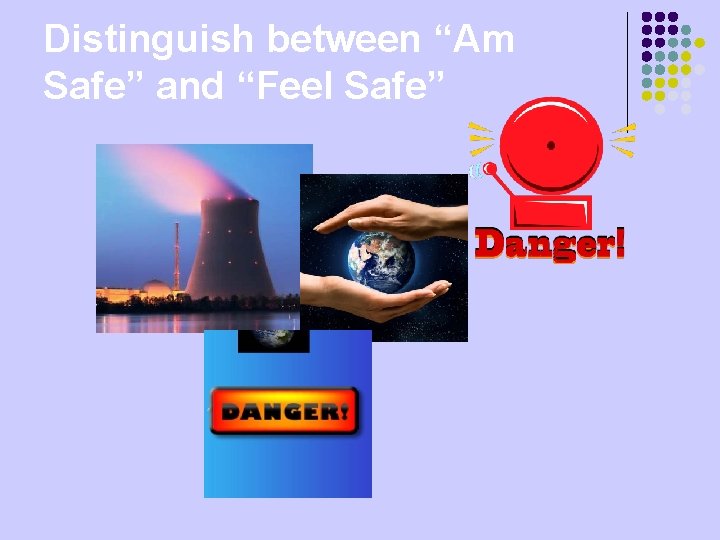
Distinguish between “Am Safe” and “Feel Safe”
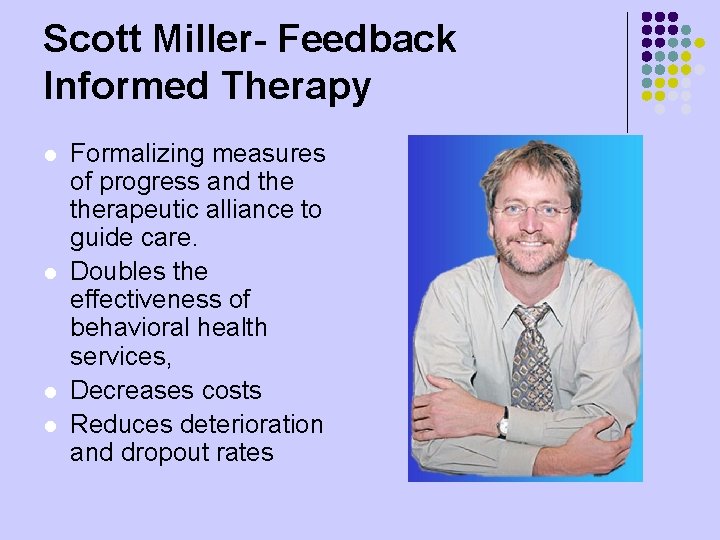
Scott Miller- Feedback Informed Therapy l l Formalizing measures of progress and therapeutic alliance to guide care. Doubles the effectiveness of behavioral health services, Decreases costs Reduces deterioration and dropout rates
Recognize individual differences No one method works with all people 3 -2 -1 Sensory grounding Safe-place visualization Flashback Journal Athletics, music, dancing Emotional Freedom Techniques Light Stream Icon in envelope EMDR Yoga Mindfulness Cognitive Behavioral Therapy DBT Progressive Relaxation Anchoring Transitional Object Postural grounding Internal vault Timed/metered expression Neurofeedback Communal Rhythms Theater Art Group Therapy Internal Family Systems
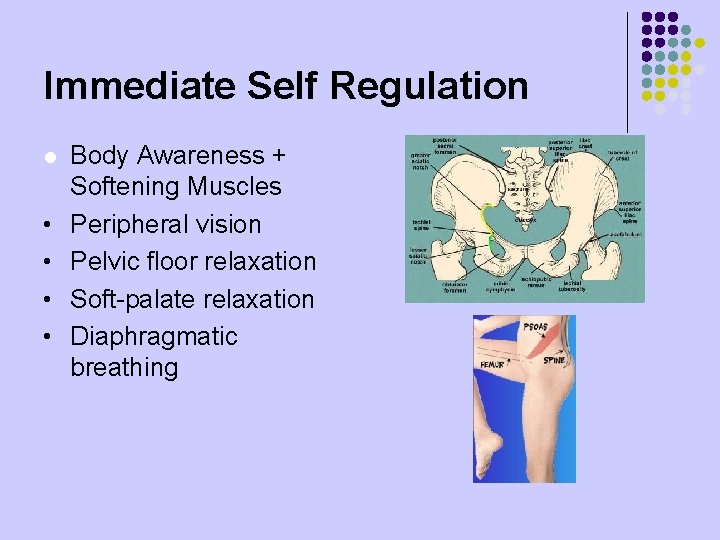
Immediate Self Regulation l • • Body Awareness + Softening Muscles Peripheral vision Pelvic floor relaxation Soft-palate relaxation Diaphragmatic breathing
LOVE Interpersonal Skills l l l Attunement Empathy Love from your significant other New permanent object The partner is a healing source for trauma
6. Responds by fully integrating knowledge about trauma into policies, procedures, practices and settings.
Key Principles of Trauma Informed Care l l l l Safety Trustworthiness & transparency Collaboration & mutuality Empowerment Resilience & strengths based Cultural, historical & gender issues Change is a process
It’s the little things l l Interactions that express kindness, patience, reassurance, calm, acceptance and listening An Environment l l l Comfortable Calming Clean Messages are pleasant, inspiring, hopeful PLEASE and THANK YOU
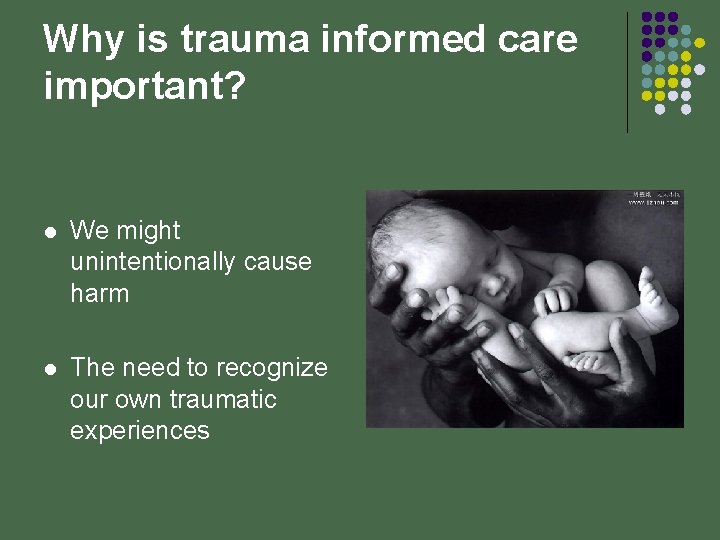
Why is trauma informed care important? l We might unintentionally cause harm l The need to recognize our own traumatic experiences
to another: It’s for our children & grandchildren Carolyn Rich Curtis, Ph. D. 2747 Julie Ann Court, Sacramento, CA 95608 carolynrichcurtis@gmail. com 916 -995 -6846
Place an order on our Dibble Institute website within 30 days of the airing of this webinar for Free Shipping (savings of 10%) Use the code: “webinar” at checkout.
Thank You for Joining Us Today! There is a brief survey after the end of this webinar. Thank you for providing us feedback by completing this survey. Webinar will be available in 3 days: www. Dibble. Institute. org/webinars-archives/ Questions? Contact: Dixie Zittlow: Dixie@Dibble. Institute. org Cathy Guidry: Cathy@Dibble. Institute. org
KEEP IN TOUCH! • www. Dibble. Institute. org • Subscribe to our newsletter • Like us on Face. Book • Follow us on Linked. In • Relationship. Skills@dibbleinstitute. org • 800 -695 -7975
June 2015 Upcoming Webinar Connecting the Dots: The Role of Healthy Romantic Relationships in Adolescents’ Lives Presenter: Mindy Scott, Child Trends