
WELCOME Dr Sambhaji Rajaram Mane M Sc B

WEL-COME Dr. Sambhaji Rajaram Mane M. Sc. B. Ed. Ph. D. Associate Professor and Head Department of chemistry Smt. K. R. P. Kanya Mahavidyalaya, Islampur
Carbon 13 NMR Spectroscopy
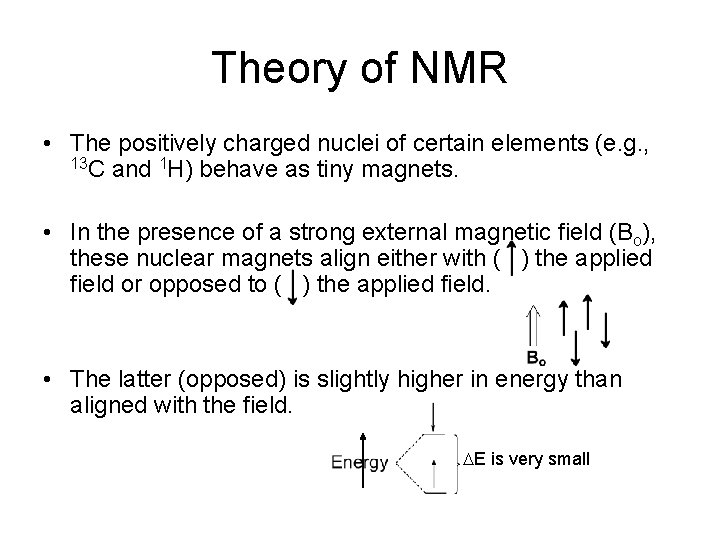
Theory of NMR • The positively charged nuclei of certain elements (e. g. , 13 C and 1 H) behave as tiny magnets. • In the presence of a strong external magnetic field (Bo), these nuclear magnets align either with ( ) the applied field or opposed to ( ) the applied field. • The latter (opposed) is slightly higher in energy than aligned with the field. DE is very small
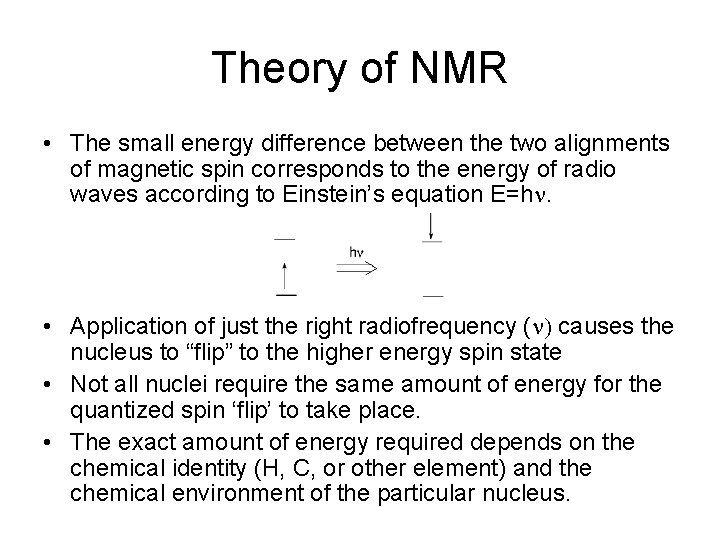
Theory of NMR • The small energy difference between the two alignments of magnetic spin corresponds to the energy of radio waves according to Einstein’s equation E=hn. • Application of just the right radiofrequency (n) causes the nucleus to “flip” to the higher energy spin state • Not all nuclei require the same amount of energy for the quantized spin ‘flip’ to take place. • The exact amount of energy required depends on the chemical identity (H, C, or other element) and the chemical environment of the particular nucleus.
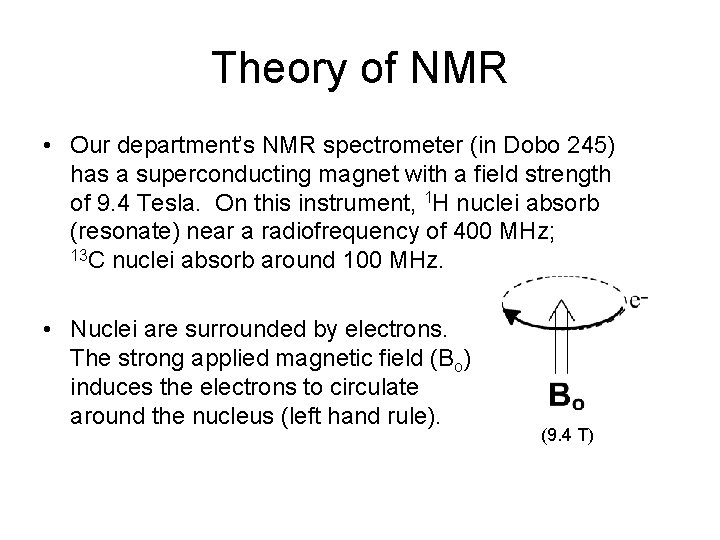
Theory of NMR • Our department’s NMR spectrometer (in Dobo 245) has a superconducting magnet with a field strength of 9. 4 Tesla. On this instrument, 1 H nuclei absorb (resonate) near a radiofrequency of 400 MHz; 13 C nuclei absorb around 100 MHz. • Nuclei are surrounded by electrons. The strong applied magnetic field (Bo) induces the electrons to circulate around the nucleus (left hand rule). (9. 4 T)
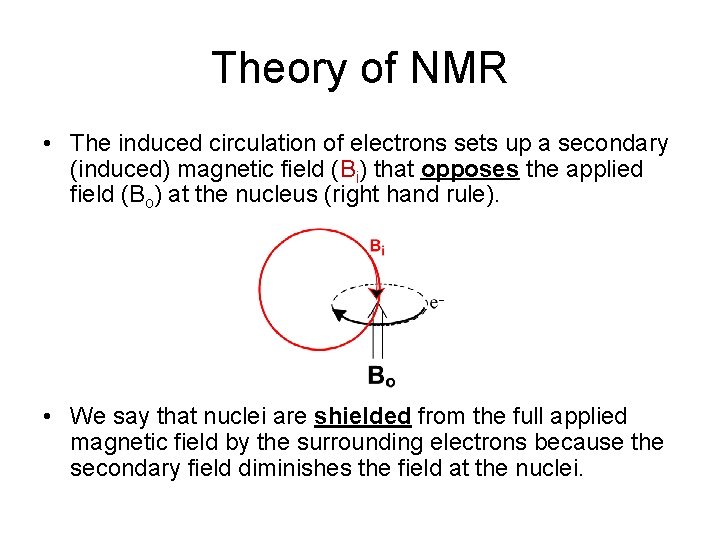
Theory of NMR • The induced circulation of electrons sets up a secondary (induced) magnetic field (Bi) that opposes the applied field (Bo) at the nucleus (right hand rule). • We say that nuclei are shielded from the full applied magnetic field by the surrounding electrons because the secondary field diminishes the field at the nuclei.
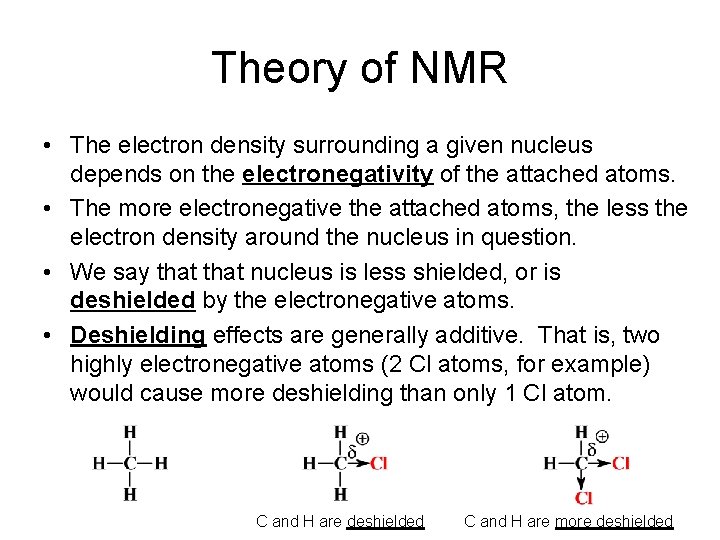
Theory of NMR • The electron density surrounding a given nucleus depends on the electronegativity of the attached atoms. • The more electronegative the attached atoms, the less the electron density around the nucleus in question. • We say that nucleus is less shielded, or is deshielded by the electronegative atoms. • Deshielding effects are generally additive. That is, two highly electronegative atoms (2 Cl atoms, for example) would cause more deshielding than only 1 Cl atom. C and H are deshielded C and H are more deshielded
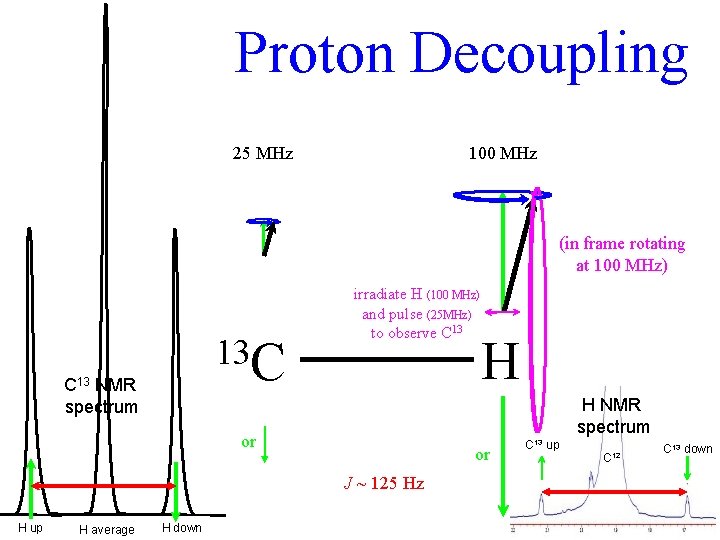
Proton Decoupling 25 MHz 100 MHz (in frame rotating at 100 MHz) 13 C C 13 NMR spectrum irradiate H (100 MHz) and pulse (25 MHz) to observe C 13 H NMR spectrum or or J ~ 125 Hz H up H average H down H C 13 up C 12 C 13 down
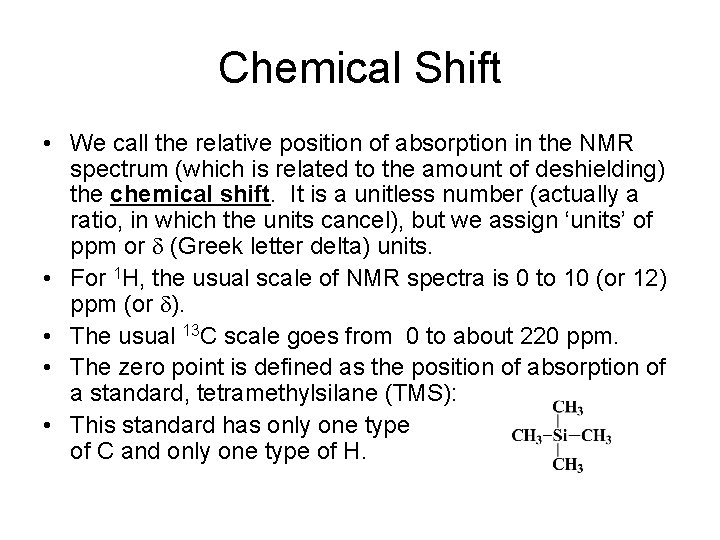
Chemical Shift • We call the relative position of absorption in the NMR spectrum (which is related to the amount of deshielding) the chemical shift. It is a unitless number (actually a ratio, in which the units cancel), but we assign ‘units’ of ppm or d (Greek letter delta) units. • For 1 H, the usual scale of NMR spectra is 0 to 10 (or 12) ppm (or d). • The usual 13 C scale goes from 0 to about 220 ppm. • The zero point is defined as the position of absorption of a standard, tetramethylsilane (TMS): • This standard has only one type of C and only one type of H.
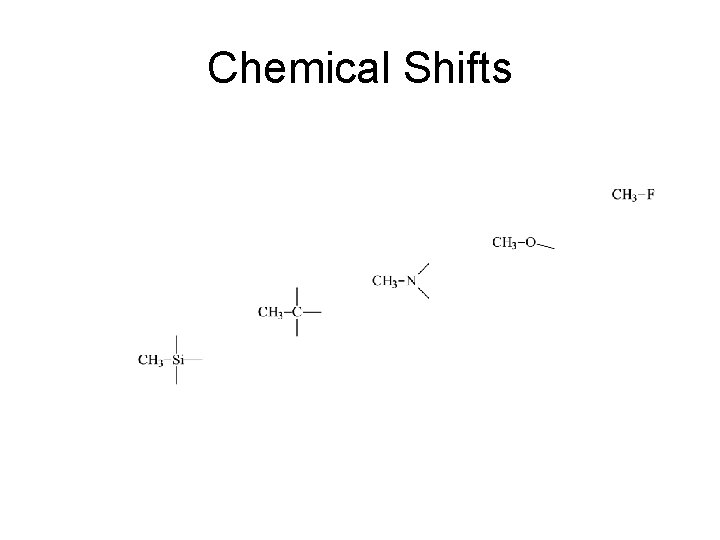
Chemical Shifts
Chemical Shifts • Both 1 H and 13 C Chemical shifts are related to three major factors: – The hybridization (of carbon) – Presence of electronegative atoms or electron attracting groups – The degree of substitution (1º, 2º or 3º). These latter effects are most important in 13 C NMR, and in that context are usually called ‘steric’ effects. • First we’ll focus on Carbon NMR spectra (they are simpler)
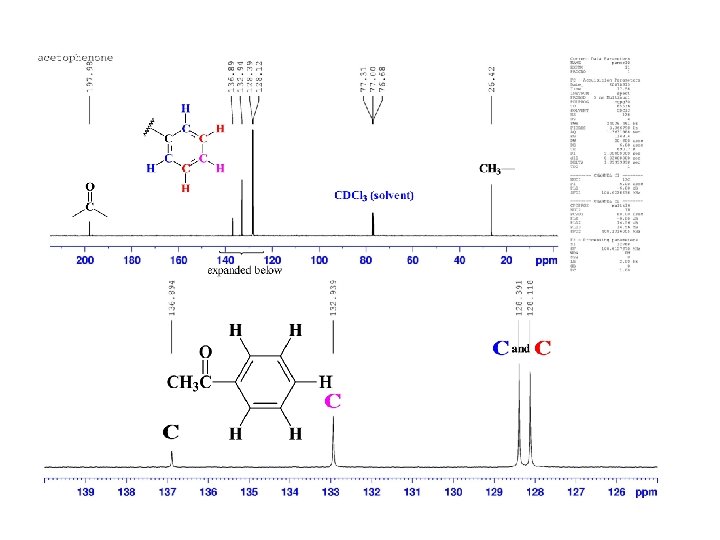
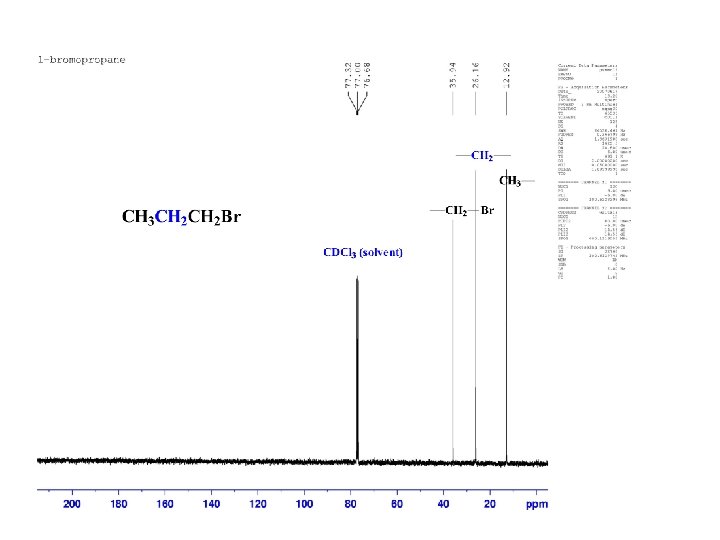
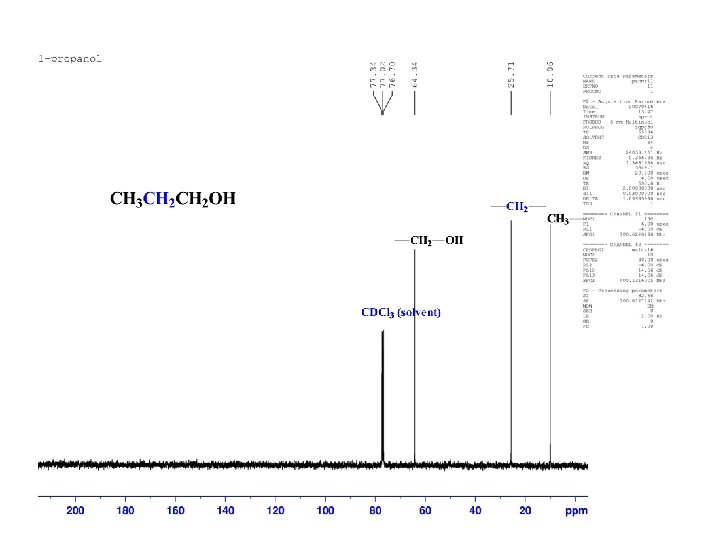
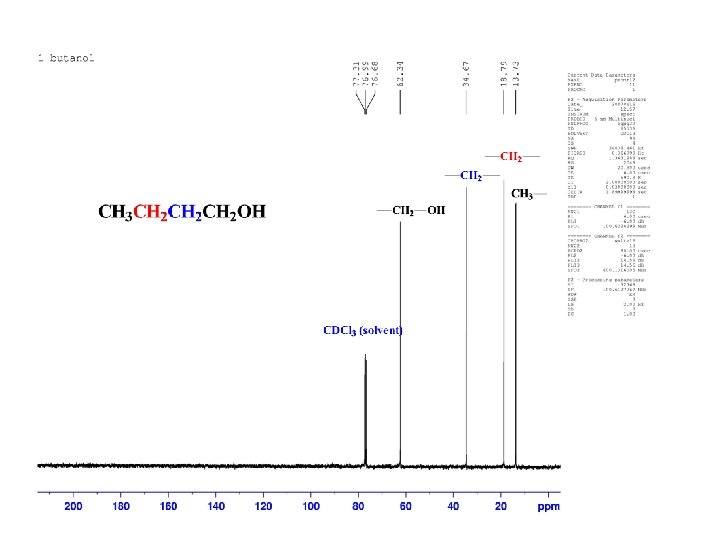
CMR Spectra • Each unique C in a structure gives a single peak in the spectrum; there is rarely any overlap. – The carbon spectrum spans over 200 ppm; chemical shifts only 0. 001 ppm apart can be distinguished; this allows for over 2 x 10⁵ possible chemical shifts for carbon. • The intensity (size) of each peak is NOT directly related to the number of that type of carbon. Other factors contribute to the size of a peak: – Peaks from carbon atoms that have attached hydrogen atoms are bigger than those that don’t have hydrogens attached. • Carbon chemical shifts are usually reported as downfield from the carbon signal of tetramethylsilane (TMS).
13 C Chemical Shifts
1 H and 13 C NMR compared: both give us information about the number of chemically nonequivalent nuclei (nonequivalent hydrogens or nonequivalent carbons) both give us information about the environment of the nuclei (hybridization state, attached atoms, etc. )
1 H and 13 C NMR compared: the signal for the NMR of a 13 C nucleus is 10 -4 times weaker than the signal for a hydrogen nucleus a signal for a 13 C nucleus is only about 1% as intense as that for 1 H because of the magnetic properties of the nuclei, and at the "natural abundance" level only 1. 1% of all the C atoms in a sample are 13 C (most are 12 C)
1 H and 13 C NMR compared: 13 C signals are spread over a much wider range than 1 H signals making it easier to identify and count individual nuclei Check the spectra on the next slides: Figure 13. 20 (a) shows the 1 H NMR spectrum of 1 chloropentane; Figure 13. 20 (b) shows the 13 C spectrum. It is much easier to identify the compound as 1 -chloropentane by its 13 C spectrum than by its 1 H spectrum.
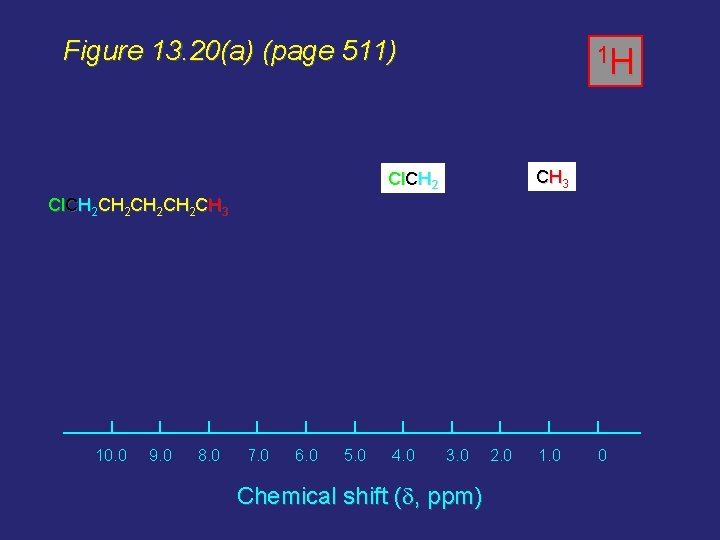
Figure 13. 20(a) (page 511) 1 H CH 3 Cl. CH 2 CH 2 CH 2 CH 3 10. 0 9. 0 8. 0 7. 0 6. 0 5. 0 4. 0 3. 0 Chemical shift (d, ppm) 2. 0 1. 0 0
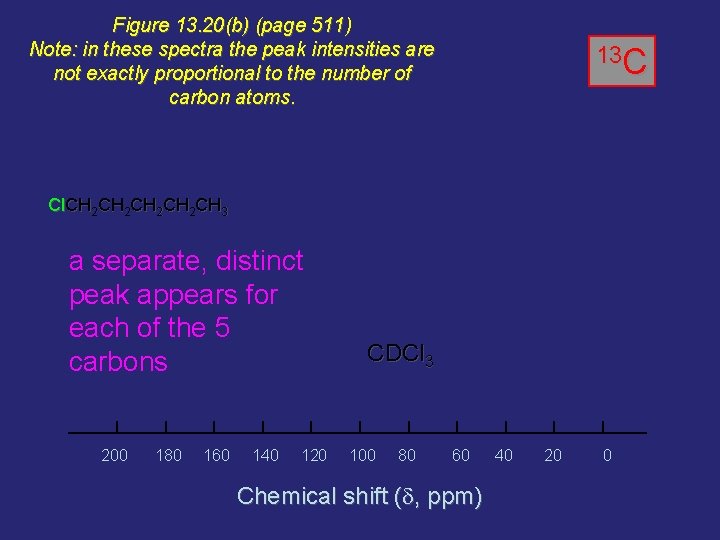
Figure 13. 20(b) (page 511) Note: in these spectra the peak intensities are not exactly proportional to the number of carbon atoms. 13 C Cl. CH 2 CH 2 CH 3 a separate, distinct peak appears for each of the 5 carbons 200 180 160 140 120 CDCl 3 100 80 60 Chemical shift (d, ppm) 40 20 0
13. 15 13 C Chemical Shifts are measured in ppm (d) from the carbons of TMS
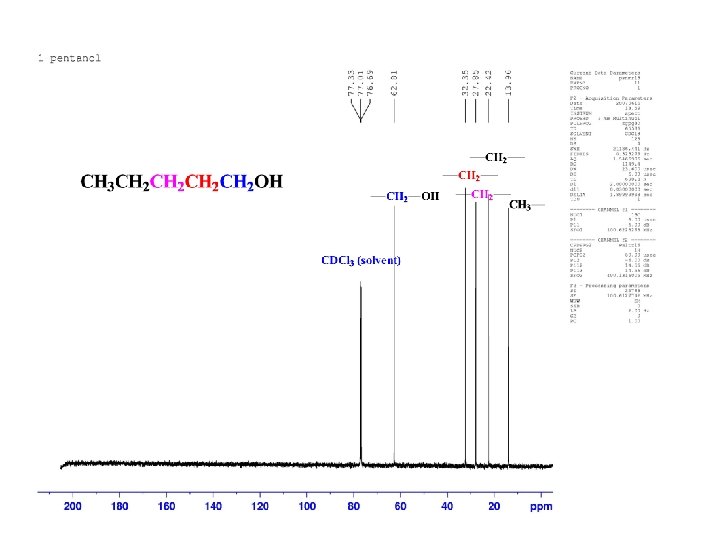
13 C Chemical shifts are most affected by: • hybridization state of carbon • electronegativity of groups attached to carbon
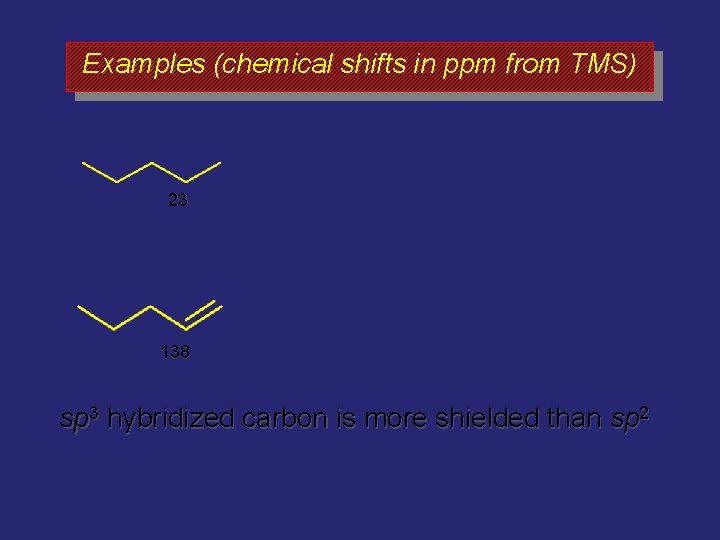
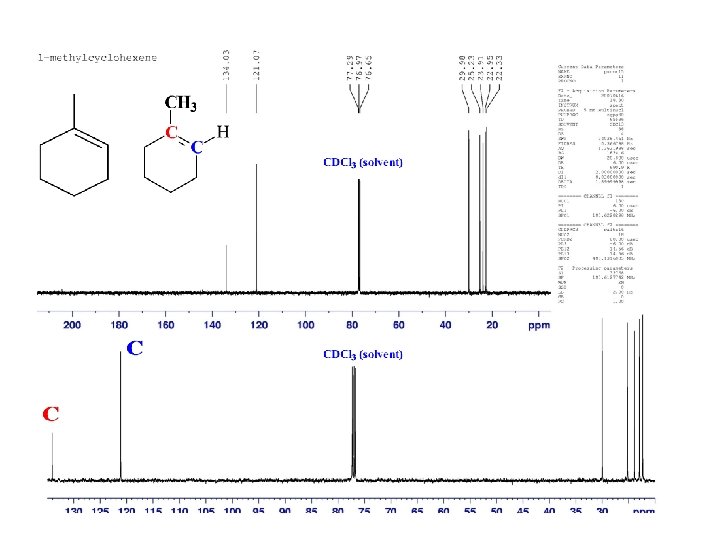
Examples (chemical shifts in ppm from TMS) 23 138 sp 3 hybridized carbon is more shielded than sp 2
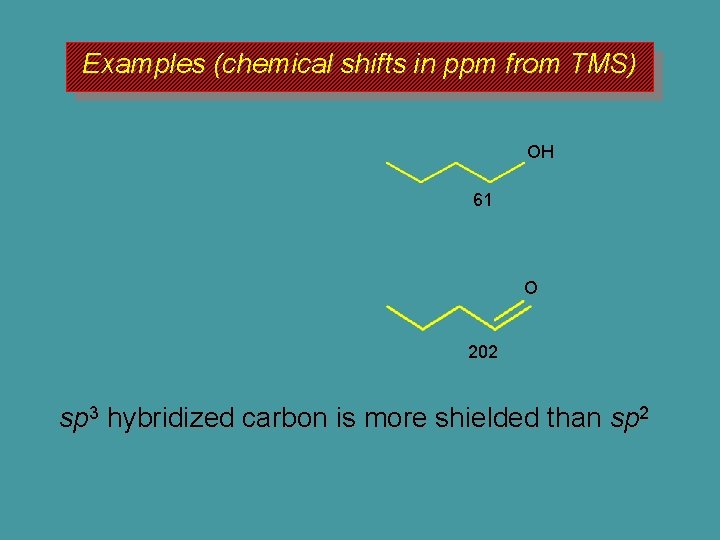
Examples (chemical shifts in ppm from TMS) OH 61 O 202 sp 3 hybridized carbon is more shielded than sp 2
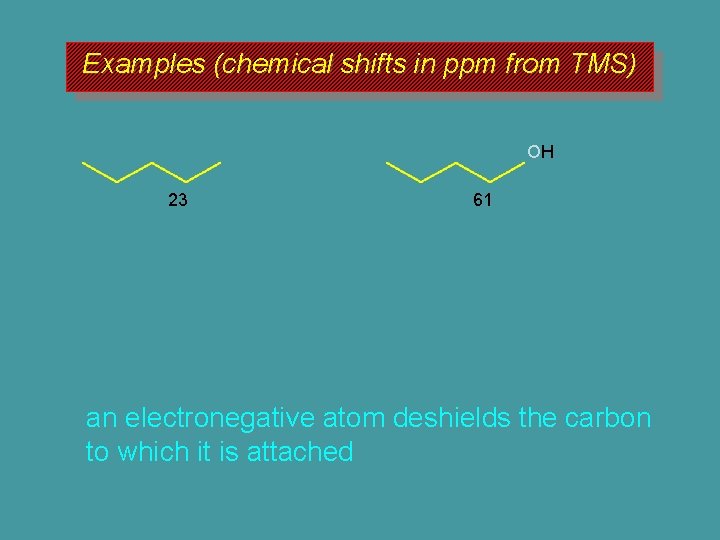
Examples (chemical shifts in ppm from TMS) OH 23 61 an electronegative atom deshields the carbon to which it is attached
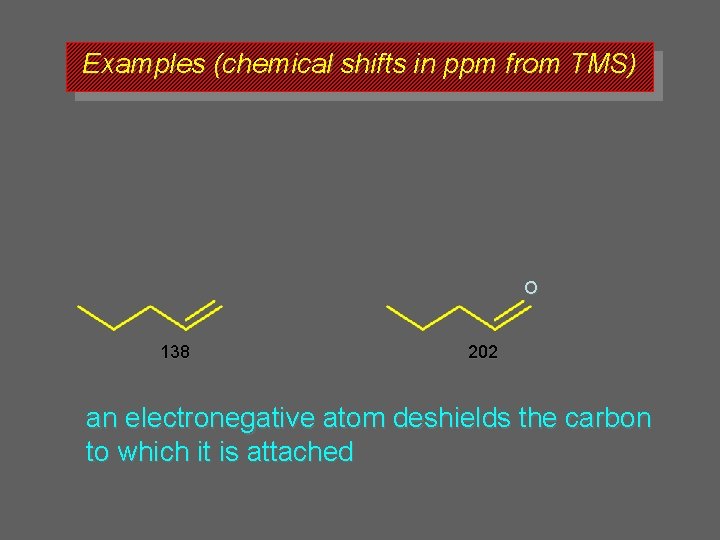
Examples (chemical shifts in ppm from TMS) O 138 202 an electronegative atom deshields the carbon to which it is attached
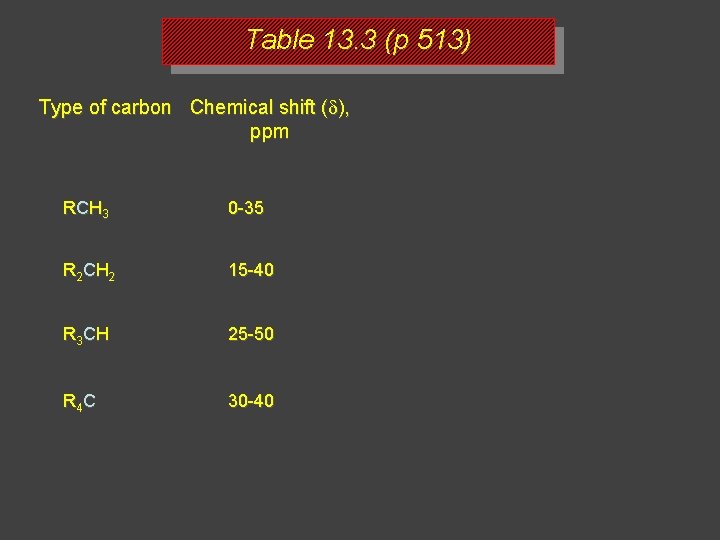
Table 13. 3 (p 513) Type of carbon Chemical shift (d), ppm RCH 3 0 -35 R 2 CH 2 15 -40 R 3 CH 25 -50 R 4 C 30 -40
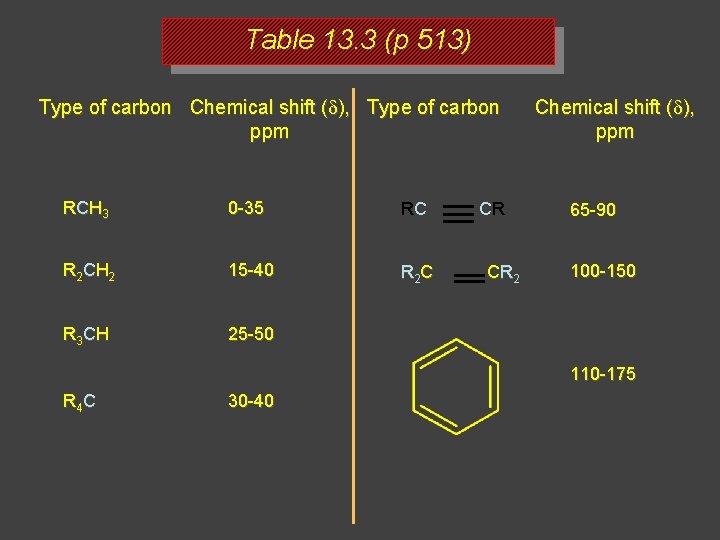
Table 13. 3 (p 513) Type of carbon Chemical shift (d), Type of carbon ppm RCH 3 0 -35 RC R 2 CH 2 15 -40 R 2 C R 3 CH 25 -50 CR CR 2 Chemical shift (d), ppm 65 -90 100 -150 110 -175 R 4 C 30 -40
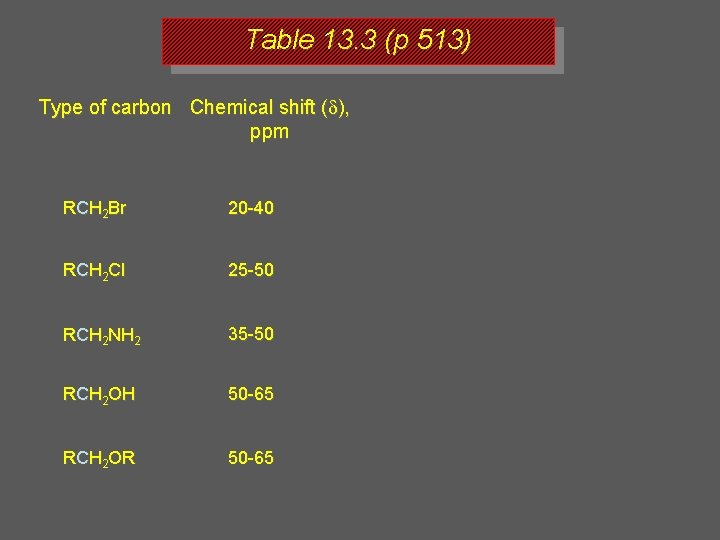
Table 13. 3 (p 513) Type of carbon Chemical shift (d), ppm RCH 2 Br 20 -40 RCH 2 Cl 25 -50 RCH 2 NH 2 35 -50 RCH 2 OH 50 -65 RCH 2 OR 50 -65
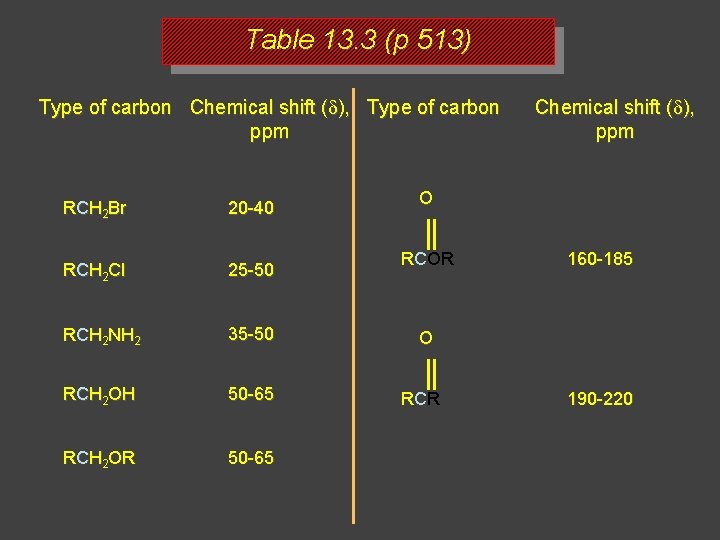
Table 13. 3 (p 513) Type of carbon Chemical shift (d), Type of carbon ppm RCH 2 Br 20 -40 RCH 2 Cl 25 -50 RCH 2 NH 2 35 -50 RCH 2 OH 50 -65 RCH 2 OR 50 -65 Chemical shift (d), ppm O RCOR 160 -185 O RCR 190 -220
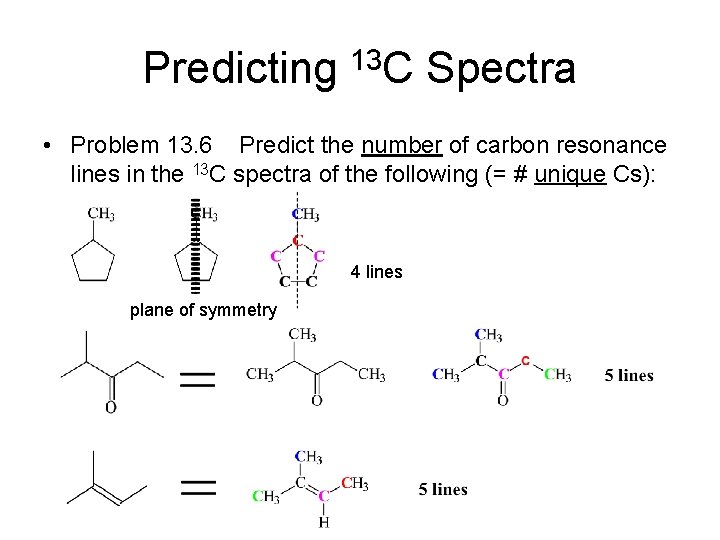
Predicting 13 C Spectra • Problem 13. 6 Predict the number of carbon resonance lines in the 13 C spectra of the following (= # unique Cs): 4 lines plane of symmetry
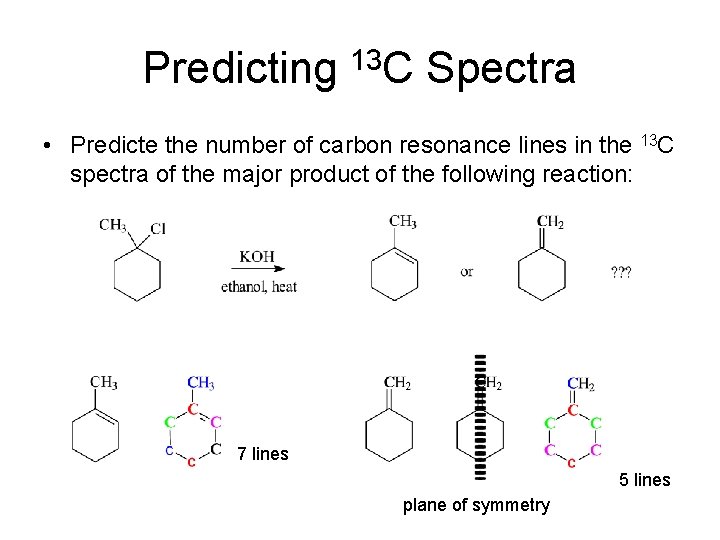
Predicting 13 C Spectra • Predicte the number of carbon resonance lines in the 13 C spectra of the major product of the following reaction: 7 lines 5 lines plane of symmetry
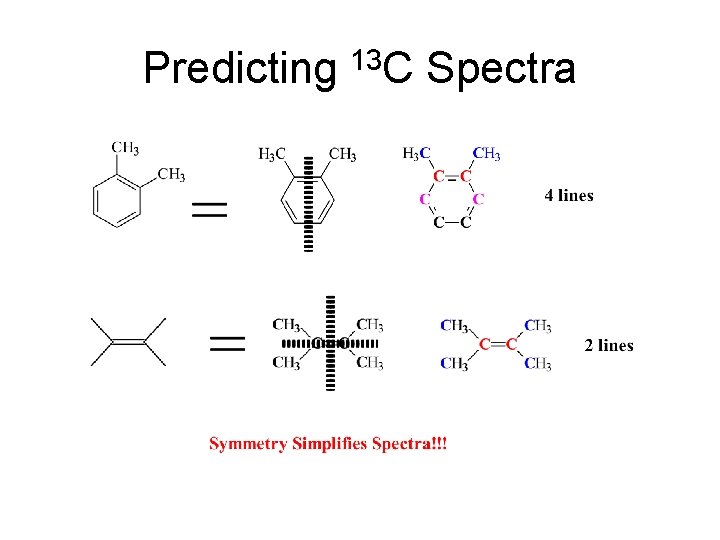
Predicting 13 C Spectra
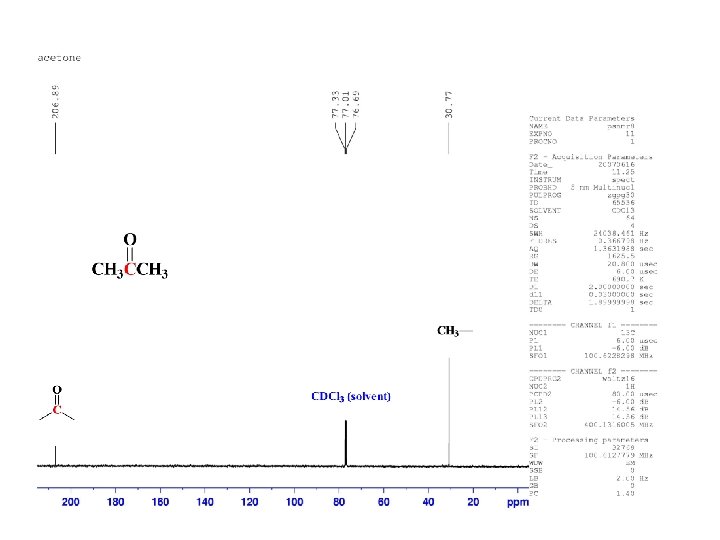
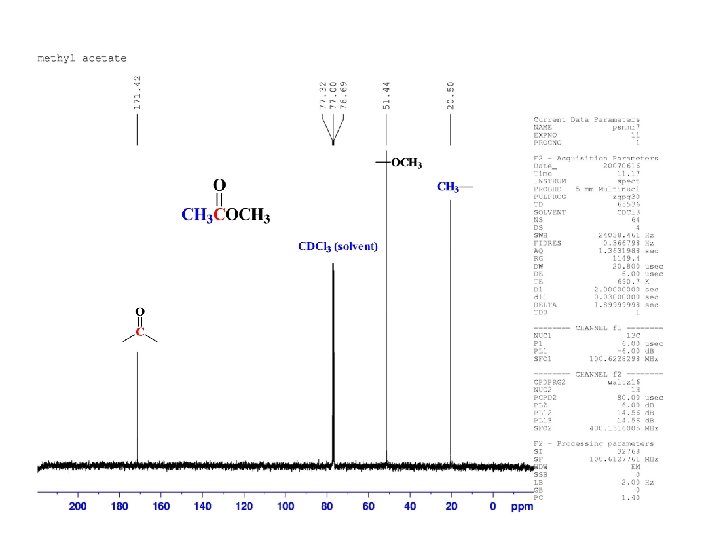
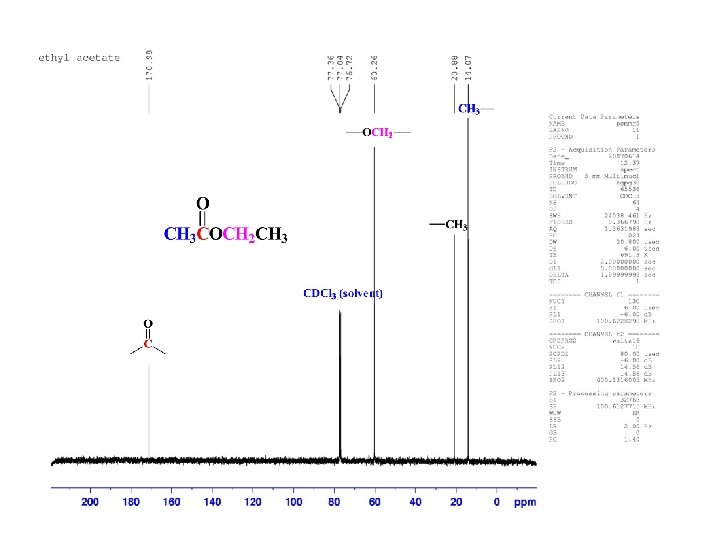
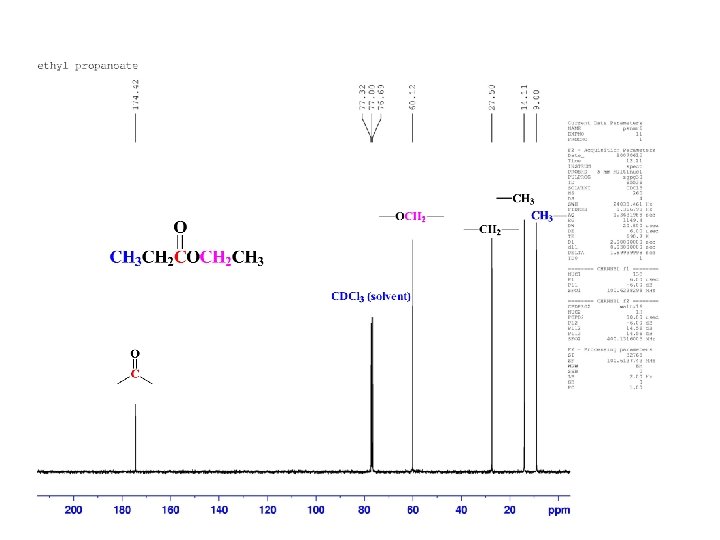
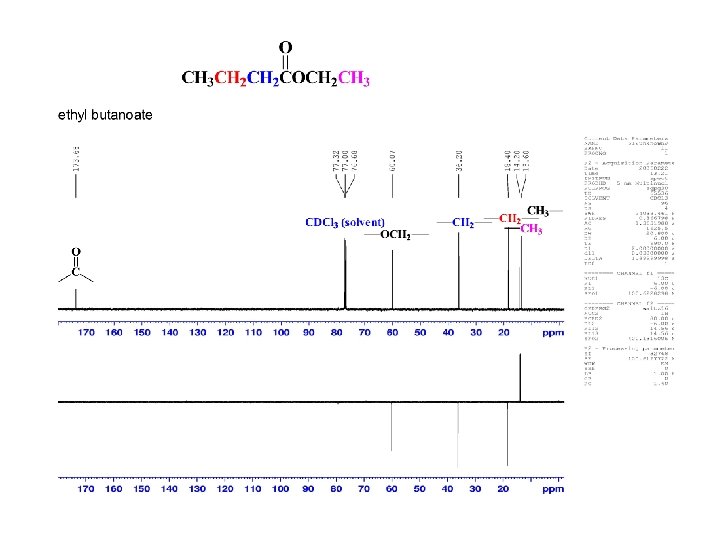
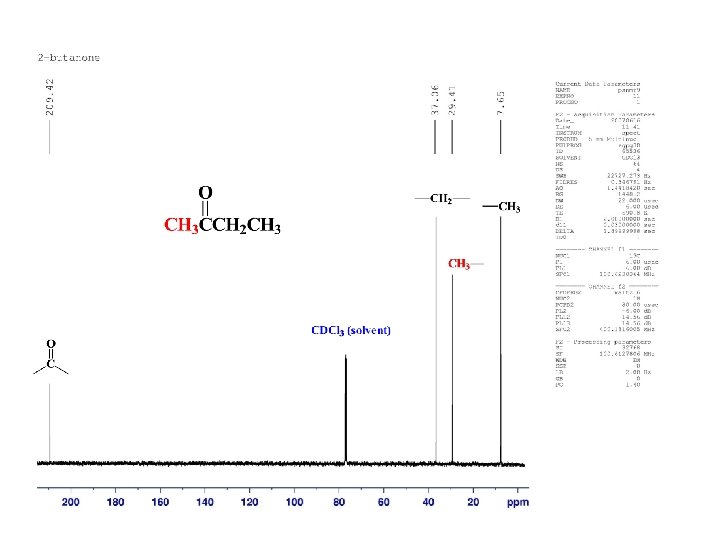
C 6 H 12 O 2
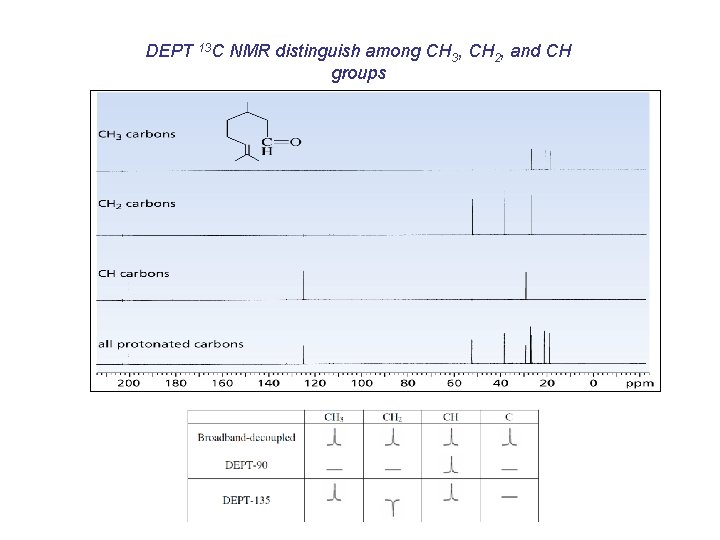
DEPT 13 C NMR distinguish among CH 3, CH 2, and CH groups

THANK FOR YOUR ATTENTION 46
- Slides: 46