
Welcome DR BABASAHEB AMBEDKAR to MARATHWADA UNIVERSITY Multispectral
Welcome DR. BABASAHEB AMBEDKAR to MARATHWADA UNIVERSITY Multispectral AURANGABAD Research Lab Department of Computer Science & Information Technology Dr. Ratnadeep R. Deshmukh Professor, DST-FIST, Program Coordinator
CONTENT � � � Introduction Specification of Field. Spec 4 Application Areas ü ü ü Geology / Mining Defense & Intel Environmental Materials Analysis Agriculture � Examples of Spectral Signature � Work in Progress at Our Premises � Research Student Working on Remote Sensing and GIS � Conclusion
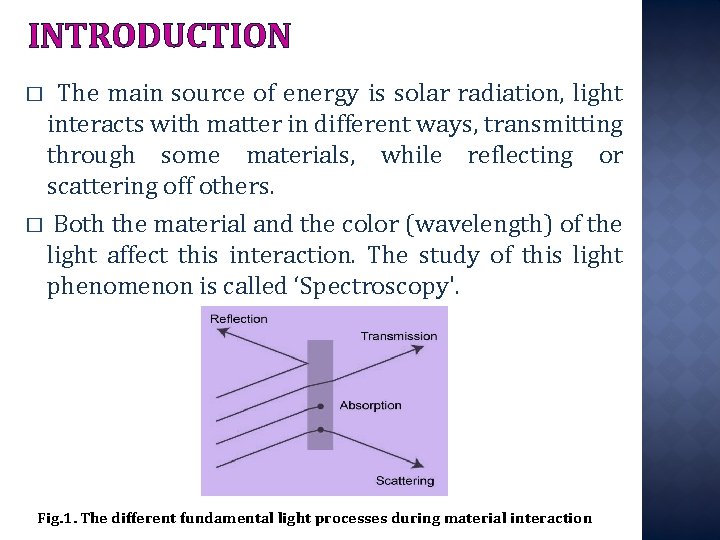
INTRODUCTION The main source of energy is solar radiation, light interacts with matter in different ways, transmitting through some materials, while reflecting or scattering off others. � Both the material and the color (wavelength) of the light affect this interaction. The study of this light phenomenon is called ‘Spectroscopy'. � Fig. 1. The different fundamental light processes during material interaction
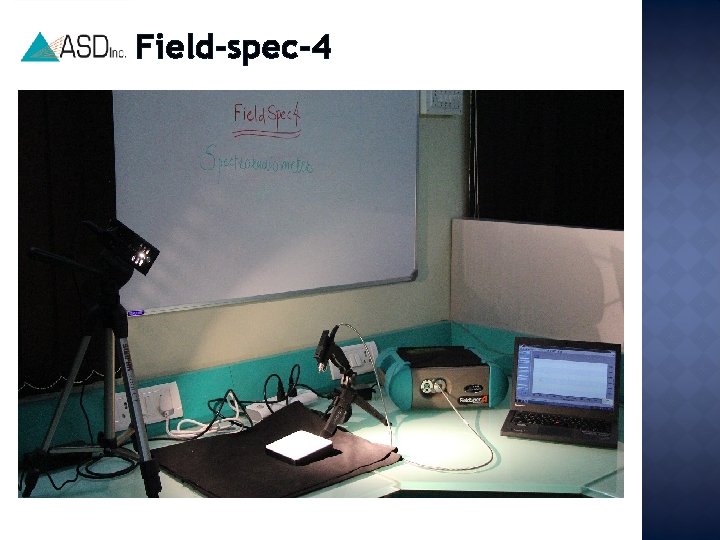
Field-spec-4
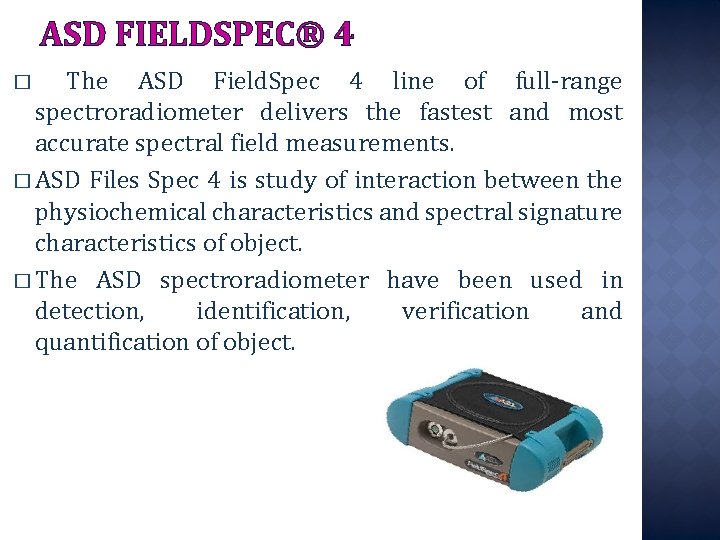
ASD FIELDSPEC® 4 The ASD Field. Spec 4 line of full-range spectroradiometer delivers the fastest and most accurate spectral field measurements. � ASD Files Spec 4 is study of interaction between the physiochemical characteristics and spectral signature characteristics of object. � The ASD spectroradiometer have been used in detection, identification, verification and quantification of object. �
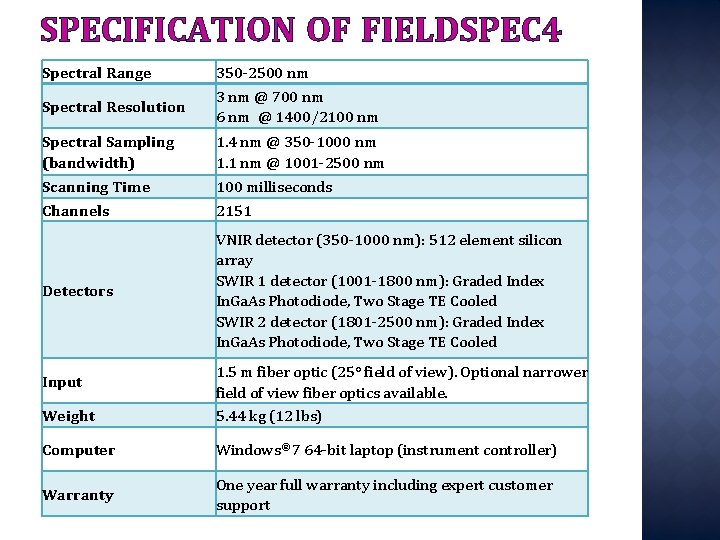
SPECIFICATION OF FIELDSPEC 4 Spectral Range Spectral Resolution 350 -2500 nm 3 nm @ 700 nm 6 nm @ 1400/2100 nm Spectral Sampling (bandwidth) 1. 4 nm @ 350 -1000 nm 1. 1 nm @ 1001 -2500 nm Scanning Time Channels 100 milliseconds 2151 Detectors VNIR detector (350 -1000 nm): 512 element silicon array SWIR 1 detector (1001 -1800 nm): Graded Index In. Ga. As Photodiode, Two Stage TE Cooled SWIR 2 detector (1801 -2500 nm): Graded Index In. Ga. As Photodiode, Two Stage TE Cooled Weight 1. 5 m fiber optic (25° field of view). Optional narrower field of view fiber optics available. 5. 44 kg (12 lbs) Computer Windows® 7 64 -bit laptop (instrument controller) Warranty One year full warranty including expert customer support Input
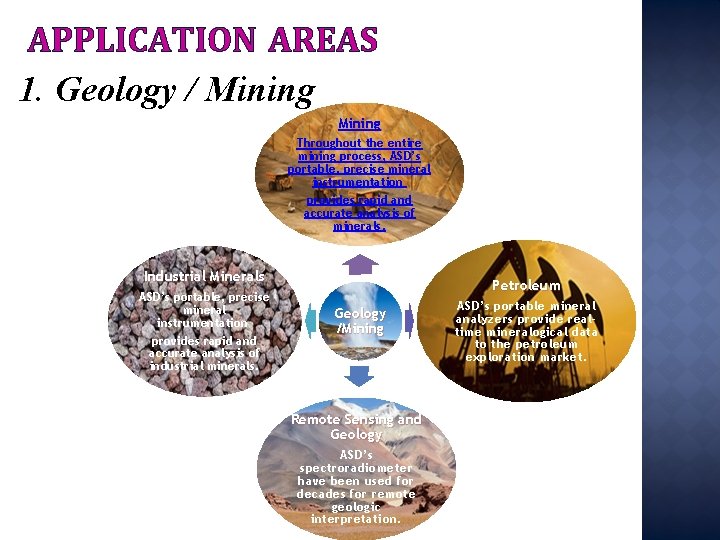
APPLICATION AREAS 1. Geology / Mining Throughout the entire mining process, ASD’s portable, precise mineral instrumentation provides rapid and accurate analysis of minerals. Industrial Minerals ASD’s portable, precise mineral instrumentation provides rapid and accurate analysis of industrial minerals. Petroleum Geology /Mining Remote Sensing and Geology ASD’s spectroradiometer have been used for decades for remote geologic interpretation. ASD’s portable mineral analyzers provide realtime mineralogical data to the petroleum exploration market.
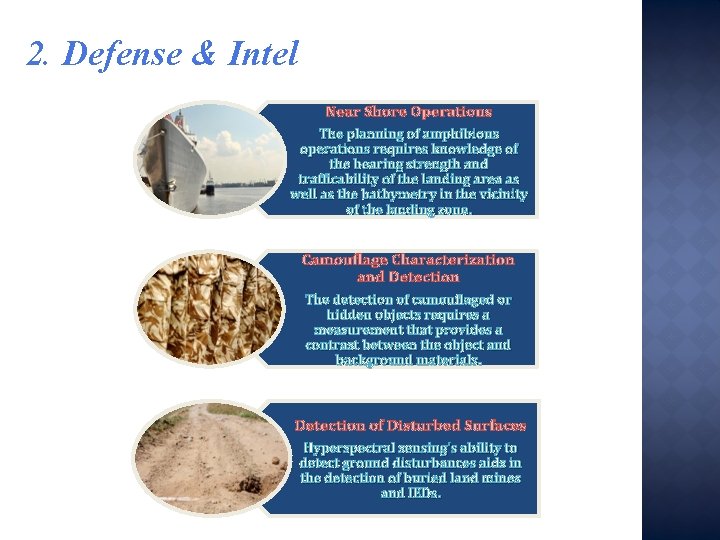
2. Defense & Intel Near Shore Operations The planning of amphibious operations requires knowledge of the bearing strength and trafficability of the landing area as well as the bathymetry in the vicinity of the landing zone. Camouflage Characterization and Detection The detection of camouflaged or hidden objects requires a measurement that provides a contrast between the object and background materials. Detection of Disturbed Surfaces Hyperspectral sensing's ability to detect ground disturbances aids in the detection of buried land mines and IEDs.
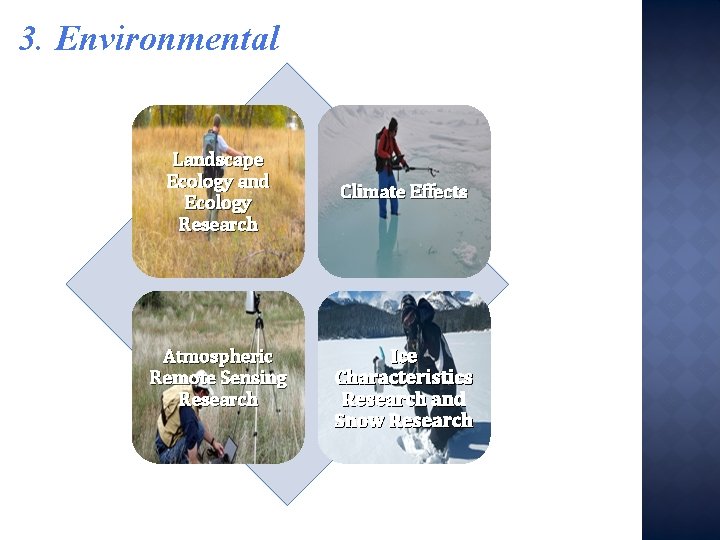
3. Environmental Landscape Ecology and Ecology Research Atmospheric Remote Sensing Research Climate Effects Ice Characteristics Research and Snow Research
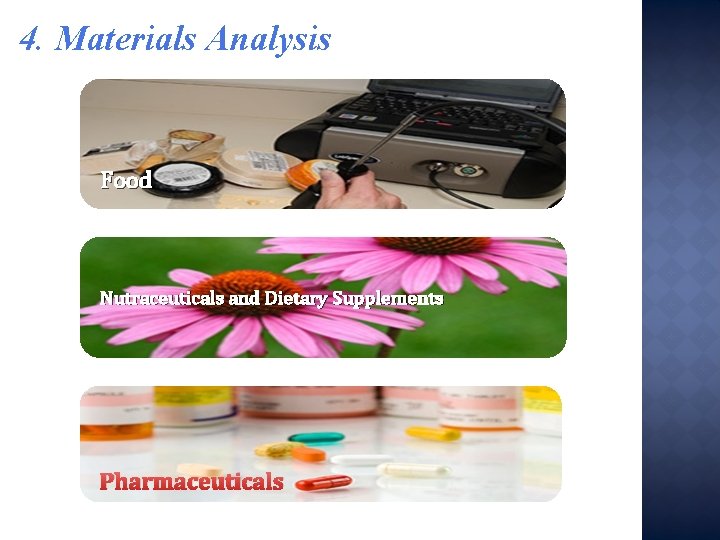
4. Materials Analysis Food Nutraceuticals and Dietary Supplements Pharmaceuticals
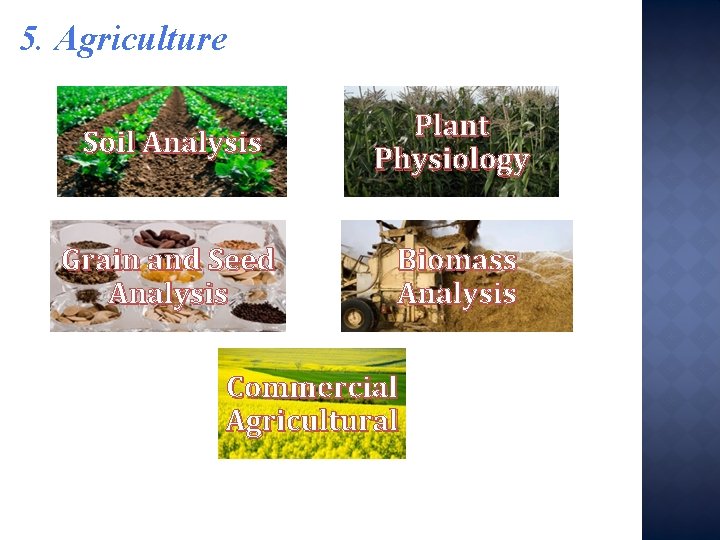
5. Agriculture Soil Analysis Plant Physiology Grain and Seed Analysis Biomass Analysis Commercial Agricultural
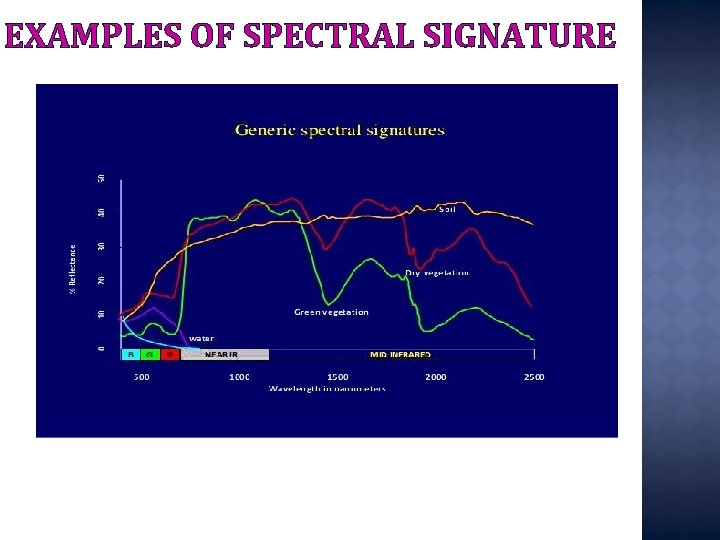
EXAMPLES OF SPECTRAL SIGNATURE
Work in Progress at Our Premises Agriculture: � Winter Crop Discrimination Using Field Hyper Spectral Remotely Sensed Data � Classification of Crop Types Using Spatial And Spectral Features From Remote Sensing Data � Design and development of spectral signature of crops using hyperspectral data analysis techniques � Analysis of Effect of Air Pollution On Chlorophyll, Water, Carotenoid Anthocyanin Content Of Tree Leaves Using Spectral Indices
Cont… � Determination Of Leaf Nitrogen Concentration Of Tomato Plant � Spectral Analysis Of Chlorophyll, Water Content within Fresh And Water Stressed Leaves Using Hyper spectral Data � Detection Of Pesticide Using Spectroscopy � Analysis Of Effect Of 2, 4 -D Amine On Chlorophyll Content In Wheat And Corn � Detection of Acid Rain Stress Effect on Plants Using Spectroradiometer � Estimation of Phosphorus Content in Leaves of Plants Using PLSR and SVMR � Spectroscopic Determination of Aboveground biomass in grass using hyperspectal indices
Cont… Soil: � Spatial & Spectral Feature Extraction For Soil Type Classification From Hyperspectral Remote Sensing Data � Creation of Soil Spectral Library Using Field Spectra � Identification Of Arsenic Content In Soil Using Spectral Signature � Monitoring Hydrocarbon Contamination of Agricultural Soil by Reflectance Spectroscopy using ASD Fieldspec Spectroradiometer
Cont… � Estimation of Soil Organic Carbon using visible Near Infrared Spectroscopy � Estimation of Copper content in soil using VNIR reflectance spectroscopy � Spectral Estimation of Soil Moisture content using ISER Model � Hyperspectral Analysis of Soil Total Nitrogen using PLSR Method
Cont… Biometric: � Optimal Feature Band Selection for Enhance Hyperspectral Palm print Recognition Fruit: � Trace The metal content from the Seasonal fruit in the market of Aurangabad city using fieldspec device Medicinal Plant: � Identification of Plant Species Using Non Imaging Hyperspectral Spectroradiometer
RESEARCH STUDENT WORKING ON REMOTE SENSING AND GIS � Research students from our department are working on various crops, fruits, soil, medicinal plants, vegetable plants and Palmprint recognition etc. Research Student Working on Remote Sensing and GIS
CONCLUSION � Hyperspectral remote sensing studies have shown a variety of applications including geology and mining, defense, environment, agriculture and material quality assessment etc. � Selection of optimum wavebands to study different applications is a consensus view based on a broad range of the literature reported. � Acquisition and understanding of the basic spectral signatures is very essential in every application domain. � Also, there is a need to develop specific advanced tools for handling hyperspectral application-specific utilities. � However, LIDAR and thermal data need to be considered in future for hyperspectral remote sensing.

- Slides: 20