
WELCOME Changing Destructive Adolescent Behavior Unit 2 YOUR

WELCOME Changing Destructive Adolescent Behavior
Unit 2 YOUR Guide to Changing Destructive Adolescent Behavior
Unit Two: Objectives Parents will be able to: • List five tips for parents to consider before addressing problematic behavior • Practice effective confrontation • Discuss how emotionally charged behavior often creates family arguments • Recognize successful ways to end family arguments (aka: learn how to never argue with your child again) 3
The Most Effective Methods of Influencing and Motivating Children: • Positive Strokes • Positive Consequences • Negative Consequences 4
Focusing Activity 2. 1 • Example: Angry! • Example: I’m just not good enough. • • • 5
Group Activity 2. 2(a) • Example: Angry words • Example: Defensive attitude • Example: Will not listen • • •
Group Activity 2. 2(b) • Example: To be yelled at • Example: To be blamed • Example: Not to be heard • • •

Never miss a good chance to Shut Up!
Group Activity 2. 3(a) • Example: Good • Example: As if they had been heard • •
Group Activity 2. 3(b) • Example: Good • Example: Understood • •
If one won’t, then two can’t …Argue
Successfully Addressing Problematic Behavior 1. Timing 2. Develop A Plan Or An Outline 3. Choose A Private, Neutral Location 4. Minimize Interruptions 5. Prepare Yourself For The Worst
Group Activity 2. 5(a) 1. 2. 3. 4. 5. Timing Develop a plan/outline Choose a private / neutral location Minimize interruptions Prepare for the worst
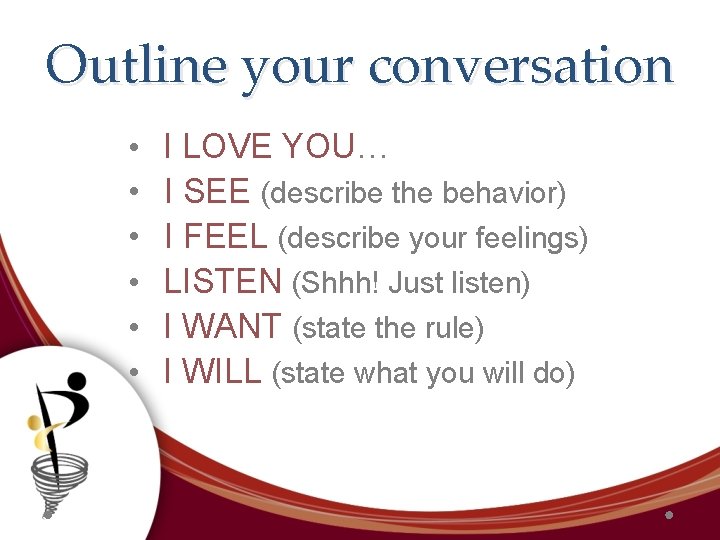
Outline your conversation • I LOVE YOU… • I SEE (describe the behavior) • I FEEL (describe your feelings) • LISTEN (Shhh! Just listen) • I WANT (state the rule) • I WILL (state what you will do)
What to expect: • • Anger Denial Blaming Bluffing Parents should: • Remain calm • Stay on track • Clarify rules • Clarify expectations/ consequences • End on a positive note Parents should not: • Insist their child look at them • Apologize for the confrontation • Threaten or try to scare the child • Preach or lecture • Judge the child • Compare the child to others • Lie to their child
Group Activity 2. 5(b) I Love: I See: I Feel: Listen: I Want: I Will:
Threats of Running Away • Do not: challenge your child to run • Do: try & defuse the situation
Threats of Suicide • Do not: challenge your child take threat lightly • Do: call a mental health professional call the police try to defuse the situation err on behalf of your child’s safety
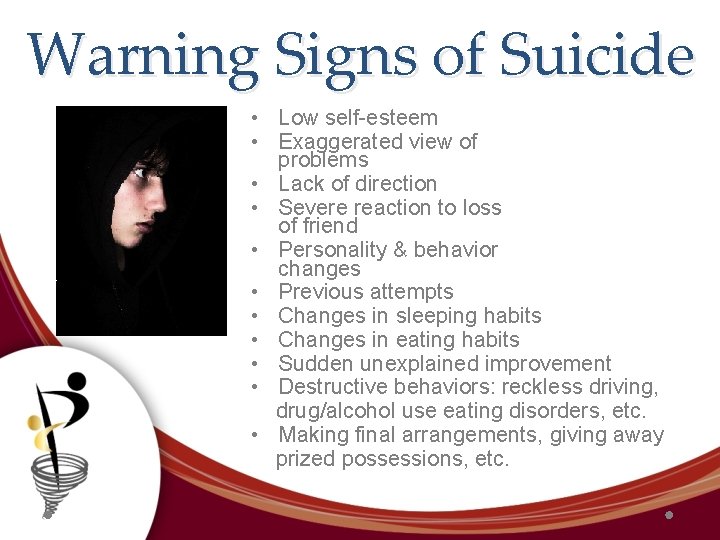
Warning Signs of Suicide • Low self-esteem • Exaggerated view of problems • Lack of direction • Severe reaction to loss of friend • Personality & behavior changes • Previous attempts • Changes in sleeping habits • Changes in eating habits • Sudden unexplained improvement • Destructive behaviors: reckless driving, drug/alcohol use eating disorders, etc. • Making final arrangements, giving away prized possessions, etc.

Group Activity 2. 6 • •
Review Activity 2. 7 1. 2. 3. 4. 5. Children are generally driven by____ Parents should _____ themselves before they address problematic behaviors with their children. Parents should always be calm when they ____ their children about problematic behaviors. Parents should develop a ____ or an _____ before addressing problematic behavior. When a child threatens suicide, parents should call a mental health professional or the police _______. outline / confront / emotion / immediately / plan / prepare
Review Activity 2. 7 Most powerful ideas YOU learned from this Unit: • •
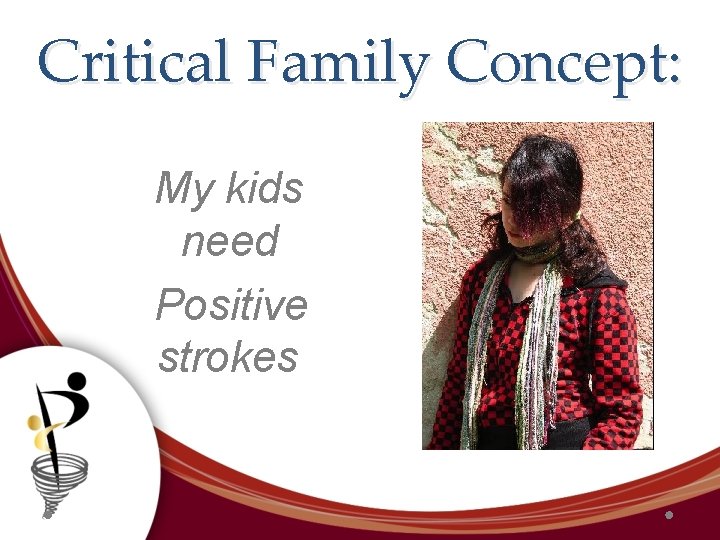
Critical Family Concept: My kids need Positive strokes
- Slides: 23