
Welcome BIO 240 Conservation of Natural Resources Dr
Welcome! BIO 240 – Conservation of Natural Resources Dr. Thomas M. Gehring Room 181 Brooks Hall 774 -2484 tom. gehring@cmich. edu http: //www. cst. cmich. edu/users/gehri 1 tm
“In short, a land ethic changes the role of Homo sapiens from conqueror of the land-community to plain member and citizen of it. It implies respect for his [her] fellow-members, and also respect for the community as such. ” Aldo Leopold
"A thing is right when it tends to preserve the integrity, stability, and beauty of the biotic community. It is wrong when it tends otherwise. . To keep every cog and wheel is the first precaution to intelligent tinkering. " (Aldo Leopold, champion of conservation)
Knowledge Assessment 1) Current human population size? 2) Annual growth rate (%) of human population? 3) Number of species in the World? 4) Daily extinction rate of species? 5) What is biodiversity?
Critical Thinking Skills • First, need to differentiate between beliefs and knowledge • Process: 1) Gather complete information 2) Question the methods, conclusions, sources of study or story 3) Tolerate some level of uncertainty 4) Look at the Big Picture

Scientific Method Reject Fail to Reject
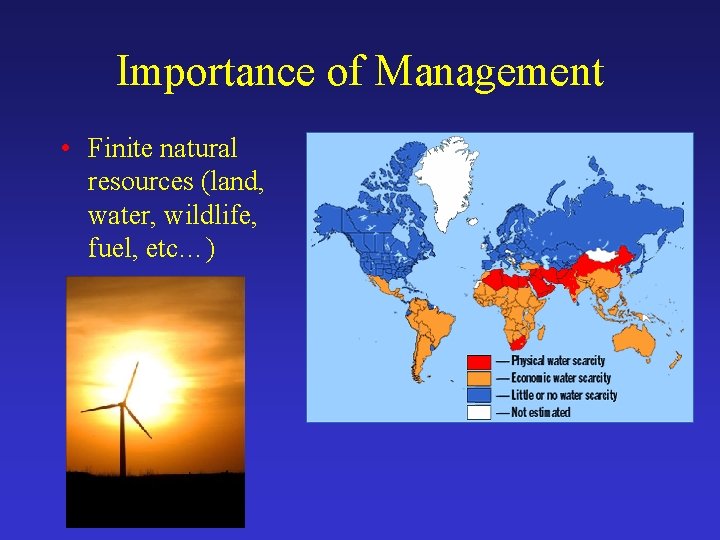
Importance of Management • Finite natural resources (land, water, wildlife, fuel, etc…)
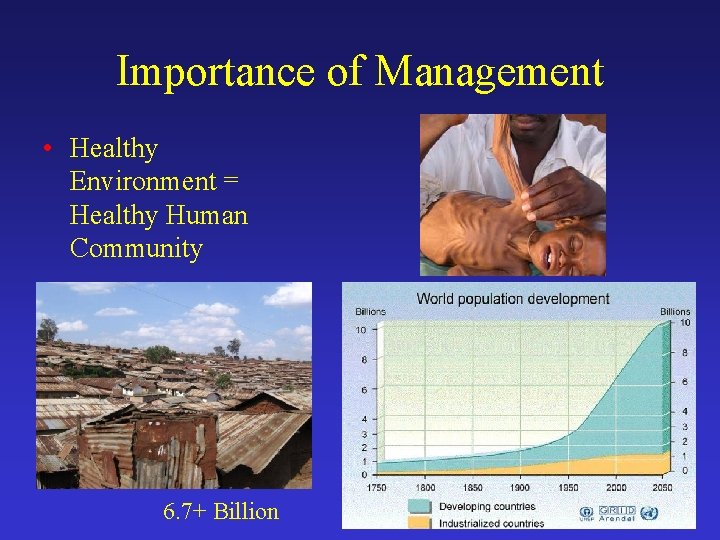
Importance of Management • Healthy Environment = Healthy Human Community 6. 7+ Billion
Importance of Management • Future generations inherit our world
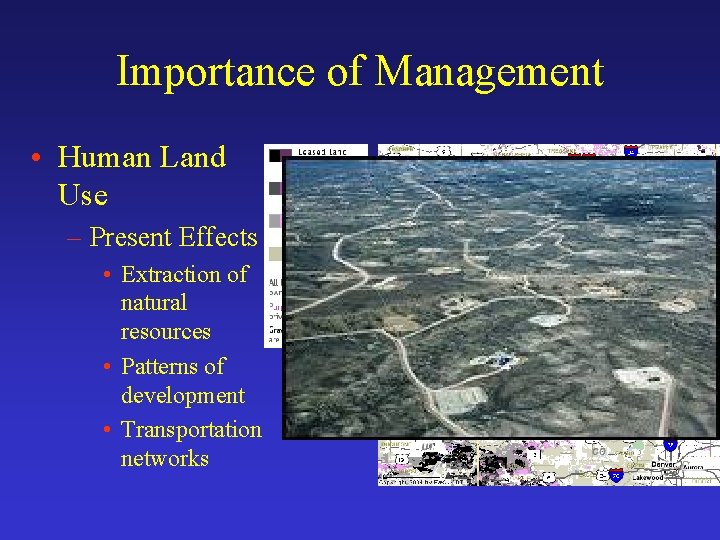
Importance of Management • Human Land Use – Present Effects • Extraction of natural resources • Patterns of development • Transportation networks
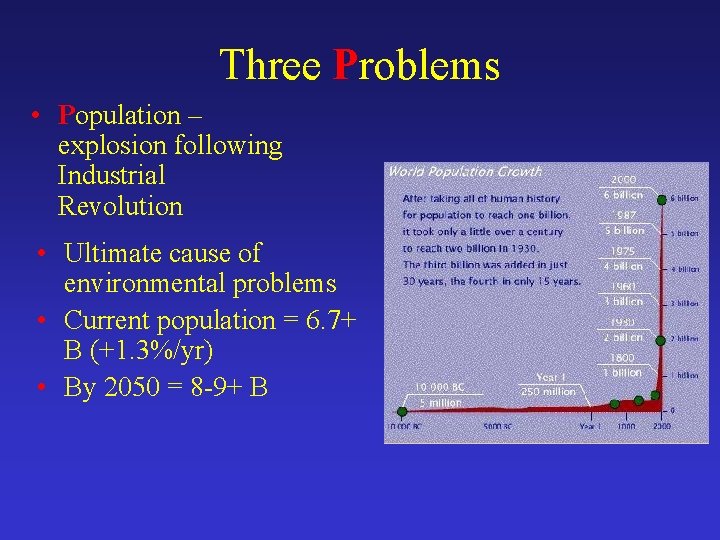
Three Problems • Population – explosion following Industrial Revolution • Ultimate cause of environmental problems • Current population = 6. 7+ B (+1. 3%/yr) • By 2050 = 8 -9+ B
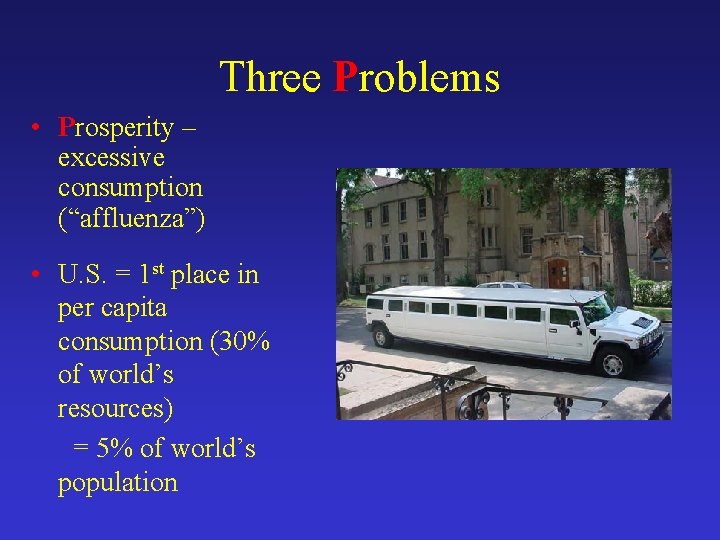
Three Problems • Prosperity – excessive consumption (“affluenza”) • U. S. = 1 st place in per capita consumption (30% of world’s resources) = 5% of world’s population
Prosperity? • 1 American = 20 -40 persons from less developed nation • Loss of soil > natural replacement rate • ~1 million A (400, 000 ha) farmland converted to subdivision annually • ~1 million species extinct during 19802000 (estimates of 50, 000 species/yr
Three Problems • Prosperity * Affluenza now for us, next generation on their own?
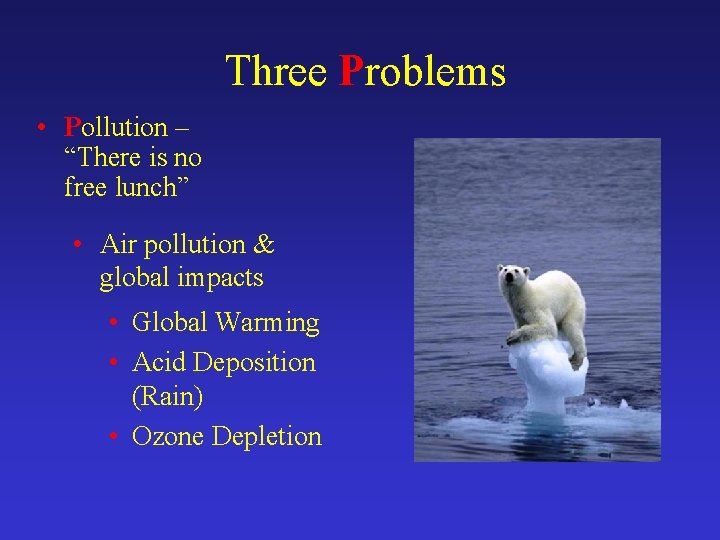
Three Problems • Pollution – “There is no free lunch” • Air pollution & global impacts • Global Warming • Acid Deposition (Rain) • Ozone Depletion
Three Problems • Pollution – “There is no free lunch” * Water Pollution leading to: 1) unsafe drinking water 2) regulated fish consumption 3) increased prevalence human disease
Quality of Life • Future Projections The Limits of Growth (1972) Fig. 1. 5 – poor prospects with ’ 72 rates Unsustainable society (define? ) Updated in 1992 = underestimates
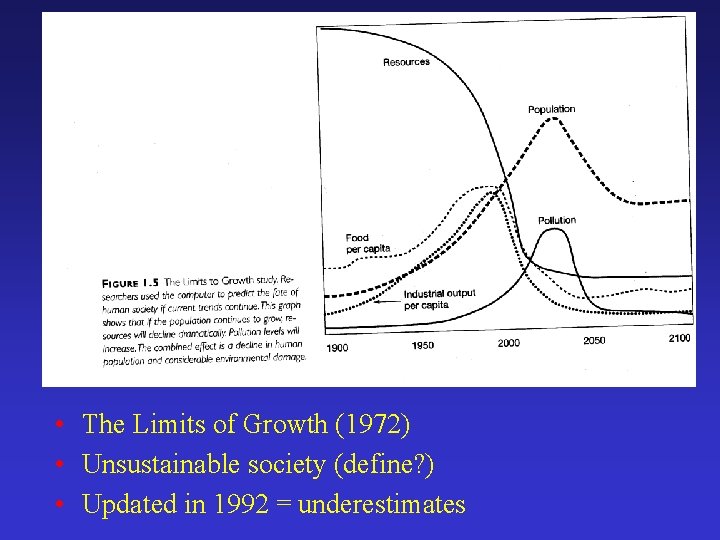
• The Limits of Growth (1972) • Unsustainable society (define? ) • Updated in 1992 = underestimates
Differing Viewpoints • Optimists Technology will solve our problems
Differing Viewpoints • Pessimists Time is too short for “techno-fixes”
Differing Viewpoints • Moderates Develop a sustainable society…. SOON!
Six Principles of Sustainability • Conservation: use needed resources wisely • Recycling: reuse materials again • Renewable Resources: resources that replenish themselves • Restoration: repair damaged systems • Population Control & Mgt. • Adaptability
Do you live sustainably? • Next time: Calculate your carbon debt • How many tons of CO 2 do you produce? • What actions could you take to reduce this debt? • Turn in 1 -page written assignment
History of Conservation • 19 th Century – Early history of U. S. – National Park & National Forests • 20 th Century -- Four major periods
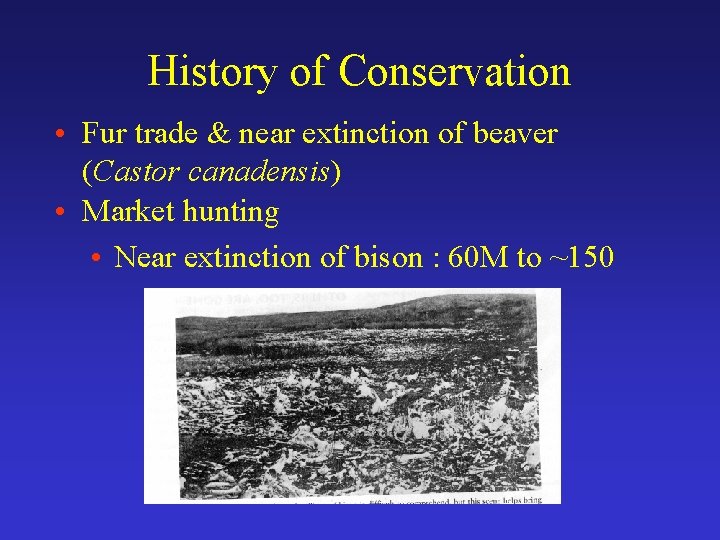
History of Conservation • Fur trade & near extinction of beaver (Castor canadensis) • Market hunting • Near extinction of bison : 60 M to ~150
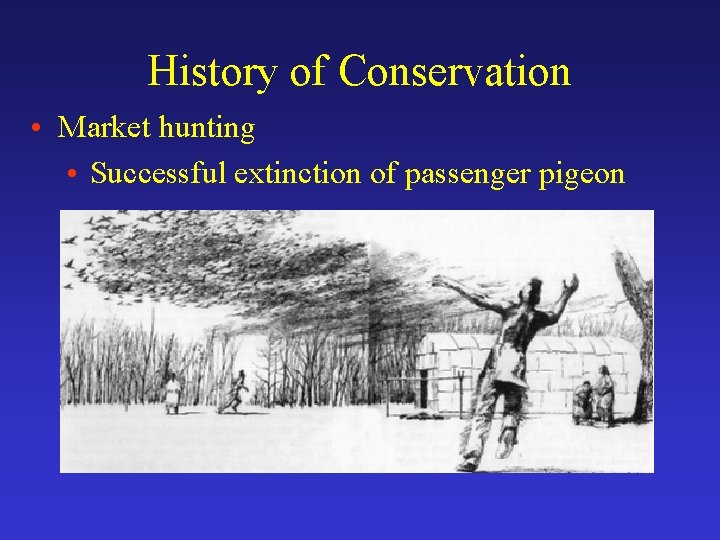
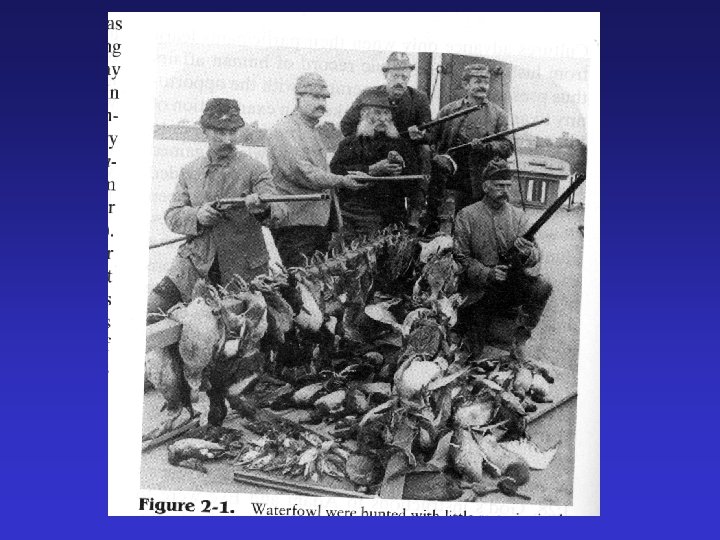
History of Conservation • Market hunting • Successful extinction of passenger pigeon
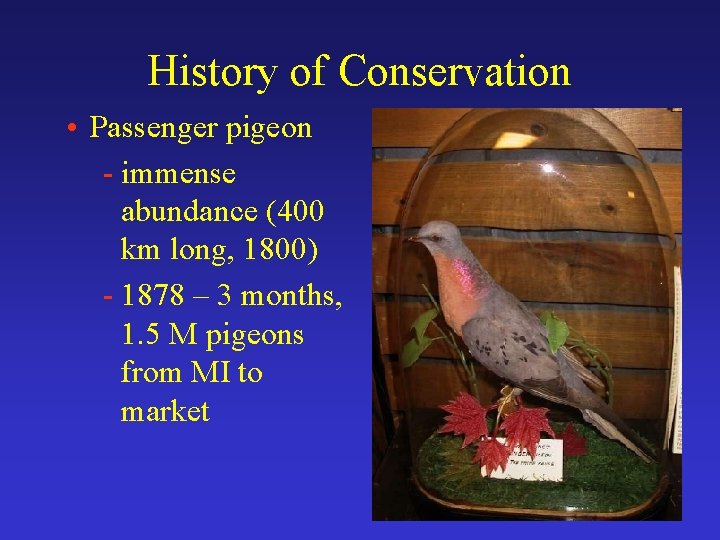
History of Conservation • Passenger pigeon - immense abundance (400 km long, 1800) - 1878 – 3 months, 1. 5 M pigeons from MI to market
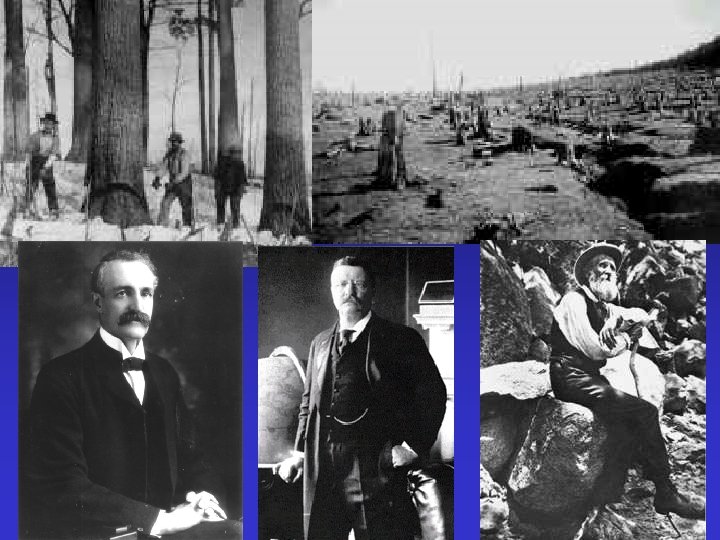
Conservation in the 20 th Century First Wave: Early 1900’s • Theodore Roosevelt, Gifford Pinchot, John Muir • White House Conference on Nat. Res. : 1) timber depletion 2) irrigation farming 3) lack of water & resource use 4) mismanagement of resources
Conservation in the 20 th Century First Wave: Early 1900’s • National Conservation Commission – Result of White House Conference – Completed 1 st Natural Resources Inventory – State conservation departments created (MI DNR)
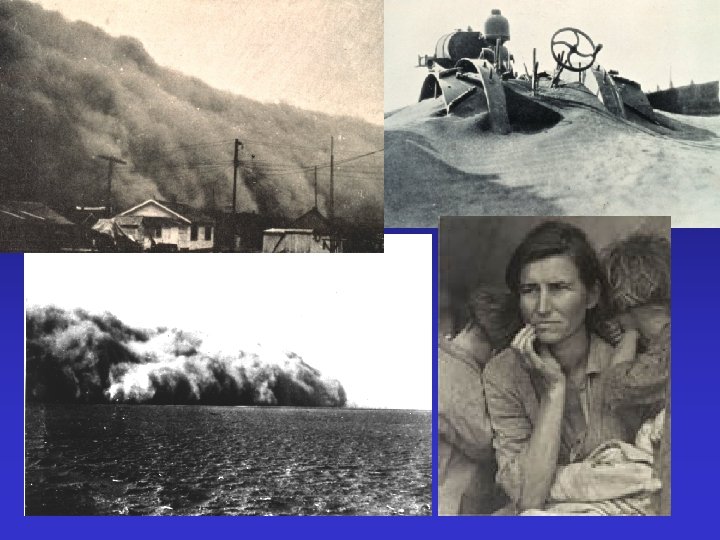
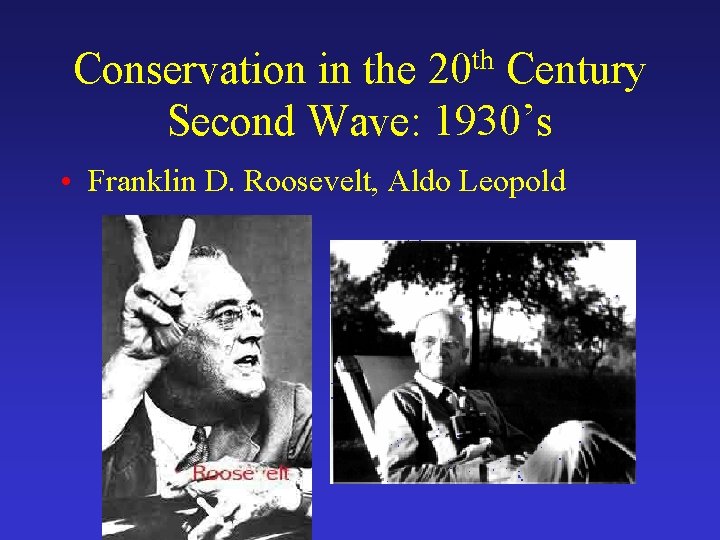
Conservation in the 20 th Century Second Wave: 1930’s • Franklin D. Roosevelt, Aldo Leopold
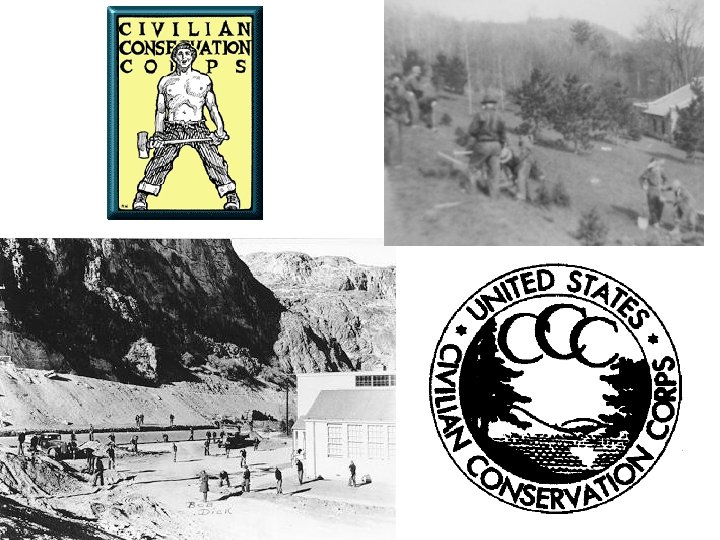
Conservation in the 20 th Century Second Wave: 1930’s • Franklin D. Roosevelt, Aldo Leopold • Natural Resources Board (2 nd Nat. Res. Inventory • New Programs: - Prairie States Forestry Project (erosion) - Civilian Conservation Corps (CCC) - Soil Conservation Service (SCS NRCS
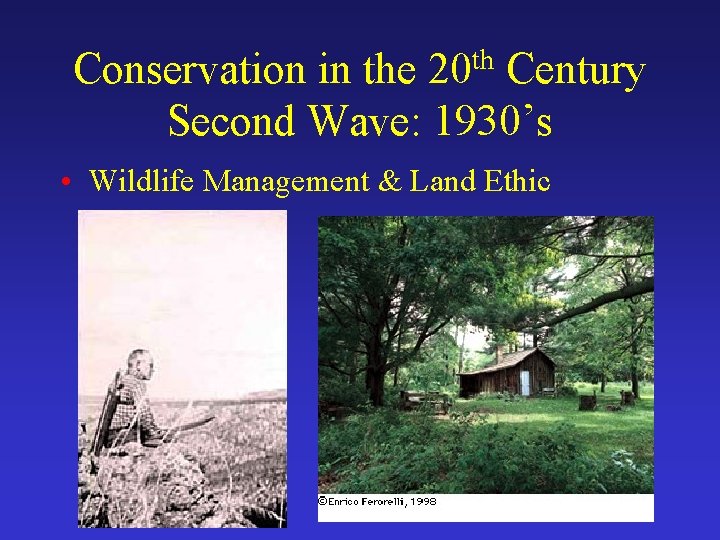
Conservation in the 20 th Century Second Wave: 1930’s • Wildlife Management & Land Ethic
The Wilderness Society - founded 1935 - Leopold = co-founder
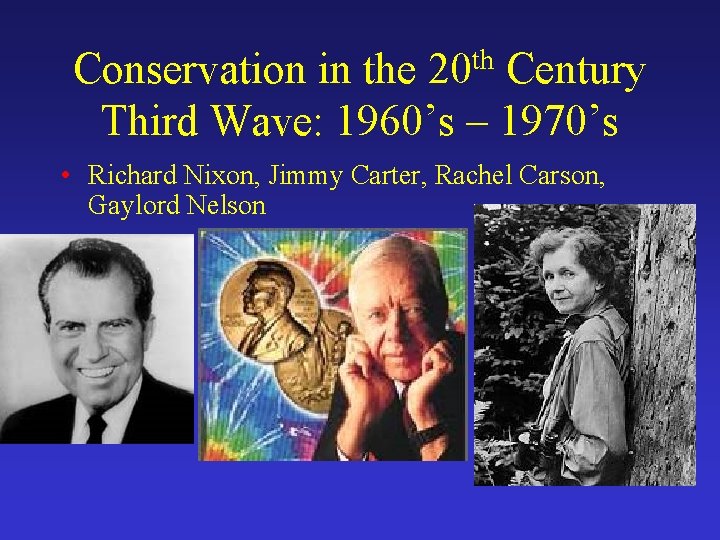
Conservation in the 20 th Century Third Wave: 1960’s – 1970’s • Richard Nixon, Jimmy Carter, Rachel Carson, Gaylord Nelson

April 22, 1970
Conservation in the 20 th Century Third Wave: 1960’s – 1970’s • Richard Nixon, Jimmy Carter, Rachel Carson, Gaylord Nelson • • Important Conservation Legislation: 1964 Wilderness Act 1970 Clean Air Act 1969 National Environmental Policy Act (NEPA)
Conservation in the 20 th Century Third Wave: 1960’s – 1970’s National Environmental Policy Act (NEPA) • All federal actions significantly affecting environment • Directs the preparation of Environmental Impact Statement (EIS)
Conservation in the 20 th Century Third Wave: 1960’s – 1970’s • Important Conservation Legislation (cont. ) • 1973 Endangered Species Act - Sec. Interior & Commerce - Listing species & develop recovery plans • 1976 National Forest Management Act - Sec. Agriculture - assess forest lands, multiple-use mgt. program, implement mgt. plan for each unit of the National Forest System.
Conservation in the 20 th Century Third Wave: 1960’s – 1970’s • Important Conservation Legislation (cont. ) • 1977 Clean Water Act • 1985 Food Security Act - Farm Bill Provisions - Conservation Reserve Program (CRP)
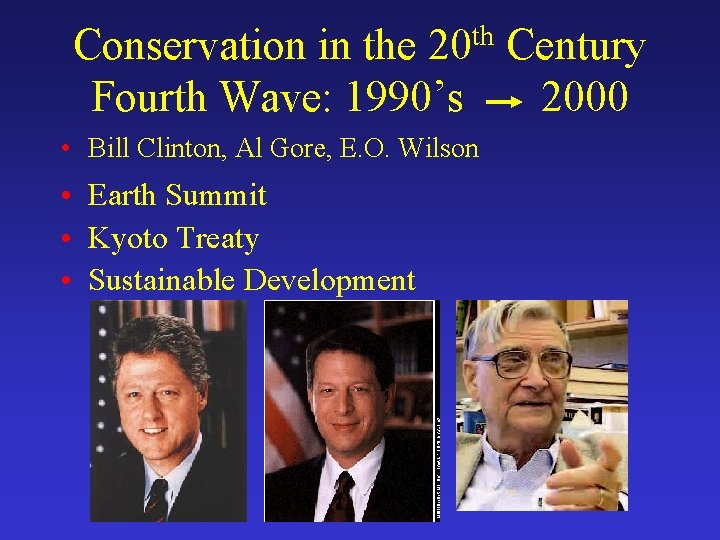
Conservation in the 20 th Century Fourth Wave: 1990’s 2000 • Bill Clinton, Al Gore, E. O. Wilson • Earth Summit • Kyoto Treaty • Sustainable Development
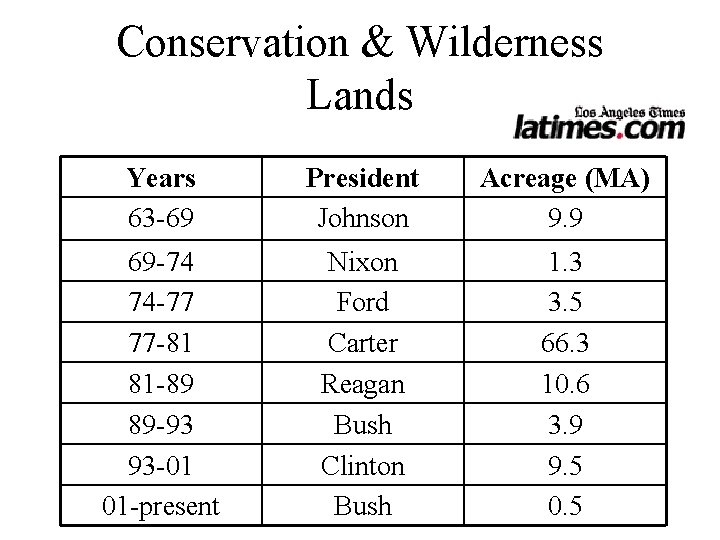
Conservation & Wilderness Lands Years 63 -69 President Johnson Acreage (MA) 9. 9 69 -74 74 -77 77 -81 81 -89 89 -93 93 -01 01 -present Nixon Ford Carter Reagan Bush Clinton Bush 1. 3 3. 5 66. 3 10. 6 3. 9 9. 5 0. 5
Conservation in the 21 st Century Fifth Wave? • BIO 240 Students – What will you leave for the future generations? – How will you leave this a better place?
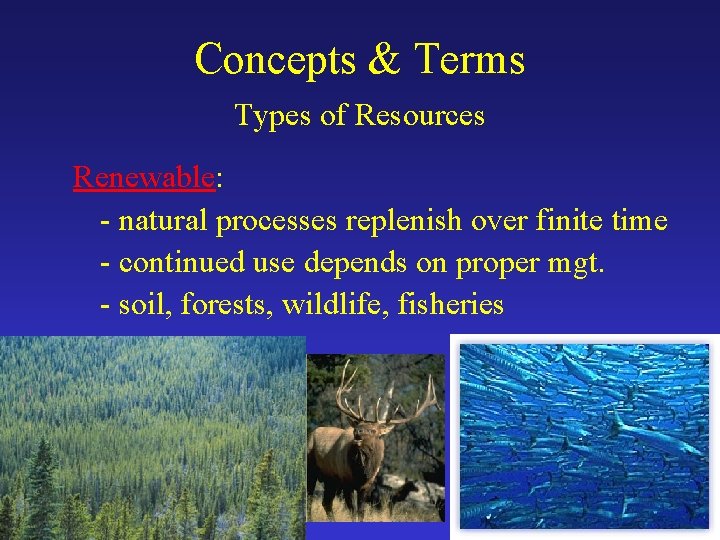
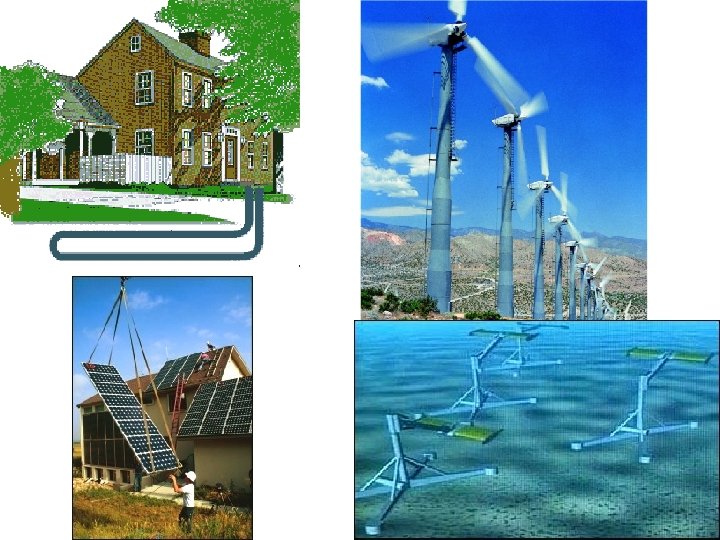
Concepts & Terms Types of Resources Renewable: - natural processes replenish over finite time - continued use depends on proper mgt. - soil, forests, wildlife, fisheries
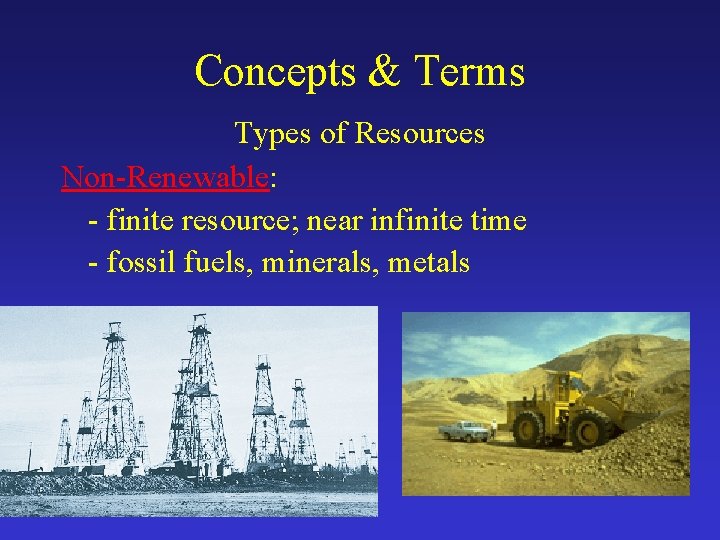
Concepts & Terms Types of Resources Non-Renewable: - finite resource; near infinite time - fossil fuels, minerals, metals
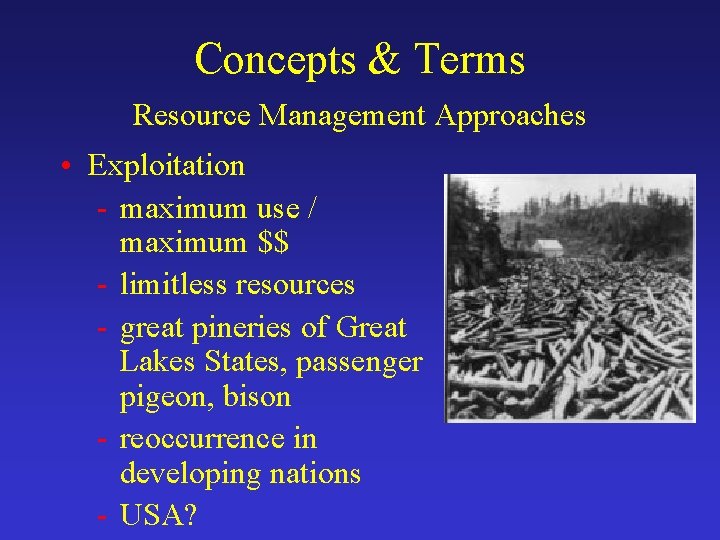
Concepts & Terms Resource Management Approaches • Exploitation - maximum use / maximum $$ - limitless resources - great pineries of Great Lakes States, passenger pigeon, bison - reoccurrence in developing nations - USA?
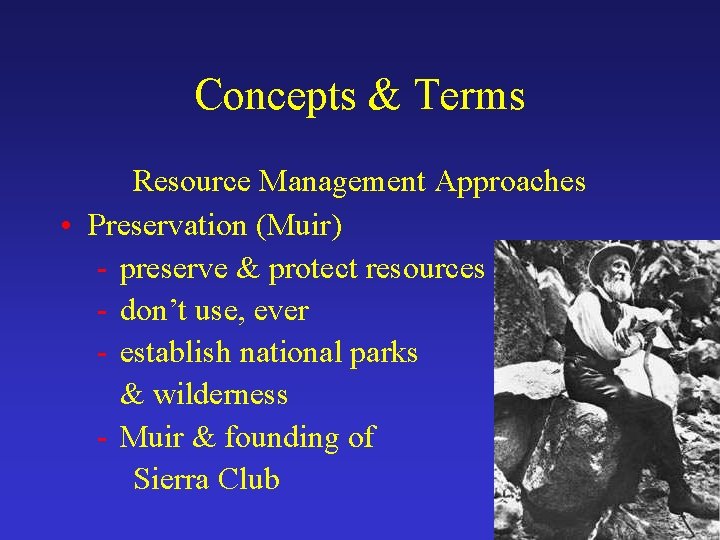
Concepts & Terms Resource Management Approaches • Preservation (Muir) - preserve & protect resources - don’t use, ever - establish national parks & wilderness - Muir & founding of Sierra Club
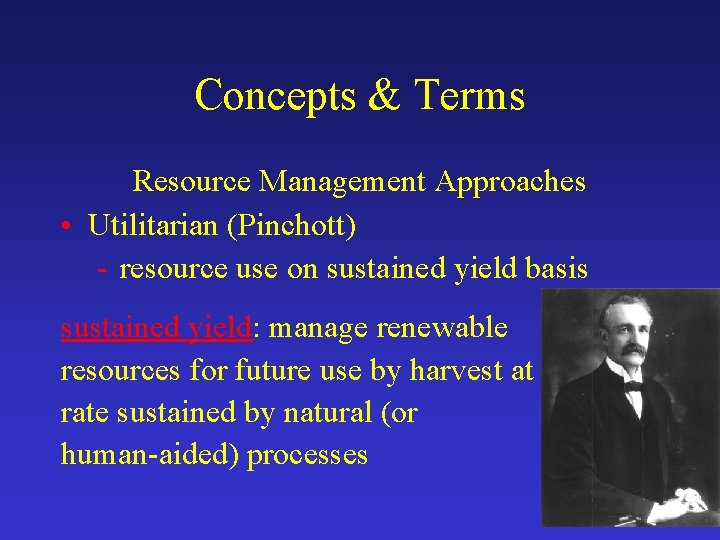
Concepts & Terms Resource Management Approaches • Utilitarian (Pinchott) - resource use on sustained yield basis sustained yield: manage renewable resources for future use by harvest at rate sustained by natural (or human-aided) processes
Concepts & Terms Resource Management Approaches • Ecological (Sustainable) (Pinchot, Leopold) - multiple use approach of resource use - ecosystem-management approach adds component of limit human impacts to multiple-use concept – sustain ecosystems = whole systems
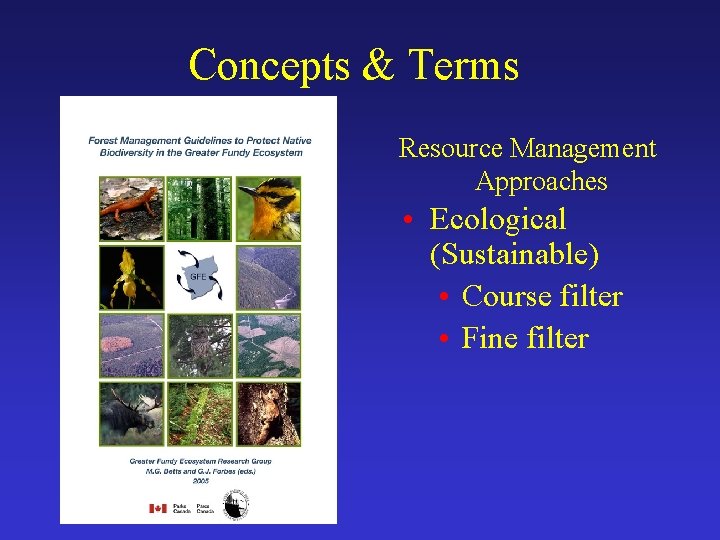
Concepts & Terms Resource Management Approaches • Ecological (Sustainable) • Course filter • Fine filter
Concepts & Terms Resource Management Approaches • Ecological (Sustainable) (cont. ) adaptive management: given current scientific understanding, 1) implement mgt. strategy, but 2) monitor effects and adjust
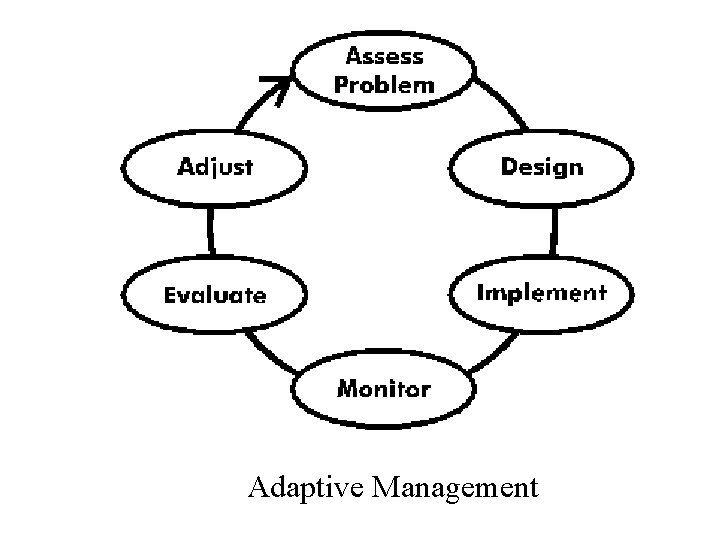
Adaptive Management
Economics • market economy: driven by supply/demand - demand dictates production (> profit = increased production) • measure success via Gross Domestic Product (GDP) = all goods & services generated (approx. $10 trillion)
Improving Market Economics (ME) 1) ME assumes infinite growth potential, but works in finite system 2) ME time frame is short (< 5 yrs); ecological time frame is long (10’s-millions yrs) 3) ME has input/output flaws – incorporate environmental impacts, social & cultural impacts, pollution
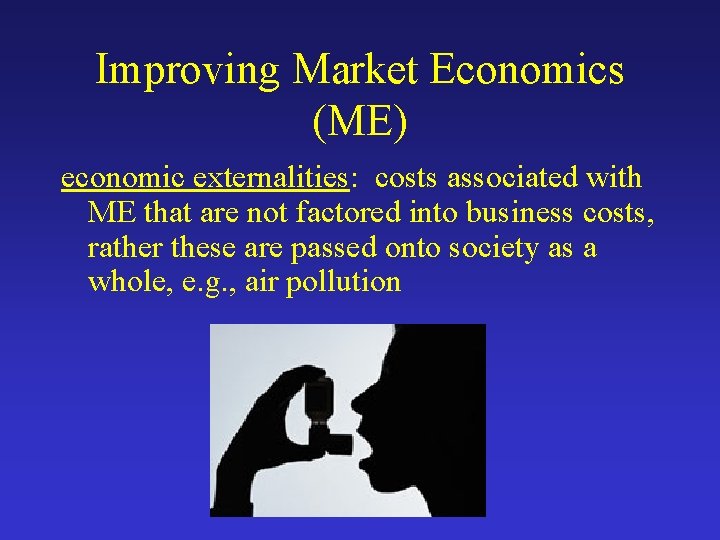
Improving Market Economics (ME) economic externalities: costs associated with ME that are not factored into business costs, rather these are passed onto society as a whole, e. g. , air pollution
Improving Market Economics (ME) 4) ME fails to account for “free services” 5)
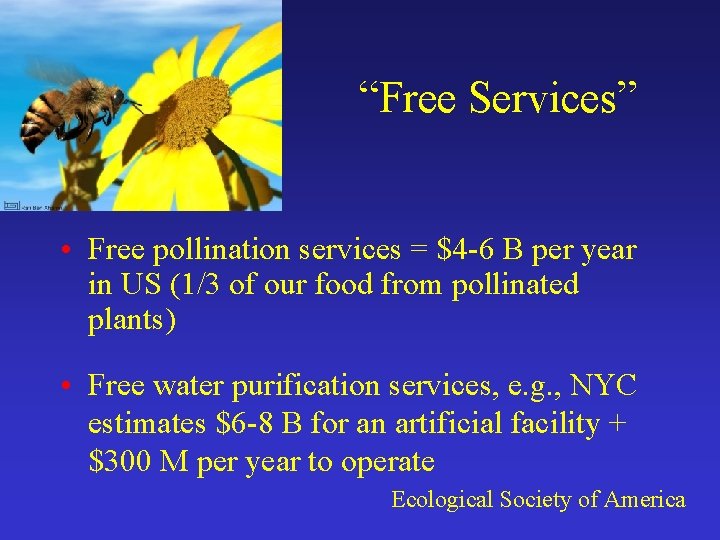
“Free Services” • Free pollination services = $4 -6 B per year in US (1/3 of our food from pollinated plants) • Free water purification services, e. g. , NYC estimates $6 -8 B for an artificial facility + $300 M per year to operate Ecological Society of America
Improving Market Economics (ME) 5) GDP fails to factor in environmental damage or natural capital “good” vs. “bad” economic activities Index of Sustainable Economic Welfare (ISEW) - alternative measure of success; factors in beneficial gains & negative output (e. g. , pollution)
- Slides: 63