
Welcome Back Chapter 9 and 10 covers Cell
Welcome Back! • Chapter 9 and 10 covers Cell Division – Mitosis – Meiosis Don’t forget lab quiz next week and Article # 1 due in Lab. Let’s discuss my expectations.

2 categories of Cells Germ Cells: the reproductive cells that will create the offspring of the animal. Sperm and egg (and the cells that produce the sperm and egg). Produce offspring. Meiosis Somatic Cells: all other cells, such as skin, muscle, and nerves. Reproduce for growth, repair, replacement. Mitosis.

2 types of reproduction • Asexual: produces offspring that are genetically identical to parent. (mitosis). – Budding: offspring grows out of parent – Fragmentation: parent breaks into distinct pieces, each of which can produce an offspring. – Regeneration: a piece of a parent is detached, it grows and develops into a completely new individual. Sea star

Sexual Reproduction • • • 2 parents Genetic material from each contributed Genetic diversity NO CLONES Daughter cells are individual Meiosis produces the cells used for sexual reproduction

9. 1 Prokaryotes Have a Simple Cell Cycle • Cells divide in 2 stages 1 st copy the DNA § this process is called replication Then split the cell in two to form daughter cells § this process is called binary fission

9. 1 Prokaryotes Have a Simple Cell Cycle • The hereditary info is stored in DNA – prokaryotic chromosome is a single circle of DNA – 1 st DNA unzips at a point called the origin of replication – a new double helix forms by adding complementary nucleotides to the exposed DNA strands that have been unzipped – Goes on until the cell has 2 complete copies of the hereditary information
9. 1 Prokaryotes Have a Simple Cell Cycle • After replication, cells GROWS – When big enough, the cell splits into 2 equal halves – new plasma membrane and cell wall form – eventually the cell constricts in two to form two daughter cells • each daughter cell is a complete, living cell with its own DNA

Figure 9. 1 Cell division in prokaryotes
9. 2 Eukaryotes Have a Complex Cell Cycle • Eukaryotic cells – contain more DNA than prokaryotic cells – Not circular – DNA in eukaryotic cells is linear and packaged into a compact chromosome • there is more than one chromosome in a eukaryotic cell
Somatic & Germ Cells have different Cell Cycles Mitosis: occurs in non reproductive cells • somatic cells Meiosis: is a cell division mechanism that occurs in cells that participate in sexual reproduction • germ cells
9. 2 Eukaryotes Have a Complex Cell Cycle • The eukaryotic cell cycle is divided into distinct phases – Interphase (G 1, S, and G 2 phases) – Mitosis (M phase) – Cytokinesis (C phase)
9. 2 Eukaryotes Cell Cycle • Interphase – first phase of the cycle & sometimes considered a resting phase but is actually a period of activity – comprised of three phases • G 1 phase – primary growth phase of the cell following division – most cells spend majority of lifespan in this phase • S phase – DNA replication occurs in prep for cell division • G 2 phase – further preparation for cell division, including replication of mitochondria and synthesis of microtubules
9. 2 Eukaryotes Have a Complex Cell Cycle • Mitosis (M phase) – a microtubular apparatus binds to the chromosomes and moves them apart • Cytokinesis (C phase) – the cytoplasm divides, creating two daughter cells
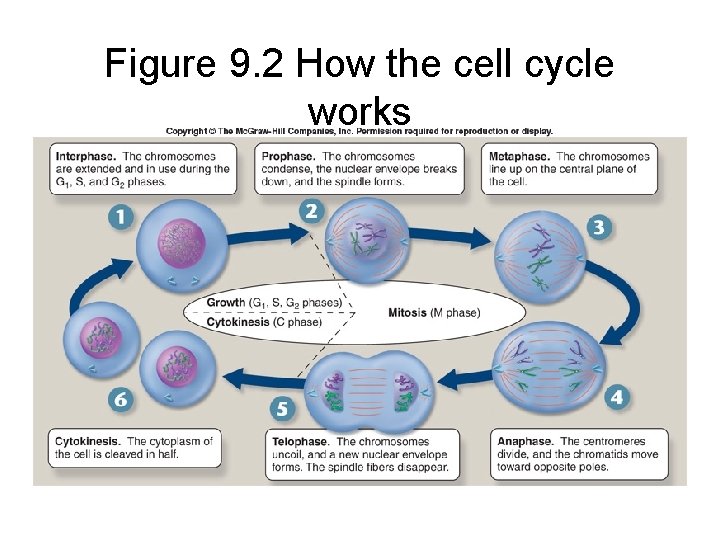
Figure 9. 2 How the cell cycle works
9. 3 Chromosomes • Chromosome number varies among organisms – most eukaryotes have between 10 and 50 chromosomes in their somatic cells • Chromosomes are paired in somatic cells – these pairs are called homologous chromosomes, or homologues – homologues contain information about the same traits but the information may vary – cells that have two of each type of chromosome are called diploid cells • one chromosome of each pair is inherited from the mother and the other is inherited from the father
9. 3 Chromosomes • Prior to cell division, each of the homologous chromosomes replicates, forming two identical copies called sister chromatids – the sister chromatids are joined together by a structure called a centromere – humans have 23 pairs of homologous chromosomes • when each chromosome in the pair is replicated, this makes for a total of 92 chromatids
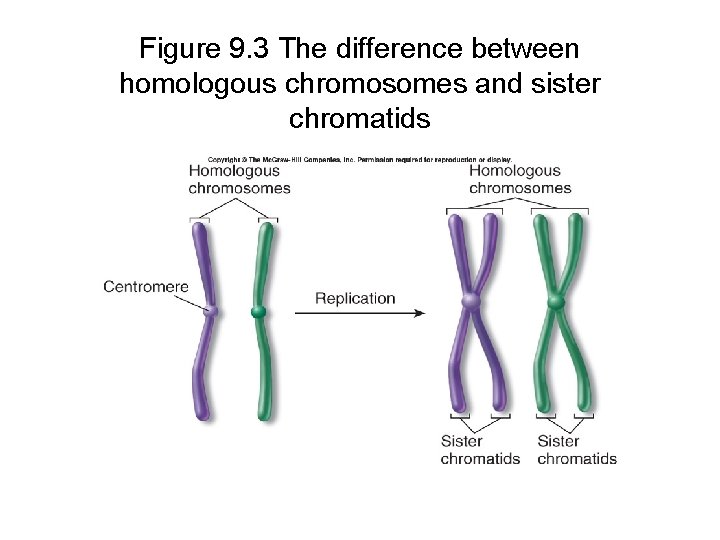
Figure 9. 3 The difference between homologous chromosomes and sister chromatids
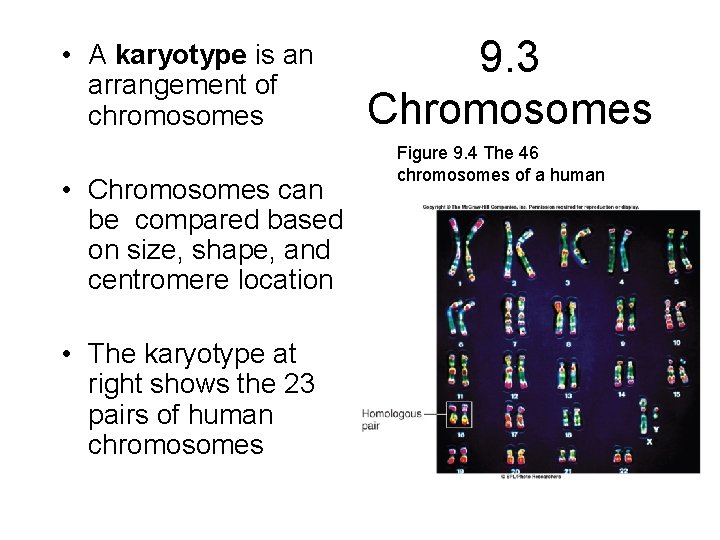
• A karyotype is an arrangement of chromosomes • Chromosomes can be compared based on size, shape, and centromere location • The karyotype at right shows the 23 pairs of human chromosomes 9. 3 Chromosomes Figure 9. 4 The 46 chromosomes of a human
9. 3 Chromosomes • Chromosomes are comprised of chromatin, a complex of DNA and protein – there is also some RNA associated with chromosomes – the DNA in a chromosome is one very long double-stranded fiber that extends unbroken for the length of the chromosome – the DNA is coiled in order to allow it to fit into a small space despite being very long
9. 3 Chromosomes • DNA is coiled around proteins called histones – the histones have positive charges to counteract the negative charges associated with the phosphate groups of the DNA • The DNA coils around a core of eight histone proteins to form a complex called a nucleosome – the nucleosomes in turn can be coiled together further to form ultimately a compact chromosome
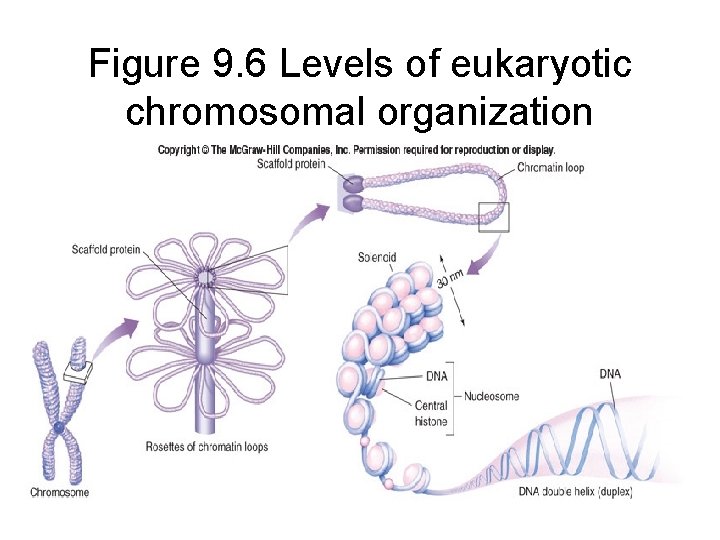
Figure 9. 6 Levels of eukaryotic chromosomal organization
• • 9. 4 Cell Division: MITOSIS Interphase sets the stage for cell division – chromosomes are first duplicated – chromosomes begin to wind up tightly in a process called condensation – sister chromatids are held together by a protein complex called cohesin Following interphase, division of the nuclear contents occurs, known as mitosis – four distinct stages of mitosis • Prophase • Metaphase • Anaphase • telophase
PROPHASE (beginning of mitosis) • the condensed chromosomes first become visible • the nuclear envelope begins to disintegrate and the nucleolus disappears • centrioles separate in the center of the cell and migrate to opposite ends (“poles”) of the cell • the centrioles start to form a network of protein cables called the spindle (spindle is made of microtubules) • some of the microtubules extend toward the centromere of the chromosomes • these microtubules will grow from each pole until attached to a centromere at a disc of protein called a kinetochore
9. 4 Cell Division • Metaphase – chromosomes (attached to microtubules of the spindle) align in the center of the cell • the centromeres are aligned along an imaginary plane that divides the cell in half, known as the equatorial plane
9. 4 Cell Division • Anaphase – sister chromatids separate • enzymes break the cohesin and the kinetochores – the microtubules of the spindle are dismantled starting at the poles • this pulls the chromatids toward the poles
9. 4 Cell Division • Telophase – the spindle is dismantled – nuclear envelope forms around the set of chromosomes at each pole – the chromosomes begin to uncondense – the nucleolus reappears
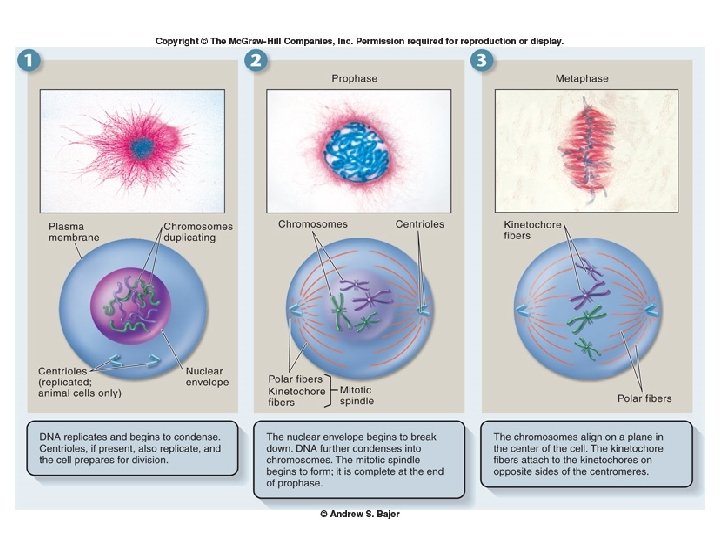
Figure 9. 7 How cell division works
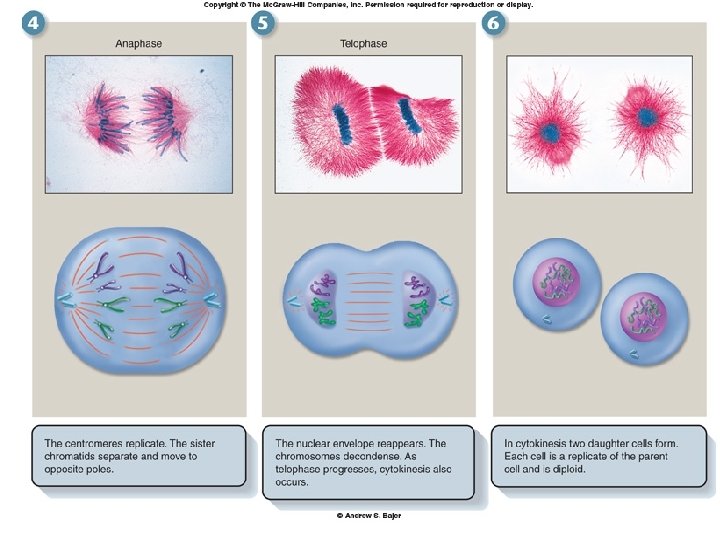
Figure 9. 7 How cell division works
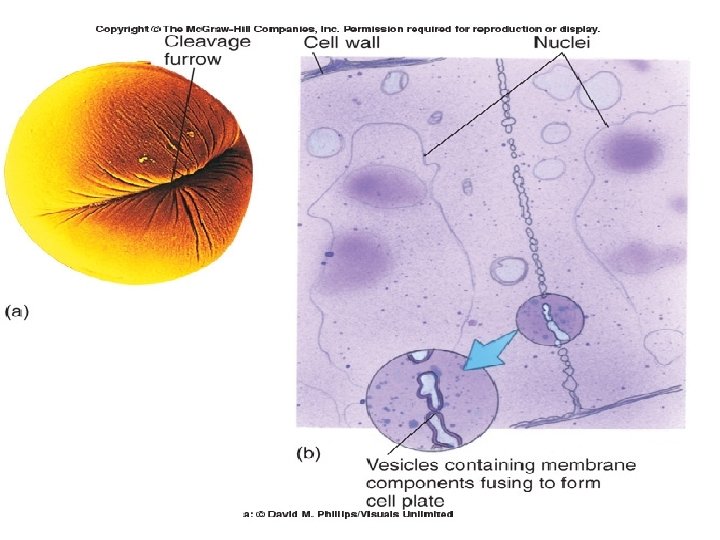
Cytokinesis • occurs at end of mitosis • Cytoplasmic division (into roughly equal halves) • in animals: – cytokinesis occurs by actin filaments contracting and pinching the cell in two – this action is evident as a cleavage furrow that appears between the daughter cells • in plants: – new cell wall laid down to divide the 2 daughter cells – cell wall grows at right angles to the mitotic spindle and is called the cell plate
9. 5 Controlling the Cell Cycle • The cell cycle is controlled by checkpoints to ensure that a previous phase is fully completed before advancing to the next phase – feedback from the cell determines whether the cycle switches to the next stage – three principal checkpoints control the cycle in eukaryotes • G 1, G 2, and M checkpoints
9. 5 Controlling the Cell Cycle • G 1 checkpoint – this checkpoint makes the decision about whether the cell should divide and enter S – some cells never pass this point and are said to be in G 0 • G 2 checkpoint – this checkpoint leads to mitosis • M checkpoint – this checkpoint occurs during metaphase and triggers the exit process of the M phase and entry to the G 1 phase
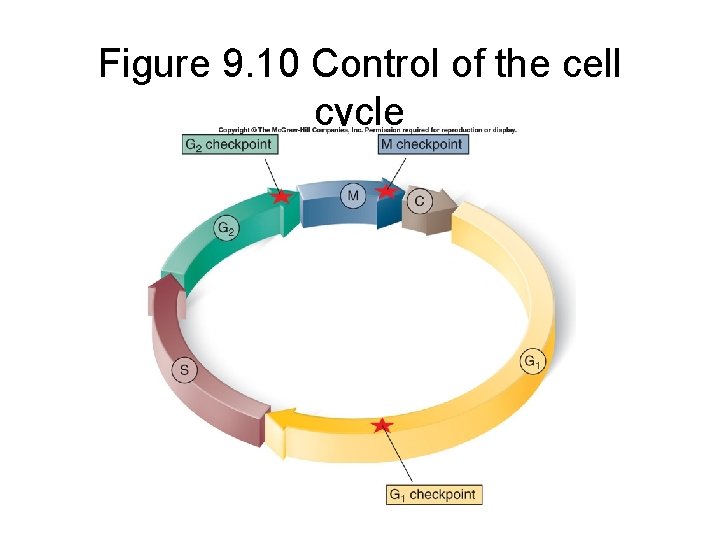
Figure 9. 10 Control of the cell cycle
9. 6 What Is Cancer? • Cancer is a growth disorder of cells – apparently normal cells grow uncontrollably and spread to other parts of the body – Result: a growing cluster of cells (tumor) • benign tumors: surrounded by a healthy layer of cells (aka encapsulated) & do not spread to other areas • malignant tumors: not encapsulated and are invasive – spread to different areas of the body to form new tumors (metastases)
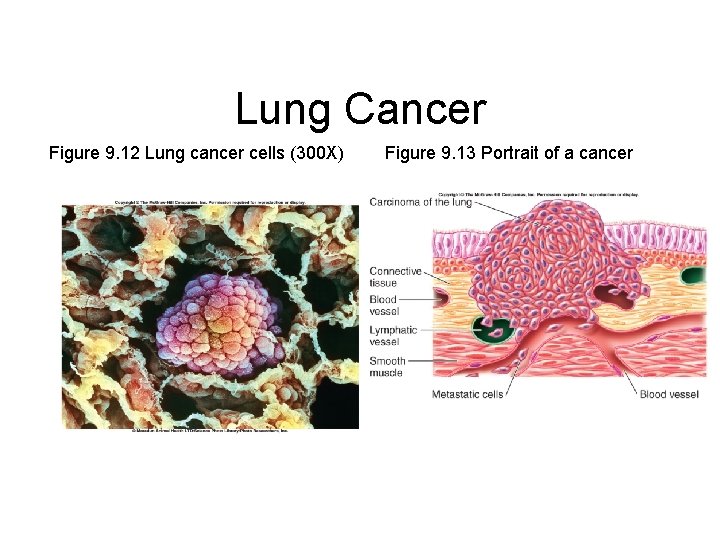
Lung Cancer Figure 9. 12 Lung cancer cells (300 X) Figure 9. 13 Portrait of a cancer
9. 6 What Is Cancer? • Cancer is caused by a gene disorder in somatic tissue in which damaged genes fail to control properly the cell cycle – mutations causes damage to genes • may result from chemical or environmental exposure, such as UV rays – viral exposure may also alter DNA
2 classes of genes involved in Cancer • proto-oncogenes – these genes encode proteins that stimulate cell division – mutations to these genes can cause cell to divide excessively – when mutated, these genes become oncogenes • tumor-suppressor genes • these genes normally turn off cell division in healthy cells • when mutated, these genes allow uncontrolled cell division
Cancer and Control of Cell Cycle • Cancer: when damaged genes fail to control cell division – one such gene, p 53, affects the G 1 checkpoint • its normal action is to detect abnormal DNA – Halts cell division of a cell with damaged DNA until the DNA is repaired or directs the cell to be destroyed if the damage cannot be fixed • if this gene itself becomes damaged, it will allow damaged cells to divide unchecked
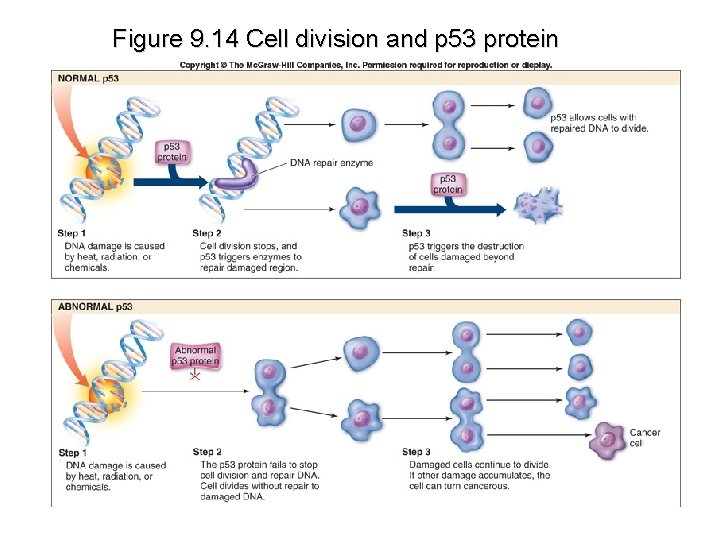
Figure 9. 14 Cell division and p 53 protein
Essentials of the Living World Second Edition George B. Johnson Jonathan B. Losos Chapter 10 Meiosis Copyright © The Mc. Graw-Hill Companies, Inc. Permission required for reproduction or display.
10. 1 Discovery of Meiosis • Gametes – reproductive cells (eggs and sperm) – contain half the complement of chromosomes found in somatic cells – the gametes fuse to form a new cell called a zygote, which contains two complete copies of each chromosome • the fusion of gametes is called fertilization, or syngamy
10. 1 Meiosis: gamete formation • involves some mechanism to halve the # of chromosomes found in somatic cells – if not the number of chromosomes would double with each fertilization – Meiosis: process of reduction division in forming gametes • this ensures a consistent chromosome number across generations
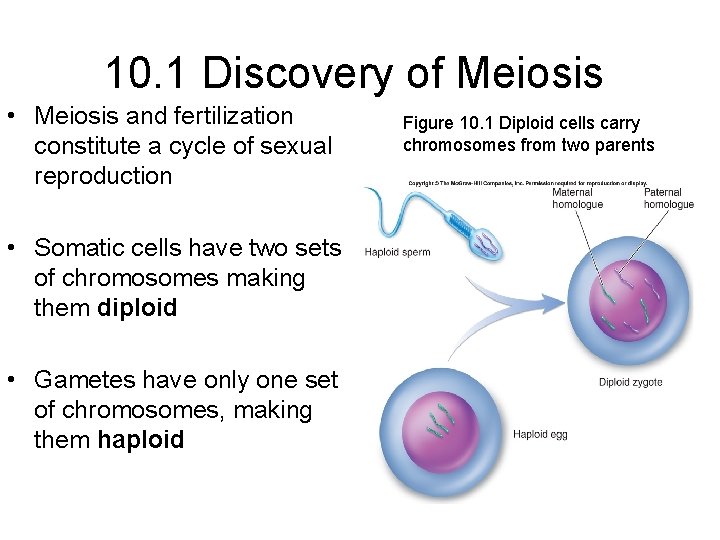
10. 1 Discovery of Meiosis • Meiosis and fertilization constitute a cycle of sexual reproduction • Somatic cells have two sets of chromosomes making them diploid • Gametes have only one set of chromosomes, making them haploid Figure 10. 1 Diploid cells carry chromosomes from two parents
Asexual Reproduction • Some organisms reproduce by mitotic division and do not involve gametes – an example is binary fission in prokaryotes • Other organisms are able to reproduce both sexually and asexually – for example, strawberry plants flower (sexual reproduction) and send out runners (asexual reproduction)
Germ Line Cells: 2 n • In animals, the cells that will eventually undergo meiosis are reserved early on for the purpose of reproduction – these cells are referred to as germline cells and are diploid like somatic cells – Only germ-line cells will undergo meiosis to produce haploid gametes
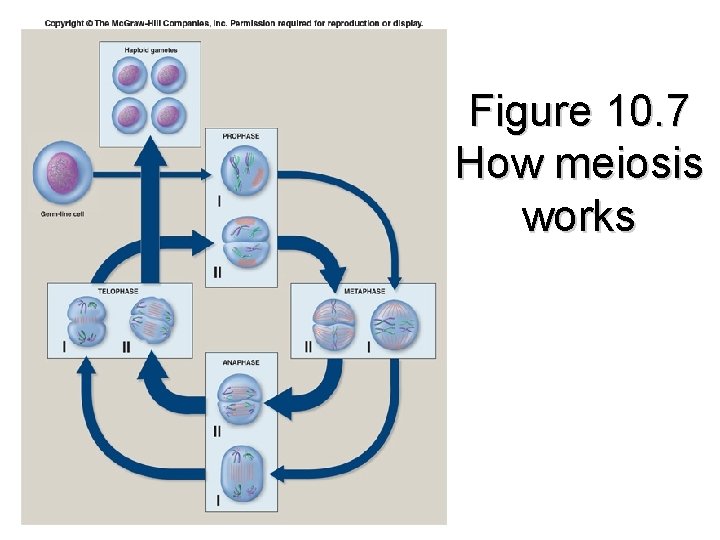
Figure 10. 7 How meiosis works
Meiosis involves 2 divisions l DNA is replicated only before meiosis I – meiosis I: • separates pairs of homologues – meiosis II • separates the replicate sister chromatids – when meiosis is complete, the result is that one diploid cell has become four haploid cells
Meiosis I divided into 4 events 1. Prophase I • Homologues pair up and exchange segments 2. Metaphase I • The paired homologous chromosomes align on a central plane 3. Anaphase I • Homologues separate from the pairing and move to opposite poles 4. Telophase I • Individual chromosomes gather at each of the two poles
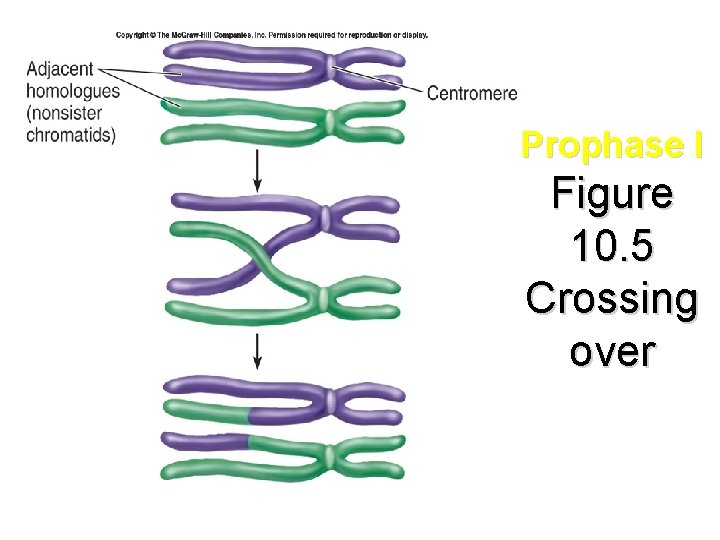
Prophase I Figure 10. 5 Crossing over
During prophase I • homologous chromosomes line up as pairs – crossing over occurs between two non-sister chromatids of homologous chromosomes • the chromatids break in the same place and section of chromosomes are swapped • the result is a hybrid chromosome – the pairing is held together by the cohesion between sister chromatids and the crossovers
During metaphase I • the orientation of the homologous chromosome pairing is a matter of chance – each possible orientation of which homologue faces which pole results in gametes with different combinations of parental chromosomes – this process is called independent assortment
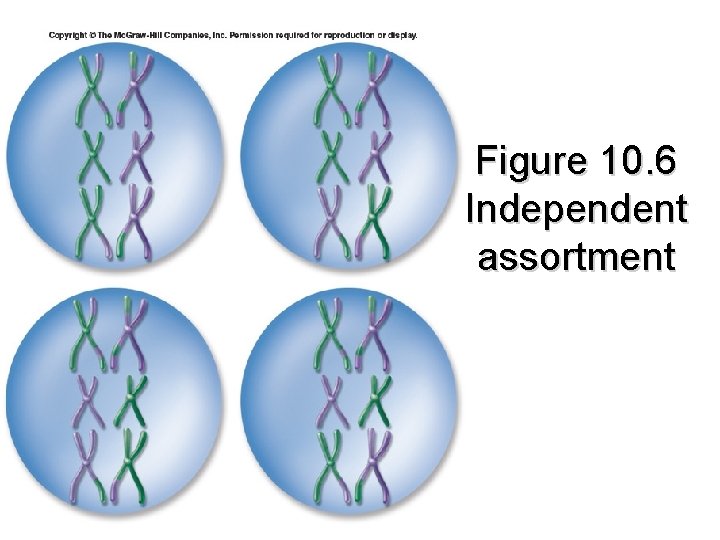
Figure 10. 6 Independent assortment
In anaphase I and telophase I • the chromosome pairs separate and individual homologues move to each pole • In telophase I, the chromosomes gather at their respective poles to form two chromosome clusters
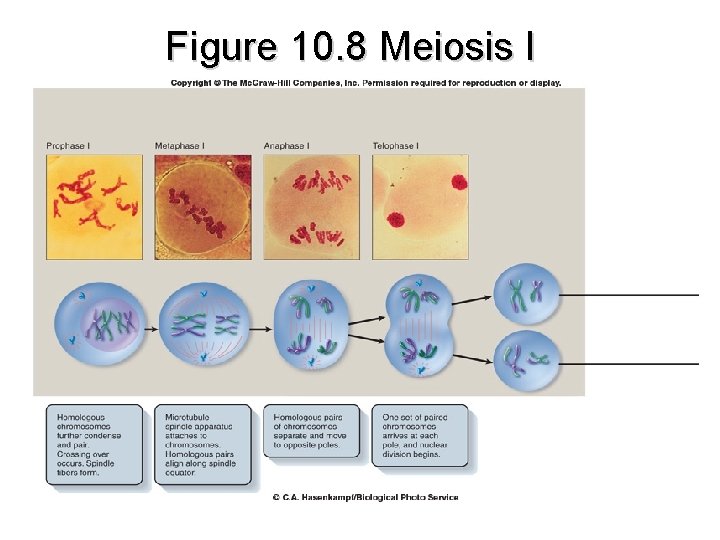
Figure 10. 8 Meiosis I
After Meiosis I…… • a brief interphase occurs where there is no replication of DNA • Meiosis II follows and is basically a mitotic division of the products of meiosis I – except that the sister chromatids are nonidentical because of crossing over in meiosis I
Meiosis II also divided into 4 stages 1. Prophase II: new spindle forms to attach to chromosome clusters 2. Metaphase II: spindle fibers bind to both sides of the centromere and individual chromosomes align along a central plane 3. Anaphase II: sister chromatids move to opposite poles 4. Telophase II: the nuclear envelope is reformed around each of the four sets of daughter chromosomes
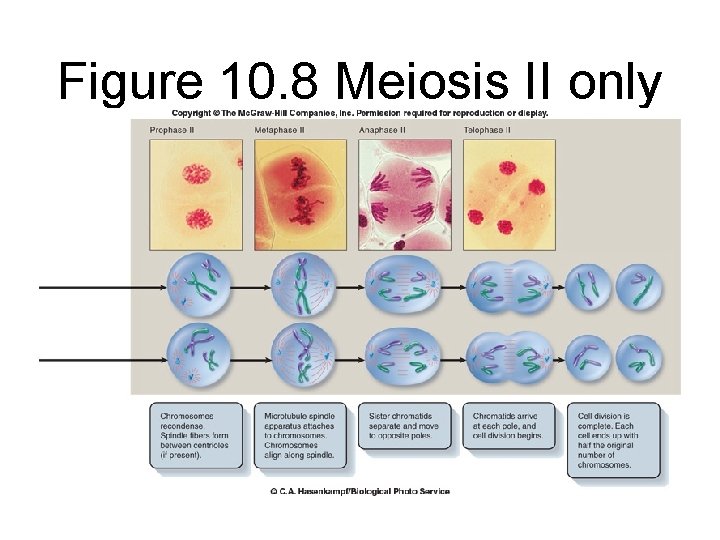
Figure 10. 8 Meiosis II only
10. 4 How Meiosis Differs from Mitosis Meiosis has 2 unique features not found in mitosis – synapsis • process of drawing together homologous chromosomes down their entire lengths so that crossing over can occur – reduction division • because meiosis involves two nuclear divisions but only one replication of DNA, the final amount of genetic material passed to the gametes is halved
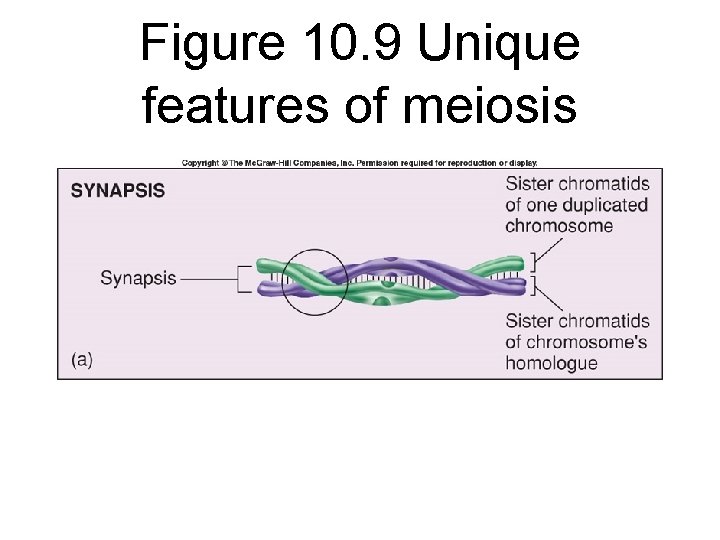
Figure 10. 9 Unique features of meiosis
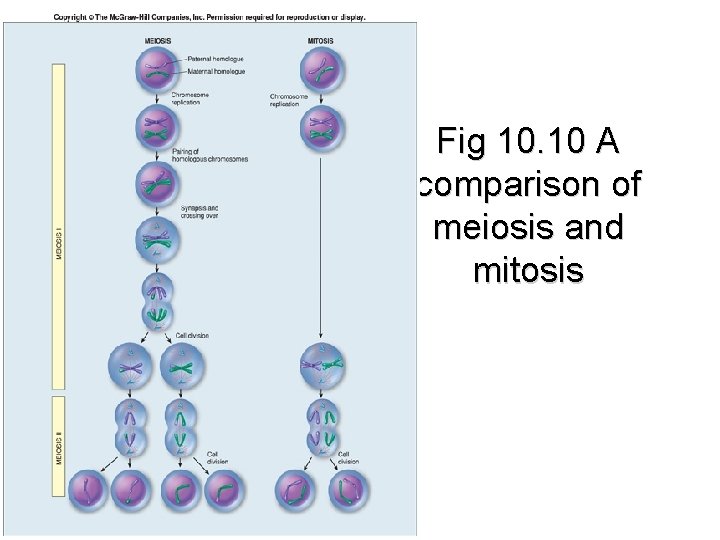
Fig 10. 10 A comparison of meiosis and mitosis
10. 5 Evolutionary Consequences of Sex • Sexual reproduction has an enormous impact on how species evolve because it generates rapidly new genetic combinations • Three mechanisms help produce this variety • • • Independent assortment Crossing over Random fertilization
- Slides: 61