
WELCOME AND INTRODUCTION Kari NejakBowen University of Pittsburgh
WELCOME AND INTRODUCTION Kari Nejak-Bowen University of Pittsburgh School of Medicine Department of Pathology April 24, 2018
WHAT IS PATHOLOGY? Pathology is the study and diagnosis of disease processes.
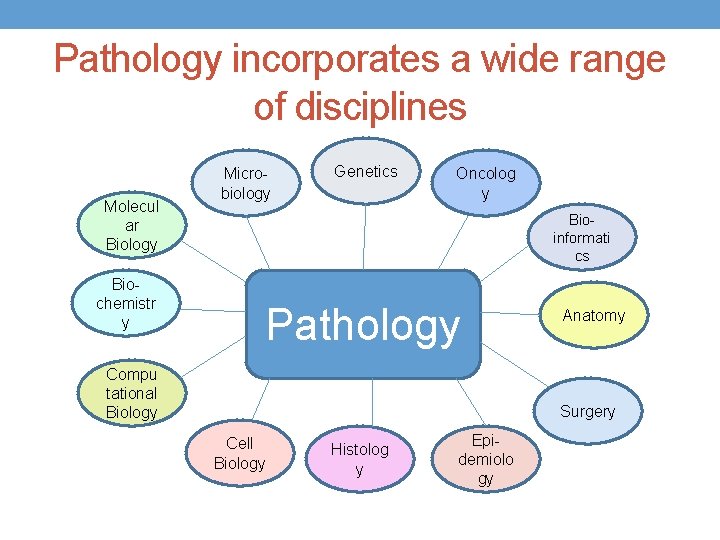
Pathology incorporates a wide range of disciplines Molecul ar Biology Biochemistr y Microbiology Genetics Oncolog y Bioinformati cs Pathology Compu tational Biology Anatomy Surgery Cell Biology Histolog y Epidemiolo gy
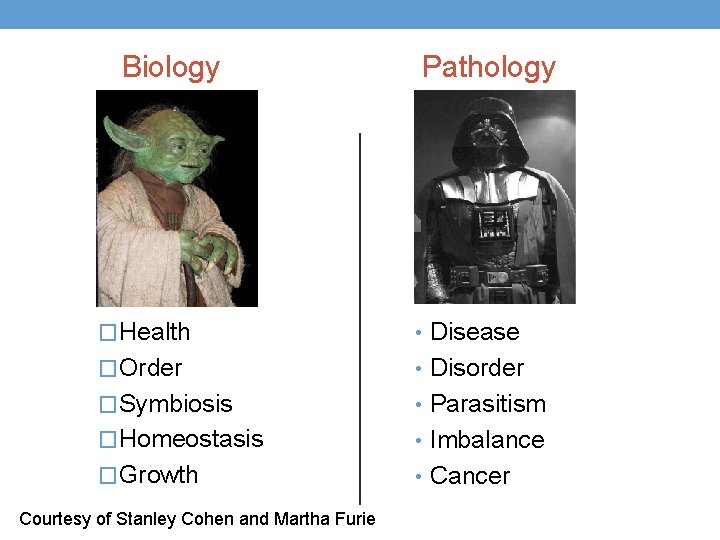
Biology Pathology �Health • Disease �Order • Disorder �Symbiosis • Parasitism �Homeostasis • Imbalance �Growth • Cancer Courtesy of Stanley Cohen and Martha Furie
Experimental Pathology… • A scientific field which investigates the type of injury and the body’s response to it by studying: • Causes • Processes • Development • Outcomes and consequences
Experimental Pathologists ask: ØWhat causes disease? ØHow do we know who is at risk for disease? ØHow do we diagnose disease? ØHow do we understand the nature of the disease? ØHow do we use our understanding of the disease to develop treatments?
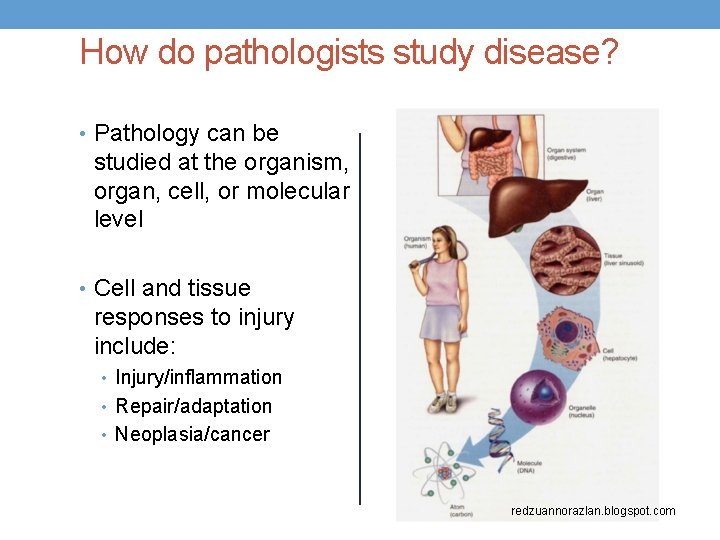
How do pathologists study disease? • Pathology can be studied at the organism, organ, cell, or molecular level • Cell and tissue responses to injury include: • Injury/inflammation • Repair/adaptation • Neoplasia/cancer redzuannorazlan. blogspot. com
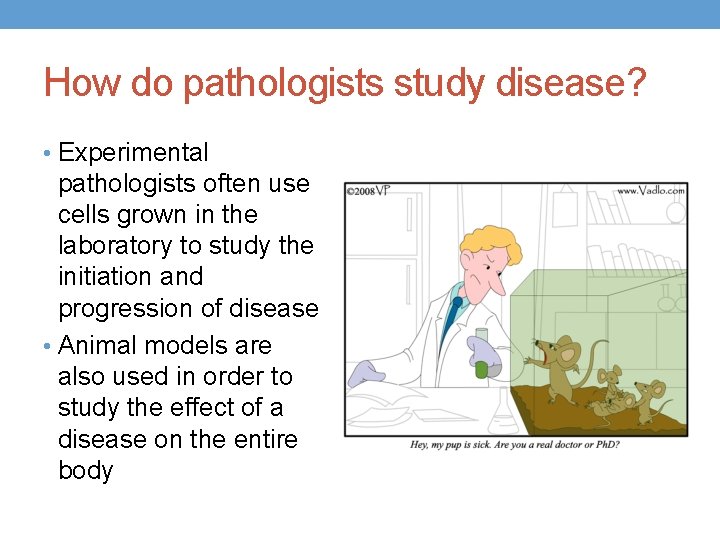
How do pathologists study disease? • Experimental pathologists often use cells grown in the laboratory to study the initiation and progression of disease • Animal models are also used in order to study the effect of a disease on the entire body
Misconceptions about animal research • Research on animals isn’t necessary üWe have to understand basic biology to learn how to treat/cure disease. üAnimals are used along with computer models, cell cultures and human studies. • Treatments developed in animals don’t work on people üKnowledge attained through laboratory animal research has played a vital role in almost every major medical advance of the last century, including organ transplants, analgesics, antibiotics, anti-depressants, bypass surgery, heart catheterization, joint replacement, and more.
Misconceptions about animal research • Research is animal abuse üMost research is not painful. üIf an animal is in pain, pain medication must be given. üIf an animal is suffering, it will be removed from the study or euthanized. • Researchers don’t care about animals üResearch is highly regulated, and researchers are committed to animal welfare. üAn Animal Care and Use Committee at each institution rigorously reviews all proposed studies. üVeterinarians help design protocols. üAnimals get care from skilled technicians and veterinarians.
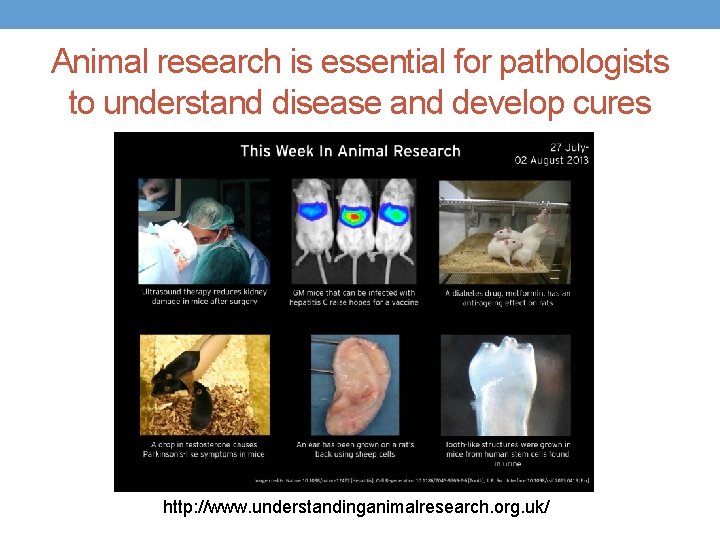
Animal research is essential for pathologists to understand disease and develop cures http: //www. understandinganimalresearch. org. uk/
Why teach pathology in high school? The “three R’s” • Relevant • Our understanding of disease is becoming more advanced • Health care is also becoming more complex • There is a wealth of misleading information on health and disease topics It is estimated that nearly 9 out of 10 adults may lack the skills needed to manage their health and prevent disease https: //health. gov/communication/literacy/quickguide/factsbasic. htm
Why teach pathology in high school? (continued) • Real-world application of science • Many students have been affected by disease in their daily lives • Rewarding and interesting • Knowing more about their own health and bodies can empower students
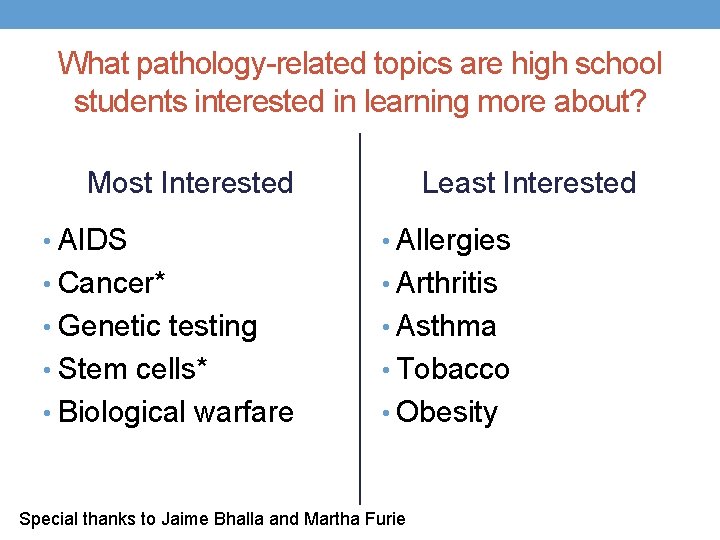
What pathology-related topics are high school students interested in learning more about? Most Interested Least Interested • AIDS • Allergies • Cancer* • Arthritis • Genetic testing • Asthma • Stem cells* • Tobacco • Biological warfare • Obesity Special thanks to Jaime Bhalla and Martha Furie
How to find information on pathologyrelated topics? • The internet is a great resource for both teachers and students • Much of pathology is visual • Pictures and examples will catch the attention of students • A great self-learning tool, where students can progress at their own pace • Opportunity for independent investigation
How to evaluate online health information • When visiting a new health web site, these questions may help you decide whether it is a helpful resource: • Who runs the site? • Why have they created the site? • What do they want from you? • What is the source of the information? • Who is paying for the site? • Is the information reviewed by experts? • Is it up-to-date, and is it reviewed? • Does the site make unbelievable claims; does it sound too good to be true? • Are original sources of the data and research listed? https: //nccih. nih. gov/health/webresources https: //medlineplus. gov/webeval. html
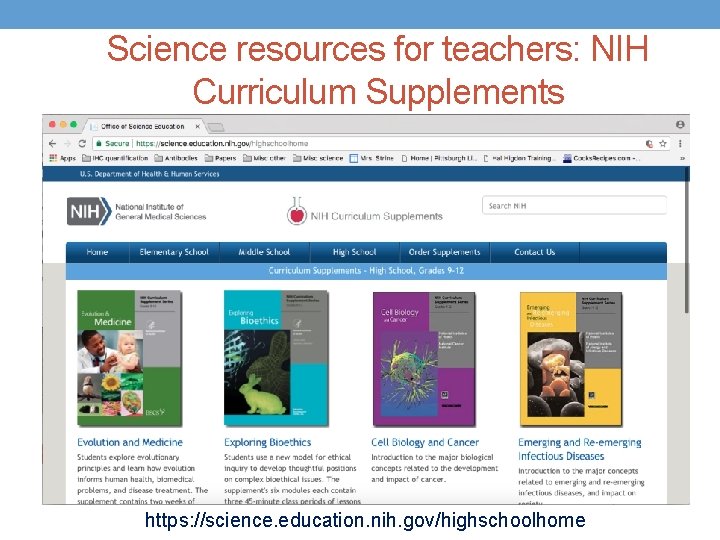
Science resources for teachers: NIH Curriculum Supplements https: //science. education. nih. gov/highschoolhome
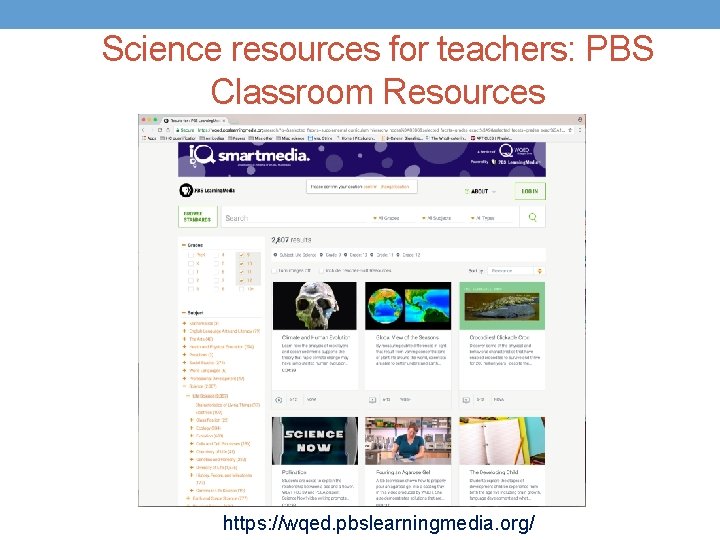
Science resources for teachers: PBS Classroom Resources https: //wqed. pbslearningmedia. org/
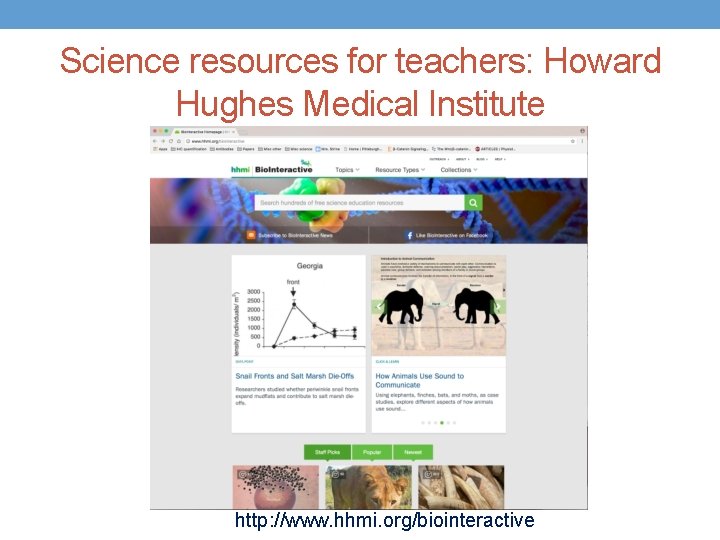
Science resources for teachers: Howard Hughes Medical Institute http: //www. hhmi. org/biointeractive
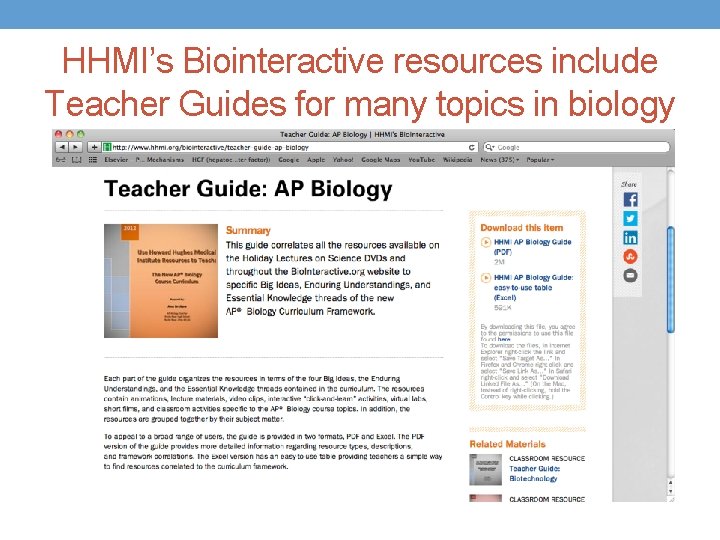
HHMI’s Biointeractive resources include Teacher Guides for many topics in biology
What about resources for students interested in pathology? • 2 ways to find information about pathology: • Internet search engines • Health and patient education web sites • There also “interactive” websites that allow the user to browse images and content, as well as case-based approaches to learning pathology concepts. • Other websites offer advice on careers in pathology.
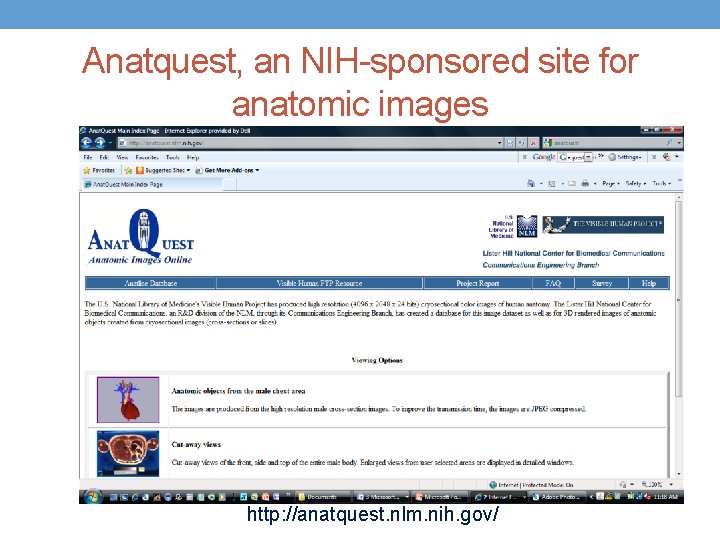
Anatquest, an NIH-sponsored site for anatomic images http: //anatquest. nlm. nih. gov/
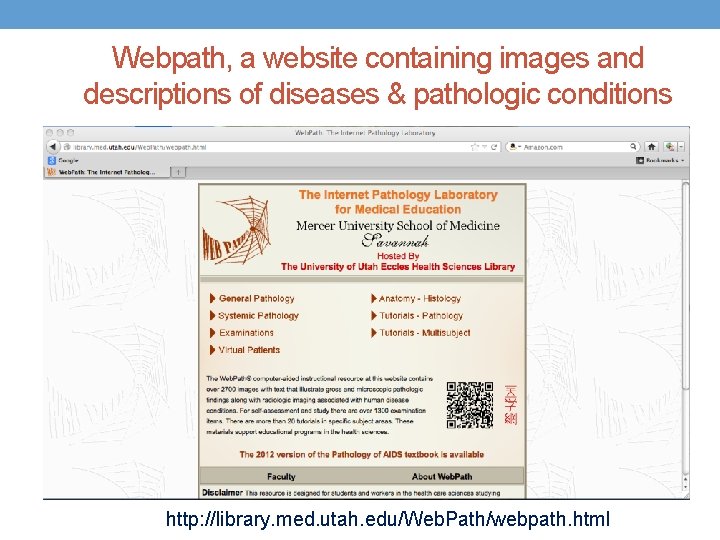
Webpath, a website containing images and descriptions of diseases & pathologic conditions http: //library. med. utah. edu/Web. Path/webpath. html
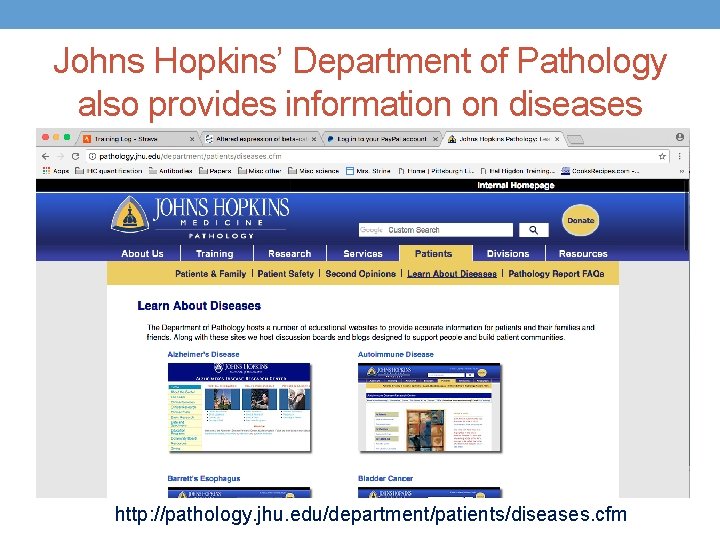
Johns Hopkins’ Department of Pathology also provides information on diseases http: //pathology. jhu. edu/department/patients/diseases. cfm
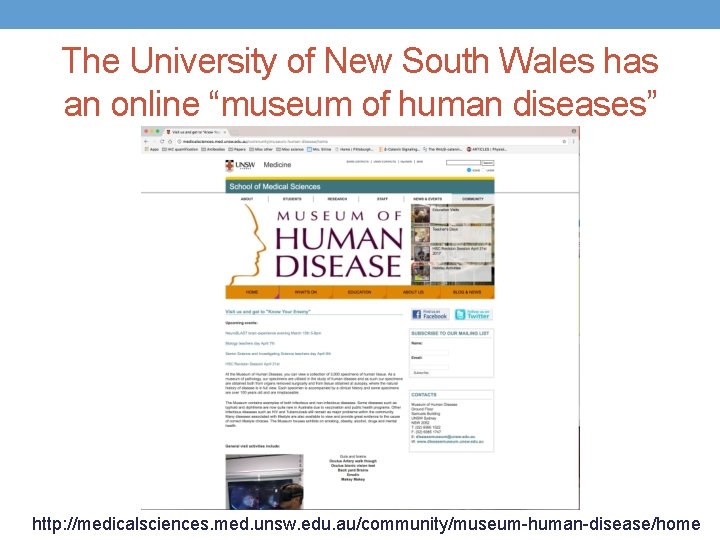
The University of New South Wales has an online “museum of human diseases” http: //medicalsciences. med. unsw. edu. au/community/museum-human-disease/home
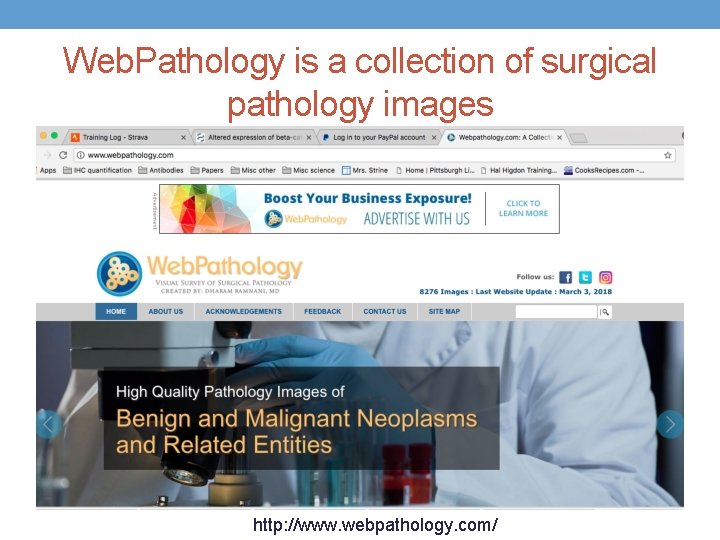
Web. Pathology is a collection of surgical pathology images http: //www. webpathology. com/
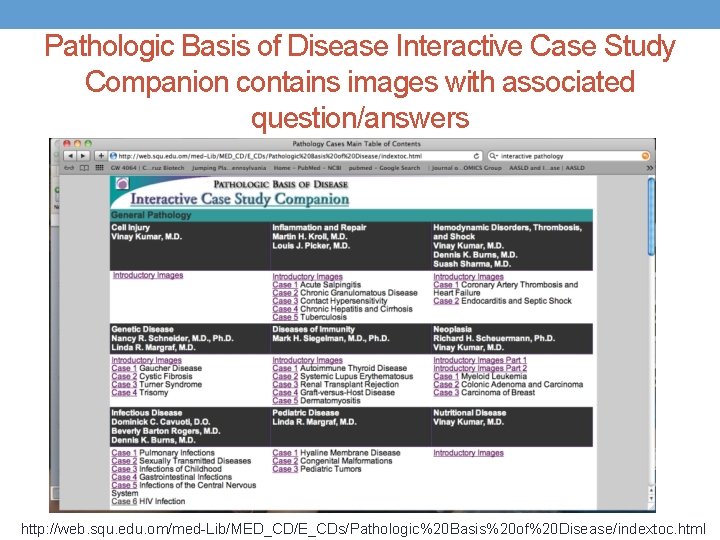
Pathologic Basis of Disease Interactive Case Study Companion contains images with associated question/answers http: //web. squ. edu. om/med-Lib/MED_CD/E_CDs/Pathologic%20 Basis%20 of%20 Disease/indextoc. html
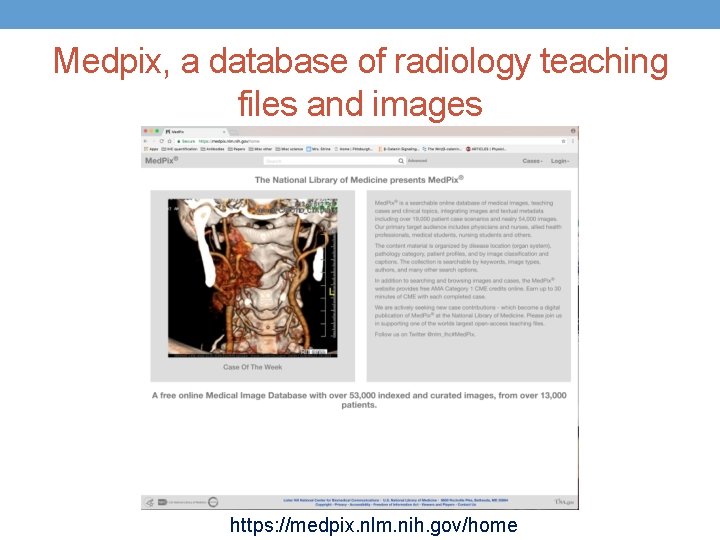
Medpix, a database of radiology teaching files and images https: //medpix. nlm. nih. gov/home
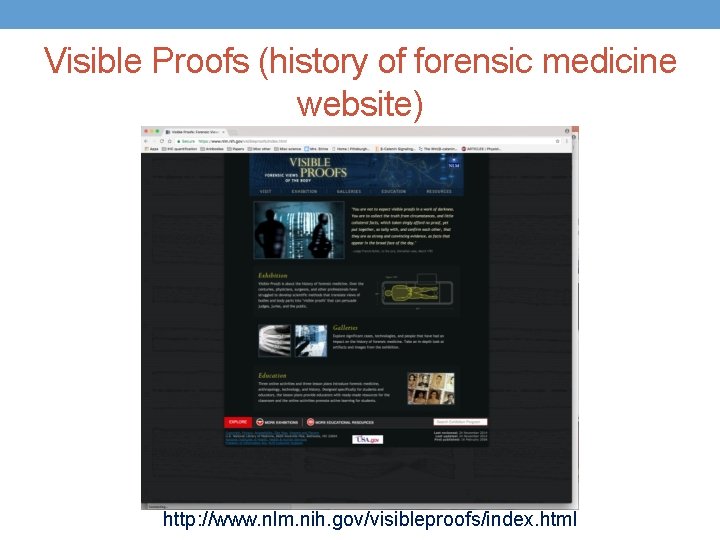
Visible Proofs (history of forensic medicine website) http: //www. nlm. nih. gov/visibleproofs/index. html
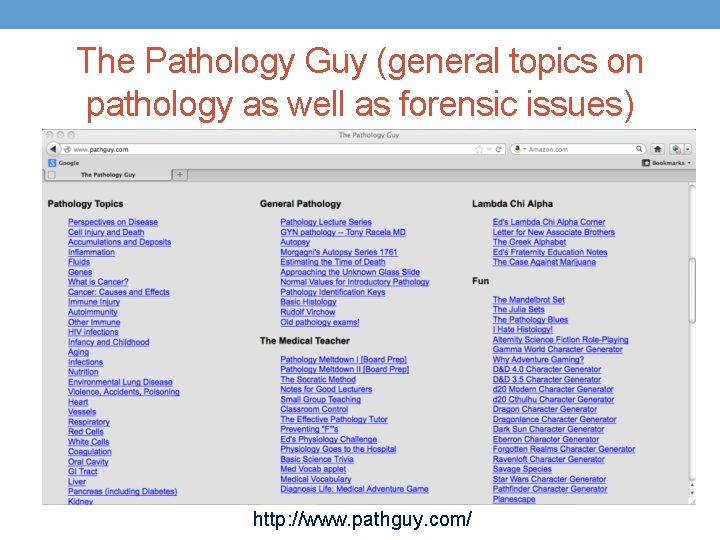
The Pathology Guy (general topics on pathology as well as forensic issues) http: //www. pathguy. com/
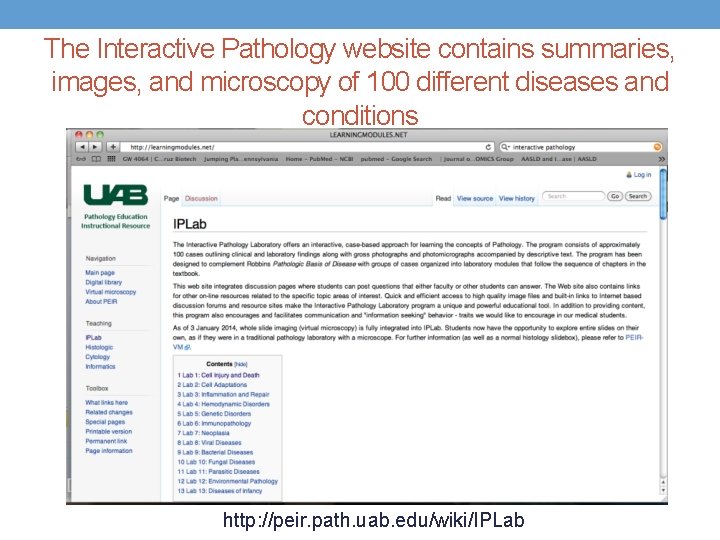
The Interactive Pathology website contains summaries, images, and microscopy of 100 different diseases and conditions http: //peir. path. uab. edu/wiki/IPLab
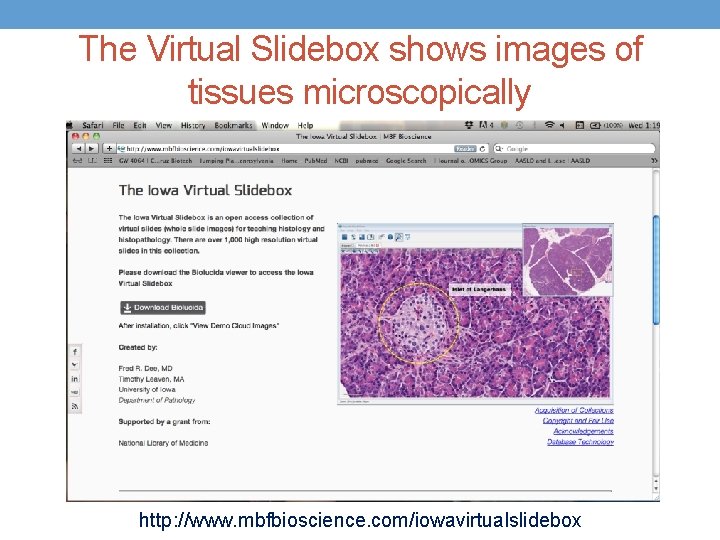
The Virtual Slidebox shows images of tissues microscopically http: //www. mbfbioscience. com/iowavirtualslidebox
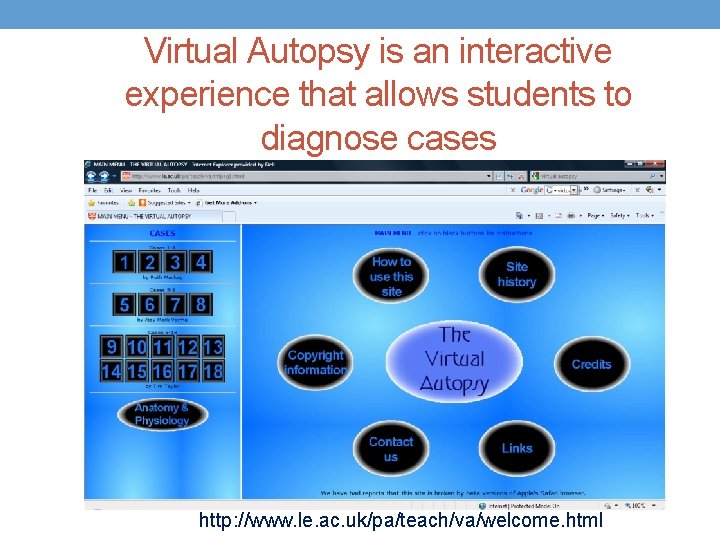
Virtual Autopsy is an interactive experience that allows students to diagnose cases http: //www. le. ac. uk/pa/teach/va/welcome. html
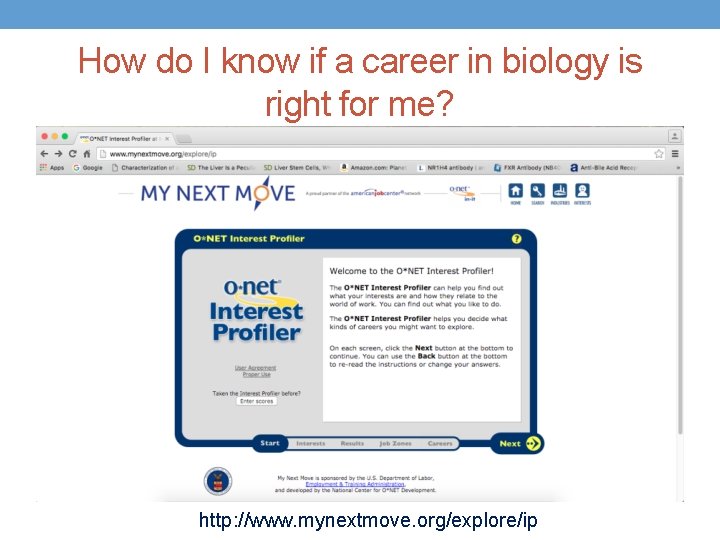
How do I know if a career in biology is right for me? http: //www. mynextmove. org/explore/ip
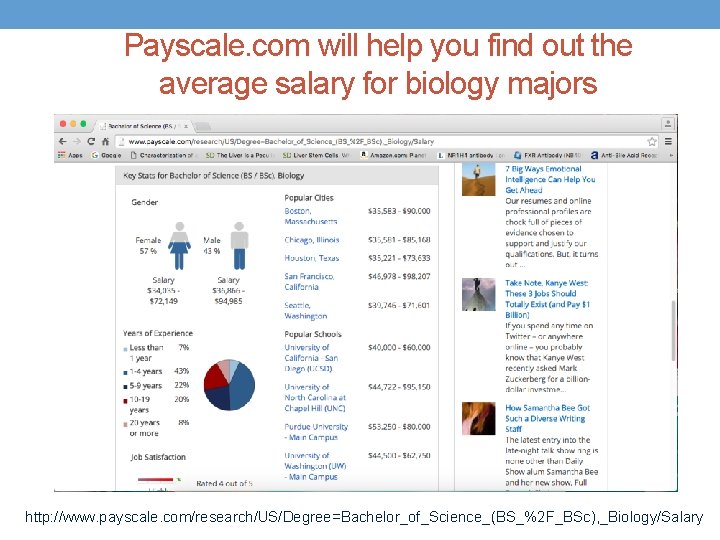
Payscale. com will help you find out the average salary for biology majors http: //www. payscale. com/research/US/Degree=Bachelor_of_Science_(BS_%2 F_BSc), _Biology/Salary
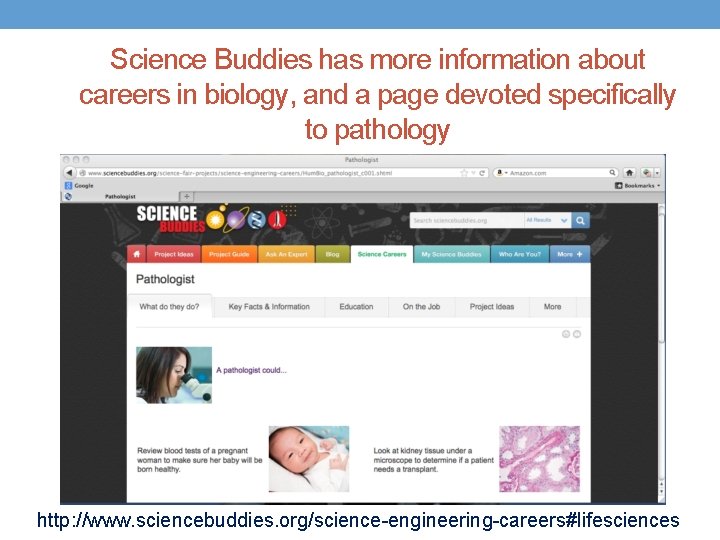
Science Buddies has more information about careers in biology, and a page devoted specifically to pathology http: //www. sciencebuddies. org/science-engineering-careers#lifesciences
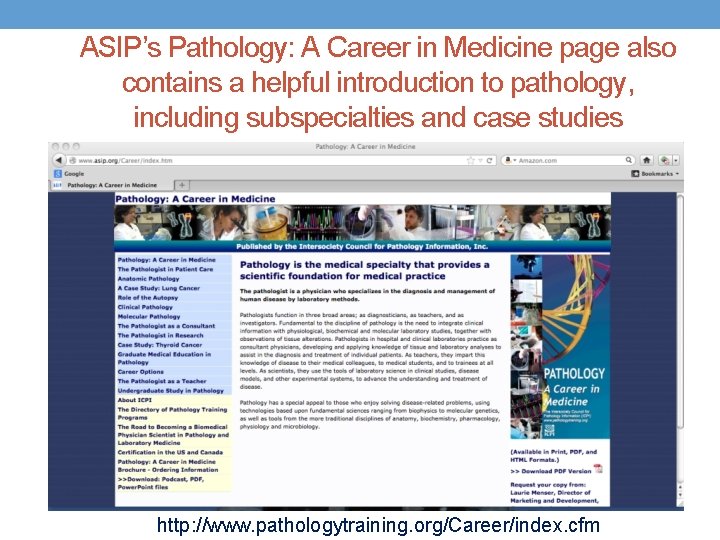
ASIP’s Pathology: A Career in Medicine page also contains a helpful introduction to pathology, including subspecialties and case studies http: //www. pathologytraining. org/Career/index. cfm
- Slides: 37