
Welcome Aboard the RV Marcus G Langseth Science

Welcome Aboard the R/V Marcus G. Langseth Science Party Briefing and Safety Orientation 2015 Revision
ISM and Safety Management System n n Procedures have been established as to how the R/V Marcus G. Langseth will be operated. The purpose of the procedures is to ensure the vessel is operated to achieve the following outcomes: Comply with US and International regulations. n Protect the safety of the personnel onboard. n Protect the vessel and its equipment. n Protect the Marine Environment in which we operate. n
Sexual Harassment Policy n The goal of the Office of Marine Operations and Lamont Doherty Earth Observatory is to ensure that all individuals are treated with mutual respect and that an atmosphere of professionalism is maintained in all our interactions. Harassment no matter what form will not be tolerated. n Any person who believes they are being harassed should seek resolution of the problem through discussions with the individual directly concerned. n If this does not resolve the matter, or if there is reluctance to deal directly with the person involved, the problem should then be brought to the attention of the Master for L. D. E. O. employees or contractors. n In all instances anyone onboard may seek resolution via the Captain or refer the situation ashore to the Operations Manager. n Resolution of any such incident will be sought immediately and maybe grounds for disciplinary action.
Sexual Harassment Definition n Harassment can take many forms. It can blatant or subtle, verbal, printed, or physical. Examples of conduct that can constitute harassment include: n Outright propositions/improper suggestions n Racial or ethnic jokes, slurs, or cartoons n Abuse, insults, or jokes concerning sexual orientation n Touching, including pats, hugs, squeezes, brushing against, putting arms around shoulders n Insinuations about private life or lifestyle n Threats or promises regarding compliance with sexual behavior n Actions or sounds -whistling, suggestive sounds, obscene gestures, display of offensive pictures n Sexist, lewd, or obscene remarks, jokes, or cartoons n Imbalance of attention, whether it be positive or negative, towards one employee or student based upon gender or race n Assault -sexual or otherwise
Alcohol Policy n There is to be no unauthorized consumption or possession of alcohol on board the R/V Langseth. Any alcohol you wish to bring home, must be given to the Master for the duration of the voyage. n In the event of a serious accident, all persons involved are subject to drug and alcohol testing. n In the event of suspicion of alcohol use, all persons are subject to alcohol and drug testing. n
Controlled Drug Policy n There is to be no consumption or possession of any drug that would be considered illegal in the United States. n Any prescribed controlled substance in your possession should be accompanied by a prescription. n In the event of a serious accident, all persons involved are subject to drug and alcohol testing. n In the event of suspicion of drug use, you are subject to alcohol and drug testing. n Refusing to take a test is deemed to be a
Smoking Policy n All smoking in the interior of the ship is forbidden. This policy includes your stateroom and head, even if they are private and not shared. n Smoking in Bed is dangerous and strictly forbidden. n During FUELING, there is NO SMOKING on board, including on deck. n Please dispose of cigarette butts properly. n
M. S. D. S. n n M. S. D. S. = Material Safety Data Sheets MSDS information is available for hazardous substances which are used in the operation and maintenance of the vessel. n MSDS information is available on the ship’s internal web site. http: //www/msds/ n MSDS paper copies are available in the Ship’s Office. n MSDS sheets are available in some science lab spaces for the chemicals that are found or used in that space.
Safety Policies – Foot Wear n Absolutely no open toe shoes on working decks and in work spaces. n Work Spaces includes all lab, office, machinery spaces, instrument, exterior decks and staging areas. n Open toe shoes includes open toe sandals, flip flops, etc.
Work Vests n Work Vests shall be worn when working with ANY gear over the side. Work vests are a compromise from having to wear the bulky and uncomfortable Lifejackets used in an Abandon Ship Situation. n In cold weather, cold weather work suits can be used in place of work vests. n Work vests are stored at designated locations near exits to the working decks. n Please return the vests to these storage positions when done, so others can use them. n
When Work Vests are Required n Work vests should be worn in the following examples: Deploying or Recovering ANY science gear going over the side. n Handling mooring lines or other gear going over the side. n Working near an opening in the railing / bulwarks where the potential to fall overboard exists. n
Hard Hats n Hard Hats are required when using lifting gear. Examples include : n Working with Cranes n Working with lifting apparatus, and operations where heavy objects are able to move about while suspended. n Hard Hats are stored near the exits to the working decks, similar to Work Vests – please return them when finished with the operation.
Ladders n Ladders on ships ( Stairs ) are steeper than found on shore, and require extra caution. n Take extra care when descending ladders, and always use the hand railings. n If carrying items up or down, consider getting assistance, and always keep one hand on the railing.
Space Awareness n Identify the safety gear in your work space, such as Fire Extinguishers, First Aid Kits, Eye Wash Stations, Fire Alarms, Phone, and Means of Escape. n Identify how to get from your stateroom to your muster location, including emergency escape routes. n When working on deck, know where the closest Life Ring and Phone are in case of a Man Overboard.
Emergency Signals n n n In cases of Fire or Emergency, the signal is 10 Seconds of continuous ringing of the General Alarm, and the same on the Ship’s Whistle. In case of Abandon Ship, the signal is 7 or more short rings on the General Alarm, followed by a long ring ( 4 to 6 seconds ), and the same signal on the Ship’s Whistle. In case of Man Overboard, the signal is 3 long rings ( 4 to 6 seconds ) on the General Alarm and Ship’s Whistle.
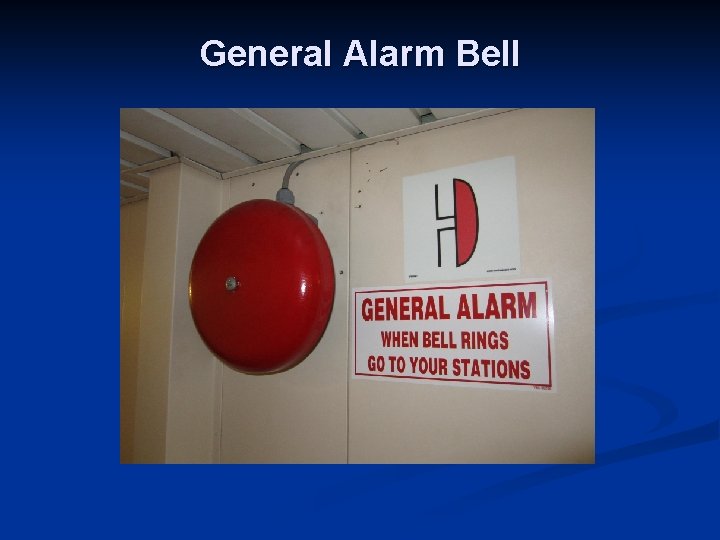
General Alarm Bell
Muster Location n n The Science Party and the Science Technicians all muster on the Bridge Deck, aft of the Bridge. Alternate muster locations will be announced by the public address system or word of mouth, if the primary muster location is unsuitable due to weather or emergency scenario. Do not delay in getting to your muster location – a quick assessment of who may be trapped or in need of assistance is critical in getting them timely help. Once mustered, you may be assigned duties depending on the nature of the emergency, such as Lookout in a Man Overboard scenario.
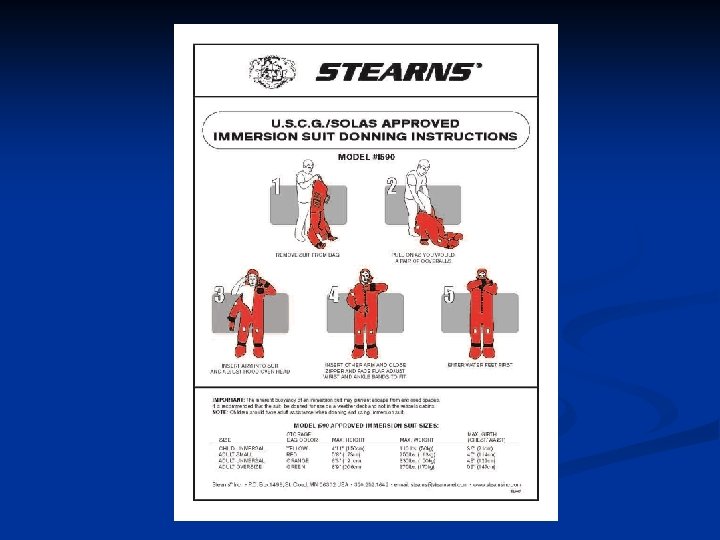
Life Jackets + Survival Suits n Stowed on the Bridge Deck, aft of the Bridge, are boxes filled with PFDs ( Life Jackets ) and Survival Suits. n PFDs are universal sized for adults. n Survival Suits are universal sized for most adults, but we also have small and xx-Large size suits. n Each PFD and Survival Suit has a light and whistle.
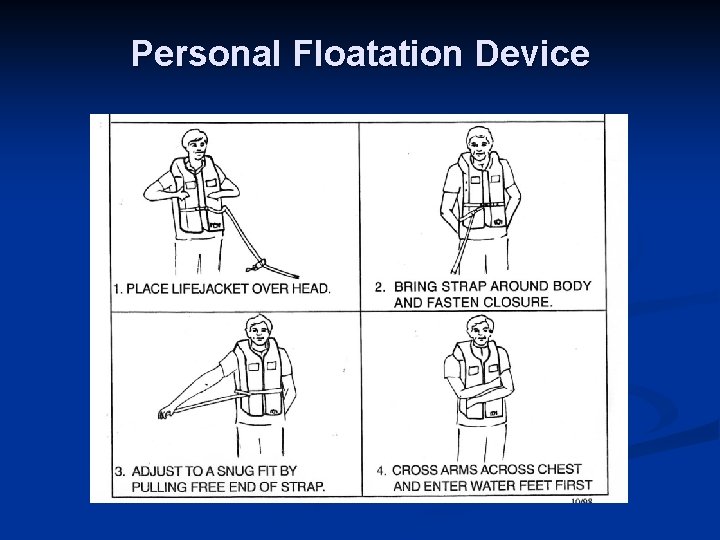
Personal Floatation Device
Shipboard Communications n In case of Fire, Man Overboard, or other Emergency, call out loudly to others the nature of the emergency. n When we are at sea, the best place to call in case of an emergency is the BRIDGE. Pick up any ship’s phone, and dial 999, and press SEND. n There are pull stations around the vessel that activate the ship’s smoke alarm system – their activation does not instantaneously activate the General Alarm, but does communicate to the Bridge via the Fire Detection System.
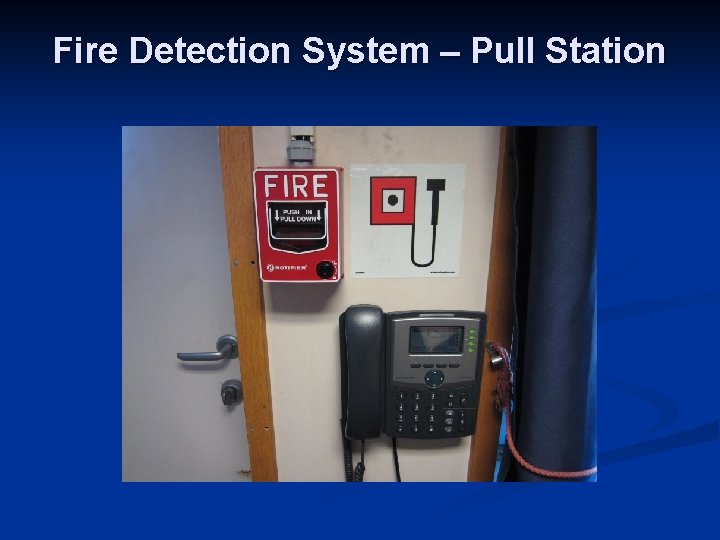
Fire Detection System – Pull Station
Communication with the Bridge n Never assume the Bridge has been notified about an operation, such as launching or recovering gear. n If there is any question – confirm that information has reached the Bridge and the nature of the operation is clear to all parties.
Medical Issues n n The Master is the Primary Medical Care Provider on the vessel. n If issues arise during the voyage, advice can be sought via our shore based physician advisory service. n See the Master if you have any medical concerns or problems. If you need any prescription medications, make sure you have sufficient quantity to last for the entire voyage.
Seismic Sound Source Hazards n n The air guns used in geophysical surveys use 2000 psi air. Stay off the Main Deck when Air Guns are being Launched or Recovered, and when air pressure is at the guns when on deck. n A Yellow flashing light on the Main Deck indicates that high pressure air has been applied to the guns on deck, and you should wear hearing protection On or Near the Main Deck exterior.
Hot Work Rules n n n All HOT WORK requires a work permit to be filled out, with the following exemptions: n If the hot work is limited to “bench work”, and not including any welding that would be done to the vessels deck, hull, or superstructure. n Bench Work is only to be done between 0800 and 2000 hours. See Chief Engineer or Engineer on Watch for a Hot Work permit. No cutting, burning or welding or any other alterations to the ship’s structure or equipment is permitted without the permission of & issuance of a “Permit to Work” from the Captain and Chief Engineer.
Permit to Work Aloft n Permit to Work Aloft is required before commencing work aloft, that is, in any area where there is a risk of falling more than 1 meter ( approximately 39 inches), including overboard. n See Mate on Watch for a Permit to Work Aloft n Proper Fall Arresting Gear is required for all Permits. n Other considerations may be required, such as securing ladders, radar + radio safety, securing tools, modifying other work in the area, etc.
Confined Space Entry Procedure n n Before entry into a confined space, a permit to work in the confined space must be issued by the Captain or Officer on Watch. Confined space examples: tanks, sealed void spaces, and chain lockers. The atmosphere in the confined space must be tested for oxygen and combustible vapors. Dangers in confined spaces include: n Lack of oxygen n Combustible vapors n Noxious gases n Entrapment
Wire Transit Procedure n n Water tight boundaries are important to the vessel being able to survive certain damage situations without sinking. Any time a water tight wire transit is to be opened, a permit is needed before opening. n Marine Cable Transit Permit must be filled out and signed by either the Chief Engineer or Captain.
n n n CRANES: Only crew who have been trained and qualified by the Chief Mate are authorized to operate the cranes. WATERTIGHT DOORS: All watertight doors must be secured in rough weather & at night. These doors are clearly marked. SECURING OF “LOOSE GEAR”: It is imperative that all gear be properly secured while at sea. This is true for all items on the deck, in lab spaces and in your cabin. Loose gear is a hazard to personnel & the ship. Tie down hardware & materials can be obtained from the ship’s crew (technical & maritime).
n n n Restricted Spaces + Access to Tools + Workshops Several areas on the ship are restricted in their access. The bridge is restricted access in accordance with federal regulations. However access can be arranged via a request to the Captain / Bridge Watch. Access to ALL machinery spaces is restricted. If you would like a tour of the spaces you can ask the Chief Engineer and we will be pleased to show you around at a mutually convenient time. This space is restricted as a matter of personal safety. Access to work shops, storage spaces, and tools
Water Use + Laundry n n n Fresh water is made in the Engine Room while we are underway, but excessive consumption can exceed the vessel’s ability to make fresh water. Toilets aboard this ship operate with fresh water. Any leaking or running toilet should be reported to the Engine Room immediately. Laundry Machines are available for everyone’s use. n n Use 1 scoop of soap or less. Always clean the lint filter on the dryer before use. Never dry items that have residue oils on the fabric Be careful that items put in the dryer are not going to melt from the high heat.
Mess Deck n n Clean clothes are required for the Mess Deck. Ensure you do not have sharp objects in your pockets prior to sitting down, to prevent damage to the upholstery. Do not take utensils or cups or plates/bowls from the Mess Deck. Paper cups are provided, if you are carrying a drink off the Mess Deck. There are 2 trash cans on the Mess Deck – segregate trash as per the posted signs, to comply with the waste disposal rules of the operating area.
Garbage + Waste Policy n n n NEVER throw plastic trash over the side. Some vessel operating areas are restricted, in not allowing any waste to be put over the side. Please segregate trash into the receptacles as they are marked. NO Oil or Oily Water is to be put over the side at any time. If you have any of this waste, contact the Science Officer to coordinate disposal into the vessel’s holding tanks with the Chief Engineer. NO Oily Waste is to be disposed of over the side at any time, such as oily rags + towels.
CONTACTING THE CAPTAIN or CHIEF SCIENCE OFFICER n DO NOT hesitate to contact the Captain or Chief Science Officer in the event of: A particularly sensitive situation <or> n A safety-related matter which remains uncorrected <or> n A “service quality”-related matter which remains uncorrected. n
- Slides: 35