
WEIGHTED SYNERGY GRAPHS FOR EFFECTIVE TEAM FORMATION WITH

- Slides: 31
WEIGHTED SYNERGY GRAPHS FOR EFFECTIVE TEAM FORMATION WITH HETEROGENEOUS AD HOC AGENTS Somchaya Liemhetcharat, Manuela Veloso Presented by: Raymond Mead
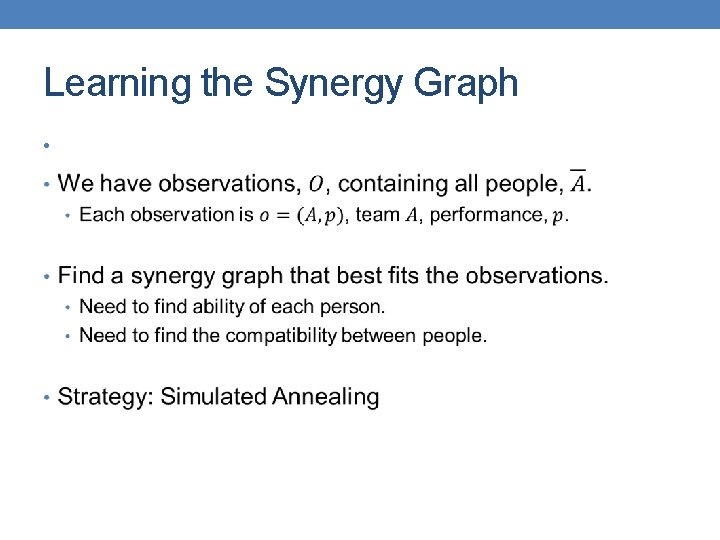
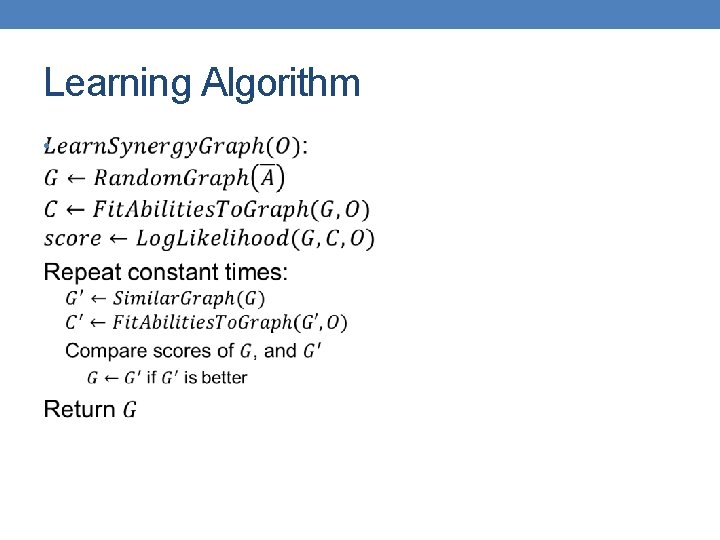
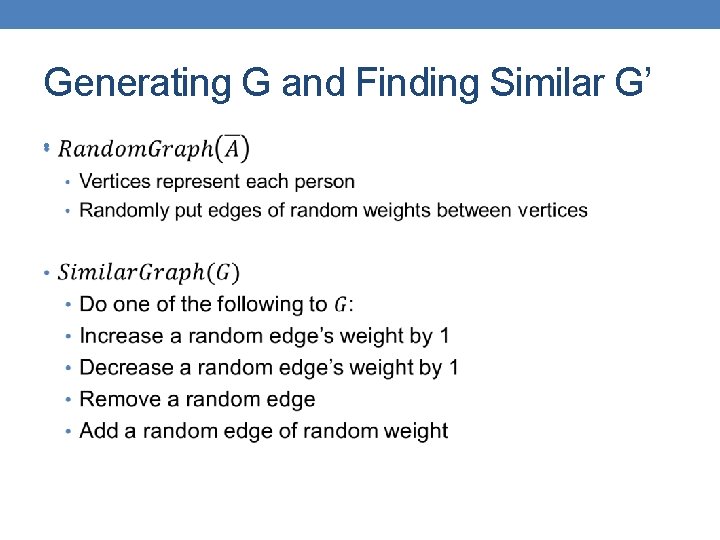
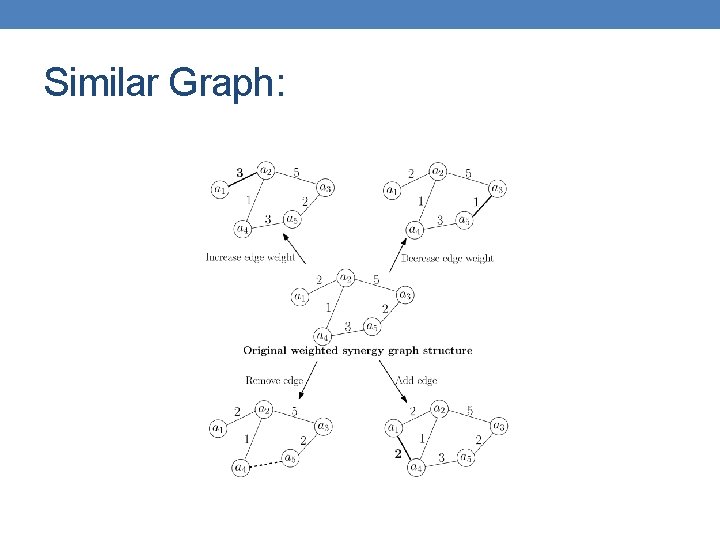
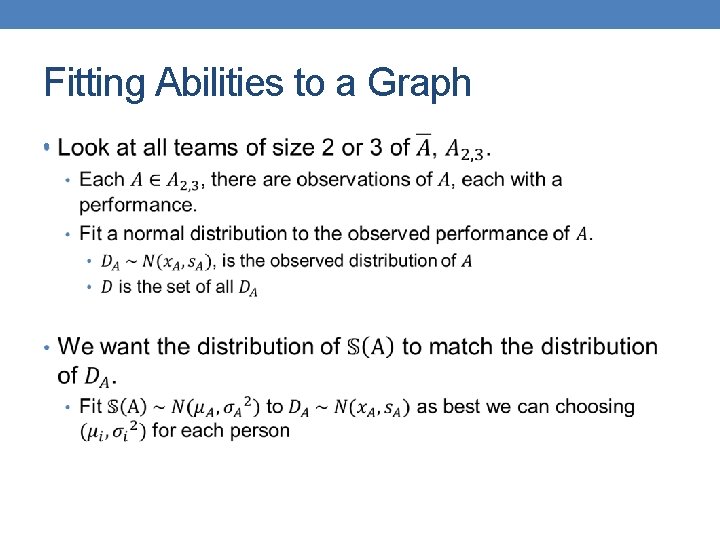
Problem • Written for Robo. Cup Rescue Simulator, where teams of robots are used to solve tasks. • We want to choose the best team of robots to tackle a disaster. • Around 50 possible agents. • How can we form the best team when everyone’s abilities, and how well people work together, are known? • Given observations of groups and their performances, how can we generate a graph to model each person’s ability, and how well people work together?
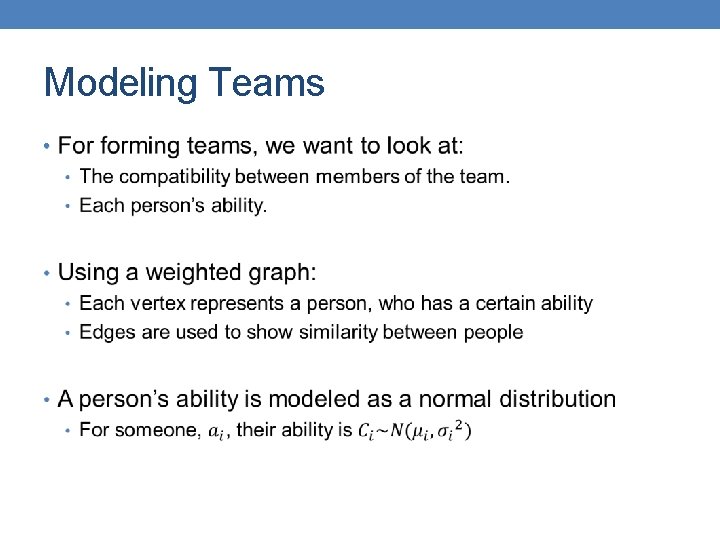
Modeling Teams •
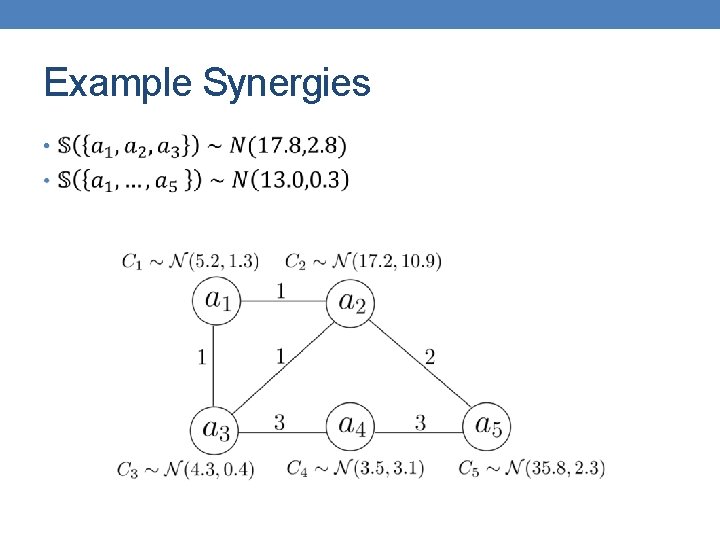
Example Graph
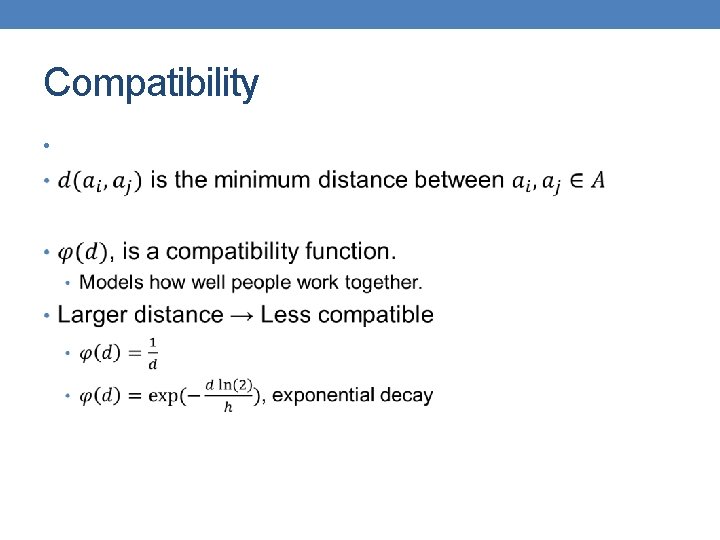
Compatibility •
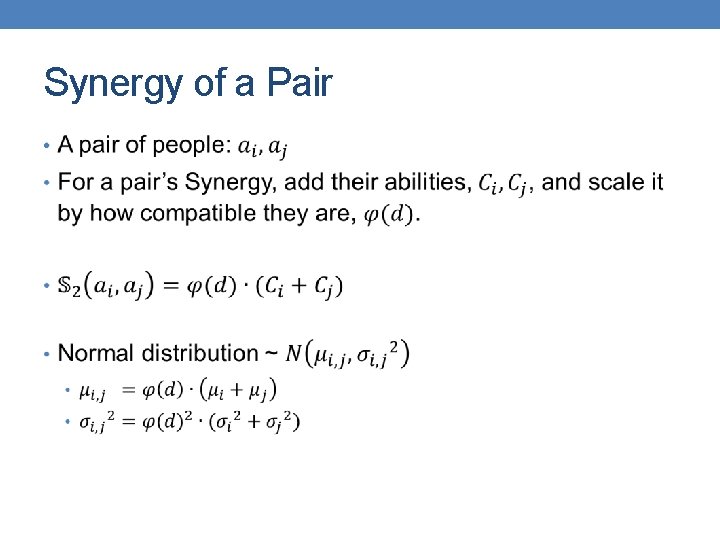
Synergy of a Pair •
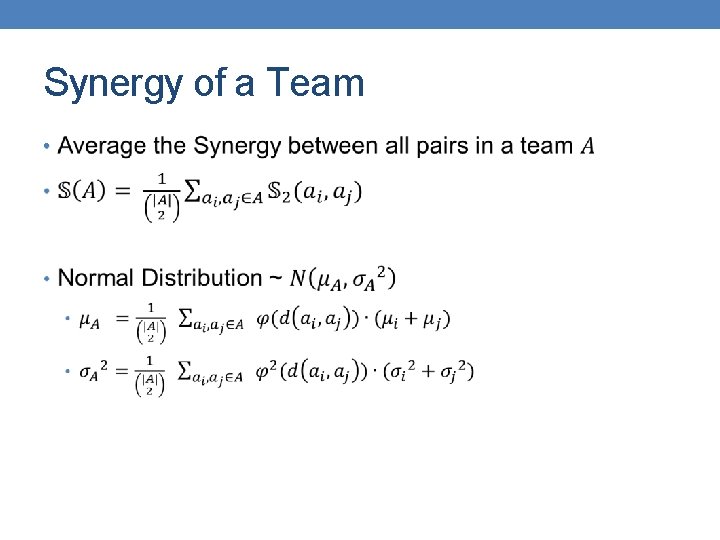
Synergy of a Team •
Example Synergies •
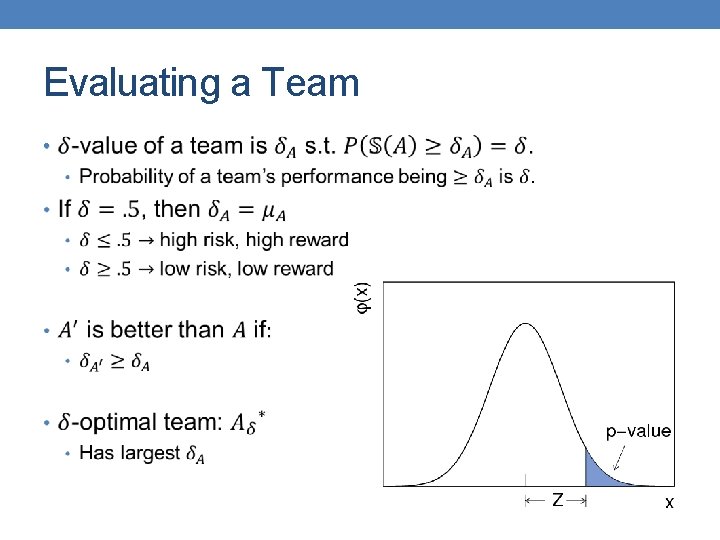
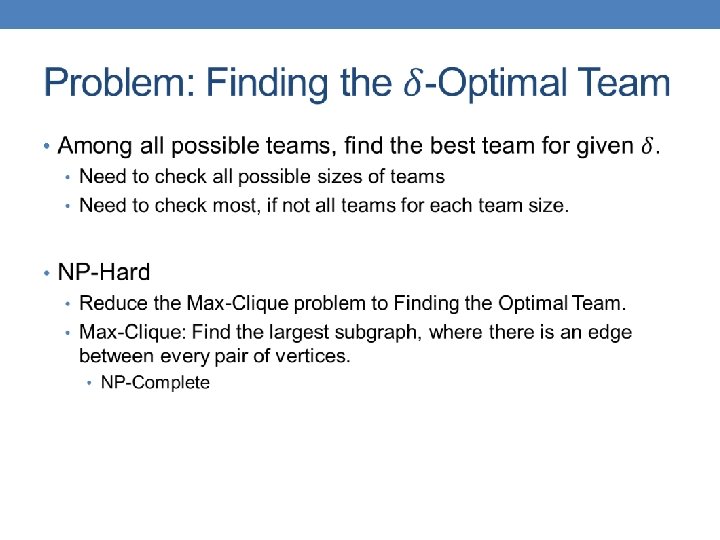
Evaluating a Team •
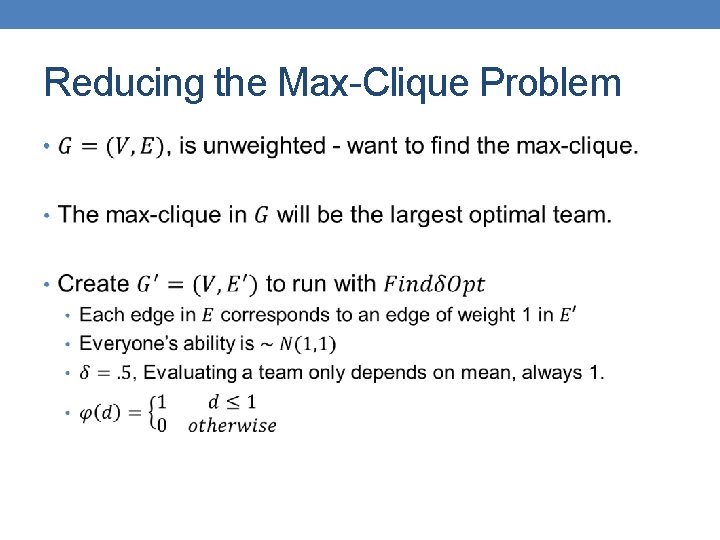
Reducing the Max-Clique Problem •
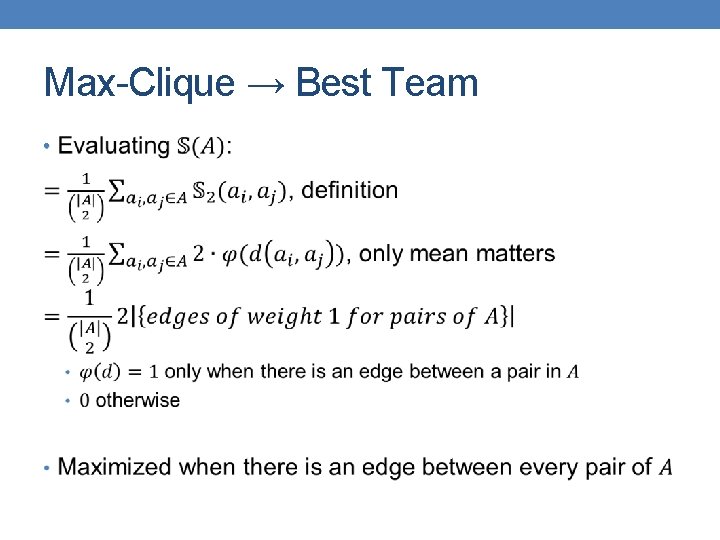
Max-Clique → Best Team •
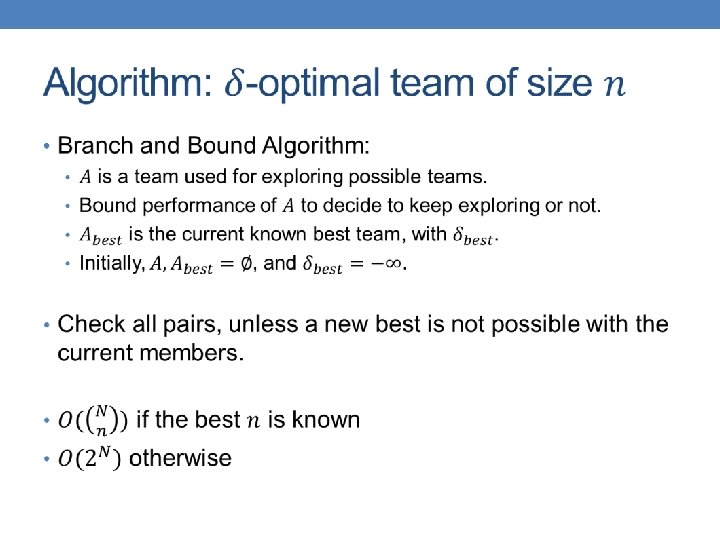
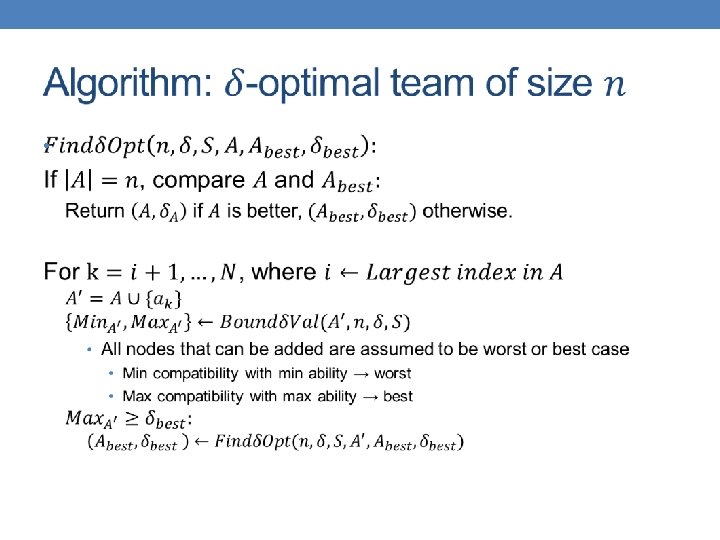
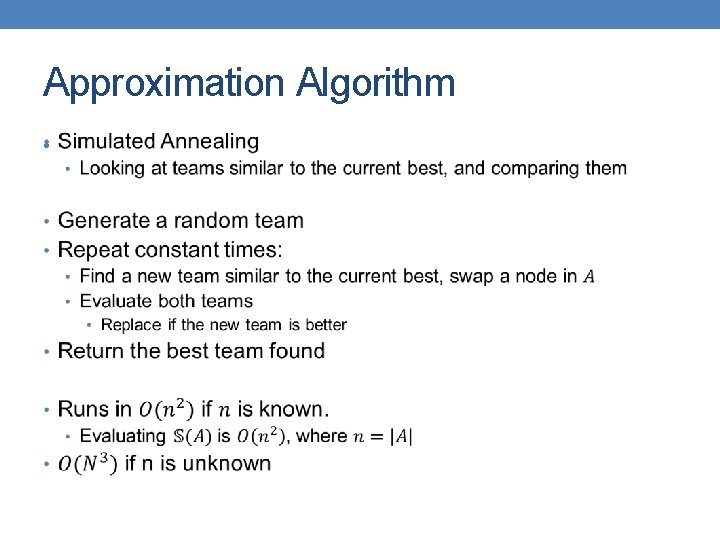
Approximation Algorithm •
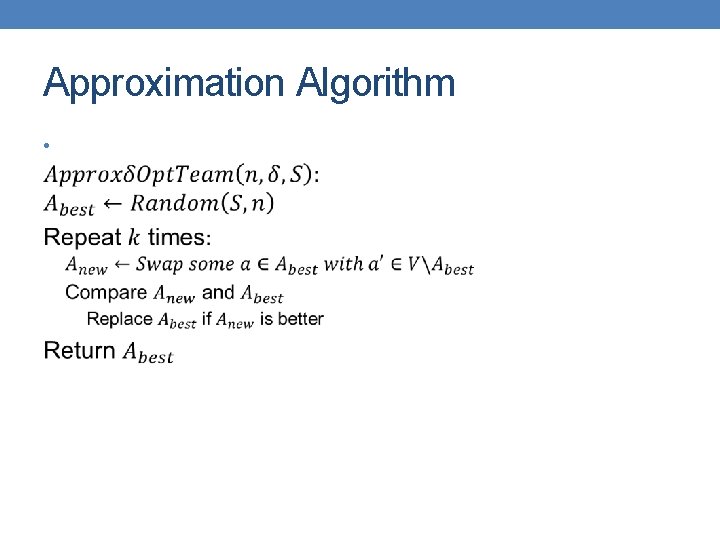
Approximation Algorithm •
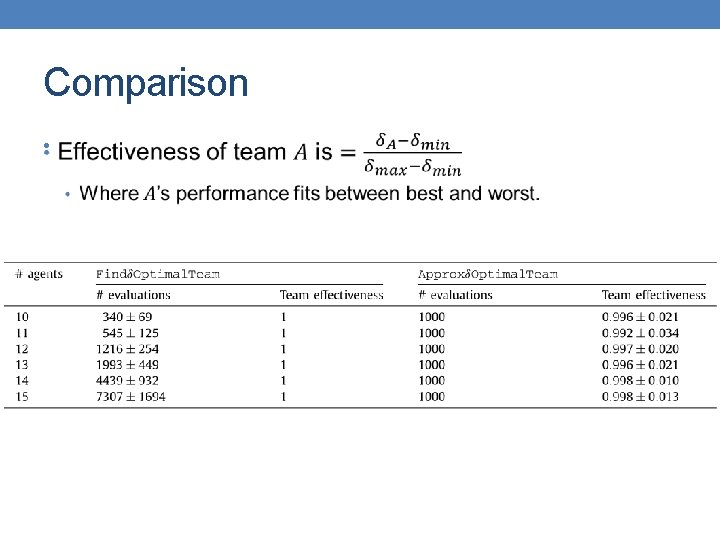
Comparison •
Learning the Synergy Graph •
Learning Algorithm •
Generating G and Finding Similar G’ •
Similar Graph:
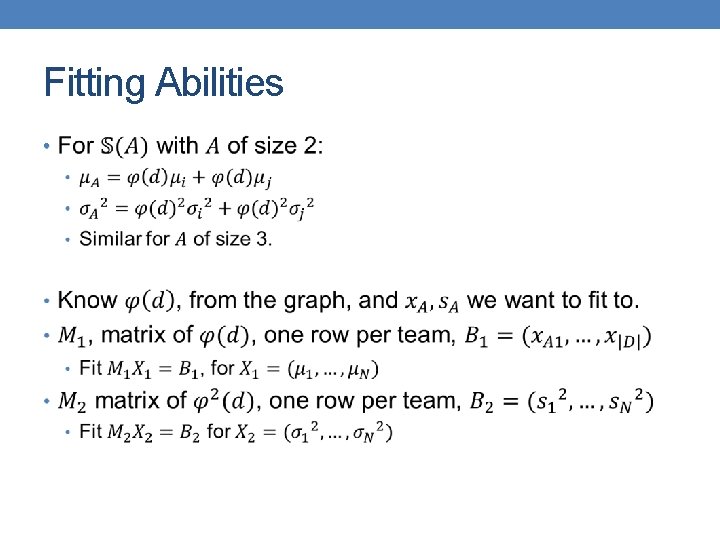
Fitting Abilities to a Graph •
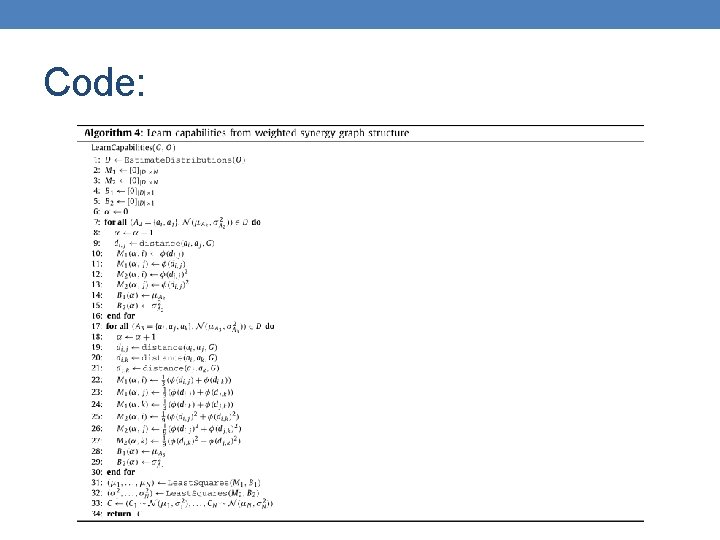
Fitting Abilities •
Code:
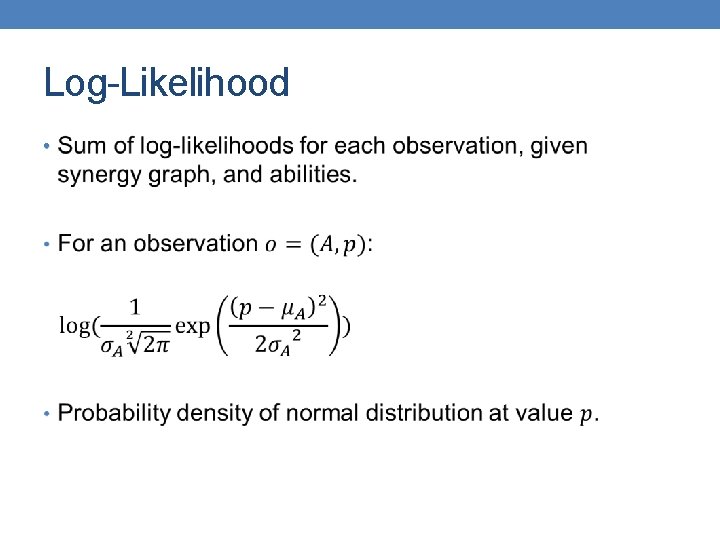
Log-Likelihood •
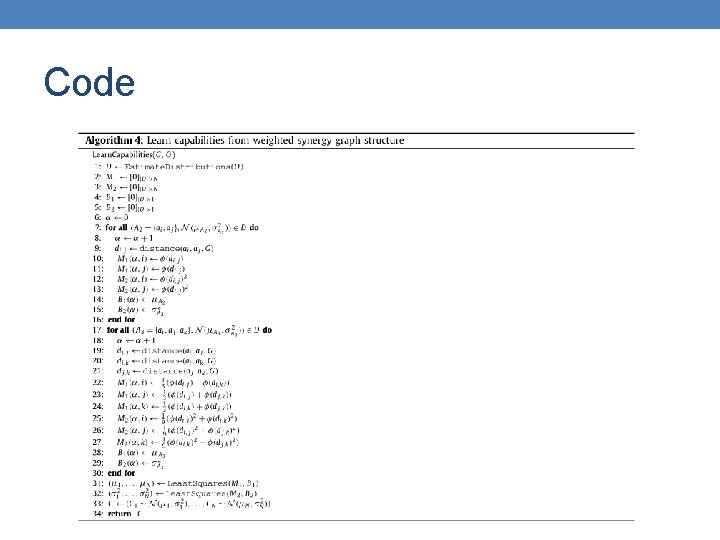
Code
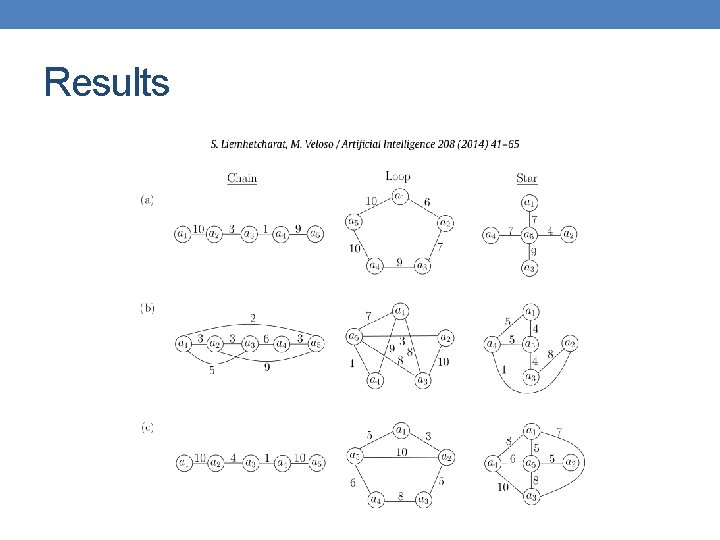
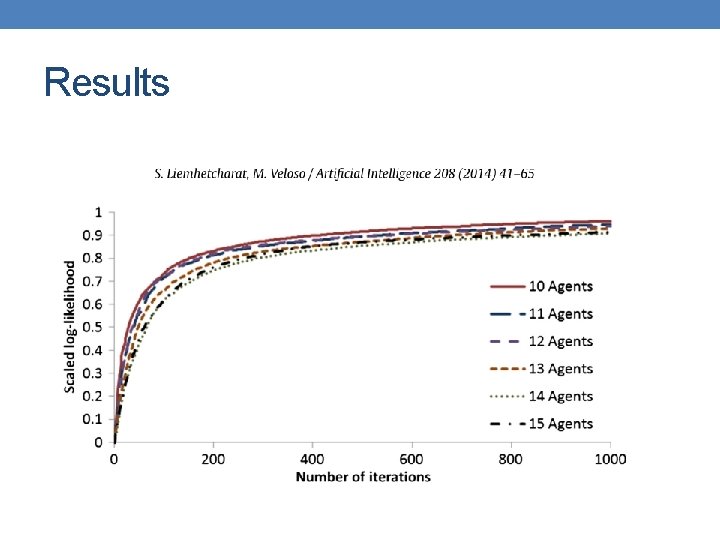
Evaluation • Generate a hidden graph, with compatibility and abilities. • Generate a set of observations • Run the learning Algorithm • Compare Log-Likelihood of learned graph with true graph.
Results
Results
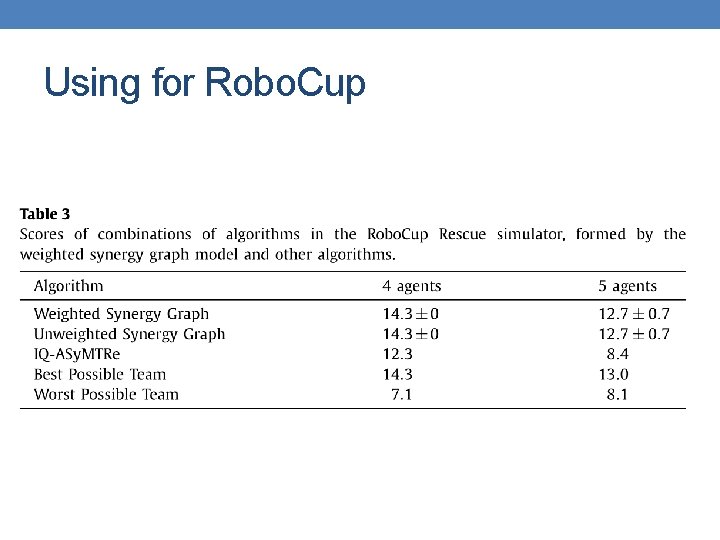
Using for Robo. Cup
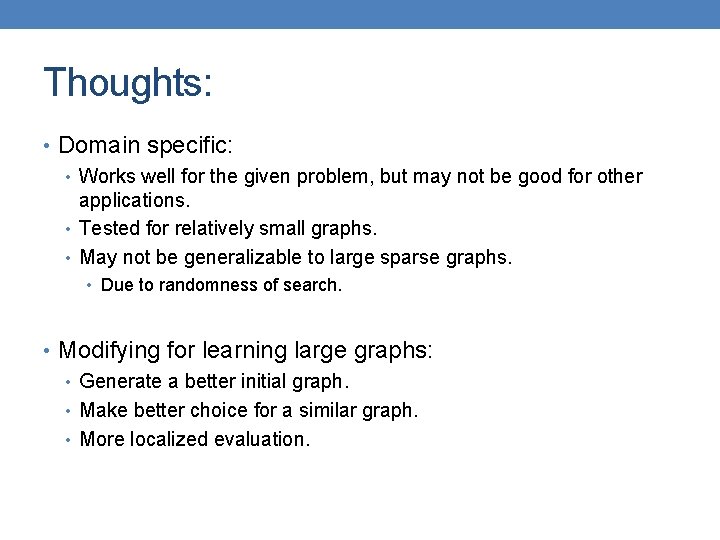
Thoughts: • Domain specific: • Works well for the given problem, but may not be good for other applications. • Tested for relatively small graphs. • May not be generalizable to large sparse graphs. • Due to randomness of search. • Modifying for learning large graphs: • Generate a better initial graph. • Make better choice for a similar graph. • More localized evaluation.