
WEIGHT TRAINING Strength Training for Track Field Methods





- Slides: 28
WEIGHT TRAINING Strength Training for Track & Field
Methods of Developing Strength Circuit Training Weight Training Plyometrics
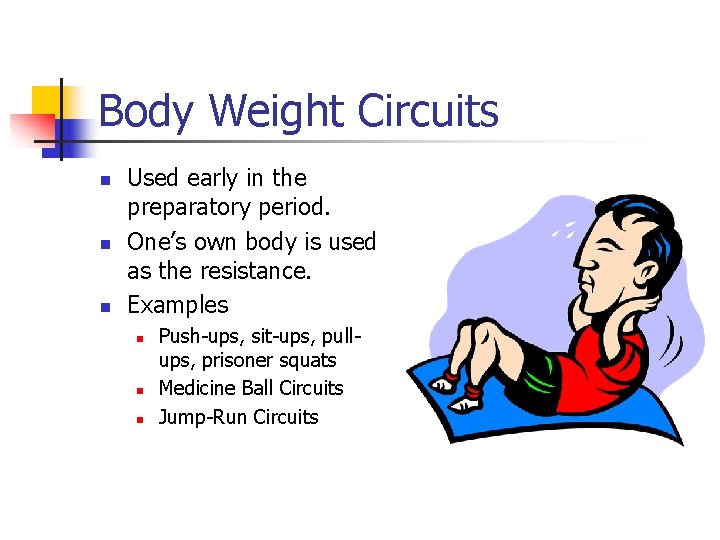
Body Weight Circuits n n n Used early in the preparatory period. One’s own body is used as the resistance. Examples n n n Push-ups, sit-ups, pullups, prisoner squats Medicine Ball Circuits Jump-Run Circuits
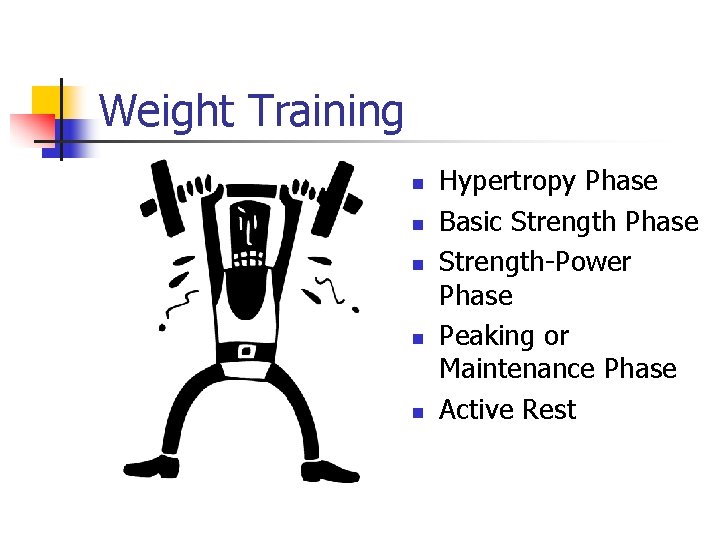
Weight Training n n n Hypertropy Phase Basic Strength Phase Strength-Power Phase Peaking or Maintenance Phase Active Rest
Hypertropy Phase (General Preparation Phase) n n n High volume with low intensity Includes any work that tends to increase muscle mass and muscle-nerve recruitment. Moderate loads-50%-70% 8 -10 repetitions. 3 to 6 sets. 3 -4 sessions/week
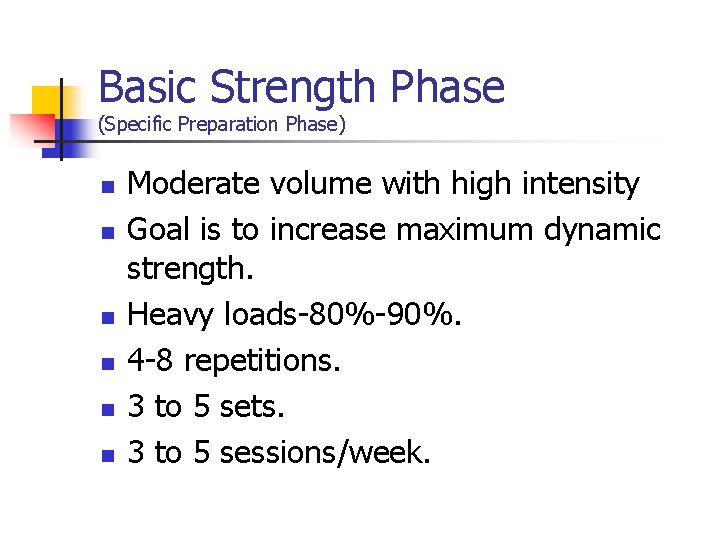
Basic Strength Phase (Specific Preparation Phase) n n n Moderate volume with high intensity Goal is to increase maximum dynamic strength. Heavy loads-80%-90%. 4 -8 repetitions. 3 to 5 sets. 3 to 5 sessions/week.
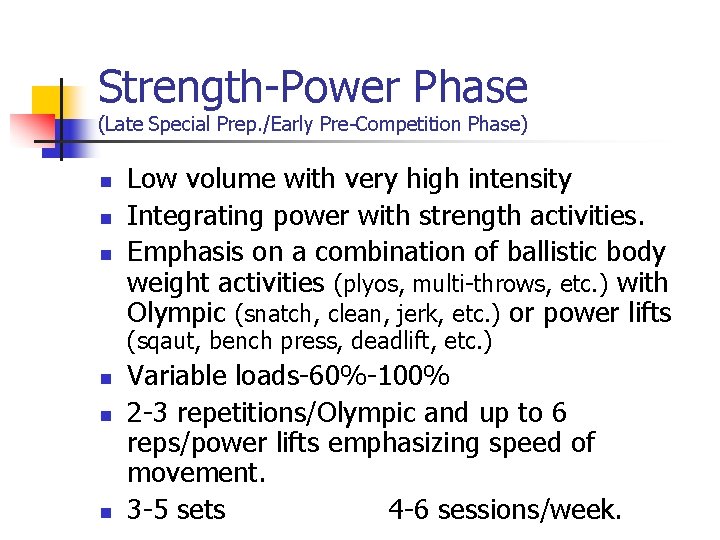
Strength-Power Phase (Late Special Prep. /Early Pre-Competition Phase) n n n Low volume with very high intensity Integrating power with strength activities. Emphasis on a combination of ballistic body weight activities (plyos, multi-throws, etc. ) with Olympic (snatch, clean, jerk, etc. ) or power lifts (sqaut, bench press, deadlift, etc. ) n n n Variable loads-60%-100% 2 -3 repetitions/Olympic and up to 6 reps/power lifts emphasizing speed of movement. 3 -5 sets 4 -6 sessions/week.
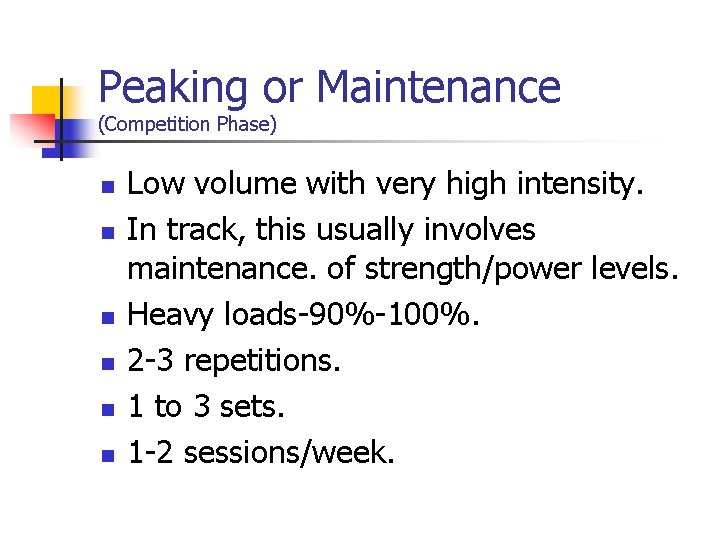
Peaking or Maintenance (Competition Phase) n n n Low volume with very high intensity. In track, this usually involves maintenance. of strength/power levels. Heavy loads-90%-100%. 2 -3 repetitions. 1 to 3 sets. 1 -2 sessions/week.
Active Rest n n Take 2 to 4 days off 2 -3 weeks of other activities or very light technical work.
Weight Training Program Design
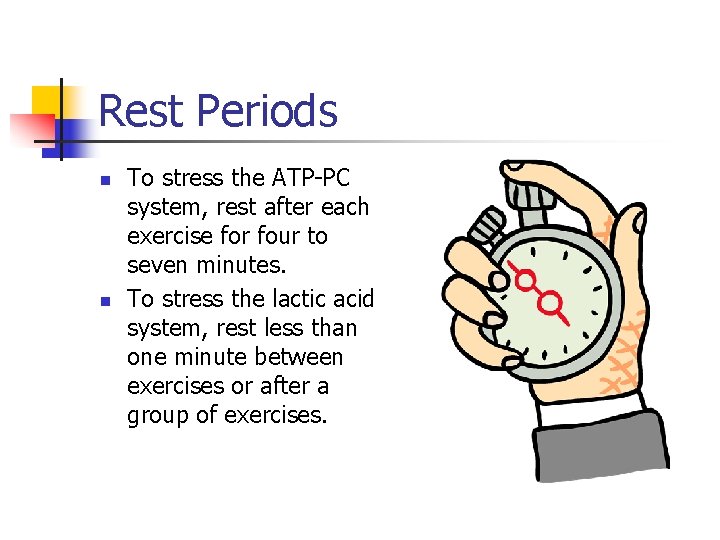
Rest Periods n n To stress the ATP-PC system, rest after each exercise for four to seven minutes. To stress the lactic acid system, rest less than one minute between exercises or after a group of exercises.
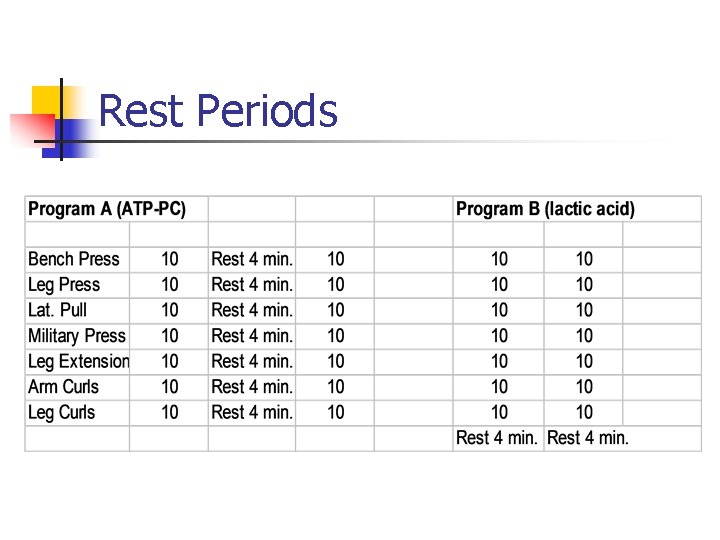
Rest Periods
Rest Periods Program A gives an example of rest periods producing a primary stress on the ATP-PC system. n Program B gives an example of rest periods taken at the end of a circuit, primarily stressing the lactic acid system. Short rest could be taken between exercises with similar results. One must understand the basic energetics of your events to design the correct rest intervals. n
Choice of Exercise
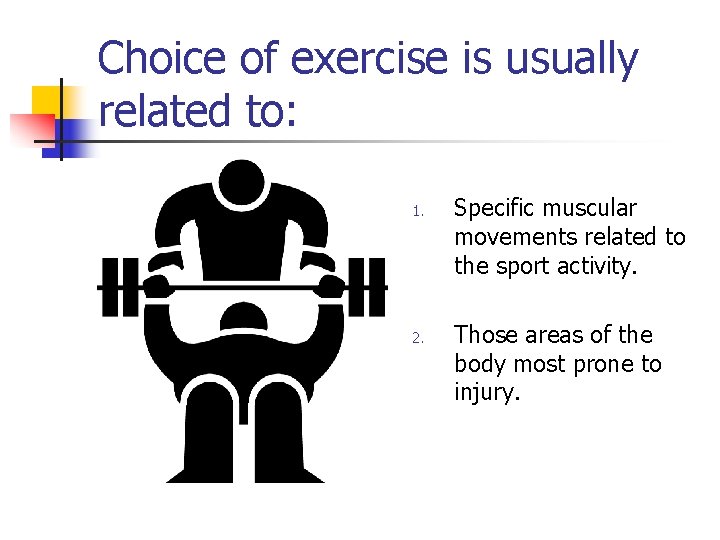
Choice of exercise is usually related to: 1. 2. Specific muscular movements related to the sport activity. Those areas of the body most prone to injury.
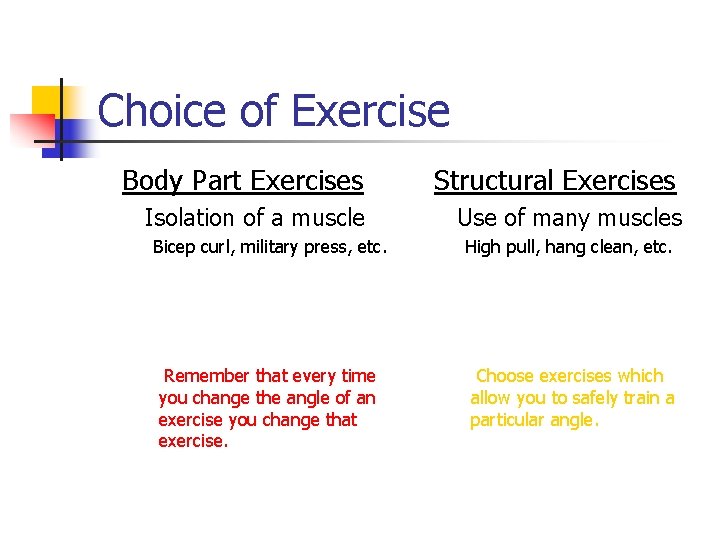
Choice of Exercise Body Part Exercises Structural Exercises Isolation of a muscle Use of many muscles Bicep curl, military press, etc. High pull, hang clean, etc. Remember that every time you change the angle of an exercise you change that exercise. Choose exercises which allow you to safely train a particular angle.
Choice of Exercise With all the possible exercises you could put into your program one needs to make a careful analysis of the exercises chosen. Analyze the needs of the sport and the athlete. Choose exercises which will best develop the angles and muscular characteristics desired. You can and should change exercises during the yearly cycle.
Order of Exercises
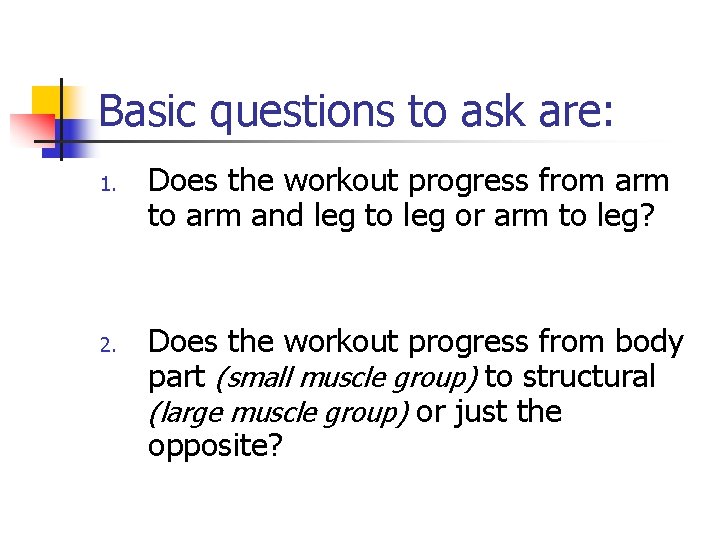
Basic questions to ask are: 1. 2. Does the workout progress from arm to arm and leg to leg or arm to leg? Does the workout progress from body part (small muscle group) to structural (large muscle group) or just the opposite?
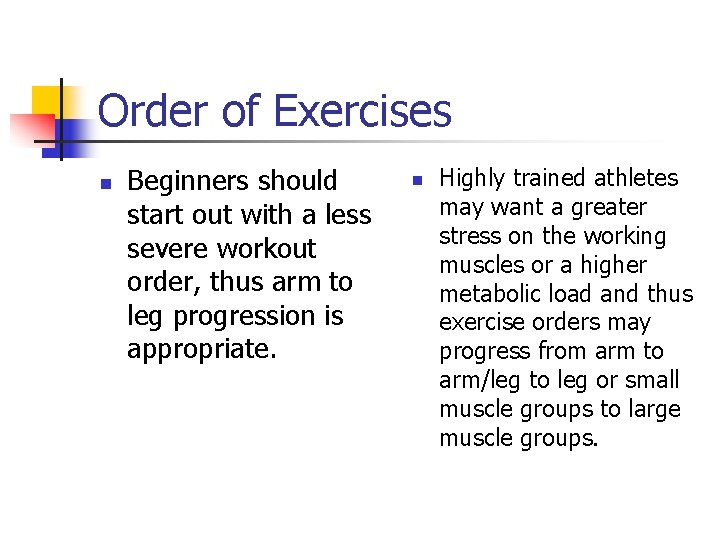
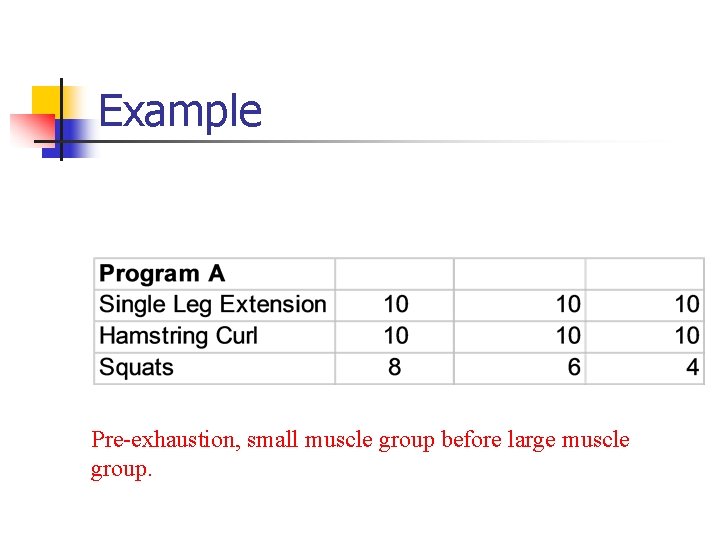
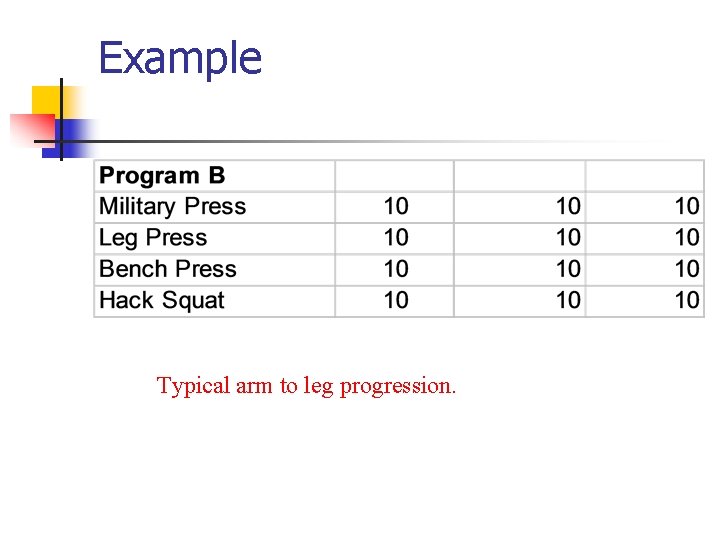
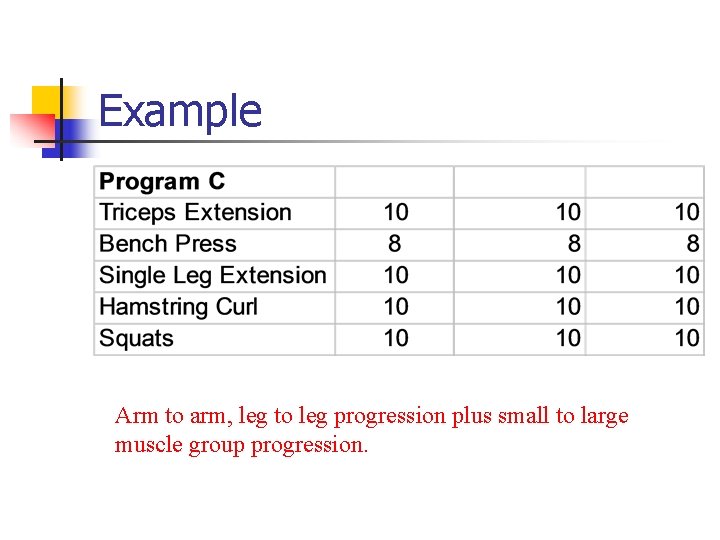
Order of Exercises n Beginners should start out with a less severe workout order, thus arm to leg progression is appropriate. n Highly trained athletes may want a greater stress on the working muscles or a higher metabolic load and thus exercise orders may progress from arm to arm/leg to leg or small muscle groups to large muscle groups.
Example Pre-exhaustion, small muscle group before large muscle group.
Example Typical arm to leg progression.
Example Arm to arm, leg to leg progression plus small to large muscle group progression.
Administrative Variables
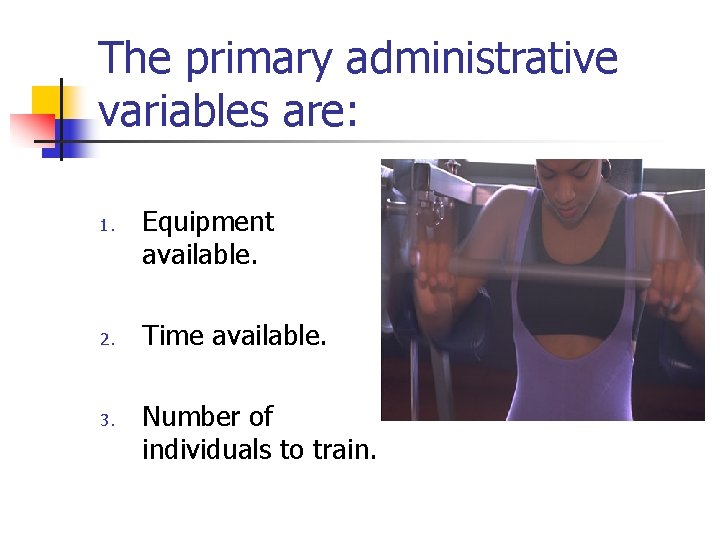
The primary administrative variables are: 1. 2. 3. Equipment available. Time available. Number of individuals to train.
Equipment Available n Gear your training around what you have available. You can be creative by using manual resistance, plyometric, isometric or paired resistance substitutes if proper equipment is unavailable.
Time Constraints n n Try to pack into the available time as much of the optimal stimulus as possible. (BE EFFICIENT) As, stay with large becomes a factor time muscle group exercises & multijoint exercises.
Number of Individuals to Train n Try to be very organized by having set patterns of movements and times at each exercise station; group teaching sessions on a lift need to be scheduled in order to avoid tying up equipment.