
Weight loss and exercise Obesity Overweight BMI 25
Weight loss and exercise
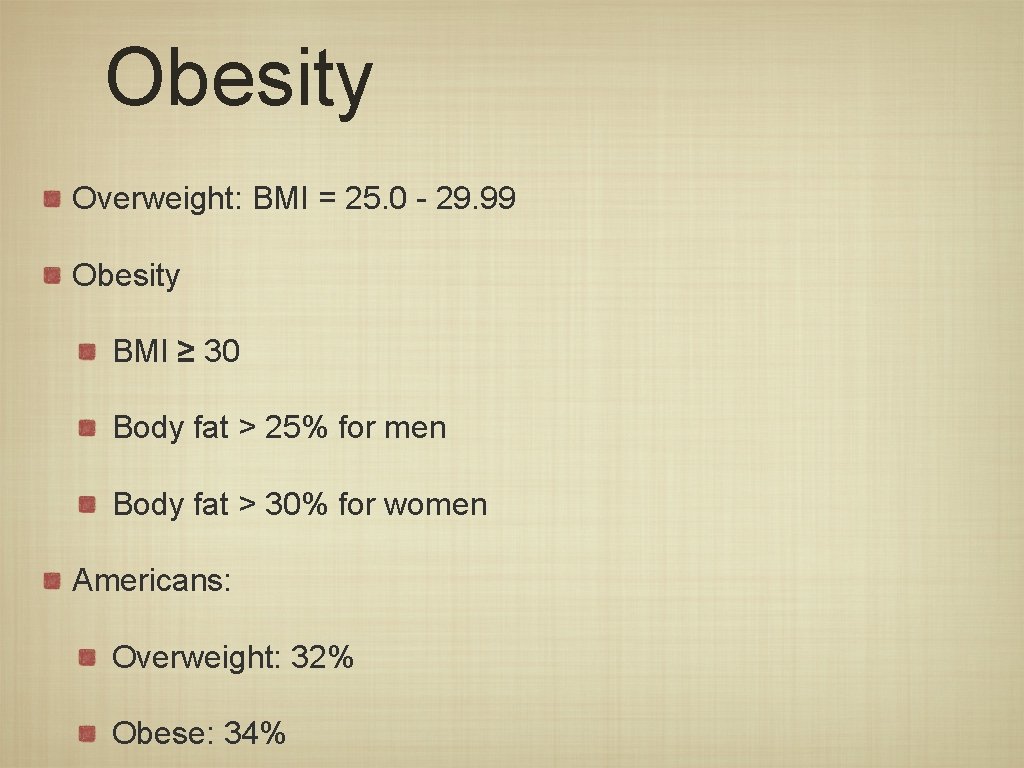
Obesity Overweight: BMI = 25. 0 - 29. 99 Obesity BMI ≥ 30 Body fat > 25% for men Body fat > 30% for women Americans: Overweight: 32% Obese: 34%

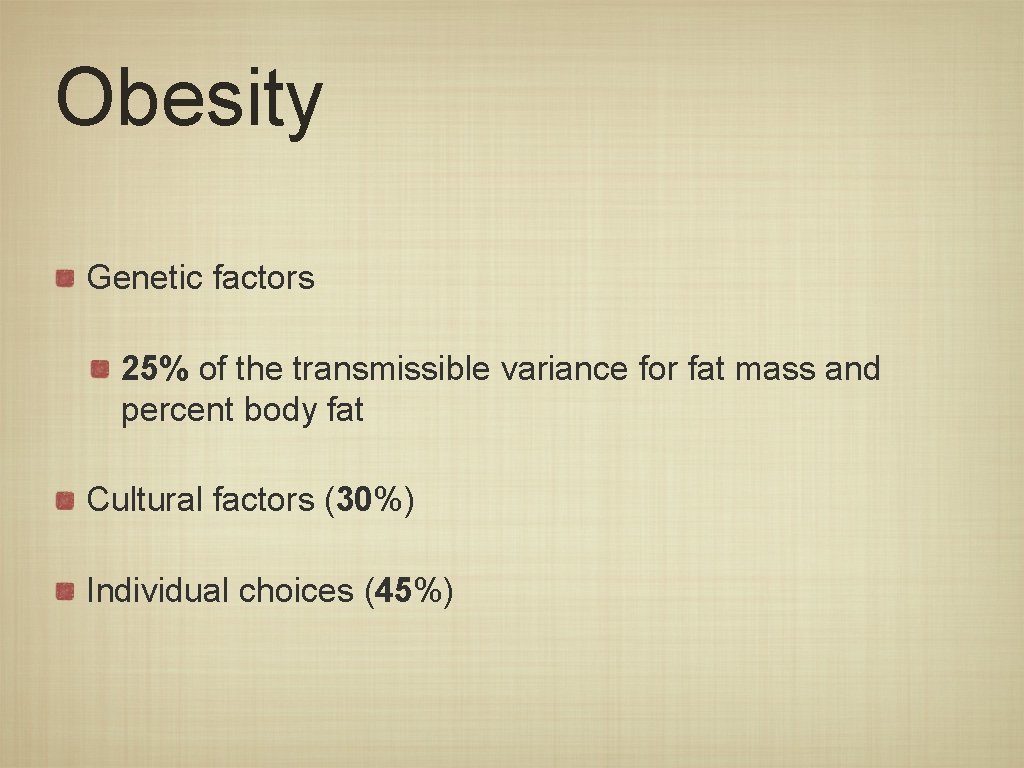
Obesity Genetic factors 25% of the transmissible variance for fat mass and percent body fat Cultural factors (30%) Individual choices (45%)
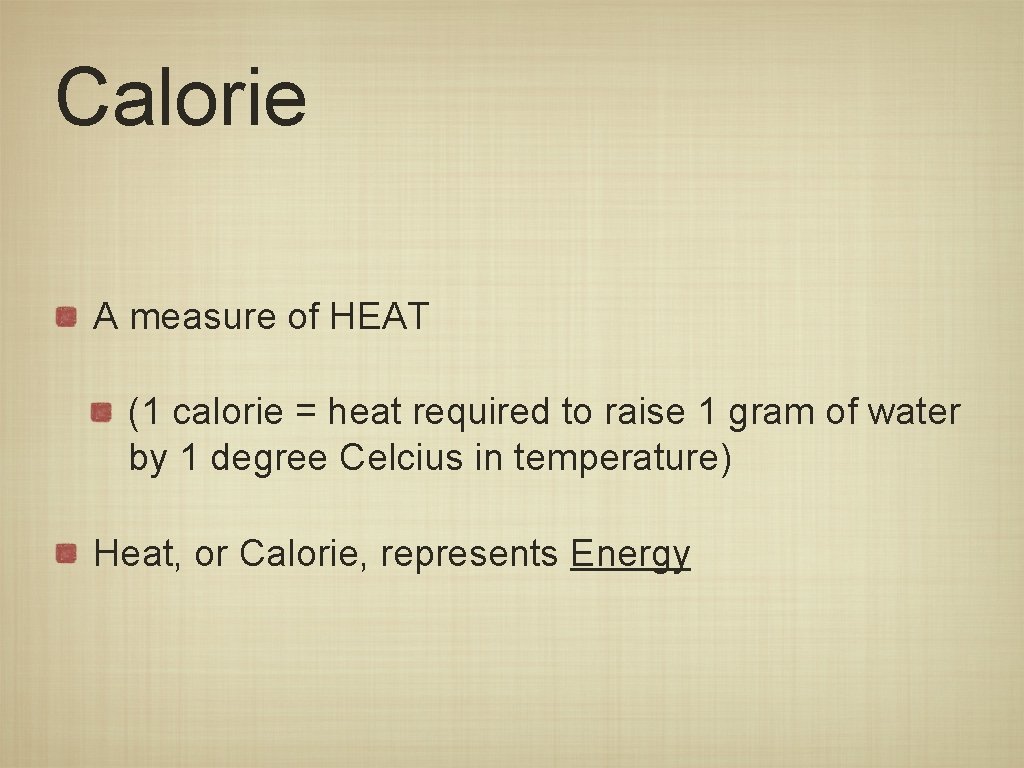
Calorie A measure of HEAT (1 calorie = heat required to raise 1 gram of water by 1 degree Celcius in temperature) Heat, or Calorie, represents Energy
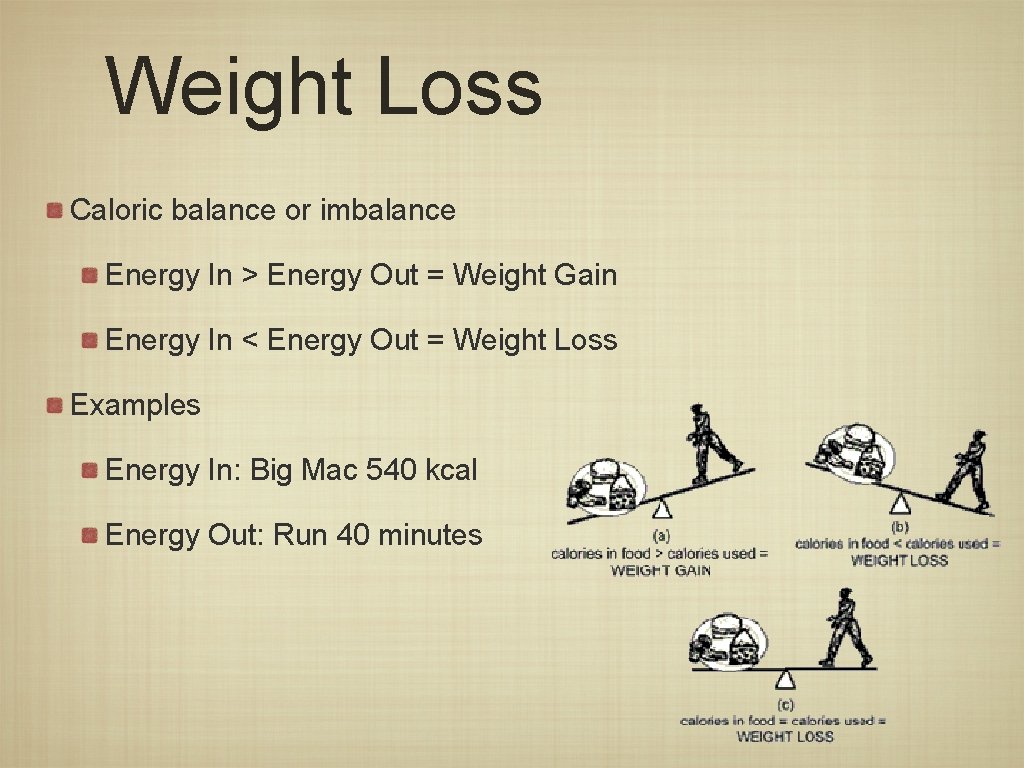
Weight Loss Caloric balance or imbalance Energy In > Energy Out = Weight Gain Energy In < Energy Out = Weight Loss Examples Energy In: Big Mac 540 kcal Energy Out: Run 40 minutes
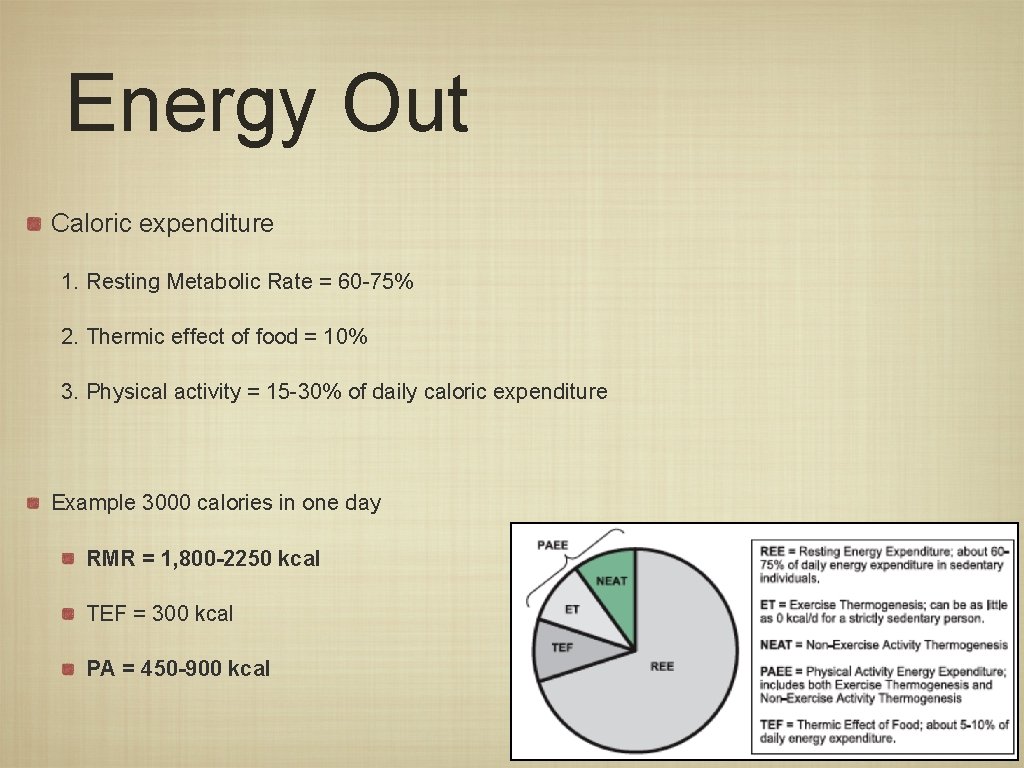
Energy Out Caloric expenditure 1. Resting Metabolic Rate = 60 -75% 2. Thermic effect of food = 10% 3. Physical activity = 15 -30% of daily caloric expenditure Example 3000 calories in one day RMR = 1, 800 -2250 kcal TEF = 300 kcal PA = 450 -900 kcal
Energy In Fat = 9 calories per gram Alcohol = 7 calories per gram Carbohydrate = 4 calories per gram Protein = 4 calories per gram
Weight Loss Reduce ‘Energy In’ and/or Increase ‘Energy Out’. . . … 500 -1000 fewer calories per day (3, 500 -7, 000 fewer calories per week) Recommendations: 1 -2 lbs of weight loss per week
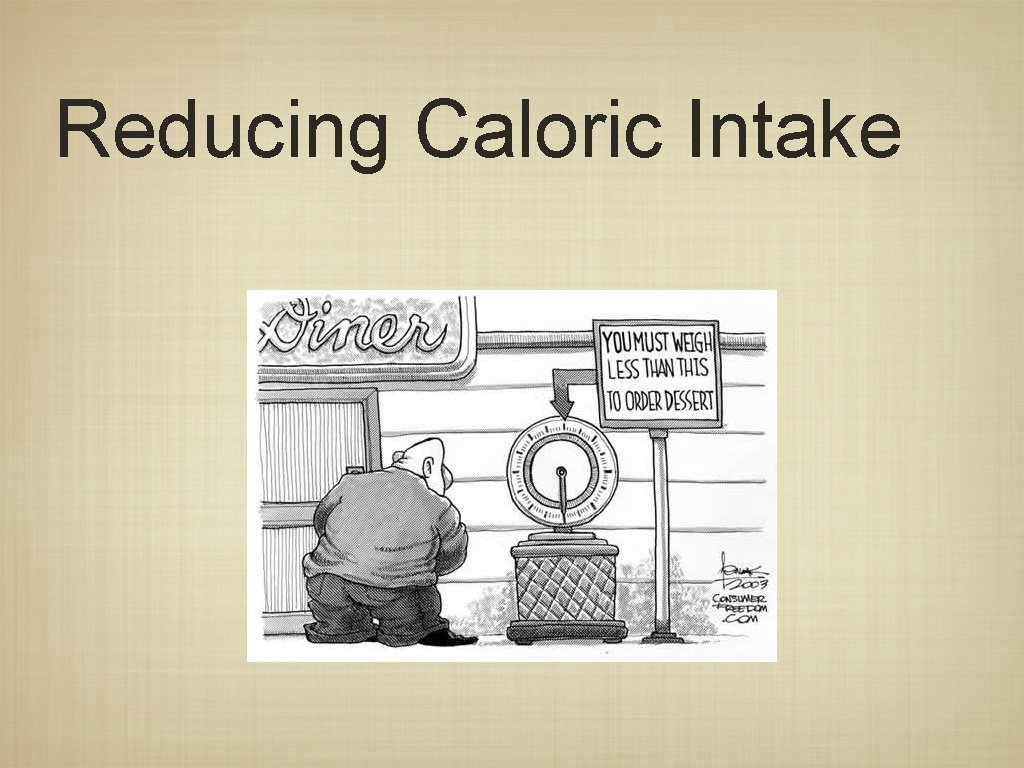
Reducing Caloric Intake
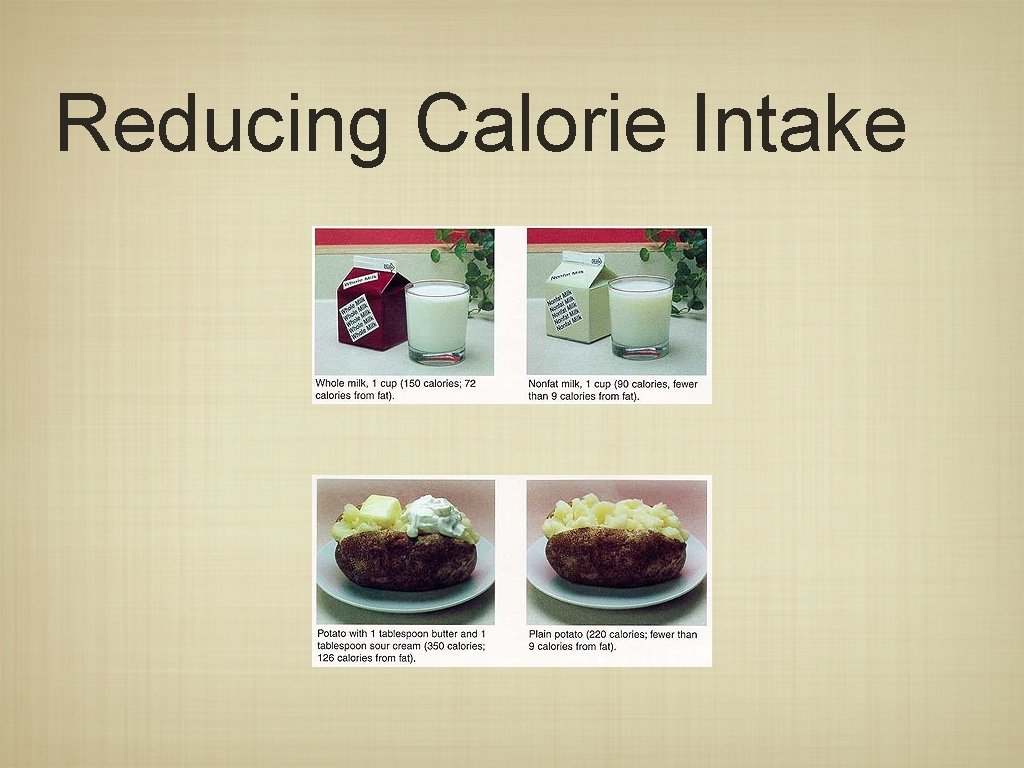
Reducing Calorie Intake
Rapid Weight Loss / Low Calorie Diets = weight loss greater than 1 -2 pounds per week. Where does the weight loss come from? Water loss, Muscle loss, etc. Metabolic rate?
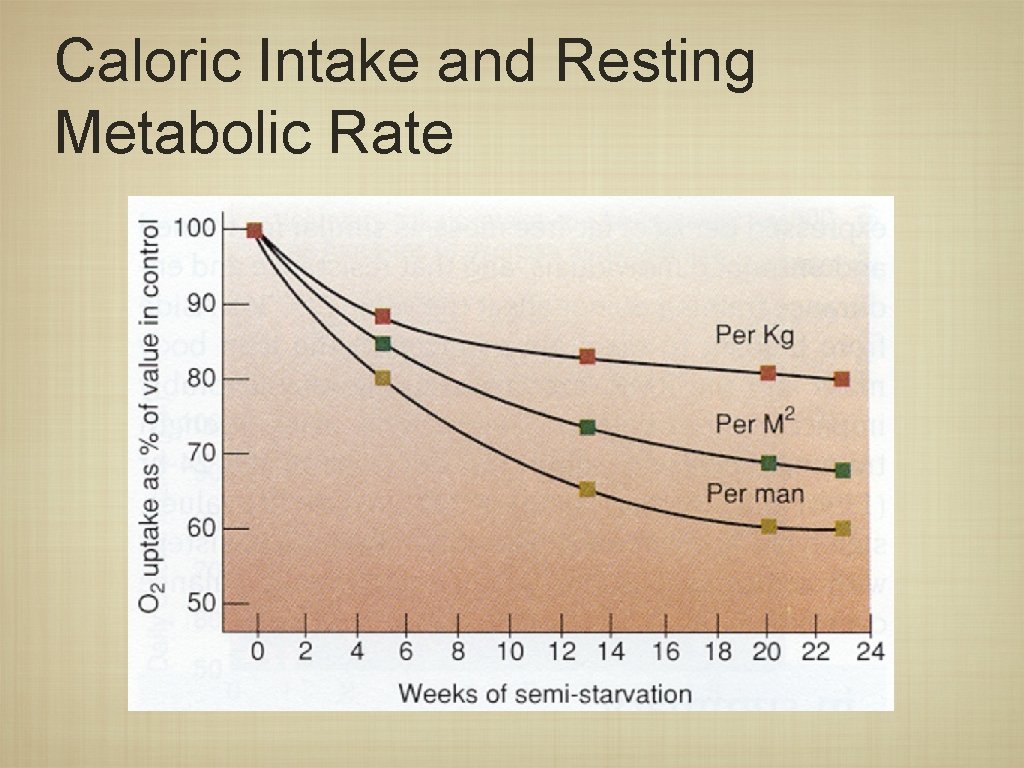
Caloric Intake and Resting Metabolic Rate
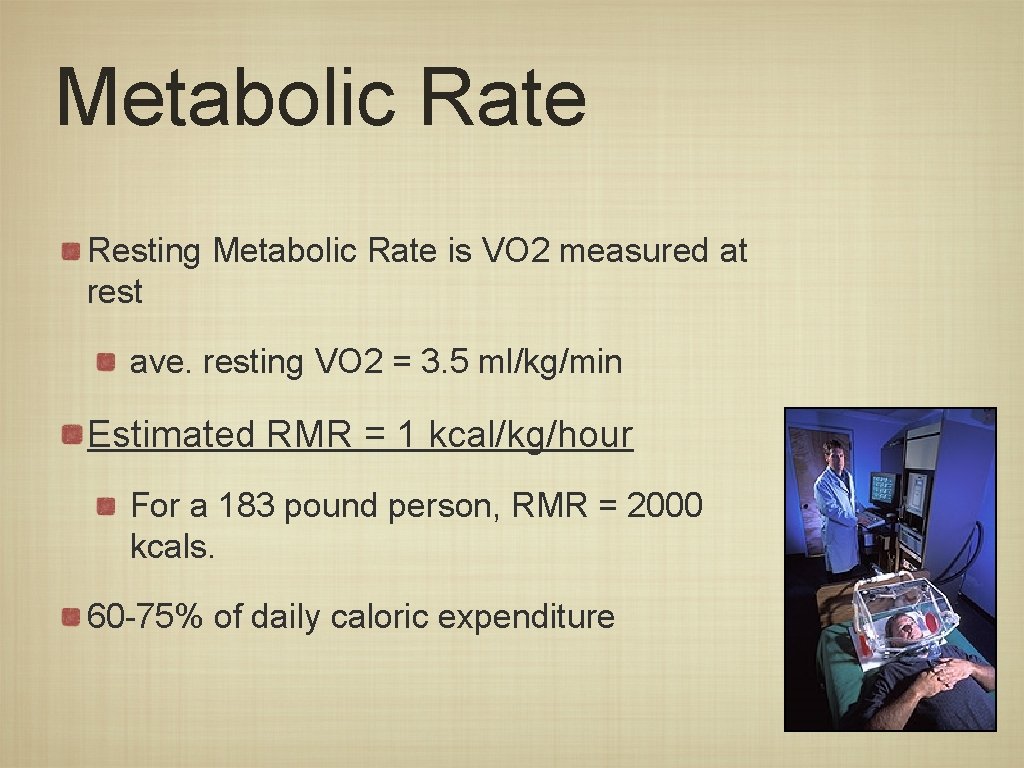
Metabolic Rate Resting Metabolic Rate is VO 2 measured at rest ave. resting VO 2 = 3. 5 ml/kg/min Estimated RMR = 1 kcal/kg/hour For a 183 pound person, RMR = 2000 kcals. 60 -75% of daily caloric expenditure
Metabolic Rate Genetics Gender Fat-free mass Dieting Hormones (e. g. Thyroid hormones, etc) Over eating (thermogenesis) Medications/Drugs
Increasing Caloric Expenditure
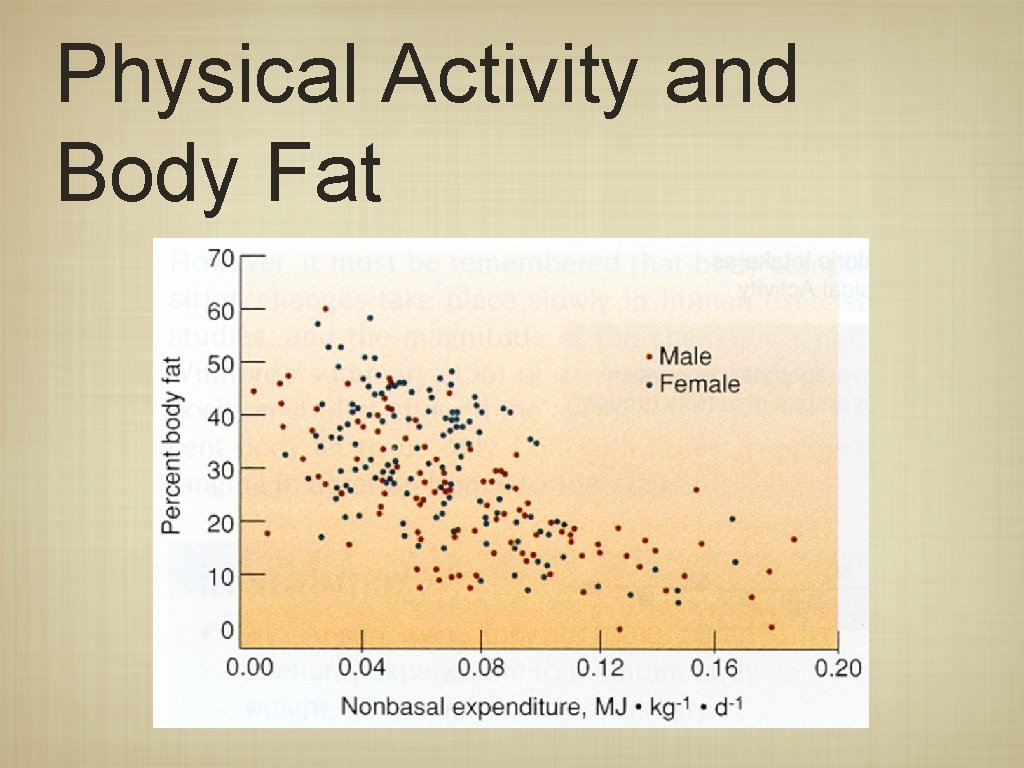
Physical Activity and Body Fat
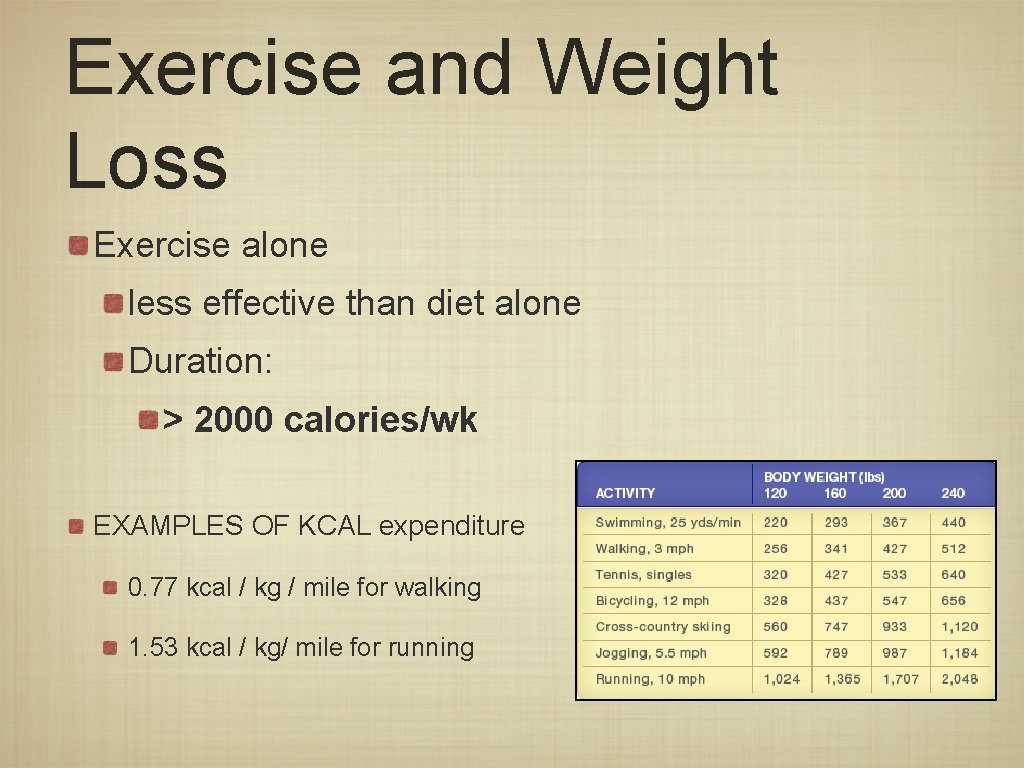
Exercise and Weight Loss Exercise alone less effective than diet alone Duration: > 2000 calories/wk EXAMPLES OF KCAL expenditure 0. 77 kcal / kg / mile for walking 1. 53 kcal / kg/ mile for running
Exercise and Weight Loss Exercise may be most critical to help maintain weight loss Exercise helps to maintain muscle mass and metabolic rate
Exercise and Weight Loss Aerobic exercise v Resistance exercise WORKOUT CALORIES resting metabolic rate Aerobic Exercise: Duration versus Intensity
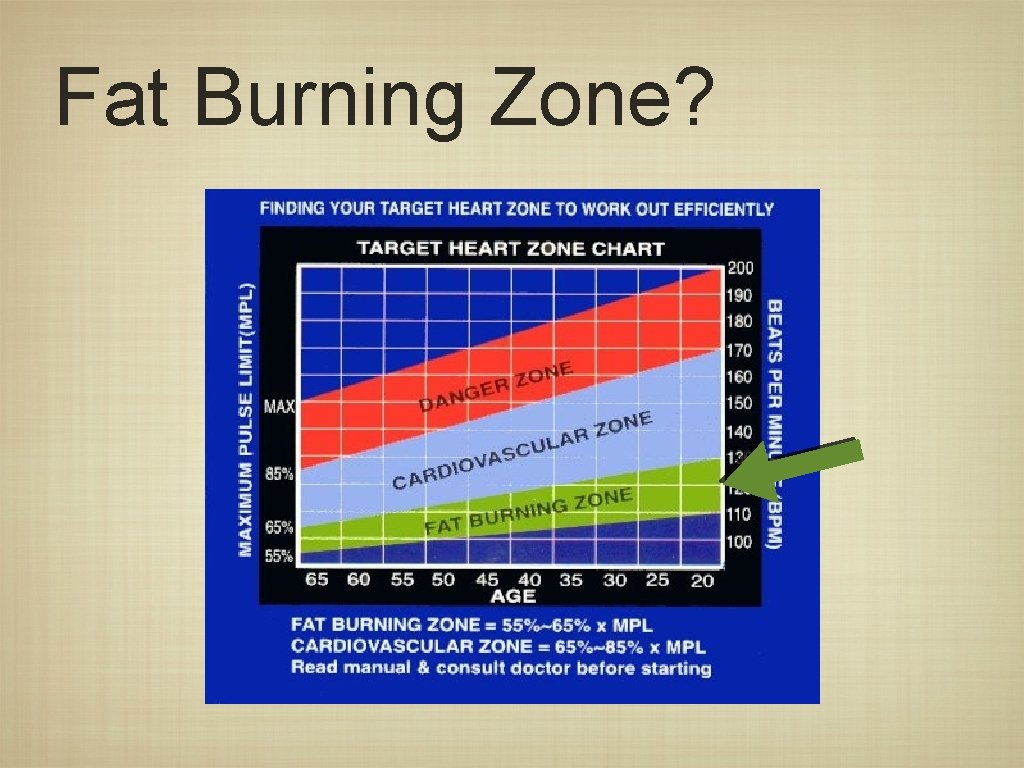
Fat Burning Zone?
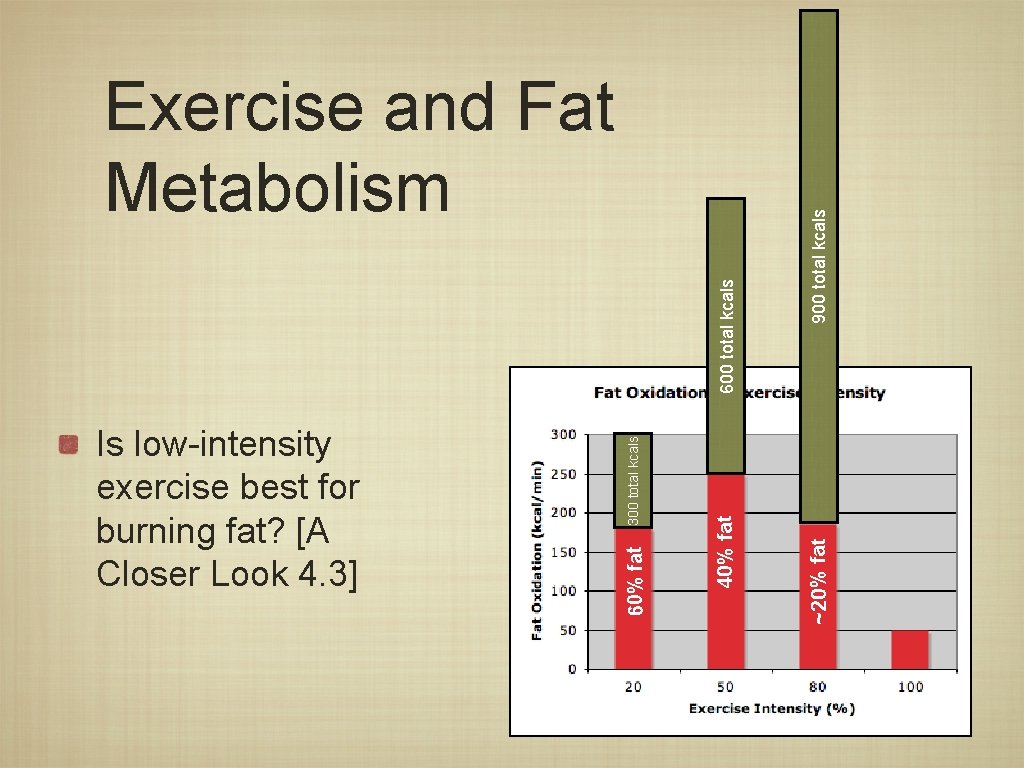
900 total kcals ~20% fat 40% fat 60% fat Is low-intensity exercise best for burning fat? [A Closer Look 4. 3] 300 total kcals 600 total kcals Exercise and Fat Metabolism
Successful Weight Loss diet and exercise Diet: limited caloric intake (source of calories is unimportant) Exercise: increase physical activity
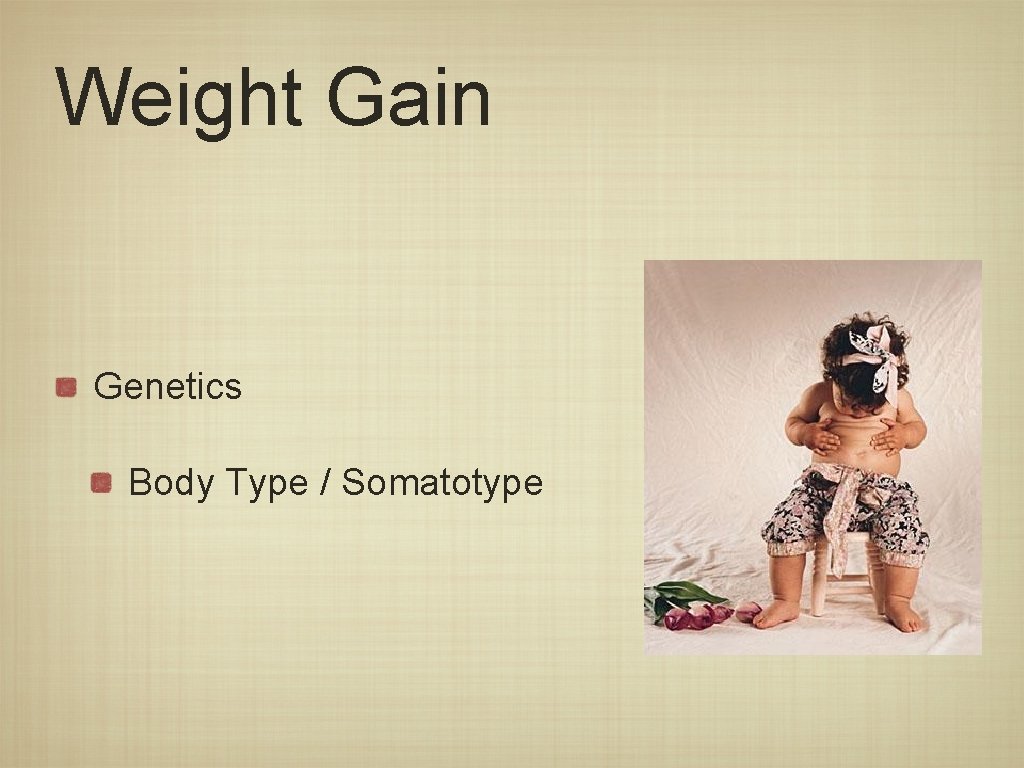
Weight Gain Genetics Body Type / Somatotype
Weight Gain Caloric intake greater than caloric expenditure. 25 -30 calories per pound of body weight to gain weight (20 calories per pound to maintain weight) . . . or. . . 500 -1000 extra calories per day.
Weight Gain Caloric distribution Carbohydrates - 60 to 70% of total calories Protein - 10 to 15% of total calories Fat - remainder of total calories.
Weight Gain Example for 200 pounds. Carbohydrates: energy for anabolism (~3000 kcals) Protein: amino acids for anabolism (~1200 kcals) Fat: can’t avoid it (~800 kcals) PSM
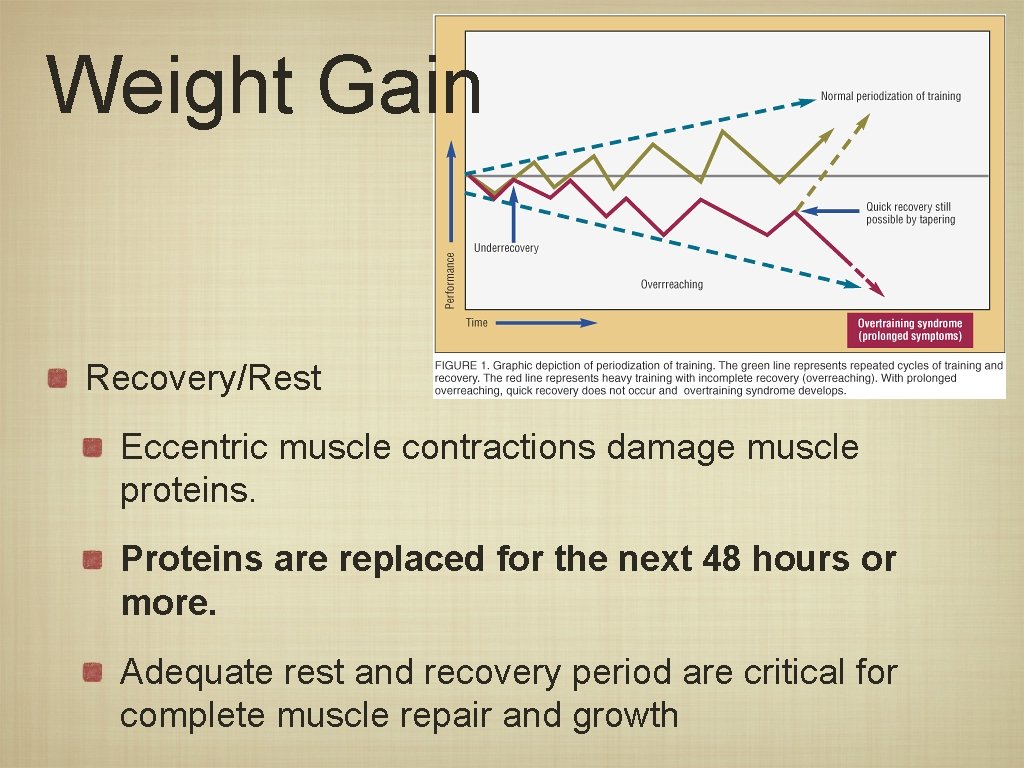
Weight Gain Recovery/Rest Eccentric muscle contractions damage muscle proteins. Proteins are replaced for the next 48 hours or more. Adequate rest and recovery period are critical for complete muscle repair and growth
- Slides: 28